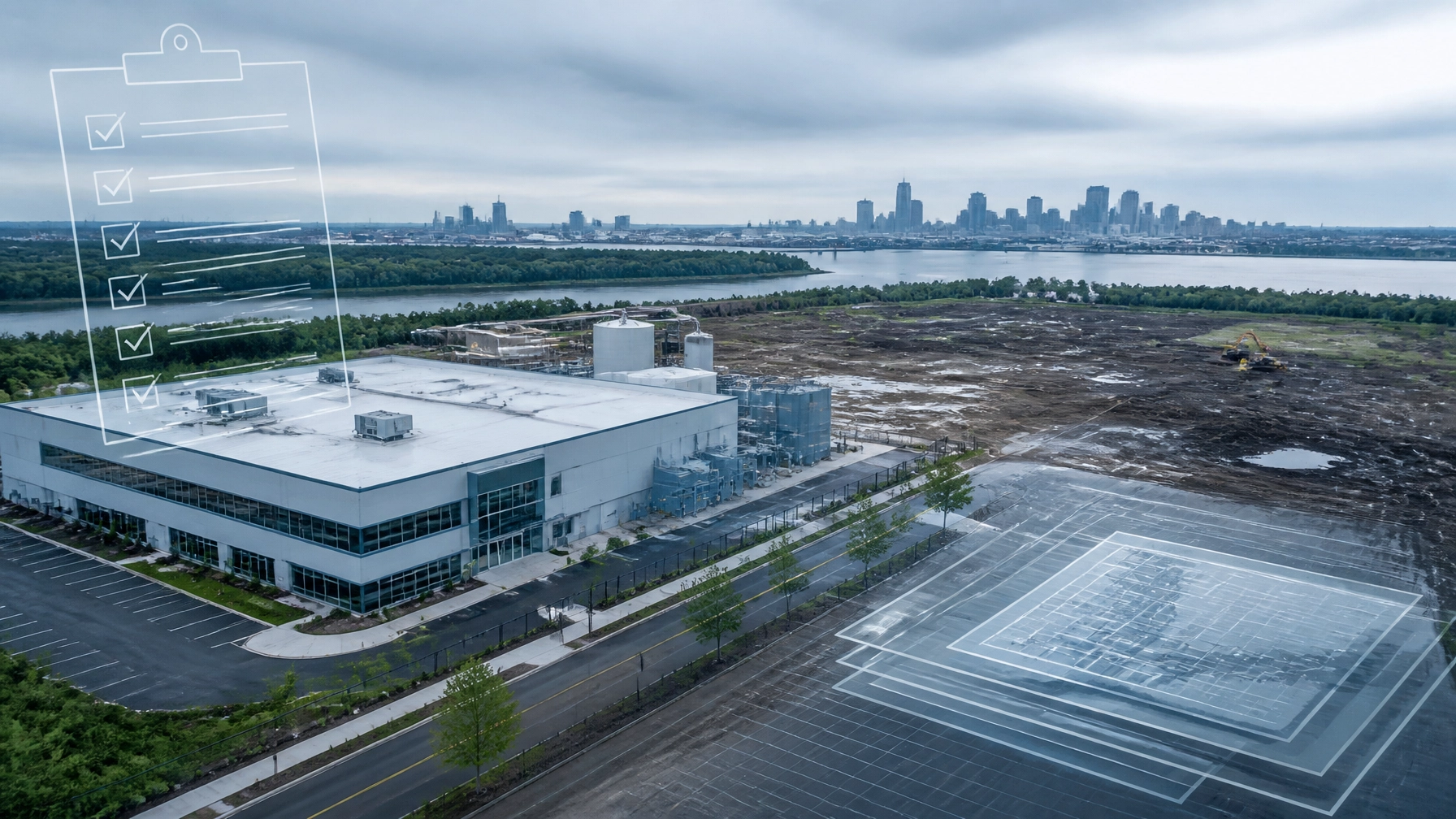
An industrial property sale, closure, lease assignment, or operational change can create more than a transaction deadline. It can create an ISRA triggering event under New Jersey law.
When that happens, the clock starts quickly. The owner or operator may need to file a General Information Notice within five calendar days, retain a Licensed Site Remediation Professional, investigate Areas of Concern, and establish a defensible path to an RAO or other applicable closure outcome.
For owners, developers, attorneys, and lenders in Jersey City, Newark, Bergen County, Hudson County, Essex County, and Northern New Jersey, early planning matters. NJDEP rules establish the requirements. Transaction planning determines whether those requirements derail your closing or fit into the project schedule.
What Is ISRA and When Does It Apply?
The Industrial Site Recovery Act, or ISRA, applies to certain New Jersey industrial establishments. Applicability generally depends on factors such as:
- The facility’s primary NAICS code
- Whether the operation handled hazardous substances or hazardous waste
- Whether the establishment operated in New Jersey on or after December 31, 1983
- Whether the facility is closing, changing ownership, or transferring operations
The implementing rules appear in N.J.A.C. 7:26B.
A property does not become subject to ISRA simply because it has an industrial-looking building. The analysis requires a review of the actual operation, historical use, ownership structure, hazardous materials, and transaction documents.
Common triggering events include:
- Sale or conveyance of the industrial establishment or its real property
- Transfer of business ownership or operations
- Closure or public release of a decision to close
- A lease of 99 years or longer
- Certain corporate dissolutions, bankruptcies, and reorganizations
- A change in operations that changes the primary NAICS classification
The transaction date is not always the closing date. An agreement of sale, public announcement, lease execution, or other defined event may start the compliance timeline earlier.
That is why an NJ ISRA triggering event environmental consultant should be involved before the purchase agreement is signed whenever possible.
The Five-Day GIN Deadline
The General Information Notice, or GIN, notifies NJDEP that an ISRA triggering event occurred.
NJDEP’s official GIN instructions state:
“Notification to the NJDEP must occur within 5 calendar days after the ISRA triggering event.”
The five-day period means calendar days, not business days. A weekend or holiday does not automatically extend the deadline.
The GIN typically identifies:
- The industrial establishment
- Current owners and operators
- The applicable NAICS code
- The type and date of the triggering event
- The proposed transaction or operational change
- Authorized representatives
- The parties responsible for conducting remediation
The owner or operator may file the GIN without being an LSRP. However, filing the notice is only the first compliance step. It does not complete the remediation, resolve liability, or establish case closure.
ISRA Triggering Event Timeline
| Timing | Typical action | Practical objective |
|---|---|---|
| Before the transaction | Confirm ISRA applicability and review historical operations | Identify the compliance path before documents are signed |
| Trigger date | Sale, closure, transfer, qualifying lease, or other event occurs | Establish the legal start date |
| Within 5 calendar days | Submit the GIN to NJDEP | Satisfy the initial notification requirement |
| Within 45 days | Retain an LSRP and submit the retention notification | Put a licensed professional in control of the remediation |
| Early remediation | Complete PA/SI and evaluate Areas of Concern | Establish site conditions and data gaps |
| Investigation phase | Conduct RI and define nature and extent of contamination | Support remedy selection and cost planning |
| Remedial action | Excavate, treat, contain, monitor, or control contamination | Achieve applicable remediation standards |
| Closure phase | Obtain required RAPs and issue the appropriate closure document | Establish regulatory completion and ongoing obligations |
The exact sequence depends on the site, the triggering event, prior case history, and whether contamination or existing controls are present.
Retaining an LSRP for ISRA Compliance
A Licensed Site Remediation Professional is authorized under New Jersey’s Site Remediation Reform Act to oversee and certify remediation work.
For an ISRA case, the LSRP may manage:
- NJDEP case initiation and correspondence
- Preliminary Assessment and Site Investigation
- Sampling plans and field investigations
- Remedial Investigation and Feasibility Study
- Remedial Action Work Plans
- Remedial action implementation
- Deed notices and Site Management Plans
- Engineering and institutional controls
- Remedial Action Permits
- Response Action Outcome certification
Envicon’s NJDEP LSRP services are structured around one point of responsibility from investigation through case closure.
That matters during a sale. Your attorney needs accurate environmental representations. Your lender needs a defensible risk position. Your contractor needs clear soil, groundwater, vapor, and disposal requirements. Your regulator needs complete and technically supportable submissions.
A large consultant may divide those responsibilities among multiple departments. An effective regional team keeps the technical work, regulatory communication, and transaction schedule connected.
PA/SI Comes Before the Full Remedial Investigation
The Preliminary Assessment and Site Investigation establish the initial understanding of the property.
The Preliminary Assessment reviews historical records, site operations, regulatory files, aerial photographs, permits, waste handling, tanks, spills, and Areas of Concern.
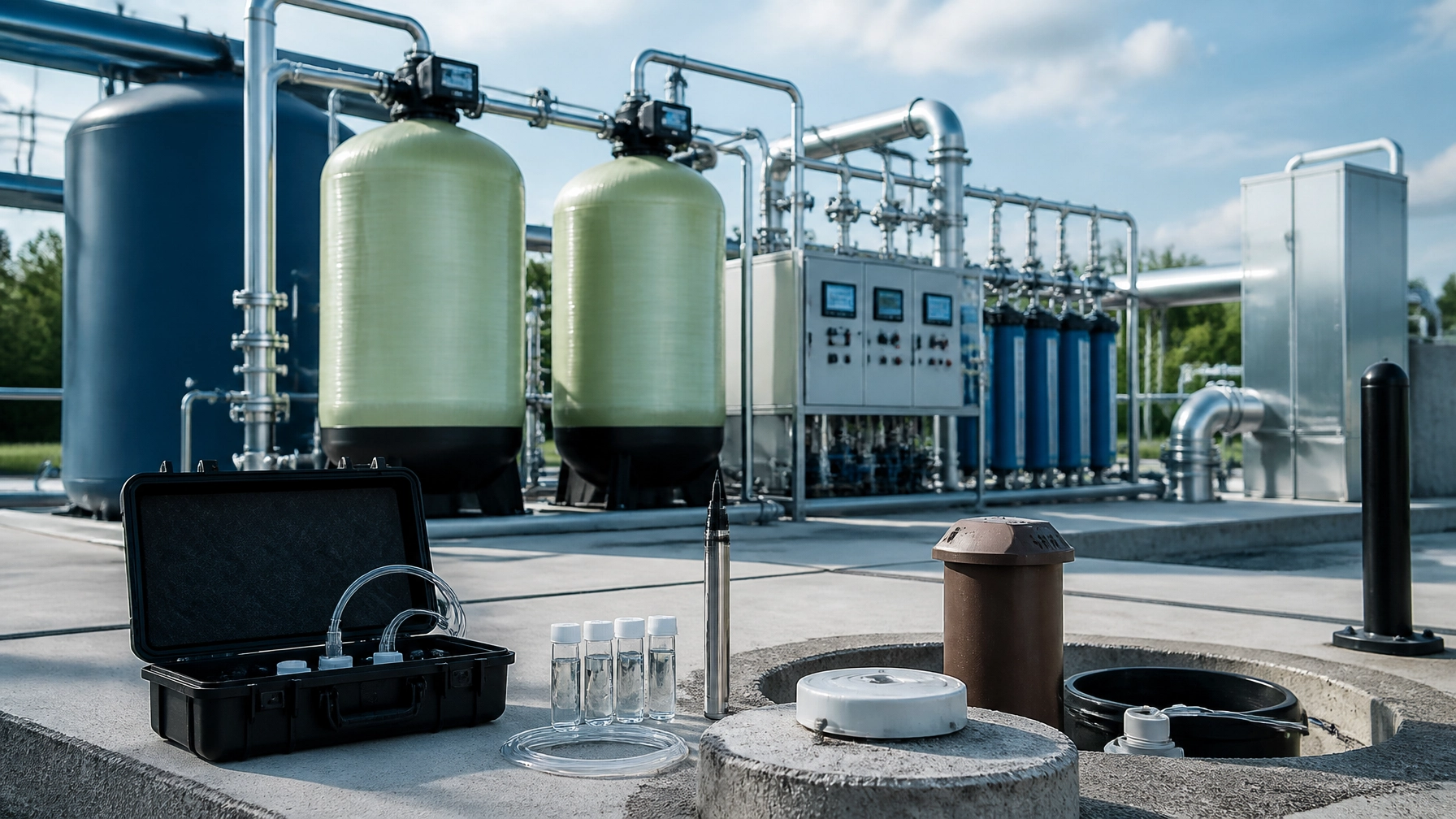
The Site Investigation then tests those concerns through field work such as:
- Soil borings
- Groundwater monitoring wells
- Soil gas or sub-slab vapor sampling
- Surface water or sediment sampling
- Building inspections
- Laboratory analysis using applicable NJDEP methods

The objective is not to collect data for its own sake. The objective is to determine whether contamination exists, where it is located, how it may move, and whether people or environmental receptors could be exposed.
If the PA/SI identifies contamination, the LSRP typically advances the case into a Remedial Investigation. The RI defines the horizontal and vertical extent of contamination and evaluates exposure pathways. It also provides the technical basis for selecting a remedy that fits the site’s future use.
Remedial Action and Long-Term Controls
Remedial action may involve:
- Excavation and off-site disposal
- Soil treatment or stabilization
- Groundwater treatment
- Monitored natural attenuation
- Vapor mitigation
- Capping or paving
- Deed restrictions
- Institutional controls
- Engineering controls
- Long-term groundwater monitoring
The right remedy depends on the contaminants, media, geology, receptors, redevelopment plan, and applicable standards.
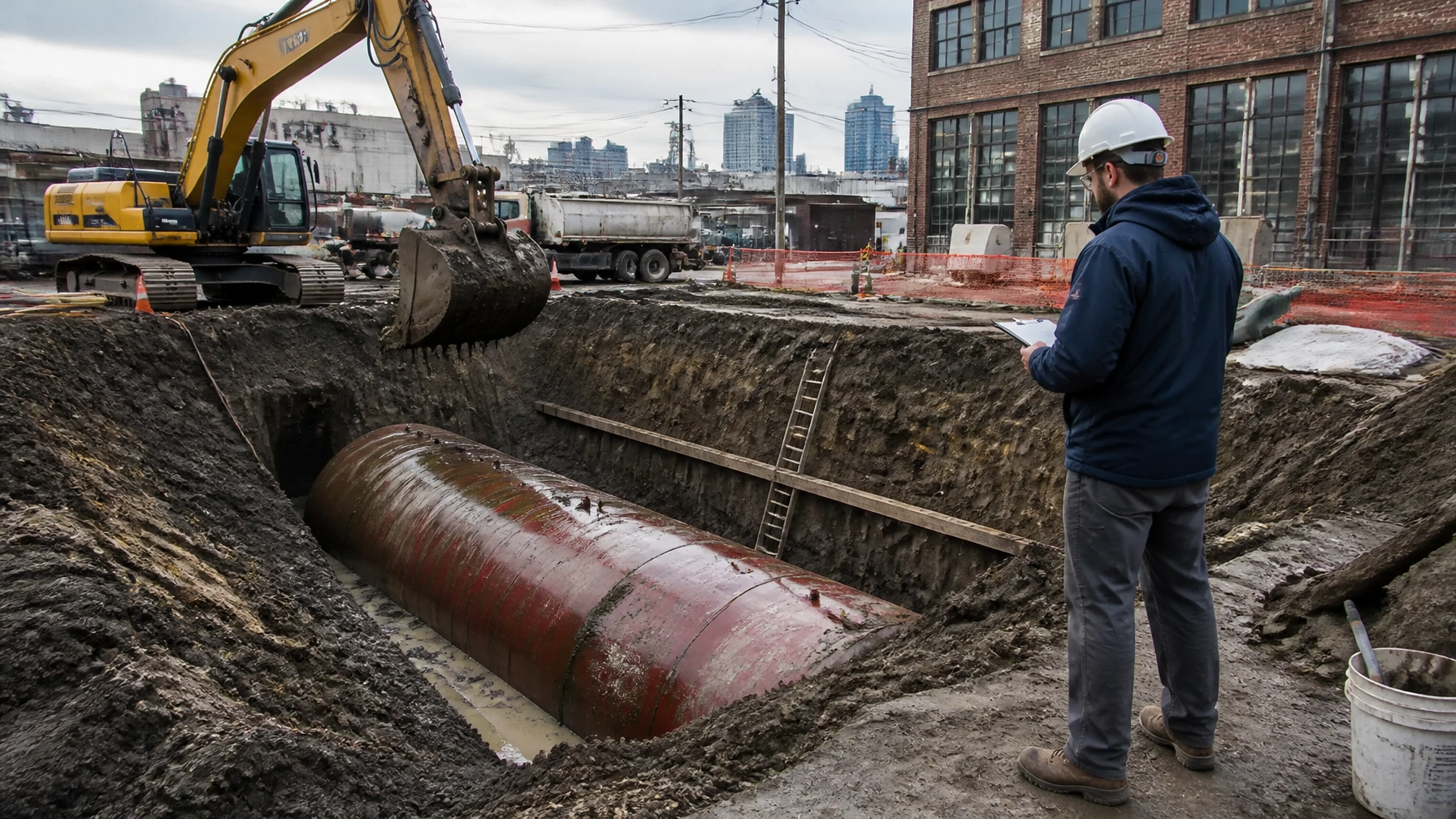
For a dense urban site in Jersey City or Newark, excavation may need to coordinate with shoring, utilities, dewatering, vapor controls, and building foundations. For an industrial property in Bergen or Essex County, the solution may depend on historic fill, former tanks, manufacturing chemicals, or groundwater impacts extending beyond the parcel.

An engineering control, such as a cap or vapor barrier, physically prevents exposure. An institutional control, such as a deed notice or land use restriction, legally or administratively limits how the property may be used.
Controls can support closure, but they create continuing obligations.
Remedial Action Permits and Biennial Certifications
When contamination remains in place under an engineering or institutional control, NJDEP may require a Remedial Action Permit, commonly called a RAP.
A RAP may address:
- Soil controls
- Groundwater controls
- Classification Exception Areas
- Monitoring and maintenance obligations
- Site access and reporting requirements
The LSRP must account for required RAPs before issuing an RAO. The permit is not a paperwork detail. It defines what the property owner must inspect, maintain, monitor, and certify after the transaction closes.
Biennial certifications generally document that the remedy remains protective. Depending on the permit, requirements may include:
- Inspection of caps, barriers, or other engineering controls
- Groundwater monitoring results
- Maintenance records
- Site photographs
- Evaluation of changing standards
- Confirmation that institutional controls remain effective
- Certification using NJDEP-required forms
The owner should assign these responsibilities before closing. A property can be technically remediated and still fall out of compliance if the permit obligations are ignored.
RAO Versus No Further Action
For current LSRP-led remediation, the primary closure document is generally the Response Action Outcome, or RAO. The LSRP issues and certifies the RAO after completing the required investigation and remedial action, addressing applicable controls, and satisfying the requirements for the selected outcome.
An RAO may address:
- Unrestricted use
- Restricted use
- Limited restricted use
- A specific Area of Concern
- The entire site
A site with remaining contamination may still reach closure through a restricted or limited restricted use RAO if the controls and long-term obligations are properly established.
A No Further Action, or NFA, letter is more commonly associated with legacy NJDEP cases or earlier regulatory frameworks. It may still appear in historical files and transaction records. The correct interpretation depends on when it was issued, what areas it covered, whether conditions changed, and whether ongoing permits or controls remain active.
NJDEP’s RAO guidance and SRP forms page provide the official documents and submission pathways.
The practical point is simple: do not treat “NFA” or “RAO” as a standalone comfort letter. Review the underlying scope, conditions, deed notice, RAPs, monitoring obligations, and current property use.
NJDEP Rules Versus Transaction Planning
NJDEP rules tell you what must happen. They do not tell you how to protect your closing date, negotiate responsibility, or align remediation with construction.
That is where planning creates value.
Before a Jersey City, Newark, or Northern New Jersey transaction, we recommend that you:
- Confirm whether the property is an ISRA-subject industrial establishment
- Identify the earliest possible triggering event
- Prepare the GIN information before the trigger occurs
- Retain the LSRP early
- Review existing NJDEP cases, RAOs, NFAs, RAPs, and deed notices
- Build investigation and remediation costs into the purchase model
- Coordinate environmental obligations with the site civil and construction schedule
- Assign post-closing permit and biennial certification duties
- Define responsibility for unknown contamination in the transaction documents
Envicon combines NJDEP LSRP oversight, remediation planning, brownfield support, field investigation, and construction coordination. See our remediation and brownfield services.
From our Jersey City headquarters, we support projects across Hudson County and the surrounding Northern New Jersey market, including Newark, Bergen County, and Essex County.
Frequently Asked Questions
Does every industrial property sale trigger ISRA?
No. ISRA applies only when the establishment meets the applicable statutory and regulatory criteria. The facility’s operations, NAICS classification, hazardous substance history, and transaction structure all matter.
Can the owner file the five-day GIN without an LSRP?
Yes. NJDEP’s online instructions indicate that the GIN filer does not have to be an LSRP. The owner or operator still needs to meet the separate obligation to retain an LSRP when required.
What does an LSRP do for a property sale?
An LSRP evaluates the site, directs investigation and remediation, communicates with NJDEP, prepares required submissions, manages controls and permits, and certifies the appropriate closure outcome.
Is an RAO the same as an NJDEP approval letter?
No. An RAO is certified by the retained LSRP and submitted to NJDEP. NJDEP may audit the work. Required RAPs and other regulatory conditions must be addressed before the RAO is issued.
How long does ISRA compliance take?
The schedule depends on the site history, contamination, access, laboratory data, remedy, agency requirements, and transaction structure. A straightforward PA/SI may take weeks. A complex RI and remedial action may take months or longer.
Does an NJDEP case end when an RAO is issued?
Not always. If the RAO relies on a RAP, deed notice, engineering control, or groundwater monitoring, ongoing obligations continue after the RAO.
Start Before the Five-Day Clock Starts
If you are selling, acquiring, closing, leasing, or redeveloping an industrial property in Jersey City, Newark, Bergen County, Hudson County, Essex County, or Northern New Jersey, confirm the ISRA position before signing transaction documents.
The five-day GIN deadline is manageable when the facts are organized and the responsible team is already in place. It becomes a problem when the trigger date is disputed, the facility history is incomplete, or the consultant is brought in after the closing schedule has already been set.
We do not sell reports. We create a cleared path from triggering event to closure.
Talk With Envicon
- Call Envicon now at (917) 764-2171
- Get a free quote today
- View our complete list of environmental and engineering services