For NYC and Lower Hudson Valley property transactions, vapor intrusion is no longer a late-stage technical issue. It can affect acquisition decisions, lender approval, building design, remediation budgets, and closing schedules.
The current NYSDEC vapor intrusion guidance 2026 framework remains anchored in the New York State Department of Health’s 2006 Soil Vapor Intrusion Guidance, with important updates issued in 2017 and February 2024. The 2024 update added 13 petroleum-related volatile organic compounds to new Soil Vapor/Indoor Air Decision Matrices D, E, and F.
That matters for brownfield sites, former gas stations, industrial properties, dry cleaner sites, manufacturing parcels, and any NYC property with an E-designation or known subsurface VOC impacts.
The technical question is straightforward:
Can vapors from soil or groundwater enter an occupied or planned building at concentrations that require additional investigation, monitoring, or mitigation?
The transaction question is just as important:
Can you resolve that question before it affects your closing date?
What changed for New York soil vapor evaluations?
The NYSDOH guidance originally focused on chlorinated volatile organic compounds, including compounds such as tetrachloroethene, trichloroethene, vinyl chloride, and carbon tetrachloride.
The 2017 update reorganized the chlorinated VOC decision process into Matrices A, B, and C.
In February 2024, NYSDOH expanded the framework with 13 petroleum-related VOCs in Matrices D, E, and F. These compounds include:
- Benzene
- Toluene
- Ethylbenzene
- Methylene-related petroleum compounds
- Naphthalene
- Cyclohexane
- Heptane
- Hexane
- Isooctane
- 1,2,4-trimethylbenzene
- 1,3,5-trimethylbenzene
- 1,3,5-trimethylbenzene
- Ortho-, meta-, and para-xylene compounds
The precise analyte list and matrix assignment should be confirmed against the current NYSDOH Soil Vapor/Indoor Air Decision Matrices before a work plan or report is finalized.
The 2024 update did not create an entirely new sampling method. It expanded the compounds that must be considered when interpreting soil vapor and indoor air data.
For 2026 projects, that means a historical sampling program designed only around chlorinated solvents may not address the full petroleum-related vapor risk.
How the NYSDOH decision matrices work
The decision matrices compare two types of data:
- Sub-slab or soil vapor concentrations.
- Indoor air concentrations.
The applicable matrix then provides a recommended response based on the relationship between those results.
Depending on the matrix and concentration range, the response can include:
- No further action.
- Additional sampling.
- Continued monitoring.
- Source identification.
- Mitigation.
- A combination of these actions.
The matrices are not a substitute for professional judgment. They are part of a broader conceptual site model that considers the source, pathway, building, sampling conditions, and data quality.
A result that appears low in soil vapor may still require attention if:
- The sample was collected near a preferential pathway.
- The building has a basement with occupied space.
- The slab contains cracks or unsealed penetrations.
- Indoor air results are elevated.
- A petroleum source remains active.
- Seasonal or building pressure conditions may have affected the results.
- Sampling did not represent the planned future building footprint.
The matrix provides structure. The site-specific facts determine the defensible path forward.
Sampling starts with the building and the pathway
A technically sound vapor intrusion program begins with a site walk and a current conceptual site model. The consultant should understand how the building is used, how it is constructed, and where vapor could move.
Sub-slab vapor
Sub-slab samples are collected immediately below the building slab. They help evaluate whether soil gas beneath the structure contains VOCs that could migrate indoors.
Sampling points should account for:
- Building size and layout.
- Basement and crawlspace areas.
- Known or suspected source areas.
- Utility corridors.
- Floor drains and sumps.
- Cracks, joints, and foundation penetrations.
- Areas planned for future occupied use.
For a transaction, sub-slab data can be especially important when the buyer plans to renovate, convert industrial space to residential use, or add below-grade occupied areas.
Indoor air
Indoor air sampling evaluates the air occupants may breathe. NYSDOH recommends sampling in the lowest livable space when a basement or other below-grade area is occupied or could become occupied.
A good indoor air program also considers:
- Outdoor ambient air.
- Household and commercial products that can interfere with results.
- HVAC operating conditions.
- Building occupancy.
- Recent construction or renovations.
- Heating oil, gasoline, solvents, cleaners, and other background sources.
Indoor air results must be interpreted carefully. A detected compound may come from the subsurface, but it may also come from a product stored or used inside the building.
Crawlspaces and unfinished areas
Crawlspaces can create a direct connection between soil gas and indoor air. They should not be treated as interchangeable with a finished basement.
The evaluation should document:
- Crawlspace height and access.
- Vapor barriers.
- Ventilation.
- Soil or concrete floor conditions.
- Utility penetrations.
- Standing water or moisture.
- Whether the space is connected to occupied rooms.
Preferential pathways
Vapor does not always move straight upward through soil. It can follow the easiest route.
Common preferential pathways include:
- Utility trenches.
- Sewer and stormwater lines.
- Conduits.
- Elevator pits.
- Floor drains.
- Foundation walls.
- Fractured slabs.
- Building-to-building connections.
This is why a grid of samples without pathway analysis can miss the actual risk.

Tracer gas testing can strengthen the conclusion
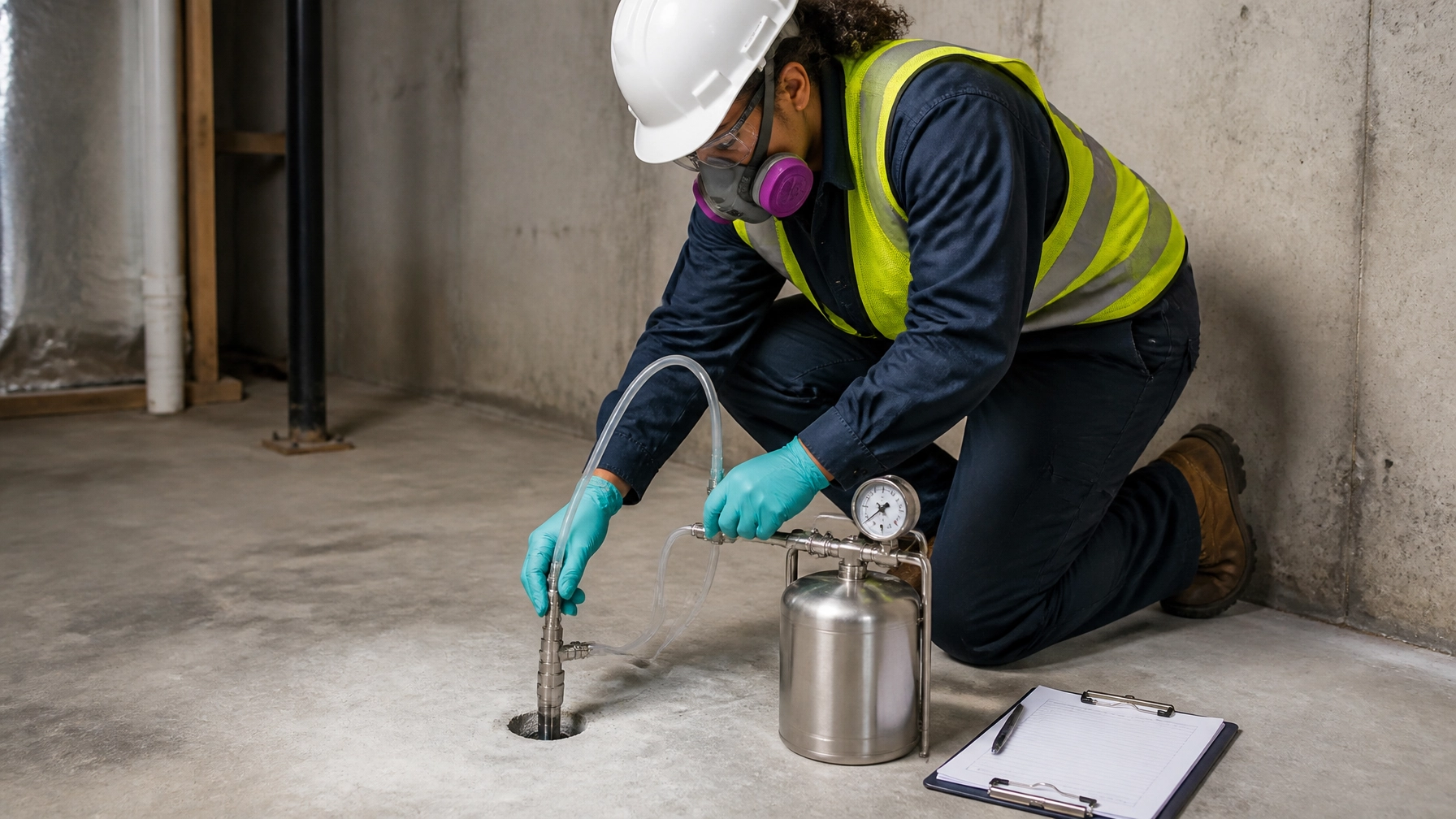
NYSDOH recommends considering tracer-gas testing when collecting sub-slab samples. Tracer gas helps determine whether the sampling point is properly sealed and whether indoor air may be entering the sub-slab sample location.
That distinction matters.
A sub-slab sample diluted by indoor air may understate subsurface concentrations. A sample affected by leakage around the probe may not represent actual conditions below the slab.
Tracer-gas testing can help assess:
- Sampling point integrity.
- Potential short-circuiting.
- Building air intrusion into the sample.
- Whether results are representative.
- Whether additional sampling is needed.
For NYC brownfield transactions, this extra quality-control step can prevent an avoidable dispute between the buyer, seller, lender, and regulator.
How NYSDEC and NYSDOH guidance affects BCP and remedial sites
NYSDEC and NYSDOH use the vapor intrusion framework when reviewing remedial sites, including sites participating in the Brownfield Cleanup Program.
The guidance can affect:
- Remedial investigation work plans.
- Soil vapor and indoor air sampling.
- Remedial design.
- Engineering controls.
- Site management plans.
- Environmental easements.
- Certificate of Completion conditions.
- Long-term monitoring.
- Construction documentation.
A petroleum-impacted property may now require a more complete evaluation of petroleum VOCs than an older report reflects. That does not automatically mean the property needs a mitigation system. It does mean the existing data must be reviewed against the current matrices and the current site use.
For BCP and other NYSDEC remedial sites, the safest approach is to identify vapor intrusion issues early, before the building design, regulatory work plan, or closing conditions become fixed.
What this means for NYC E-designation projects
NYC E-designation projects require coordination with the NYC Office of Environmental Remediation. The exact requirements depend on the designation, property history, proposed work, and OER review.
For many sites, the applicant must submit a Phase I assessment and a proposed soil, groundwater, and soil vapor testing protocol before field work begins. Sampling should not start until the applicable protocol receives written approval.
NYC requirements also address:
- Soil gas and sub-slab soil gas.
- Indoor air.
- VOC analysis using EPA Method TO-15.
- ELAP-certified laboratory analysis.
- Site-specific sampling locations.
- Reporting to OER.
- Remediation or mitigation determinations.
Under NYC’s E-designation program, vapor findings can affect whether a project needs additional controls before construction or occupancy.
That can influence:
- Closing conditions.
- Construction sequencing.
- Foundation design.
- Basement use.
- Mechanical system design.
- OER sign-off.
- DOB coordination.
- Buyer and lender risk allocation.
For a Manhattan transaction, the issue is rarely just whether vapor is present. The issue is whether the current data supports the proposed use and whether the path to approval fits the closing schedule.
See Envicon’s NYC environmental consulting services and our local Manhattan environmental assessment support.
A practical 2026 screening checklist
Before committing to a full investigation or accepting an existing report, confirm that the file addresses:
- Current building use and planned future use.
- Basement, crawlspace, and slab conditions.
- Historical dry cleaning, fuel, manufacturing, or solvent use.
- Soil, groundwater, and soil vapor data.
- Chlorinated VOCs and petroleum-related VOCs.
- Decision Matrices A through F, where applicable.
- Indoor and outdoor air sampling.
- Preferential pathways.
- Tracer-gas testing for sub-slab samples.
- EPA Method TO-15 and laboratory qualifications.
- Seasonal or operational conditions during sampling.
- OER or NYSDEC work plan approval.
- Mitigation design and verification requirements.
- The effect on closing, construction, and occupancy schedules.
A report that answers these questions gives your lender, counsel, architect, and regulator something useful to work with. A report that only lists laboratory results leaves the project team to interpret the risk after the fact.
When mitigation is the better business decision
Mitigation may be appropriate when concentrations remain elevated, the vapor source cannot be quickly removed, or the building design makes pathway control practical.
Common controls include:
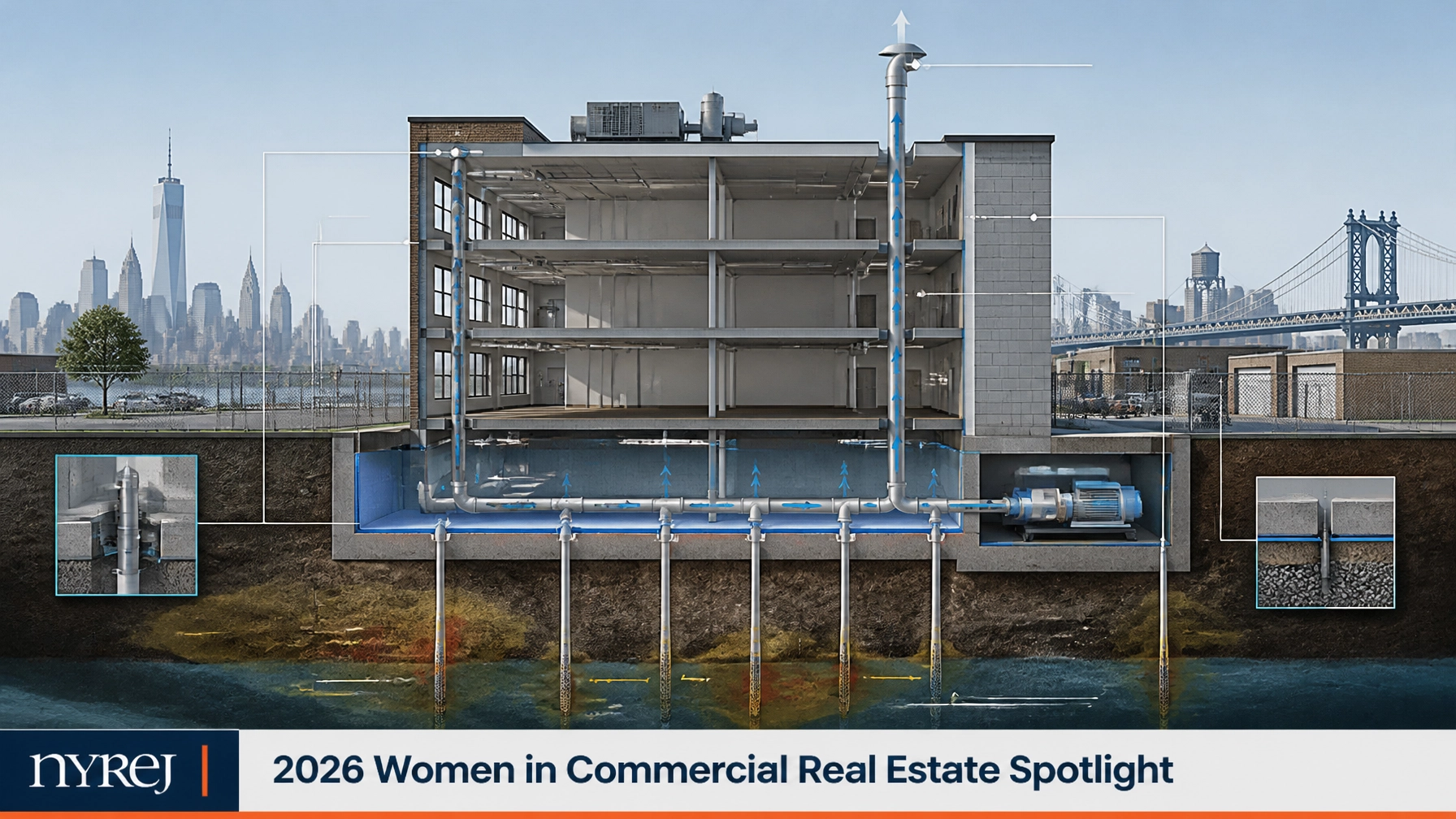
- Sub-slab depressurization systems.
- Vapor barriers.
- Passive venting systems.
- Sealing of cracks and penetrations.
- Building pressurization.
- Source removal or treatment.
- Long-term operation and maintenance.
The right system depends on the building, contaminant, slab, source, and regulatory endpoint. A cookie-cutter mitigation design can create maintenance problems and delay sign-off.
Envicon’s approach connects sampling, interpretation, design, and field verification. We provide vapor intrusion assessments and coordinate mitigation when the evidence supports it. We also provide vapor intrusion mitigation system design when a control is necessary.
As we explain in our guide to vapor intrusion mitigation, the goal is not to install equipment simply because a report identified a concern. The goal is to control the pathway, document performance, and give the project a clear route to approval.
The transaction takeaway
For NYC and Lower Hudson Valley properties in 2026, vapor intrusion should be evaluated as both an environmental condition and a transaction condition.
The February 2024 NYSDOH update expanded the petroleum VOC decision framework. NYC E-designation projects may require OER-approved protocols before sampling. BCP and other NYSDEC remedial sites continue to rely on the NYSDOH guidance when evaluating vapor conditions and selecting remedies.
If you are buying, selling, refinancing, designing, or redeveloping a property with possible vapor concerns:
- Review the existing data against the current NYSDOH framework.
- Confirm that petroleum VOCs were considered where relevant.
- Evaluate sub-slab, indoor air, crawlspace, and preferential pathway conditions.
- Use tracer gas when sampling integrity needs to be demonstrated.
- Coordinate with OER or NYSDEC before field work.
- Build mitigation and regulatory review into the closing schedule.
Evidence-based screening is faster than a late-stage surprise. The right sampling plan does more than identify risk. It gives your project a defensible path forward.
Work with a team that can move from evidence to action
Envicon Group provides vapor intrusion assessment, environmental due diligence, remediation support, and construction oversight across NYC and the Lower Hudson Valley.
We work directly with developers, property investors, attorneys, lenders, architects, contractors, and public agencies. Our licensed professionals connect field conditions to regulatory requirements, building design, and transaction deadlines.
Need evidence-based screening or mitigation planning for a New York property?
- Call Envicon now at (917) 764-2171
- Request a free project quote
- Use the proprietary Project Risk Screener
Sources
- NYSDOH Soil Vapor Intrusion Guidance and February 2024 update
- NYSDOH Soil Vapor/Indoor Air Decision Matrices D, E, and F
- NYSDEC Vapor Intrusion Guidance
- NYC OER E-designation program
- NYC Rules, Title 43, Chapter 14