For commercial real estate in Manhattan, Brooklyn, Queens, Jersey City, Newark, and Northern New Jersey, environmental due diligence can determine whether a transaction closes, gets delayed, or requires a new round of negotiations.
The current industry standard is ASTM E1527-21, the recognized process for conducting a Phase I Environmental Site Assessment. When properly completed by an Environmental Professional, it can support All Appropriate Inquiries, or AAI, under the federal CERCLA liability framework.
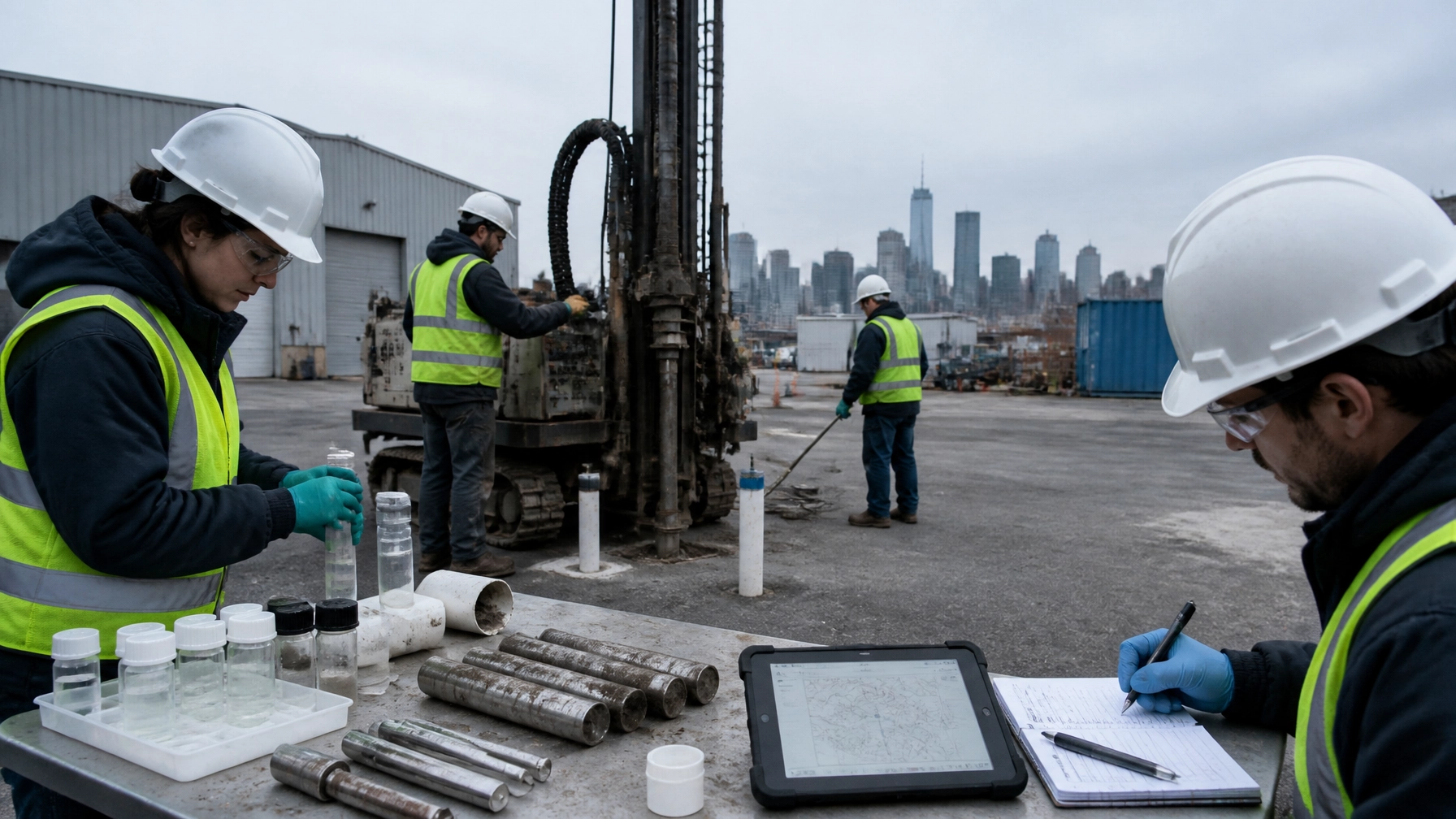
A Phase I ESA does not test soil or groundwater. It evaluates available information and physical conditions to identify potential environmental liabilities before acquisition, refinancing, development, or leasing.
This ASTM E1527-21 checklist explains what a complete assessment should include and where New York and New Jersey properties require closer attention.
What Is Included in a Phase I ESA for a Commercial Property?
An ASTM E1527-21 Phase I ESA has four core components:
- Records review
- Site reconnaissance
- Interviews
- Report of findings and Environmental Professional opinion

The assessment is site-specific. A former industrial parcel in Newark may require a different level of professional judgment than a Manhattan office building, even when both transactions use the same ASTM standard.
1. Records Review
The records review looks backward. The objective is to understand how the property and surrounding parcels were used over time and whether those uses could have caused a release or threatened release of hazardous substances or petroleum products.
A typical records review includes:
- Historical aerial photographs
- Sanborn fire insurance maps
- City directories
- Topographic maps
- Historical property records
- Federal environmental databases
- State and local regulatory databases
- Spill, tank, waste, and cleanup records
- Available prior Phase I and Phase II reports
- Brownfield and voluntary cleanup program records
- Regulatory agency files when available
For New York properties, the review may include NYSDEC records, NYC Office of Environmental Remediation records, E-Designation information, and historical industrial uses identified through city records.
For New Jersey properties, the review may include NJDEP databases, known contaminated site records, underground storage tank information, spill files, and records relevant to the Licensed Site Remediation Professional process.
The review should also consider adjoining properties. A dry cleaner, metal plating operation, gas station, manufacturing facility, or former manufactured gas plant next door may affect the subject property even if the subject parcel itself was never industrial.
2. Site Reconnaissance
The site reconnaissance is the field component of the Phase I ESA. The Environmental Professional visits the property and visually evaluates the subject site and adjoining properties.
The inspection may look for:
- Underground or aboveground storage tanks
- Drums, containers, or chemical storage
- Staining or distressed vegetation
- Floor drains, sumps, or clarifiers
- Waste handling areas
- Electrical transformers
- Strong or unusual odors
- Evidence of spills or releases
- Soil disturbance or imported fill
- Damaged or corroded equipment
- Oil-water separators
- Abandoned wells or septic systems
- Vapor mitigation systems or environmental controls
The inspection also documents limitations. Snow cover, locked areas, active construction, unsafe conditions, or inaccessible interiors can create significant data gaps.
In dense urban markets, the field review often requires more than a quick walk around the building. Historic fill, shared utility corridors, former rail uses, buried tanks, and neighboring industrial operations can affect how the site is evaluated.
3. Interviews
Interviews provide information that may not appear in databases or historical maps.
The Environmental Professional typically seeks information from:
- The current property owner
- Current operators and tenants
- Property managers
- Former owners or operators, when available
- Occupants familiar with site operations
- Local government officials
- Neighboring property owners if the site is abandoned
Questions may address prior spills, chemical use, tanks, waste disposal, environmental investigations, regulatory notices, and known contamination.
The User also has responsibilities under ASTM E1527-21. The User is generally the buyer, lender, borrower, owner, or other party commissioning the assessment.
You should provide the Environmental Professional with:
- Prior environmental reports
- Regulatory correspondence
- Known spills or releases
- Information about former site operations
- Knowledge of environmental restrictions
- Information about current and planned property use
- Any specialized knowledge about the property
- Information about whether the purchase price reflects environmental concerns
- The reason the assessment is being performed
An Environmental Professional cannot evaluate information that the transaction team never discloses.
4. Report of Findings
The written report documents the methodology, records reviewed, interviews conducted, site observations, limitations, findings, and professional conclusions.
A lender-ready report should clearly identify:
- The property and transaction purpose
- The scope of services
- Sources reviewed
- Dates of interviews and site reconnaissance
- Significant data gaps
- Activity and use limitations
- Environmental liens, when included in the scope
- Recognized environmental conditions
- Controlled recognized environmental conditions
- Historical recognized environmental conditions
- De minimis conditions
- The Environmental Professional’s opinion
- Recommendations for additional investigation, when appropriate
ASTM E1527-21 is not intended to eliminate all uncertainty. It establishes a practical and defensible inquiry process based on professional judgment, available information, time, and cost.
Understanding REC, CREC, and HREC Findings
The conclusions section is often the most important part of the report for a buyer, lender, or attorney.
Recognized Environmental Condition
A Recognized Environmental Condition, or REC, generally involves the presence or likely presence of hazardous substances or petroleum products due to a release, likely release, or material threat of a future release.
Examples may include:
- A documented petroleum spill
- A leaking underground storage tank
- Soil or groundwater contamination
- An active regulatory case
- A former dry cleaner with a potential solvent release
- A neighboring source that may have migrated onto the property
A REC does not automatically mean the property cannot be purchased. It means the condition requires informed risk evaluation and may justify a Phase II ESA or another response.
Controlled Recognized Environmental Condition
A Controlled REC, or CREC, is a past REC that has been addressed to the satisfaction of the applicable regulatory authority, but contamination remains subject to controls.
Controls may include:
- Deed restrictions
- Environmental covenants
- Soil caps
- Vapor mitigation systems
- Groundwater use restrictions
- Engineering controls
- Institutional controls
- Site management requirements
A CREC requires continuing compliance. The next owner may have obligations to maintain the controls and prevent exposure.
Historical Recognized Environmental Condition
A Historical REC, or HREC, is a past release that has been addressed to regulatory satisfaction and does not currently meet the definition of a REC.
The classification depends on current conditions and regulatory criteria. New information, changed land use, or updated standards can affect the analysis.
Activity and Use Limitations
Activity and use limitations, or AULs, restrict how a property can be used or modified.
For example, a property may prohibit groundwater use, require a cap to remain intact, or require a vapor mitigation system to operate. A Phase I ESA should identify known AULs and explain how they affect the transaction.
The buyer should coordinate with counsel and the title company. Recorded environmental liens and land-use restrictions are especially important because they may not be apparent from a standard property inspection.
Under ASTM E1527-21, the User has specific responsibilities, including arranging for the search of recorded environmental cleanup liens. Envicon can help coordinate expanded due diligence when the transaction requires it.
Emerging Contaminants and PFAS
ASTM E1527-21 focuses on hazardous substances and petroleum products within the CERCLA framework. Emerging contaminants may require additional analysis beyond the standard Phase I scope.
Potential issues include:
- PFAS
- 1,4-dioxane
- Vapor intrusion
- Indoor air quality
- Certain solvent-related pathways
- Site-specific contaminants associated with historic operations
PFAS requirements continue to develop at both the federal and state levels. A records-based screen, regulatory file review, or separate sampling program may be appropriate depending on the property history, intended use, lender requirements, and regulatory program.
The report should state whether emerging contaminants were evaluated and under what criteria. Do not assume that a standard Phase I answers every contaminant question.
What ASTM E1527-21 Does Not Include
A Phase I ESA is not a building inspection and does not include laboratory testing unless separately authorized.
The standard does not automatically include:
- Asbestos surveys
- Lead-based paint inspections
- Mold assessments
- Radon testing
- Structural inspections
- Property condition assessments
- Indoor air testing
- Soil or groundwater sampling
- Vapor intrusion testing
- Wetland delineation
- Floodplain analysis
- Full regulatory compliance audits
Order separate testing when the property history, building age, planned work, lender, regulator, or transaction documents require it.
For example, an older Brooklyn warehouse may need an asbestos and lead survey before renovation. A former dry-cleaning site in Jersey City may need a vapor intrusion assessment. A property with a suspected release may need a Phase II Environmental Site Assessment to evaluate soil, groundwater, or soil vapor.

ASTM E1527-21 and the 180-Day Rule
For AAI purposes, certain components must generally be completed or updated within 180 days before acquisition. These include:
- Interviews
- Government records review
- Visual inspections of the property and adjoining properties
- Environmental lien searches
- The Environmental Professional’s declaration
Other AAI components generally must be completed within one year before acquisition. The report date alone does not establish whether every component meets the required timing.
If your closing date moves, ask whether the Phase I needs an update. A stale report can create lender, legal, and liability problems at the worst possible point in the transaction.
Local Phase I ESA Considerations in New York and New Jersey
Properties in Manhattan, Brooklyn, and Queens often require attention to former manufacturing, printing, dry-cleaning, rail, utility, and petroleum uses. NYC E-Designation requirements and OER involvement may add separate regulatory obligations.
In Jersey City, Newark, and Northern New Jersey, historic industrial operations, urban fill, waterfront redevelopment, NJDEP records, and ISRA-related considerations can affect the transaction.
Envicon provides ASTM E1527-21 Phase I ESA services across New York and New Jersey. We also support clients through our NYC environmental consulting team, Jersey City office, and regional environmental assessment practice.
Final ASTM E1527-21 Checklist
Before ordering a Phase I ESA, confirm that:
- The scope identifies ASTM E1527-21
- An Environmental Professional will perform or supervise the assessment
- The transaction purpose and reliance parties are clear
- Prior reports and regulatory documents are available
- Owner, operator, and occupant interviews are planned
- The site and adjoining properties will be inspected
- New York or New Jersey agency records will be reviewed
- Environmental liens and AULs are addressed
- REC, CREC, and HREC classifications are explained
- Emerging contaminants are discussed when relevant
- The 180-day and one-year timing requirements are tracked
- Separate asbestos, lead, mold, radon, structural, or Phase II scopes are considered
A complete Phase I ESA should do more than produce a report. It should give you a clear understanding of what the property presents, what the lender may ask next, and what action protects your transaction.
The right due diligence does not slow a project down. It removes uncertainty before uncertainty becomes cost.
Sources
Ready to Scope Your Phase I ESA?