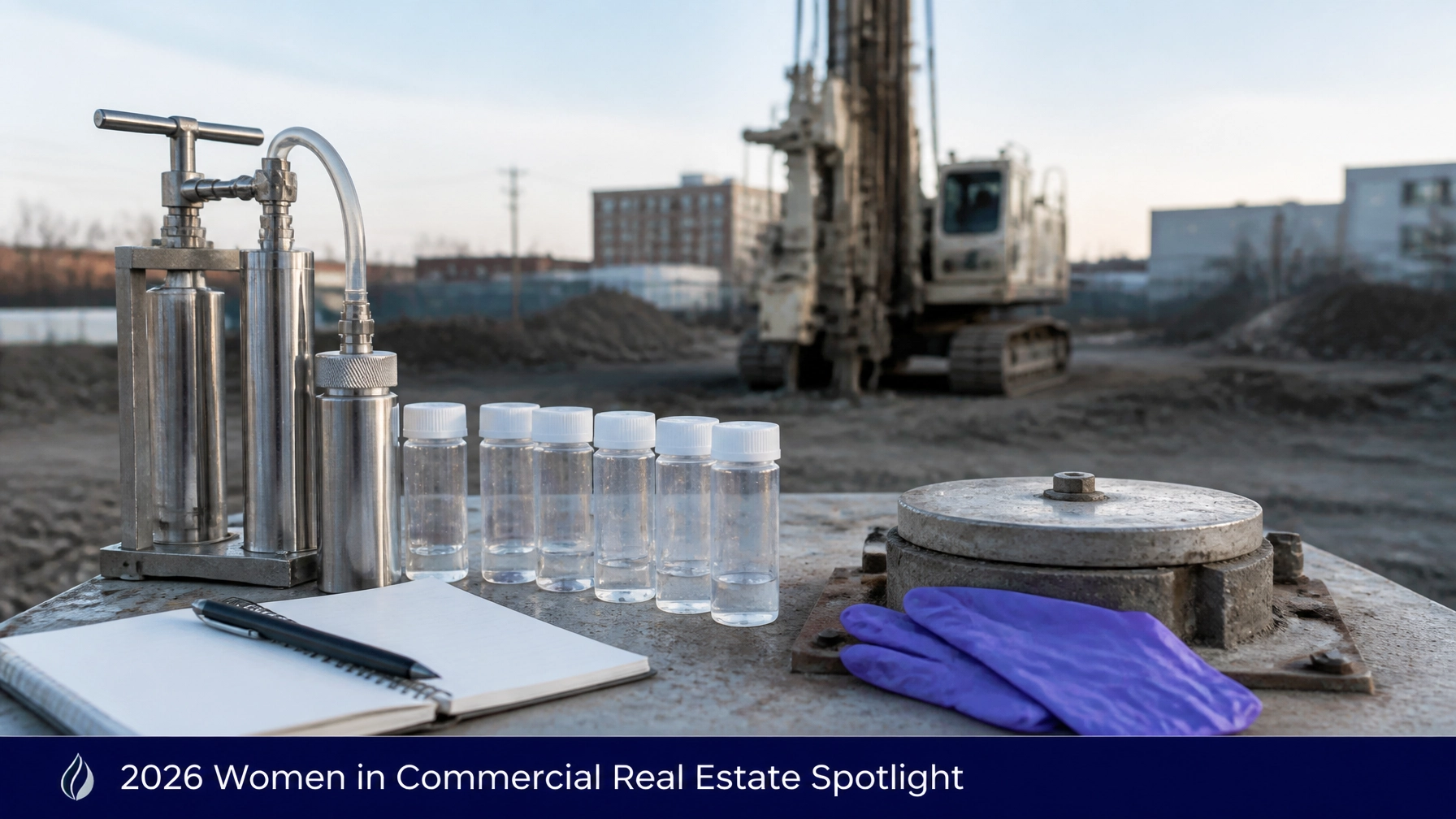
If you’re searching for Phase II ESA cost Jersey City Newark, the first thing to understand is that a responsible scope does not come from a universal price sheet.
A Phase II Environmental Site Assessment can involve a few targeted soil borings. It can also require groundwater wells, soil vapor testing, PFAS analysis, traffic control, regulatory coordination, and LSRP involvement. The difference comes from the property’s history, the findings in the Phase I, lender requirements, site access, and the level of certainty needed before closing.
For commercial acquisitions in Jersey City, Newark, Hoboken, Bayonne, Hudson County, Essex County, and Bergen County, the right question is not simply, “What does a Phase II cost?”
The better question is:
What sampling scope will answer the environmental risk question without creating avoidable gaps, delays, or rework?
Phase II ESA cost in Jersey City and Newark depends on the sampling scope
The phrase “Phase II ESA” usually describes an intrusive environmental investigation. The work may include soil, groundwater, soil vapor, or a combination of media.
New Jersey’s regulatory framework uses different terms. NJDEP generally refers to a sequence of Preliminary Assessment, Site Investigation, and Remedial Investigation under N.J.A.C. 7:26E. In a transaction, a consultant may still use “Phase II” to describe due diligence sampling intended to evaluate recognized environmental conditions identified during a Phase I ESA.
That distinction matters. A transaction-focused investigation may answer whether a property appears acceptable for acquisition. A regulated Site Investigation or Remedial Investigation may require broader characterization, additional reporting, and an LSRP-led process.
The scope should be clear before fieldwork begins.
How the Phase I ESA shapes your Phase II budget
A Phase I ESA should identify recognized environmental conditions, historical uses, adjoining property concerns, and potential areas of concern. Those findings determine where and how the Phase II investigation should begin.
For example, a former:
- Gas station may require petroleum-focused soil and groundwater sampling.
- Dry cleaner may justify volatile organic compound testing and vapor evaluation.
- Manufacturing facility may require VOCs, SVOCs, metals, PCBs, and other site-specific analytes.
- Metal-plating operation may raise concerns about metals, chlorinated solvents, and process chemicals.
- Rail yard or industrial waterfront parcel may involve historic fill, petroleum, metals, and groundwater impacts.
- Firefighting foam storage or use area may justify PFAS consideration.
The Phase I does not automatically dictate every sample location. It provides the factual basis for a sampling plan. A strong Phase II scope connects each boring, well, and laboratory analysis to a specific environmental question.
Our Phase I ESA service helps establish that connection before you commit to intrusive work.
The main cost drivers for a Phase II environmental site assessment in NJ
1. Number and depth of soil borings
The number of borings depends on the size of the property, the number of recognized conditions, the building footprint, historical operations, and the need to evaluate both source areas and likely migration pathways.
Depth also affects cost. A boring that stops above shallow fill is not equivalent to one advanced through fill to groundwater. Deeper work requires more drilling time, additional soil handling, more samples, and potentially greater utility and access planning.
Urban properties in Jersey City, Newark, Hoboken, and Bayonne often contain pavement, concrete slabs, historic fill, buried utilities, and limited staging areas. Those conditions can increase mobilization and field time.
2. Monitoring wells and groundwater depth
Groundwater sampling may be appropriate when:
- The Phase I identifies a likely release that could affect groundwater.
- Soil results indicate contamination near or below the water table.
- A petroleum, dry-cleaning, industrial, or solvent-related use occurred onsite or nearby.
- The lender requires groundwater data.
- Groundwater flow direction is needed to evaluate off-site migration.
- The site lies near a waterfront, tidal influence, or shallow groundwater setting.
A temporary well point may be sufficient for a focused transaction investigation in some cases. Permanent monitoring wells may be more appropriate when repeated sampling, plume delineation, or regulatory follow-up is likely.
Groundwater depth affects drilling time, well construction, purge and sampling procedures, laboratory analysis, and reporting. It also affects whether a single round of samples provides enough information for the transaction decision.
3. Soil vapor and vapor intrusion
Soil vapor testing is not automatically required at every commercial property. It becomes more relevant when volatile contaminants are present or suspected and occupied or planned buildings could be affected.
A vapor scope may involve:
- Exterior soil gas points.
- Near-slab sampling.
- Sub-slab sampling.
- Indoor air sampling.
- Groundwater evaluation near a structure.
- Multiple sampling events or seasonal considerations.
NJDEP’s Vapor Intrusion Technical Guidance and Vapor Intrusion Screening Levels provide the technical framework for evaluating this pathway.
Under N.J.A.C. 7:26E-1.15, vapor intrusion evaluation can be triggered when volatile contaminants in groundwater, soil gas, or indoor air meet applicable conditions. The exact scope depends on the contaminant, distance to the building, building use, and available lines of evidence.
A vapor investigation can add meaningful cost, but skipping a justified vapor evaluation can create a larger problem during lender review, design, permitting, or occupancy.

4. Contaminant history and laboratory methods
Laboratory analysis is one of the most important cost variables.
A limited petroleum panel is not priced like a broad suite covering VOCs, SVOCs, pesticides, PCBs, metals, emerging contaminants, and PFAS. The required laboratory method also matters. PFAS analysis requires specialized procedures, quality controls, sample handling, and laboratory capabilities.
The analytical plan should reflect the property’s history. It should not be selected by default from a generic checklist.
The wrong laboratory scope creates two risks:
- You pay for unnecessary testing.
- You miss an analyte that a lender, regulator, or future buyer expects to see.
5. PFAS Phase II ESA Newark and other New Jersey sites
PFAS deserves careful treatment. A property does not automatically require PFAS sampling simply because it is in Newark, Jersey City, or another New Jersey municipality.
PFAS may be relevant when:
- Historical operations involved metal plating, manufacturing, coatings, textiles, firefighting foam, or related activities.
- The Phase I identifies a known or suspected PFAS source.
- The property is connected to a regulated remediation case.
- An AOC is unknown or not well documented.
- NJDEP requirements, lender conditions, or project-specific risk decisions support testing.
NJDEP lists groundwater quality standards of 0.014 micrograms per liter for PFOA, 0.013 micrograms per liter for PFOS, and 0.013 micrograms per liter for PFNA. See NJDEP’s Ground Water Quality Standards and PFAS program resources.
NJDEP also adopted PFAS-related changes affecting remediation standards and technical requirements in 2026. Where potential contaminants in an AOC are unknown or not well documented, the applicable regulatory investigation may require broader analyte coverage. That does not mean every transactional Phase II ESA requires the same PFAS scope. The trigger, site status, regulatory pathway, and purpose of the investigation must be evaluated.
6. Access, traffic control, and urban conditions
A boring in an open gravel lot is different from a boring in an active parking facility, roadway, loading dock, or occupied commercial building.
Cost can increase when the project requires:
- Concrete or asphalt coring.
- Utility mark-outs and clearance procedures.
- Night or off-hours work.
- Traffic control in Newark or Jersey City.
- Coordination with tenants and property managers.
- Limited drill-rig access.
- Indoor sampling.
- Restoration of paved surfaces.
- Soil cuttings or investigation-derived waste management.
- Coordination with construction or demolition activities.
These are not administrative details. They determine how efficiently the field team can work and whether the sampling locations actually answer the environmental questions.
Decision table: when is expanded sampling justified?
| Site condition or transaction concern | Sampling approach that may be justified | Why it matters |
|---|---|---|
| One well-documented source area with limited historical use | Targeted soil borings and focused laboratory analysis | Efficiently tests the known concern without overbuilding the scope |
| Former petroleum use with shallow groundwater | Soil borings plus groundwater sampling | Evaluates source impacts and potential migration |
| Dry cleaner, solvent use, or VOC history near a building | Soil, groundwater, and potentially soil vapor | Addresses the vapor intrusion pathway |
| Suspected PFAS source or regulated NJDEP site | PFAS analysis in applicable media | Evaluates contaminants with very low applicable standards |
| Unknown or poorly documented AOC | Broader sampling and analytical suite | Reduces the chance of missing an unexpected contaminant |
| Historic fill across a large urban parcel | Multiple biased borings at varied depths | Characterizes fill, underlying soil, and potential migration |
| Lender requires regulatory closure or a clear pathway | Expanded documentation and possible LSRP review | Aligns the report with financing and future liability concerns |
| Initial results exceed applicable standards | Additional delineation and regulated investigation planning | Determines whether the matter has moved beyond transaction screening |
The table is a planning tool, not a substitute for a site-specific work plan. A sampling program should be adjusted to the property and the transaction deadline.

Lender requirements can change the answer
A lender may accept a focused investigation for one transaction and require additional work for another. The difference may involve loan size, property use, environmental insurance, historical operations, or the lender’s internal risk policy.
Common lender questions include:
- Were all recognized environmental conditions addressed?
- Were samples collected from the likely source areas?
- Was groundwater evaluated where appropriate?
- Was vapor considered for occupied or planned buildings?
- Were the laboratory methods appropriate?
- Do the findings support a recognized environmental condition, controlled REC, or other conclusion?
- Is an LSRP involved or needed?
- Does the report provide a clear recommendation for closing?
This is why “Phase II ESA lender requirements Hudson County” should not be treated as a single checklist. Requirements vary by lender and property. We recommend obtaining the lender’s environmental conditions early, then comparing them with the Phase I findings and proposed sampling scope.
When LSRP involvement becomes important
An LSRP is not automatically required for every Phase II ESA performed as private transaction due diligence. However, the work may enter a different regulatory framework if sampling identifies contamination above applicable standards, a discharge requires reporting, or the buyer intends to pursue NJDEP remediation, a Response Action Outcome, or another regulatory endpoint.
At that point, the project may require:
- Formal PA, SI, or RI documentation.
- Expanded delineation.
- NJDEP submissions.
- Remedial alternatives analysis.
- Groundwater or vapor mitigation.
- Soil management planning.
- LSRP oversight and certification.
Our NJ LSRP services support clients when a transaction concern becomes a regulatory project. The earlier that transition is recognized, the easier it is to control schedule and cost.
A better way to evaluate Phase II ESA cost in Jersey City and Newark
At Envicon, we do not start with a generic package and add change orders after mobilization.
We review:
- The Phase I findings.
- Historical site operations.
- Existing reports and regulatory records.
- Building and utility constraints.
- Groundwater and vapor conditions.
- Lender requirements.
- The acquisition schedule.
- The likely NJDEP pathway.
- Whether the investigation needs to support a transaction decision, financing, design, or regulatory closure.
Then we build a scope that is technically defensible and commercially useful.
That means targeted sampling when targeted sampling is enough. It means expanded investigation when the site history or data requires it. Our environmental assessment services are designed to give you a clear path from findings to action.
Takeaway for NJ commercial acquisitions
There is no responsible universal price for a Phase II ESA in Jersey City, Newark, Hoboken, Bayonne, Bergen County, Hudson County, or Essex County.
The cost depends on the questions the investigation must answer:
- How many borings are needed?
- How deep must they go?
- Is groundwater present or potentially impacted?
- Does the building create a vapor concern?
- Do PFAS or other emerging contaminants require evaluation?
- Is the AOC well documented?
- What does the lender require?
- Will an LSRP or NJDEP involvement be necessary?
- Can the work be completed without disrupting active operations?
A well-designed scope controls cost by reducing uncertainty before the drill rig arrives. It also protects the transaction from the more expensive outcome: incomplete data, lender rejection, re-mobilization, or a regulatory issue discovered after closing.
CTA: Review your Phase II scope before you mobilize
Have a Phase I with RECs? Buying a commercial property in Jersey City, Newark, Hoboken, Bayonne, Bergen County, Hudson County, or Essex County?
Request a Phase II ESA scope review before you authorize fieldwork.
You can also use our project risk screener to identify potential environmental and project risks, or call Envicon at (917) 764-2171.
The right investigation does more than produce samples. It gives you a defensible decision and a clearer path to closing.