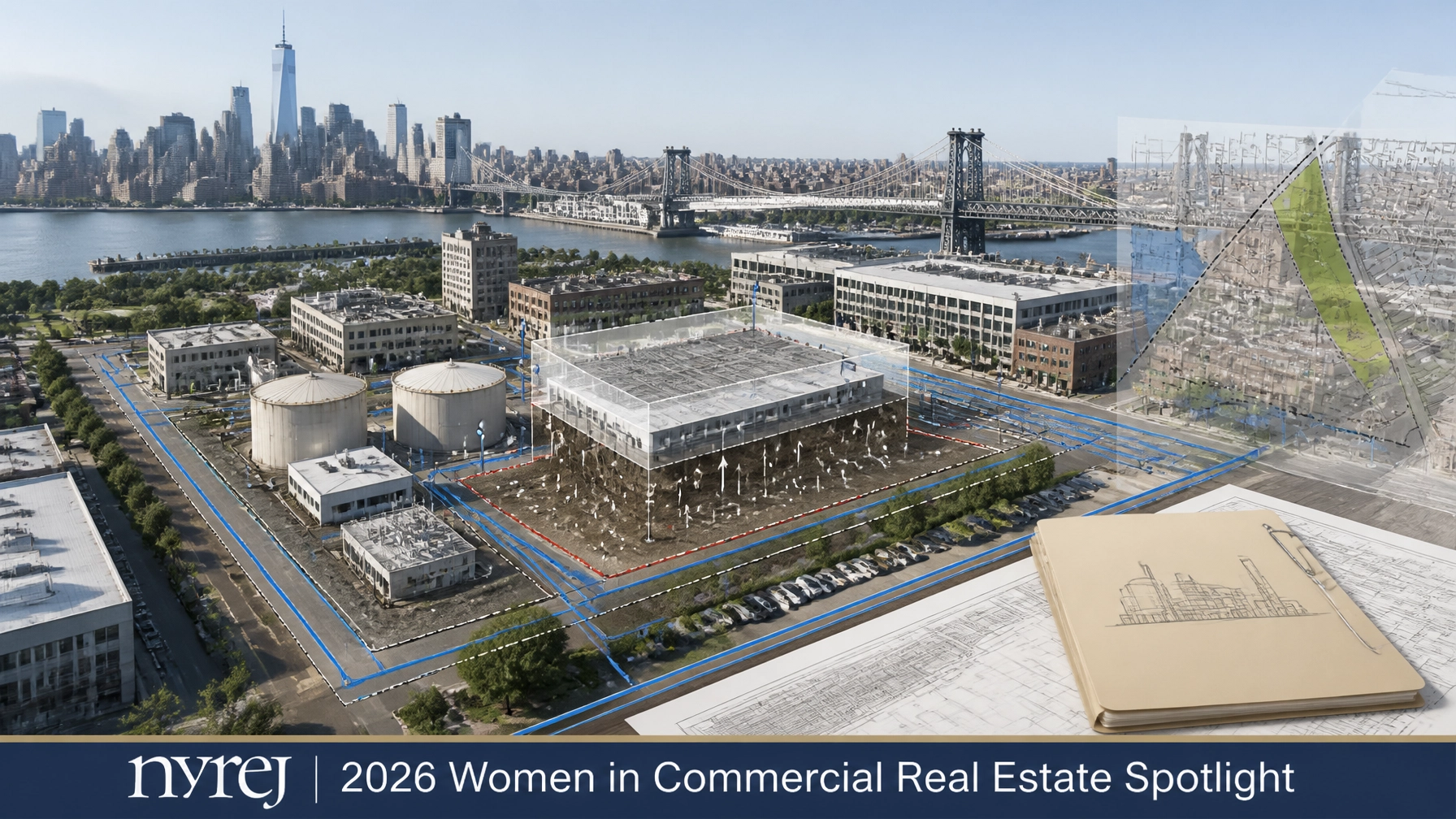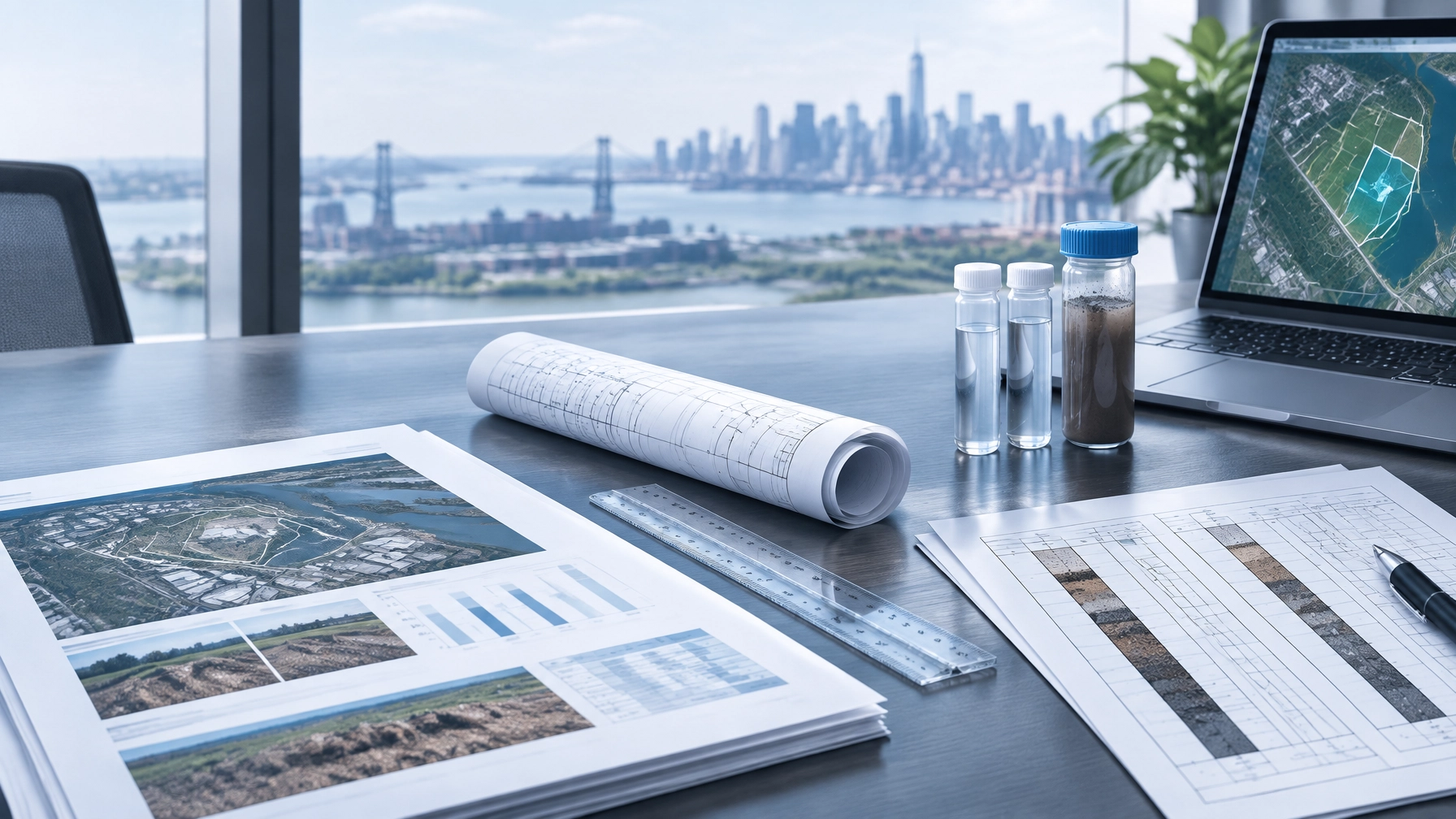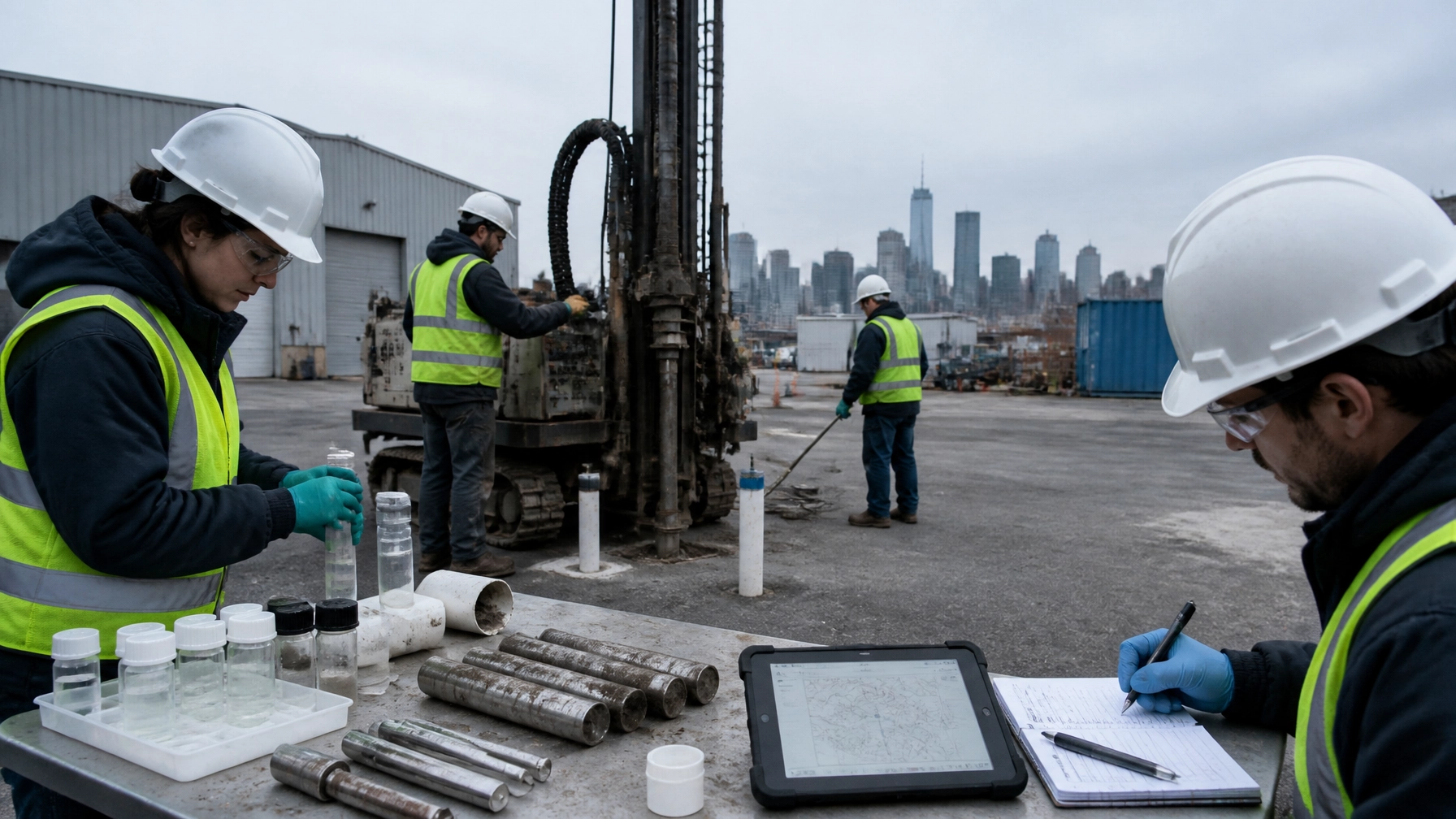
A 2026 acquisition in Jersey City, Newark, Hoboken, Bayonne, or another Northern New Jersey industrial corridor cannot rely on a high-level desktop review alone.
Historic manufacturing, rail operations, bulk storage, metal finishing, dry cleaning, landfilling, and waterfront filling have left many properties with environmental conditions that affect price, financing, construction, and closing timelines.
For buyers, the issue is not simply whether contamination exists. The issue is whether you understand the condition well enough to price it, structure the transaction, satisfy the lender, and move toward redevelopment without losing months to avoidable surprises.
That is the purpose of transaction-focused brownfield remediation in Jersey City and throughout Hudson, Essex, Bergen, and Northern New Jersey.
Why environmental due diligence matters before you sign
A property can appear ready for redevelopment while still carrying significant environmental risk below grade.
A former warehouse in Jersey City may have buried tanks, historic fill, chlorinated solvents, or vapor intrusion concerns. A Newark industrial parcel may have decades of petroleum handling, waste storage, or manufacturing activity that does not appear in the current building condition.
Those conditions can affect:
- Purchase price and environmental escrows
- Lender approval
- Construction budgets
- Excavation and disposal requirements
- Dewatering and discharge planning
- Building design and vapor controls
- NJDEP reporting obligations
- ISRA compliance
- Tax credit and grant readiness
- The date you can start construction
A report that identifies a problem without explaining the path forward does not protect the transaction. You need a defensible scope, realistic cost assumptions, and a clear sequence from investigation through regulatory closure.
Start with the property history, not the asking price
The first step in environmental due diligence for a brownfield acquisition is a disciplined review of property history.
We examine current and historical sources that may reveal past operations and potential Areas of Concern, including:
- Historic Sanborn maps and city directories
- Aerial photographs and topographic maps
- NJDEP site remediation records
- UST registrations and closure documentation
- Prior environmental reports
- Fire insurance maps
- Industrial permits and discharge records
- Interviews with owners, operators, tenants, and municipal officials
- Adjoining and nearby properties with potential off-site impacts
For a property in the Hudson County industrial corridor, the surrounding parcels matter as much as the subject site. A groundwater plume, former dry cleaner, plating operation, fuel terminal, or rail yard may affect the property even when the current owner never used hazardous substances.
That is why environmental due diligence for a brownfield in Hudson County must look beyond the tax lot boundary.
Phase I ESA and NJDEP Preliminary Assessment
Most commercial and industrial acquisitions begin with an ASTM-compliant Phase I Environmental Site Assessment. The Phase I evaluates the site history, regulatory databases, current conditions, and potential Recognized Environmental Conditions under ASTM E1527-21.
For a New Jersey transaction, buyers should also evaluate whether a NJDEP Preliminary Assessment is needed. The Preliminary Assessment focuses on site-specific Areas of Concern and helps determine whether additional investigation is required under New Jersey’s Site Remediation Program.
Envicon’s Phase I Environmental Site Assessment service is built around the transaction, not just the report. We connect findings to the next decision:
- Can the acquisition proceed as structured?
- Does the lender need a Phase II?
- Should the buyer request an environmental escrow?
- Is an LSRP needed before closing?
- Could the intended redevelopment trigger vapor or soil management controls?
- Does the site history create an ISRA concern?
A Phase I should help you decide what to do next. It should not leave your attorney, lender, and development team interpreting risk on their own.
When a Phase II investigation becomes necessary
A Phase II Environmental Site Assessment uses field sampling to evaluate suspected contamination. Depending on the property history and proposed use, the investigation may include:
- Soil borings
- Groundwater monitoring wells
- Soil vapor sampling
- Sub-slab sampling
- UST geophysics and test pits
- Petroleum and VOC analysis
- PAHs and metals associated with historic fill
- PCBs and site-specific constituents
- PFAS where historical operations support the concern
The right scope depends on the property. A former machine shop in Newark does not present the same risk profile as a waterfront terminal in Jersey City or a former dry cleaner in Hoboken.
This is also why brownfield investigation cost in NJ varies widely. Cost depends on site size, access, number of Areas of Concern, depth to groundwater, laboratory parameters, drilling conditions, utility congestion, traffic control, and the level of reporting required.
A lower initial scope may not be cheaper if it misses the source area and forces a second mobilization. We design investigations to answer the questions that affect your acquisition and construction plan.

The recurring issues on Jersey City and Newark brownfields
Historic fill
Historic fill is common across urban and waterfront areas of Northern New Jersey. Fill may contain ash, brick, glass, concrete, metals, PAHs, and other materials associated with past placement and development.
The investigation must consider the horizontal and vertical extent of the fill, its physical characteristics, groundwater conditions, and the proposed exposure scenario.
In many cases, the practical remedy does not require removing every cubic yard of fill. A properly designed cap, deed notice, soil management plan, and long-term permit obligations may provide a more efficient path. That decision must be based on adequate delineation and regulatory requirements.
Underground storage tanks
USTs remain a common transaction risk at former service stations, industrial properties, trucking facilities, heating oil sites, and manufacturing operations.
Our review looks for both registered and unregistered tanks, abandoned product lines, historic tank farms, fill ports, dispensers, and evidence of prior releases. If a tank is found, the acquisition team needs to understand closure requirements, soil impacts, groundwater impacts, disposal classification, and possible funding options.
PFAS
PFAS should not be added automatically to every sampling program, but it should not be ignored where site history indicates possible use.
Potential triggers include certain manufacturing operations, fire-training areas, facilities with aqueous film-forming foam, landfills, waste handling, and specific industrial processes. New Jersey’s remediation framework continues to evolve, and current standards and guidance must be checked when the sampling plan is prepared.
Vapor intrusion
Vapor intrusion is a major concern when volatile chemicals migrate from soil or groundwater into buildings. It becomes especially important when an industrial property will be converted to housing, offices, schools, or other occupied uses.
A proper evaluation may require soil gas, sub-slab soil gas, indoor air, or outdoor air sampling. The redevelopment design may also need vapor barriers, sub-slab depressurization, passive venting, or building use restrictions.

LSRP, ISRA, and the acquisition timeline
If the property is an industrial establishment subject to the New Jersey Industrial Site Recovery Act, the transaction may require specific notification and remediation steps.
The timing matters. Buyers should evaluate ISRA applicability during the letter-of-intent or contract stage, not immediately before closing.
An LSRP can help coordinate:
- Preliminary Assessment and site history review
- Site Investigation and Remedial Investigation
- NJDEP submissions and required certifications
- Remedial alternatives evaluation
- Remedial Design and implementation oversight
- Soil, groundwater, and indoor air controls
- Remedial Action Permit requirements
- Response Action Outcome planning
Envicon’s NJ LSRP services give the buyer, seller, counsel, lender, architect, and contractor one technical path to follow.
The goal is not to make the property look risk-free. The goal is to define the risk honestly and manage it so the project can move.
Remedial design, soil management, and dewatering
Investigation results must connect directly to the construction plan.
For a new building, garage, utility corridor, or public-realm improvement, the remedial strategy may include:
- Excavation and off-site disposal
- Clean fill placement
- Engineered caps
- Soil reuse protocols
- Vapor mitigation systems
- Groundwater treatment
- In-situ treatment
- UST removal and release response
- Dewatering and discharge controls
- Construction air monitoring
- Soil stockpile management
- Import and export documentation
A soil management plan should account for excavation limits, soil classification, staging space, trucking routes, disposal facilities, worker protection, stormwater controls, and field documentation.
Dewatering can create a separate schedule and permitting issue. Groundwater encountered during excavation may require treatment, discharge authorization, or disposal. These costs need to appear in the development budget before the contractor mobilizes.
NJEDA incentive readiness while applications are closed
As of September 2026, the NJEDA Brownfields Redevelopment Incentive Program is not currently accepting applications while NJEDA develops rules associated with the 2024 program amendments. NJEDA states that a new application will be posted after the rules are issued.
That does not mean buyers should wait to prepare.
An acquisition team can use this period to organize:
- Eligible investigation and remediation costs
- Preliminary remediation budgets
- Project financing assumptions
- Municipal support requirements
- Prevailing wage considerations
- Developer equity requirements
- Green remediation commitments
- Site access documentation
- LSRP reports and cost records
Incentive readiness should support the transaction without becoming the only reason the transaction works. Confirm current eligibility and timing directly with NJEDA before relying on any potential tax credit.
NJDEP’s Contaminated Site Remediation and Redevelopment Program and Brownfields Program provide additional guidance, funding information, mapping resources, and regulatory materials.

Brownfield acquisition checklist for Northern New Jersey
Before closing on an industrial or underutilized property in Jersey City, Newark, Hoboken, Bayonne, Bergen County, Hudson County, or Essex County, confirm that you have:
- Completed an ASTM Phase I ESA
- Evaluated the need for an NJDEP Preliminary Assessment
- Reviewed historic operations and adjoining properties
- Checked NJDEP records and available GIS data
- Investigated USTs and former product lines
- Evaluated historic fill conditions
- Considered PFAS based on site history
- Screened for vapor intrusion pathways
- Determined whether ISRA applies
- Engaged an LSRP when required
- Prepared a Phase II or SI/RI scope
- Estimated investigation and remediation costs
- Planned for soil disposal, reuse, and dewatering
- Reviewed potential engineering and institutional controls
- Documented NJEDA incentive readiness without assuming approval
- Addressed environmental escrows, indemnities, and access rights
- Built investigation and remediation milestones into the closing schedule
The Envicon approach
Large consulting firms often separate the report, the regulatory work, and the construction response among different teams. That can leave the buyer with three opinions and no accountable path.
At Envicon, our environmental professionals stay close to the transaction and the field. We coordinate with attorneys, lenders, developers, architects, contractors, municipalities, and regulators from the first review through remediation implementation.
You get direct answers, clean documentation, and a scope tied to the way you intend to build.
That is the difference between buying an environmental report and buying confidence in the next decision.
Plan your brownfield transaction review
If you are evaluating an industrial or underutilized property in Jersey City, Newark, Hoboken, Bayonne, Bergen County, Hudson County, Essex County, or another Northern New Jersey market, bring the environmental questions forward before they become closing conditions.
Start with a brownfield transaction review:
- Request a brownfield transaction review
- Call Envicon at (917) 764-2171
- Estimate potential project costs
A complicated site is not automatically a bad acquisition. It is a site that requires facts, sequence, and ownership.
Envicon helps turn environmental uncertainty into a clear path toward a clean, buildable, and compliant asset.