A deep excavation in Jersey City, Newark, Hoboken, or elsewhere in Hudson County can encounter groundwater before the foundation work begins. Once that water enters the excavation, the project team must make several decisions quickly:
- How much water will be pumped?
- How long will dewatering continue?
- Where will the water go?
- Does the water contain petroleum, metals, solvents, or other pollutants?
- What NJDEP authorization and local approvals apply?
- What treatment and monitoring will keep the discharge compliant?
The answer is not always a single “NJDEP dewatering permit Jersey City.” New Jersey requirements depend on the discharge destination, pumping rate, duration, contaminant profile, site location, and project conditions.
A permit decision made after excavation starts is usually a construction delay waiting to happen.
Start with the difference between water diversion and water discharge
Construction dewatering creates two separate regulatory questions.
First, does the project need authorization to divert or pump groundwater? New Jersey regulates water diversions under N.J.A.C. 7:19. The current rule defines dewatering as the temporary diversion of groundwater from wells, wellpoints, excavations, or sumps to facilitate construction.
Under N.J.A.C. 7:19, a project that can divert more than 100,000 gallons per day may require a water allocation authorization, temporary dewatering permit, short-term permit-by-rule, or dewatering permit-by-rule.
The pathway depends on the project schedule and configuration:
- More than 100,000 gallons per day for more than 30 days in a consecutive 365-day period may require a Temporary Dewatering Permit.
- More than 100,000 gallons per day for less than 31 days may qualify for a Short-Term Water Use Permit-by-Rule, subject to notification requirements.
- Dewatering above 100,000 gallons per day from a coffer dam or confined area may qualify for a Dewatering Permit-by-Rule.
- A project below the threshold may still require discharge authorization, sewer approval, treatment, monitoring, and erosion and sediment controls.
Second, where will the pumped water be discharged? That question determines the applicable NJPDES or local approval pathway.
Discharge destination determines the compliance strategy
Surface water discharge
If dewatering water will discharge directly to a river, stream, tidal water, or a storm sewer that conveys water to a receiving waterbody, the project may require NJPDES authorization.
NJDEP’s Category B7 Short-Term De Minimis Discharge General Permit can authorize eligible short-term discharges used to lower the groundwater table during certain construction activities. The current NJDEP program page identifies B7 as a short-term de minimis permit for eligible surface water discharges.
B7 is not a blanket approval for every excavation. It does not cover known or suspected contaminated groundwater, sediment-laden water, stormwater discharges, or several other excluded discharge types. The receiving water also matters. Certain waters, including FW1 waters, Pinelands waters, and certain shellfish waters, are excluded.
For an eligible B7 discharge, the project team should expect to address:
- A completed request for authorization.
- Representative sampling of untreated discharge water.
- Laboratory analysis by a New Jersey-certified laboratory.
- Applicable effluent limits and narrative standards.
- On-site retention of permit documentation.
- Start and stop notifications.
- Discharge monitoring and field observations.
NJDEP’s B7 application checklist should be reviewed for the current submission requirements and timing. Plan early. NJDEP identifies a minimum 30-day lead time for B7 authorization requests.
Discharge to a sanitary sewer
Sending groundwater to a sanitary sewer is not an automatic shortcut.
The project must coordinate with the local sewer authority or publicly owned treatment works. In Jersey City, that may involve the Jersey City Municipal Utilities Authority. In Newark, the project may need to coordinate with the City of Newark and the applicable regional sewer system. Hoboken and other Hudson County municipalities may have different application forms, pretreatment limits, fees, flow restrictions, and inspection requirements.
The sewer authority may request:
- Analytical data for metals, petroleum compounds, VOCs, SVOCs, and other site-specific constituents.
- A projected flow rate and total discharge volume.
- A treatment system description.
- A sampling and reporting plan.
- A discharge connection detail.
- Proof of NJDEP or other applicable authorization.
- Flow controls and emergency shutoff procedures.
NJPDES rules also regulate indirect discharges to domestic treatment works. If the groundwater could affect treatment operations, biosolids, worker safety, or permit limits, the sewer authority may require pretreatment or a significant indirect user review.
The practical rule is simple: obtain written approval before connecting a pump to a sewer. A verbal field authorization is not a substitute for a documented discharge pathway.
Discharge to ground or on-site infiltration
Discharging dewatering water into an infiltration basin, drywell, recharge gallery, or other subsurface system can trigger NJPDES Discharge to Ground Water requirements.
NJDEP states that a facility discharging pollutants to ground waters of the State requires a NJPDES Discharge to Ground Water permit, unless another valid authorization applies.
This pathway requires particular caution on former industrial, petroleum, manufacturing, dry-cleaning, landfill, and waterfront properties. Infiltrating contaminated water can spread a plume, affect neighboring properties, or interfere with an active remediation program.
Do not select on-site infiltration simply because there is no convenient sewer connection. Confirm the water quality, hydrogeology, receiving soil conditions, and regulatory pathway first.
Characterize the water before selecting treatment
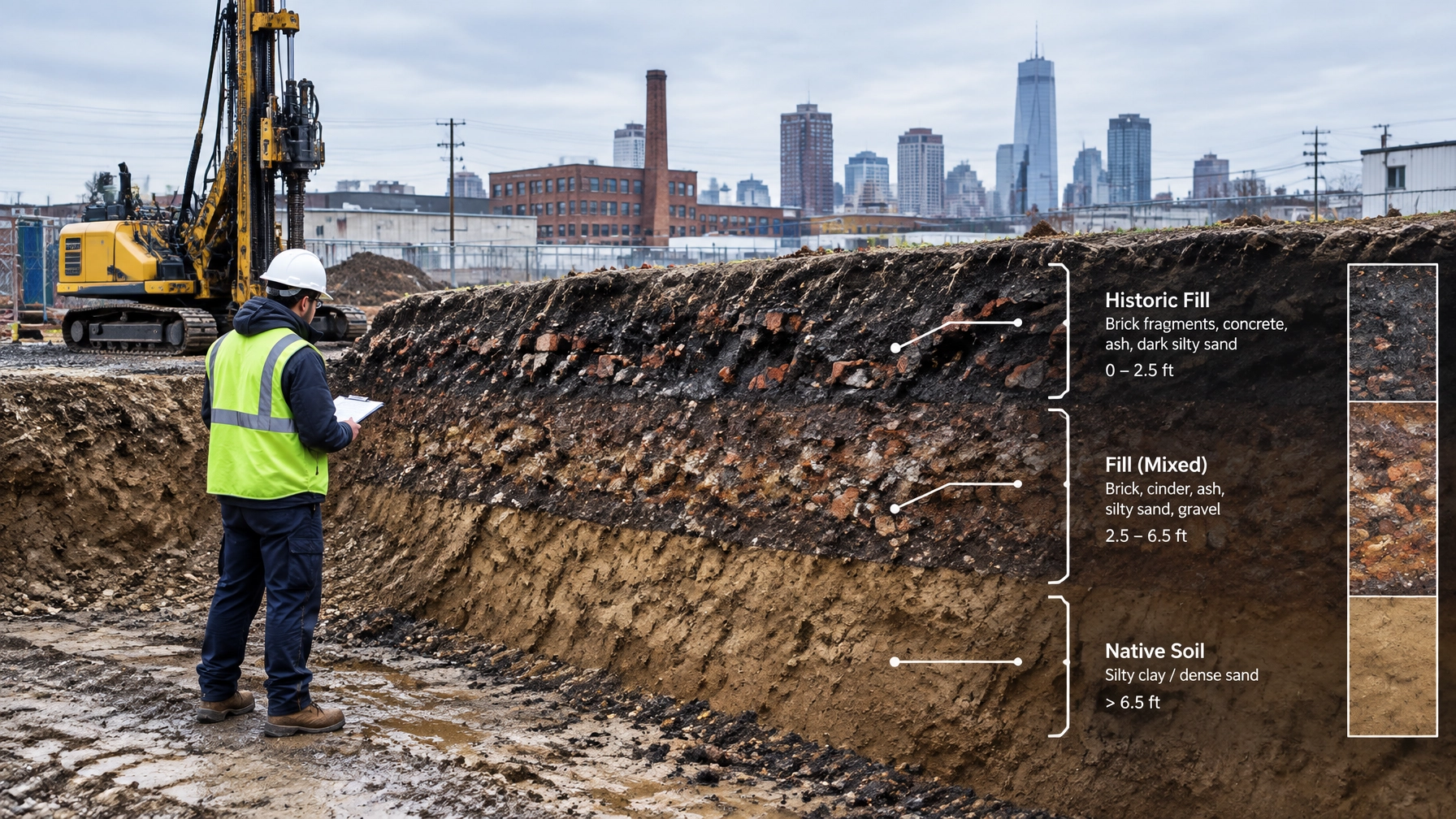
A dewatering system should be designed around analytical data, not appearance.
Clear water can contain dissolved petroleum compounds, chlorinated solvents, metals, or other constituents that are not visible in the field. Conversely, turbid water may require sediment control even when dissolved contaminant concentrations are low.
A practical pre-excavation characterization program may include:
- Field pH, temperature, conductivity, turbidity, and dissolved oxygen.
- Total suspended solids.
- Petroleum-related compounds based on site history.
- VOCs and SVOCs where industrial or commercial use suggests a potential source.
- Metals, including iron, manganese, lead, and other site-specific parameters.
- PFAS where the site history, regulatory review, or project conditions warrant evaluation.
- Additional parameters required by the receiving sewer, NJDEP permit, or remedial program.
Sampling should represent the water that will actually enter the treatment system. A sample from an existing monitoring well may help establish site conditions, but it may not replace a representative sample of the proposed untreated discharge.

Build the treatment train around the contaminant profile
A typical construction dewatering treatment train may include:
- Sump, wellpoint, or well extraction
- Equalization or temporary storage
- Settling or clarification
- Bag or cartridge filtration
- Oil-water separation where needed
- Granular activated carbon for petroleum compounds or VOCs
- Specialty media or metals treatment where analytical results require it
- Final sampling point and flow measurement
- Approved discharge connection
Treatment capacity must match both the expected flow and the peak pumping rate. A system that works at 20 gallons per minute may fail when excavation inflow reaches 75 gallons per minute after a storm or change in groundwater elevation.
Temporary tanks and treatment vessels also need secondary containment, secure hose connections, spill response materials, and a clear bypass prevention plan.
NJDEP does not prescribe one manufacturer or treatment technology for every project. The treatment system must achieve the applicable discharge limits and comply with the relevant permit or sewer authorization.
Control erosion, sediment, and site impacts
Groundwater discharge is only one part of excavation water management.
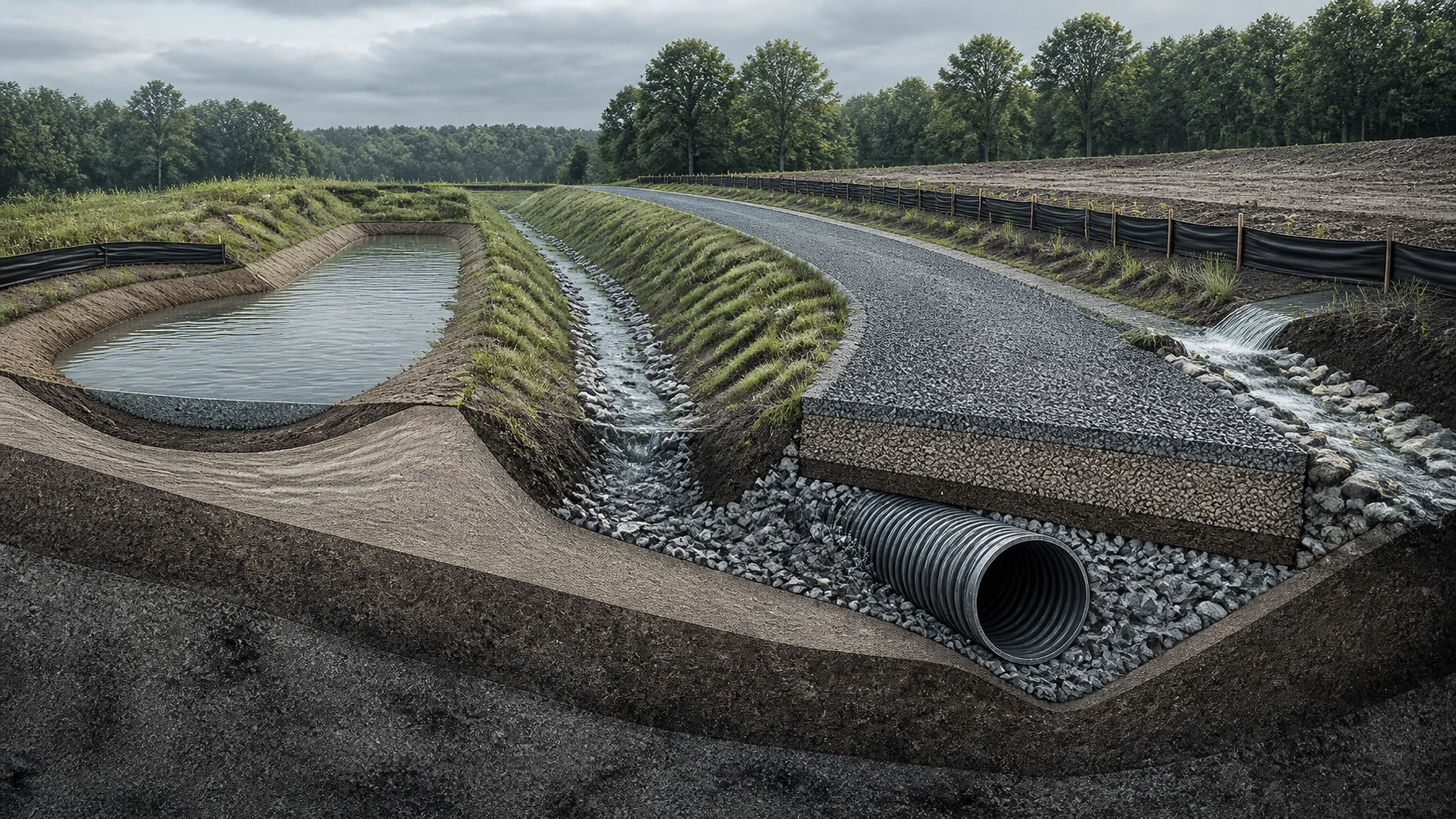
Construction teams must prevent sediment-laden water from leaving the site through storm drains, streets, adjacent properties, or unprotected discharge points. Depending on the project, controls may include:
- Stabilized stone construction entrances.
- Silt fencing and inlet protection.
- Filter bags or settling tanks.
- Lined temporary storage.
- Energy dissipation at discharge points.
- Berms around treatment equipment.
- Protected hose routes.
- Daily inspection of tanks, pumps, fittings, and controls.
- Erosion and sediment control measures required by the local Soil Conservation District.
NJDEP’s construction stormwater permit information explains that construction activities may require a separate NJPDES stormwater authorization and soil erosion and sediment control plan. A B7 authorization does not replace those requirements.

Coordinate utilities before pumping begins
Dewatering can affect more than the excavation.
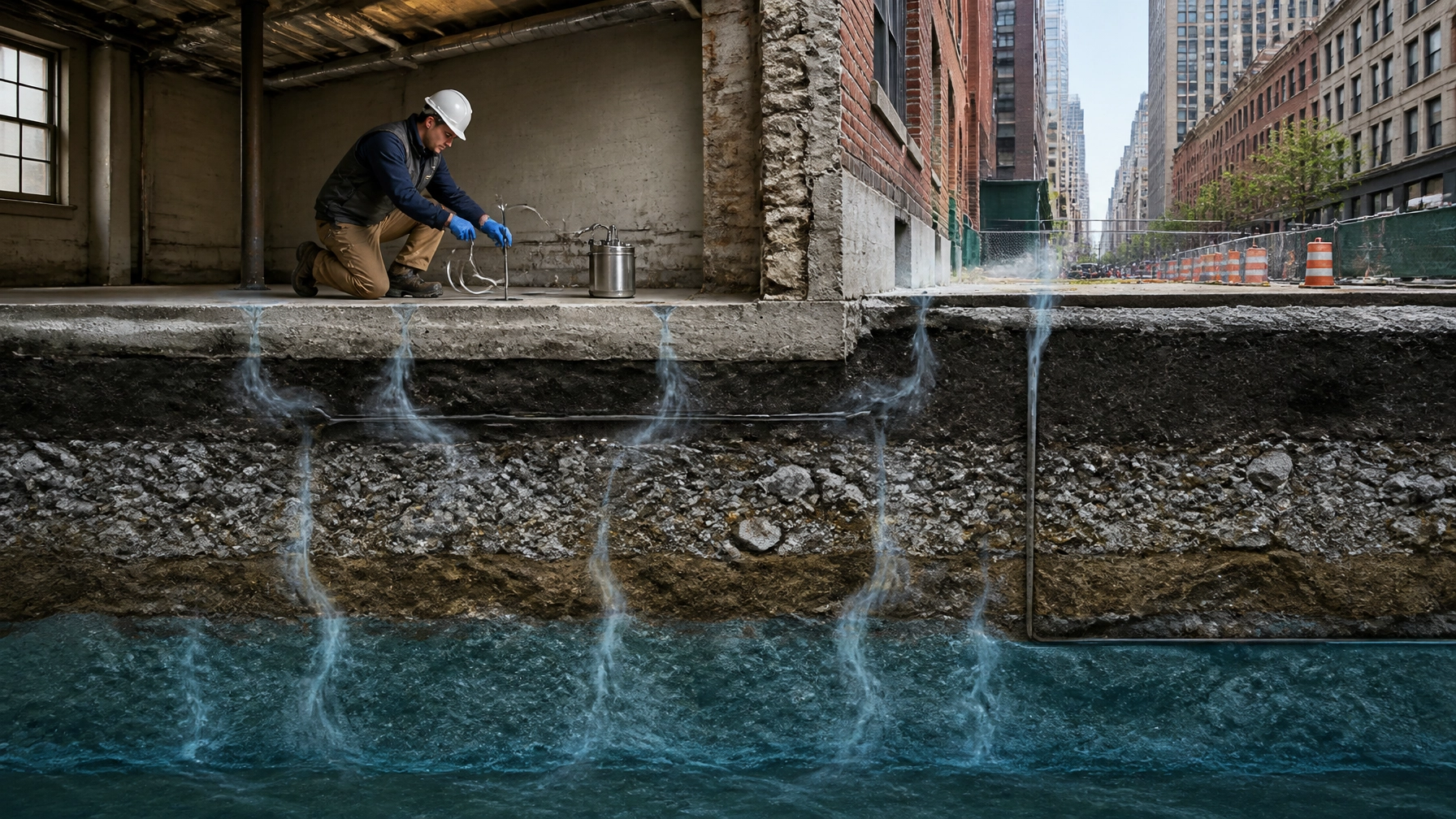
Lowering groundwater may influence nearby basements, utility trenches, shoring systems, neighboring foundations, and adjacent monitoring wells. A high-capacity pumping system can also draw water toward the excavation and alter contaminant migration.
Before startup, the project team should confirm:
- Existing utility locations and invert elevations.
- Nearby water supply wells.
- Adjacent basements and below-grade structures.
- Monitoring wells and remediation systems.
- Excavation support design assumptions.
- Sewer connection capacity.
- Discharge point ownership and access.
- Backup power and emergency shutdown procedures.
- Pump totalizers and calibration records.
- Responsibilities for daily inspections and reporting.

NJDEP dewatering permit Jersey City readiness checklist
Before excavation, confirm that the project team has:
- Defined the excavation depth and groundwater elevation.
- Estimated the anticipated pumping rate and duration.
- Evaluated whether the 100,000-gallon-per-day threshold applies.
- Determined whether a temporary dewatering permit or permit-by-rule may be required.
- Identified the discharge destination.
- Characterized untreated groundwater.
- Confirmed whether B7 eligibility applies.
- Obtained written sewer authority approval where applicable.
- Designed treatment for the actual contaminant profile.
- Prepared temporary storage and secondary containment.
- Included erosion and sediment controls.
- Installed flow measurement and sampling points.
- Coordinated nearby utilities, wells, structures, and remediation systems.
- Assigned construction oversight and documentation responsibilities.
- Built permit lead time into the excavation schedule.
Make dewatering part of the construction plan
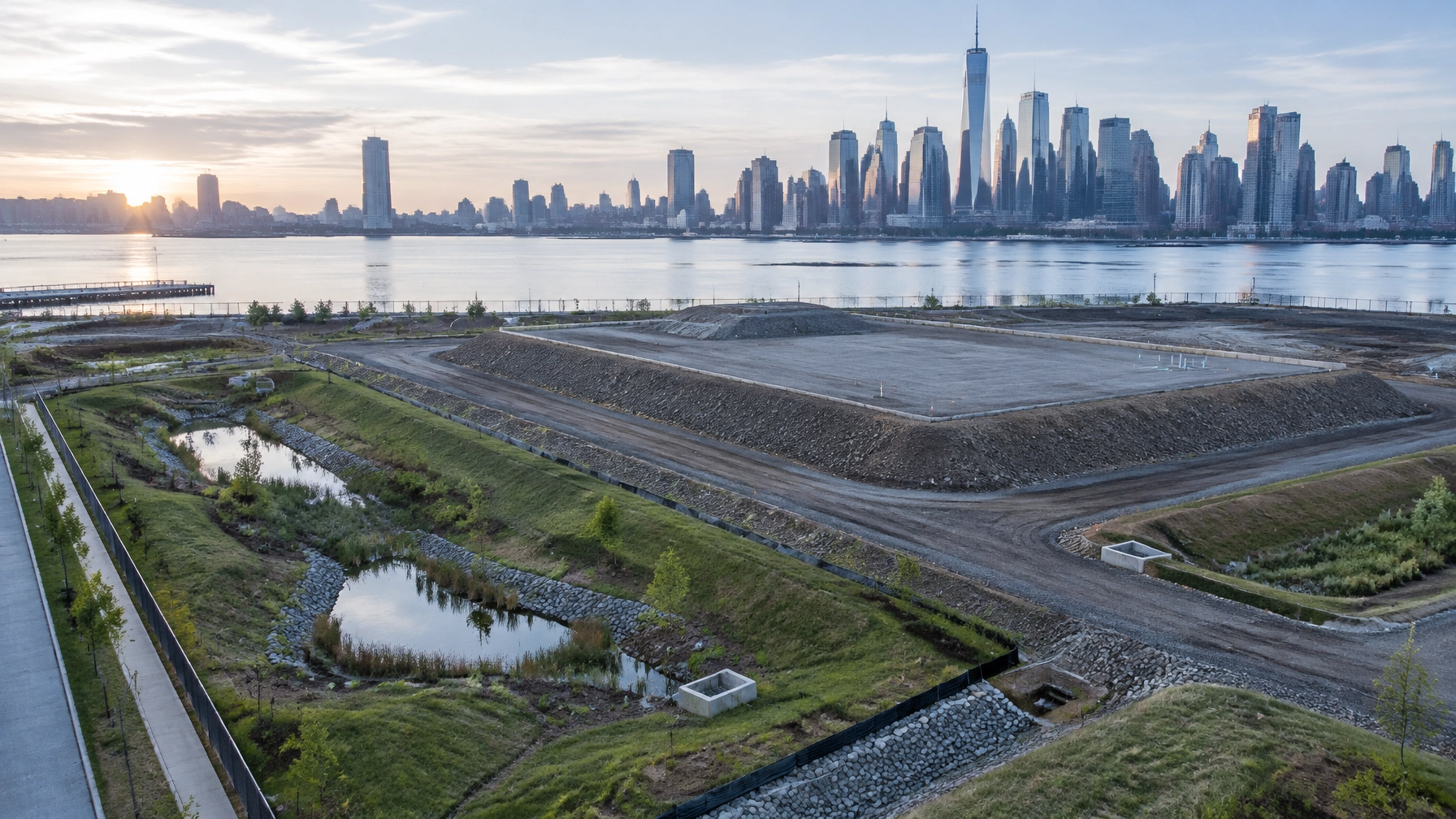
For a Jersey City or Newark excavation, groundwater management should appear in the bid documents, logistics plan, environmental plan, and construction schedule. It should not be treated as a pump rental decision made after the excavation fills with water.
Envicon Group combines civil and geotechnical engineering, environmental investigation, regulatory permitting, and field-level construction oversight. Our civil and geotechnical engineering team can evaluate excavation conditions, pumping needs, discharge controls, and site impacts. Our compliance and permitting team can help coordinate the regulatory pathway and supporting documentation.
We work directly with owners, contractors, architects, utility providers, attorneys, and local agencies across the region. That coordination matters in Jersey City, Newark, Hoboken, and Hudson County, where tight sites and active infrastructure leave little room for an unplanned discharge problem.
Takeaway
A construction dewatering plan must answer two questions before excavation begins:
- Is authorization required to divert the groundwater?
- Is the proposed discharge pathway legally and technically acceptable?
The correct answer depends on flow, duration, destination, water quality, site history, and local conditions. Early sampling and permit review can prevent rejected connections, re-mobilization, treatment changes, and avoidable schedule loss.
Ready for a site-specific dewatering review?
Request a pre-excavation dewatering review for your Jersey City, Newark, Hoboken, or Hudson County project. We’ll evaluate the anticipated pumping rate, discharge destination, sampling needs, treatment approach, permit pathway, and field oversight requirements.
- Request a site-specific scope
- Call Envicon Group at (917) 764-2171
- Review our civil and geotechnical services
- Review our compliance and permitting services
- View our Jersey City location
Plan the discharge before you start the pump. Clear the path before you start the excavation.