New Jersey developers and contractors need to treat historic fill as a design and construction issue, not only an environmental report issue.
On March 20, 2026, NJDEP announced two new guidance documents addressing historic fill and metals with natural background concentrations. On May 26, 2026, NJDEP issued a follow-up notice addressing fill donor material and contaminants of emerging concern, including PFAS.
The practical message is clear. Historic fill can affect investigation scope, groundwater strategy, cap design, utility installation, soil export, imported fill, and construction budgets.
The right response is not automatically full excavation. It is early characterization, defensible assumptions, coordinated civil design, and complete documentation.
“The use of site-wide low permeability caps could greatly increase the amount of surface water runoff.”
NJDEP, Addressing Soil Remediation Standards for the Migration to Ground Water Exposure Pathway Remedial Action for Historic Fill Material
What NJDEP means by historic fill
Under N.J.A.C. 7:26E-1.8, historic fill means non-indigenous material deposited to raise the elevation of a property that was contaminated before placement and is not connected to operations at the location where it was placed.
Examples can include:
- Construction and demolition debris
- Dredge spoils
- Incinerator residue
- Fly ash
- Non-hazardous solid waste
- Brick, ash, cinders, and other urban fill components
Historic fill does not include municipal solid waste landfill material, substantially chromate chemical production waste, chemical production waste, or waste from metal or mineral ore processing, including slag and tailings.
That distinction matters. Material that falls outside the historic fill definition may require separate evaluation as its own area of concern.
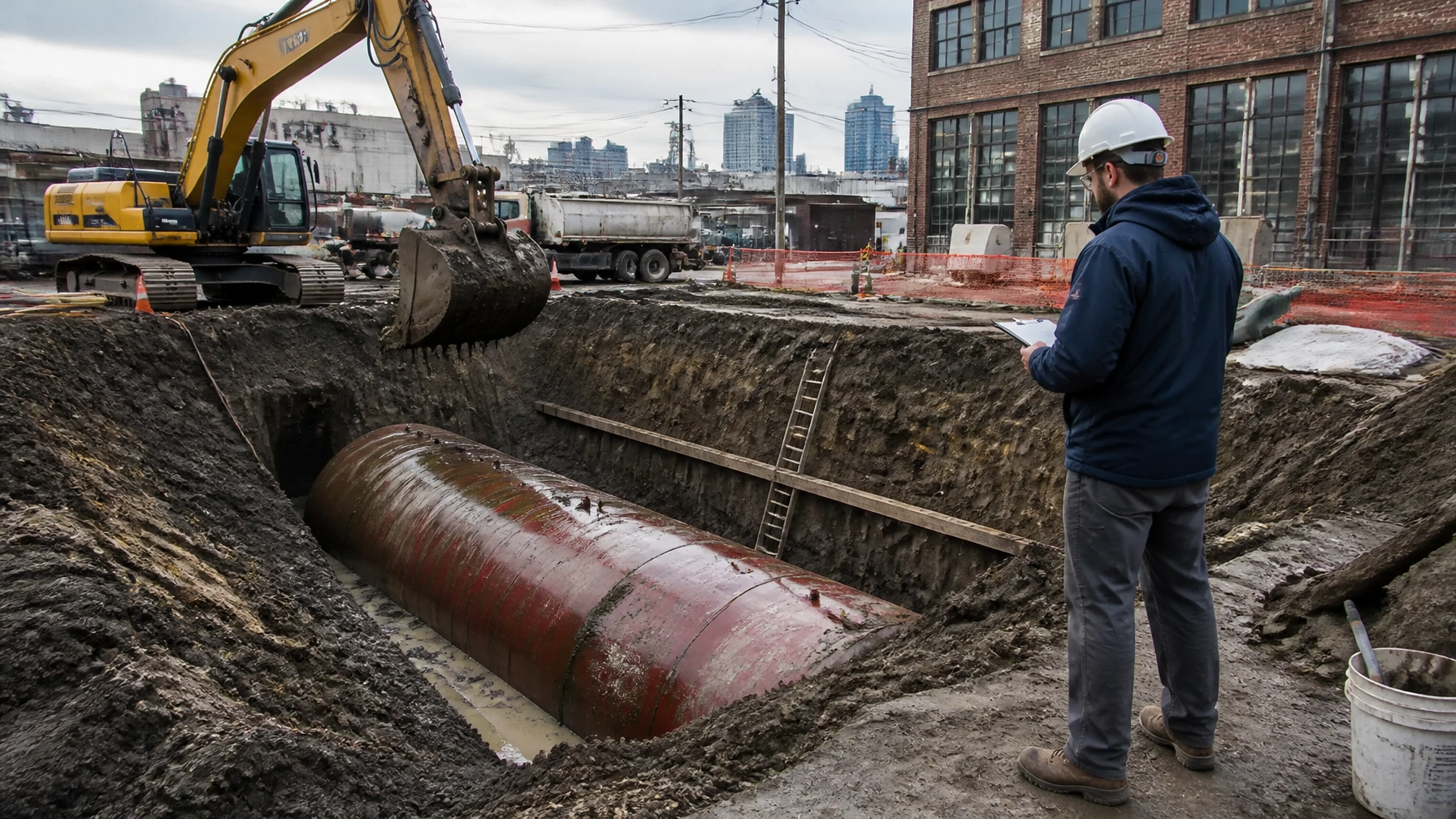
In Newark, Jersey City, and older industrial portions of Hudson County, historic fill may extend across an entire block, multiple tax lots, or adjacent properties. It may also be mixed with current areas of concern such as former tanks, process areas, rail spurs, dry wells, or manufacturing buildings.
NJDEP requires those areas of concern to be investigated independently of the historic fill itself.

When historic fill characterization is required
If historic fill is suspected, the first step is to confirm whether it is present. This usually requires a combination of:
- Historical aerial photographs and Sanborn maps
- Site plans and grading records
- Test pits or borings
- Stratigraphic logging
- Field observations of debris, ash, cinders, and non-native material
- Laboratory analysis of representative soil samples
Under N.J.A.C. 7:26E-3.12, once historic fill is identified, the person responsible for remediation has two paths.
Option 1: Use the regulatory assumption
The project may assume that:
- Historic fill is contaminated above the residential direct contact soil remediation standards
- Historic fill exceeds applicable soil remediation standards for the migration to groundwater pathway
- Groundwater is contaminated above applicable groundwater remediation standards
The project then proceeds to a remedial investigation under the historic fill requirements.
This approach can save early sampling time, but it does not eliminate the need for a properly scoped remedial investigation, groundwater strategy, or remedial action documentation.
Option 2: Characterize the fill and groundwater
The project may sample the historic fill and groundwater to determine whether applicable standards are exceeded.
For most urban historic fill investigations, the analytical program should be based on site history and expected contaminants. Common parameters include:
- Target Analyte List metals
- Target Compound List semivolatile compounds and PAHs
- Extractable Petroleum Hydrocarbons
- Site-specific petroleum, PCB, VOC, or cyanide parameters
- PFAS or other contaminants of emerging concern when site history supports the evaluation
Sampling must represent the physical variability of the fill. A single composite sample rarely answers the questions needed for construction planning. Fill may change significantly over short distances and with depth.
The March 2026 policy changes the cap conversation
NJDEP’s March 19, 2026 policy statement addresses historic fill that is widespread across a property or across contiguous blocks and lots.
The policy applies where historic fill exceeds the soil remediation standards for the migration to groundwater exposure pathway, but remains below the residential direct contact soil remediation standards.
In that situation, NJDEP states that a low permeability cap is not automatically required as the remedial strategy.
That is an important change for site planning. A site-wide low permeability cap can affect:
- Stormwater runoff calculations
- Infiltration and recharge assumptions
- Green infrastructure layouts
- Utility crossings
- Building elevations
- Parking and pavement sections
- Landscape design
- Maintenance obligations
- Construction sequencing
The policy does not mean that historic fill can be ignored. Any exceedances above the migration to groundwater standard must be documented in the remedial action permit and deed notice as required by the policy and N.J.A.C. 7:26E-5.2.
Where historic fill exceeds residential or non-residential direct contact standards, the project still needs a protective remedy. That may include a cap, clean soil cover, pavement, concrete, building slabs, utility corridor controls, institutional controls, or another approved engineering approach.
The remedy must match the actual exposure pathway and planned use.
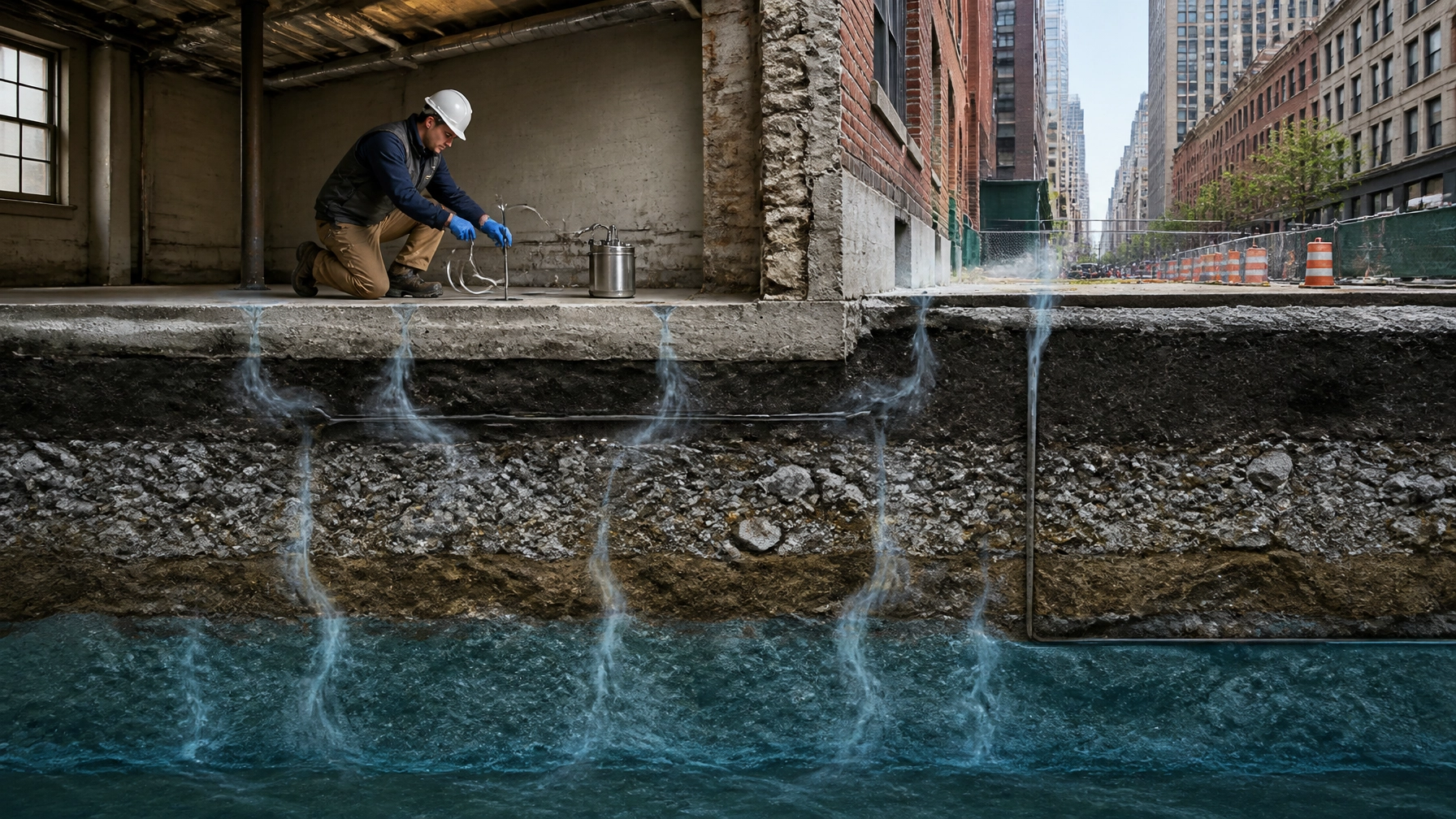
Groundwater migration still controls the risk strategy
Historic fill is not only a soil issue.
Under N.J.A.C. 7:26E-4.7, the remedial investigation must establish the extent of groundwater contamination associated with the historic fill.
When historic fill extends beyond the property boundary, NJDEP allows the proposed groundwater classification exception area to use the property footprint as its boundary.
When historic fill remains within the property boundary, the project may either:
- Investigate groundwater to define the plume and prepare a CEA based on the known extent of contamination, or
- Propose a CEA using the property footprint, subject to the applicable requirements
NJDEP’s current rules also state that a groundwater remedial action permit is not required for the CEA established for historic fill under the historic fill remedial action requirements. The CEA remains effective indefinitely.
For a Jersey City waterfront parcel, shallow groundwater may be influenced by fill thickness, tidal conditions, utility corridors, and adjacent properties. In Newark, groundwater flow and fill placement may reflect former industrial operations, rail infrastructure, or large-scale grading. In either case, the project team needs a conceptual site model that connects soil, groundwater, drainage, foundations, and excavation.

Metals and natural background require evidence
Metals such as arsenic, iron, manganese, and nickel can occur at elevated concentrations because of natural background conditions or regional urban fill.
That does not make every elevated result background.
Under N.J.A.C. 7:26E-3.8, a natural background investigation must generally demonstrate that:
- Samples come from similar soil conditions that have not been affected by current or historical activities
- The contaminant distribution does not show a concentration gradient associated with a discharge
- Concentrations fall within appropriate New Jersey background references, where available
The same concept applies to groundwater. The investigation must consider horizontal and vertical distribution and whether the data show a plume pattern.
If the evidence supports a natural background conclusion, no further remediation is required for that contaminant. But historic fill and natural background are different concepts. A developer should not use a background argument to avoid characterizing a fill layer that contains ash, debris, petroleum staining, or evidence of an anthropogenic source.
Donor fill and contaminants of emerging concern
NJDEP’s May 26, 2026 notice creates a direct construction planning issue for alternative fill and donor material.
A Fill Use Plan may need to evaluate contaminants of emerging concern before donor material is reused. The evaluation may be required when:
- PFAS or another CEC is present in donor groundwater above a groundwater standard or interim criterion
- A CEC is present in donor soil above a soil standard or interim standard
- Current or historical donor site operations indicate potential use or discharge of CECs
- Site history indicates that the donor material may contain chemicals not covered by traditional fill testing
NJDEP specifically states that CEC evaluation should occur before reuse, even when the donor site investigation for those contaminants has not yet been completed.
If donor material contains CECs above an applicable soil standard, movement should not occur until the receiving area of concern has been investigated and delineated for those CECs.
For PFAS analysis, NJDEP requires reporting of the full list of PFAS compounds included in the analytical method, consistent with N.J.S.A. 58:10A-10.3.
The safe sequence is:
- Document donor site history.
- Define the proposed receiving area.
- Identify traditional contaminants and CECs.
- Characterize the donor material.
- Prepare the Fill Use Plan.
- Confirm that the receiving area can accept the material.
- Track source, volume, placement area, and final conditions.
The NJDEP Fill Material Guidance should be reviewed with the current rules and project-specific requirements.

How historic fill changes civil design and construction budgets
Historic fill affects costs in ways that do not always appear in an environmental line item.
A project may need additional budget for:
- Test pits and supplemental borings
- Groundwater monitoring wells
- Fill characterization
- PFAS or other CEC analysis
- Soil reuse and disposal planning
- Export facility approval
- Imported clean fill certification
- Temporary stockpile management
- Dust and odor control
- Community air monitoring
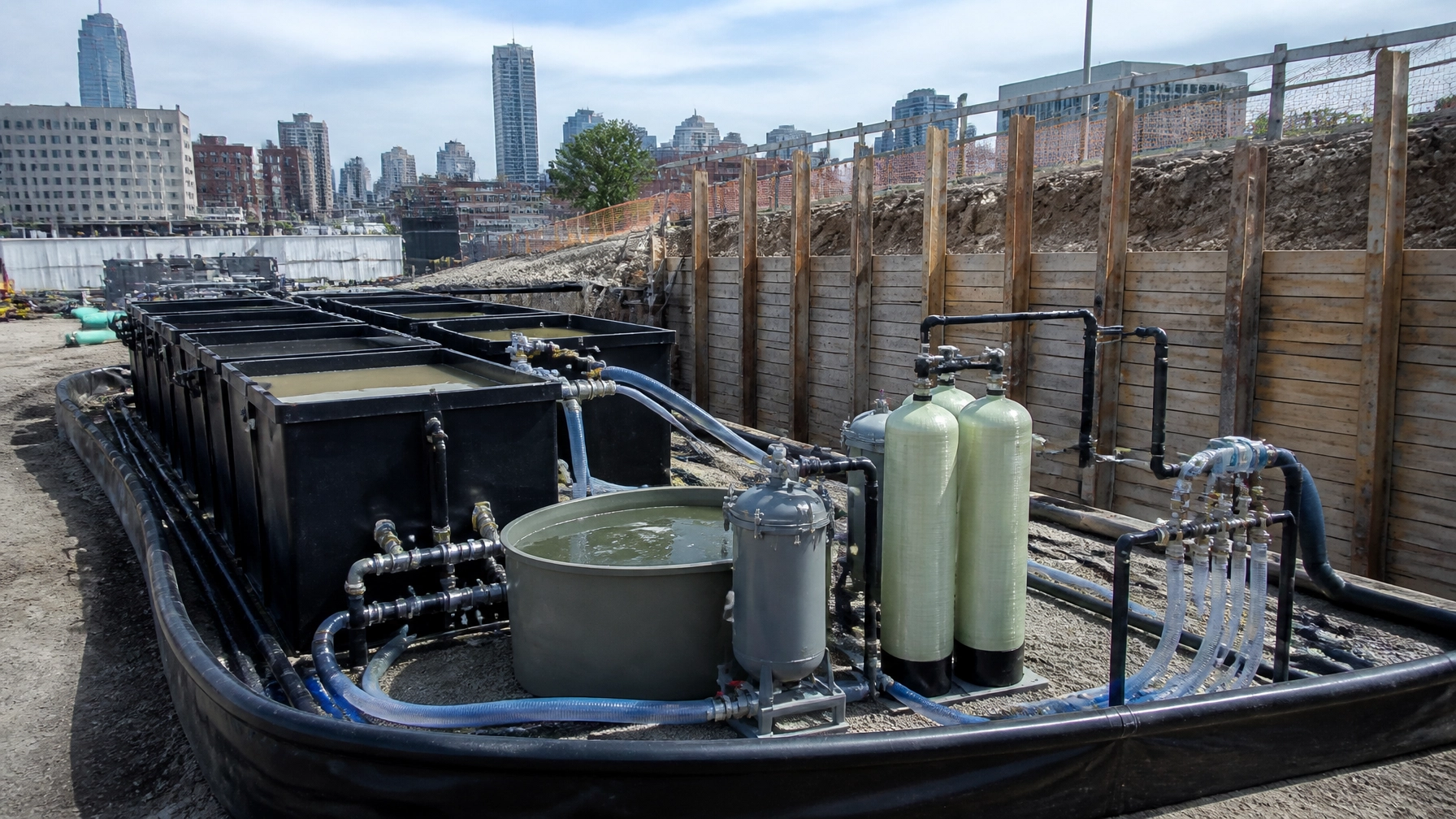
- Dewatering treatment and discharge permits
- Utility trench controls
- Clean cover or pavement systems
- Surveying and as-built documentation
- Long-term inspection and maintenance
The largest cost risk is usually not the laboratory analysis. It is discovering the soil management problem after excavation begins.
A contractor may bid on a simple cut-and-fill scope, then encounter variable fill, unexpected debris, groundwater, restricted disposal options, or a need to segregate material by location and depth.
That is why soil management should be coordinated with the civil plans before the bid package is finalized.
At Envicon, our field-first approach connects the investigation, remedial strategy, civil design, and construction oversight. We coordinate sampling, disposal routing, fill documentation, and agency requirements before the excavator arrives.
Our Soil Disposal and Clean Fill Certification service includes sampling, laboratory coordination, waste classification, facility pre-approval, manifests, and clean fill certification. Our Remediation and Brownfield Redevelopment team can carry the strategy through NJDEP coordination and site closure.
We also provide transparent site-specific pricing. Clients can use our cost estimator to establish an early budget range instead of waiting for a large consultant to return a vague proposal after weeks of review.
A practical 2026 checklist for NJ projects
Before construction or property acquisition, confirm the following:
- Has historic fill been mapped by depth and area?
- Have current areas of concern been separated from the historic fill evaluation?
- Has the team selected sampling or the regulatory assumption route?
- Has groundwater migration been evaluated?
- Is a CEA required or appropriate?
- Does the proposed remedy require a cap or another engineering control?
- Will the remedy affect stormwater or utility design?
- Has the donor fill history been reviewed for PFAS and other CECs?
- Is a Fill Use Plan required?
- Are disposal facilities pre-approved?
- Are soil reuse, export, manifests, and as-built controls included in the construction documents?
- Does the budget include field oversight and regulatory reporting?
The takeaway
The 2026 NJDEP guidance does not make every historic fill site a full excavation project.
It does require better decisions earlier.
Characterize the fill when characterization will reduce uncertainty. Use assumptions when they provide a defensible and efficient path. Document groundwater migration. Do not treat natural background as a shortcut without evidence. Screen donor material for CECs before reuse. Coordinate caps, covers, utilities, stormwater, and soil export with the civil design.
For developers and contractors in Jersey City, Newark, and Hudson County, the winning strategy is field data tied directly to construction decisions.
Historic fill is manageable when the team owns the problem from the first boring through final documentation.
Call to Action
Need a site-specific historic fill, groundwater, or soil management strategy?