New Jersey property owners often ask one question after contamination is identified: “When will we receive No Further Action?”
In 2026, the current answer is usually an LSRP-issued Response Action Outcome, or RAO. The RAO replaced the older NJDEP-issued NFA letter as the primary final remediation document under New Jersey’s Site Remediation Reform Act.
The timeline is not universal. A clean soil-only site in Newark may follow a very different path from a Jersey City property with groundwater contamination, vapor intrusion concerns, historic fill, or long-term engineering controls.
The important point is simple. An RAO does not arrive because a report was submitted. It arrives after the site, permits, fees, records, and continuing obligations are aligned.
“The LSRP shall not issue the RAO until … remediation is completed” and all required remedial action permits have been issued. NJDEP Response Action Outcome Guidance, Version 3.0
RAO versus NFA in New Jersey
A historic No Further Action letter was issued by NJDEP. Under the current LSRP program, the licensed professional makes the final remediation determination and issues the RAO to the person responsible for conducting the remediation.
Older NFA letters still matter. They remain part of a property’s environmental record and may include:
- Deed notices
- Classification Exception Areas
- Groundwater monitoring
- Vapor intrusion conditions
- Engineering controls
- Use restrictions
- Continuing reporting obligations
For a No Further Action New Jersey property sale, the buyer’s attorney, lender, insurer, and environmental consultant should review the old NFA or current RAO together with every permit and notice that supports it.
The document title alone does not tell you whether the property is unrestricted.
NJDEP RAO requirements Newark property owners should confirm
The core NJDEP RAO requirements in Newark, Jersey City, Hoboken, Bayonne, and throughout Hudson, Bergen, and Essex counties are site-specific. However, the LSRP generally must confirm that:
- The applicable investigation and remedial action are complete.
- Soil, groundwater, vapor, indoor air, and other relevant media have been evaluated.
- All applicable permits and approvals are in place.
- Required remedial action permits have been issued.
- Remediation-related monitoring wells have been properly decommissioned, unless they remain active under a permit or another case.
- Annual remediation fees and NJDEP oversight costs have been paid.
- The RAO accurately identifies the site, block and lot, case numbers, UST information, permits, and scope of remediation.
- Required notices, maps, deed restrictions, and institutional controls are included.
- The LSRP can stand behind the technical record using independent professional judgment.
An LSRP may issue an unrestricted, limited restricted, or restricted use RAO. The result depends on the cleanup level and whether contamination remains under controls.
That distinction matters to owners, lenders, and buyers. A restricted use RAO can still support redevelopment, but the property carries operational responsibilities that must transfer correctly during a sale.
The 2026 regulatory date that changes the planning conversation
NJDEP adopted the REAL rule amendments on January 20, 2026. NJDEP states that certain legacy provisions allowed qualifying applications to be reviewed under prior rules for 180 days after adoption. That legacy period expired on July 20, 2026.
As of September 2026, property owners should not assume that a proposed rule, an older consultant memo, or a pre-REAL checklist controls the file.
Use this hierarchy:
- The adopted REAL rules and current NJDEP forms.
- Current NJDEP technical requirements and guidance.
- Case-specific direction from the assigned NJDEP program and the LSRP.
- Older proposals and industry summaries for background only.
Read the NJDEP REAL rule adoption notice and the REAL adoption courtesy copy before setting a transaction date around a regulatory assumption.
A proposal is not a requirement. A rule adoption is not a guarantee of a faster closure. Your LSRP must determine which standards, forms, permits, and notices apply to the specific case.
A practical NJDEP RAO lifecycle timeline
The following sequence is useful for planning. It is not a guaranteed schedule.

1. Case and transaction file review
The process starts with the existing record.
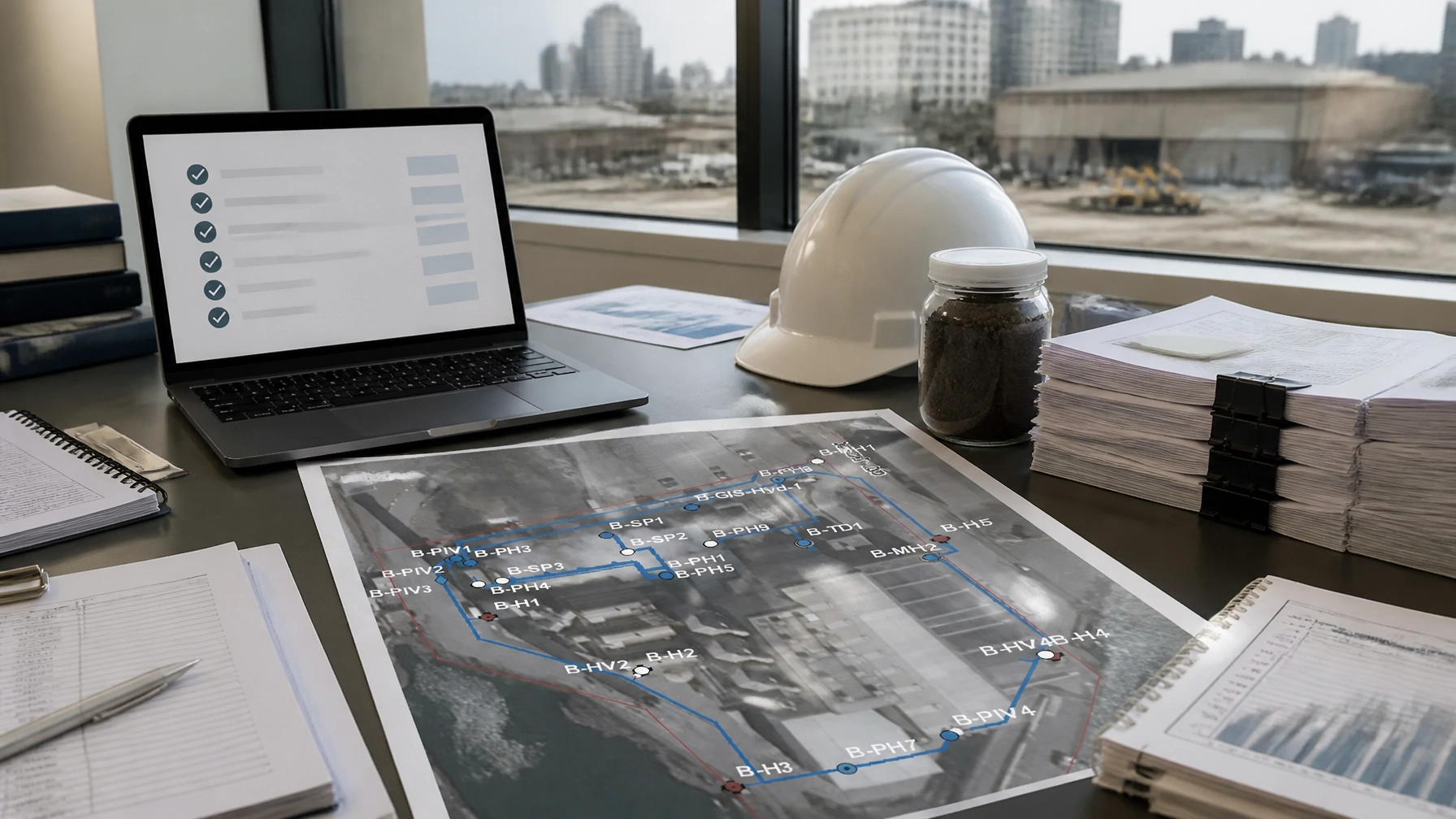
The LSRP reviews prior Phase I and Phase II reports, incident numbers, NJDEP correspondence, UST records, prior NFA or RAO documents, permits, deed notices, monitoring data, and the intended future use.
This step often identifies the actual schedule risk. Missing laboratory data, inconsistent block and lot information, open invoices, or an unrecorded deed notice can create problems late in the transaction.
2. Investigation and delineation
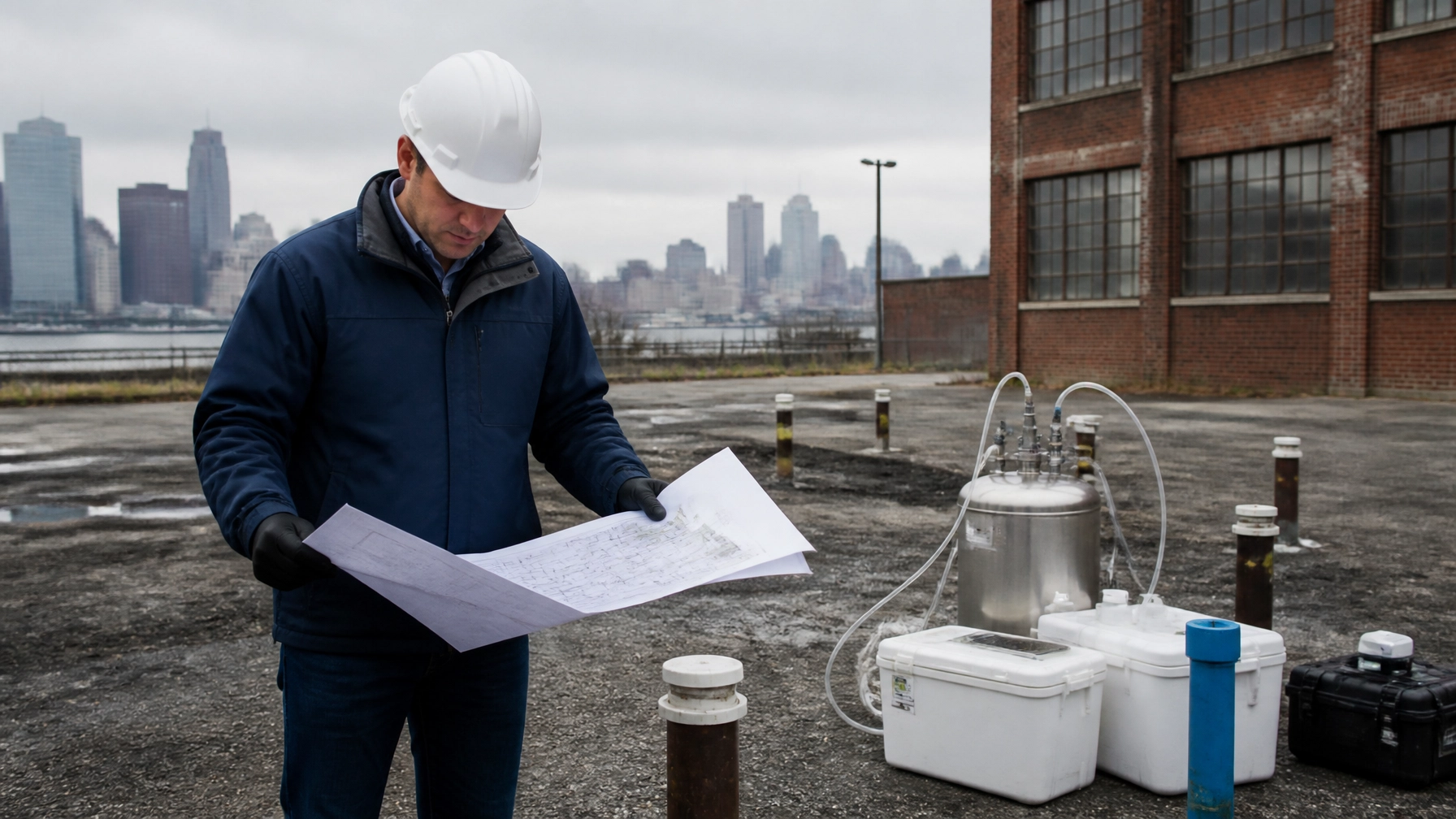
The LSRP evaluates the areas of concern and determines whether additional work is needed.
Depending on the site, that may include:
- Soil borings and excavation confirmation samples
- Groundwater wells and plume delineation
- Soil gas and indoor air testing
- Vapor intrusion pathway evaluation
- Historic fill characterization
- UST closure documentation
- Off-site source or commingled plume evaluation
A soil-only issue may move toward closure after confirmation sampling. Groundwater and vapor cases often require more data, seasonal monitoring, or long-term controls.
3. Remedial design and implementation
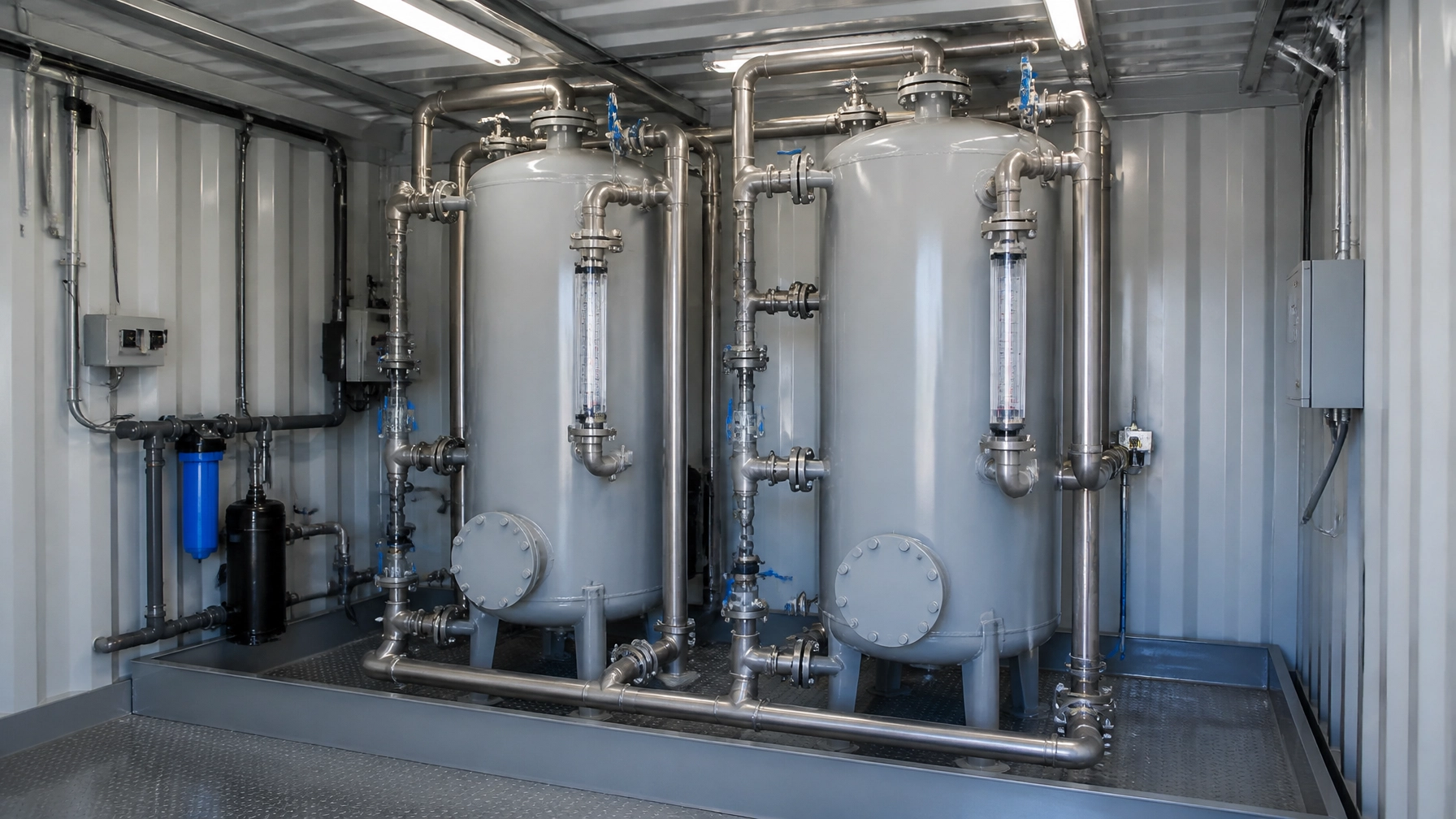
The remedy may involve excavation, disposal, clean fill, in-situ treatment, groundwater treatment, a cap, a vapor mitigation system, monitored natural attenuation, or a combination of controls.
The best remedy is not always the largest remedy. It is the remedy that protects people and the environment while fitting the site’s end use, construction plan, schedule, and budget.
Envicon supports this phase through NJ LSRP Services and Remediation and Brownfield Redevelopment.
4. Remedial Action Permits and controls
A Remedial Action Permit, or RAP, is generally required when contamination remains and long-term engineering or institutional controls are needed.
Examples include:
- Soil caps or covers
- Deed notices
- Groundwater Classification Exception Areas
- Groundwater monitoring
- Active treatment systems
- Vapor barriers or sub-slab depressurization systems
- Long-term indoor air monitoring
The RAO remedial action permit process in New Jersey is not a formality. The permit establishes how the remedy remains protective after construction ends.

5. RAO preparation and LSRP verification
The LSRP prepares the RAO after the remediation and required controls are complete.
The LSRP must be able to verify the work, not simply rely on an inherited narrative. That means reviewing field records, laboratory data, waste documentation, confirmation samples, construction photographs, monitoring results, and permit conditions.
The RAO should clearly state:
- Whether the outcome is unrestricted, limited restricted, or restricted use.
- Whether it covers the entire site or specific areas of concern.
- Which media were addressed.
- Which contamination remains.
- Which notices and continuing obligations apply.
- Which permits remain active.
If the record does not support the proposed language, the LSRP should not issue the RAO.
6. Post-RAO and post-NFA compliance
Closure does not always mean the file is finished.
For properties with active RAPs, owners may need to complete:
- Biennial remedial action protectiveness certifications
- Engineering control inspections
- Groundwater monitoring
- Indoor air or vapor monitoring
- Site Management Plan activities
- Financial assurance requirements
- Permit fees
- Deed notice maintenance
- Ownership or permittee transfers
This is the practical meaning of NJDEP post-NFA compliance. A property can have an old NFA letter or a current RAO and still carry ongoing responsibilities.
Indoor air, IANA, soil, and groundwater
Indoor air and vapor intrusion deserve separate attention in 2026. A property that was acceptable for an industrial use may require additional evaluation before residential conversion, school use, childcare use, or substantial renovation.
Where applicable under current REAL requirements, an Indoor Air Notification Area, or IANA, may function as an institutional control for an indoor air or vapor intrusion concern. The exact boundaries, notifications, data, mapping, and continuing requirements must be confirmed against current NJDEP requirements and the case-specific LSRP strategy.
An IANA does not replace investigation. It documents a condition that must be controlled and communicated.
Groundwater can also remain above applicable standards under a CEA, monitored natural attenuation remedy, or active treatment system. In those cases, the RAO and RAP must be read together.
Deficiencies that commonly extend the timeline
A closure package can stall because of details that appear administrative but carry regulatory consequences.
Before setting a closing date, confirm:
- NJDEP fees and oversight invoices are paid.
- UST registration records match the RAO.
- Well decommissioning reports have been submitted where required.
- Permit numbers and effective dates are correct.
- Deed notices are recorded and searchable.
- Site maps match the actual restricted areas.
- Sampling data supports the stated cleanup conclusion.
- Indoor air and vapor pathways have been addressed.
- The RAO scope does not accidentally exclude an area needed for the transaction.
- The buyer understands which obligations transfer.
A deficiency may require a corrected document, additional sampling, a permit modification, or another agency submission. That is why the fastest path is usually a complete file, not a rushed signature.
What to put in the property transaction file
For a property sale in Newark, Jersey City, Hoboken, Bayonne, or another New Jersey market, organize the transaction file before diligence begins.
Include:
- Current and historic Phase I and Phase II reports
- Preliminary Assessment, Site Investigation, and Remedial Investigation documents
- Remedial Action Work Plans and Remedial Action Reports
- Current and historic NFA letters or RAOs
- RAPs, deed notices, CEAs, and related maps
- Indoor air, soil gas, groundwater, and soil data
- Well permits and decommissioning reports
- UST registration and closure records
- NJDEP invoices and payment confirmations
- Biennial certifications and monitoring reports
- NJDEP correspondence and deficiency responses
- Site Management Plans and engineering control inspection records
- Ownership and permittee transfer documents
A well-organized transaction file gives counsel, lenders, and buyers a clear answer to the question that matters: what remains, who is responsible, and what must happen next?
Why the LSRP RAO timeline in Jersey City is site-specific
A Jersey City waterfront parcel may involve historic fill, groundwater contamination, vapor intrusion, utility corridors, and redevelopment restrictions. A warehouse in Bergen County may have USTs and petroleum impacts. A former industrial property in Newark or Essex County may involve multiple incident numbers, commingled plumes, or an ISRA transaction.
The schedule depends on:
- Contaminant type and concentration
- Number of affected media
- Soil, groundwater, and vapor conditions
- Building occupancy and future use
- Required permits
- Remedy construction
- Confirmation sampling
- Agency comments
- Historic records and data gaps
- Ownership and permittee changes
- Whether controls remain after the RAO
That is why a consultant promising the same closure date for every site is giving you a sales answer, not an engineering answer.
Envicon works directly with owners, attorneys, developers, contractors, and regulators to build the closure path around the actual site. From our Jersey City headquarters, we support projects across Jersey City and Hudson County, Newark, Hoboken, Bayonne, Bergen County, and Essex County.
Takeaway
An RAO is not simply the new name for an NFA letter. It is a professional determination supported by investigation, remediation, permits, fees, records, and continuing compliance.
For 2026 planning:
- Confirm whether the site has an RAO, historic NFA, or open remediation obligation.
- Separate current adopted requirements from proposals and outdated summaries.
- Review soil, groundwater, indoor air, and vapor conditions together.
- Identify RAPs, IANAs, CEAs, deed notices, and engineering controls early.
- Clear invoices, deficiencies, and well records before the transaction deadline.
- Build the schedule around the site, not a generic industry promise.
The right objective is not just a closure document. It is a clear, defensible path to a buildable and transferable property.
Talk to Envicon about your New Jersey closure timeline