A geotechnical report cost in Jersey City, NJ depends on the work required to answer one question: can the proposed building be supported safely and economically on the soils that are actually beneath the site?
There is no responsible flat fee for every property. A two-story infill project, a warehouse in Newark, and a high-rise near the Hudson River do not need the same boring program, laboratory testing, or foundation analysis.
Jersey City, Newark, Hoboken, Bayonne, Bergen County, and Essex County also present recurring challenges. Historic fill, soft compressible soils, shallow groundwater, buried debris, restricted access, and nearby structures can all change the scope.
The right budget starts with the right investigation.
What drives geotechnical investigation cost in Hudson County?
A geotechnical investigation cost in Hudson County is usually driven by field production, laboratory testing, engineering analysis, and site logistics. The report itself is only one part of the work.
| Scope item | Cost driver | Why it changes the fee |
|---|---|---|
| Soil borings | Number, spacing, and depth | More borings provide better coverage across variable fill and soil layers. Deeper borings require additional drilling time and material handling. |
| SPT sampling | Frequency and refusal depth | Standard Penetration Testing helps estimate soil density and strength. Difficult soils or deep foundations may require more frequent sampling. |
| Groundwater | Depth, seasonal conditions, and monitoring duration | A single groundwater observation may not represent seasonal high water. Monitoring wells, piezometers, or repeat readings add field and reporting work. |
| Historic fill | Thickness, variability, and debris | Fill can change over short distances. It may require additional borings, test pits, classification, compaction review, or settlement analysis. |
| Rock | Depth and hardness | Rock coring, refusal verification, and rock quality evaluation require different equipment and field time than soil drilling. |
| Laboratory testing | Classification, strength, and compressibility | Testing may include grain size, moisture, Atterberg limits, consolidation, direct shear, or other project-specific analyses. |
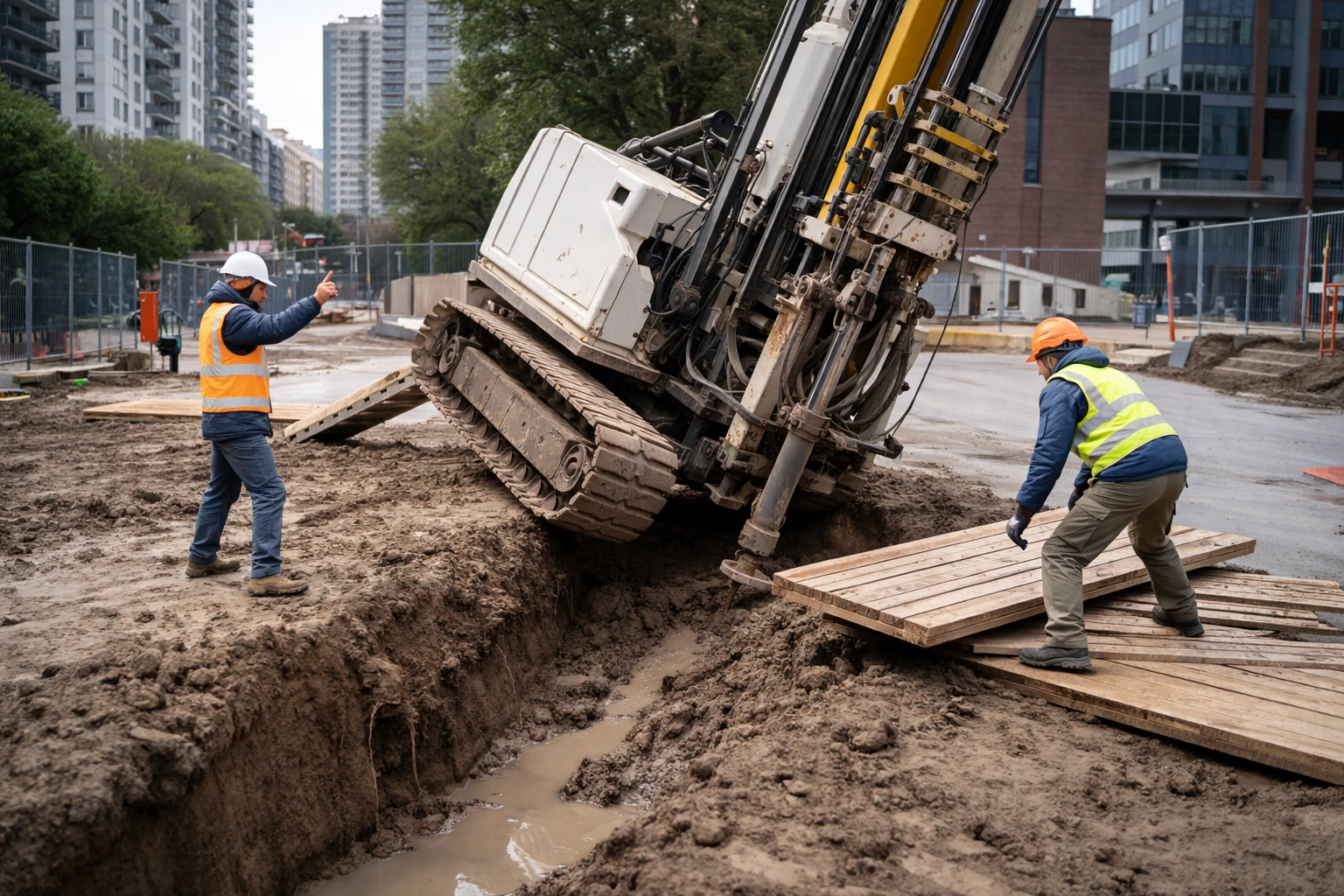
| Access and traffic control | Urban congestion and restricted staging | Jersey City and Hoboken sites may need small rigs, sidewalk protection, lane closures, utility coordination, or off-hour work. |
| Foundation design | Shallow footings, mats, piles, or alternatives | The engineer must evaluate bearing capacity, settlement, lateral loads, and constructability for the proposed structure. |
| Retaining walls and excavation | Wall height, surcharge, and adjacent structures | Urban excavation may require lateral earth pressure parameters, shoring input, underpinning coordination, and monitoring recommendations. |
| Dewatering | Excavation depth, groundwater, and discharge route | Below-grade construction can require a dewatering plan, treatment, discharge permitting, and field monitoring. |
| Schedule | Standard, expedited, or phased delivery | Rush work may require priority drilling, laboratory coordination, senior review, and compressed reporting. |
A proposal should show these assumptions clearly. If it only says “geotechnical report,” you do not yet know what you are buying.
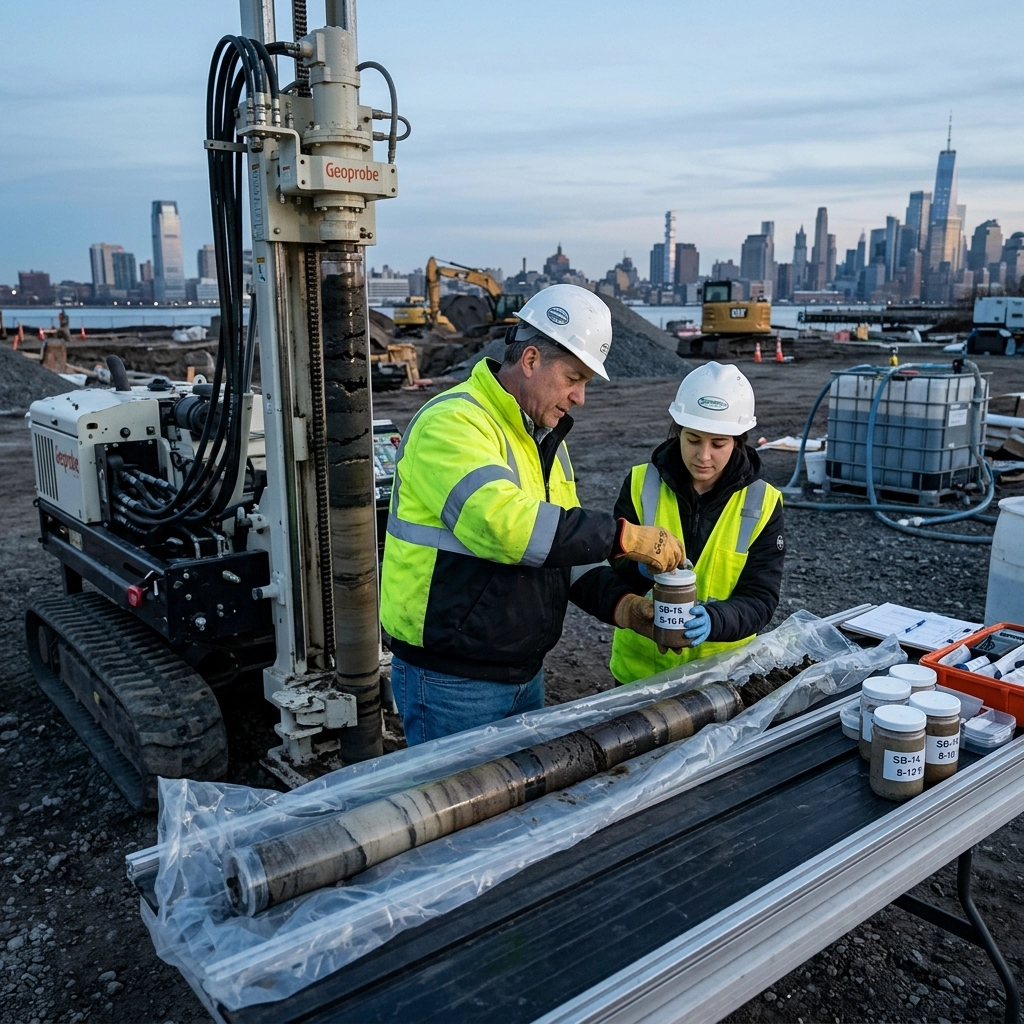
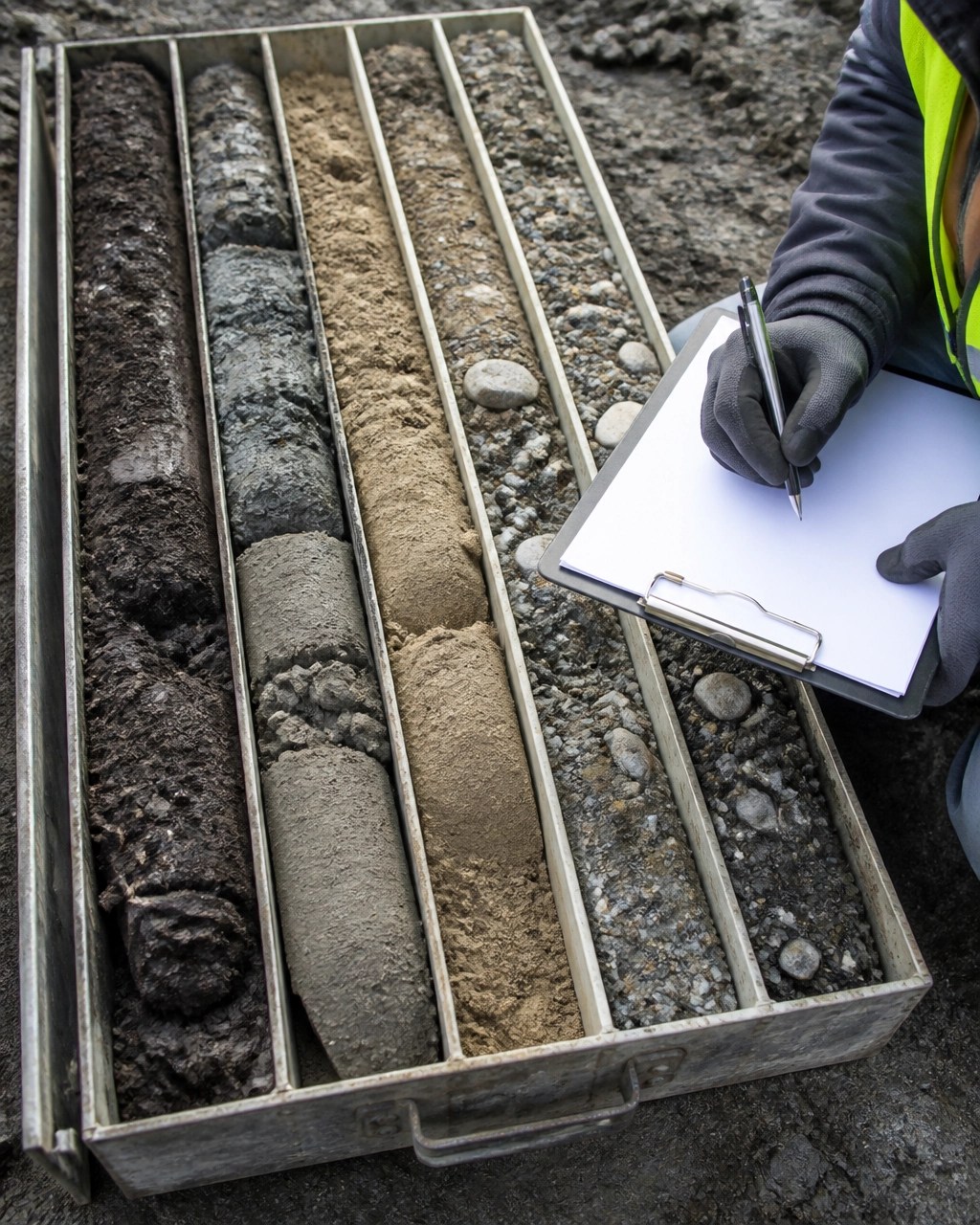
Soil borings, SPT, and what the field program should answer
A boring program should be tied to the building design, not selected from a generic template.
For a typical commercial development, the engineer may need to determine:
- The thickness and consistency of historic fill.
- The transition from fill to native soil.
- Soil density and strength using SPT data.
- The depth to groundwater and potential seasonal fluctuation.
- The depth to competent bearing material or bedrock.
- Whether shallow foundations are practical.
- Whether piles, micropiles, helical piles, or another deep foundation system should be considered.
- Whether excavation will require shoring, underpinning, or dewatering.
- Whether settlement could affect the building, sidewalks, utilities, or neighboring structures.
SPT sampling is commonly performed with split-spoon samplers under ASTM D1586 procedures. The resulting blow counts help the engineer evaluate relative density and consistency. SPT data does not replace engineering judgment. It must be interpreted alongside boring logs, groundwater observations, laboratory results, site history, and the proposed structural loads.
Why fill and groundwater matter in Jersey City
Historic fill is common across waterfront and former industrial areas of Jersey City, Hoboken, Bayonne, Newark, and nearby Hudson and Essex County communities. Fill may include sand, silt, gravel, brick, concrete, ash, wood, or other construction debris.
The problem is not simply that fill exists. The problem is that its properties may vary significantly across the site.
One boring may encounter dense granular material. Another may encounter loose debris or soft silty soil. That variability can affect:
- Footing size and allowable bearing pressure.
- Total and differential settlement.
- Slab-on-grade performance.
- Utility trench stability.
- Excavation support.
- Pavement and loading dock design.
- Soil reuse and disposal planning.
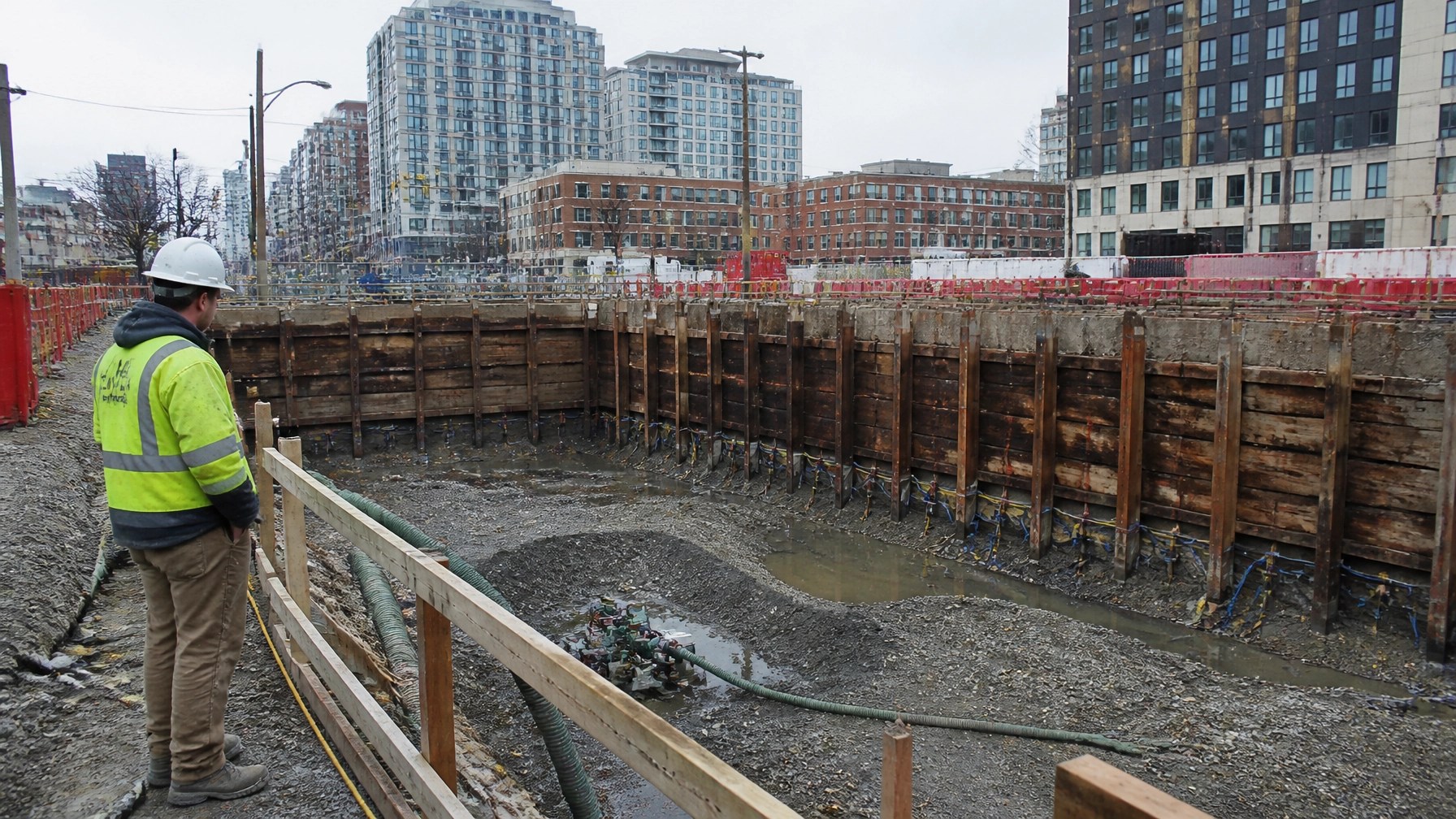
Groundwater adds another layer. A high water table can affect basement design, temporary excavation stability, concrete placement, uplift, and construction sequencing. If the project requires dewatering, the design team may also need to evaluate treatment, discharge, and permitting requirements.
Envicon’s civil and geotechnical engineering team coordinates subsurface investigation with civil design and construction support. That matters because the boring program should reflect the actual grading, foundation, stormwater, and excavation plan.
“Subsurface data first, design second.” That is how avoidable foundation surprises are reduced.
Foundation design, retaining walls, slabs, and settlement
A geotechnical report for commercial development in New Jersey should do more than describe soil layers. It should provide design recommendations that the structural and civil teams can use.
Depending on the project, those recommendations may address:
Shallow foundations
The report may provide allowable bearing pressures, footing embedment, estimated settlement, subgrade preparation, and construction observation requirements.
Deep foundations
If near-surface soils are weak or compressible, the engineer may evaluate driven piles, micropiles, helical piles, drilled shafts, or other systems. The selection depends on loads, vibration sensitivity, access, groundwater, adjacent structures, and installation constraints.
Slabs and floor systems
Recommendations may address slab subgrade preparation, unsuitable soil removal, engineered fill, vapor protection, drainage layers, modulus values, and whether ground improvement is appropriate.
Retaining walls and excavation support
The report may provide lateral earth pressure parameters, surcharge considerations, drainage requirements, seismic coefficients where applicable, and recommendations for temporary or permanent support systems.
Settlement and liquefaction
Settlement analysis becomes important where fill or compressible native soils support new loads. Liquefaction screening may also apply where site-specific soil, groundwater, seismic, and project conditions warrant it. It should not be added as a generic line item without first understanding the site and design.
Geotechnical report versus Phase II ESA versus PCA
These reports answer different questions.
Geotechnical report
A geotechnical report evaluates physical subsurface conditions for design and construction. It focuses on soil behavior, bearing capacity, settlement, groundwater, foundations, slabs, retaining walls, excavation, and related engineering issues.
Phase II ESA
A Phase II Environmental Site Assessment evaluates whether contamination may be present and, if so, its nature and extent. Sampling may target petroleum, volatile organic compounds, metals, PFAS, pesticides, or other constituents based on recognized environmental conditions.
A geotechnical boring can encounter contamination, but a geotechnical report is not a Phase II ESA. The sampling plan, laboratory methods, data quality requirements, and regulatory objectives are different.
Property Condition Assessment
A PCA evaluates the physical condition of existing improvements. It may cover roofs, façades, mechanical systems, electrical systems, plumbing, site features, and capital repair needs.
A PCA may identify visible cracking or settlement. It usually does not replace a subsurface investigation when the project requires foundation design or a technical explanation of soil-related movement.
One property may need all three reports. The key is to define the decision each report must support before fieldwork begins.
What to request in a Jersey City geotechnical proposal
Before selecting a consultant, ask for a written scope that identifies:
- Proposed boring locations, count, and depths.
- Whether SPT sampling is included.
- Whether groundwater observations or monitoring wells are included.
- Laboratory tests and the number of samples.
- Treatment of historic fill and suspected debris.
- Rock coring or refusal procedures, if applicable.
- Foundation, slab, pavement, and retaining wall recommendations.
- Settlement and liquefaction evaluation, where applicable.
- Excavation, shoring, underpinning, and dewatering input.
- Utility clearance and traffic control responsibilities.
- Anticipated schedule and report delivery date.
- Whether the report will be sealed by a New Jersey Professional Engineer.
- Whether construction-phase support is included or priced separately.
NJDOT guidance provides a useful example of the level of documentation expected on public infrastructure work. Its Design Submission Procedure calls for boring logs, boring location plans, subsurface profiles, laboratory or in-situ test results, groundwater information, and interpretation of engineering properties. Private building projects may have different requirements, but the principle is the same: the report must connect field data to design decisions.
The NJDOT Design Manual for Bridges and Structures and NJDOT Procedures Manual are additional official references for subsurface exploration, groundwater observations, foundation evaluation, and reporting.
How Envicon approaches the work
Envicon does not sell a generic report. We build a site-specific investigation around your structure, schedule, lender, architect, and construction plan.
Our team works across Jersey City, Newark, Hoboken, Bayonne, Bergen County, Hudson County, and Essex County. We coordinate civil, geotechnical, and environmental questions early so one investigation does not create another round of fieldwork later.
That regional experience matters on constrained urban sites. Access, traffic, utilities, groundwater, historic fill, and neighboring foundations must be addressed before the drill rig arrives.
For a local starting point, see our Jersey City engineering and environmental services. If contamination is also a concern, we can coordinate the geotechnical scope with a Phase II ESA rather than treating the two investigations as unrelated assignments.
Takeaway
The cost of a geotechnical report in Jersey City, NJ is determined by the decisions the report must support.
Boring count and depth matter. So do SPT sampling, groundwater, fill, rock, laboratory testing, access, traffic control, foundations, retaining walls, slabs, settlement, liquefaction, dewatering, and schedule.
The lowest fee is not always the lowest project cost. A thin report that misses variable fill or groundwater can lead to redesign, delays, change orders, and avoidable construction risk.
The better approach is direct and practical: define the building, investigate the subsurface, connect the findings to design, and keep one accountable team involved through construction.
Ready to scope your project?
- Call Envicon now
- Get a free quote today
- Use the proprietary project cost estimator
- View civil, geotechnical, and environmental services