A Jersey City, Hoboken, Bayonne, Newark, or other North Jersey excavation can require more than a pump and a discharge hose. If groundwater enters the excavation, the project team must evaluate withdrawal volume, pumping duration, water quality, discharge destination, sewer capacity, and site constraints before excavation begins.
The key state threshold is 100,000 gallons per day. But that threshold does not create one universal permit pathway. The applicable approval depends on how much water the project expects to divert, how long pumping will continue, whether the excavation is confined, and where the water will go.
This article explains the main issues behind an NJ water allocation permit for construction dewatering, with a focus on Hudson, Bergen, and Essex counties.
Start with the expected pumping condition
A common mistake is to calculate dewatering volume from the pump’s nameplate capacity alone. That number may describe what the pump can move under ideal conditions. It does not necessarily describe what the excavation will actually withdraw.
The permitting review should use a defensible estimate of expected field conditions, including:
- Number and size of pumps
- Wellpoint, sump, or deep-well configuration
- Anticipated flow rate during peak groundwater intrusion
- Expected pumping hours per day
- Excavation depth and footprint
- Seasonal groundwater conditions
- Tidal influence near the Hudson River or Newark Bay
- Drawdown requirements
- Planned duration, including separate excavation phases
- Backup pumping and emergency bypass conditions
For planning purposes, convert the expected rate to gallons per day:
Gallons per day = gallons per minute × 60 × pumping hours per day
A pump operating at 70 gallons per minute for 24 hours moves approximately 100,800 gallons per day. That is close enough to the regulatory threshold that assumptions matter.
The calculation should reflect expected pumping conditions, not an optimistic average that ignores peak inflow.
What the 100,000-gallon threshold means in New Jersey
NJDEP’s water allocation rules generally use a 100,000-gallon-per-day threshold for regulated diversions of ground or surface water. Construction dewatering projects above that threshold may fall into different categories depending on duration and configuration.
The primary official reference is NJDEP’s Water Allocation Permits, Registrations, and Utilization guidance.
| Project condition | Potential NJDEP pathway | Planning issue |
|---|---|---|
| More than 100,000 gallons per day for 30 days or less | Short Term Water Use Permit-by-Rule, often involving BWA-003 and BWA-004 | Advance notification and reporting may apply |
| Construction dewatering at or above the threshold for more than 30 days in a consecutive 365-day period | Temporary Dewatering Permit, commonly associated with BWA-002 | The rate, duration, source, and impact analysis must support the application |
| More than 100,000 gallons per day from a fully confined excavation or cofferdam | Dewatering Permit-by-Rule, commonly associated with BWA-005 | The physical configuration and containment must be documented |
| Long-term, non-construction diversion | Water Allocation Permit | This is not the same as a temporary construction dewatering condition |
| Any volume discharged to a regulated receiving system | Separate discharge review may apply | NJPDES, sewer authority, treatment, or local approvals may be required |
The distinction between less than 31 days and more than 30 days matters. A short-term pathway should not be treated as a way to continue pumping indefinitely. If field conditions extend the work beyond the approved period, the project may need to stop pumping or obtain a different approval.
NJDEP’s Temporary Dewatering Permit application and dewatering guidance should be reviewed using the current forms and instructions before submission.
Permit-by-rule does not mean no requirements
A permit-by-rule can be more streamlined than an individual permit, but it still carries conditions.
Depending on the category, the project may need to:
- Notify NJDEP before starting the diversion
- Submit the proposed location and pumping method
- Document the anticipated daily volume
- Track actual pumping rates and daily totals
- Protect nearby wells and surface water supplies
- Repair or replace affected water supplies if the diversion causes damage or loss
- Maintain records for inspection
- Stop or modify pumping if the approved conditions no longer apply
A confined excavation or cofferdam may qualify for a dewatering permit-by-rule when the withdrawal is physically contained. That does not mean every excavation with shoring qualifies. The project team must evaluate whether the sidewalls, cutoff system, cofferdam, or other controls actually contain the dewatering impacts.
A temporary dewatering permit may be the more appropriate pathway where pumping is expected to continue beyond 30 days, where the excavation is not fully confined, or where the withdrawal could exceed natural replenishment.
The discharge destination changes the analysis
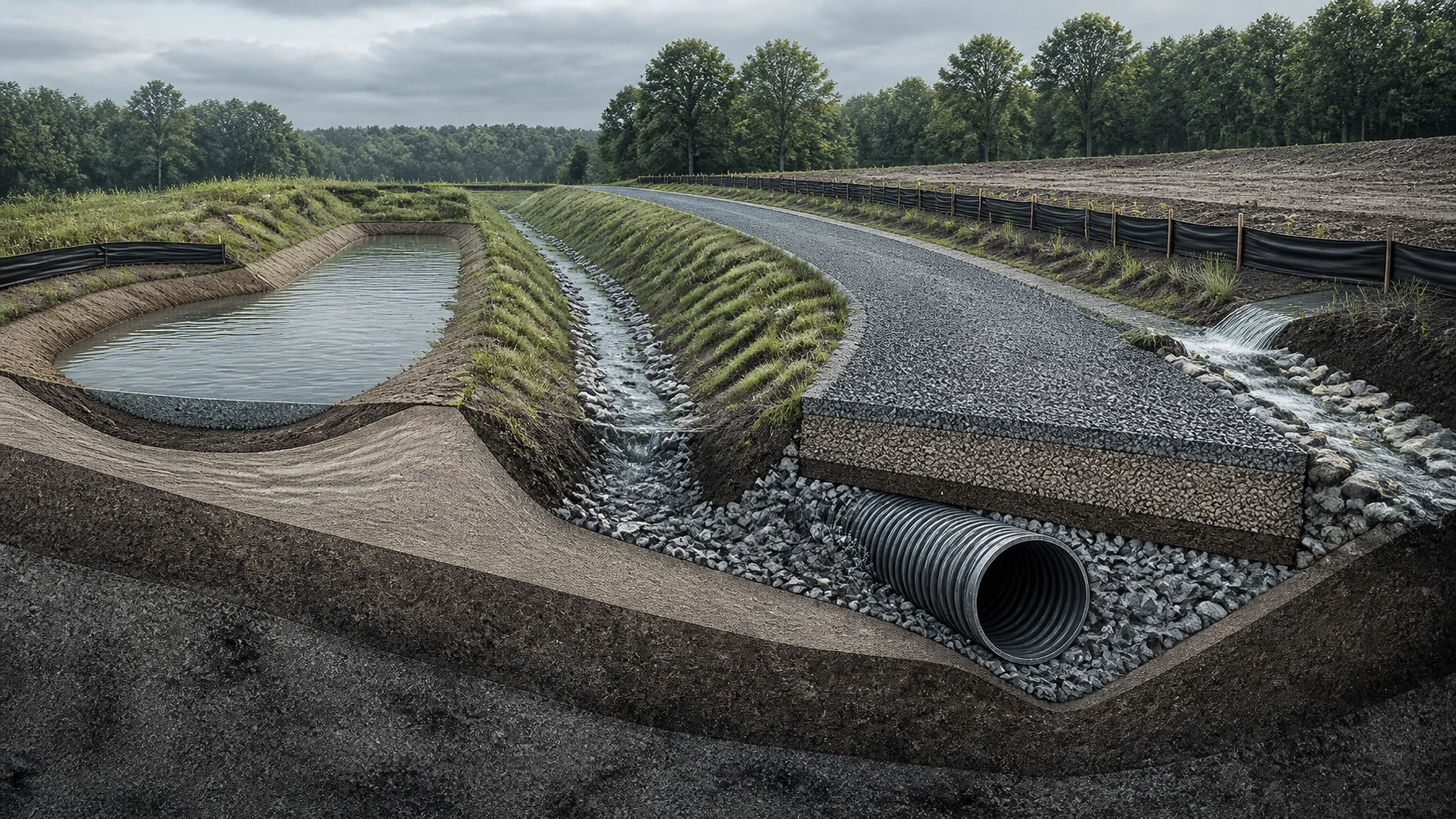
Water allocation addresses the diversion. It does not automatically authorize the discharge.
The discharge pathway must be evaluated separately.

Discharge to surface water
Uncontaminated groundwater discharged to a surface water body may require authorization under the NJPDES Construction Dewatering general permit. NJDEP describes this category as applying to short-term construction dewatering discharges containing negligible levels of pollutants.
The project may need:
- Pre-discharge sampling
- Laboratory analysis
- Flow and discharge-point information
- Treatment or filtration controls
- Certification forms
- Advance submission before discharge begins
- Monitoring during the discharge
The NJPDES Construction Dewatering pathway is not a substitute for treatment when groundwater contains petroleum compounds, volatile organic compounds, metals, PFAS, or other pollutants. Known or suspected contaminated groundwater may require a different NJPDES authorization, treatment system, or Site Remediation Program coordination.
Review NJDEP’s permit application forms and checklists before selecting a discharge category.
Discharge to a sanitary or combined sewer
Discharge to a sewer requires approval from the receiving sewer authority. In Jersey City, that may involve the Jersey City Municipal Utilities Authority. In parts of Hudson County, the North Hudson Sewerage Authority may be involved.
The authority may require:
- A temporary discharge or sewer connection application
- Estimated and maximum flow rates
- Sampling data
- Treatment details
- A discharge location
- Flow controls and monitoring
- Professional engineer certifications
- Fees
- Restrictions on discharge timing or duration
A sewer connection is not automatically available because a nearby manhole exists. The receiving system may have hydraulic, treatment, or combined sewer overflow limitations.
Projects should also evaluate whether the proposed discharge or related sewer work triggers NJDEP Treatment Works Approval requirements. The commonly cited 8,000-gallon-per-day threshold for certain sewer improvements can become important even when the project’s groundwater diversion is below 100,000 gallons per day.
Sampling and treatment must match the site
Before selecting a treatment train, review existing Phase II data, historical operations, groundwater results, soil results, and nearby regulatory files.
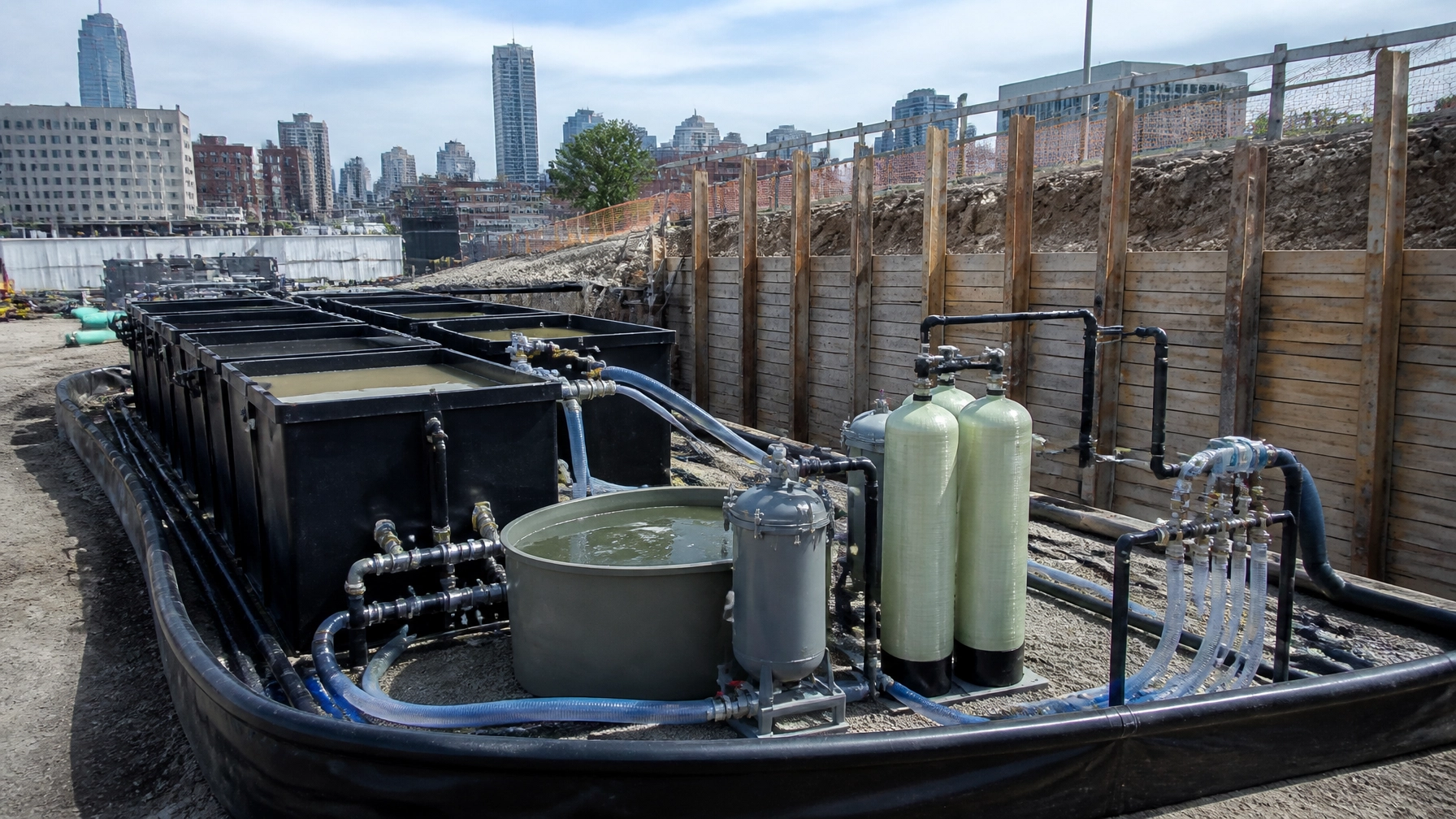
Potential treatment components include:
- Settling tanks for suspended solids
- Bag filters
- Granular activated carbon for petroleum compounds and many volatile organics
- Metals treatment
- pH adjustment
- Oil-water separation
- Cartridge filtration
- Flow equalization
- Final sampling before discharge

Treatment selection should follow the actual analytical profile. A clear-looking discharge can still contain dissolved contamination. Conversely, a properly designed treatment system can create a reliable discharge path when the project team designs it early and maintains it in the field.
This is where environmental and civil coordination matters. The dewatering system needs enough space, power, access, secondary containment, sampling points, and maintenance planning. It also needs to work with excavation support, truck traffic, utility protection, and the construction schedule.
Hudson County planning issues
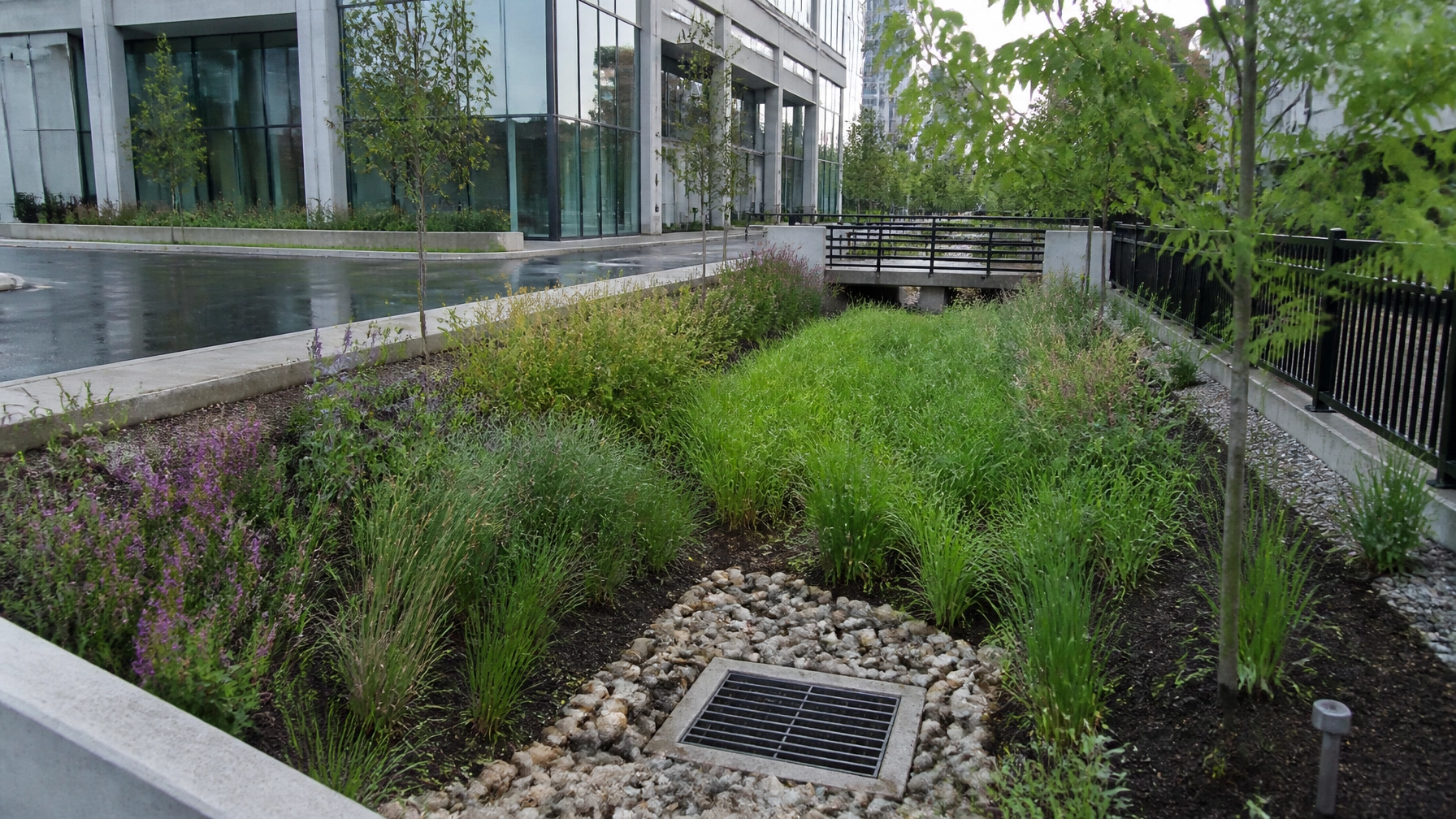
Jersey City, Hoboken, and Bayonne projects often face additional constraints because of dense development, shallow groundwater, tidal influence, and combined sewer infrastructure.
Before excavation, evaluate:
- Flood Hazard Area mapping
- Coastal and tidal wetlands constraints
- Hudson River or Newark Bay influence
- Existing bulkheads and waterfront structures
- Adjacent building foundations
- Utility corridors
- Combined sewer restrictions
- Local sewer authority requirements
- Construction stormwater authorization
- Soil and groundwater contamination
- Settlement and drawdown impacts
Flood Hazard Area or coastal approvals can be separate from the water allocation and discharge approvals. A project can have a valid dewatering plan and still need additional authorization for excavation, grading, fill, shoreline work, or work within a regulated flood area.
Newark and Essex County projects may present different receiving-water and sewer conditions, but the same planning principle applies. Identify the discharge route and permit dependencies before mobilizing excavation equipment.
Construction dewatering decision tree
Use this as an initial screening tool, not as a substitute for NJDEP confirmation.
-
Will expected diversion reach or exceed 100,000 gallons per day?
- No: Continue reviewing NJPDES, sewer, stormwater, flood, and local requirements.
- Yes: Continue to the next question.
-
Will pumping continue for more than 30 days in a consecutive 365-day period?
- No: Evaluate the Short Term Water Use Permit-by-Rule and applicable reporting requirements.
- Yes: Evaluate a Temporary Dewatering Permit.
-
Is the withdrawal from a fully confined excavation or cofferdam?
- Yes: Evaluate whether the Dewatering Permit-by-Rule applies to the specific configuration.
- No: Continue with the temporary dewatering permit analysis.
-
Where will the water go?
- Surface water: Evaluate NJPDES Construction Dewatering or another appropriate DSW authorization.
- Sanitary or combined sewer: Obtain sewer authority approval and evaluate NJDEP requirements.
- Groundwater reinjection or infiltration: Review NJPDES discharge-to-groundwater requirements.
- Off-site treatment: Confirm transporter, facility, sampling, and waste-profile requirements.
-
Does sampling show contamination or elevated solids?
- Yes: Design treatment and select the correct NJPDES or remediation pathway.
- No: Confirm that the receiving authority accepts the proposed discharge and monitoring plan.
Plan the water pathway before excavation
A dewatering problem discovered after excavation starts becomes a schedule problem. Pumps may need to run continuously, treatment equipment may not fit, discharge approval may be incomplete, and contaminated groundwater may require a different permit than expected.
Envicon Group supports developers, contractors, attorneys, and public agencies with pre-excavation water management reviews, civil and geotechnical coordination, sampling plans, treatment design support, regulatory submissions, and field oversight. Our civil and geotechnical services and compliance and permitting services are built around the actual conditions of New York and New Jersey projects.
For Jersey City projects, see our Jersey City location page.
Sources and official resources
- NJDEP Water Allocation Permits, Registrations, and Utilization
- NJDEP Temporary Dewatering Permit Application, BWA-002
- NJDEP Dewatering Guidance
- NJDEP NJPDES Permit Applications and Checklists
- NJDEP Linear Construction Guidance
- North Hudson Sewerage Authority Sewer Connections
- Jersey City Municipal Utilities Authority
Request a pre-excavation water-management review
Before your project reaches groundwater, confirm the expected pumping volume, duration, treatment needs, discharge destination, and agency approvals.
- Call Envicon now at (917) 764-2171
- Request a scope and free project consultation
- Review Envicon compliance and permitting services
The right dewatering strategy does more than remove water. It protects the schedule, controls environmental risk, and keeps the excavation moving with a clear path to compliance.