For a Newark, Jersey City, Hoboken, Bayonne, or broader Hudson, Bergen, or Essex County site, there is no reliable universal price per gallon for PFAS groundwater remediation.
The real NJDEP PFAS groundwater remediation cost depends on the treatment objective, groundwater flow, PFAS profile, discharge pathway, and how long the system must operate. A small, controlled extraction system with low flow may have a very different budget from a multi-well pump-and-treat system managing a large plume with GenX, PFOA, PFOS, and co-contaminants.
NJDEP itself states that treatment costs vary based on system size, the number of wells or sources, water chemistry, organic matter, and the degree of contamination. That same principle applies to industrial and redevelopment sites.
The right starting point is not a vendor quote for a carbon vessel. It is a defensible site model tied to NJDEP requirements, discharge authorization, treatment performance, and closure.
Why PFAS treatment costs are difficult to predict
PFAS compounds behave differently from many conventional groundwater contaminants. They are persistent, mobile, and often present as a mixture of long-chain and short-chain compounds.
The PFAS profile matters.
PFOA and PFOS may respond well to granular activated carbon under the right conditions. Shorter-chain compounds and compounds such as GenX may require a different treatment approach or a more complex treatment train. Organic matter and co-contaminants can consume treatment capacity before the system reaches its design endpoint.
EPA describes the core design variables clearly:
“GAC can be 100 percent effective for a period of time, depending on the type of carbon used, the depth of the bed of carbon, flow rate of the water, the specific PFAS you need to remove, temperature, and the degree and type of organic matter as well as other contaminants.”
That is why an estimated PFAS treatment cost in Jersey City cannot be transferred directly to another property in Newark or Bayonne. The site conditions control the budget.
The main cost drivers for NJDEP PFAS groundwater remediation
1. Flow rate and extraction system design
The first major question is how much groundwater must be extracted and treated.
A low-flow system using one extraction well may require a compact treatment skid. A larger plume may require multiple extraction wells, trench systems, conveyance piping, equalization tanks, pumps, controls, backup power, and secondary containment.
Extraction design also affects:
- Well installation and development
- Trenching and underground piping
- Electrical service
- Flow control and instrumentation
- Hydraulic capture
- Site access and security
- Winterization and freeze protection
EPA’s groundwater guidance emphasizes capture zone analysis for pump-and-treat systems. A system that does not control the plume may still generate significant operating costs without achieving the required remedial objective.
2. PFAS concentration and chemical profile
A treatment system must be designed around the compounds detected, not just total PFAS.
The investigation should evaluate:
- PFOA
- PFOS
- PFNA
- GenX or HFPO-DA
- PFBS and PFHxS where applicable
- Other site-specific PFAS identified through history and analytical data
- Precursors or co-contaminants that may affect treatment
For a GenX groundwater cleanup in New Jersey, the treatment design must account for the compound’s behavior and the applicable NJDEP groundwater criteria or standards. Do not assume that a system designed for PFOA and PFOS will automatically perform the same way for GenX.
3. Total organic carbon and co-contaminants
Total organic carbon, suspended solids, iron, manganese, petroleum compounds, VOCs, and other constituents can change treatment performance.
GAC capacity may decrease when organic matter competes for adsorption sites. Iron and suspended solids can foul vessels or increase pretreatment requirements. VOCs may require air treatment or a separate treatment stage.
This is where a bench-scale or pilot study can prevent a costly full-scale redesign.
4. Treatment technology selection
Granular activated carbon
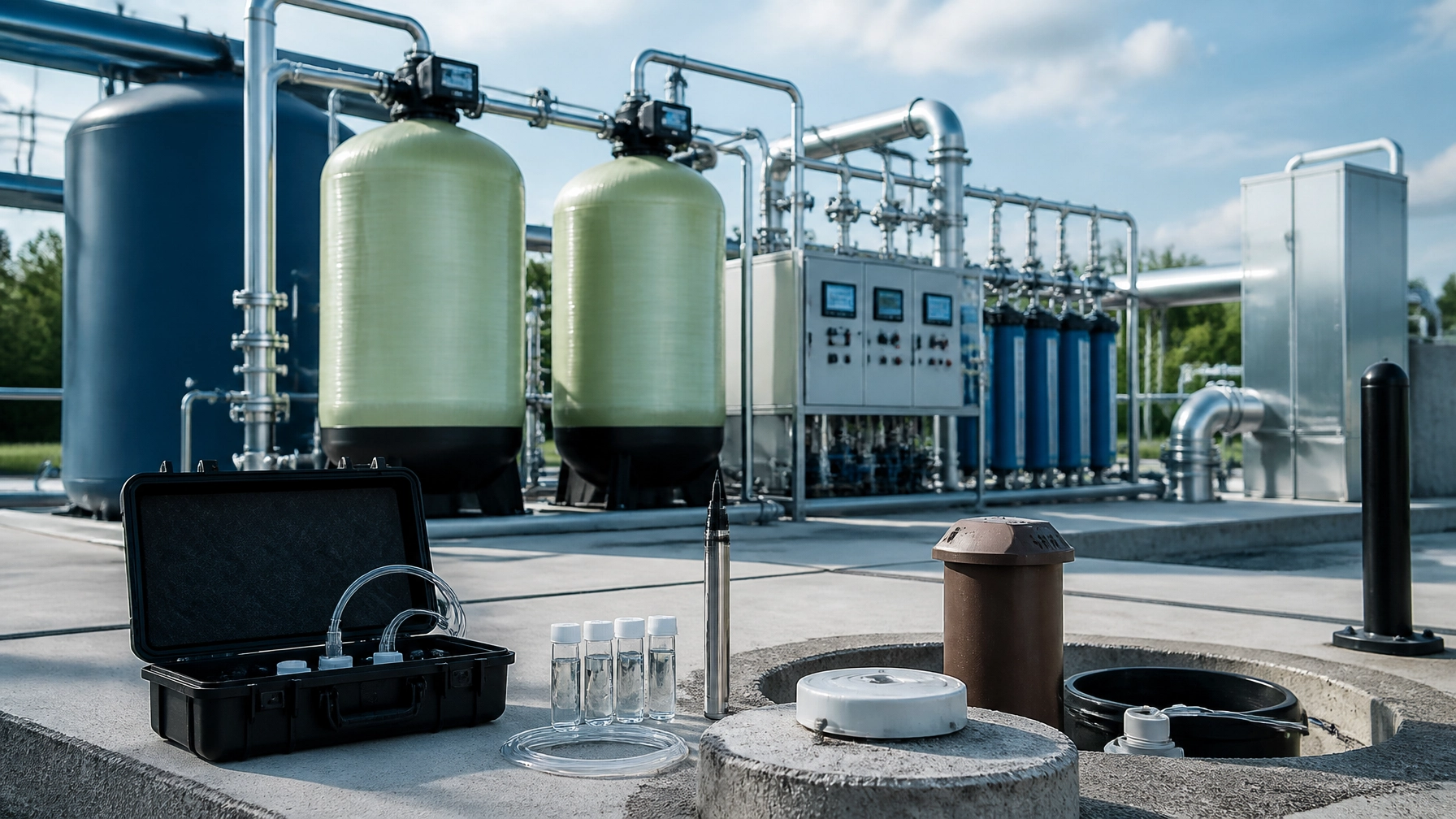
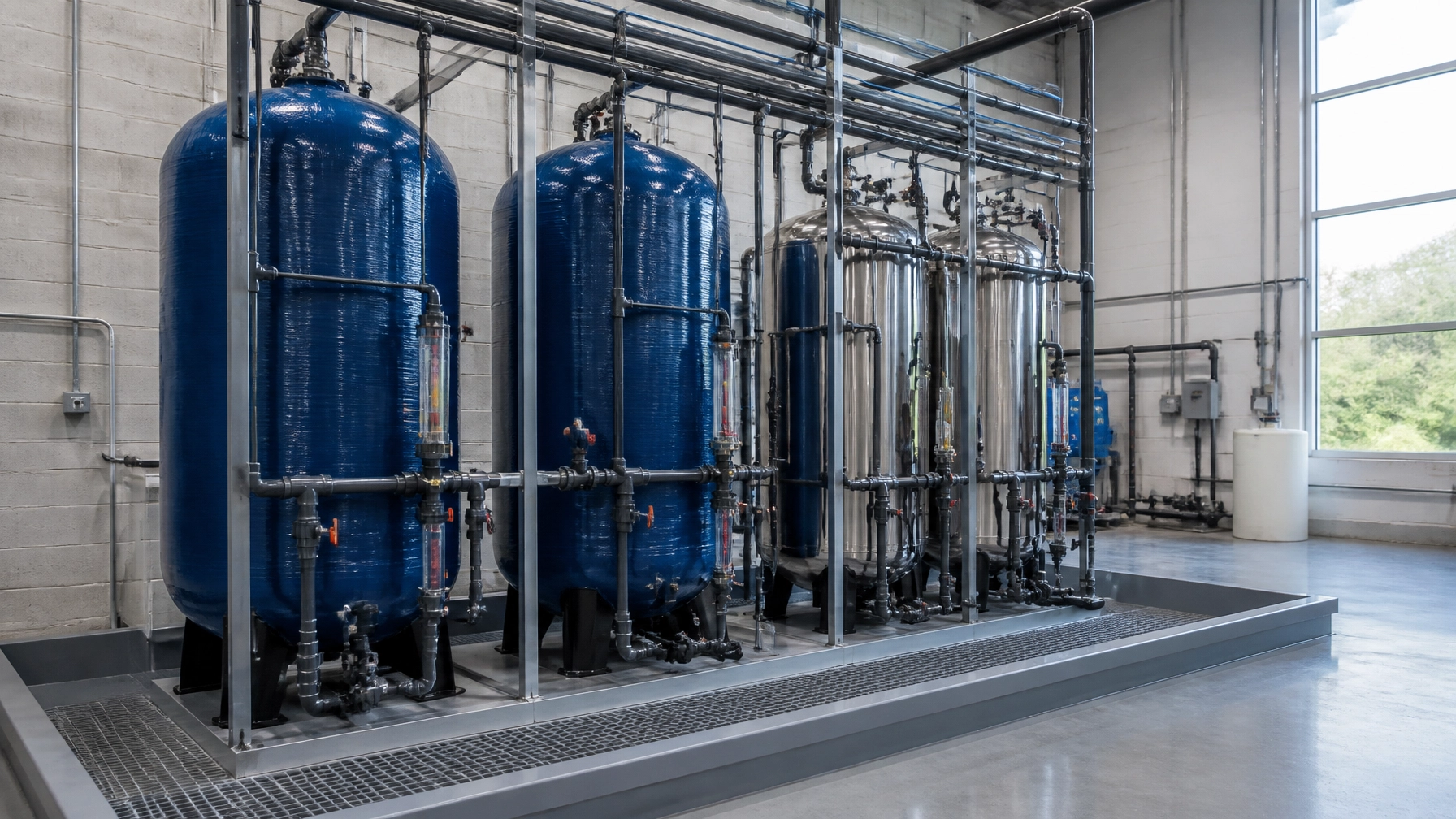
GAC is a common treatment option for PFAS groundwater. It can be installed in lead-lag vessels so that the first vessel captures most of the loading while the second vessel provides polishing and breakthrough protection.
GAC costs include:
- Vessel rental or purchase
- Carbon media
- Pretreatment
- Piping and controls
- Sampling ports
- Media delivery and removal
- Changeout labor
- Transportation and residuals management
Ion exchange
Anion exchange resin can provide high PFAS capacity and may be effective for compounds that are less favorable for GAC. It can also create different residuals and changeout requirements.
The GAC ion exchange cost in Hudson County depends on resin selection, flow, PFAS concentrations, water chemistry, vessel configuration, and whether the media is single-use or regenerated.
IX may reduce vessel size or changeout frequency in some applications. It may also carry higher media or disposal costs. The comparison must use lifecycle cost, not only initial equipment pricing.
Foam and emerging treatment options
Foam fractionation and other destruction or concentration technologies may be considered for specific waste streams. They are not automatically appropriate for every New Jersey groundwater site.
Before using an emerging option, the project team should confirm:
- Demonstrated performance for the site’s PFAS profile
- Treatment residuals
- Regulatory acceptance
- Discharge implications
- Backup treatment requirements
- Closure documentation needs
For many 2026 sites, GAC and ion exchange remain the most practical starting points for ex situ treatment. EPA also identifies high-pressure membranes as effective, but they can generate a concentrated waste stream that requires additional management.

Preliminary cost planning table
The following table is a budgeting framework. It is not a universal price list.
| Cost category | What drives the cost | Budgeting question |
|---|---|---|
| Site investigation | Number of wells, plume size, geology, analytical program, access | Is the conceptual site model strong enough to size the remedy? |
| Extraction system | Flow, number and depth of wells, trenching, pumps, electrical work | Can the system capture the plume without excessive pumping? |
| Pilot testing | PFAS profile, TOC, competing contaminants, media selection | Will pilot data reduce uncertainty about breakthrough and changeout? |
| GAC treatment | Vessel size, carbon type, empty bed contact time, changeout frequency | How quickly will the carbon reach breakthrough? |
| Ion exchange | Resin type, loading, regeneration or disposal, vessel configuration | Does IX reduce lifecycle cost for this PFAS mixture? |
| Pretreatment | Solids, iron, manganese, oil, VOCs, biological growth | What must be removed before the PFAS media? |
| Discharge authorization | NJPDES or DGW requirements, receiving pathway, sampling | Can treated water be discharged, reinjected, or sent off site? |
| Monitoring and laboratory work | Sampling frequency, PFAS method, number of locations | What data will NJDEP and the LSRP require? |
| Residuals management | Spent carbon, resin, concentrate, sludge, transportation | Who manages and documents PFAS-bearing residuals? |
| O&M and closure | Operators, electricity, inspections, reporting, endpoint verification | How long will the system run and what proves completion? |
NJDEP estimates approximately $600 to $900 per water sample for certain PFAS analyses using EPA Methods 537 or 537.1. That figure applies to laboratory analysis, not the full cost of sampling, field labor, data validation, reporting, or regulatory coordination.
Discharge authorization can change the entire budget
Treatment does not end when the water exits the vessel.
A site may need authorization for discharge to groundwater, surface water, a publicly owned treatment works, or another approved pathway. NJDEP’s PFAS strategy states that Discharge to Groundwater permit applications must include PFAS monitoring in the pollutant analysis summary. Certain permits may also require ongoing quarterly monitoring.
Before finalizing the treatment design, confirm:
- The proposed discharge pathway
- Applicable NJPDES or DGW requirements
- Influent and effluent sampling requirements
- Effluent limits or action levels
- Flow limits
- Sampling locations and frequencies
- Reporting format
- Residuals and waste characterization
- Contingency plans if the system misses performance targets
Discharge uncertainty is one of the most common reasons early PFAS budgets fail. A treatment system may be technically capable of removing PFAS, but the project still needs an approved destination for the treated water and a compliant plan for spent media.
Monitoring, reporting, LSRP oversight, and closure
A PFAS remedy requires more than equipment installation.
The LSRP must connect the investigation, remedial action, monitoring program, regulatory submissions, and final closure strategy. That may include:
- Groundwater elevation measurements
- Extraction and treatment flow records
- Influent, intermediate, and effluent samples
- Sentinel well monitoring
- PFAS trend analysis
- Sampling for VOCs, metals, petroleum, or other co-contaminants
- System inspection and maintenance records
- Media breakthrough evaluation
- NJDEP reporting
- Remedy optimization
- Long-term monitoring
- Response Action Outcome or other closure documentation
For an acquisition or redevelopment project, the closure strategy should be considered before treatment begins. A system designed only to reduce concentrations may not produce the data needed to demonstrate that the remedial objective has been achieved.
Envicon supports these decisions through Phase II Environmental Site Assessments, remediation and brownfield services, and New Jersey LSRP services.
A practical 2026 budgeting sequence
For a PFAS site in Newark, Jersey City, Hoboken, Bayonne, or another northern New Jersey market, we recommend this sequence:
- Review historical operations, AFFF use, industrial processes, waste handling, and potential source areas.
- Confirm the PFAS analytical program and laboratory reporting limits.
- Build or update the conceptual site model.
- Define groundwater flow, plume boundaries, and potential receptors.
- Evaluate PFOA, PFOS, PFNA, GenX, and other relevant PFAS.
- Characterize TOC, solids, metals, petroleum, VOCs, and other co-contaminants.
- Compare GAC, ion exchange, membranes, foam, or hybrid treatment.
- Complete pilot testing when media performance is uncertain.
- Confirm discharge authorization before purchasing equipment.
- Prepare a lifecycle budget that includes monitoring, changeouts, residuals, reporting, and closure.
The best budget is not the lowest initial equipment quote. It is the one that accounts for the full remedial path.
What Envicon brings to the project
Large consulting firms often separate the person who writes the report from the person managing the treatment system. That creates delays between field conditions, engineering decisions, and regulatory communication.
Envicon keeps those functions connected.
Our team works directly with property owners, developers, attorneys, contractors, laboratories, regulators, and treatment vendors. We provide clear documentation, field-level oversight, and practical decisions tied to your schedule.
We do not treat PFAS as a media-only problem. We evaluate the source, the groundwater, the treatment system, the discharge pathway, the regulatory endpoint, and the business consequence of delay.
That is how we help turn a contaminated or underused site into a buildable asset.
FAQ
What is the average NJDEP PFAS groundwater remediation cost?
There is no defensible average for all New Jersey sites. Cost depends on flow, plume size, PFAS concentrations, PFAS profile, treatment technology, discharge pathway, operating duration, media changeouts, monitoring, and closure requirements.
What is the PFAS remediation cost in Newark, NJ?
A Newark site may require a higher budget when access is constrained, utilities are congested, groundwater extraction affects active operations, or the site includes VOCs, metals, petroleum, or historic fill. A site-specific investigation and treatment evaluation are necessary before pricing.
What affects PFAS treatment cost in Jersey City?
The major factors include extraction well layout, available space for a treatment compound, flow rate, groundwater chemistry, discharge authorization, utility requirements, and the need to maintain operations during treatment.
What is the cost difference between GAC and ion exchange in Hudson County?
Neither technology has a universal installed price. GAC may have different media and changeout costs than IX. The correct comparison uses projected media life, residuals handling, labor, sampling, disposal, and total operating duration.
Is PFAS pump-and-treat appropriate for every New Jersey site?
No. Pump-and-treat may be appropriate where hydraulic control and extracted-water treatment can achieve the remedial objective. Other sites may require source control, in situ treatment, monitored natural attenuation, or a combined remedy.
How does an LSRP affect the budget?
The LSRP helps define the investigation, remedial action, regulatory submissions, monitoring program, and closure documentation. Early LSRP involvement can reduce redesign, avoid unsupported assumptions, and align treatment with the eventual regulatory endpoint.
Takeaway
The right way to estimate NJDEP PFAS groundwater remediation cost is to price the entire system, not just the treatment vessels.
Flow, PFAS chemistry, TOC, co-contaminants, extraction design, GAC or IX selection, pilot testing, discharge authorization, media changeouts, residuals, monitoring, reporting, LSRP oversight, and closure all belong in the first budget.
If you are evaluating a PFAS site in Newark, Jersey City, Hoboken, Bayonne, Hudson, Bergen, or Essex County, Envicon can help you replace a broad cost guess with a defensible path forward.
Next steps
- Call Envicon now at (917) 764-2171
- Get a free quote today
- Use our proprietary project risk screener
- Review our remediation and brownfield services