If you are preparing a Remedial Action Permit for a Newark, Jersey City, Hoboken, Bayonne, Hudson, Bergen, or Essex County site, do not start with an old PDF saved on your server.
NJDEP changed the RAP process on February 17, 2026. The updated framework combines soil, groundwater, and indoor air permitting into a more integrated process. It also changes how applicants submit forms, pay fees, document institutional controls, and manage future permit modifications.
The practical rule is simple: verify the current form, confirm the correct media components, and build the electronic filing package before the permit application goes in.
NJDEP’s official SRP Forms Library remains the controlling source for current forms, instructions, and version dates.
What changed on February 17, 2026?
NJDEP’s February 17 update introduced a revised RAP structure for soil, groundwater, and indoor air. The agency’s February 17, 2026 listserv notice and related electronic submission and online payment notice explain the transition.
The major changes include:
- A combined RAP approach for soil, groundwater, and indoor air
- Electronic submission requirements for applicable RAP-related documents
- Online payment procedures for RAP fees
- Focused RAP categories within the initial or new media component application
- A formal Indoor Air Notification Area, or IANA
- GIS documentation for indoor air controls and site boundaries
- New applications for technical modifications, administrative changes, combinations, and termination
- Revised protectiveness and biennial certification procedures
The forms released with the original update represented six core application categories. NJDEP has since posted revised versions of several forms, so the February 17 date identifies the process change, not necessarily the form version you should download today.
The six core NJDEP RAP form categories
The current NJDEP Forms Library organizes RAP applications by the action you need to take. The following categories cover most 2026 Newark and North Jersey filings.
1. Initial or new media component application
The RAP Initial / New Media Component Application covers an initial RAP, a Focused RAP, or the addition of a new media component.
The form addresses:
- Soil
- Groundwater
- Indoor air
- Focused RAP categories I through V
- New media added to an existing permit
A site with an existing soil RAP and a newly identified vapor intrusion pathway may need to add indoor air as a media component. That is different from starting a new permit from scratch.
2. Technical modification application
Use the RAP Technical Modification Application when the requested change affects the technical basis of the permit.
Examples may include:
- A revised groundwater monitoring approach
- A change to an engineering control
- A modified indoor air monitoring plan
- New sampling data that changes the control boundary
- A change in remedial action performance or maintenance requirements
A technical modification should not be treated as an administrative correction. The supporting technical record must show why the change remains protective.
3. Administrative changes application
The RAP Administrative Changes Application addresses changes that do not alter the technical remedy.
Potential examples include:
- Ownership or entity name changes
- Nontechnical corrections
- Certain contact or administrative updates
- Changes that do not affect the approved control or monitoring requirements
When the change affects the remedy, media, monitoring, or protectiveness, use the technical modification pathway instead.
4. Application to administratively combine RAPs
The RAP Application to Administratively Combine RAPs supports consolidation of separate permits.
This matters for older sites where soil, groundwater, and indoor air were managed under separate RAPs. A combined permit can reduce duplicated tracking and make future certifications easier to manage.
The combination does not erase the underlying obligations. It organizes them under one permit structure.
5. Termination or removal of a media component
The RAP Termination/Removal of a Media Component Application is used when an entire RAP or a specific media component is ready for termination or removal.
Do not confuse removal of a media component with an automatic RAO. The LSRP must confirm that the applicable remedial objectives, controls, monitoring, and documentation support the requested action.
6. Contact information change form
The RAP Contact Information Change Form keeps the permit record current when responsible parties, consultants, or other contacts change.
This is a small form with a real project impact. Outdated contacts can cause missed notices, delayed certifications, and avoidable regulatory confusion.
Indoor air controls and the new IANA framework
For sites with vapor intrusion concerns, the most important 2026 development may be the Indoor Air Notification Area.
An IANA is an institutional control associated with indoor air concerns. It identifies an area where building occupants, municipalities, counties, or other stakeholders may need notice because subsurface contamination could affect indoor air.
The NJDEP IANA guidance and the IANA Fact Sheet Form should be reviewed with the RAP application.
A Newark or Jersey City indoor air RAP package may need to address:
- Indoor air and sub-slab sampling data
- The buildings and parcels within the notification area
- Occupant and municipal notification
- GIS boundaries and spatial deliverables
- Indoor air monitoring and maintenance
- Engineering controls such as sub-slab depressurization
- Long-term documentation supporting protectiveness

The Vapor Intrusion Mitigation Monitoring and Maintenance Checklist is also listed by NJDEP with a February 17, 2026 version date. Use it when the site includes an active mitigation or monitoring obligation.
If your project needs sub-slab sampling, indoor air testing, or mitigation design, Envicon’s vapor intrusion assessment team can coordinate the field work, data review, and regulatory documentation under one scope.
GIS is now part of permit readiness
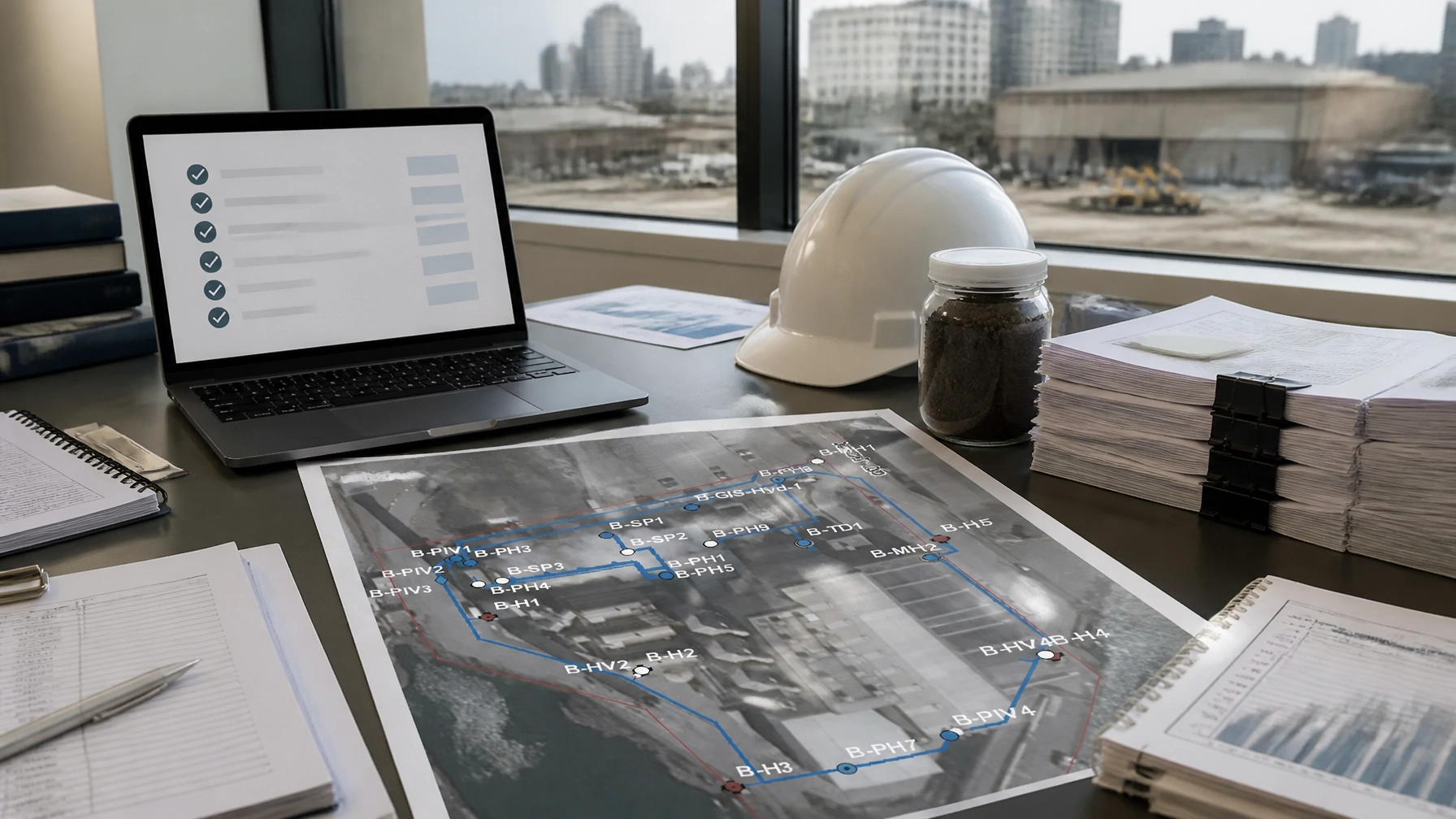
IANA and other institutional controls require more than a narrative description. The control area must be mapped accurately and tied to the site record.
Your GIS package should be checked for:
- Correct parcel and building boundaries
- Consistent coordinate systems
- Monitoring well and sampling point locations
- The IANA or other control boundary
- Buildings or receptors requiring notification
- Consistency between the map, application, and technical report
- Required GIS file formats and naming conventions
NJDEP has published additional CSRR GIS resources and announced the availability of IANA and site boundary GIS layers in 2026.

A boundary error can create a practical problem even when the technical remedy is sound. The wrong parcel line can affect notifications, deed restrictions, future construction planning, and lender review.
Electronic filing checklist for Newark and Hudson County sites
Before submitting a 2026 RAP package, confirm the following:
- Download the current form from the NJDEP SRP Forms Library
- Record the form version and date in your internal filing log
- Identify whether the filing covers soil, groundwater, indoor air, or multiple media
- Determine whether the application is initial, focused, technical, administrative, combined, or termination-related
- Review the applicable NJDEP instructions before completing the PDF
- Confirm whether the document must be submitted through NJDEP Online, by email, or through another specified method
- Complete online fee payment when required
- Verify that the Remedial Action Report is submitted through the required online service before the RAP application, where applicable
- Include the correct GIS files and maps for IANA, CEA, or other institutional controls
- Review the applicable incomplete application checklist
- Confirm that supporting reports, certifications, and signatures match the application
- Save proof of submission, payment, and delivery
NJDEP lists separate Notice of Incomplete checklists for soil, groundwater, and indoor air RAP applications. These checklists are useful for quality control. They should not automatically be included with the RAP application unless the applicable instructions say otherwise.
Protectiveness and biennial certification
A RAP does not end when NJDEP approves the application. Active controls require ongoing management.
The Remedial Action Protectiveness / Biennial Certification Form is used to document whether the remedy remains protective.
Depending on the site, the certification may require review of:
- Engineering controls
- Institutional controls
- Groundwater monitoring
- Indoor air monitoring
- Vapor mitigation operation and maintenance
- Deed notices
- IANA or CEA conditions
- Changes in site use or building occupancy
- New data that could affect protectiveness
For a property in Newark, Jersey City, Hoboken, or Bayonne, the certification should be coordinated with ownership, property management, contractors, and the LSRP. A missed inspection or undocumented system change can create a compliance issue later.
Why local NJDEP coordination matters
RAP forms are not a substitute for a permit strategy.
A large national consultant may hand your team a form package and leave the project manager to resolve missing data, inconsistent maps, or agency comments. Envicon works differently. Our NJ LSRP services connect field investigation, regulatory coordination, GIS, vapor intrusion, and closure planning.
That matters across Newark, Jersey City, Hoboken, Bayonne, and the broader Hudson, Bergen, and Essex County market. The work must fit the site, the building, the agency requirements, and the transaction deadline.
As NJDEP states, its mission is to “reduce the number of contaminated sites in New Jersey to ensure the protection of public health and the environment and ready sites for redevelopment.” The permit package should support that outcome, not create another delay.
Final takeaway
The 2026 NJDEP remedial action permit forms are part of a broader shift toward integrated permits, electronic processing, GIS-supported institutional controls, and documented long-term protectiveness.
Before filing:
- Verify the current form version.
- Select the correct RAP pathway.
- Include every applicable media component.
- Map IANA and other institutional controls accurately.
- Confirm electronic submission and fee instructions.
- Use the incomplete application checklists as an internal quality-control tool.
- Plan biennial certification and future permit changes from the start.
For Newark and North Jersey sites, permit readiness is not paperwork alone. It is a coordinated technical and regulatory process that keeps the project moving.
Talk with Envicon about your NJDEP RAP package
- Call Envicon now at (917) 764-2171
- Get a free project quote
- View our NJ LSRP and environmental services