DRAFT | Pending approval.
A Phase II ESA cost in New Jersey is not determined by a standard menu of borings and laboratory tests. It is determined by the question your Phase I ESA raises and the level of certainty your lender, attorney, regulator, or development team needs before moving forward.
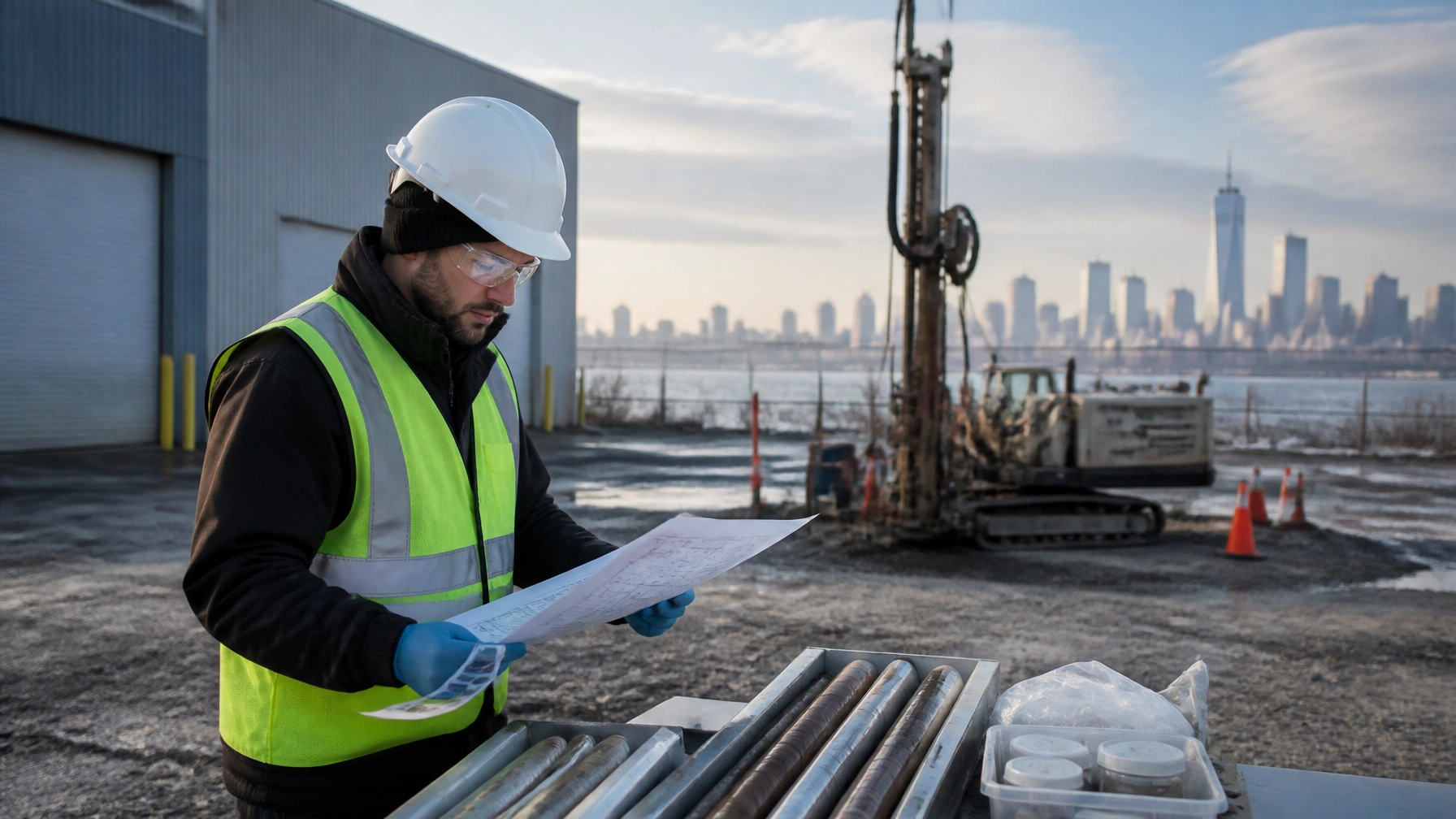
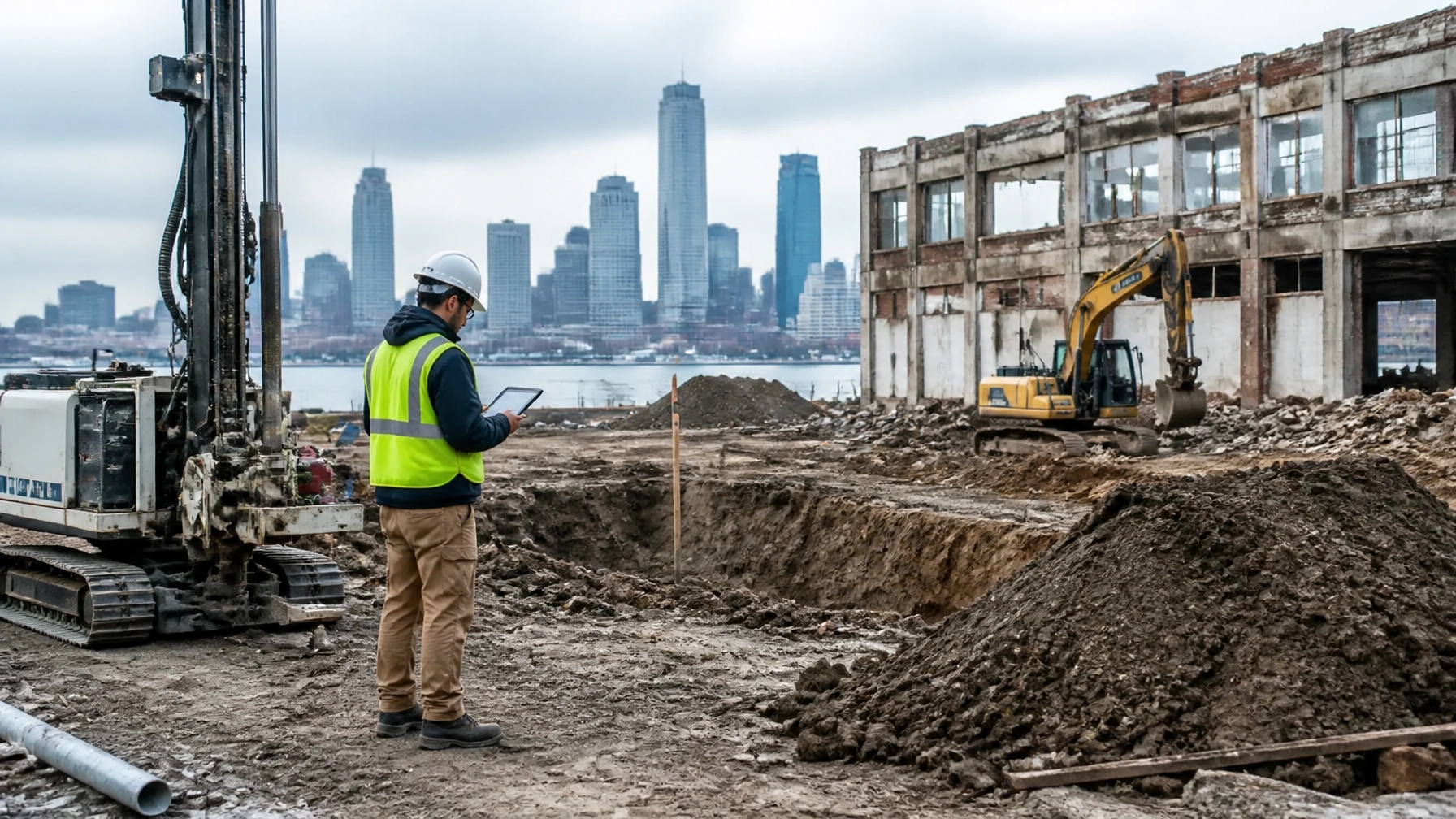
That distinction matters in Newark, Jersey City, Hoboken, Bayonne, and throughout Hudson, Bergen, and Essex counties. Urban sites often have layered fill, former industrial uses, buried tanks, complex utilities, limited access, and nearby buildings that create vapor concerns.
A defensible Phase II scope should answer three questions:
- Is contamination present?
- What media and areas are affected?
- What does the finding mean for the transaction, construction plan, and regulatory path?
Phase II ESA cost in New Jersey starts with the Phase I findings
A Phase I ESA does not automatically require a Phase II. It identifies recognized environmental conditions, or RECs, and determines whether intrusive investigation is necessary.
The Phase I-to-Phase II decision usually follows this logic:
- No REC or credible environmental concern: A Phase II may not be necessary.
- Limited REC with a defined source: A targeted investigation may resolve the concern.
- Multiple RECs or uncertain site history: A broader investigation may be appropriate.
- Industrial history, historic fill, USTs, or potential off-site migration: Soil, groundwater, and possibly vapor sampling may be needed.
- Lender or regulatory requirement: The scope may need to follow specific protocols, reporting formats, or LSRP oversight.
The objective is not to collect the largest possible number of samples. It is to collect enough data to make a reliable decision.
As NJDEP states in N.J.A.C. 7:26E, the purpose of a site investigation is to determine whether additional remediation is necessary because contaminants are present above applicable standards or criteria. That is the standard we use to build a practical investigation plan.
Targeted investigation versus expanded investigation
A targeted Phase II investigation focuses on a defined environmental question.
For example, a former auto repair facility may require soil borings near a suspected UST, dispenser island, and waste oil storage area. A former dry cleaner may require soil, groundwater, and vapor evaluation near the building footprint and sewer connections.
An expanded investigation may be necessary when:
- The Phase I identifies several RECs.
- Historical operations are poorly documented.
- Soil conditions suggest widespread historic fill.
- Groundwater is shallow or likely to migrate off site.
- Contamination is found during initial field work.
- The proposed use includes residential occupancy.
- The lender wants a more complete estimate of environmental exposure.
- NJDEP or an LSRP pathway requires additional characterization.
A targeted scope can reduce unnecessary cost and delay. An underscoped investigation can create the opposite result. If the first round of sampling does not answer the lender’s question, the project pays for another mobilization, more laboratory work, and a revised report.
What drives soil boring and groundwater sampling cost in New Jersey?
The following factors control the cost of a Phase II environmental site assessment in NJ.
1. REC type and contaminant profile
A petroleum REC does not require the same analytical program as a chlorinated solvent concern, historic fill condition, dry cleaner, metal plating operation, or suspected PFAS source.
The consultant must select analytes based on historical use and field observations. Common analytical groups may include:
- Volatile organic compounds
- Semivolatile organic compounds
- Target analyte list metals
- PCBs
- Petroleum-related compounds
- PFAS where required or supported by site history
- Vapor intrusion compounds
- Site-specific constituents
Broader analyte lists increase laboratory cost. They also increase the amount of data that must be reviewed and explained.
2. Number, depth, and location of borings
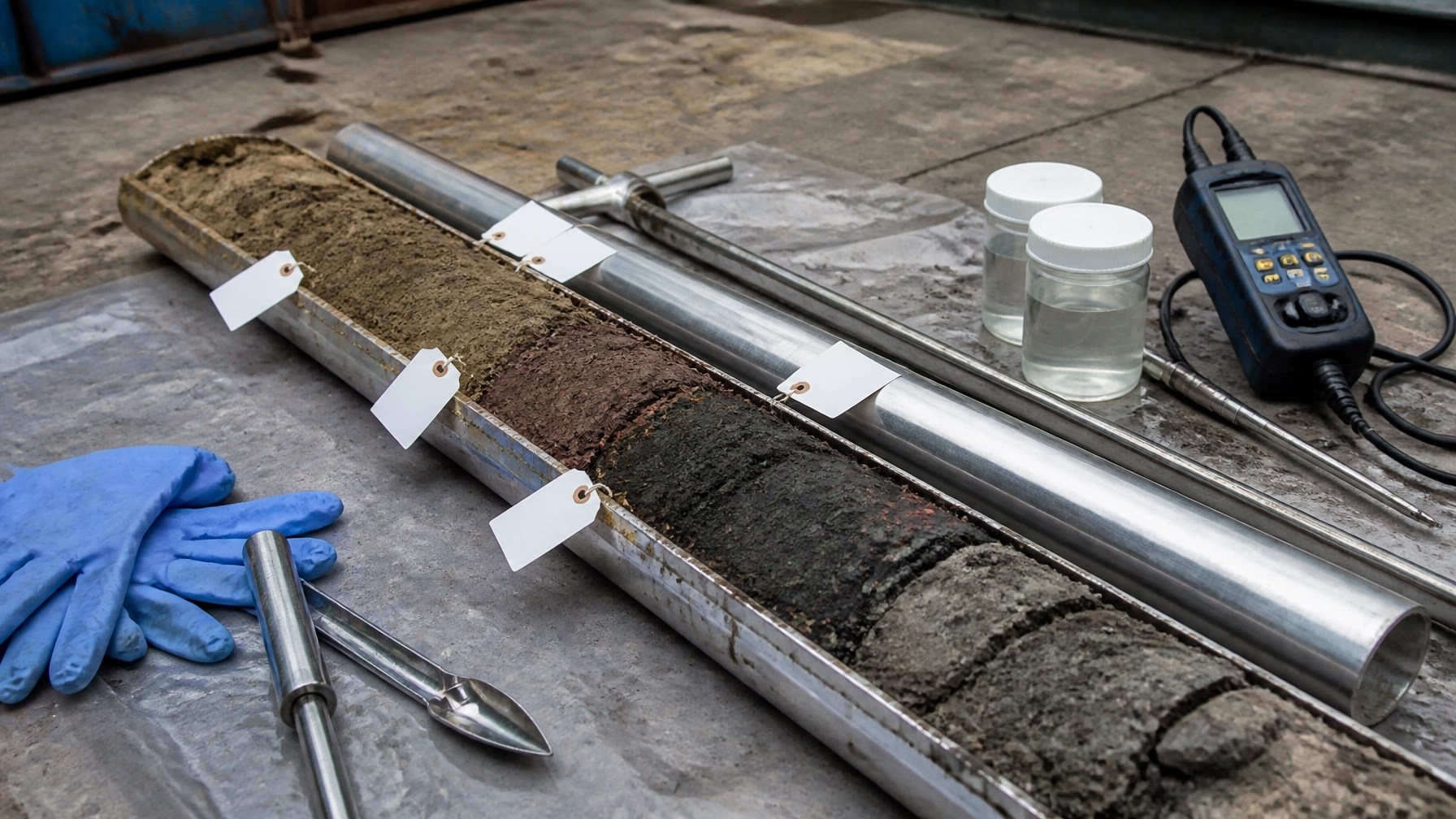
Boring count is only part of the calculation. Depth matters because the investigation may need to evaluate:
- Surface soil
- Historic fill
- Native soil
- The water table
- Utility corridors
- Potential source zones
- Soil beneath or adjacent to a building
Borings should be placed against the REC, not distributed randomly across the property. In a Jersey City warehouse conversion, for example, the layout may need to account for former process areas, floor drains, loading docks, fill placement, and proposed foundation locations.
3. Groundwater conditions
Groundwater can change a limited Phase II into a more involved investigation.
Cost drivers include:
- Whether groundwater is encountered during drilling
- Whether temporary points or permanent monitoring wells are appropriate
- Well construction and development
- Groundwater flow direction
- Number of sampling locations
- Need for additional upgradient or downgradient points
- Potential off-site migration
- Long-term monitoring or remediation follow-up
NJDEP’s rules require groundwater sampling to be sufficient to evaluate contamination and, when contamination is confirmed, additional work may be needed to delineate its horizontal and vertical extent.
4. Soil vapor and vapor intrusion
Vapor work is not automatically included in every Phase II ESA. It becomes more important when volatile contaminants are suspected in groundwater or soil near occupied or proposed buildings.
A vapor scope may include:
- Soil gas sampling
- Sub-slab sampling
- Indoor air sampling
- Ambient air control samples
- Building construction review
- Utility pathway evaluation
- Multiple sampling events
- Vapor mitigation recommendations
NJDEP’s Technical Requirements for Site Remediation address vapor intrusion investigation triggers and the evaluation of buildings, subsurface utilities, soil gas, groundwater, and indoor air.
The cost question is not simply whether vapor sampling is expensive. The real question is whether vapor data is necessary to protect the transaction and avoid a later discovery after construction begins.
5. PFAS and laboratory methods
PFAS analysis requires careful field procedures. Sampling equipment, clothing, containers, water sources, and decontamination practices can introduce cross-contamination if the program is not designed correctly.
NJDEP’s PFAS Sampling Fact Sheet supplements the state’s Field Sampling Procedures Manual. The selected laboratory method, reporting limits, analyte list, matrix, and quality control requirements all affect cost.
PFAS should not be added as a vague line item. The proposal should state:
- Which media will be sampled
- Which PFAS compounds will be analyzed
- Which method will be used
- Required reporting limits
- Sample handling requirements
- Investigation-derived waste procedures
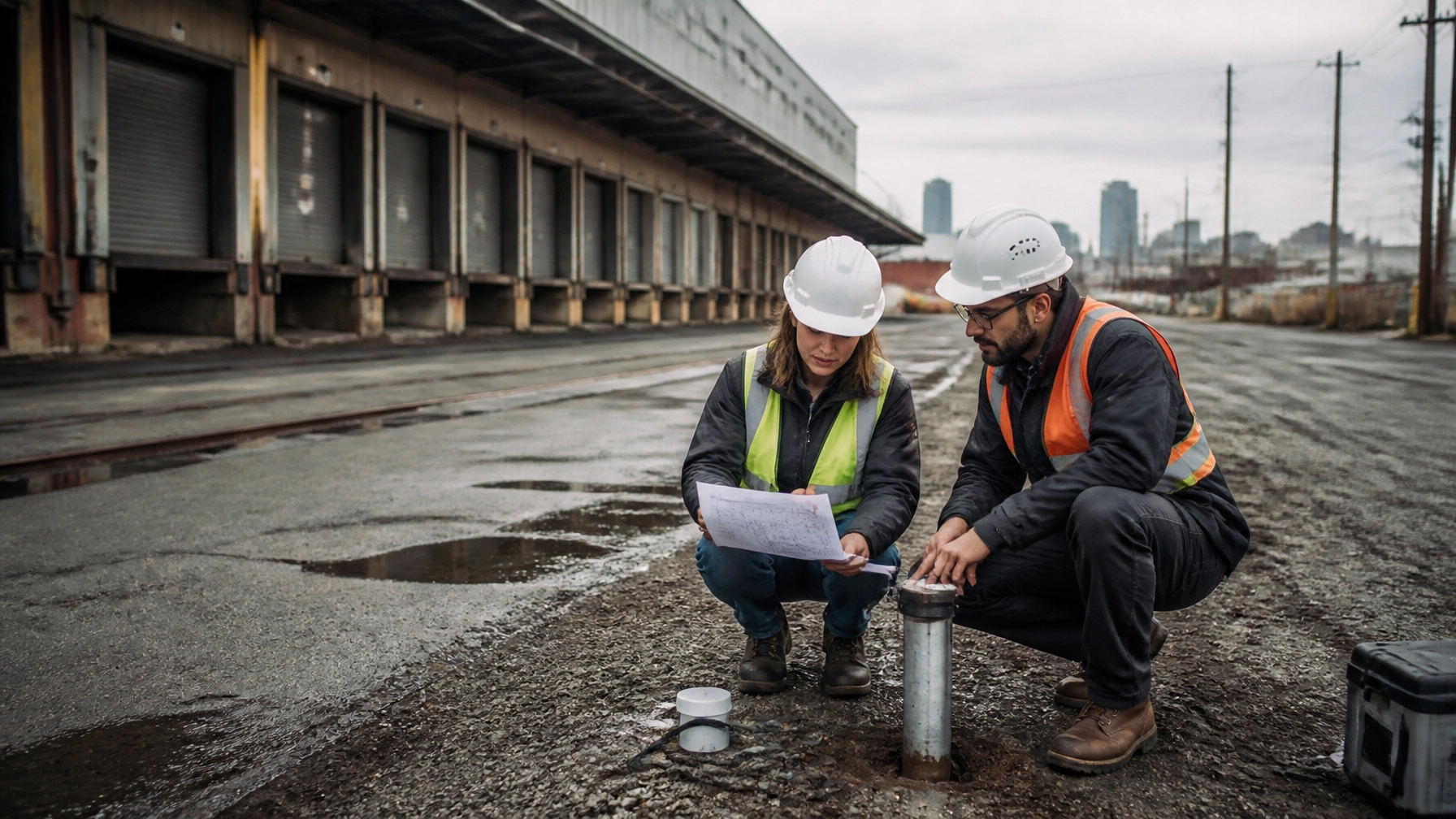
6. Access, traffic control, and field conditions
A boring program on an open industrial lot is different from one in a Newark warehouse, a Hoboken basement, or a busy Bayonne commercial corridor.
Field cost may increase because of:
- Limited drill rig access
- Interior drilling
- Concrete or asphalt coring
- Active tenants
- Security requirements
- Utility clearance and GPR
- Street occupancy
- Traffic control
- Night or weekend work
- Restoration of finished surfaces
- Coordination with construction activities
These items should appear clearly in the proposal. They should not arrive later as unexplained change orders.
7. Regulatory, lender, and LSRP scope
A lender may require an ASTM-conformant Phase II report, specific reliance language, data tables, or a remediation cost opinion. A New Jersey site entering a formal remediation pathway may require LSRP oversight and NJDEP-compatible documentation.
NJDEP’s rules address quality assurance, laboratory certifications, sampling plans, chain of custody, data deliverables, boring logs, well documentation, GIS data, and reporting. The NJDEP Contaminated Site Remediation and Redevelopment program maintains the applicable rules, forms, guidance, and technical resources.
EPA’s All Appropriate Inquiries rule applies to Phase I due diligence and recognizes ASTM E1527-21. It does not establish a universal Phase II price or sample count. Lender Phase II requirements in NJ remain transaction-specific.
Phase II ESA decision and cost table
| Phase I or project condition | Likely investigation approach | Relative cost impact | Primary decision output |
|---|---|---|---|
| One defined REC with accessible soil | Limited soil borings and targeted laboratory analysis | Lower | Determine whether the REC is confirmed |
| Petroleum concern with shallow groundwater | Soil and groundwater sampling near the source | Moderate | Evaluate source impact and potential migration |
| Former industrial operation with multiple RECs | Expanded soil, groundwater, and analyte program | Higher | Characterize multiple areas of concern |
| Volatile contaminants near a building | Soil, groundwater, and vapor intrusion evaluation | Higher and variable | Determine whether a complete vapor pathway exists |
| Poorly documented contamination or PFAS concern | Broader analytical program with specialized QA/QC | Variable | Establish defensible data for lender or regulator review |
| Contamination above applicable standards | Additional delineation and remedial planning | Project-specific | Estimate cleanup exposure and regulatory path |
There is no responsible universal answer to “What does a Phase II ESA cost in New Jersey?” The useful answer is a written scope that identifies the assumptions behind the fee.
What your Phase II proposal should include
Before selecting a consultant, ask for:
- REC-by-REC scope justification
- Boring and monitoring point locations
- Proposed depths and sample intervals
- Soil, groundwater, vapor, and PFAS assumptions
- Laboratory methods and reporting limits
- Utility clearance and access requirements
- Traffic control or restoration costs
- LSRP involvement, if applicable
- Report format and lender reliance requirements
- Clear exclusions and change-order triggers
- Remediation follow-up options if contamination is found
Envicon provides a Phase II ESA scope that connects field data to the decision you actually need to make. We do not hand you a laboratory package and leave you to interpret it. We explain whether the result supports closing, requires more delineation, changes the construction plan, or starts a remediation pathway.
That difference matters in Newark, Jersey City, Hoboken, Bayonne, and across Hudson, Bergen, and Essex counties. Local access, local agency expectations, and direct senior oversight reduce the risk of paying for work that does not move the project forward.
FAQ
What is the Phase II environmental site assessment cost in NJ?
There is no fixed New Jersey price. Cost depends on the REC type, number and depth of borings, groundwater conditions, vapor requirements, PFAS analysis, laboratory methods, access, traffic control, reporting, lender requirements, and whether LSRP or remediation follow-up is needed.
Does every Phase I ESA require a Phase II?
No. A Phase II is generally recommended when the Phase I identifies a REC or another environmental concern that cannot be resolved through records review and site reconnaissance alone.
How does Phase II ESA cost differ between Newark and Jersey City?
The technical scope drives most of the cost, but urban access conditions can affect mobilization, drilling, traffic control, utility clearance, and restoration. A Phase II ESA in Jersey City may require different logistics from a Newark warehouse or a suburban Bergen County property.
Do lenders have standard Phase II requirements in New Jersey?
Lenders commonly expect a clear connection between the Phase I findings and the Phase II scope. They may also require ASTM-conformant work, qualified professionals, laboratory documentation, reliance language, and an opinion on further environmental exposure. Exact requirements vary by institution and transaction.
Can a Phase II ESA lead directly to remediation?
Yes. If sampling confirms contamination above applicable standards, the next step may include delineation, remedial cost estimating, soil management, vapor mitigation, NJDEP coordination, or LSRP oversight. A good Phase II report should identify that path rather than simply recommend more study.
The takeaway
A Phase II ESA is not a box to check. It is a decision tool.
The right investigation answers the Phase I question, satisfies the actual lender or regulatory need, and gives you a defensible path to closing, construction, remediation, or renegotiation.
If you need help evaluating a New Jersey property, use our project risk screener, contact Envicon for a site-specific scope, or call us at (917) 764-2171.
Sources
- NJDEP Contaminated Site Remediation and Redevelopment Program
- N.J.A.C. 7:26E Technical Requirements for Site Remediation
- NJDEP Field Sampling Procedures Manual
- NJDEP PFAS Sampling Fact Sheet
- EPA Standards and Practices for All Appropriate Inquiries