For New Jersey condominium and cooperative boards, the structural inspection deadline in 2026 starts with one document: the building’s certificate of occupancy.
Under P.L. 2023, c.214, commonly known as S2760, the CO date determines when a covered building must receive its initial structural integrity inspection. Observable damage can move that deadline forward. The building’s structural system determines whether the law applies at all.
This matters across Jersey City, Hoboken, Newark, Bayonne, Hudson County, Bergen County, and Essex County, where many residential buildings use concrete, masonry, steel, hybrid systems, podium decks, or attached balconies.
The right answer is not a guess based on building age or height. Boards need to review the CO record, confirm the building’s construction type, and document the inspection schedule with a New Jersey-licensed structural engineer.
The short answer: how to calculate the deadline
For a covered building, use this sequence:
- Confirm that the building is a residential condominium or cooperative.
- Confirm that its primary load-bearing system includes concrete, masonry, steel, heavy timber, or a hybrid structure.
- Locate the applicable certificate of occupancy date.
- Calculate the statutory deadline.
- Check for observable damage that may trigger a 60-day inspection requirement.
- Review the prior inspection report for any earlier follow-up date.
- Confirm the final interpretation with the engineer, local officials, NJDCA, and association counsel.
The law states that the initial inspection must occur within the earlier of:
“15 years of the date on which the covered building receives a certificate of occupancy” or “60 days after observable damage to the primary load bearing system.”
See N.J.S.A. 52:27D-132.4 and the New Jersey Department of Community Affairs structural integrity FAQ.
What is a covered building under S2760?
S2760 applies to a residential condominium or cooperative building with a primary load-bearing system made up of:
- Concrete
- Masonry
- Steel
- Heavy timber
- A hybrid combination of these systems
- A podium deck or similar transfer structure
The law defines the primary load-bearing system as the connected arrangement of columns, beams, or bracing that transfers building loads to the foundation. The evaluation also includes the foundation and connected or attached balconies.
The law generally excludes:
- Single-family homes
- Buildings that are primarily rental dwellings rather than condominiums or cooperatives
- Certain frame-built structures with combustible walls or roofs
- Ancillary concrete, masonry, or steel elements that do not form part of the primary load path
Building height does not determine coverage. A lower-rise condominium can qualify. A taller building can fall outside the definition if its ownership structure or primary system does not meet the statute.
When records are incomplete, do not rely on appearance alone. Review approved plans, structural drawings, the master deed or condominium documents, construction permits, and the CO record.
The NJ structural inspection certificate of occupancy deadline
The timing falls into three practical categories.
1. CO issued on or after January 8, 2024
For a new covered building, the initial inspection is due within 15 years of the CO date, unless observable damage triggers an earlier inspection.
For example:
- CO date: July 15, 2024
- Normal initial inspection deadline: July 15, 2039
- Observable primary-system damage: inspection due within 60 days of the damage
The 15-year period is a maximum timing rule. It is not permission to wait if the building shows structural deterioration.
2. CO issued from January 8, 2009 through January 7, 2024
For these existing buildings, the inspection must occur within one year after the date marking the building’s 15th CO anniversary.
Example:
- CO date: June 1, 2010
- 15-year anniversary: June 1, 2025
- Latest statutory transition window: June 1, 2026
A board should not treat the one-year window as extra time to ignore the issue. Inspection access, engineer availability, records review, report preparation, and corrective maintenance planning all take time.
3. CO issued before January 8, 2009
If the CO preceded the law’s effective date by 15 years or more, the initial inspection had to occur within two years after January 8, 2024.
For these older covered buildings, the key deadline was January 8, 2026.
If a covered building in Jersey City, Hoboken, Newark, Bayonne, or another New Jersey municipality missed that date, the board should act promptly. Delaying further creates a documentation problem and may make corrective work more difficult to plan.
The NJDCA Construction Code Communicator summary confirms that the CO date controls the inspection schedule.
Observable damage creates a separate 60-day trigger
The calendar deadline is not the only trigger.
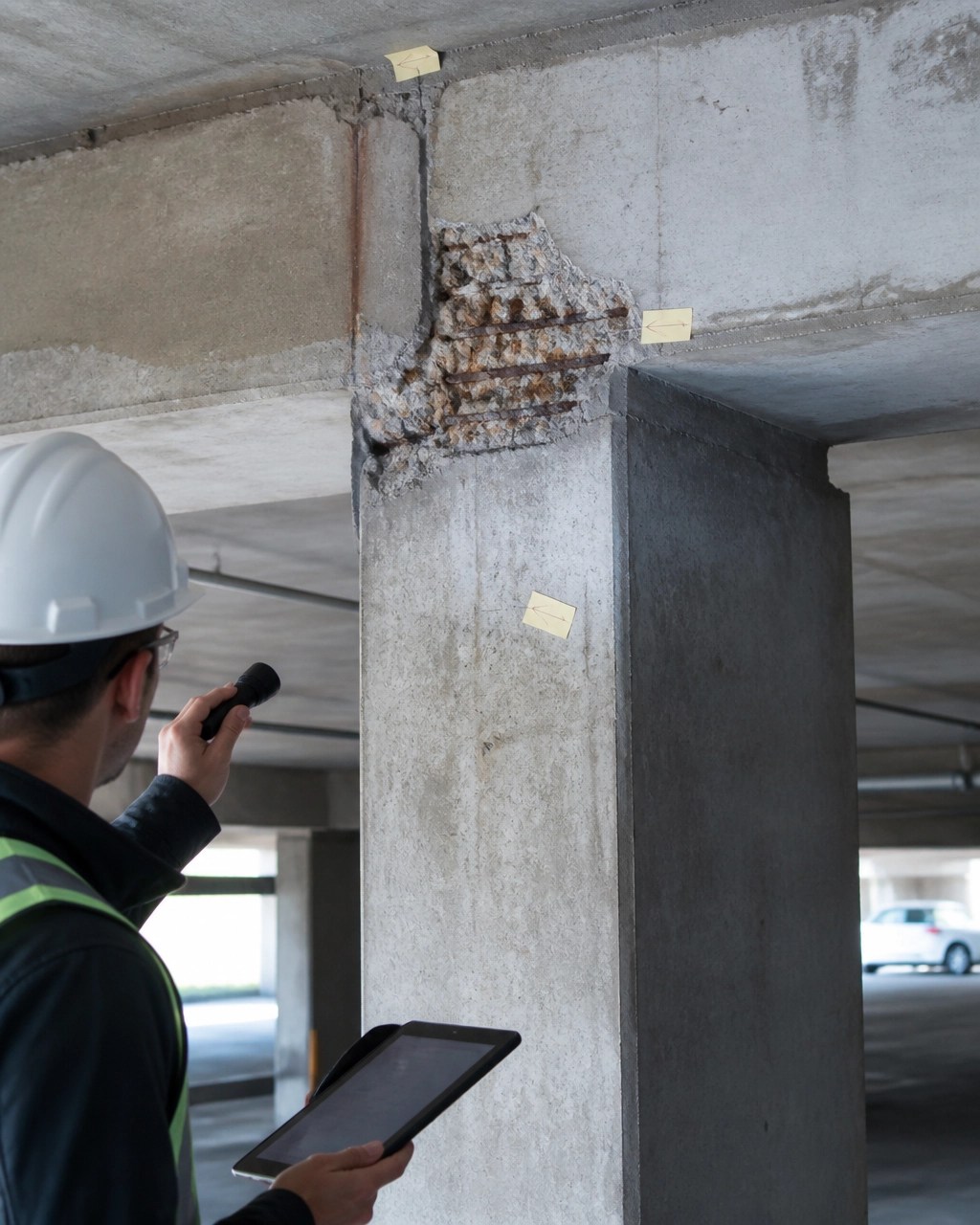
Observable damage to the primary load-bearing system requires an inspection within 60 days. That rule can apply even when the building is younger than 15 years or has recently completed an inspection.
Examples may include:
- Significant cracking in structural concrete
- Concrete spalling that exposes reinforcing steel
- Visible corrosion affecting structural members
- Deformation or displacement of beams, columns, slabs, or structural walls
- Damaged balcony components connected to the load-bearing system
- Evidence of movement, settlement, or distress affecting the load path
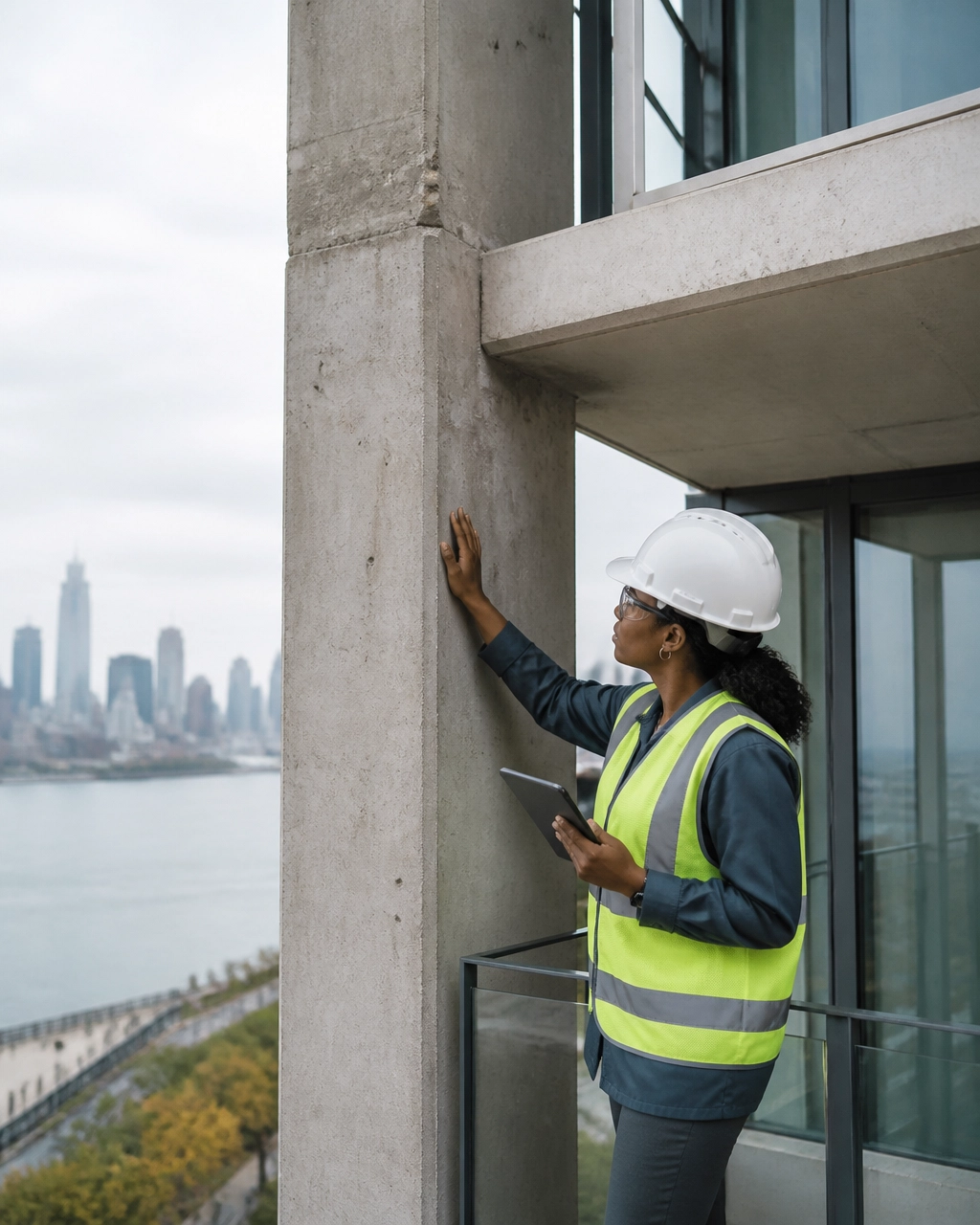
Not every crack is a structural emergency. But boards should not make that determination without qualified review. A property manager, superintendent, contractor, or board member may identify the condition. A licensed structural engineer should determine its significance.
What should the inspection report include?
The report should address the condition of the primary load-bearing system and identify required maintenance or repairs with reasonable specificity.
Under S2760, the report must:
- Describe the condition of the primary load-bearing system
- Identify required maintenance or repairs
- Establish when the next inspection should occur
- Follow an ASCE structural condition assessment protocol or a similar nationally recognized protocol
- Provide the report to the municipal appointing authority, construction official, and enforcing agency
- Give the owner practical guidance needed to maintain structural integrity
The report must do more than state that the building appears acceptable. A useful report connects observations to action.
That may include:
- Locations and severity of observed deterioration
- Photographic documentation
- Review of balconies, foundations, columns, beams, slabs, bracing, and podium areas
- Recommended monitoring
- Recommended testing, if warranted
- Corrective maintenance priorities
- Repair design or permit needs
- Follow-up inspection timing
A statutory inspection is not automatically a destructive testing program. It is also not automatically a repair design package. The engineer may recommend concrete testing, rebar locating, probes, sampling, load evaluation, or repair design when visual observations and available records indicate that additional work is necessary.
That distinction matters for budget and board communications. Start with a defined inspection scope. Expand the work only when the building’s condition supports it.
Access and records can determine the schedule
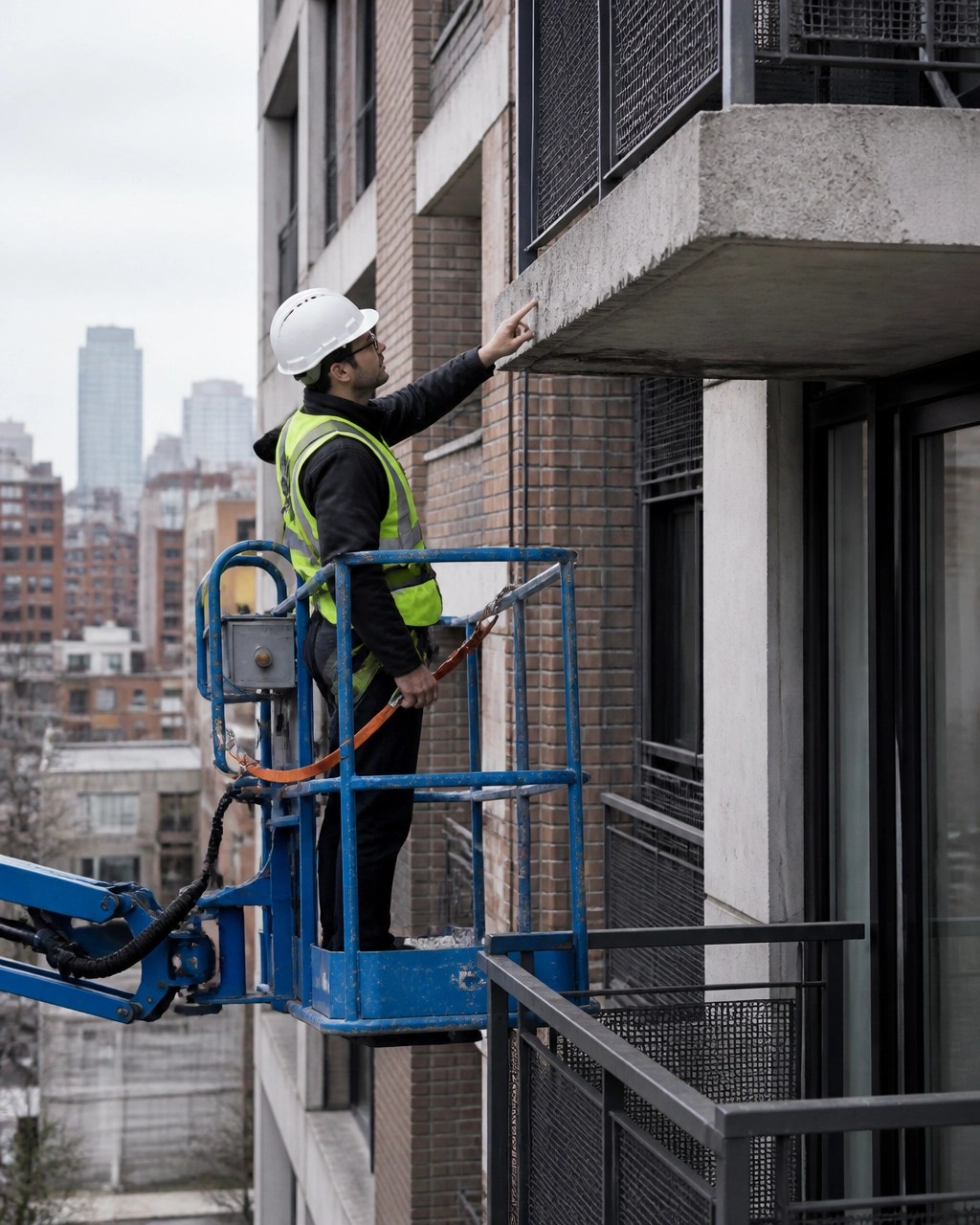
A board cannot complete a credible inspection if the engineer cannot access the relevant areas.
Before the site visit, arrange access to:
- Parking garages
- Mechanical rooms
- Roof areas
- Balconies and terraces
- Stairwells and corridors
- Foundation or basement areas
- Podium decks
- Exterior elevations
- Utility or service spaces
- Areas affected by prior leaks or repairs
Boards should also collect:
- All COs and amended COs
- Approved structural drawings
- Prior inspection reports
- Repair invoices and warranties
- Permit records
- Violation notices
- Waterproofing and facade records
- Balcony repair documentation
- Insurance claims involving structural damage
- Reserve studies and capital plans
- Preventive maintenance documents
The CO date is often treated as a single clean data point. In practice, a building may have original, amended, temporary, partial, or final occupancy records. That is why the board, engineer, municipal construction official, and counsel should verify which document controls.
How structural inspections connect to reserve studies
S2760 also affects capital planning.
A structural inspection identifies current conditions and corrective maintenance. A reserve study evaluates capital assets, anticipated repair or replacement costs, funding requirements, and long-term planning.
They are different services, but the outputs should align. A report identifying concrete repairs, balcony work, waterproofing, or structural maintenance should inform the association’s reserve planning.
Envicon provides structural inspections and reserve studies with a field-first approach. The goal is not to produce two disconnected reports. The goal is to give the board a clear path from observed condition to budget, maintenance, repair, and documentation.
2026 deadline decision tree
Use this decision tree as a starting point:
-
Is the property a residential condominium or cooperative?
- If no, confirm with counsel whether S2760 applies.
- If yes, continue.
-
Does the primary load-bearing system include concrete, masonry, steel, heavy timber, or a hybrid system?
- If no, document the basis for exclusion.
- If yes, continue.
-
Was the CO issued before January 8, 2009?
- Initial inspection deadline: January 8, 2026.
-
Was the CO issued between January 8, 2009 and January 7, 2024?
- Calculate the 15th anniversary.
- Complete the inspection within one year after that anniversary.
-
Was the CO issued on or after January 8, 2024?
- Complete the initial inspection within 15 years of the CO date.
-
Is there observable damage to the primary load-bearing system?
- Schedule the inspection within 60 days of the damage, regardless of the ordinary calendar deadline.
-
Has an earlier inspection already occurred?
- Follow the next date established by the preceding report.
- Later inspections cannot be more than five years after the preceding inspection under the subsequent-inspection provisions.
This is a planning tool, not legal advice. Counsel and the NJDCA should verify unusual ownership structures, conversions, amended COs, and disputed dates.
FAQ
What is the structural integrity inspection NJ CO date rule?
The CO date determines the initial inspection schedule for a covered residential condominium or cooperative building. Newer buildings generally use the 15-year rule. Existing buildings use the statutory transition periods tied to January 8, 2024.
What is the NJ condo inspection deadline in Jersey City?
There is no single Jersey City-wide date. The deadline depends on the building’s qualifying structural system, ownership type, CO date, previous reports, and any observable damage.
Does S2760 apply to rental apartment buildings?
The law’s covered-building definition excludes a building that is not a condominium or cooperative and consists primarily of rental dwellings. Confirm the ownership structure with counsel.
Is the inspection only visual?
The inspection is generally a condition assessment of the primary load-bearing system. The engineer may recommend testing or additional investigation when conditions cannot be evaluated reliably through visual review and available records.
Does a reserve study replace the structural inspection?
No. A reserve study and a structural integrity inspection serve different purposes. A reserve study can include the costs of inspections and corrective maintenance, but it does not replace the statutory structural report.
Who should verify the final deadline?
The board should coordinate with a New Jersey-licensed structural engineer, the local construction official or enforcing agency, NJDCA, and association counsel when the CO date, building classification, or transition rule is unclear.
Final takeaway
For New Jersey boards, the structural inspection deadline is a records-and-condition question.
Start with the CO date. Confirm the primary load-bearing system. Check for observable damage. Review prior reports. Then build a documented schedule that the board, engineer, residents, and municipal officials can understand.
In Jersey City, Hoboken, Newark, Bayonne, Hudson, Bergen, and Essex, the practical advantage is direct coordination. You should not receive a generic report and be left to interpret the consequences alone.
Envicon helps boards move from uncertainty to an actionable structural maintenance plan with precision, speed, and trust.
Plan the inspection before the deadline
For Jersey City projects, visit our Jersey City structural and environmental consulting team. We help boards and property stakeholders resolve complex engineering challenges with direct coordination and clear next steps.