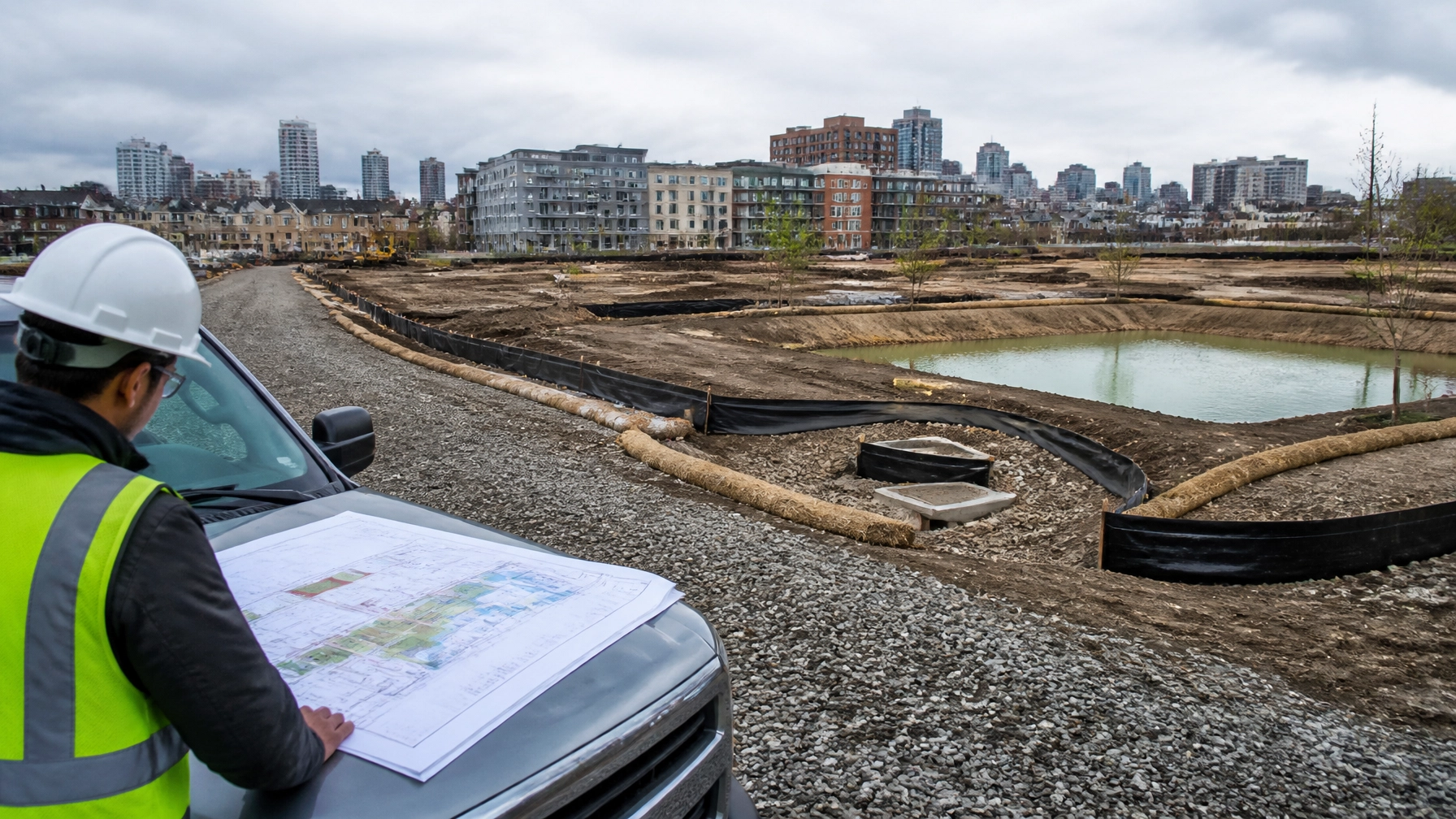
A construction site in New Jersey can trigger two separate compliance tracks before the first excavator moves soil.
The first is the Soil Erosion and Sediment Control Plan, commonly called a SESCP, which is reviewed by the local Soil Conservation District. The second is NJDEP authorization under the NJPDES Construction Activity Stormwater General Permit 5G3, permit NJ0088323.
If the plan does not match the actual grading, drainage, phasing, and contractor operations, the project can face inspection deficiencies, sediment releases, redesigns, and avoidable delays.
Envicon provides SWPPP services in New Jersey for developers, contractors, architects, and property owners across Jersey City, Newark, Hoboken, Bayonne, Hudson County, Bergen County, and Essex County.
When does a New Jersey construction project need 5G3 coverage?
NJPDES 5G3 generally applies to construction activity that disturbs:
- One acre or more of land.
- Less than one acre when the work is part of a larger common plan of development or sale that will ultimately disturb one acre or more.
Construction activity includes clearing, grading, excavation, demolition, utility installation, and related earth disturbance.
The common-plan rule matters on phased developments. A project cannot avoid 5G3 coverage simply by dividing a larger development into smaller applications or construction packages. The disturbance must be evaluated across the overall plan.
New Jersey also has a separate Chapter 251 threshold. Projects that disturb more than 5,000 square feet generally need a certified Soil Erosion and Sediment Control Plan from the local Soil Conservation District. A project disturbing one acre or more may need both:
- A certified SESCP under New Jersey’s Soil Erosion and Sediment Control Act.
- NJPDES 5G3 authorization through a Request for Authorization.
The New Jersey Department of Agriculture’s Chapter 251 guidance and the New Jersey Soil Erosion and Sediment Control Standards provide the foundation for the soil erosion review.
NJPDES 5G3 permit process
For a typical construction project, the sequence is straightforward, but each step depends on accurate site information.
1. Define the disturbance area
Calculate the full disturbance footprint. Include:
- Building pads and foundations.
- Driveways, parking areas, and access roads.
- Utility trenches.
- Stormwater facilities.
- Temporary staging and stockpile areas.
- Demolition and clearing areas.
- Off-site improvements tied to the project.
Do not limit the calculation to the building footprint. Utility work and temporary construction areas often push a project over the one-acre threshold.
2. Prepare and certify the SESCP
The local Soil Conservation District reviews the erosion and sediment control plan. Once certified, the district provides the codes needed for the NJDEP authorization process.
The plan should reflect the actual construction sequence. It should not be a generic sheet set copied from another property.
3. Submit the Request for Authorization
The owner or operator submits the RFA through NJDEP’s electronic permitting system. The RFA must generally be submitted at least 30 days before land disturbance.
That 30-day submission period is not a guaranteed approval period. Current lead times depend on project facts, plan completeness, local Soil Conservation District review, NJDEP review, municipal coordination, and the number of comments issued.
You also should not assume that the passage of 30 days creates automatic authorization. Confirm the current permit conditions and authorization status before beginning regulated earth disturbance. NJDEP’s stormwater rule guidance and FAQs should be checked for current program requirements.
What belongs in a site-specific SWPPP or SPPP?
New Jersey documents may use the term Stormwater Pollution Prevention Plan, or SPPP. Many contractors and developers use SWPPP as the general industry term. The practical requirement is the same: the plan must explain how the project will prevent pollution during construction.
A site-specific plan should address:
- Existing drainage patterns.
- Proposed grading and finished elevations.
- Soil types and erosion risk.
- Construction entrances and tracking controls.
- Perimeter silt fencing and stabilized boundaries.
- Inlet protection and conveyance controls.
- Sediment basins, traps, check dams, and outlet protection.
- Concrete washout and material storage.
- Dewatering and discharge management.
- Stockpile protection.
- Waste handling.
- Temporary and permanent stabilization.
- Inspection procedures and corrective actions.
- Construction phasing.
- Responsible contractor and owner personnel.
The plan also needs to match the drawings. If the civil plan shows one drainage path but the SWPPP shows another, the contractor receives conflicting instructions. That creates field confusion and weakens the compliance record.

Grading and drainage must work together
A SWPPP is not a substitute for civil engineering.
Temporary erosion controls manage sediment during construction. The civil drainage design manages runoff, conveyance, detention, water quality, groundwater recharge, and long-term site performance.
The two scopes must be coordinated before construction begins.
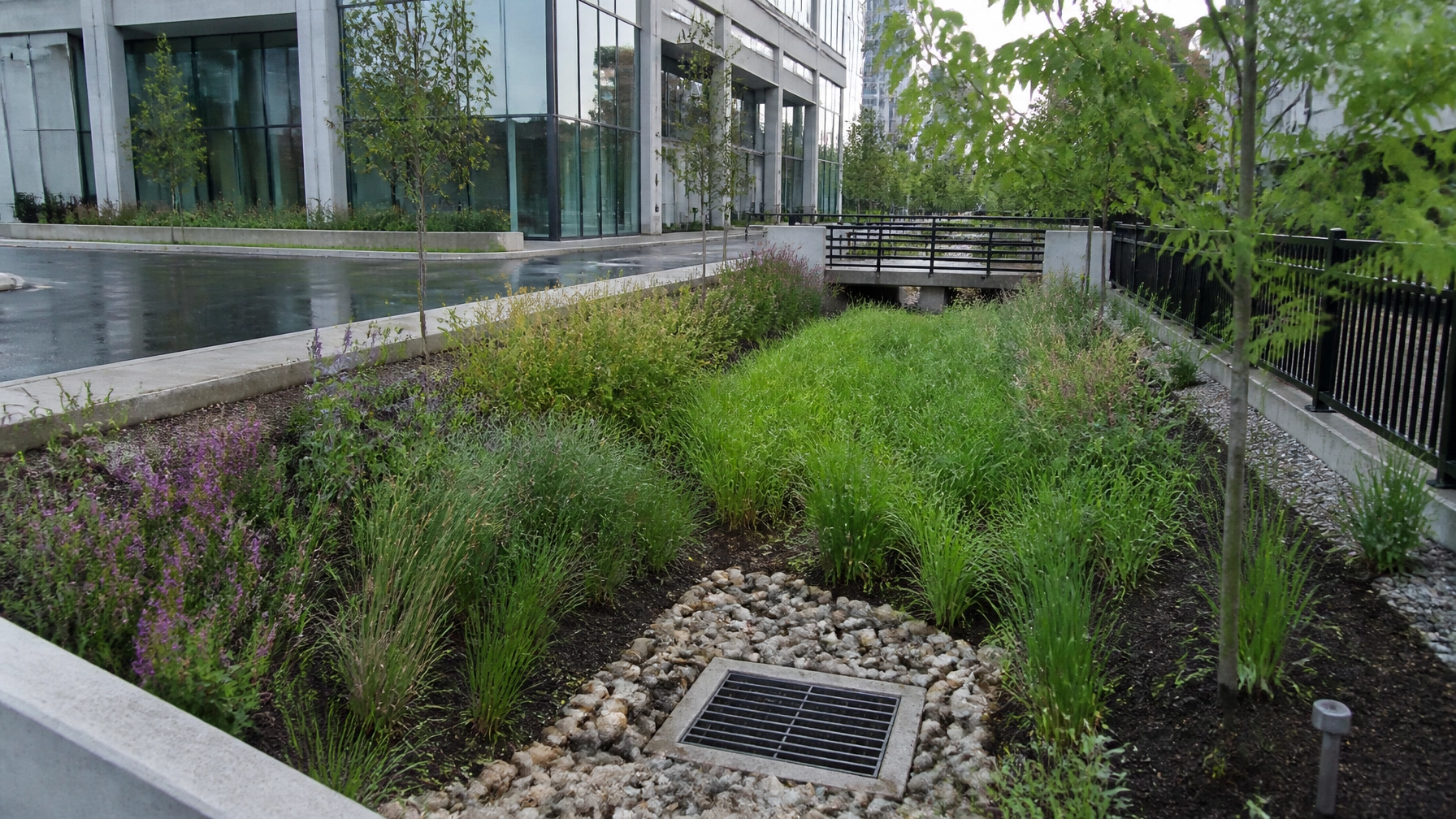
For example, a temporary swale may need to protect an active excavation until the permanent stormwater system is installed. A proposed catch basin may need inlet protection during earthwork but must remain accessible for inspection and maintenance. A sediment basin may need a stable emergency overflow route that does not direct water toward a neighboring property or public roadway.
Envicon’s civil and geotechnical engineering team coordinates grading, drainage, erosion control, utility design, and site constraints under one project structure. That reduces the gap between the engineer preparing the plan and the contractor implementing it.
Stabilization, inspections, and rain-event response
Unprotected soil is the primary exposure on an active construction site. A plan should identify how disturbed areas will be stabilized when work pauses, weather changes, or a phase reaches completion.
Stabilization may include:
- Temporary seed and mulch.
- Erosion control blankets.
- Hydraulic stabilization.
- Stone or aggregate cover.
- Temporary soil protection.
- Permanent vegetation.
- Paving, concrete, or other final surface treatments.
Inspections should verify that controls remain functional. The inspector should look for:
- Sediment leaving the site.
- Damaged or undermined silt fencing.
- Clogged inlet protection.
- Erosion at swale outlets.
- Full or bypassed sediment basins.
- Unprotected stockpiles.
- Failed construction entrances.
- Exposed soil after a rain event.
- Discharge from dewatering operations.
- Required corrective actions that remain open.
Rain-event response must be practical. Contractors need to know who checks the site, when the inspection occurs, how deficiencies are documented, and who has authority to mobilize labor and materials.
A weekly inspection log that does not reflect field conditions will not protect the project. The record needs photographs, locations, observations, corrective actions, and closeout dates.

Contractor roles and MS4 coordination
The permittee, developer, general contractor, and subcontractors each have operational responsibilities. The contract documents should identify who will:
- Maintain erosion and sediment controls.
- Conduct or coordinate inspections.
- Keep the logbook on site.
- Respond to rain events.
- Manage concrete washout.
- Protect stockpiles and material storage.
- Coordinate dewatering.
- Report a release or failed BMP.
- Update the engineer when site conditions change.
Municipal MS4 coordination also matters. A project may discharge toward a municipal storm drain, watercourse, inlet, or outfall. The municipality may have additional requirements involving connections, public right-of-way protection, outfall conditions, construction access, or local inspection.
In Jersey City, Newark, Hoboken, and Bayonne, tight urban parcels create additional constraints. There may be limited space for sediment controls, shared access roads, dense utilities, active sidewalks, and direct runoff paths to municipal infrastructure.
That is why SWPPP services in Jersey City and Newark require more than selecting BMPs from a standard detail sheet. The controls must fit the physical site and the construction sequence.
New Jersey SWPPP permit-readiness checklist
Before requesting authorization or mobilizing, confirm that you have:
- Calculated the complete disturbance area.
- Evaluated the common plan of development.
- Determined whether Chapter 251 certification is required.
- Identified the correct Soil Conservation District.
- Prepared a site-specific SESCP and SWPPP or SPPP.
- Coordinated grading and drainage drawings.
- Identified temporary and permanent stabilization measures.
- Planned construction phasing.
- Selected BMPs for entrances, perimeters, inlets, stockpiles, and outlets.
- Addressed dewatering and discharge points.
- Identified contractor inspection responsibilities.
- Confirmed municipal MS4 coordination requirements.
- Obtained the required SCD and 251 codes.
- Submitted the NJPDES 5G3 RFA through the proper NJDEP system.
- Allowed at least 30 days before planned land disturbance.
- Confirmed authorization before beginning regulated work.
FAQ: SWPPP services NJ
What is the one-acre rule for NJPDES 5G3?
NJPDES 5G3 generally applies when construction disturbs one acre or more, or when a smaller disturbance is part of a common plan that will ultimately disturb one acre or more.
Is an SWPPP required for less than one acre?
A project under one acre may still need a certified soil erosion and sediment control plan if it disturbs more than 5,000 square feet. It may also be subject to other municipal, state, or local requirements. Confirm the full project scope before assuming an exemption.
What is the difference between an SWPPP and an SESCP?
The SESCP focuses on soil erosion and sediment control and is certified by the local Soil Conservation District. The SWPPP or SPPP addresses broader construction stormwater pollution prevention, including BMPs, inspections, material management, stabilization, and corrective actions. For many one-acre projects, both are part of the compliance package.
How long does NJPDES 5G3 authorization take?
The RFA must generally be submitted at least 30 days before land disturbance. Actual lead times depend on the project, plan quality, agency review, local coordination, and comments. Do not treat the 30-day period as a guaranteed approval date.
Can I use a standard SWPPP template?
A template can provide structure, but it cannot replace site-specific engineering. A plan that ignores actual grades, drainage paths, soil conditions, phasing, and contractor operations creates compliance risk.
The takeaway
A compliant NJPDES 5G3 package starts before construction. Calculate the real disturbance area, obtain the required SESCP certification, prepare a site-specific SWPPP or SPPP, integrate the plan with grading and drainage, and assign field responsibilities clearly.
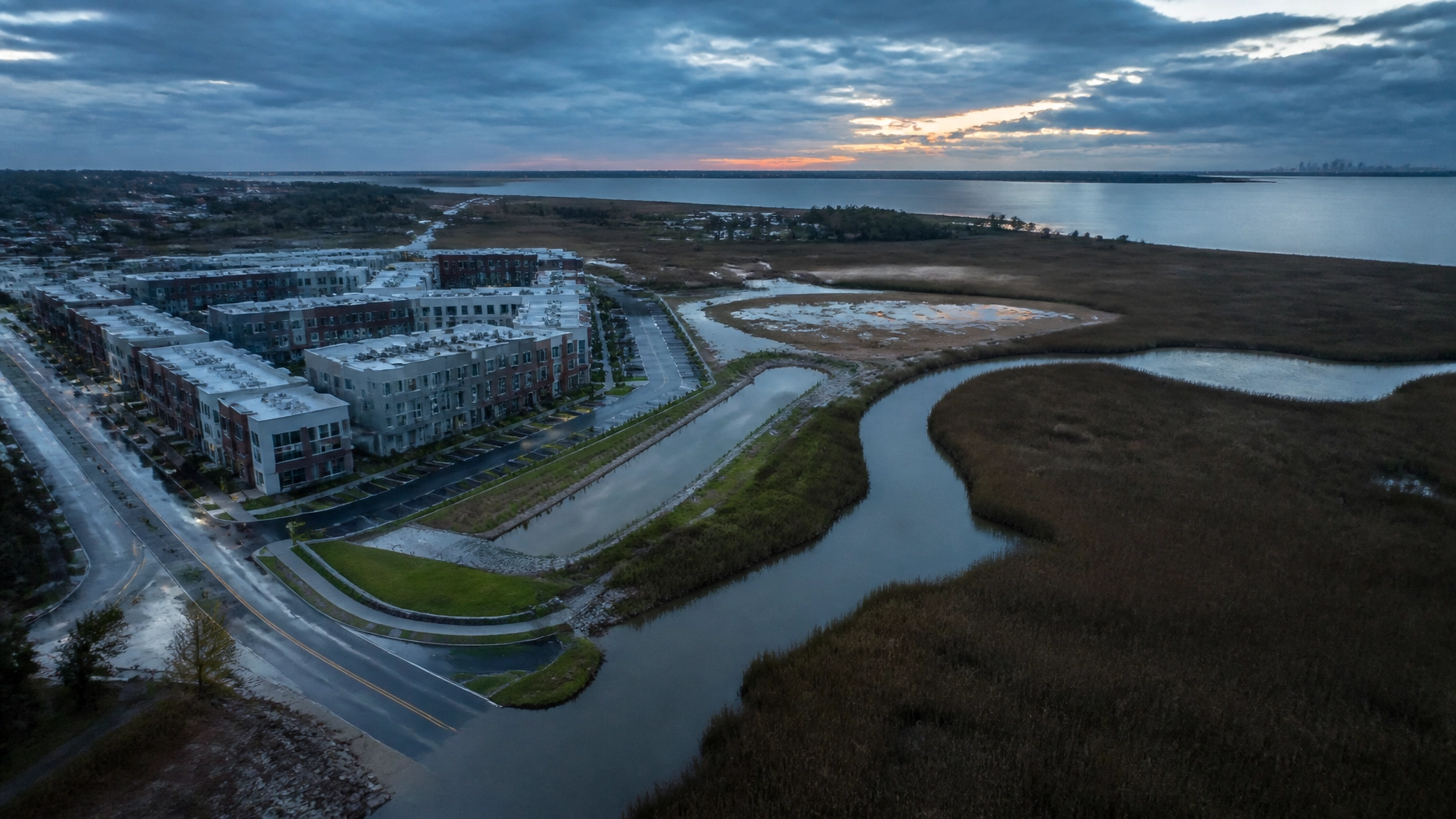
Whether your project is in Jersey City, Newark, Hoboken, Bayonne, Bergen County, Hudson County, or Essex County, the objective is the same: control runoff, protect receiving waters, and keep construction moving without preventable agency or field problems.
Envicon brings civil engineering, stormwater planning, permitting, and construction coordination together. We do not just deliver a plan. We help make the plan work in the field.
Ready to start?
- Call Envicon now
- Get a free quote
- Use the project cost estimator
- Review Envicon’s stormwater and SWPPP services