A New Jersey acquisition can look financially sound until environmental diligence exposes a buried tank, historic fill, vapor concern, or an ISRA obligation that nobody put on the closing calendar.
The problem usually isn't that environmental work exists. The problem is sequencing it too late.
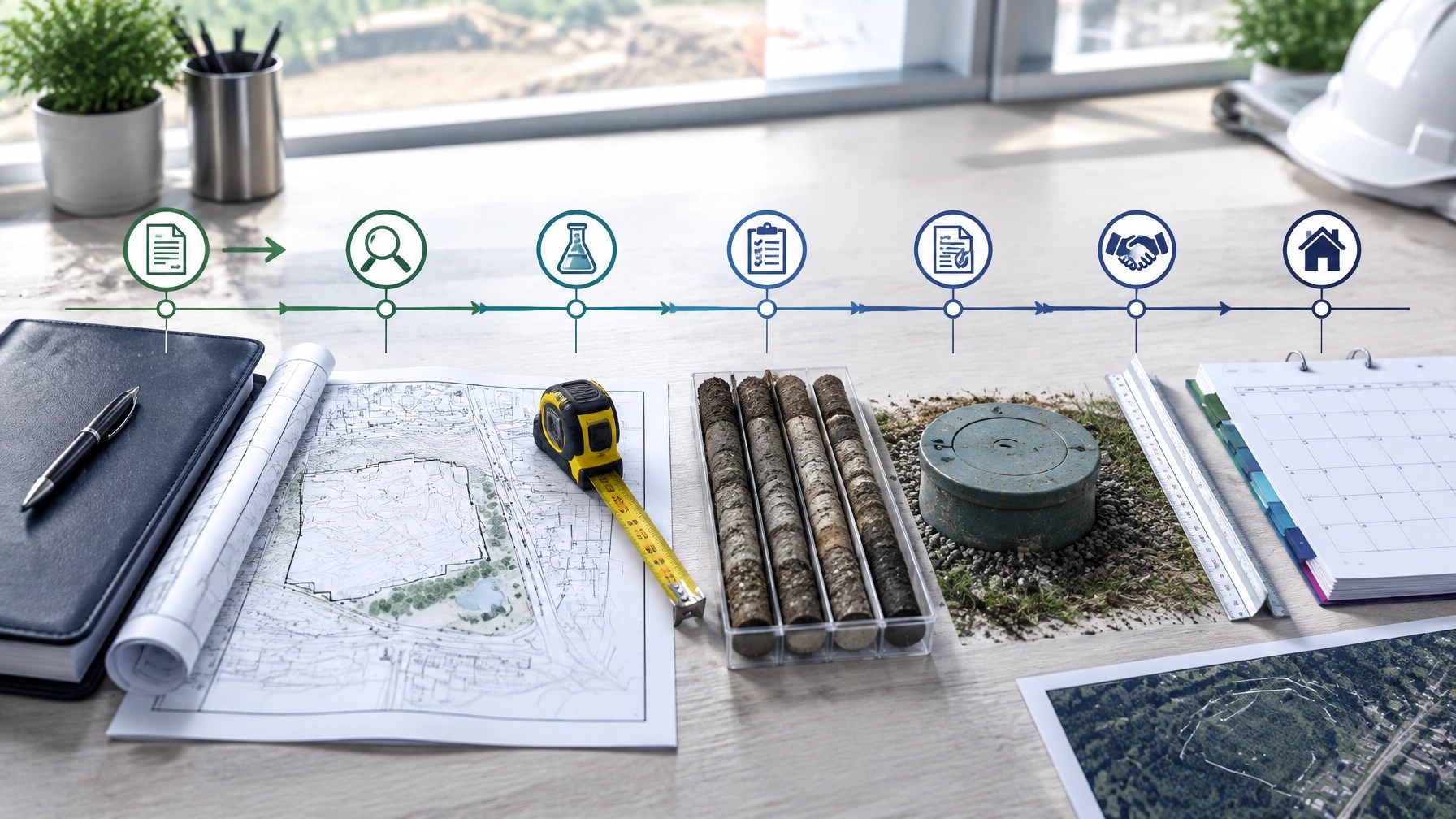
For developers, environmental due diligence for developers NJ projects should begin at the term sheet, not after the purchase agreement is signed. Your Phase I, Preliminary Assessment, Phase II investigation, ISRA review, lender requirements, and construction schedule must work as one process.
This checklist shows how to build that process around your closing date.
The NJ due diligence clock starts before the PSA
Environmental diligence should answer four questions before your due diligence period expires:
- Can you acquire the property without assuming an unacceptable environmental liability?
- Does the site require a Phase II investigation or NJDEP-directed remediation?
- Does the transaction trigger ISRA?
- Can you begin planned site work after closing without creating a second schedule problem?
A standard Phase I ESA is an important starting point. It should follow ASTM E1527-21 and support federal All Appropriate Inquiries under 40 CFR Part 312.
But New Jersey transactions often require a broader review. Depending on the property's past use, a Preliminary Assessment, Site Investigation, LSRP involvement, ISRA analysis, vapor assessment, or historic fill evaluation may also be necessary.
The objective is not to collect reports. It is to reach a defensible go, no-go, or proceed-with-controls decision before you commit capital.
Checklist 1: Term sheet to signed PSA
1. Screen the property before you finalize the deal structure
At the term sheet stage, collect:
- Current and historical property addresses
- Tax block and lot information
- Current and prior owners and operators
- Historical industrial, commercial, or manufacturing uses
- Known underground storage tanks
- Prior environmental reports
- NJDEP case numbers, permits, notices, and enforcement records
- Existing deed restrictions, activity and use limitations, or engineering controls
- Planned use, excavation depth, basement design, and utility work
In Hudson, Essex, Bergen, and other heavily developed New Jersey markets, historic fill is a routine issue. Former manufacturing properties may also carry petroleum, volatile organic compounds, metals, PCBs, or chlorinated solvents.
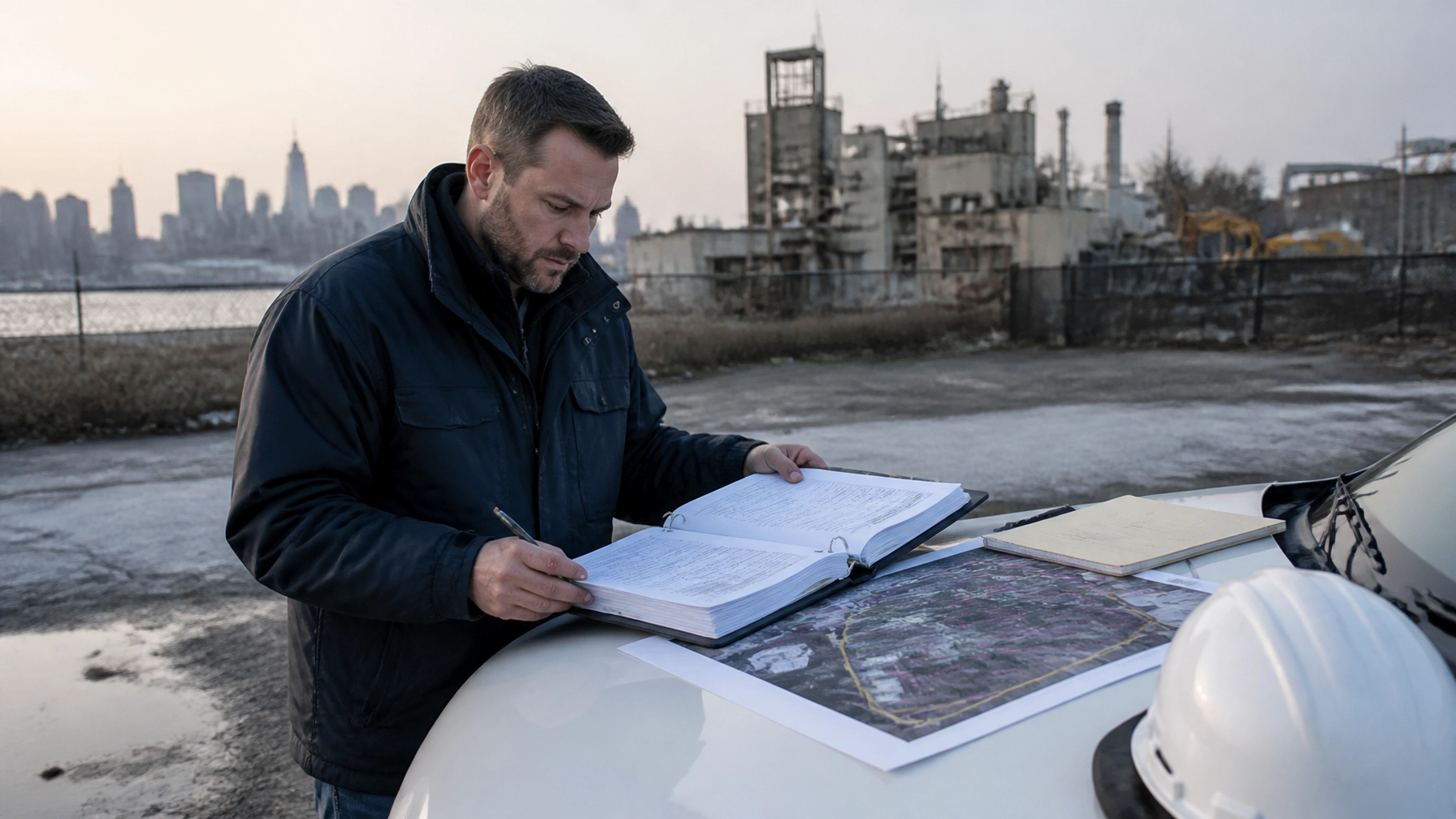
Your consultant should review the site's environmental history through a development lens. A condition that is manageable for continued industrial use may become expensive when your plan includes excavation, residential occupancy, a parking garage, or below-grade utilities.
2. Put environmental access rights in the PSA
Your purchase agreement should provide enough time and access to complete intrusive diligence if the Phase I identifies a recognized environmental condition.
Confirm that the PSA addresses:
- Site access for borings, test pits, monitoring wells, and soil vapor sampling
- Notice requirements before field work
- Access to buildings, tanks, utility areas, and locked spaces
- Responsibility for damage caused by testing
- Rights to collect and remove investigation-derived waste
- Seller cooperation with interviews and historical records
- Termination rights or extension rights if findings arrive late
- Allocation of pre-existing contamination and newly discovered releases
A Phase II cannot be scheduled if the seller treats the property like a museum. Resolve access before the investigation becomes critical path.
Checklist 2: Phase I ESA and NJ Preliminary Assessment
3. Order the right Phase I scope
A lender-focused Phase I may satisfy the bank while leaving development questions unanswered. Confirm that your scope includes:
- ASTM E1527-21 records review
- Historical aerials, Sanborn maps, city directories, and topographic maps
- Federal, state, and local environmental database review
- NJDEP file and case review
- Interviews with owners, operators, occupants, and knowledgeable parties
- Site reconnaissance of the property and adjoining properties
- Environmental lien and activity and use limitation review
- Clear REC, HREC, and CREC conclusions
- A recommendation for Phase II work where needed
Under EPA's AAI timing rules, the overall inquiry must be performed or updated within one year before acquisition. Key elements, including interviews, lien searches, government records review, site inspection, and the environmental professional's declaration, must be current within 180 days before acquisition.
That means a Phase I completed too early can become stale before closing.
4. Decide whether a NJ Preliminary Assessment belongs in the scope
New Jersey's Preliminary Assessment is not simply a longer Phase I. It follows NJDEP requirements under N.J.A.C. 7:26E and evaluates areas of concern, operational history, potential releases, migration pathways, and the need for further investigation.
A PA is especially important when:
- The property has an industrial history
- The transaction may trigger ISRA
- The site has known or suspected contamination
- An existing NJDEP remediation case is open
- The buyer wants a stronger state-level liability and cleanup position
- The property contains historic fill, tanks, waste handling areas, or process equipment
The PA should not sit in a separate file that no one reads. It should connect directly to the development plan, projected excavation, soil management, and anticipated remediation cost.
Envicon often combines the federal Phase I scope with the New Jersey-specific assessment so the buyer, lender, counsel, and development team are working from one coordinated risk picture. You can review the Phase I Environmental Site Assessment service for the scope elements and transaction timelines.
Checklist 3: Know when Phase I becomes Phase II
5. Move to Phase II when the REC needs data, not speculation
A Phase I identifies conditions that require professional judgment. It does not determine the concentration or horizontal and vertical extent of contamination.
A Phase II or NJ Site Investigation may be appropriate when the Phase I or PA identifies:
- Former or current USTs
- Petroleum staining or impacted soil
- Dry-cleaning or metal-plating operations
- Historic fill
- Waste storage or disposal areas
- Solvent use
- Groundwater impacts
- Vapor intrusion or vapor encroachment concerns
- Off-site contamination migrating onto the property
- PFAS concerns based on historical operations or site setting
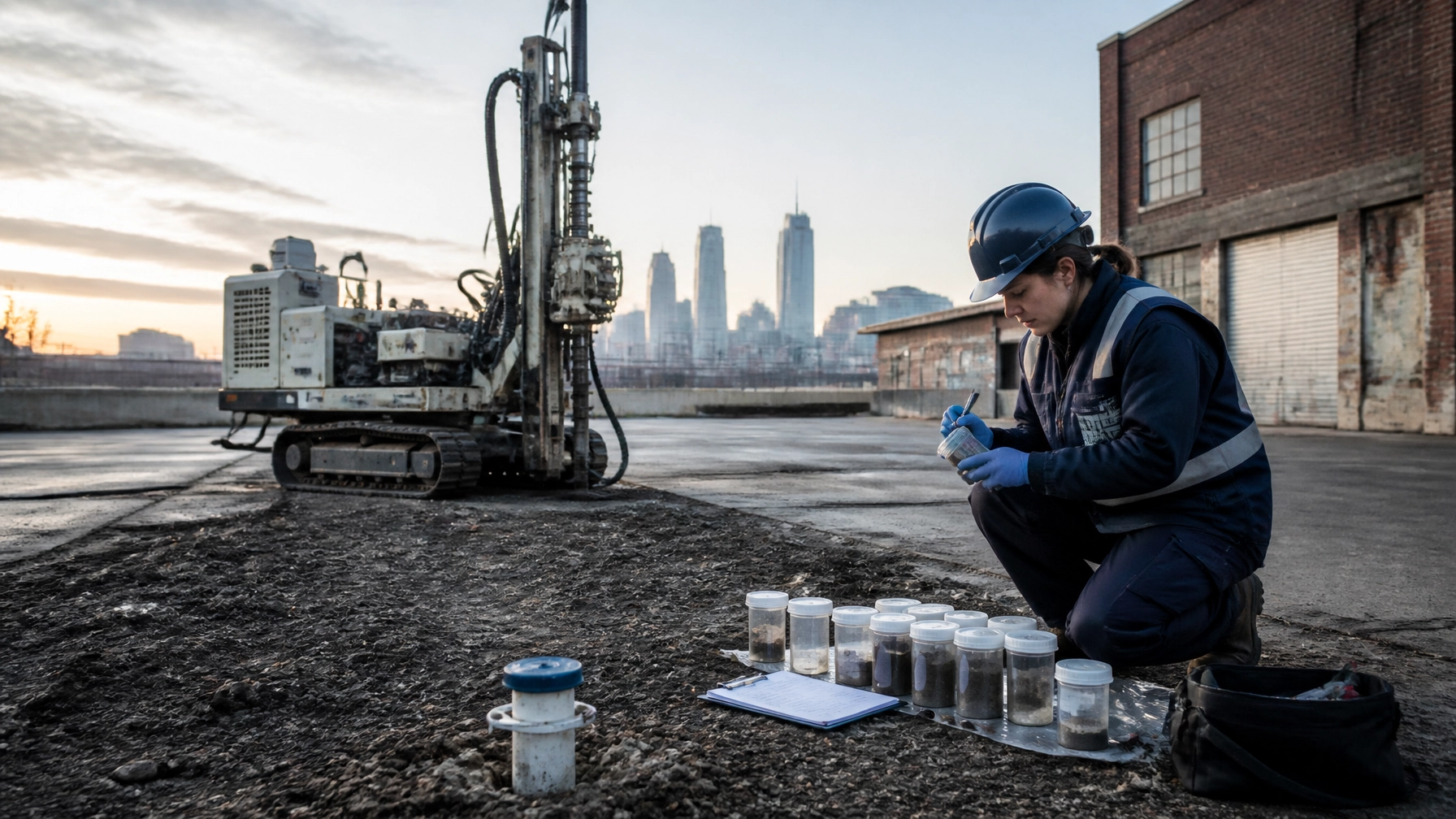
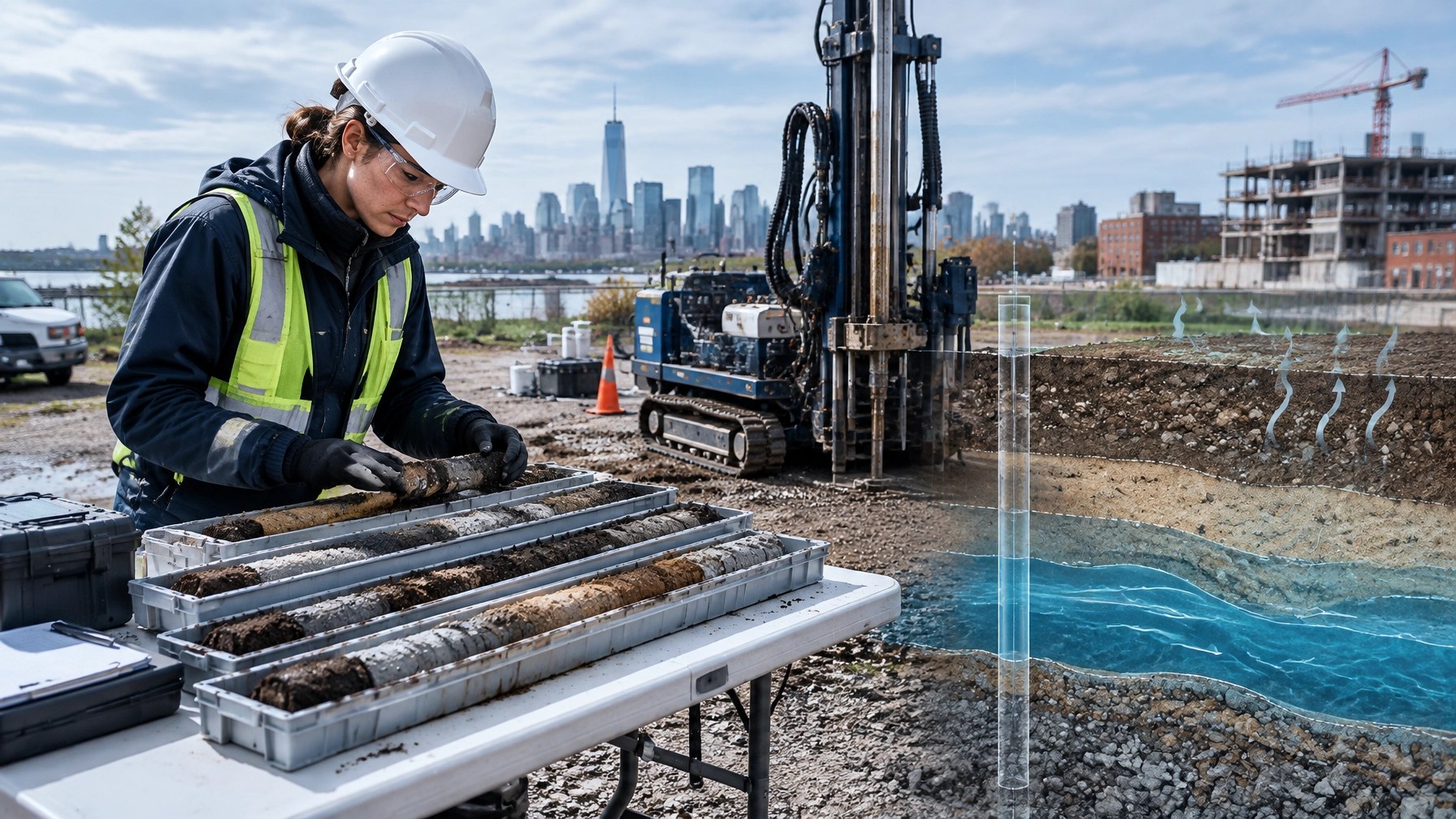
The correct response is a targeted sampling plan. That may include soil borings, groundwater monitoring wells, soil vapor, sub-slab vapor, indoor air, tank closure work, or geophysical locating.
Do not authorize a generic “full site” investigation without understanding the question it must answer. The investigation should help you price the risk, revise the design, negotiate the purchase agreement, or walk away.
Practical Phase II timing
For a conventional acquisition, plan to:
- Scope the Phase II within days of the Phase I or PA
- Secure access and utility clearance immediately
- Complete field work 60 to 90 days before closing when possible
- Allow time for laboratory analysis and technical interpretation
- Receive a cost and schedule opinion before the environmental contingency expires
- Reserve time for supplemental sampling if results are incomplete
Envicon's environmental assessment team uses GPR before many intrusive programs to reduce utility strike risk and keep the investigation moving. The goal is straightforward: give you usable information before your closing decision becomes irreversible.
Checklist 4: Put ISRA on the clock early
6. Determine ISRA applicability before signing
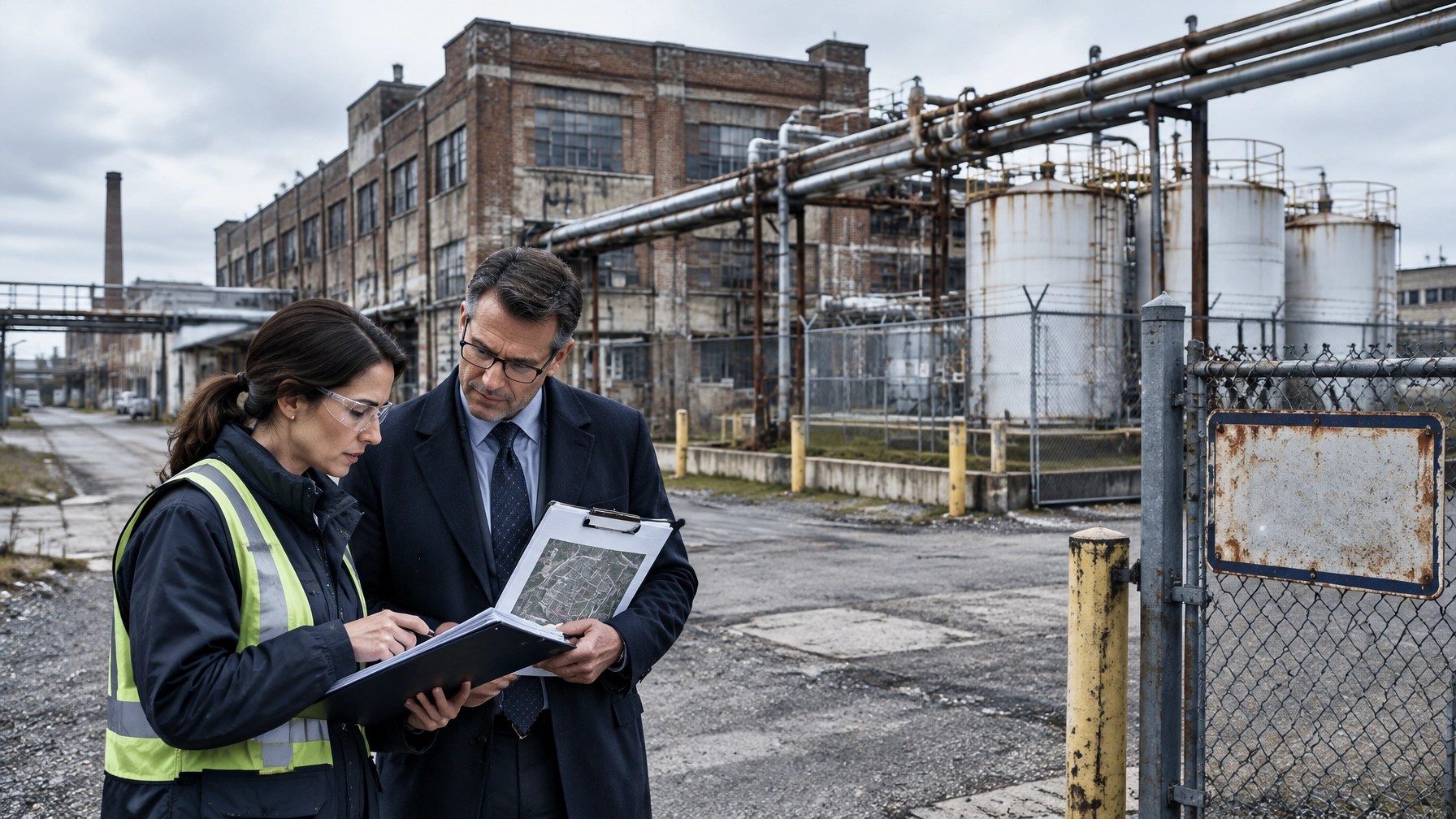
The New Jersey Industrial Site Recovery Act can apply to certain industrial establishments based on their operations and applicable NAICS classifications. Do not wait until closing counsel asks whether ISRA applies.
Review:
- Current and historical operations
- NAICS classifications
- Manufacturing, processing, storage, or waste-related activities
- Prior ISRA cases
- Existing Response Action Outcomes
- Open NJDEP remediation obligations
- Whether a waiver, exemption, or remediation-in-progress path may apply
Under current NJDEP rules, an ISRA triggering event can include signing an agreement of sale for an industrial establishment or its real property. A completed General Information Notice generally must be submitted within five calendar days after the triggering event. See the NJDEP ISRA rules and confirm the transaction-specific analysis with environmental counsel and an LSRP.
This is where deals get lost. The parties negotiate a 30-day closing after signing, then discover that the ISRA clock started when the agreement was executed. The environmental team is still trying to determine whether the property qualifies.
Treat ISRA as a transaction workstream, not a post-closing administrative task.
Checklist 5: Build site work into the closing plan
7. Coordinate environmental findings with construction
Your environmental diligence should inform civil design and construction planning before closing.
Ask whether the findings affect:
- Basement excavation
- Soil export and disposal
- Dewatering
- Utility installation
- Foundation design
- Vapor mitigation
- Soil reuse
- Community air monitoring
- Construction worker protection
- Stormwater controls
- NJDEP remediation obligations
If your project will disturb one or more acres, or forms part of a larger common plan of development, review the NJPDES Construction Activity General Permit 5G3 requirements early. NJDEP indicates that new projects generally need a Soil Erosion and Sediment Control Plan certification and an electronic Request for Authorization submitted at least 30 days before land disturbance. The NJDEP 5G3 permit materials should be checked against the current project scope.
Environmental due diligence is complete only when the findings can move into the civil drawings, budget, schedule, and permit strategy.
Where NJ acquisition deals actually get lost
The recurring failures are predictable:
- The buyer orders a Phase I after signing the PSA with a short diligence period.
- The report satisfies the lender but does not answer development or NJDEP questions.
- The Phase I identifies a REC, but there is no access for Phase II work.
- The Phase II starts after the environmental contingency expires.
- ISRA applicability is discussed after the agreement of sale is signed.
- The buyer discovers historic fill after the excavation budget is fixed.
- Vapor risk appears after building design is complete.
- A prior report is older than the AAI timing window.
- The consultant delivers findings without a cost, schedule, or action path.
The answer is not always more testing. It is better sequencing and direct accountability.
A closing-date checklist for NJ developers
Before you close, confirm that:
- The Phase I meets ASTM E1527-21 and AAI requirements.
- The 180-day AAI elements are current.
- The NJ Preliminary Assessment question has been addressed.
- All RECs and areas of concern have a documented disposition.
- Phase II results are complete where warranted.
- Soil, groundwater, and vapor risks are understood.
- ISRA applicability is documented.
- LSRP responsibilities are assigned if required.
- Purchase agreement protections match the environmental findings.
- Remediation, escrow, indemnity, and post-closing obligations are documented.
- Planned excavation and disturbance are reflected in the environmental scope.
- Construction stormwater and erosion control requirements are on the schedule.
A large national consultant may hand you a report and leave your team to interpret it. Envicon works directly with developers, attorneys, lenders, architects, contractors, and regulators so the report becomes a decision.
We combine technical diligence, field investigation, regulatory coordination, and project visibility. That is how environmental due diligence protects more than your lender. It protects your closing date and your ability to build.
Final takeaway
For New Jersey developers, environmental due diligence should run in parallel with the transaction, not behind it.
Start at the term sheet. Screen ISRA before signing. Complete the Phase I and PA early. Trigger Phase II when the facts require it. Keep the AAI clock current. Tie every finding to cost, design, permitting, and closing strategy.
Precision, speed, and trust are not separate benefits. They are what keep a difficult site moving toward a buildable future.
Ready to clear the path to closing?
- Use Envicon's proprietary project risk screener
- Get a free consultation
- Call Envicon at (917) 764-2171