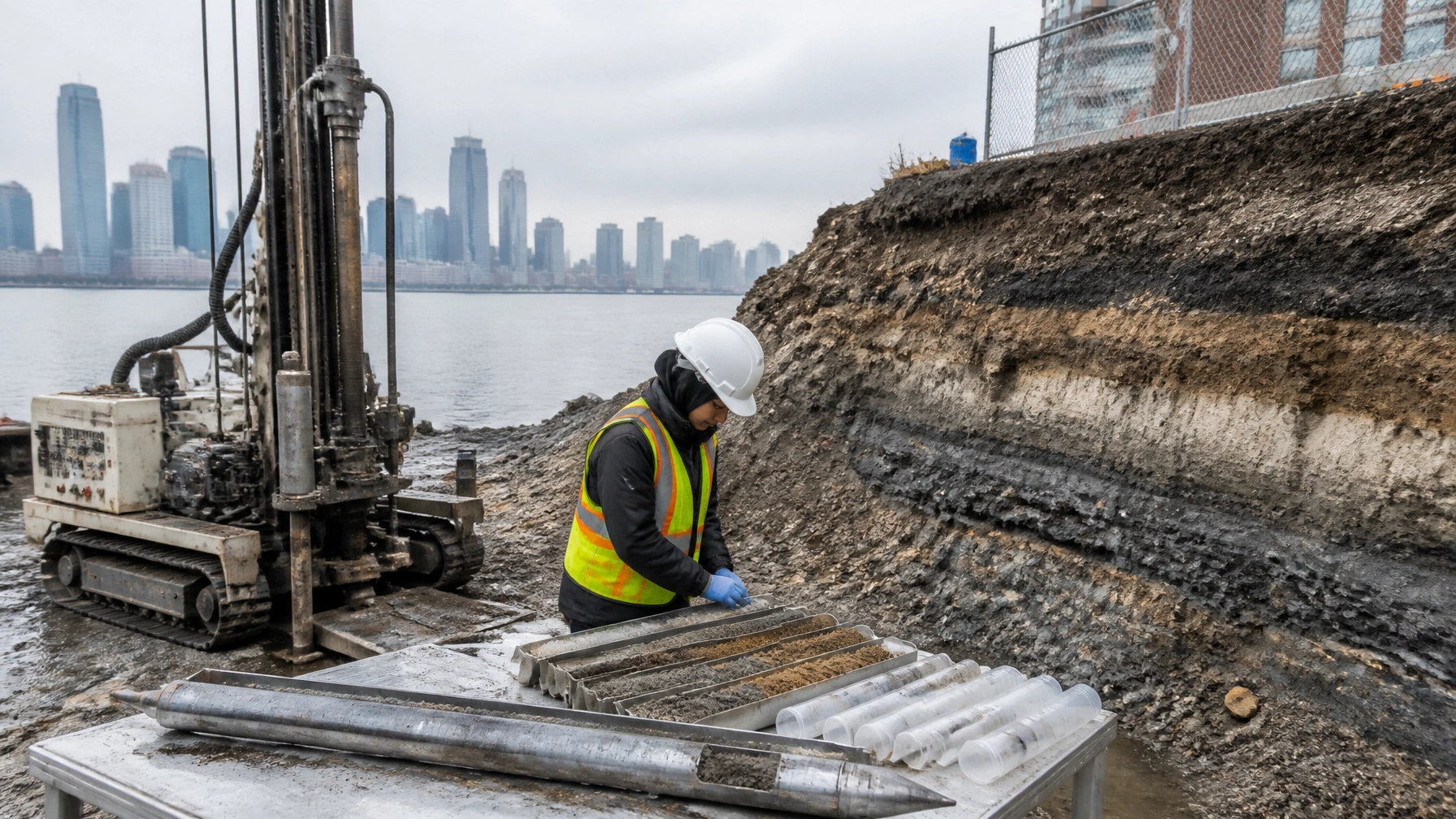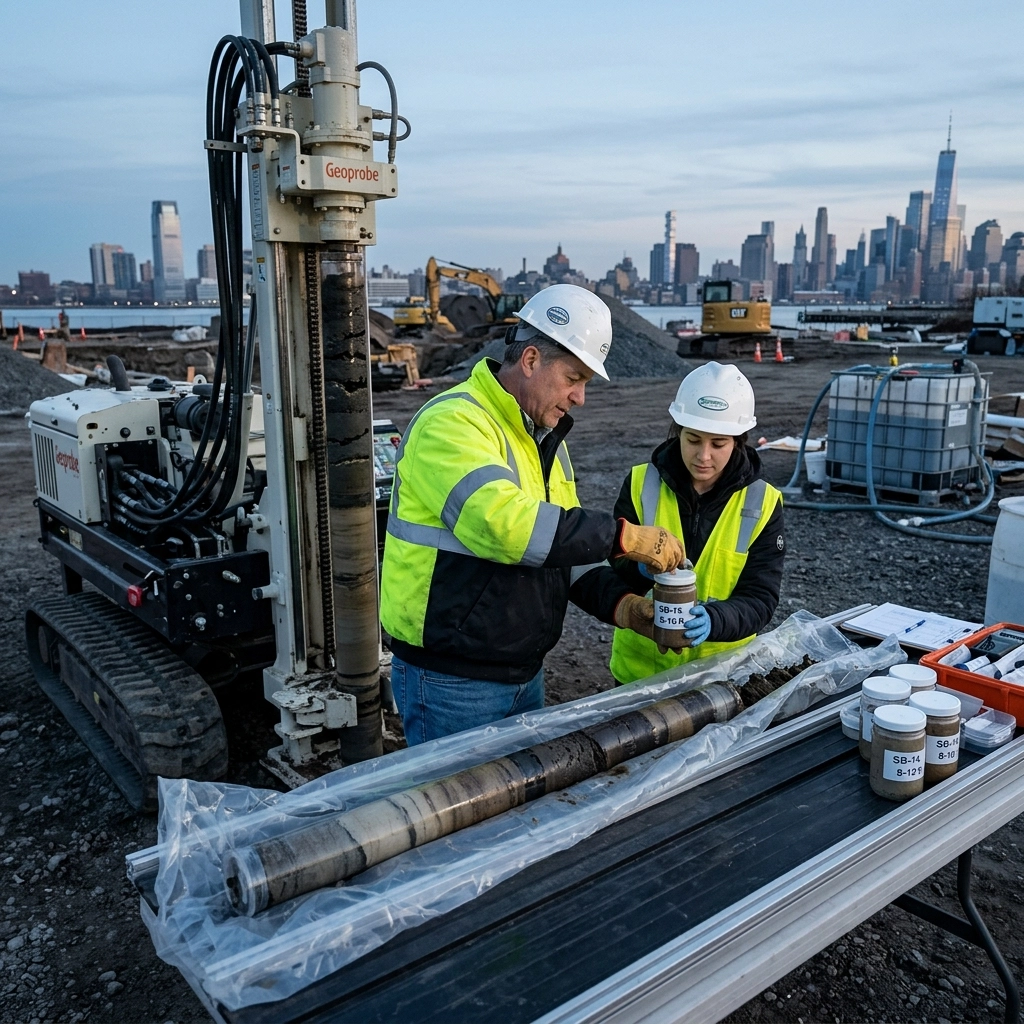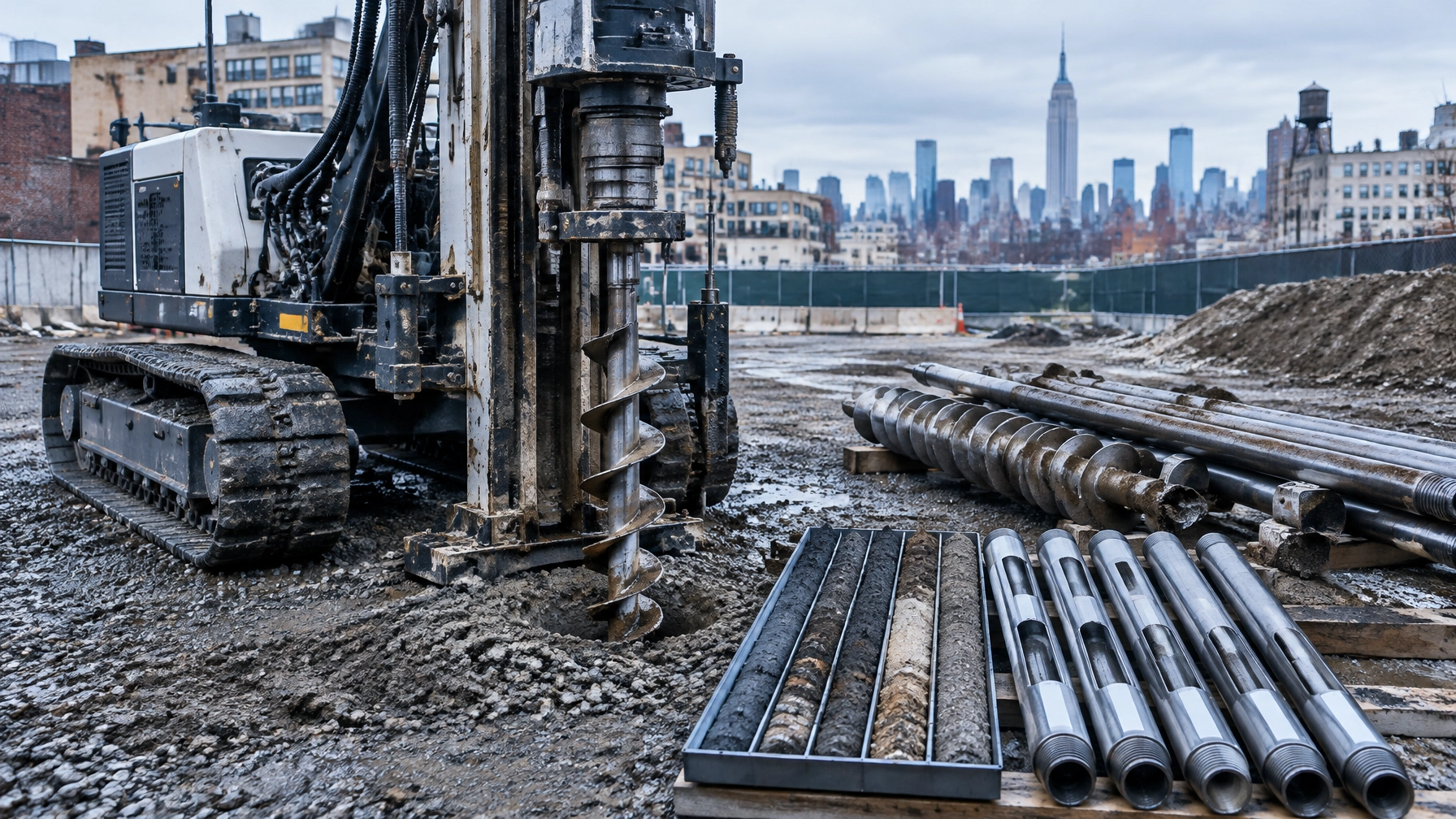
On a Queens redevelopment site, one drill rig can serve two investigations. That does not mean every boring, tool, or sample can serve both.
Geotechnical work measures how soil and rock will perform under foundations and other loads. A Phase II environmental site assessment investigates whether contaminants are present and how they are distributed. Both may require drilling, utility clearance, access coordination, and handling of soil or groundwater. That overlap can reduce mobilization costs. Poor coordination can also compromise the environmental record or leave the design team without the engineering data it needs.
The practical rule is simple: share the mobilization, not uncontrolled methods or equipment.
Where one mobilization saves money
The opportunity is usually in logistics. A coordinated program can reduce repeat rig setup, traffic and access arrangements, utility markouts, field supervision, and disruption to an active site. It can also give the civil, geotechnical, and environmental teams a better shared picture of subsurface conditions.
Locations may overlap where both programs need information about the same part of the site. A proposed building footprint, for example, may need subsurface engineering data and environmental characterization. But nearby locations are not automatically interchangeable. A geotechnical boring’s depth, sampling intervals, and construction method may not match the Phase II’s data objectives.

Before combining work, agree on a location plan that shows each boring’s purpose, target depth, sampling interval, method, and final condition. Identify which holes are strictly geotechnical, which are environmental, and which may be considered for both only if they meet both protocols.
This matters for geotechnical investigation costs in NJ and environmental due diligence for developers in NJ. A shared mobilization may reduce field logistics, but the savings should not depend on collecting unusable data or paying for repeat work.
Where sharing can destroy data quality
A geotechnical SPT sample is collected to evaluate soil behavior. It is not automatically an environmental sample. Its handling, interval selection, and quality controls may differ from those required for chemical analysis. If you want soil from a geotechnical boring considered for environmental testing, define the environmental protocol before drilling and document how the sample will be collected and preserved.
Equipment and drilling methods also matter. Reused tooling can carry material from one interval or boring into another. Drilling fluids, lubricants, bentonite, and other materials can affect environmental samples if the work plan does not control them. A boring that crosses impacted soil can also create a pathway between intervals if it is not properly managed and sealed.
PFAS sampling needs specific attention. Where PFAS is an analyte, the environmental sampling plan should identify dedicated, PFAS-compatible tubing and prohibit Teflon/PTFE and other unapproved fluoropolymer materials from sample contact. The NJDEP Field Sampling Procedures Manual identifies the 2024 edition as current guidance and points users to its PFAS Sampling Fact Sheet.

Keep environmental sampling equipment separate from geotechnical tooling unless the environmental lead has approved the exact equipment and decontamination process. Record the materials used, the sequence of work, and the cleaning steps. If the project cannot demonstrate how a sample was protected from contamination, the result may be difficult to defend to a lender, regulator, attorney, or reviewer.
Sequence the scopes before the rig arrives
There is no universal rule that geotechnical work must come first or Phase II work must come first. Sequence depends on the site history, known or suspected contamination, proposed sampling, and drilling methods.
If contamination is suspected, the environmental lead should review the boring layout and sequence before the geotechnical crew penetrates the area. A geotechnical boring can disturb a target interval or change the conditions that the environmental program needs to characterize. Conversely, environmental sampling may need to come first if construction-driven work could disturb the evidence or access.
Put the decision in the work plan, not in a field conversation after the rig is set up. Include:
- A boring schedule and site plan with each boring’s purpose and priority.
- The permitted drilling method, target depth, sampling intervals, and well details.
- Requirements for decontamination between locations and separate environmental equipment where needed.
- Approved materials, including any drilling fluids, additives, tubing, and well components.
- Procedures for documenting soil, groundwater, cuttings, and other investigation-derived material.
- Instructions for stopping work and contacting the environmental lead if field conditions differ from the plan.
NJDEP maintains its Site Remediation Program guidance library and its Field Sampling Procedures Manual. Review the applicable rules and guidance for the specific investigation and well type. Do not assume that a conventional geotechnical boring and a monitoring well follow identical requirements.
Permits, markouts, wells, and closeout
Permits and approvals depend on the location, depth, boring type, and site conditions. Screen the requirements before mobilization. In Queens, the NYC Department of Buildings’ 2022 Construction Codes are relevant to building-related subsurface investigations. They do not replace project-specific checks for other permits, agency requirements, or utility clearance.
For New Jersey work, confirm applicable NJDEP drilling and well requirements, including whether a proposed boring or installation falls under the state’s well rules. NJDEP’s guidance library provides links to relevant program guidance. The responsible professional and drilling contractor should confirm the required approvals and well-construction or abandonment obligations for the actual scope.
Utility markouts are a separate safety and scheduling gate. Arrange the applicable markouts and any additional private utility locating before drilling. Confirm marked utilities against the approved boring plan. A markout does not establish that every subsurface obstruction is identified.
Any monitoring or temporary well that must be abandoned needs a clear owner, method, and record. Identify that responsibility in the scope. Closeout documentation should capture the well’s construction, status, decommissioning method, and any required reporting. “The driller handled it” is not a closeout record.

Who signs off on what?
Coordination does not blur professional responsibility.
The geotechnical professional defines the data needed for design and evaluates engineering findings. The environmental professional defines the Phase II objectives, sampling and quality controls, and interpretation of environmental results. Where an NJDEP-regulated remediation is involved, the project’s LSRP has a defined role in directing and overseeing applicable remedial work. The drilling contractor performs the field work within the agreed scope and applicable requirements.
One combined mobilization can still have distinct scopes, logs, sample custody, laboratory instructions, and reports. Those records should make it clear which professional directed each activity and which data supports each conclusion.
At Envicon, we coordinate integrated civil, geotechnical, and environmental field programs with direct professional oversight. Our Phase II ESA team scopes environmental sampling around the site’s actual questions. Our Civil & Geotechnical team coordinates investigation needs with design. That means a single field plan can target shared logistics while keeping each discipline’s evidence intact.
We work on projects across Queens, New York, as well as Newark, New Jersey and Monmouth County, New Jersey. Local requirements vary. The field plan needs to reflect the actual jurisdiction, not a template from another market.
What to confirm before approving a combined scope
Before authorizing the work, make sure the team can answer these questions:
- Which locations genuinely serve both design and environmental objectives?
- Which bores require distinct methods, tools, samples, or records?
- Who controls field sequencing and approves changes?
- Are permits, utility clearance, and well obligations assigned?
- Are PFAS materials and sampling controls specified if PFAS is included?
- Who documents and signs off on well abandonment and field closeout?
A combined mobilization is a cost-control decision. It is not permission to combine incompatible protocols. If the scope is set before mobilization, you can cut duplicate logistics without weakening the data your lender, regulator, and design team rely on.
Frequently asked questions
Can a geotechnical boring also count as a Phase II boring?
Sometimes, but not by default. It must meet the environmental program’s location, sampling, equipment, decontamination, and documentation requirements. The environmental professional should approve any shared boring before work begins.
Can one driller complete both scopes?
One contractor may perform the field work if the contractor is qualified for the tasks and meets the applicable licensing, permit, and supervision requirements. The work plan still needs to separate the environmental and geotechnical procedures.
Does combining the work always lower costs?
No. It can reduce duplicate mobilization and site logistics. Extra equipment, sampling controls, permits, or separate work sequences may reduce or eliminate those savings. Compare the full scopes, not just the rig mobilization line.
What changes when PFAS is part of the Phase II?
The sampling plan should specify PFAS-compatible materials and dedicated sample-contact tubing, exclude Teflon/PTFE and unapproved fluoropolymers, and document equipment and handling controls. Follow applicable NJDEP guidance and the project-specific plan.
Plan the field program before the field day
One mobilization can support two disciplines when the team coordinates access, permits, sequencing, and documentation in advance. Keep the purposes of the borings clear. Keep sample controls intact. Assign a professional to resolve field changes before they turn into expensive rework.
Need an integrated field program for a Queens or NJ redevelopment site? Envicon coordinates environmental due diligence and civil/geotechnical investigation with clear scopes and direct professional oversight.