A renovation in Manhattan, Brooklyn, Newark, or Paterson can lose weeks when the project team treats lead paint as a minor building-material issue.
It is not minor.
Lead findings can affect the renovation scope, contractor qualifications, tenant protections, permit filings, clearance testing, and the final abatement budget. The requirements also change by jurisdiction. NYC Local Law 1, the federal EPA Renovation, Repair and Painting Rule, HUD’s Lead Safe Housing Rule, and New Jersey’s lead-based paint regulations do not create one interchangeable checklist.
They create overlapping obligations.
This guide explains what owners, developers, lenders, architects, and contractors need to know in 2026 before disturbing painted surfaces in New York and New Jersey.
The first question is not “Is there lead paint?”
The first question is:
What work will disturb painted surfaces, in what type of building, and under which rule?
A pre-1978 apartment, a pre-1960 NYC multiple dwelling, a HUD-assisted rehabilitation project, and a Newark rental property may all require different documentation and controls.
A proper pre-renovation review should identify:
- Building construction date
- Residential, commercial, or child-occupied use
- Renovation and demolition limits
- Occupancy by children under six
- Known lead paint or prior testing
- Federal or municipal funding
- Required contractor certifications
- Permit and notification requirements
- Dust clearance and closeout requirements
This is where a qualified environmental consultant in NYC adds value. The objective is not simply to collect a test result. It is to give the project team a clear path to construction.
EPA RRP applies to most paid work in pre-1978 housing
The EPA Renovation, Repair and Painting Rule under 40 CFR Part 745 generally applies to paid renovation, repair, and painting work that disturbs painted surfaces in:
- Pre-1978 housing
- Child-occupied facilities built before 1978
- Daycare centers, preschools, and similar facilities
The EPA RRP program requires firms performing covered work to become Lead-Safe Certified firms. Each project must have a certified renovator, and workers must receive the required training.
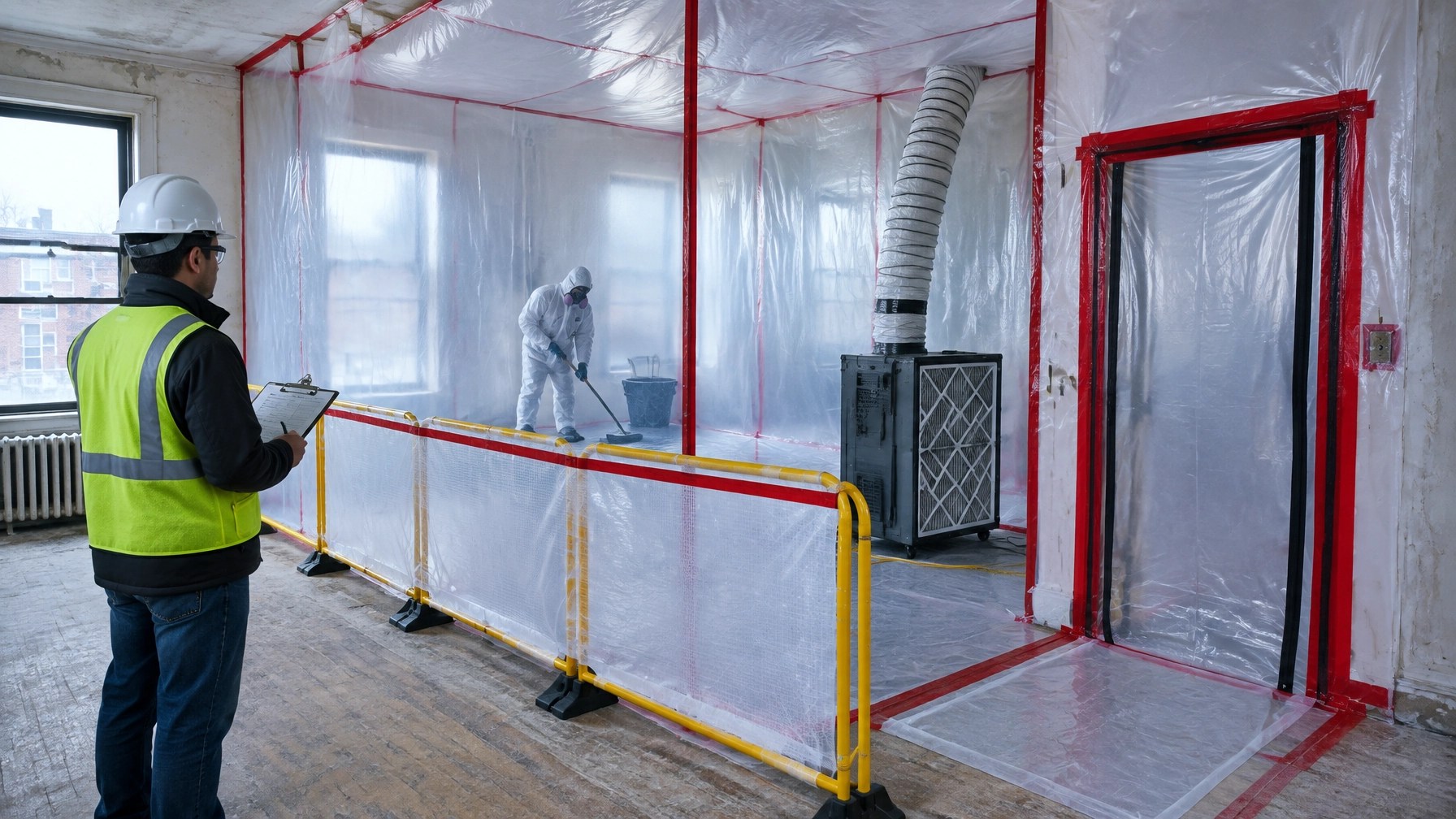
Lead-safe work practices typically include:
- Containing the work area
- Protecting floors, furniture, and HVAC openings
- Prohibiting open-flame burning
- Controlling dust from sanding, scraping, and demolition
- Using wet methods and HEPA-filtered equipment
- Cleaning the work area carefully
- Completing cleaning verification or clearance when required
- Providing the EPA’s Renovate Right information to owners and occupants
The RRP Rule is not the same as lead abatement. RRP controls exposure during renovation. Abatement permanently addresses lead-based paint hazards through removal, enclosure, encapsulation, or replacement.
That distinction matters when writing the scope of work and selecting the contractor.
NYC Local Law 1 is stricter in pre-1960 multiple dwellings
NYC Local Law 1 of 2004 applies primarily to multiple dwellings built before 1960. It also applies to certain buildings constructed between 1960 and 1978 when the owner knows that lead-based paint is present.
The law requires owners to presume paint is lead-based unless the property qualifies for an exemption based on proper testing and documentation.
The most important 2026 compliance points include:
- Covered buildings built before 1960 were required to test painted surfaces in apartments and common areas by August 2025.
- Owners must identify and address lead-based paint hazards.
- Annual notices are used to determine whether a child under six lives in or routinely spends at least 10 hours per week in a dwelling unit.
- Units and relevant common areas must be inspected when a child under six resides there.
- Repairs that disturb more than two square feet of lead-based paint or paint of unknown content require documented safe work practices.
- Records related to inspections, repairs, and safe work practices must generally be retained for at least 10 years.
The NYC HPD lead-based paint guidance also addresses turnover work, window and door friction surfaces, chewable surfaces, annual inspections, violations, and required documentation.
For larger renovation projects, the lead review should happen before the permit package is finalized. A lead finding may not independently create an NYC E-Designation, but an existing NYC E-Designation can add environmental requirements that affect the overall preconstruction sequence.
A paint inspection is not a risk assessment
These terms are often used interchangeably. They should not be.
Paint inspection
A paint inspection determines where lead-based paint is present and identifies the components or surfaces affected.
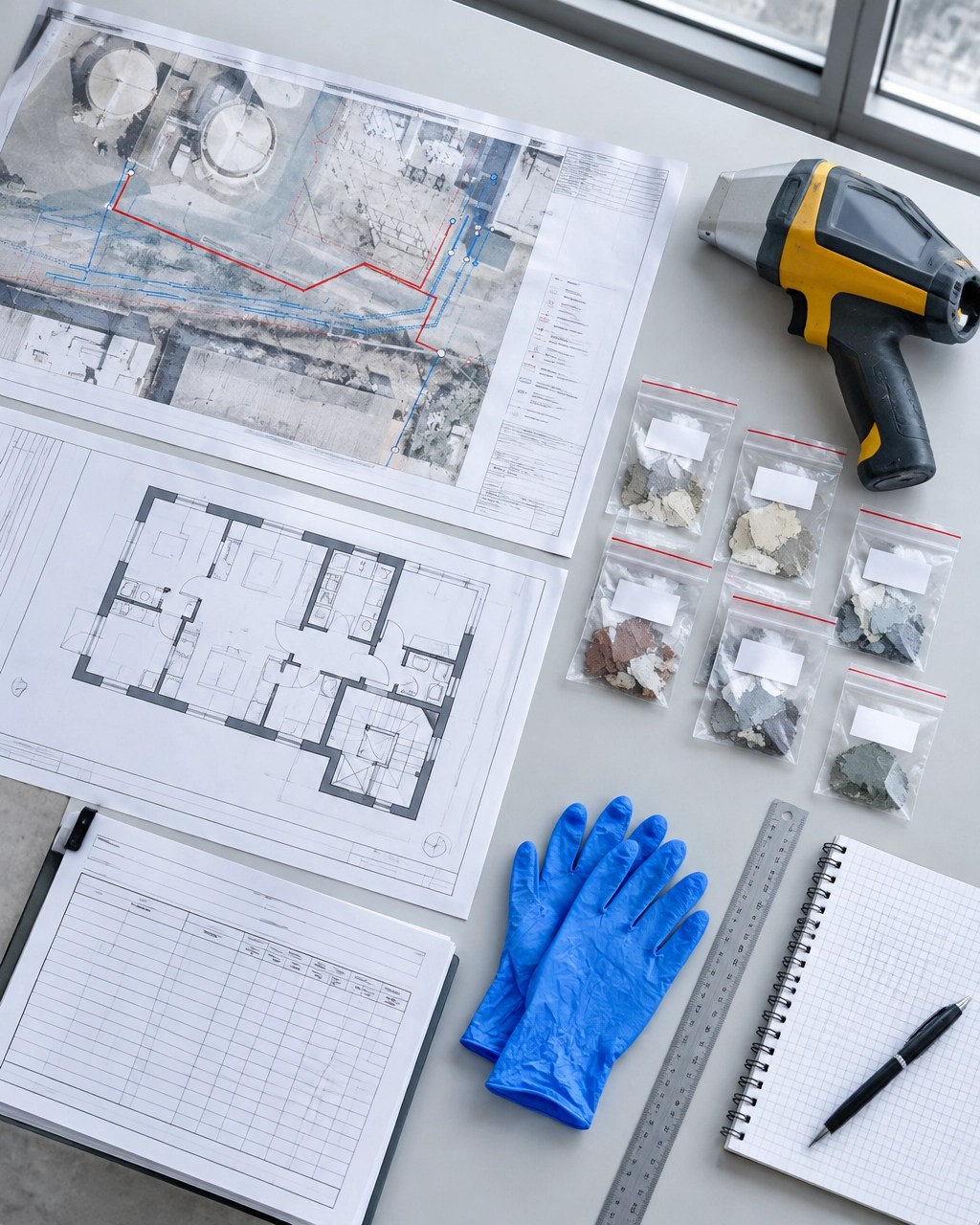
The inspector may use:
- X-ray fluorescence, or XRF
- Laboratory paint chip sampling
- A combination of both methods
A paint inspection is useful when the project needs a surface-by-surface lead determination, such as before window replacement, interior demolition, or a property transaction.
Risk assessment
A risk assessment goes further. It evaluates whether lead-based paint is creating a hazard based on its condition, location, use, occupant exposure, and the presence of lead-contaminated dust or soil.
A risk assessment may include:
- Visual evaluation of deteriorated paint
- Paint testing
- Dust wipe sampling
- Soil sampling
- Review of occupant use patterns
- Identification of friction, impact, and chewable surfaces
- Recommendations for interim controls or abatement
If the project only asks, “Does this wall contain lead?” a paint inspection may be appropriate. If the project asks, “What creates an exposure risk, and how do we control it?” a risk assessment is usually the better scope.
When to use XRF testing or laboratory paint chips
XRF testing is a non-destructive field method that measures lead in painted surfaces. It is efficient for testing doors, windows, trim, walls, ceilings, radiators, and other components in place.
XRF is often preferred when:
- Many surfaces require testing
- The project needs rapid field results
- The owner wants to preserve the building components
- A surface-by-surface map is needed
- NYC Local Law 1 documentation is required
Laboratory paint chip sampling is useful when:
- The surface geometry makes XRF difficult
- The XRF result needs confirmation
- Multiple paint layers must be characterized
- The project requires laboratory documentation
- The inspector needs a result from a specific coating or material
In New Jersey, N.J.A.C. 5:17 recognizes XRF, paint chip analysis, and other approved testing methods. Lead evaluation and abatement firms must meet New Jersey certification requirements, and laboratories analyzing lead samples must meet applicable accreditation standards.
A clean report should identify the tested component, exact location, test method, device information where applicable, laboratory results, and any limitations.
HUD funding adds another layer
When federal funds support rehabilitation, acquisition, or housing assistance, HUD’s Lead Safe Housing Rule under 24 CFR Part 35 may apply.
HUD requirements can include:
- Lead hazard evaluation
- Occupant notification
- Interim controls
- Abatement
- Safe work practices
- Dust clearance testing
- Additional documentation for the federally assisted units and common areas
The level of required hazard control can depend on the amount and type of federal rehabilitation assistance. EPA RRP certification alone does not satisfy every HUD requirement.
Before construction begins, confirm:
- Which federal program is funding the work
- Which units and common areas are covered
- Whether an inspection or risk assessment is required
- Whether interim controls or abatement are required
- Who is responsible for clearance and documentation
A funding compliance issue discovered after construction starts can force remobilization and delay reimbursement.
New Jersey requires certified evaluation and abatement work
New Jersey’s Lead Hazard Evaluation and Abatement Code, N.J.A.C. 5:17, governs lead hazard evaluation and abatement contractor certification.
The rules require:
- Certified firms for lead evaluation or lead abatement work
- Certified inspectors and risk assessors
- UCC construction permits for many abatement activities
- Advance notice to the New Jersey Department of Community Affairs for abatement jobs
- Lead-safe worksite preparation
- Final inspection and clearance testing
- Proper waste handling and documentation
The regulations also distinguish between lead evaluation, interim controls, and permanent abatement. In rental housing, separate state and municipal inspection requirements may apply to pre-1978 units.
For a Newark or Paterson renovation, the project team should confirm requirements with the municipality and New Jersey DCA before scheduling demolition. A lead-based paint finding can affect the permit path, tenant relocation plan, contractor bid package, and construction sequence.
What happens after an elevated blood lead level
In New York City, a confirmed blood lead level of 3.5 micrograms per deciliter or higher in a child under 18 triggers an environmental investigation by the NYC Department of Health and Mental Hygiene.
The investigation may include:
- A detailed exposure interview
- Inspection of the child’s primary residence
- Review of supplemental addresses
- Inspection of childcare or other regular locations
- Paint and dust testing
- Coordination with HPD
- Hazard correction and follow-up
The NYC Health Department lead guidance explains the reporting and investigation process.
In New Jersey, elevated blood lead level investigations are governed by the applicable public health rules. N.J.A.C. 5:17 states that when a child with an elevated blood lead level is identified, the relevant Department of Health requirements control the inspection, risk assessment, and abatement of premises identified as possible sources.
For owners, this means a medical finding can become a property compliance issue. It can lead to an agency inspection, a hazard determination, mandatory correction, clearance testing, and additional record production.
How lead findings affect schedule and budget
Lead findings affect more than the environmental report.
They can change:
- Demolition methods
- Contractor qualifications
- Tenant relocation requirements
- Work-area containment
- Air monitoring and clearance
- Permit submissions
- Waste handling
- Subcontractor pricing
- Construction duration
- Lender and investor conditions
A simple paint inspection may cost less than a full risk assessment, but the correct scope depends on the project. The same applies to an asbestos inspection cost in New Jersey. Lead and asbestos surveys are separate scopes, but both should be coordinated before renovation or demolition.
Budget categories may include:
- Initial inspection or risk assessment
- XRF and laboratory sampling
- Lead abatement or interim controls
- Certified contractor premiums
- Containment and HEPA equipment
- Dust clearance testing
- Tenant protection or relocation
- Permit and agency fees
- Waste packaging, transport, and disposal
- Schedule contingency
Do not wait for a contractor to discover lead after mobilization. That is when pricing becomes least predictable.
Why project teams use Envicon
Large national firms often separate the inspector, report writer, project manager, and regulatory contact. That can leave owners with a technically correct report but no practical next step.
Envicon keeps the work closer to the field.
Our team provides:
- Field-certified inspectors who understand construction conditions
- Clear documentation that supports permit and lender review
- Coordination with owners, architects, attorneys, and contractors
- Direct communication when conditions change
- Scope recommendations tied to the actual renovation
- Transparent pricing that reduces change order surprises
Collaboration is not a buzzword. It is how a lead paint inspection becomes a buildable plan.
Frequently asked questions
Is lead paint inspection required before renovating a pre-1978 building?
A lead evaluation may be required or strongly recommended depending on the building type, renovation scope, occupants, funding, and jurisdiction. Paid work in covered pre-1978 housing and child-occupied facilities generally triggers EPA RRP requirements.
Does an XRF test replace a risk assessment?
No. XRF identifies lead in painted surfaces. A risk assessment evaluates hazards, exposure pathways, dust, soil, and control options.
Does NYC Local Law 1 apply to buildings constructed after 1960?
It can apply to buildings constructed between 1960 and 1978 when the owner knows lead-based paint is present. Confirm the building’s status and documentation with a qualified professional.
Can lead paint delay a NYC renovation permit?
It can. Lead documentation, contractor qualifications, tenant protections, and safe work procedures may need to be addressed before work starts. The exact impact depends on the project and permit scope.
Does New Jersey require a permit for lead abatement?
N.J.A.C. 5:17 generally requires a Uniform Construction Code permit for removal, repair, encapsulation, or enclosure of lead-based paint or lead-contaminated soil. Confirm the project-specific requirements with the local enforcing agency.
The takeaway
Lead paint compliance in NYC and New Jersey is a preconstruction issue, not a cleanup detail.
Identify the building age. Define the work. Select the right evaluation. Confirm the applicable rule. Build abatement, clearance, permits, and documentation into the schedule before the contractor mobilizes.
Envicon helps owners and development teams solve environmental and engineering challenges with precision, speed, and trust.
Ready to plan your lead or asbestos survey?
- Call now: (917) 764-2171
- Get a free quote today
- Use the proprietary cost estimator
- View our complete list of services