As of February 2026, the New Jersey Department of Environmental Protection has added the Indoor Air Notification Area, or IANA, to the state’s remedial framework for contaminated properties.
The change matters for property owners, developers, lenders, attorneys, and construction teams working in Newark, Jersey City, and throughout Hudson County. When volatile chemicals migrate from soil or groundwater into a building and indoor air exceeds applicable standards, the issue now requires more than a sampling event or a vapor mitigation system. It requires a documented area, public notification, GIS mapping, ongoing monitoring, and long-term permit management.
NJDEP codified the IANA requirements in N.J.A.C. 7:26C-7.5 and related technical requirements in N.J.A.C. 7:26E-5.7. The official NJDEP IANA guidance and NJDEP Vapor Intrusion Technical Guidance should control every site-specific decision.
What is an Indoor Air Notification Area?
An IANA is an institutional control that identifies an area where indoor air contamination exceeds the applicable Indoor Air Remediation Standards, or IARS, because of a completed vapor intrusion pathway.
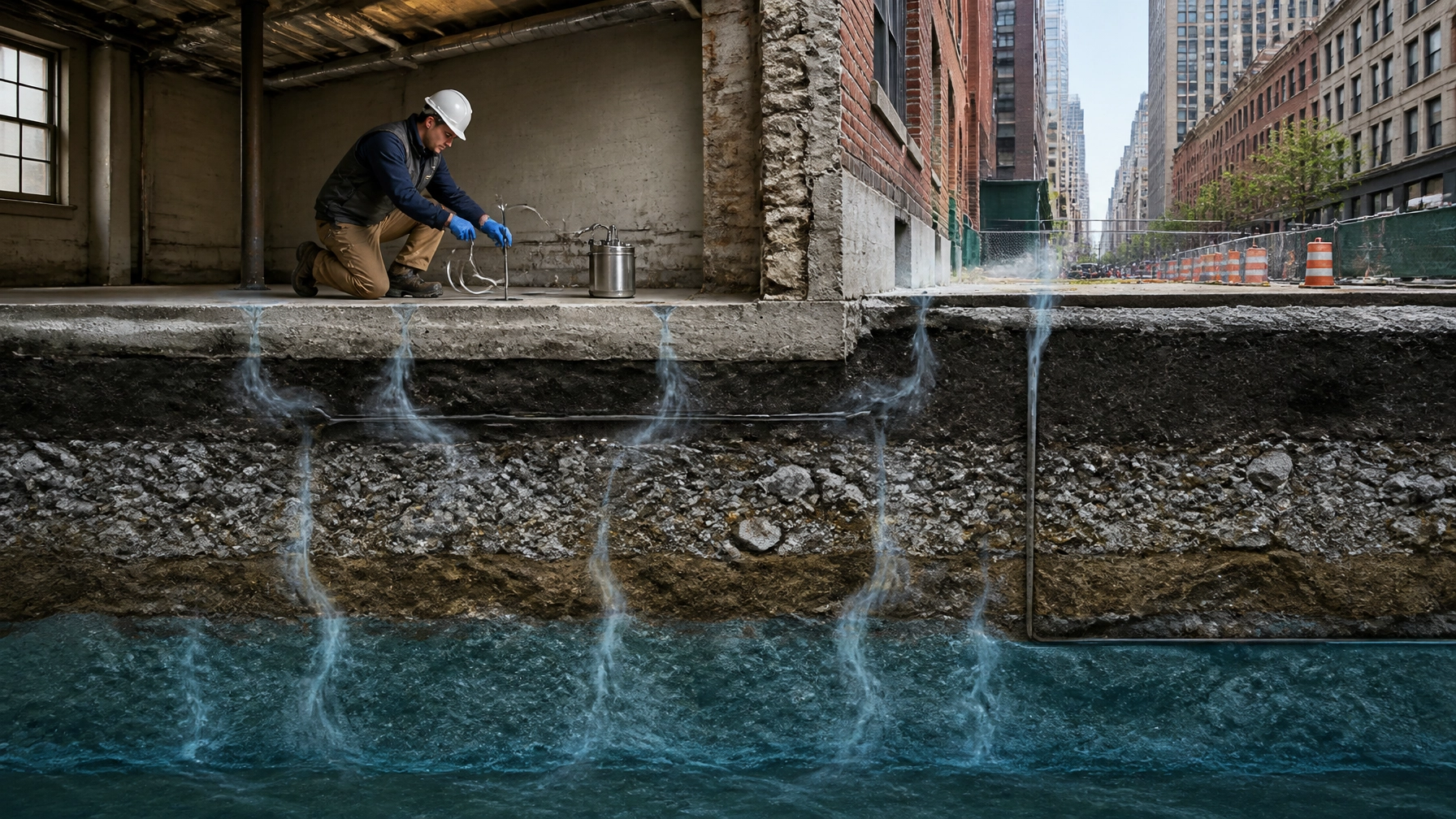
Vapor intrusion occurs when volatile chemicals in soil, soil gas, or groundwater migrate through subsurface materials, cracks, sumps, utility trenches, or other preferential pathways and enter an overlying building.
“Vapor intrusion refers to this migration of volatile chemicals from the subsurface into overlying buildings.”
Source: NJDEP Vapor Intrusion Pathway
An IANA does not mean that every building on a contaminated property has the same exposure condition. The area may include specific buildings, floors, units, or suites. The boundary must reflect current site conditions and the buildings or areas affected by the indoor-air pathway.
The IANA can also include off-site buildings when the data show that indoor air may be affected beyond the original property boundary.
How the IANA fits into the Remedial Action Permit framework
The IANA operates as part of a Remedial Action Permit, or RAP, when the remedy depends on ongoing controls rather than complete removal of the contamination.
The 2026 framework makes indoor air a formal part of long-term remedial management. A project may need to address:
- Soil contamination and any associated deed notice.
- Groundwater contamination and a Classification Exception Area, or CEA.
- Indoor air impacts and the IANA.
- Active or passive vapor mitigation systems.
- Monitoring, maintenance, inspections, and financial assurance.
- Biennial certifications and updated site documentation.
The IANA is not a substitute for mitigation. It provides notice that a potential exposure risk exists if the engineering control is not operated and maintained. The permittee remains responsible for keeping the remedy protective.
The NJDEP IANA Fact Sheet requires information about the site, contaminants, sampling results, affected buildings and units, mitigation systems, maps, GIS deliverables, notifications, and the narrative description of the IANA.
The IANA duration is indeterminate. NJDEP may revise or reestablish the area when new data, building modifications, changes in use, or additional monitoring show that the mapped boundary no longer reflects actual indoor-air conditions.
Mapping and notification obligations
The IANA process is both technical and public-facing. A strong sampling program can still create problems if the boundary, GIS file, or notification record is incomplete.
The IANA submission generally includes:
- Site location map based on a USGS quadrangle map.
- IANA map showing affected buildings, units, floors, sampling points, mitigation systems, and the horizontal extent of the area.
- Cross-section maps showing the relationship between contamination, soil vapor, groundwater, buildings, slabs, and preferential pathways.
- GIS-compatible boundary deliverables, submitted in the format required by NJDEP.
- Building and unit information, including block and lot numbers, addresses, impacted floors, suite numbers, and whether the building is on or off the subject property.
The NJDEP IANA Fact Sheet also requires notification documentation under N.J.A.C. 7:26C-7.5(d). Depending on the site, the notification list can include:
- Municipal clerk.
- County clerk.
- Local, county, or regional health department.
- Designated County Environmental Health Act agency.
- County planning board.
- Owners of real property within the subject buildings or units.
- Tenants and occupants within the IANA area.
The permittee must maintain the names, addresses, and dates associated with those notifications. This record matters during ownership transfers, leasing, refinancing, construction, and future RAP certifications.
For a redevelopment team, the practical point is simple: the IANA map cannot sit in a technical appendix that nobody uses. The boundary must inform the design drawings, lease documents, construction plans, operations manuals, and property management procedures.

Indoor-air monitoring and mitigation
NJDEP’s technical requirements establish different response paths depending on indoor-air results.
A Vapor Concern, or VC, exists when indoor air exceeds the applicable IARS but remains at or below the Vapor Intrusion Rapid Action Level. An Immediate Environmental Concern, or IEC, exists when indoor air exceeds the rapid action level.
For a VC, the requirements include:
- Notify NJDEP of the exceedance.
- Submit analytical results, maps, figures, and required data deliverables.
- Provide the results and an explanation to the property owner, occupant, and designated local health department.
- Submit a mitigation plan within the required timeframe.
- Include a monitoring plan that evaluates the effectiveness of the response.
- Implement the plan.
- Submit a vapor intrusion response action report.
- Identify and evaluate other buildings at risk, including buildings within the applicable investigation distance.
For an IEC, the response is faster and more intensive. The project must immediately notify NJDEP and implement the actions required under N.J.A.C. 7:26E-1.11. NJDEP requires an engineered response action, post-installation sampling, additional building evaluations, routine updates, and subsequent monitoring and maintenance reports.
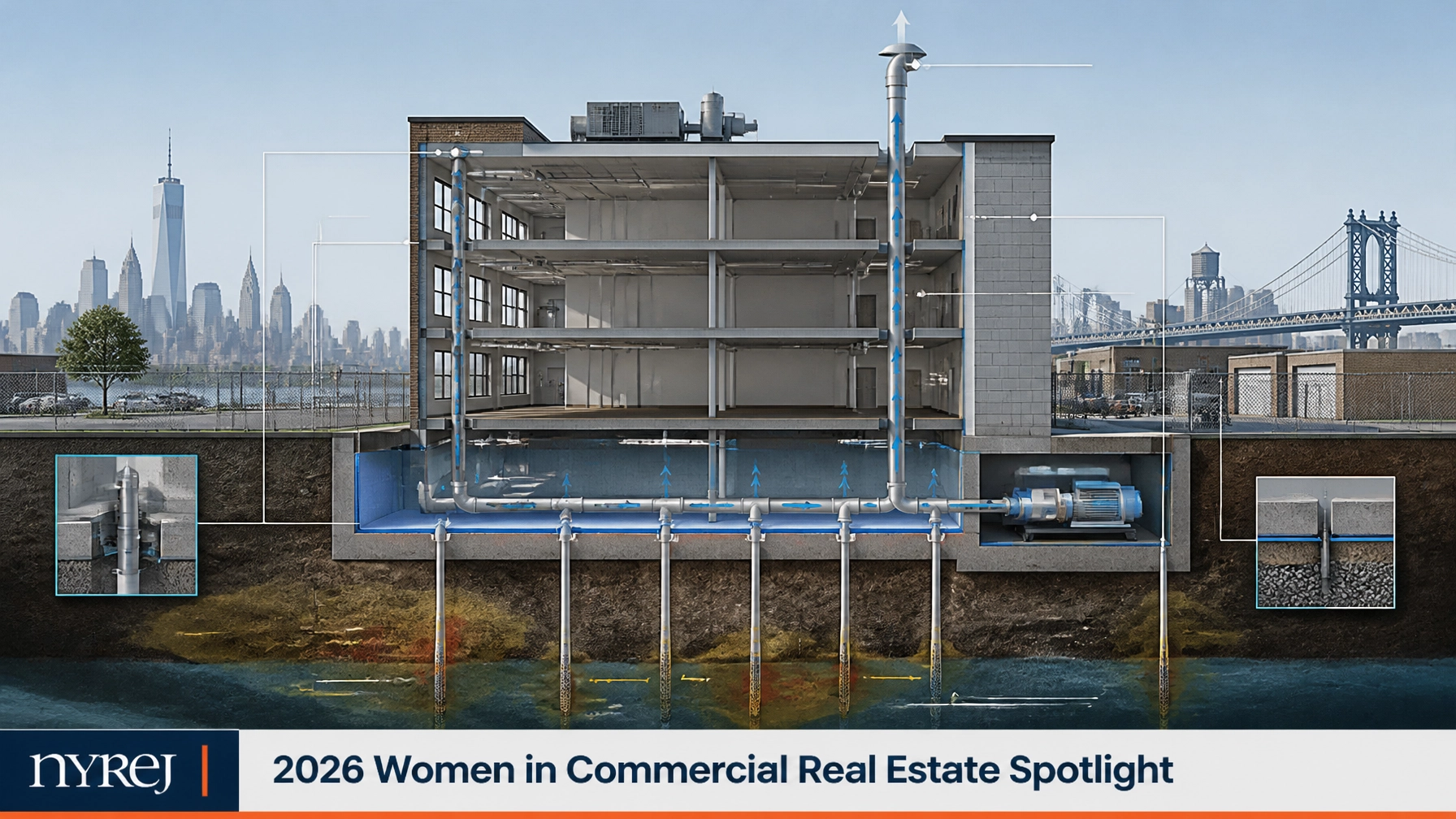
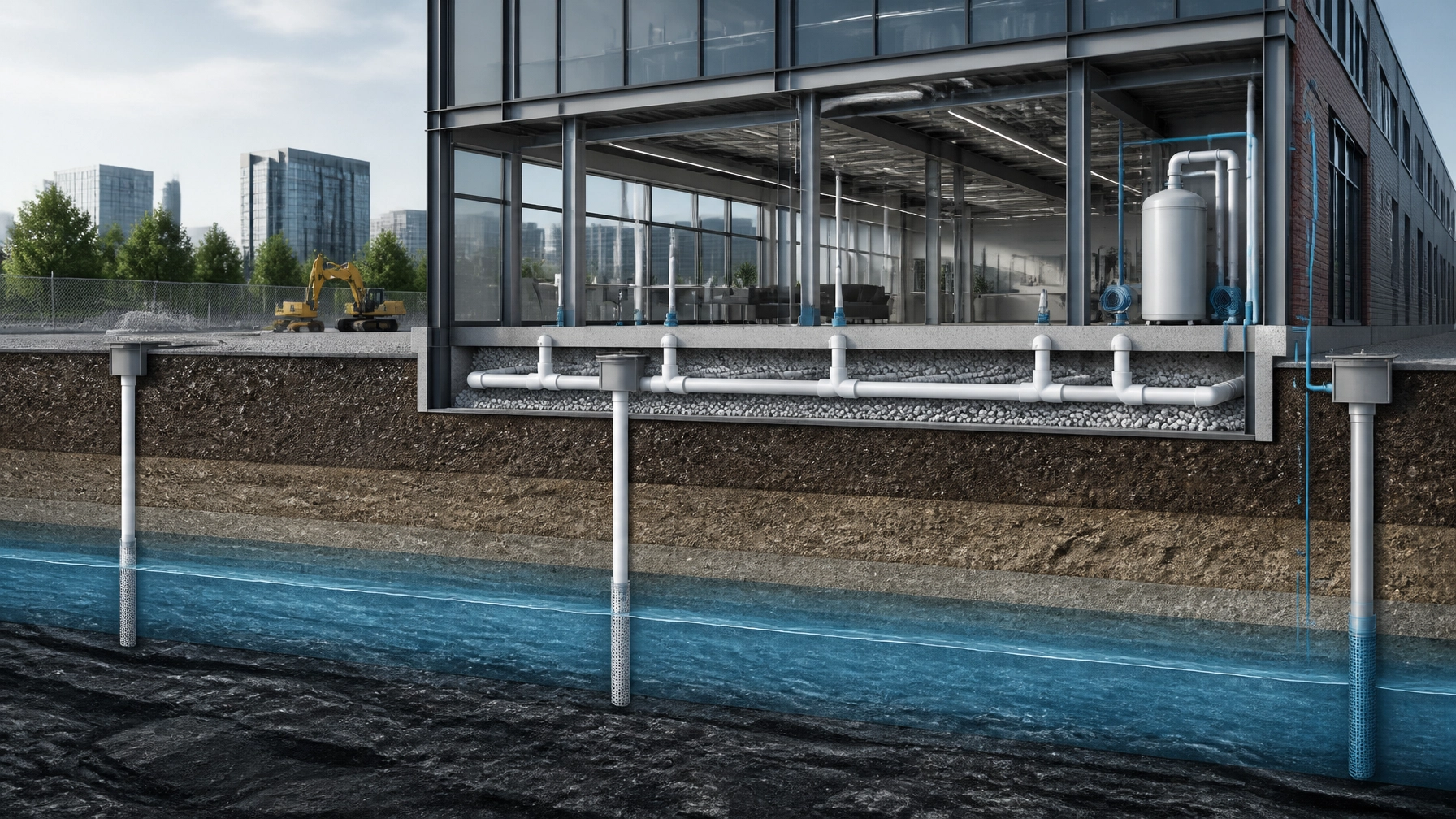
Common mitigation systems include:
- Active sub-slab depressurization.
- Soil vapor extraction or related source-control systems.
- Passive vapor barriers and venting systems.
- Crawl-space or basement mitigation.
- Sealing of preferential pathways.
- Building HVAC and pressure-control measures where appropriate.
Mitigation design must account for the actual building. A high-rise residential structure in Jersey City may have multiple slabs, podium levels, utility penetrations, parking areas, and tenant spaces. A former industrial building in Newark may have floor drains, sumps, trenches, process areas, and changing occupancy patterns. A standard detail copied from another project is not enough.
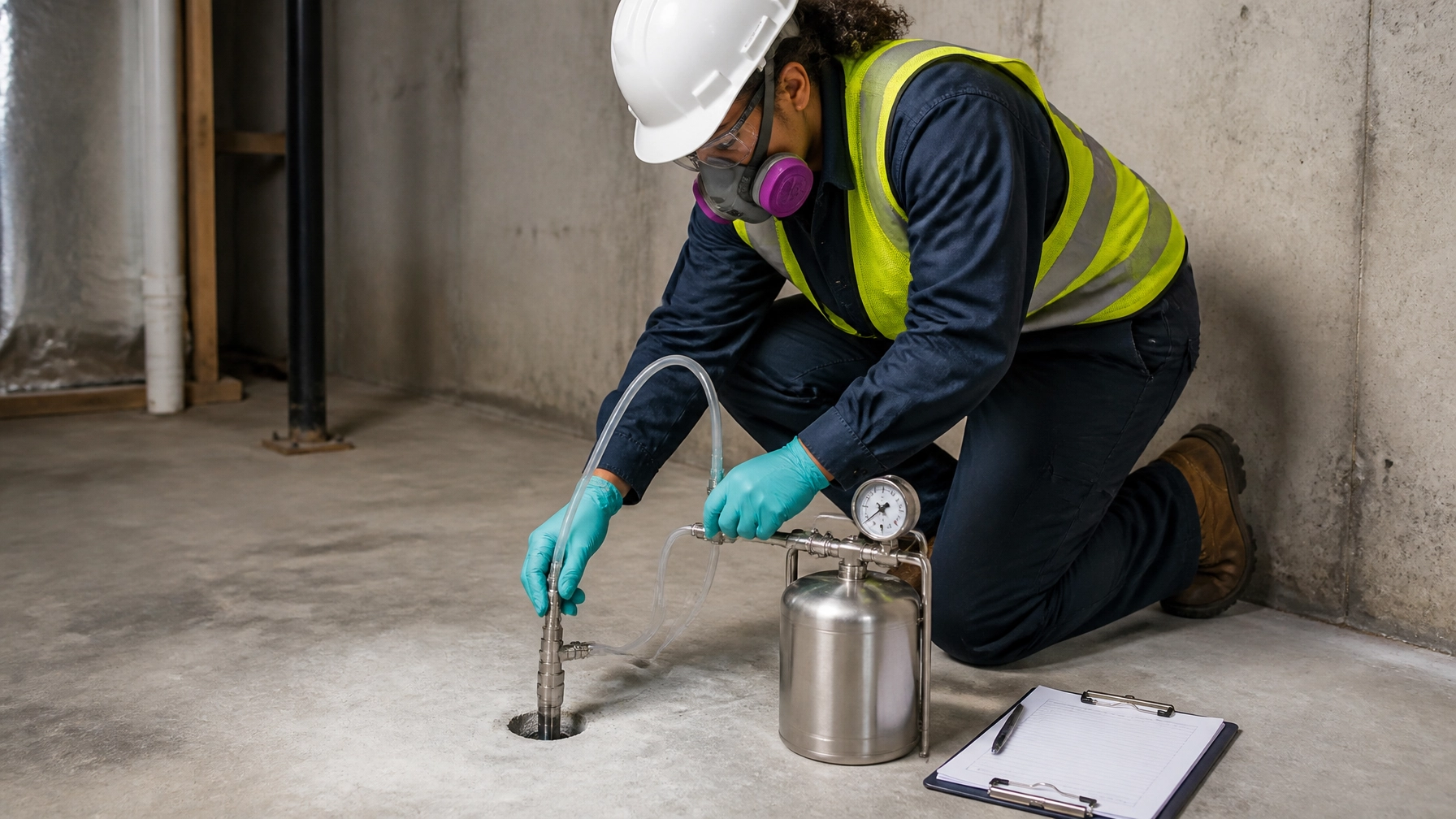
NJDEP also requires full laboratory data deliverables for vapor intrusion samples, including sub-slab, indoor-air, and ambient-air analyses. Air samples generally require canister-based collection and appropriate use of NJDEP Method LLTO-15 or USEPA Method TO-15, consistent with the applicable quality assurance plan.

Why this matters in Newark, Jersey City, and Hudson County
Newark and Hudson County redevelopment projects often involve dense urban conditions, historic industrial uses, former fuel facilities, manufactured gas plant concerns, historic fill, buried utilities, and buildings constructed over complex subsurface conditions.
That combination increases the importance of a clear conceptual site model. The team needs to understand:
- Where the source area is located.
- How groundwater flows.
- Where soil gas is present.
- Which utilities could act as preferential pathways.
- How slabs, basements, sumps, and floor drains affect migration.
- Which buildings fall within the vapor intrusion investigation area.
- Whether current or proposed use changes the applicable standards.
- How construction may damage or alter a mitigation system.
For a Jersey City or Hudson County project, an IANA can affect more than environmental reporting. It can affect construction sequencing, tenant occupancy, lender diligence, condominium documents, maintenance budgets, insurance, and long-term asset management.
For a Newark redevelopment, the IANA may also intersect with active construction, phased demolition, new foundations, utility relocations, and changes from industrial to residential use. The vapor pathway should be evaluated before design decisions lock in a slab, basement, or utility configuration.
Envicon supports these projects through vapor intrusion assessment, NJ LSRP services, and remediation and brownfield redevelopment. Our Jersey City location supports projects across Hudson County, while our Newark service area supports owners and redevelopment teams in Essex County and nearby municipalities.
Practical IANA compliance checklist
Before submitting an IANA or applying for an indoor-air RAP component, confirm that your team has:
- Reviewed current NJDEP IARS, soil gas screening levels, groundwater screening levels, and rapid action levels.
- Evaluated soil vapor, sub-slab soil gas, indoor air, ambient air, and groundwater data together.
- Identified all buildings, units, floors, basements, crawl spaces, slabs, and subsurface utilities within the investigation area.
- Documented the source, migration pathway, and completed exposure pathway.
- Confirmed whether the condition is a VC or IEC.
- Designed and installed the mitigation system based on actual building conditions.
- Sealed preferential pathways and documented the work.
- Completed post-installation sampling where required.
- Prepared the monitoring and maintenance plan.
- Created accurate IANA maps, cross-sections, and GIS files.
- Completed the NJDEP IANA Fact Sheet and instructions.
- Documented every required public notification.
- Coordinated the RAP, RAR, as-built drawings, O&M manual, financial assurance, and biennial certification.
- Integrated the environmental controls into construction drawings and property management procedures.

How Envicon keeps the project moving
An IANA is not just a regulatory form. It is a long-term operating responsibility tied to the building, the property, and the people who occupy it.
Envicon coordinates the full path from investigation to closure and ongoing compliance. We manage soil vapor and sub-slab sampling, indoor-air monitoring, mitigation design coordination, construction oversight, system verification, GIS mapping, RAP documentation, and LSRP deliverables.
We work directly with owners, developers, attorneys, architects, engineers, contractors, property managers, and regulators. Collaboration is not a buzzword. It is how the work gets done.
Our field-first approach gives you a clear answer to the questions that matter:
- What is affected?
- What must be mitigated?
- What must be notified?
- What must be mapped?
- What must be maintained?
- What does this mean for construction, financing, occupancy, and future transfer?
The 2026 IANA framework makes vapor intrusion visibility and long-term accountability part of the redevelopment process. The right response is not to delay the project or bury the issue in a report. It is to define the pathway, control the risk, document the remedy, and keep the site moving toward a buildable future.
Takeaway
If your Newark, Jersey City, or Hudson County property has soil vapor, sub-slab, groundwater, or indoor-air concerns, review the IANA requirements before your next remedial phase submission, construction milestone, or property transfer.
NJDEP has made the expectation clear. Indoor-air risks require data, mitigation, notification, mapping, and ongoing oversight.
Envicon helps turn that obligation into a controlled path forward.
Talk with Envicon
Regulatory requirements can change. This article provides general information and does not replace site-specific advice from a qualified LSRP or legal counsel. Always confirm current requirements directly with NJDEP before submitting a remedial document or implementing a remedy.