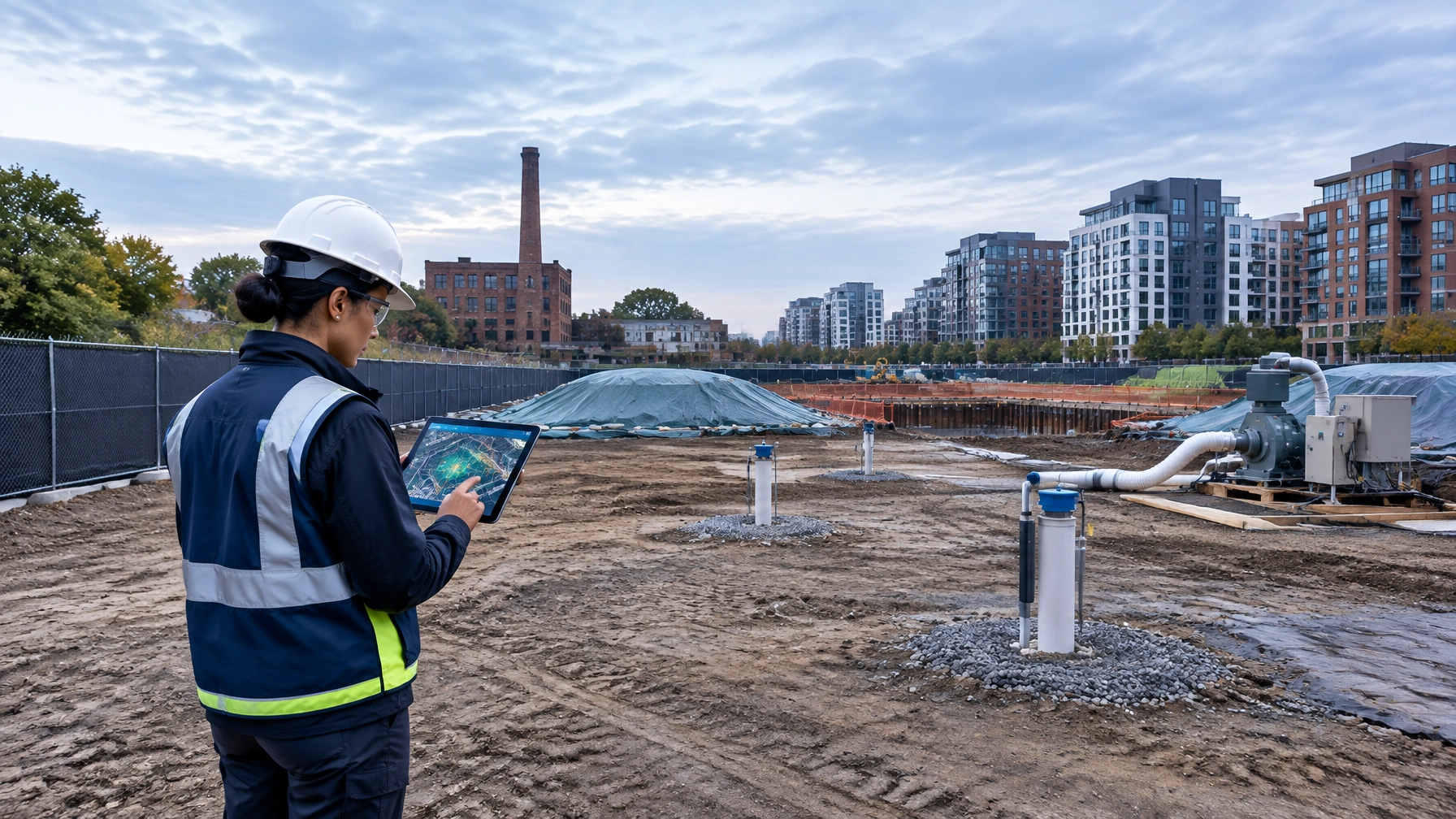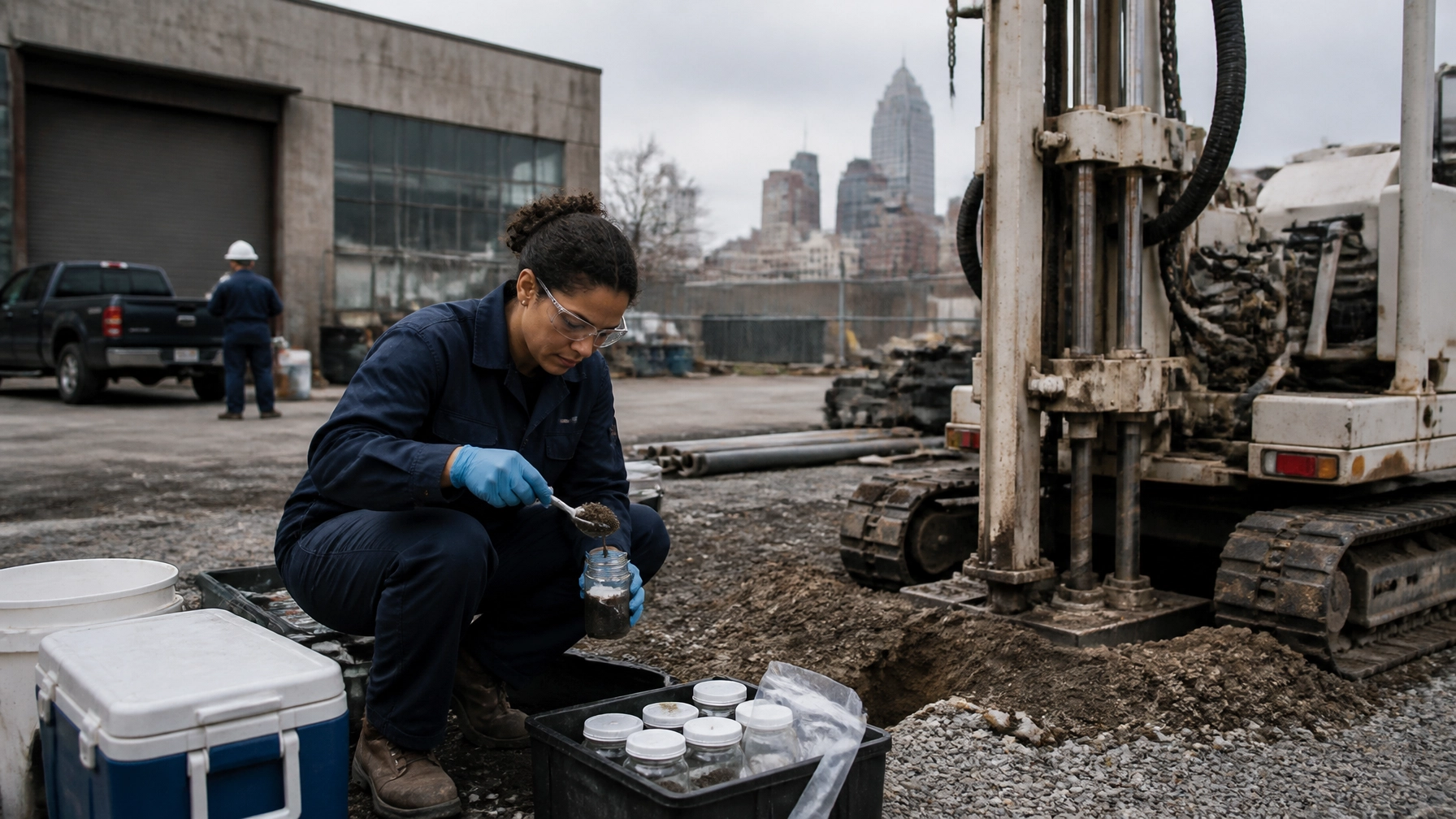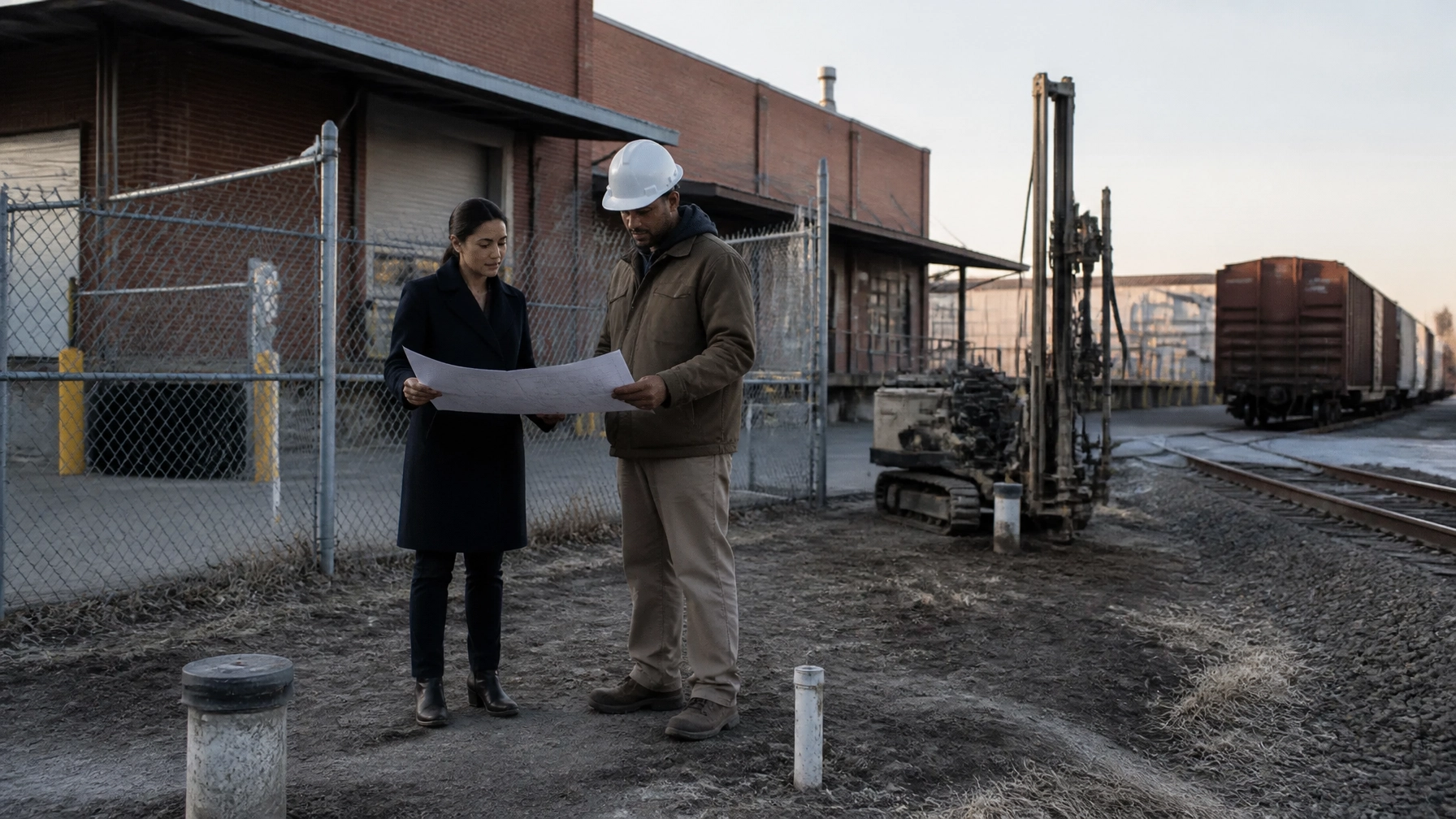
If your project team is planning commercial renovation or demolition in New York City, the phrase “10 working days” needs a closer look.
It doesn’t describe one universal Rule 56 deadline.
For a covered project, the 10-working-day requirement generally relates to federal EPA notification under the Asbestos NESHAP rules and, where demolition applies, related state or local requirements. NYSDOL Industrial Code Rule 56 uses a separate 10-calendar-day notification requirement for certain asbestos projects.
That distinction affects your construction start date, DOB permit strategy, contractor mobilization, financing schedule, and closing risk.
The safe approach is to build the entire notification sequence before demolition or regulated asbestos work begins.
The 10-day deadlines are not interchangeable
For a typical non-emergency commercial project, your team may need to coordinate several separate requirements:
- EPA NESHAP notification: At least 10 working days before covered asbestos stripping, removal, renovation, or demolition activities begin.
- NYSDOL Industrial Code Rule 56: At least 10 calendar days before the applicable regulated work begins for covered projects.
- NYC DEP ACP-7: Required for qualifying asbestos projects in New York City. The filing timing and current electronic submission process must be confirmed with DEP before work starts.
- Occupant notification: Rule 56 and NYC requirements can require advance notice to building occupants, owners, tenants, or other affected parties.
- DOB documentation: Construction and demolition permits must be coordinated with the applicable asbestos assessment and abatement documentation.
- Local authority requirements: Westchester and other municipalities outside the five boroughs may have different filing, permit, or notification procedures.
The controlling rule depends on the project type, building, work area, material, quantity, location, and agency jurisdiction.
NYSDOL’s Industrial Code Rule 56 guidance should be reviewed with the current project documents before anyone relies on a start date.
“Such notice must be received at least ten (10) calendar days prior” to the applicable Rule 56 work, according to the regulation.
That is different from the federal 10-working-day notification concept.
Start with a pre-renovation or pre-demolition asbestos survey
A commercial renovation should not begin with a contractor guessing where asbestos may be located.
It should begin with a documented survey by a properly certified asbestos inspector or investigator who understands the planned scope of work.
The survey should evaluate materials that may be disturbed by:
- Interior demolition
- Mechanical, electrical, or plumbing work
- Ceiling and flooring removal
- Wall and partition demolition
- Roofing or façade work
- Window replacement
- Elevator modernization
- Boiler and piping work
- Structural alterations
- Full building demolition
Older commercial buildings in Manhattan, Brooklyn, Queens, the Bronx, Staten Island, and Westchester frequently contain suspect materials in multiple concealed or previously renovated areas. A prior survey may not cover the current work area. It may also be too limited, too old, or based on a different renovation plan.
A defensible survey should connect the material locations to the actual construction drawings.
Bulk sampling must match the work area
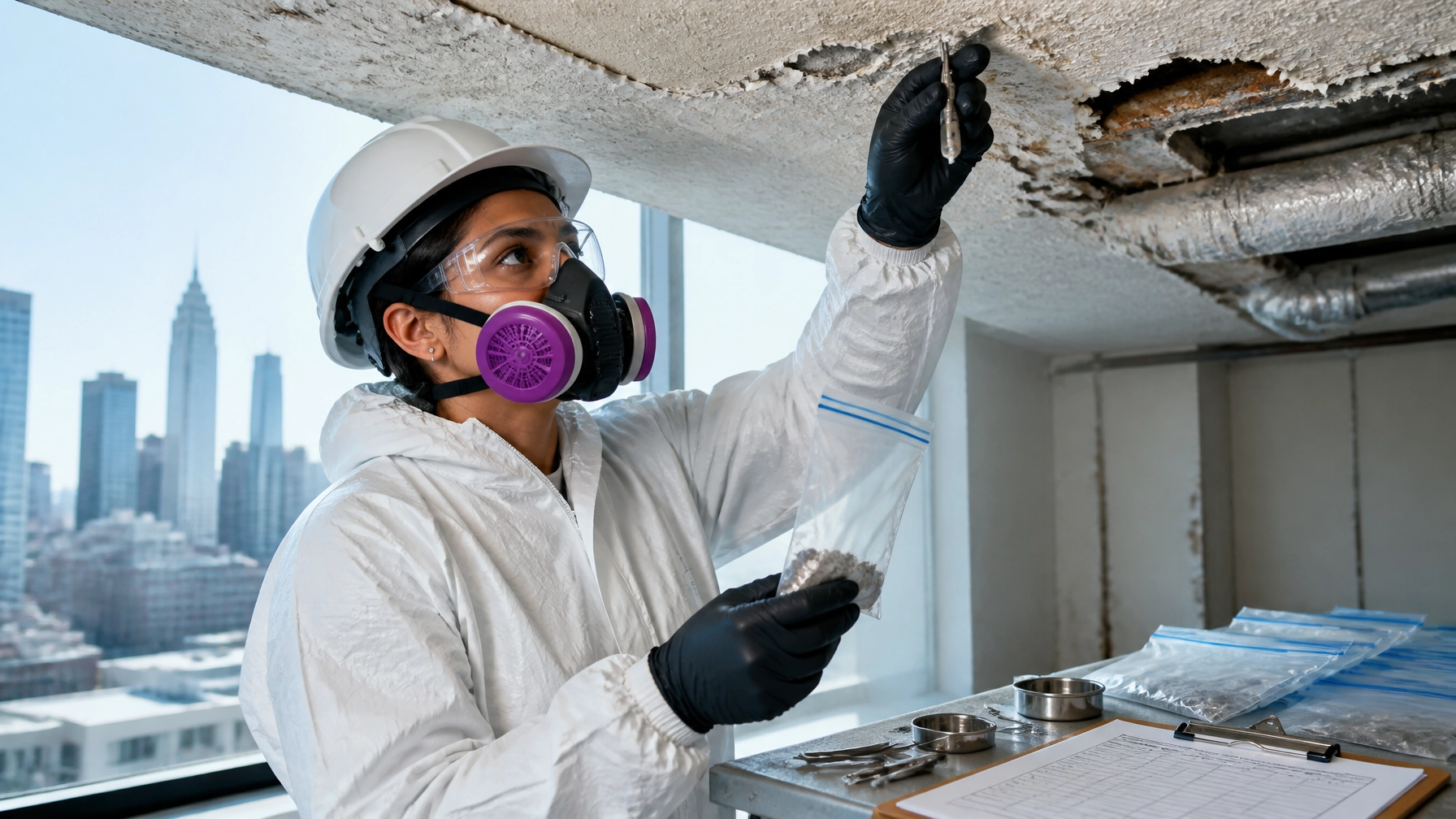
A certified inspector typically collects bulk samples from suspect materials and submits them to an appropriately accredited laboratory.
The sampling plan should account for:
- Homogeneous areas
- Different colors, textures, layers, and installation dates
- Floor tile and mastic
- Pipe and boiler insulation
- Spray-applied fireproofing
- Plaster and joint compound
- Roofing and flashing materials
- Window caulk and glazing compounds
- Transite panels and cement products
- Ceiling materials
- Adhesives and construction debris
A negative result from one room does not automatically clear an entire floor or building.
The report should explain what was sampled, where it was sampled, what was not accessible, and whether additional investigation is needed before demolition.
This is where a low-cost, narrow survey can create a high-cost schedule problem. If the contractor discovers suspect material after demolition begins, work may stop while the team remobilizes, samples, waits for laboratory results, revises the abatement scope, and files additional notifications.
RACM changes the project path
Regulated asbestos-containing material, or RACM, generally includes friable asbestos-containing material and certain non-friable materials that may become friable or be subject to significant disturbance.
The project team needs to determine:
- Whether asbestos-containing material is present.
- Whether the material will be disturbed.
- Whether the material meets the applicable asbestos-project threshold.
- Whether the work involves removal, enclosure, encapsulation, demolition, or another control method.
- Which agency notifications and permits apply.
- Whether the abatement contractor is properly licensed and qualified.
In New York City, the applicable quantity and material classification can determine whether the project is treated as an asbestos project and whether an ACP-7 notification is required.
If the survey establishes that the planned work is not an asbestos project, an ACP-5 or other applicable documentation may be needed for DOB and DEP coordination.
Review the current NYC DEP asbestos abatement forms and NYC DOB asbestos project requirements before filing. Agency procedures can change, and the correct form depends on the scope.

How ACP-5 and ACP-7 fit into NYC permits
The basic distinction is straightforward:
ACP-5
An ACP-5 generally documents that the planned work is not an asbestos project. That may be because:
- No asbestos-containing material was identified.
- Identified material will not be disturbed.
- The planned disturbance remains below the applicable threshold.
- Another valid basis applies under current DEP requirements.
For a full demolition application, DOB may require documentation addressing the entire building, not only a limited renovation area.
ACP-7
An ACP-7 is used for a qualifying asbestos project. It identifies the project, work areas, asbestos quantities, contractor, and planned abatement activities.
The ACP-7 does not replace the survey, the abatement work plan, contractor licensing, air monitoring, worker protection, or clearance documentation.
It is one part of the compliance file.
The practical point is this: do not wait until the DOB permit filing to discover that the survey, ACP form, abatement scope, and construction schedule do not align.
A practical NYC permit and abatement timeline
The following sequence is a planning framework, not a substitute for project-specific agency confirmation.
| Project stage | Primary action | Schedule concern |
|---|---|---|
| 1. Scope review | Compare architectural and demolition drawings with prior asbestos records | Survey gaps can appear here |
| 2. Certified survey | Inspect accessible areas and collect representative bulk samples | Concealed conditions may require additional investigation |
| 3. Laboratory analysis | Confirm asbestos content and material classification | Allow time for sampling and data review |
| 4. Project determination | Decide whether the work is an asbestos project | Quantity, friability, and disturbance matter |
| 5. Permit coordination | Prepare ACP-5, ACP-7, or other required documentation | Coordinate with DOB, DEP, owner, and design team |
| 6. Agency notifications | File applicable EPA, NYSDOL, DEP, and other notices | Count working days and calendar days correctly |
| 7. Contractor mobilization | Confirm licensed abatement contractor, work plan, insurance, and schedule | Do not mobilize before required notices mature |
| 8. Abatement | Establish containment, negative air, decontamination, and work controls | Air monitoring and documentation continue throughout |
| 9. Clearance | Complete visual inspection and required clearance testing | Failed clearance can delay demolition or build-back |
| 10. Closeout | Compile waste manifests, daily logs, air results, and sign-offs | Needed for project records, lenders, and future transfers |
For demolition, federal NESHAP requirements may require notification to EPA at least 10 working days before covered work. The EPA asbestos NESHAP program provides the federal framework.
For Rule 56, the NYSDOL notice is generally measured in calendar days. Day-counting should account for the date the agency receives the required notification and payment, where applicable.
Air monitoring and clearance are schedule items
Abatement is not complete when the contractor removes the material.
The project also needs:
- Work-area preparation
- Critical barriers and containment
- Negative-air controls
- HEPA filtration
- Personal and area air monitoring
- Decontamination procedures
- Waste packaging and disposal documentation
- Visual inspection
- Clearance sampling where required
- Final project records

The clearance step deserves special attention. A failed clearance result can extend the shutdown, delay demolition, and create another round of cleaning and testing.
Your abatement contractor should provide the work plan and field execution. Your environmental consultant should help confirm that the survey, scope, agency filings, monitoring, and closeout documentation support the project’s regulatory and business requirements.
What this means for closings and construction starts
A missed asbestos notification can affect more than the construction schedule.
It can delay:
- A demolition permit
- A lender’s funding condition
- A property closing
- Tenant turnover
- Contractor mobilization
- Utility disconnection
- Interior build-out
- Insurance and indemnity review
- Sale or refinancing documentation
A buyer or lender may also ask whether the asbestos survey covered the entire planned scope, whether the abatement contractor was properly qualified, and whether final clearance and disposal records are complete.
This is why asbestos planning belongs in due diligence, not only in the construction phase.
Envicon’s environmental assessment services connect site review, sampling strategy, regulatory coordination, and practical next steps. We work with developers, attorneys, architects, contractors, and owners across New York City and the region.
Our NYC environmental consulting team supports projects in Manhattan, Brooklyn, Queens, the Bronx, and Staten Island. For Westchester projects, we confirm the applicable NYSDOL, local building department, county, and municipal requirements before the schedule is finalized.

The takeaway
“NYC asbestos notification 10 working days” is a useful search phrase, but it is not a complete compliance rule.
For a commercial renovation or demolition project, confirm:
- The survey covers the full work area.
- A certified professional completed the inspection.
- Bulk samples represent the materials that will be disturbed.
- RACM and asbestos-project thresholds are evaluated correctly.
- ACP-5 or ACP-7 requirements are addressed.
- EPA, NYSDOL, DEP, DOB, and local notifications are coordinated.
- Working-day and calendar-day deadlines are counted separately.
- Abatement, air monitoring, clearance, and closeout are included in the schedule.
- Agency requirements are rechecked before filing.
The goal is not simply to submit a form. The goal is to clear the path from survey to permit to safe demolition without an avoidable shutdown.
Plan the asbestos scope before it controls your project
If you have a renovation, demolition, acquisition, or closing deadline in New York City or Westchester, send us the address, building age, drawings, and target start date.
We’ll help identify the survey and coordination steps required to move forward with precision, speed, and trust.