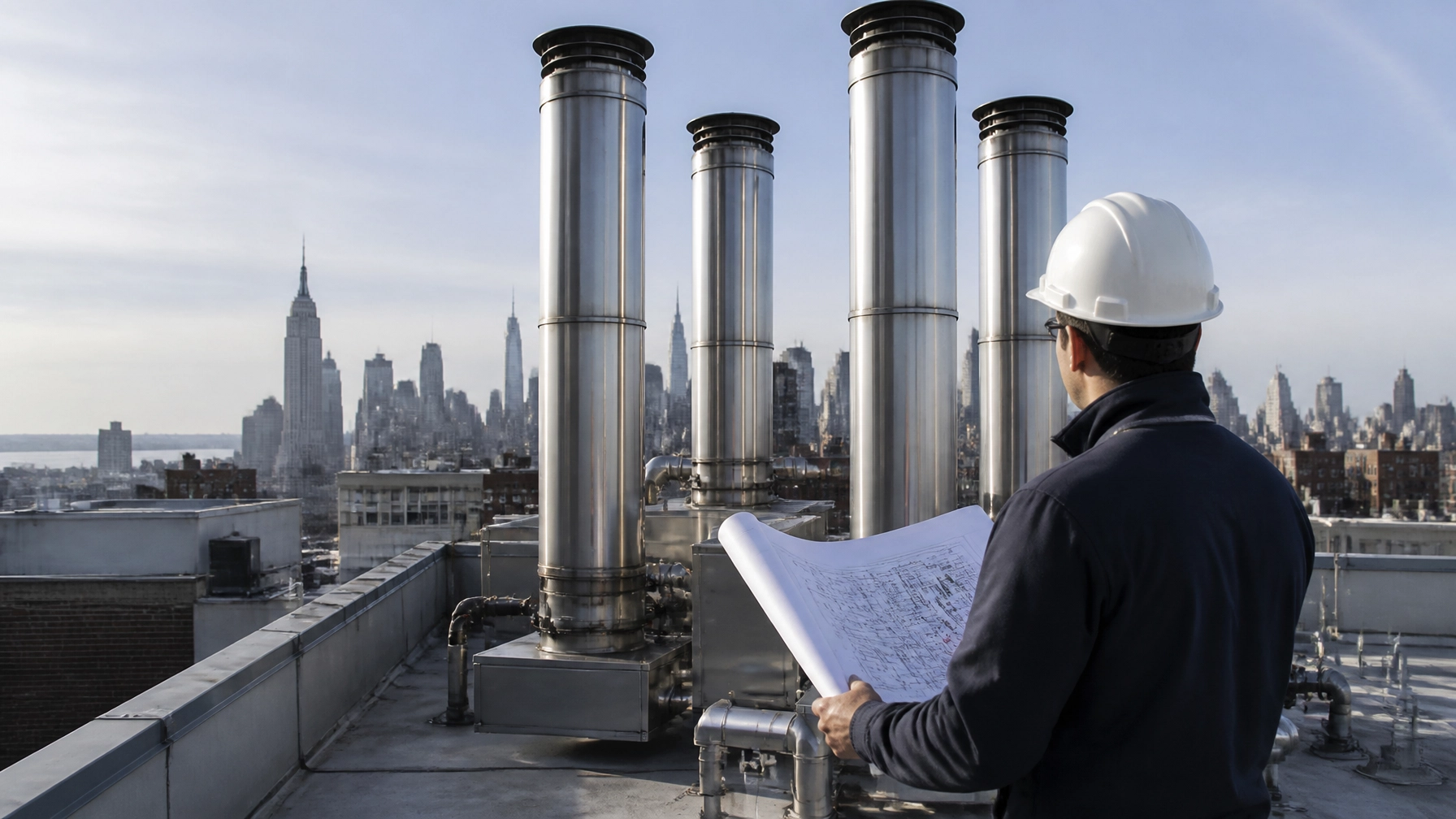
If you’re planning demolition or major renovation in New Jersey, an asbestos inspection is not a box to check after the schedule is set. It is part of the project schedule, permitting strategy, and demolition budget.
For a standard pre-demolition asbestos survey, Envicon’s current service pricing generally ranges from $800 to $1,500, with typical delivery in 3 to 5 days. Larger buildings, multiple structures, difficult access, extensive sampling, PACM, rush laboratory analysis, and abatement planning can increase the cost.
The inspection itself is only one part of the budget. The survey determines whether asbestos-containing materials, or ACM, will require removal before demolition can proceed.
What does an asbestos inspection cost in New Jersey?
A basic survey for a small, accessible commercial building may fall within the $800 to $1,500 range. Envicon’s Asbestos & Lead Paint Survey service includes an AHERA-accredited inspection, bulk sampling, laboratory analysis, a detailed report, and abatement recommendations when ACM is identified.
A combined asbestos and lead survey generally costs more. Envicon lists combined survey pricing at approximately $1,200 to $2,500 for standard scopes.
These figures are planning ranges, not a substitute for a site-specific proposal. A building with several construction eras, concealed mechanical spaces, or multiple additions may require more field time and more samples.
| Cost factor | Why it matters |
|---|---|
| Building size | Larger buildings contain more rooms, systems, and suspect materials |
| Number of materials | Each distinct material or homogeneous area may require separate samples |
| Building age and renovation history | Multiple construction eras increase the chance of concealed or layered materials |
| PACM | Presumed asbestos-containing materials may require additional investigation or conservative handling |
| Friable ACM | Materials that can release fibers when disturbed require more detailed planning |
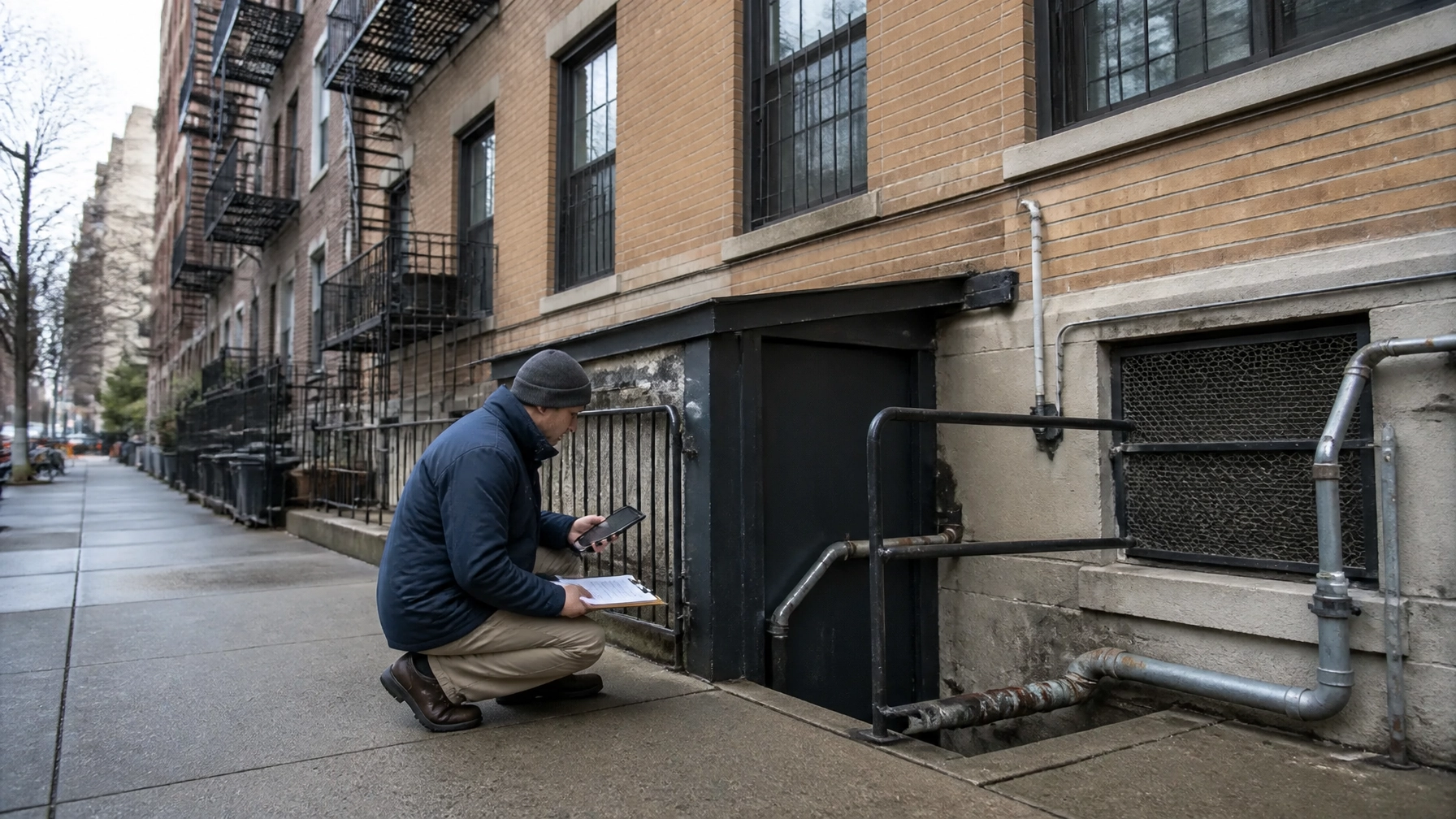
| Access conditions | Locked areas, occupied spaces, roofs, crawlspaces, and mechanical rooms increase field time |
| Laboratory turnaround | Rush PLM or additional analytical methods can increase the fee |
| Deliverable requirements | Demolition permits, lender review, abatement design, and contractor bidding may require more detailed documentation |
The lowest inspection price is not always the lowest project cost. A report that misses suspect materials can lead to change orders, stop-work conditions, re-mobilization, and a delayed demolition permit.
What the survey includes
A proper pre-demolition survey is more than a visual walkthrough. The inspector evaluates the affected structure and identifies materials that may contain asbestos, including:
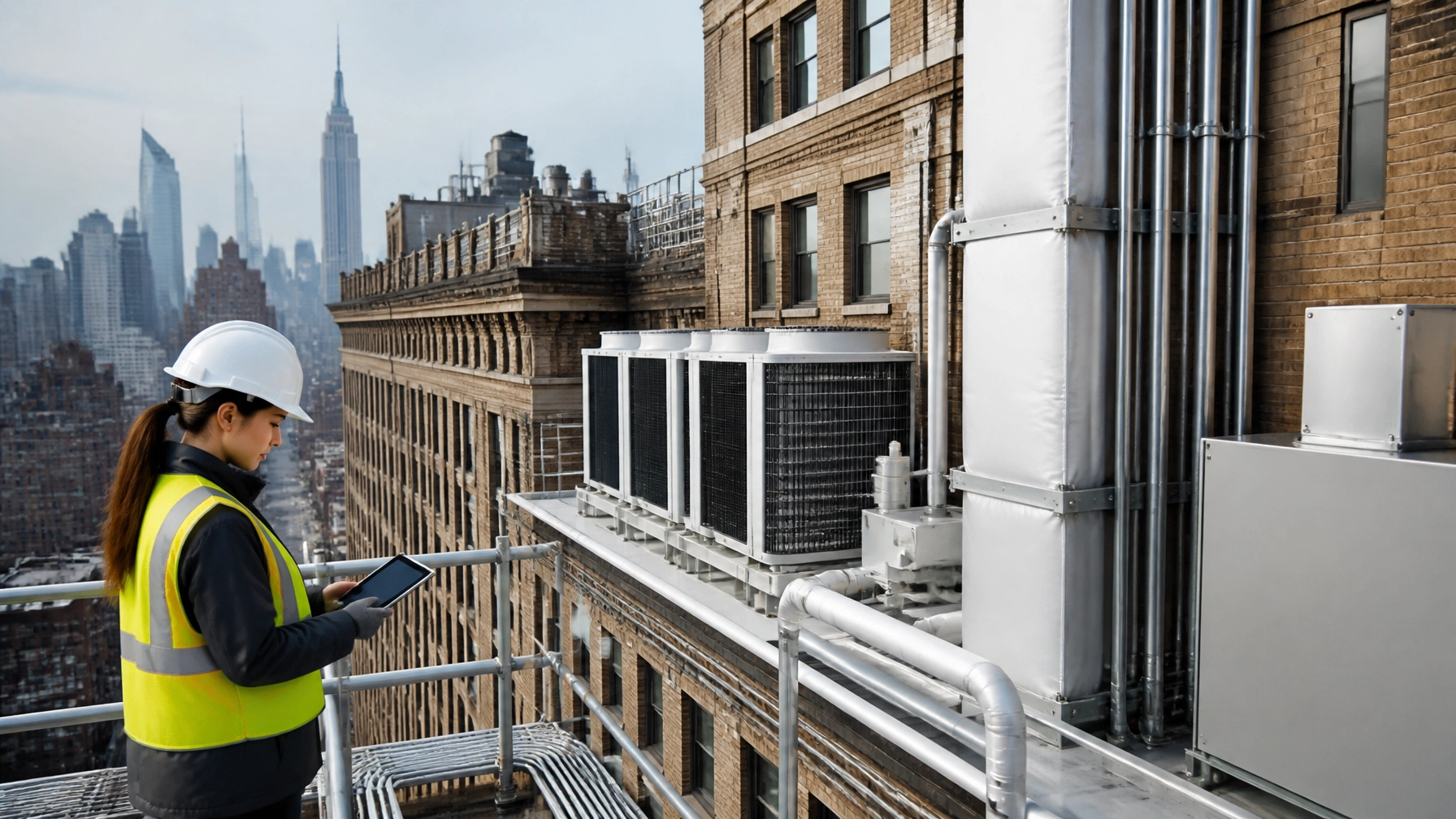
- Thermal system insulation on pipes, boilers, tanks, and ductwork
- Spray-applied or troweled fireproofing
- Textured ceilings and wall materials
- Floor tile, sheet flooring, and associated mastics
- Roofing materials and flashing
- Cement board, transite panels, and siding
- Plaster, joint compound, and construction adhesives
- Window caulk, glazing compounds, and sealants
- Electrical panels, wire insulation, and mechanical components
- Insulation in concealed spaces and utility chases
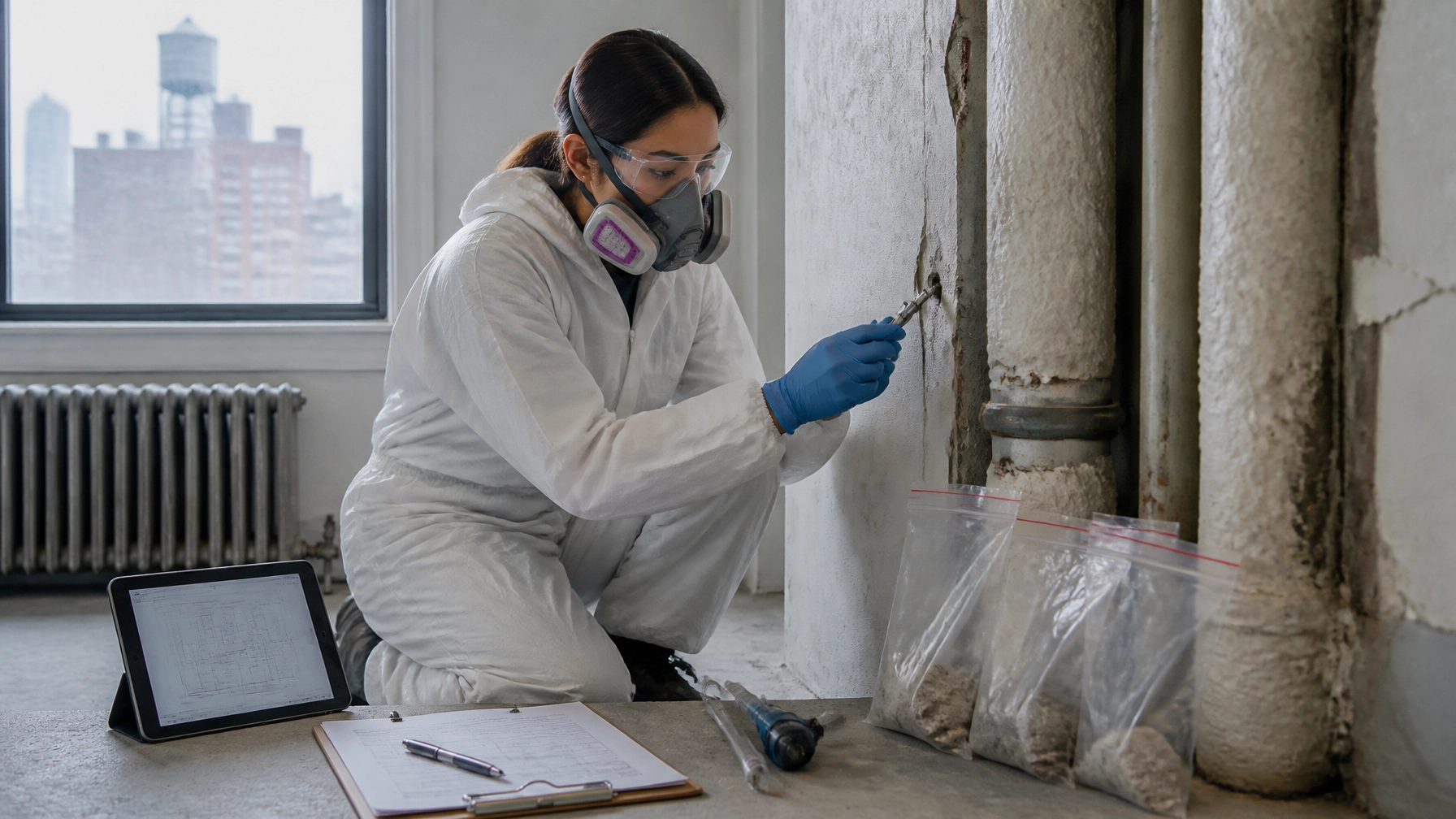
The inspector groups similar materials into homogeneous areas. Representative bulk samples are then collected and submitted to an accredited laboratory for analysis, usually by polarized light microscopy, or PLM.
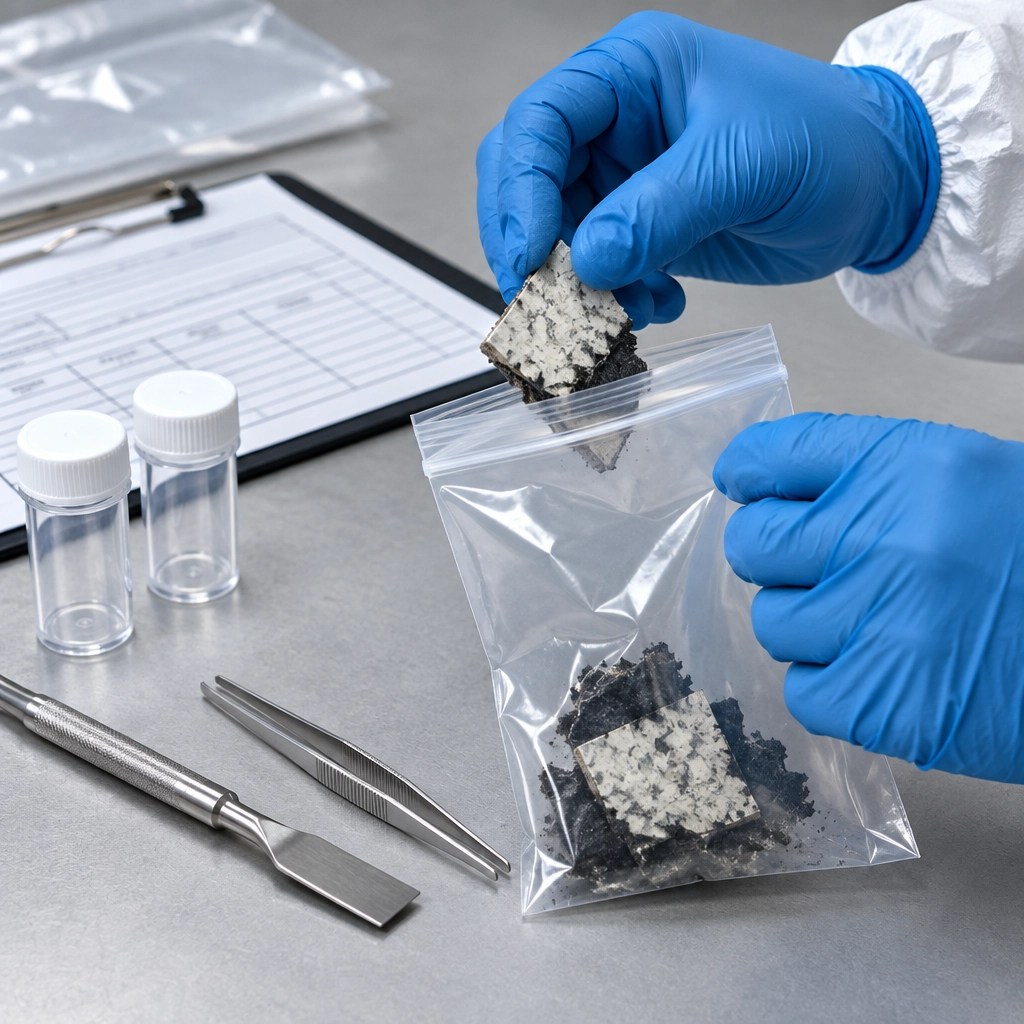
The number of samples depends on the material, its appearance, its location, and the extent of the homogeneous area. One sample may be appropriate for a clearly uniform material. Multiple samples may be necessary when color, texture, installation date, or composition changes.
That distinction matters. A survey that collects too few samples may not support a reliable demolition scope. A survey that samples every minor variation may cost more upfront but provide better protection against surprises later.
PACM, friable ACM, and non-friable ACM
Presumed asbestos-containing material
PACM means presumed asbestos-containing material. Under OSHA’s asbestos standard, certain thermal system insulation and surfacing materials in buildings constructed no later than 1980 may be treated as PACM when no determination has been made.
PACM does not always mean the material has tested positive. It means the material must be handled conservatively until an appropriate determination is made.
If PACM is present in a demolition area, the project team may need additional sampling, exposure controls, work planning, or abatement. The cost depends on whether the material can be safely characterized before work or must remain presumed during the work.
Friable ACM
Friable material can be crumbled, pulverized, or reduced to powder by hand pressure when dry. Examples may include damaged pipe insulation, sprayed fireproofing, and some ceiling or wall treatments.
Friable ACM presents a higher disturbance concern. Demolition activities can release fibers quickly, so removal, containment, air monitoring, and clearance requirements may apply before structural demolition.
Non-friable ACM
Non-friable materials generally hold their matrix under normal conditions. Common examples include some floor tiles, roofing materials, cement products, and vinyl sheet goods.
Non-friable does not mean unrestricted. Cutting, grinding, sanding, crushing, or aggressive demolition can make the material friable. Under NESHAP, a non-friable material may become regulated asbestos-containing material, or RACM, if it cannot remain intact during the planned work.
The demolition method therefore affects the budget. Removing floor tile carefully is different from using heavy equipment to crush the same material in place.
NESHAP and NJDEP requirements
Under 40 CFR §61.145, the owner or operator must thoroughly inspect the affected facility or portion of the facility for asbestos before subject demolition or renovation begins.
The federal rule covers friable ACM and Category I and Category II non-friable ACM. The inspection helps determine the amount of RACM, the required work practices, and whether notification is required.
For covered facilities in New Jersey:
- A demolition notification generally must be submitted to NJDEP at least 10 working days before demolition.
- Renovation notification applies when RACM meets or exceeds 260 linear feet, 160 square feet, or 35 cubic feet, depending on how the material is measured.
- Demolition and renovation notifications must include information such as the facility, scope, asbestos quantities, schedule, and contractor details.
- Most residential buildings with four or fewer dwelling units are excluded from certain NESHAP notification requirements, but other state, local, licensing, and worker-protection requirements may still apply.
Review the NJDEP asbestos technical guidance before finalizing a notification strategy. The project may also involve the New Jersey Department of Labor and Workforce Development, the Department of Health, the local construction official, and the applicable asbestos subcode.
New Jersey’s Asbestos Hazard Abatement Subcode can require removal, air monitoring, final clearance, and documentation before demolition proceeds. For asbestos abatement work, the contractor must also address the state notification process, including Form ASB-41.
How the survey drives the abatement budget
The inspection report should do more than list positive and negative results. It should connect each finding to the planned demolition method.
A useful report identifies:
- Material type and location
- Sample identification and laboratory result
- Whether the material is friable or non-friable
- Estimated quantity
- Whether the material will be disturbed
- Recommended removal or control method
- Waste handling and disposal considerations
- Air monitoring and clearance needs
- Documents required for permitting and contractor bidding
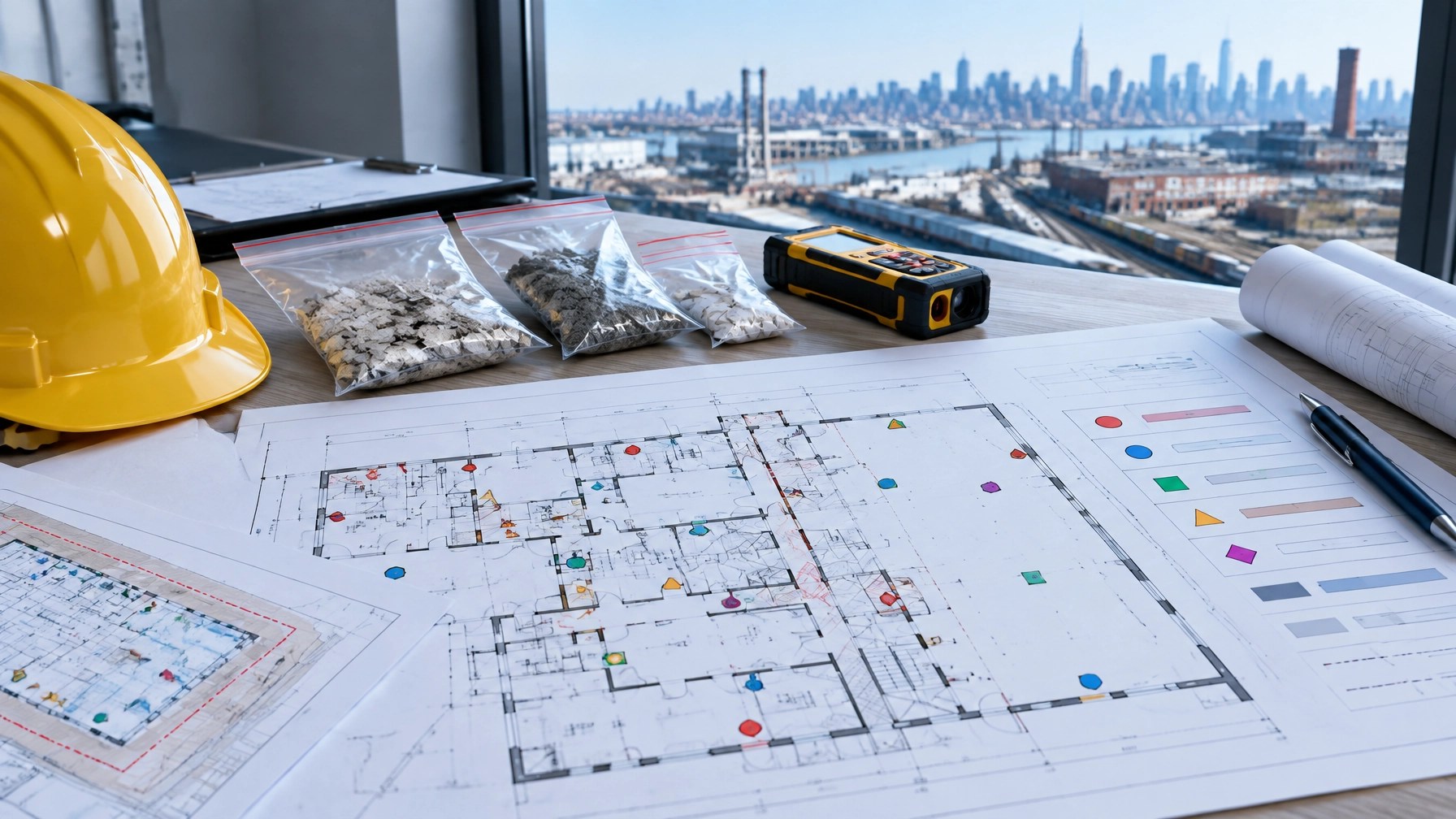
A positive result does not automatically mean the entire building must be abated. The key question is whether the material will be disturbed by the planned work.
For example, an intact non-friable material outside the demolition footprint may not require the same response as sprayed fireproofing directly above a structural removal area. The abatement scope must match the actual construction plan.
This is where field-first coordination matters. The environmental consultant, architect, demolition contractor, construction manager, and regulator need to work from the same scope. A generic report handed to the contractor creates avoidable uncertainty.
Why late asbestos findings disrupt demolition schedules
Late discoveries usually create more than a laboratory bill. They affect the sequence of work.
A typical schedule disruption may involve:
- Demolition stops in the affected area.
- The consultant returns to inspect and sample.
- Laboratory analysis is ordered.
- A licensed abatement contractor prepares pricing and a work plan.
- Required notifications and permits are addressed.
- Abatement begins.
- Air monitoring and final clearance are completed.
- Demolition is re-sequenced and the contractor remobilizes.
The notification clock can add another delay. If a project misses the required NJDEP or state notification window, the demolition start date may move even when the physical abatement is straightforward.
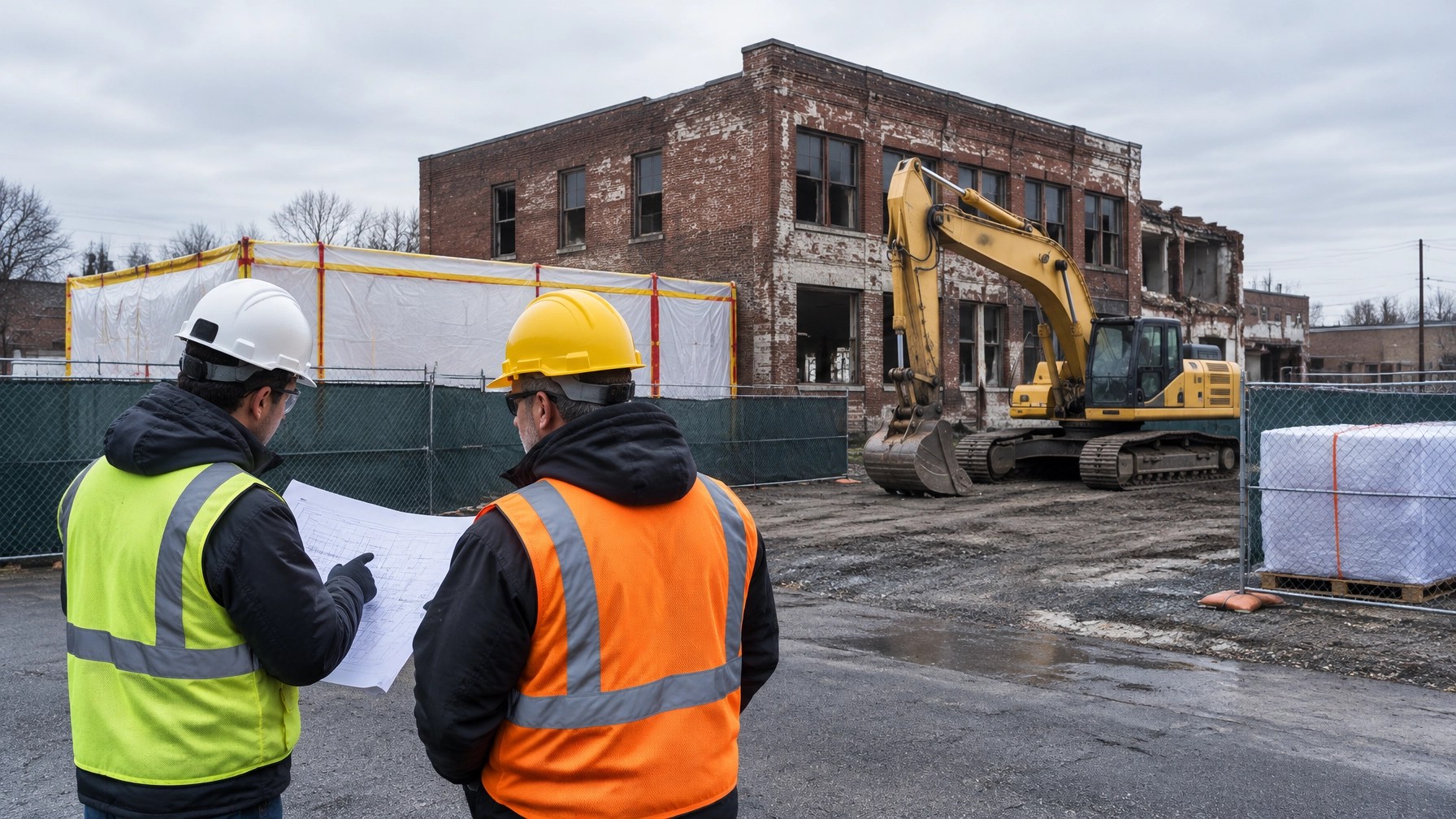
The business impact is direct:
- Equipment remains idle
- Crews are reassigned
- Carrying costs continue
- Demolition and disposal pricing may change
- Lenders and buyers receive revised schedules
- Follow-on trades lose their planned start dates
- Contractors may submit delay and remobilization claims
The practical solution is to complete the survey while the demolition scope is still being designed. If the building cannot be fully accessed, document the limitations and plan supplemental inspection before disturbance begins.
A better way to plan asbestos inspection cost in NJ
Start with the demolition plan, not just the building address. A useful scope review should ask:
- What structures will be demolished?
- Will the work include partial demolition or full razing?
- Which materials will be cut, crushed, stripped, or removed?
- Are there additions from different construction periods?
- Are mechanical rooms, roofs, crawlspaces, and concealed areas accessible?
- Does the lender, municipality, or contractor require a specific report format?
- Is the schedule dependent on a 10-working-day notification window?
- Will lead paint, mold, PCBs, or other hazardous materials be evaluated at the same time?
Envicon’s team supports projects across New Jersey, including Hudson County, Jersey City, Newark, Bergen County, Essex County, and the surrounding NY/NJ market. We provide direct coordination, clear documentation, and a defined path from inspection findings to demolition readiness.
Collaboration is not a buzzword. It is how the work gets done.
The takeaway
For most New Jersey projects, asbestos inspection cost starts with building size, access, sample count, laboratory requirements, and turnaround. The larger cost question is what happens after the survey.
A complete inspection identifies ACM before demolition. It supports NJDEP and NESHAP decisions. It helps the team define abatement quantities. Most importantly, it protects the demolition schedule from late findings that stop work after equipment and crews are already mobilized.
If your project is in planning, acquisition, permitting, or pre-demolition design, investigate asbestos early. A clear report gives you more than compliance. It gives you a buildable path.
CTA: Plan your New Jersey asbestos survey
- Use Envicon’s proprietary cost estimator tool
- Use our proprietary project risk screener tool
- Call Envicon now at (917) 764-2171