DRAFT FOR APPROVAL
A multifamily acquisition in New York City can look straightforward on paper and still carry environmental conditions that affect financing, renovation, insurance, and closing.
The basic question is not whether the property has a Phase I ESA. The question is whether your diligence scope matches the asset, the planned work, the lender’s requirements, and the conditions beneath the building.
For buyers in Manhattan, Brooklyn, Queens, the Bronx, Staten Island, and nearby Westchester, a practical environmental workflow usually includes:
- An ASTM E1527-21 Phase I ESA
- NYC E-Designation and EPIC review
- Phase II investigation when the Phase I identifies a recognized environmental condition
- Vapor intrusion screening where volatile contaminants may be present
- Asbestos scope before renovation or demolition
- Separate consideration of lead, mold, building condition, and reserve exposure
- Clear decisions on seller access, indemnity, escrow, and closing timing
“A clean Phase I is not the same as a clean transaction.”
1. Start with an ASTM E1527-21 Phase I ESA
For most commercial multifamily acquisitions, the baseline environmental report should comply with ASTM E1527-21 and the federal All Appropriate Inquiries requirements under 40 CFR Part 312.
A defensible Phase I ESA should include:
- Historical aerial photographs, Sanborn maps, city directories, and topographic records
- Federal, state, and local environmental database research
- Review of NYSDEC spill and bulk storage records
- Site reconnaissance of the property and adjoining parcels
- Interviews with owners, operators, occupants, and other knowledgeable parties
- Review of environmental liens, activity and use limitations, and prior reports
- A clear determination of recognized environmental conditions, controlled RECs, and historical RECs
The report should not simply list every possible concern. It should explain what the findings mean for your acquisition and what action, if any, should follow.
Envicon delivers ASTM E1527-21 Phase I ESAs for buyers, lenders, attorneys, and developers. Our standard process is built around a clear REC determination and a defined next step if additional investigation is needed.
Watch the timing
Under EPA’s AAI framework, certain Phase I components must be completed or updated within 180 days before acquisition. The full AAI process must generally be completed within one year before the purchase date.
That timing matters when:
- The contract period extends beyond the original report date
- The lender changes or requests reliance
- The seller provides an older report
- The closing moves into a later quarter
- A Phase II or agency review pushes the transaction schedule
An old report can create a new closing problem. Confirm the reliance and update requirements early.
2. Check E-Designation before you assume the property is ready
An NYC E-Designation is a zoning notation tied to environmental requirements for a specific tax lot. Requirements may address:
- Hazardous materials
- Air quality
- Noise
- Soil and groundwater investigation
- Remedial measures
- Construction health and safety controls
The official requirements are tied to the property’s CEQR documentation and applicable zoning records. NYC Office of Environmental Remediation processes are handled through EPIC Environment.
For a multifamily buyer, the diligence question is not simply, “Does the property have an E-Designation?” Ask instead:
- What is the exact E-Designation number?
- Which tax lots are affected?
- Does the designation apply to hazardous materials, air quality, noise, or more than one category?
- Is there an Environmental Restrictive Declaration?
- Has OER issued a Notice to Proceed, Notice of Satisfaction, or Notice of No Objection?
- Are there open obligations that could affect renovation, conversion, or occupancy?
- Does the proposed scope trigger new OER review?
A property with an E-Designation may still be a sound acquisition. But the buyer needs a documented path from current conditions to the intended construction and occupancy plan.
That path may include a Phase II Work Plan, sampling, a Remedial Action Plan, construction controls, and agency sign-off. Treating E-Designation as a zoning footnote is how buyers discover schedule risk after contract signing.
3. Phase II and vapor intrusion should answer a transaction question
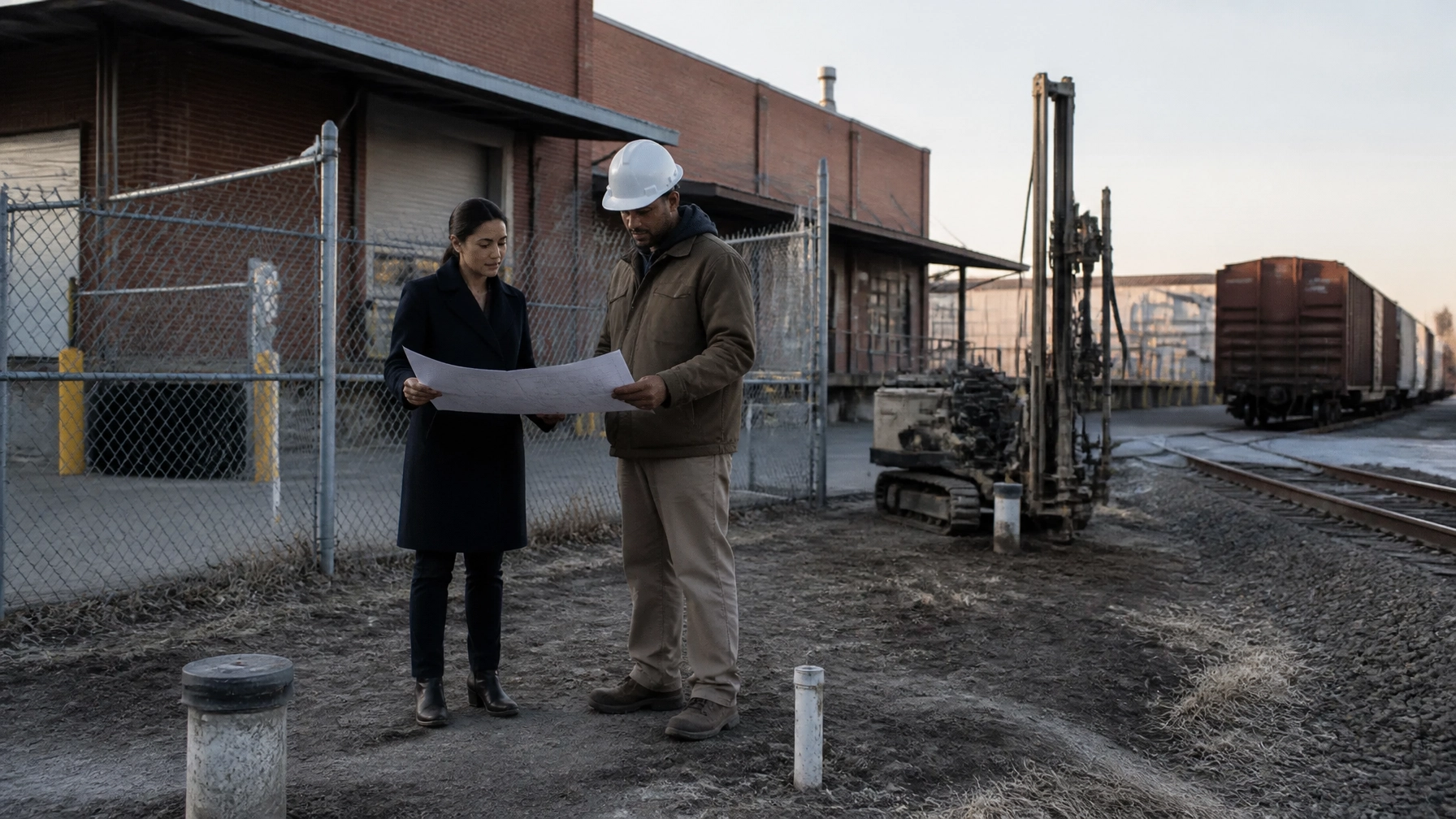
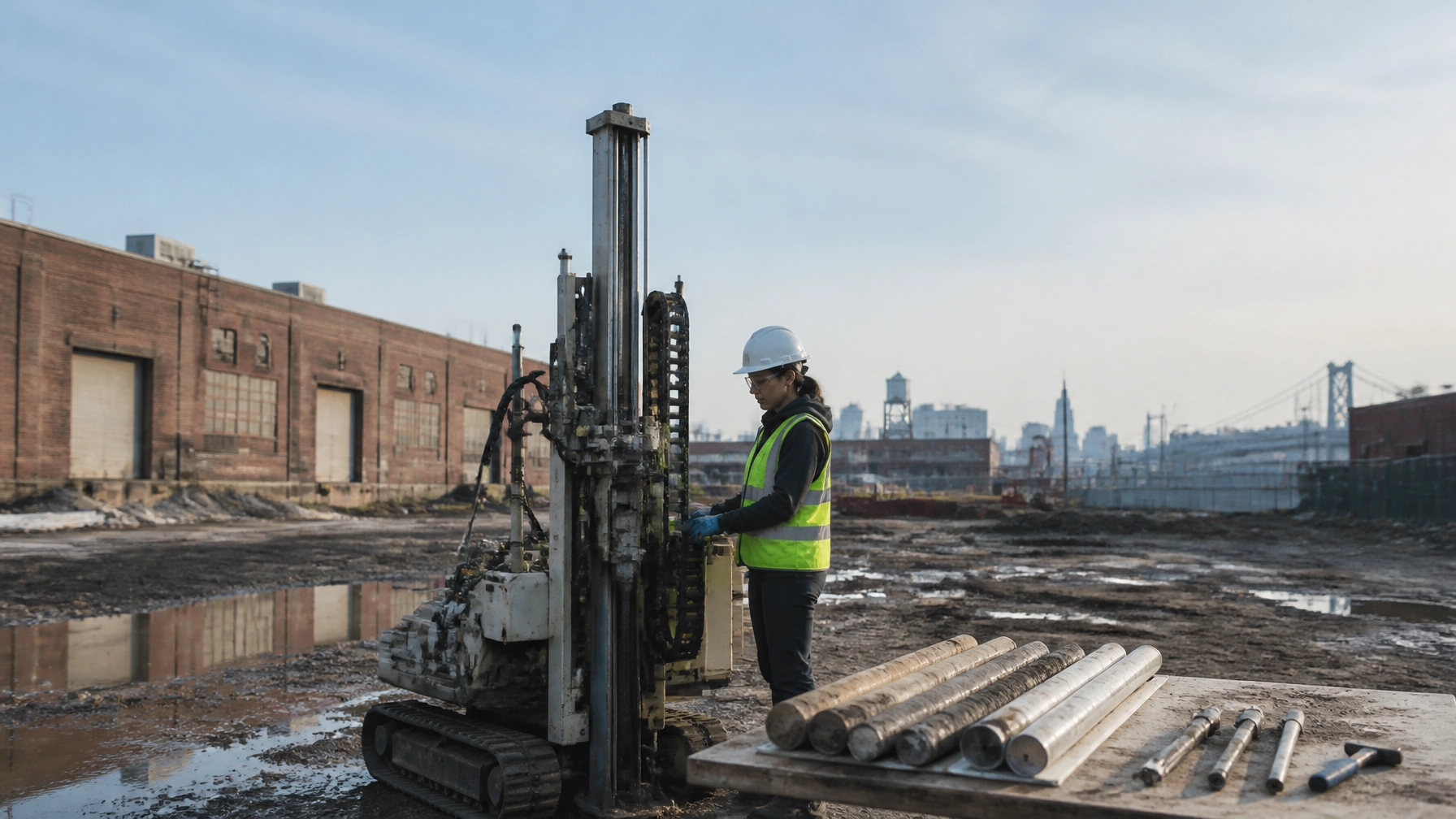
A Phase II ESA is not automatically required for every multifamily property. It becomes appropriate when the Phase I identifies a REC or when the available records and site conditions do not support a reasonable risk conclusion.
Common triggers include:
- Former dry cleaners or solvent users
- Historic gasoline stations or auto repair facilities
- Former manufacturing or industrial uses
- Fuel oil tanks and petroleum spills
- Nearby NYSDEC spill sites
- Groundwater contamination
- Historic fill or imported fill of uncertain origin
- An E-Designation requiring subsurface investigation
- A lender or insurer requiring sampling before closing

For a buyer, the Phase II scope should be tied to a decision. The investigation may need to determine whether contamination exists, whether it extends beneath the building, whether it affects planned excavation, or whether vapor could enter occupied space.
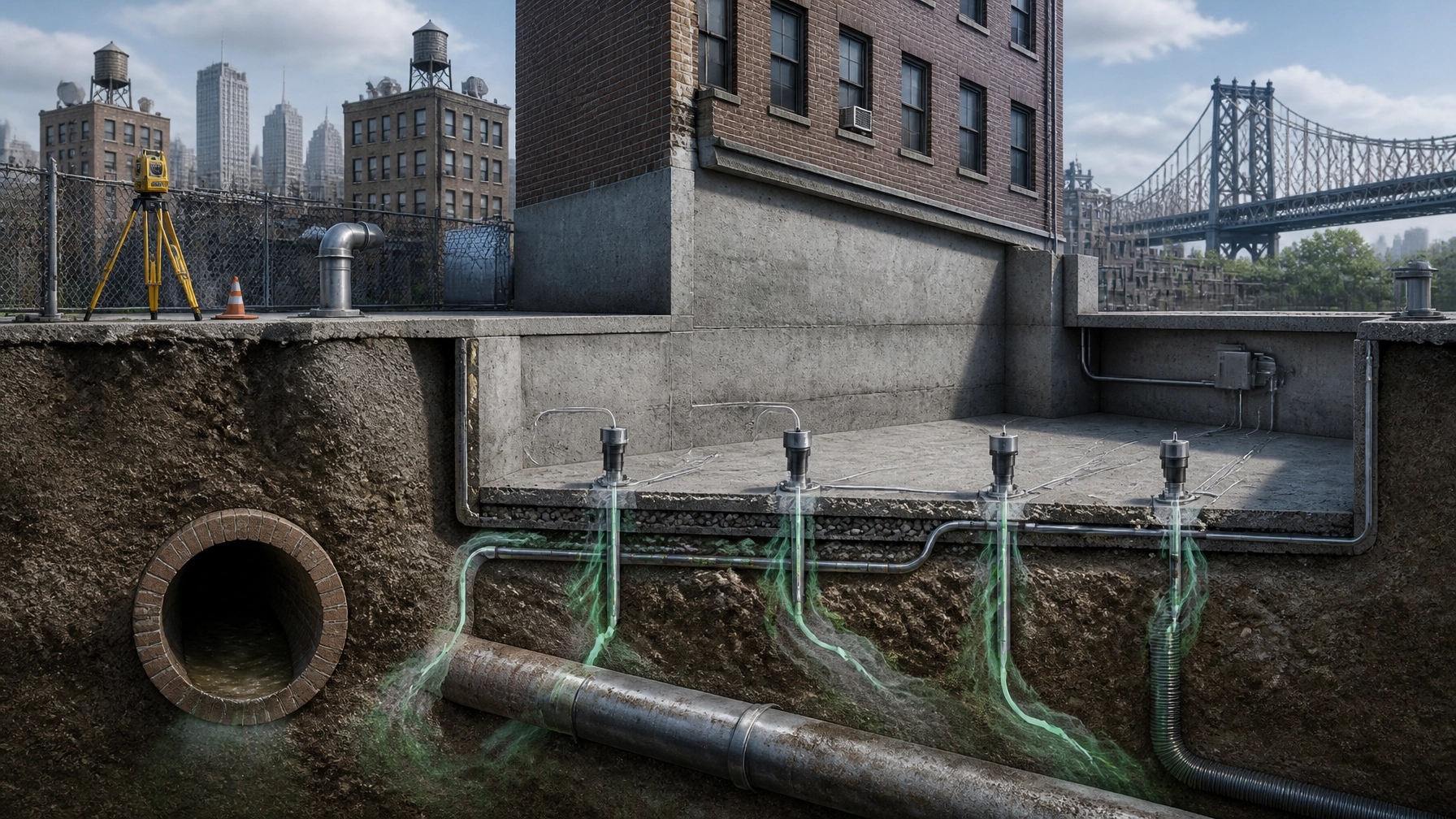
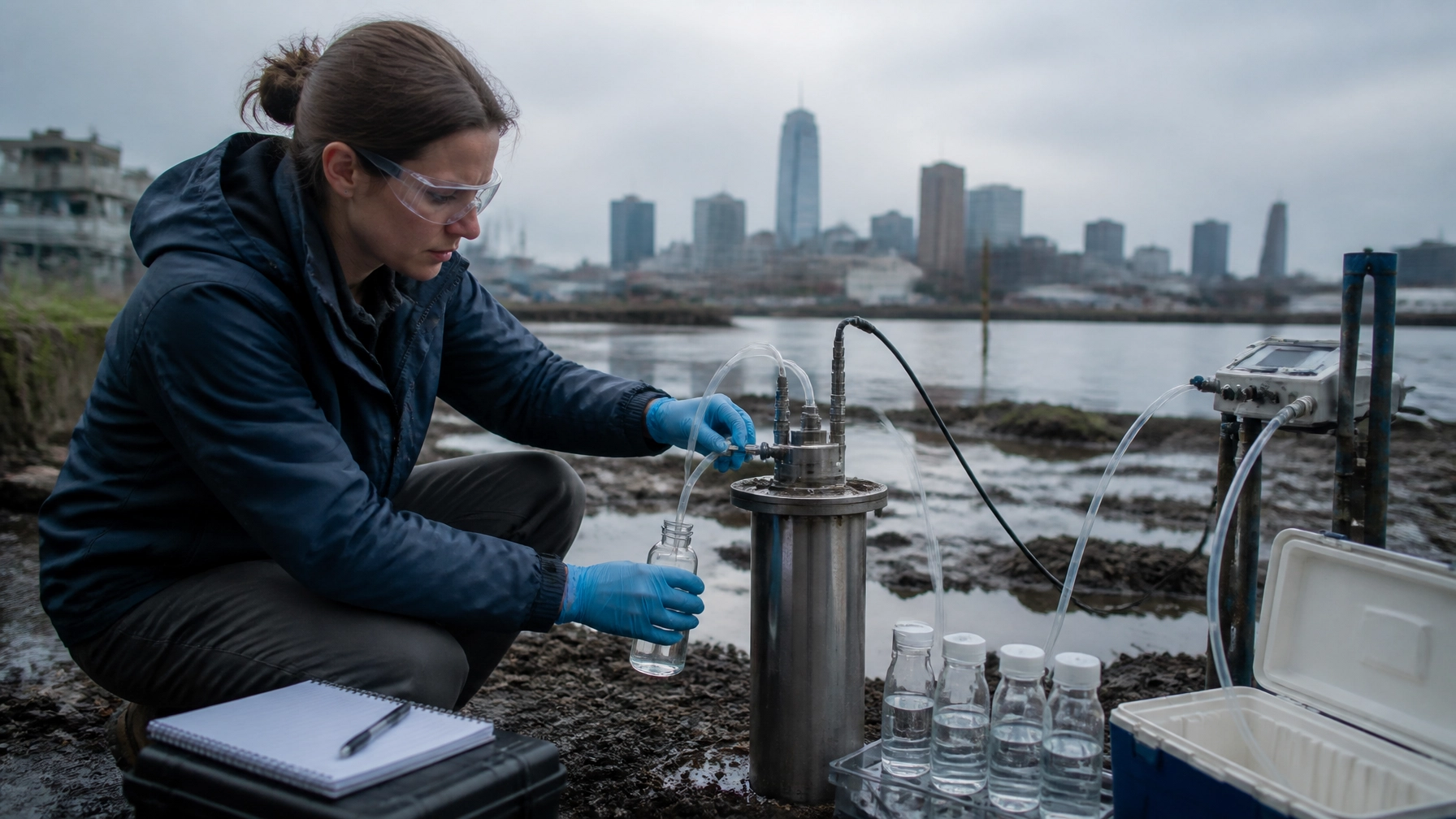
A vapor intrusion assessment may include:
- Soil gas or sub-slab sampling
- Indoor and outdoor air sampling
- Groundwater data review
- Building foundation and HVAC evaluation
- Assessment of preferential pathways
- Comparison with applicable screening levels
- Mitigation or monitoring recommendations
EPA’s vapor intrusion technical guide emphasizes multiple lines of evidence. Soil gas, indoor air, groundwater, building conditions, and potential indoor sources should be evaluated together.
Do not order indoor air sampling without considering building products, cleaning chemicals, stored fuels, and other potential indoor sources. A result without context can create confusion instead of clarity.
4. Asbestos is a separate scope from the Phase I ESA
A Phase I ESA does not constitute an asbestos survey.
For renovation, repair, remodeling, or demolition work, New York State Industrial Code Rule 56 and NYC asbestos requirements may require a survey before work begins. The survey should be performed by appropriately certified professionals and should address the materials that may be disturbed by the planned scope.
NYSDOL provides the official New York State asbestos survey requirements. NYC DEP provides asbestos abatement forms and guidance.

For an apartment building acquisition, the asbestos scope should account for:
- Pipe insulation and mechanical equipment
- Boiler rooms and heating systems
- Floor tile, mastic, and resilient flooring
- Roofing and flashing materials
- Plaster, joint compound, and textured coatings
- Window caulk and exterior materials
- Fireproofing and sprayed materials
- Planned demolition, kitchen, bathroom, and façade work
If suspect materials will be disturbed, the transaction team may need an ACP-5 or ACP-7 pathway, abatement planning, contractor coordination, and additional time before construction.
The right scope depends on the work plan. A limited survey may not protect a buyer planning a gut renovation.
5. Keep lead, mold, PCA, and reserves in the right lane
Lead and mold are important. They are also not automatically part of an ASTM Phase I ESA.
For older multifamily buildings, coordinate environmental diligence with the property condition assessment and capital planning process.
Lead
Lead-based paint and lead hazards may require separate assessments, especially in pre-1978 residential buildings. Review applicable NYC requirements, existing inspection records, tenant notices, and planned disturbance.
Mold and moisture
Mold is generally addressed through the PCA, indoor air quality work, or a targeted moisture inspection. Look for:
- Chronic roof or façade leaks
- Basement seepage
- Plumbing failures
- Poor ventilation
- Repeated tenant complaints
- Condensation around windows and mechanical systems
PCA and reserve coordination
The environmental consultant, PCA provider, architect, and lender should work from the same capital plan.
An environmental finding can affect:
- Basement renovation
- Boiler replacement
- Fuel conversion
- Façade work
- Roof replacement
- Parking or courtyard excavation
- Tenant relocation planning
- Long-term reserve requirements

6. Ask for access, indemnity, escrow, and insurance terms early
Environmental diligence is only useful if the buyer can investigate the actual risk.
The purchase agreement should address:
- Seller access for inspections and sampling
- Access to basements, mechanical rooms, occupied units, and roof areas
- Permission to install temporary vapor or groundwater points when necessary
- Responsibility for repairing sampling locations
- Delivery of prior reports, tank records, permits, and agency correspondence
- Environmental representations and survival periods
- Indemnity language and exclusions
- Escrow or holdback for open remediation
- Insurance requirements for invasive work
- Allocation of pre-closing and post-closing obligations
Do not rely on a generic seller representation that the property has no hazardous materials. That language rarely answers what the buyer needs to know about historic fill, buried tanks, asbestos, vapor, or open agency files.
7. Build the closing schedule backward
A practical NYC multifamily diligence schedule often looks like this:
- Week 1: Confirm tax lots, access, lender scope, planned renovation, and seller document delivery.
- Week 1 to 2: Complete Phase I ESA, E-Designation review, and initial asbestos and PCA coordination.
- Week 2: Decide whether RECs, E-Designation obligations, UST history, or vapor concerns require Phase II work.
- Week 2 to 4: Perform targeted sampling, asbestos survey work, or agency file review.
- Week 3 to 5: Quantify remediation, abatement, monitoring, or construction-control costs.
- Before closing: Resolve lender comments, negotiate indemnity or escrow, and document the post-closing action plan.
Complex sites need more time. OER review, laboratory turnaround, tenant access, and invasive work can extend the schedule.
Envicon coordinates environmental assessment, vapor, asbestos, regulatory review, and construction implications through one project team. That means fewer handoffs and fewer surprises between the report, the lender, and the closing table.
NYC multifamily acquisition checklist
Before you waive diligence, confirm that you have:
- ASTM E1527-21 Phase I ESA
- Phase I timing checked against the closing date
- E-Designation and EPIC status reviewed
- Environmental Restrictive Declaration reviewed, if applicable
- NYSDEC spill, UST, and bulk storage records reviewed
- Historic fill and adjacent-property conditions evaluated
- Phase II decision documented
- Vapor intrusion pathway screened where appropriate
- Rule 56 asbestos scope matched to planned work
- Lead and mold responsibilities assigned separately
- PCA and reserve findings coordinated
- Seller access documented
- Indemnity, escrow, insurance, and post-closing obligations reviewed
- Lender and insurer requirements confirmed in writing
The takeaway
Environmental due diligence for a multifamily acquisition is not a report-ordering exercise. It is a transaction workflow.
The strongest buyers connect the Phase I ESA to E-Designation requirements, Phase II and vapor decisions, asbestos scope, PCA findings, lender conditions, insurance, and contract protections before the closing schedule becomes compressed.
Envicon Group helps buyers across Manhattan, Brooklyn, Queens, the Bronx, and Staten Island, as well as Westchester, turn environmental uncertainty into a clear acquisition plan. We bring senior-led review, direct field coordination, and practical answers that move the deal forward.
Request a coordinated diligence scope
Tell us the property address, closing date, lender requirements, building age, and planned renovation. We’ll help determine which scopes are necessary and which are not.
- Request a coordinated environmental diligence scope
- Call Envicon Group at (917) 764-2171
- Use the proprietary project risk screener