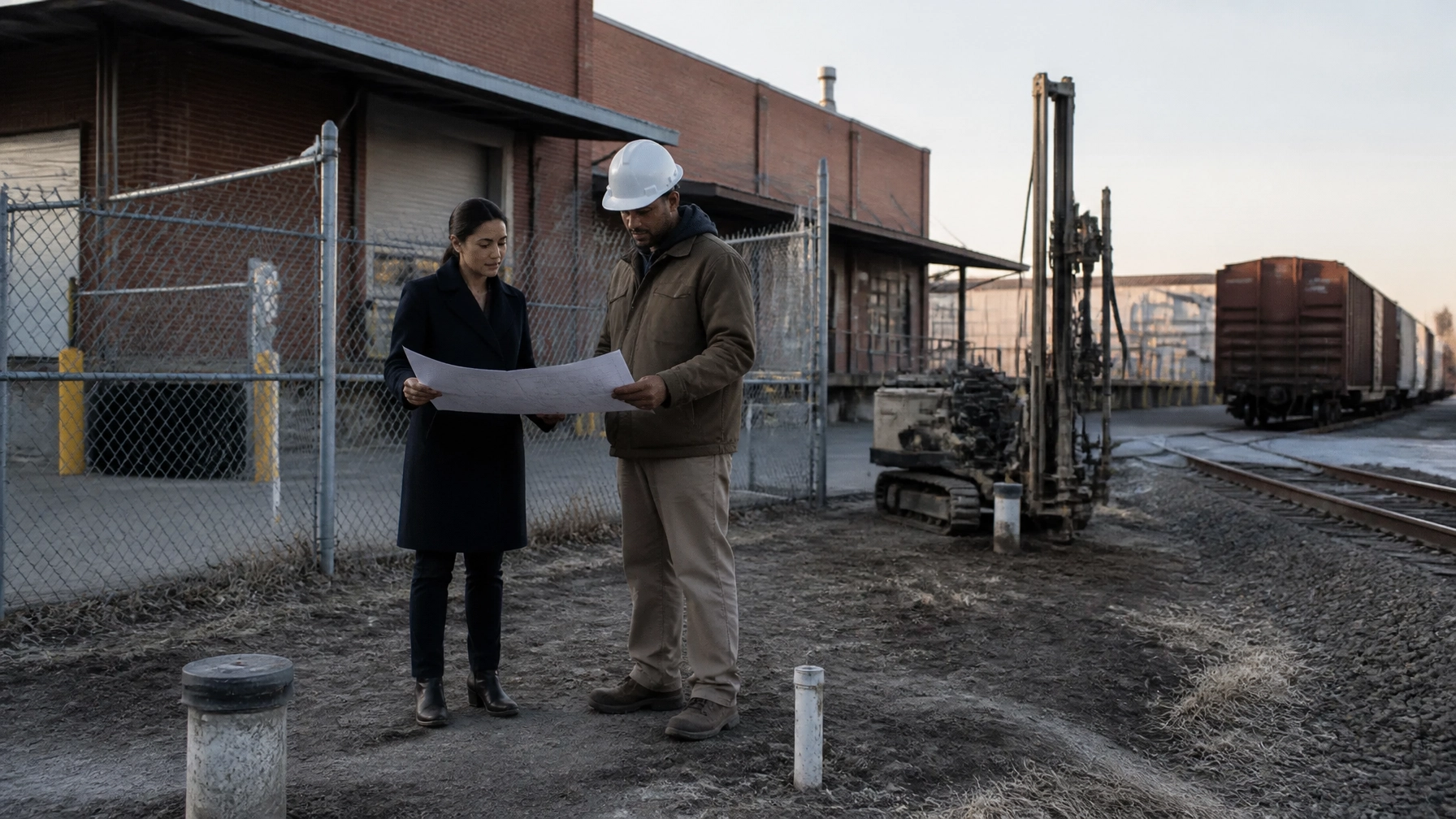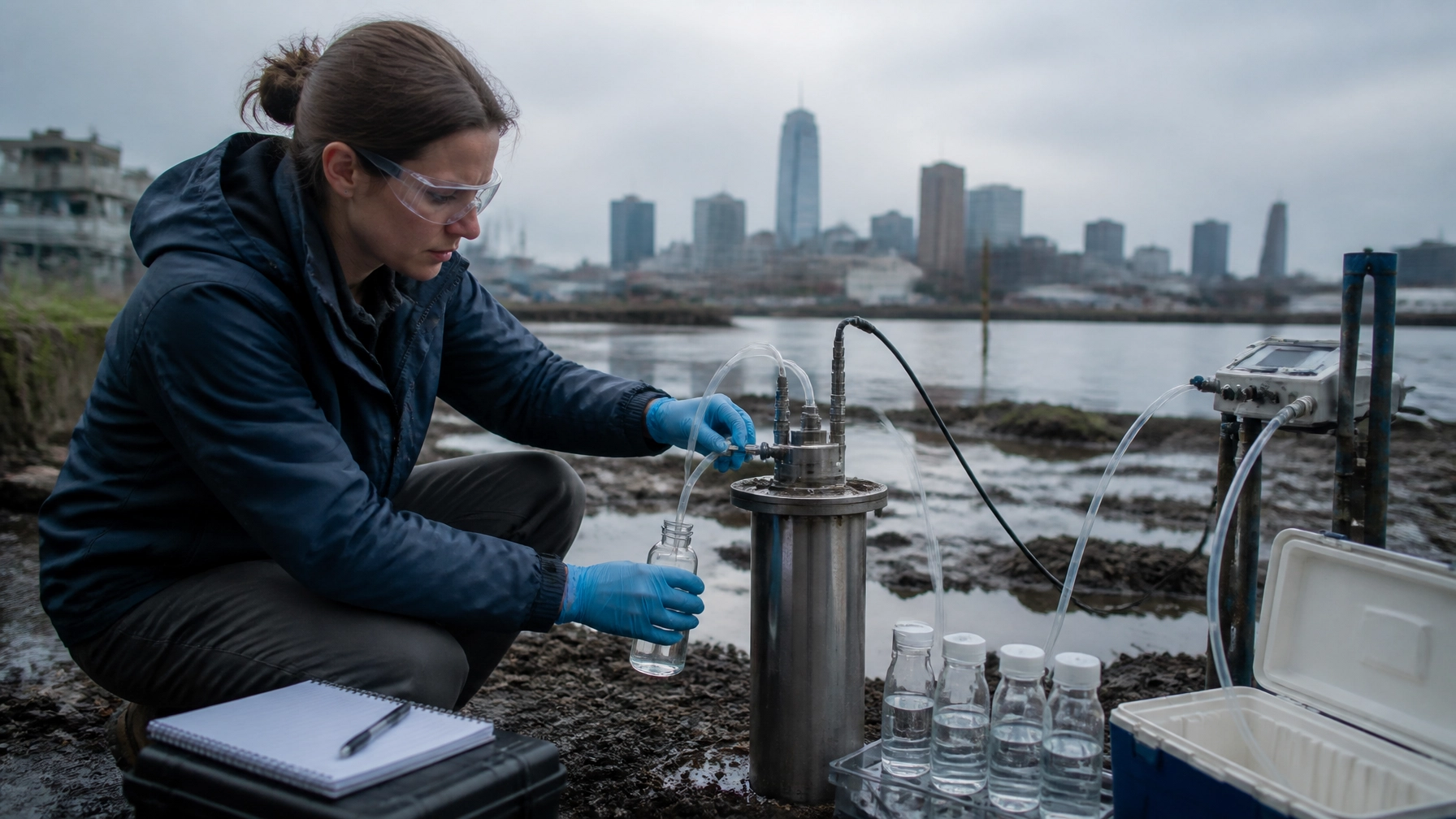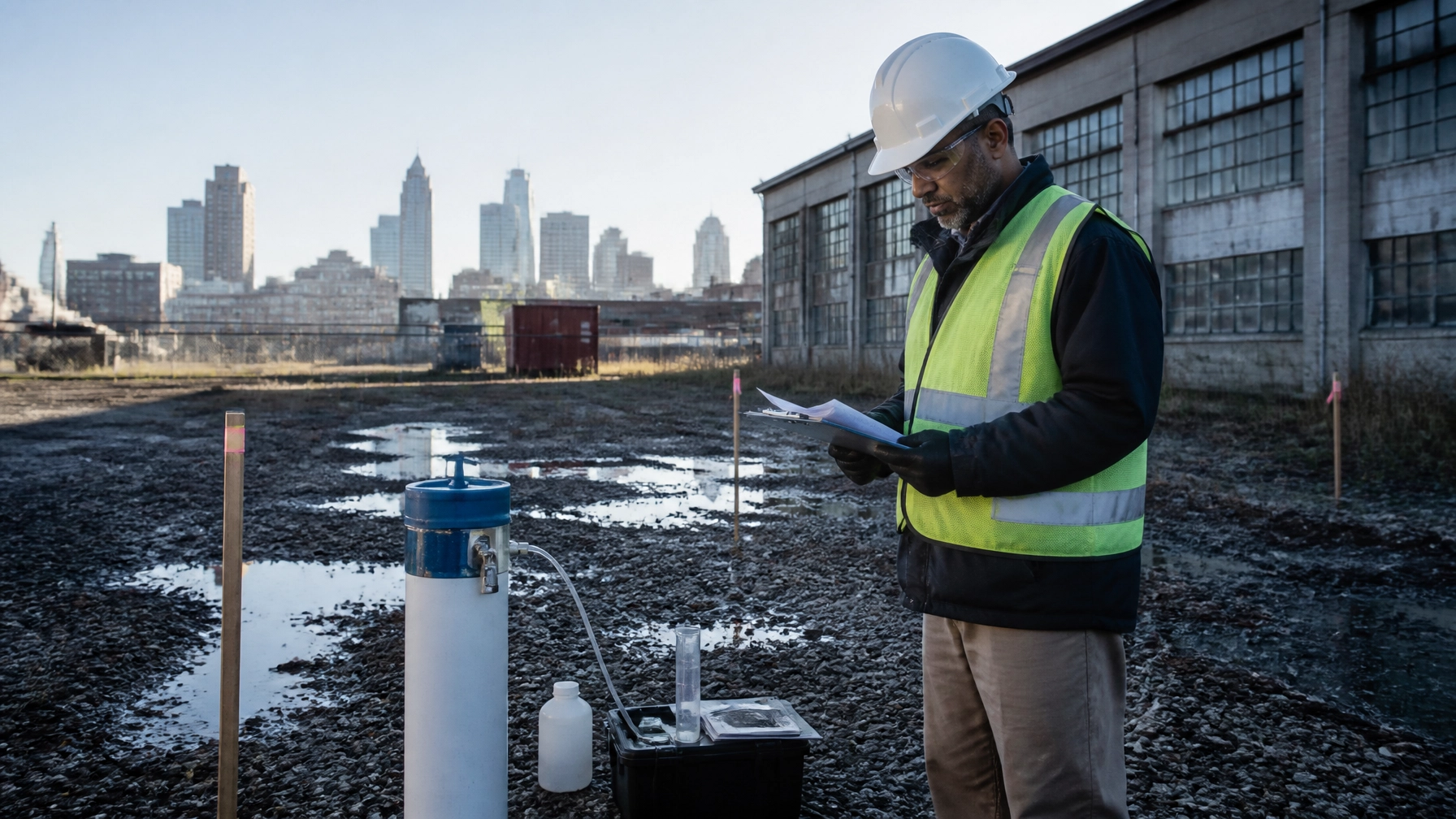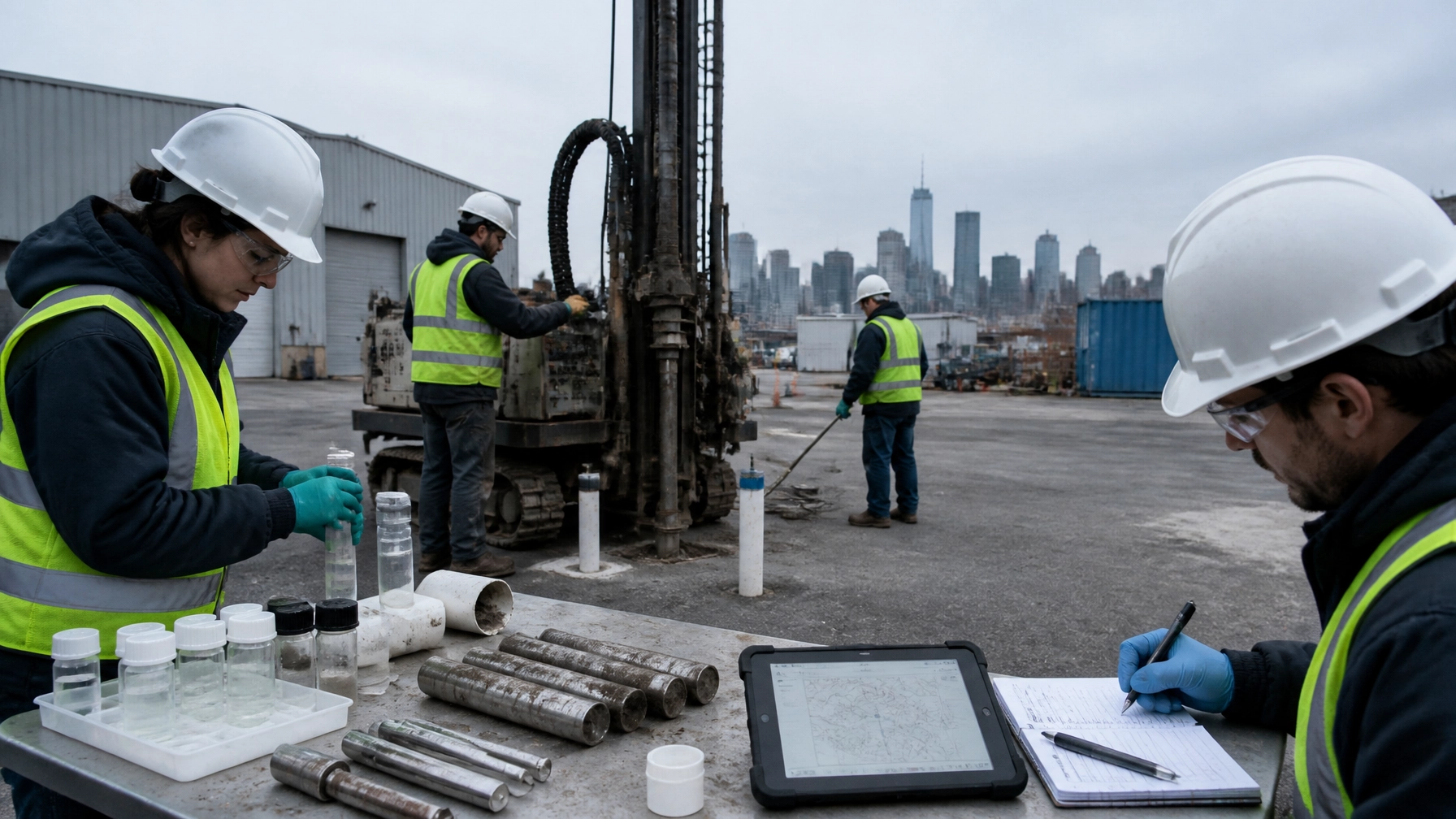
A hazardous materials E-Designation can affect your closing, design approvals, construction sequence, and occupancy plans. For projects in Queens, Brooklyn, the Bronx, Manhattan, and Staten Island, the environmental work must match the specific E-Designation language and the site’s actual vapor conditions.
That means soil vapor testing, sub-slab sampling, indoor air testing, and mitigation cannot follow a generic checklist.
The correct approach starts with the property history, building conditions, planned use, known contaminants, utility layout, and the requirements set by the NYC Office of Environmental Remediation (OER).
Why vapor testing matters before an NYC property closing
Volatile organic compounds, or VOCs, can migrate from contaminated soil or groundwater into buildings. Vapors may enter through:
- Foundation cracks and slab joints
- Utility penetrations
- Drains, sumps, and elevator pits
- Construction joints
- Conduits and abandoned piping
- Preferential pathways through fill or utility corridors
This risk matters during a purchase or refinancing because a Phase I or Phase II Environmental Site Assessment may identify a vapor concern even when the property appears clean at the surface.
For an E-Designation project, OER may require an approved investigation protocol before sampling begins. The property owner or developer typically needs to submit the Phase I ESA, sampling protocol, site figures, proposed methods, and related health and safety documentation for review.
Review the NYC OER E-Designation program requirements and the NYC E-Designation Rule before authorizing field work.
Sampling performed before protocol approval may not satisfy the project’s regulatory requirements. That can create rework, additional laboratory costs, and avoidable pressure on the closing schedule.
Soil vapor, sub-slab vapor, and indoor air are not interchangeable
Each sample type answers a different question.

| Sampling type | What it evaluates | Typical use in a transaction |
|---|---|---|
| Soil vapor | VOCs in soil gas outside or near a building | Determines whether a subsurface vapor source may exist |
| Sub-slab vapor | VOCs directly beneath a building slab | Evaluates the potential for vapor migration into the structure |
| Indoor air | VOCs present in occupied or enclosed spaces | Measures whether vapors may be affecting indoor air |
| Outdoor ambient air | Background VOC conditions outside the building | Helps distinguish indoor sources from subsurface sources |
| Tracer gas testing | Integrity of the sampling seal | Confirms that collected vapor data is representative |
A soil vapor result does not automatically prove vapor intrusion. Likewise, a non-detect indoor air result does not eliminate the need to evaluate the sub-slab pathway.
The sampling plan must account for the building’s foundation, occupancy, HVAC operation, weather conditions, floor plan, and known or suspected contaminant sources. One sampling layout will not fit every Queens warehouse, Brooklyn mixed-use building, or Manhattan redevelopment site.
NYC OER soil vapor testing in Queens and other boroughs
For NYC OER soil vapor testing in Queens, the first step is to identify the obligations in the property’s E-Designation documentation and any related environmental review materials.
The same applies to projects in:
A qualified team should review:
- Historical uses and former industrial operations
- Petroleum storage and dry-cleaning operations
- Manufacturing and automotive uses
- Existing or former underground storage tanks
- Groundwater flow direction
- Utility corridors and subsurface structures
- Building slab and foundation conditions
- Proposed excavation and building plans
- Existing mitigation systems or environmental controls
The sampling protocol should clearly show proposed sample locations. It should also explain the sample depths, collection methods, laboratory methods, quality assurance procedures, and decision criteria.
For VOC analysis under NYC E-Designation requirements, soil gas, sub-slab soil gas, and indoor air samples are generally analyzed using EPA Method TO-15 through an appropriately certified laboratory. Additional analyses may be warranted when site history indicates petroleum compounds, SVOCs, or other contaminants outside a standard VOC list.
Indoor air testing for Brooklyn E-Designation projects
Indoor air testing for Brooklyn E-Designation projects requires careful control of potential indoor sources.
Common household, commercial, and construction products can contain VOCs. Examples include:
- Solvents and degreasers
- Paints, coatings, and adhesives
- Cleaning products
- Stored fuels
- New flooring and building materials
- Dry-cleaning chemicals
- Combustion sources
A strong indoor air investigation documents building conditions before and during sampling. The field team should record HVAC operation, windows and doors, odors, stored chemicals, recent construction activities, and other conditions that could affect results.
Outdoor ambient air samples are often collected at the same time. This provides a comparison point and helps determine whether an indoor detection may come from subsurface vapor, outdoor air, or an indoor product.
Sampling should also consider preferential pathways. A building with low sub-slab vapor concentrations may still have a localized concern near a utility trench, floor drain, sump, or cracked foundation section.
How NYSDOH decision matrices affect the evaluation
The New York State Department of Health vapor intrusion guidance uses soil vapor and indoor air decision matrices to guide case-specific response actions.
The matrices compare sub-slab vapor and indoor air concentrations for selected compounds. Depending on the combination of results, the recommended action may include:
- No further action
- Identifying the source and resampling
- Monitoring
- Mitigation
The matrices are decision tools. They are not a substitute for professional judgment or a complete site evaluation.

Results must be interpreted in context. That context includes:
- Building construction
- Slab integrity
- Occupancy and exposure conditions
- Seasonal and weather-related changes
- HVAC pressure and operation
- Contaminant source location
- Soil and groundwater conditions
- Potential preferential pathways
The NYSDEC vapor intrusion guidance and the NYSDOH 2006 vapor intrusion guidance provide additional technical background.
Why tracer gas and pathway evaluation matter
Tracer gas testing helps verify that the sampling probe is properly sealed. Without a reliable seal, ambient air can leak into the sampling system and dilute or distort the result.
Tracer gas may be used during soil vapor and sub-slab sampling to evaluate probe integrity. The field procedure should be documented in the approved protocol and investigation report.
The team should also inspect and document preferential pathways, including:
- Utility penetrations
- Floor drains
- Sumps
- Elevator pits
- Cracks and joints
- Abandoned piping
- Conduit banks
- Crawl spaces and below-grade rooms
This step is especially important for existing buildings in Brooklyn and Queens where decades of renovations may have created undocumented penetrations or slab modifications.
EPIC submissions and the OER review process
The project team should organize OER submissions around the closing and construction schedule. Depending on the project stage, the submission package may include:
- Phase I Environmental Site Assessment
- Sampling and Analysis Plan or sampling protocol
- Health and Safety Plan, when applicable
- OER-approved soil, groundwater, and vapor sampling
- Laboratory data and quality control documentation
- Investigation report
- Remedial Action Plan, if required
- Mitigation design and construction documentation
- Verification results
- Request for a Notice of Satisfaction or other closeout determination
These materials are generally managed through OER’s electronic submission process, including EPIC workflows where applicable. The exact submission requirements depend on the E-Designation and the agency’s current procedures.
Your consultant should confirm the current portal requirements before submission. A technically correct report can still create delay if the package does not match the agency’s required format, certification, or supporting documentation.
OER vapor mitigation system requirements
If the investigation indicates a vapor intrusion concern, OER may require engineering controls. Possible measures include:
- Vapor barriers beneath new slabs
- Sub-slab depressurization systems
- Active soil vapor management systems
- Passive venting systems
- Sealing of cracks and preferential pathways
- Sealing around utility penetrations
- HVAC or building pressurization controls
- Long-term operation and maintenance requirements
Some OER documents reference vapor barriers with a minimum thickness of 15 mils. However, the approved Remedial Action Plan, project design, and site-specific agency direction control.

The system must be designed for the actual building. A mitigation plan for a new residential building will not necessarily work for an occupied warehouse, school, commercial space, or below-grade parking structure.
Verification may include:
- Inspection of barrier seams and penetrations
- Documentation of installation materials
- Pressure field extension testing
- Monitoring port readings
- Indoor air sampling
- Sub-slab vapor sampling
- System commissioning
- Operation and maintenance documentation
The goal is not to install equipment for its own sake. The goal is to demonstrate that the vapor pathway has been properly evaluated, controlled, and documented.
Protecting the closing schedule
Vapor concerns should be addressed during early due diligence, not after the purchase agreement sets an aggressive closing date.
Before committing to a closing schedule, confirm:
- Whether the E-Designation requires OER protocol approval
- Whether existing reports are current and usable
- Whether the building will be occupied during sampling
- Whether sub-slab access requires tenant coordination
- Whether mitigation affects the architectural design
- Whether the agency requires additional sampling
- Whether a Notice of Satisfaction is needed before closing or occupancy
Envicon coordinates vapor assessment, OER communication, mitigation design, construction oversight, and verification through one senior-led team. We do not treat the report as the finish line. We use the data to define the next action and keep the project moving.
The takeaway
NYC E-Designation vapor work is site-specific. Soil vapor, sub-slab vapor, indoor air, tracer gas, and preferential pathway evaluations each serve a different purpose.
For a Queens or Brooklyn property closing, the safest path is to:
- Review the exact E-Designation language
- Submit an OER-appropriate protocol before sampling
- Use approved methods and qualified laboratories
- Interpret results through the NYSDOH decision framework
- Design mitigation around actual building conditions
- Document installation and verification
- Plan the OER closeout process before the closing deadline
You do not need another generic report. You need a clear vapor pathway review tied to your property, your regulator, and your transaction.
Request an OER Vapor Pathway Review
- Request an OER vapor pathway review
- Call Envicon at (917) 764-2171
- Use the proprietary project risk screener
- Review Envicon’s vapor intrusion assessment service
- Learn more about NYC environmental consulting