If you’re buying commercial property in Jersey City or Newark, the cost of a Phase I ESA usually falls between $2,200 and $4,500 for a standard engagement in 2026.
A rush Phase I ESA generally falls between $3,000 and $5,500.
These are planning ranges, not fixed quotes. Property conditions, access, lender requirements, historical uses, and turnaround time control the final price.
The right question isn’t only, “How much does a Phase I ESA cost in Jersey City?” It’s also, “Will the assessment give my lender, attorney, and investment team enough information to make a closing decision?”
2026 Phase I ESA cost ranges in Jersey City and Newark
For most commercial property buyers, use these ranges when building an initial transaction budget:
| Phase I ESA scope | Planning range | Typical timing |
|---|---|---|
| Standard commercial Phase I ESA | $2,200 to $4,500 | 10 business days to 2 to 3 weeks |
| Rush Phase I ESA | $3,000 to $5,500 | Approximately 5 to 7 business days |
| Complex industrial or higher-risk property | May exceed standard range | Based on records and site conditions |
| Phase II ESA, if warranted | Separately scoped | Based on Phase I findings |
A small office or retail property with a straightforward history may fall near the lower end. A former manufacturing property, auto repair site, dry cleaner, or parcel with known tanks may require additional review and move toward the upper end.
A Phase I environmental site assessment in Hudson County also may cost more when the property has a long industrial history, multiple adjoining parcels, limited site access, or complex regulatory records.
The final fee should reflect the actual property. A low quote that excludes critical records review or lender requirements can create more cost later.
What drives Phase I ESA cost in Jersey City and Newark?
1. Industrial history and former uses
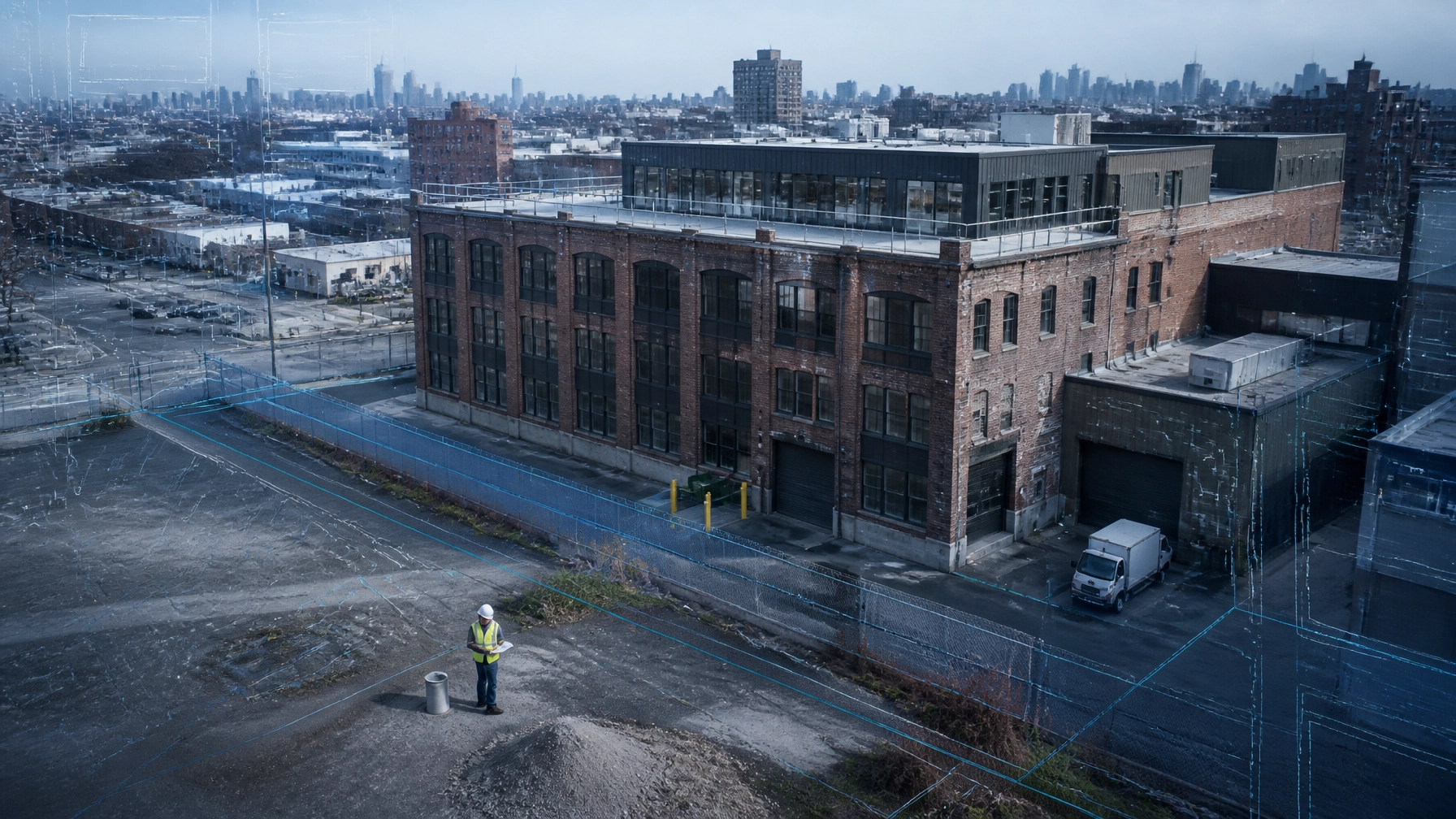
Jersey City and Newark contain many properties that transitioned from industrial, warehouse, rail, maritime, or manufacturing uses to commercial, residential, or mixed-use development.
Historical uses that can increase the scope include:
- Metal fabrication or plating
- Printing and chemical operations
- Machine shops and auto repair
- Fuel distribution or petroleum storage
- Warehousing with chemical or waste handling
- Dry cleaning
- Manufacturing and finishing operations
- Former rail, trucking, or port-related activity
A property’s current use does not tell the entire environmental story. The records review must evaluate how the property and adjoining parcels operated over time.
2. Fill and urban redevelopment conditions
Urban parcels often contain historic fill. Fill may include construction debris, ash, cinders, imported soil, or material placed during grading and redevelopment.
Historic fill does not automatically mean contamination. It does mean the Environmental Professional must understand the site’s development history, surrounding land uses, and available regulatory records.
Properties near former rail corridors, waterfronts, railyards, and major industrial districts may require more detailed review than a newer suburban commercial site.
3. Underground storage tanks
Current or former underground storage tanks, commonly called USTs, are a major cost and transaction driver.
The Phase I review may identify:
- Current or former gasoline or heating-oil tanks
- Tank removal or closure records
- NJDEP spill cases
- Petroleum discharge reports
- Abandoned fill ports or vent pipes
- Historical fuel dispensing operations
- Tank farms or bulk storage areas on adjoining parcels
A Phase I ESA does not remove a tank or determine the full extent of a release. It identifies the potential environmental condition and recommends the next step when evidence supports further investigation.
4. Dry cleaners and vapor encroachment
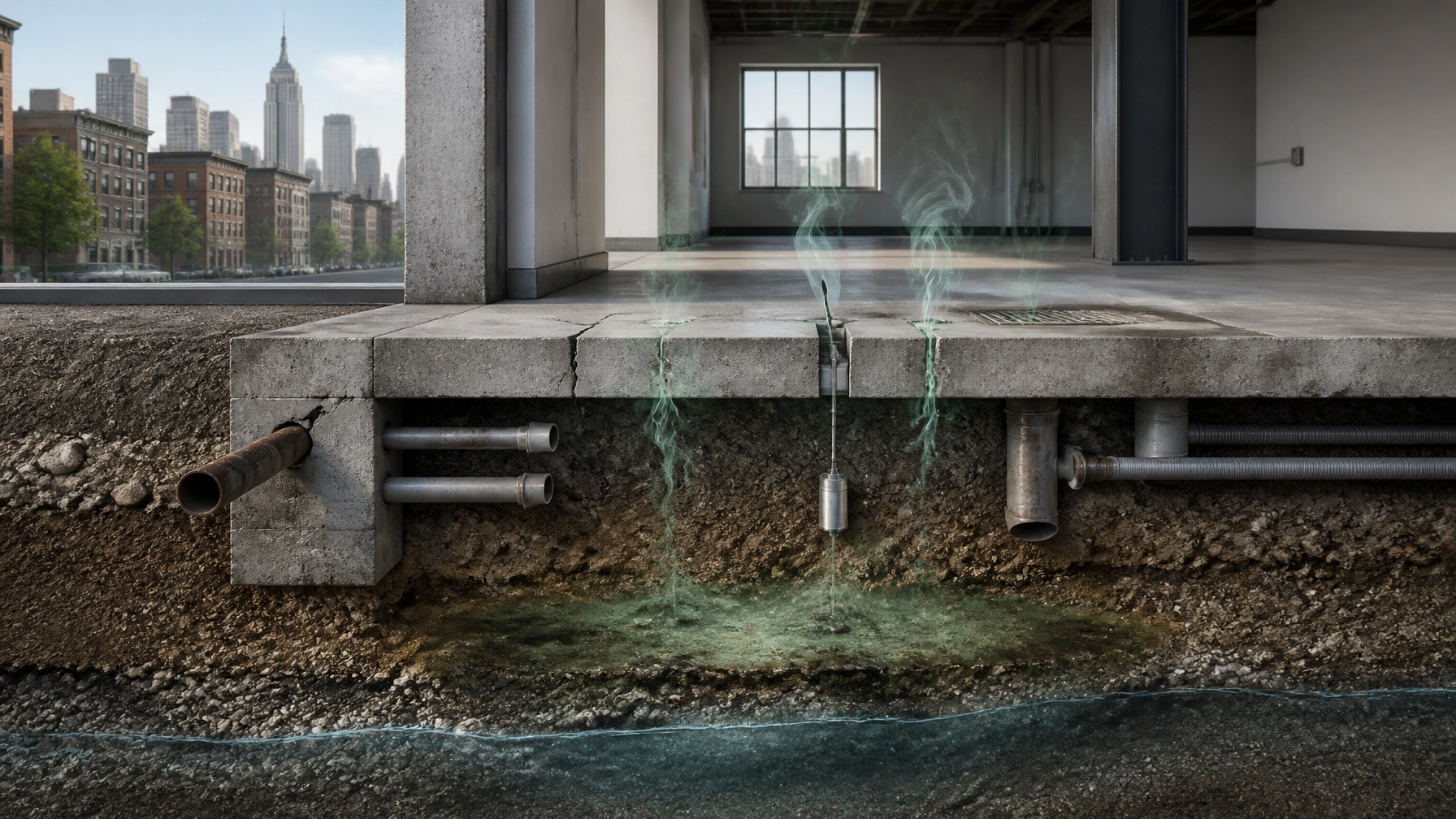
Former dry cleaners can raise concerns about chlorinated solvents, including tetrachloroethylene, often called PCE. Nearby industrial users, degreasing operations, gas stations, and petroleum releases can also create potential vapor concerns.
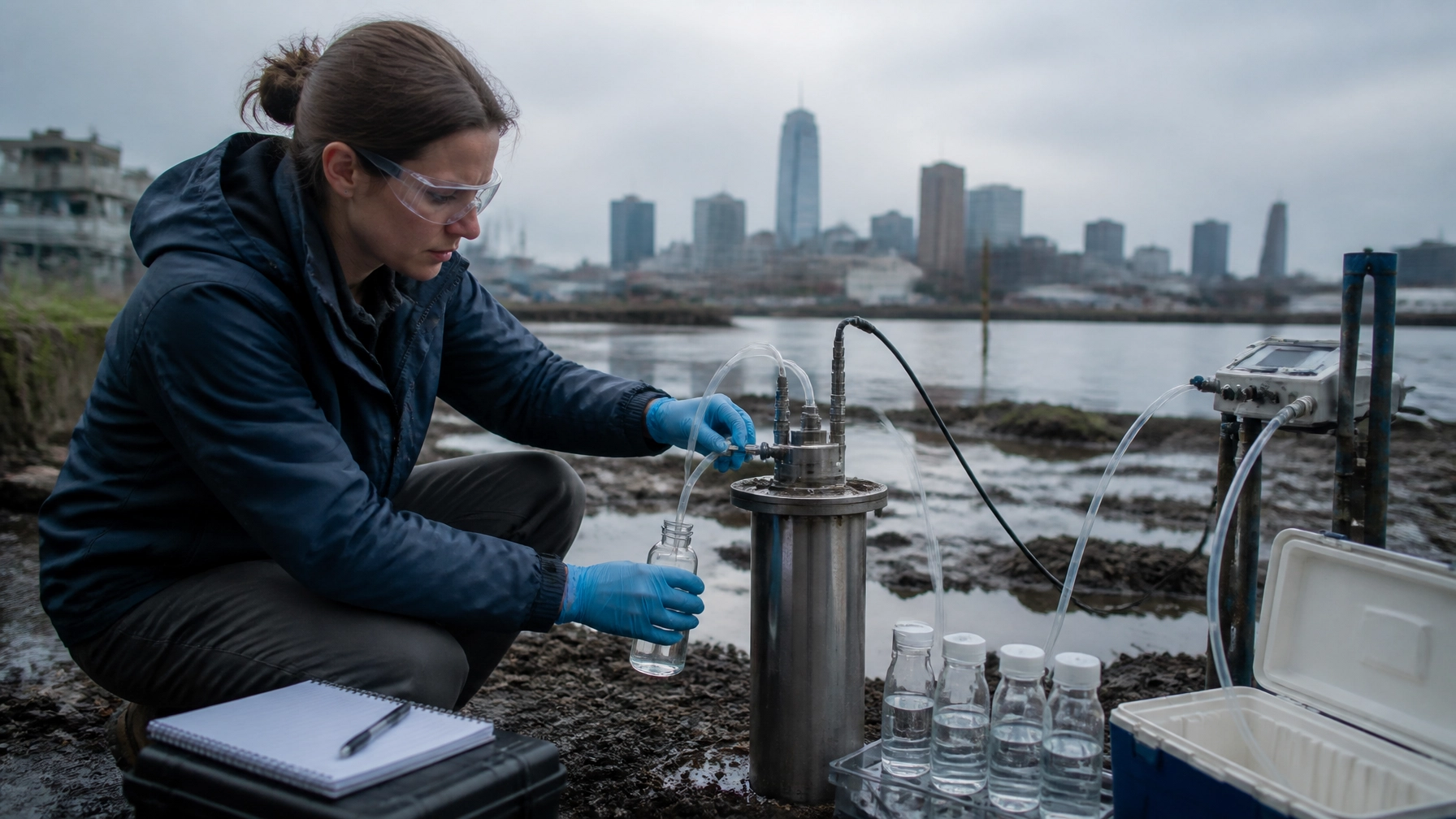
A Phase I may identify a need for a vapor encroachment screen or a more targeted investigation. Sampling is not normally part of a standard Phase I ESA.
If soil gas, sub-slab, indoor air, soil, or groundwater testing becomes necessary, that work belongs in a Phase II or a separate vapor intrusion assessment.

5. Regulatory records
Regulatory records help determine whether a property or nearby site has a history of spills, violations, remediation, permitted operations, or unresolved cases.
For a Jersey City or Newark property, the review may involve:
- NJDEP records and databases
- Federal environmental databases
- Local property and building records
- Historical aerial photographs
- Sanborn fire insurance maps
- City directories
- Prior environmental reports
- Spill and tank records
- Known engineering controls or institutional controls
A property with multiple case numbers, prior investigations, or an active remediation program may require more time to interpret than a site with a clean and simple record.
6. Property size, access, and site logistics
A single commercial building with clear access is different from a multi-building industrial parcel with secured areas, tenants, equipment, and restricted interiors.
Pricing can increase when:
- The property includes multiple tax lots
- Several buildings require inspection
- Tenants limit interior access
- The site is fenced, vacant, or partially abandoned
- Roofs, basements, tanks, or utility areas are inaccessible
- The property includes a large outdoor storage or staging area
The site reconnaissance should reflect actual conditions. A rushed walk around the front entrance is not equivalent to a complete property inspection.
7. Lender scope and turnaround
Lender requirements can affect the fee before fieldwork begins.
Your lender may require:
- ASTM E1527-21 conformance
- All Appropriate Inquiries documentation
- A specific reliance letter
- Environmental database documentation
- A vapor encroachment evaluation
- A review of environmental liens or activity and use limitations
- A current report close to the acquisition date
- A defined turnaround date
If you need a lender-approved Phase I ESA in Jersey City, provide the lender’s scope at kickoff. That prevents a second review, avoidable revisions, and closing delays.
Rush service also requires immediate coordination of records, site access, interviews, and technical review. The earlier you engage the consultant, the more options you have.
What a standard Phase I ESA includes
An ASTM E1527-21 environmental due diligence NJ engagement generally includes:
- Historical records review
- Federal and state environmental database review
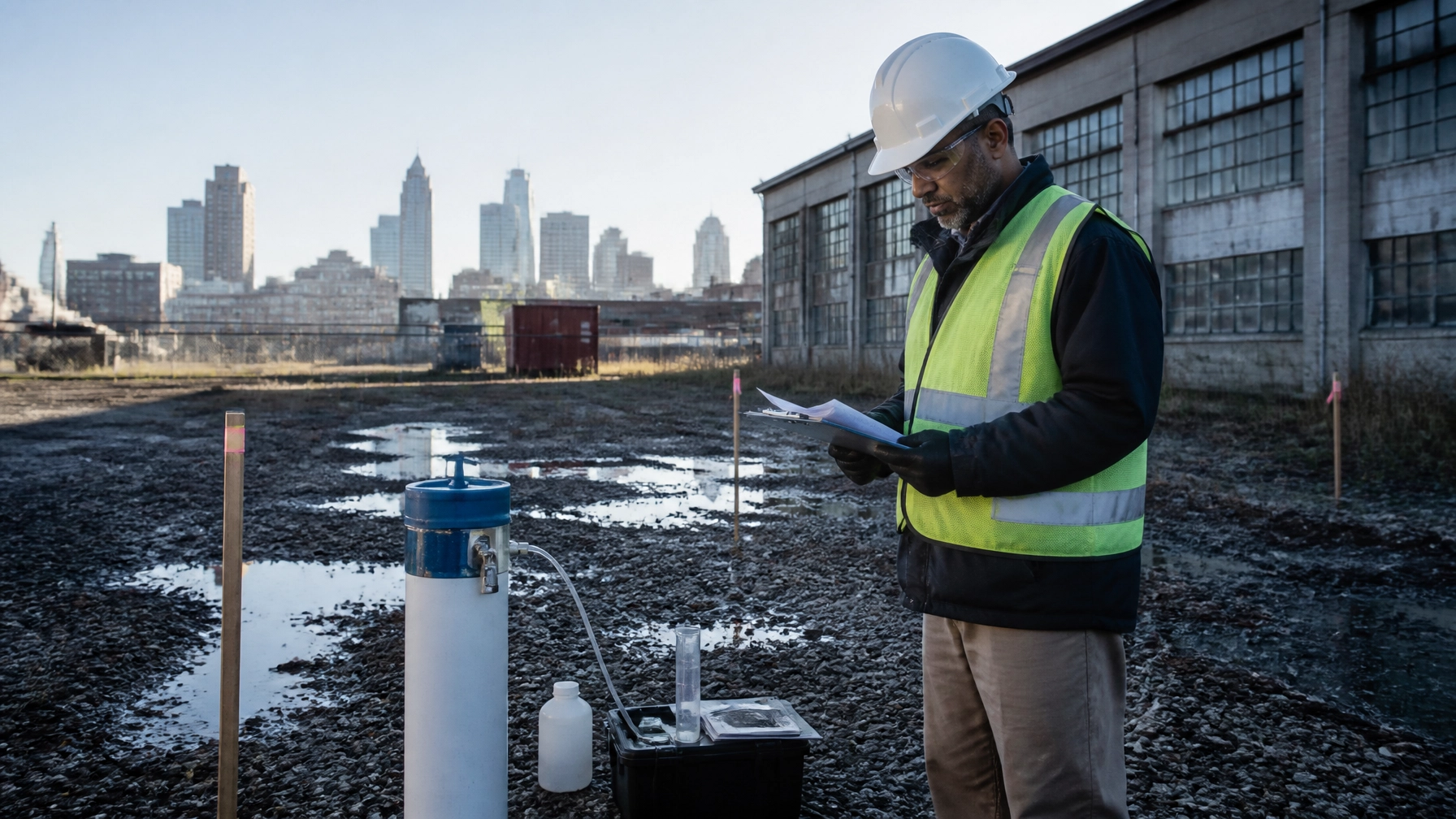
- Site reconnaissance by an Environmental Professional
- Review of adjoining and nearby properties
- Interviews with owners, occupants, operators, or other knowledgeable parties
- Evaluation of current and historical site uses
- Identification of recognized environmental conditions, historical recognized environmental conditions, controlled recognized environmental conditions, and de minimis conditions
- Documentation of significant data gaps
- A written report signed by the Environmental Professional
- Recommendations for additional investigation when warranted
The EPA’s All Appropriate Inquiries guidance identifies ASTM E1527-21 as consistent with the AAI requirements. The governing federal regulation is 40 CFR Part 312.
A Phase I ESA supports environmental due diligence and potential CERCLA liability protections. It does not guarantee that a property has no contamination.
What a Phase I ESA excludes
A standard Phase I ESA usually does not include:
- Soil sampling
- Groundwater sampling
- Soil vapor or indoor air sampling
- Sub-slab testing
- Tank removal or closure
- Remediation
- Asbestos, lead paint, mold, or radon surveys
- Building condition assessment
- Structural inspection
- Geotechnical borings
- Title review or legal opinion
- Full NJ ISRA applicability analysis unless specifically included
If your transaction requires these services, scope them early. Envicon can coordinate the Phase I with Phase II environmental investigation, UST services, vapor assessment, or NJ ISRA compliance support.

When is a Phase II ESA warranted?
A Phase II ESA may be warranted when the Phase I identifies a recognized environmental condition or another condition that requires physical data.
Common triggers include:
- A documented spill or discharge
- Current or former USTs with uncertain status
- Dry-cleaning or solvent use
- Petroleum storage or dispensing
- Industrial operations with chemical handling
- Soil staining, odors, stressed vegetation, or distressed pavement
- Known contamination on the property or an adjoining parcel
- Vapor encroachment concerns
- Incomplete or contradictory regulatory records
- A lender or attorney condition requiring sampling
The Phase II scope should answer a specific question. That may involve soil borings, groundwater monitoring wells, soil gas points, or targeted sampling near a suspected source.
We don’t recommend sampling simply because a property is old. We recommend it when the available evidence supports a defensible investigation plan.
Transaction timeline for a Jersey City or Newark Phase I ESA
Before authorization
Send the property address, tax lot information, current use, proposed use, closing date, lender requirements, and any prior reports.
Within one business day
The consultant should confirm the scope, identify obvious cost drivers, and provide a fee and delivery date.
Days 1 to 3
The team conducts the records review, requests available documents, schedules site access, and prepares for reconnaissance.
Days 2 to 5
The Environmental Professional completes the site visit and interviews. Restricted access should be resolved quickly.
Days 5 to 10 or longer
The team analyzes the findings, documents data gaps, classifies environmental conditions, and prepares the report.
Before closing
Your lender, attorney, and acquisition team review the report. If a REC is identified, you decide whether to renegotiate, obtain a Phase II, revise the purchase agreement, or proceed with defined controls.
AAI timing matters. The EPA explains that the inquiry must be conducted or updated within one year before acquisition, while certain components must be completed or updated within 180 days before acquisition. Your lender may apply a shorter reliance period.

Why transaction teams use Envicon for local Phase I work
A national firm may assign your Jersey City or Newark transaction to a team that has limited familiarity with Hudson County or Essex County records and agency expectations.
Envicon takes a different approach:
- Direct access to the professionals managing the work
- Same-business-day scoping for many inquiries
- Standard and rush scheduling options
- Fixed-fee pricing before authorization
- Lender-ready ASTM E1527-21 deliverables
- Local knowledge of Jersey City, Newark, Hudson County, and Northern New Jersey
- Clear recommendations when a Phase II is or is not justified
- Coordination with lenders, attorneys, brokers, architects, and acquisition teams
You don’t need a bloated report. You need a clear answer that helps you decide what happens next.
Frequently asked questions
How much does a Phase I ESA cost in Jersey City?
A standard commercial Phase I ESA in Jersey City typically falls between $2,200 and $4,500 as a 2026 planning range. A rush Phase I ESA typically falls between $3,000 and $5,500. Property conditions and lender requirements control the final price.
What is the typical Phase I ESA cost in Newark, NJ?
The typical Phase I ESA cost in Newark NJ falls within the same general planning ranges. Former industrial use, USTs, fill, dry cleaners, complex records, and restricted access can increase the fee.
How long does a Phase I ESA take?
A standard assessment commonly takes about 10 business days to 2 to 3 weeks. Rush service may be available in approximately 5 to 7 business days when records and site access cooperate.
Does a Phase I ESA include sampling?
No. A standard Phase I ESA is primarily a records review, site reconnaissance, interviews, and professional opinion. Soil, groundwater, soil vapor, and indoor air sampling generally require a Phase II or separate targeted scope.
Will my lender accept the report?
Acceptance depends on the lender’s requirements. Give those requirements to the consultant before authorization. Envicon’s Phase I ESA service is designed for lender and counsel review and reports a 100% lender approval rate for its Phase I ESAs.
Should I order a Phase I before signing a purchase agreement?
Ideally, environmental due diligence begins early in the negotiation period. Early review gives you time to identify RECs, request records, negotiate access, and decide whether a Phase II is needed before closing.
Plan your Phase I ESA budget before the closing clock gets tight
For a commercial property in Jersey City, Newark, or elsewhere in Hudson County, plan on $2,200 to $4,500 for a standard Phase I ESA and $3,000 to $5,500 for rush service.
Those ranges are useful for budgeting. They are not a substitute for property-specific scoping.
The best report is not the longest report. It’s the one that identifies the real environmental issues, explains the business impact, and gives your team a defensible path forward.
Request a Jersey City or Newark Phase I ESA quote