Title tag: BCP Comment Deadline November 7 2026: Port Chester Cleanup Due Diligence
Meta description: Review the proposed Port Chester BCP cleanup before November 7, 2026. See what public documents can tell NY and NJ buyers about remedy scope and costs.
For buyers and lenders, a public cleanup plan is more than a regulatory notice. It is an early look at the proposed remedy, the assumptions behind it, and the work that may still change.
NYSDEC is accepting comments through November 7, 2026 on the proposed cleanup for the 227 Westchester Avenue Development Site in Port Chester. The document set offers a practical case study for NY-metro developers and New Jersey buyers underwriting New York deals. Read it before treating a site’s environmental risk as a single line item in the budget.
The public record is not a substitute for property-specific due diligence. It can, however, help you ask better questions before you authorize sampling or lock in remedial cost assumptions.
What the Port Chester comment period actually reveals
The public comment period runs from September 23 through November 7, 2026. The site, BCP No. C360253, covers six lots totaling about 0.89 acres at Westchester Avenue and Irving Avenue in Port Chester.
NYSDEC’s public notice links to the draft Remedial Investigation Report, Supplemental Remedial Investigation Report, and draft Remedial Work Plan with an Alternatives Analysis. The DEC document repository lists the draft work plan dated July 17, 2026.
Those documents help underwriters see four things:
- Remedy scope: What the applicant proposes to remove, treat, contain, or monitor.
- Schedule and sequencing: What work must happen before redevelopment can proceed, and what oversight or sampling may follow.
- Cleanup objectives: What standard the proposed plan seeks to meet, and what controls could apply if it falls short.
- Risk framing: How the applicant characterizes site conditions and compares cleanup options.
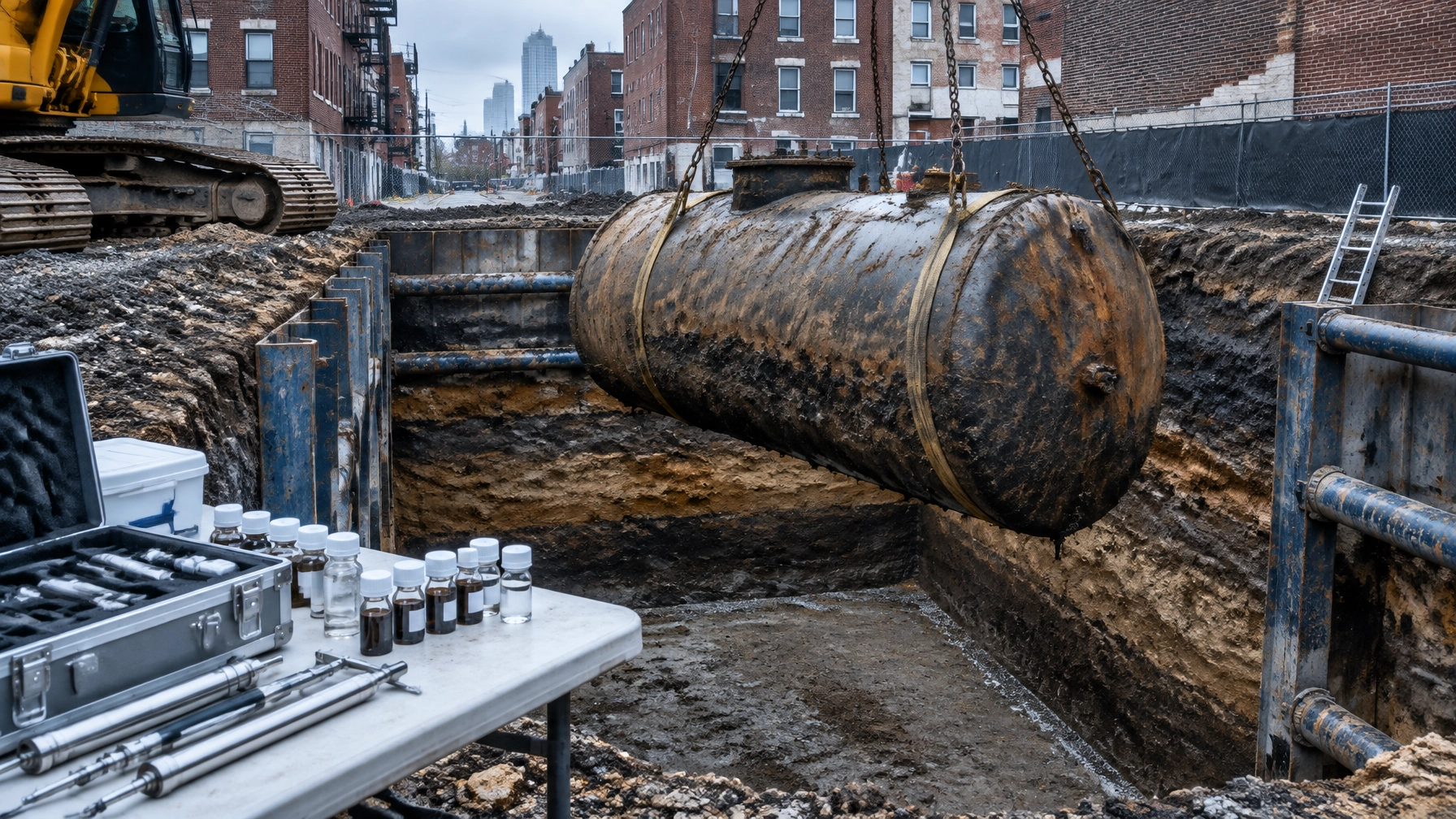
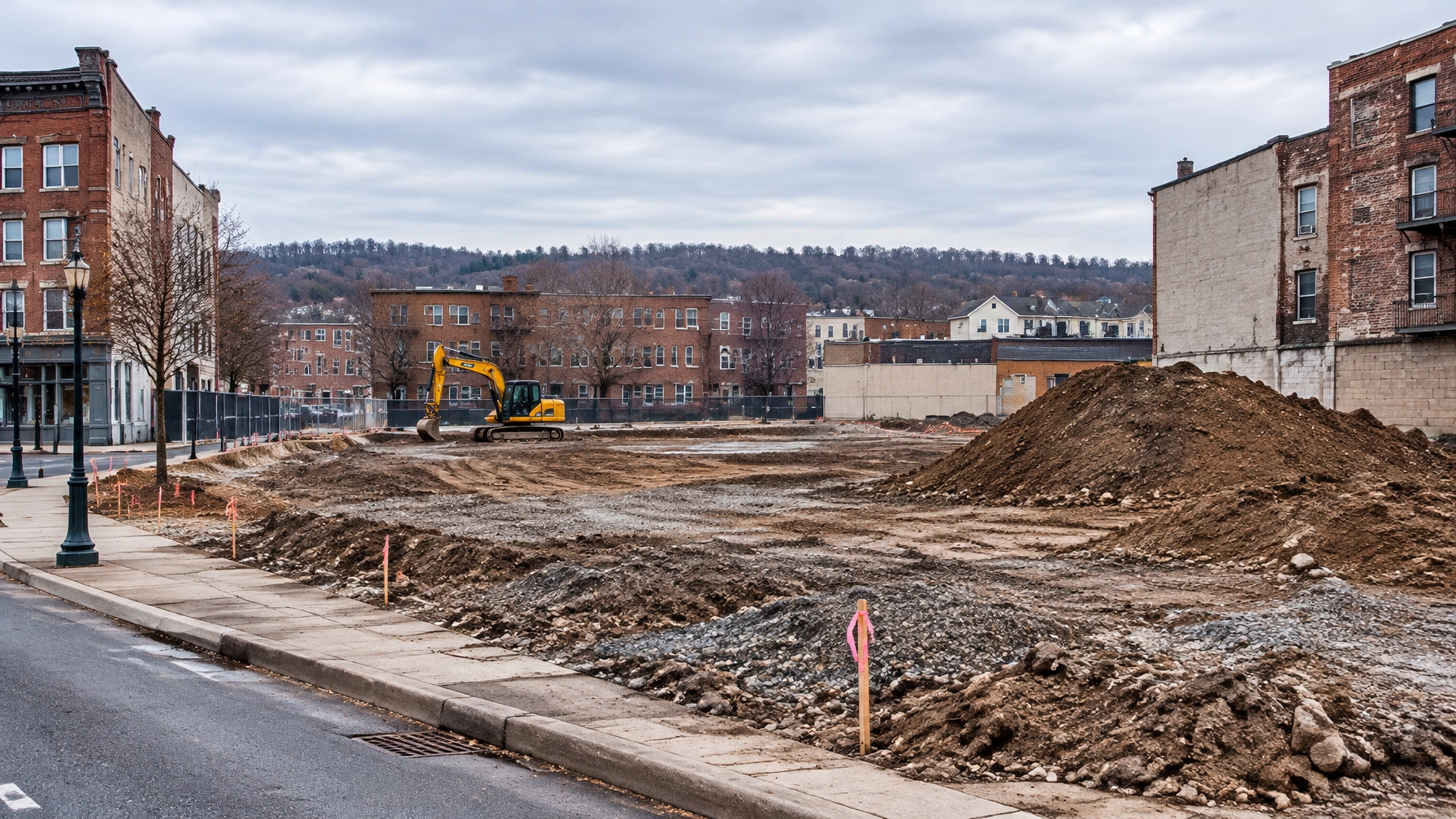
The proposal is a Track 1 Unrestricted Use cleanup. It calls for removal of an aboveground storage tank and any underground tanks and piping encountered, plus excavation and off-site disposal of approximately 34,500 cubic yards of contaminated soil. The proposed excavation extends across the site to depths of about 25 feet, generally to bedrock. In the northeast corner, the plan proposes excavation to the top of the Buckley Drain at roughly 10 feet below ground, while leaving the drain in place.
The plan also includes confirmatory soil sampling, clean backfill, a health and safety plan, community air monitoring during intrusive work, and soil vapor intrusion evaluation for new buildings. If the unrestricted-use cleanup objective is not achieved, the fact sheet says a Site Management Plan and an environmental easement may be required.
The draft identifies VOCs, SVOCs, metals, pesticides, and PFAS in soil, groundwater, and/or soil vapor. NYSDEC and NYSDOH state that the investigation found the site does not pose a significant threat to public health or the environment. That finding does not mean cleanup is complete or that the proposed remedy is final. DEC will consider comments, may revise the plan, and will issue a final Decision Document. NYSDOH must concur before the remedy is approved. See the NYSDEC fact sheet for the full summary.

Why underwriters should read the work plan, not just the notice
A notice gives you the deadline and the headline. The work plan gives you the proposed work and the assumptions that drive cost.
For Port Chester, the volume of soil, depth of excavation, off-site disposal, retained drainage infrastructure, and confirmation sampling all affect the project’s execution. Each is a question for underwriting. The 34,500-cubic-yard figure is a proposed quantity, not a guaranteed final quantity or contractor price. Actual costs depend on the approved remedy, field conditions, material classification, haul and disposal options, access, and schedule.
The alternatives analysis matters too. It shows what the applicant considered and why the proposed option was selected. Read it alongside the investigation reports. Check whether the remedy addresses the contaminants and pathways described in the investigation, and identify any conditions that could require long-term controls.
A comment period can lead DEC to revise a remedy. A change in excavation limits, cleanup objectives, monitoring, or institutional controls can change the work and the cost assumptions that sit behind a deal. The public record does not tell you that a change will occur. It tells you what is currently proposed and where to focus your questions.
Use public cleanup records before you authorize a Phase II
The Port Chester repository is useful even if you are not buying that site. It shows how much technical detail can sit behind a public notice, and how to move from a site number to source documents.
For a New York or New Jersey transaction, start with the state’s public records and then check the property itself. NYSDEC’s Brownfield Cleanup Program public comment page is one place to monitor proposed actions and comment opportunities. For New York sites, the DECinfo Locator and individual document repositories can help you find site files and related reports.
That material can sharpen your scope. It may show prior investigations, nearby sources, known contaminants, groundwater concerns, or an active remedy. It does not replace a Phase I ESA, and it does not automatically answer whether your parcel has a recognized environmental condition. A Phase II environmental site assessment NJ buyers order for a New York property should be based on the subject property’s conditions, the Phase I findings, and the transaction’s needs, not simply on a nearby cleanup notice.
The same discipline applies in reverse. A buyer pursuing environmental due diligence for developers in NJ can review relevant public records before deciding whether subsurface sampling is warranted. Then the assessment needs to meet the applicable scope and lender requirements for the property and transaction.

A practical workflow for your next deal
Use public records to target your due diligence. Do not treat them as a shortcut around it.
- Monitor notices. Track NYSDEC Environmental Notice Bulletin postings and BCP public comment notices for the property, adjacent parcels, and nearby sites.
- Pull the source documents. Read the fact sheet, investigation reports, work plan, alternatives analysis, and any decision document. Note dates and whether each file is draft, proposed, or final.
- Screen site history. Compare historic uses, agency records, site boundaries, and likely pathways with the parcel you are underwriting. A nearby site is a lead to investigate, not proof of contamination on your parcel.
- Identify cost drivers. Flag excavation depth and volume, disposal assumptions, groundwater management, vapor controls, monitoring, access limits, and long-term obligations.
- Set the right assessment scope. Start with a Phase I and Phase II environmental assessment. Use Phase I findings to decide whether targeted Phase II sampling is justified and what it needs to answer.
- Engage before the deadline or closing crunch. If the public record raises a material question, discuss it with your environmental consultant, lender, attorney, and project team while there is still time to act.
For teams based in Monmouth County, New Jersey, this is a useful way to screen New York opportunities before committing to a field scope. The same approach applies to transactions involving Newark, Queens, and other NY/NJ markets. An experienced environmental consultant in NYC can connect the public record to the site-specific questions your lender and design team need answered.

What buyers should take from Port Chester
A proposed cleanup plan is a free, public source of underwriting information. It can clarify the proposed remedy, its scope, and the conditions that may affect cost or schedule. It cannot certify a separate property, guarantee a final remedy, or replace lender-ready assessment work.
Read the source documents. Separate proposed assumptions from approved requirements. Then scope your Phase I or Phase II around the property and the decision you need to make.
That is how environmental due diligence for developers in NJ and NY becomes more than a report in a file. It becomes a clear path to a defensible decision.
Frequently asked questions
What is the November 7, 2026 deadline for?
NYSDEC is accepting written public comments through November 7, 2026, on the proposed cleanup plan for the 227 Westchester Avenue Development Site, BCP Site No. C360253, in Port Chester. The NYSDEC notice links to the public information.
Is the Port Chester cleanup plan final?
No. The plan is proposed. DEC will consider comments, revise the remedy as necessary, and issue a final Decision Document. NYSDOH must concur before the proposed remedy is approved.
Does a nearby BCP cleanup mean I need a Phase II ESA?
Not by itself. A nearby cleanup can inform your records review and help identify questions about site history, groundwater, or possible pathways. A Phase I ESA evaluates the subject property. Phase II sampling is typically scoped to address conditions identified through that assessment and other relevant evidence.
Can a public comment change a project’s cleanup cost?
It can affect the remedy if DEC revises the plan after reviewing comments. A change to excavation limits, cleanup objectives, monitoring, or controls may change the work and associated cost assumptions. A comment period does not guarantee a change.
What should a buyer review in a proposed work plan?
Review the proposed remedy, alternatives analysis, cleanup objectives, excavation quantities and depths, soil and groundwater management, vapor evaluation, confirmation sampling, monitoring, and any potential long-term controls. Compare those assumptions with the investigation reports and the intended redevelopment.