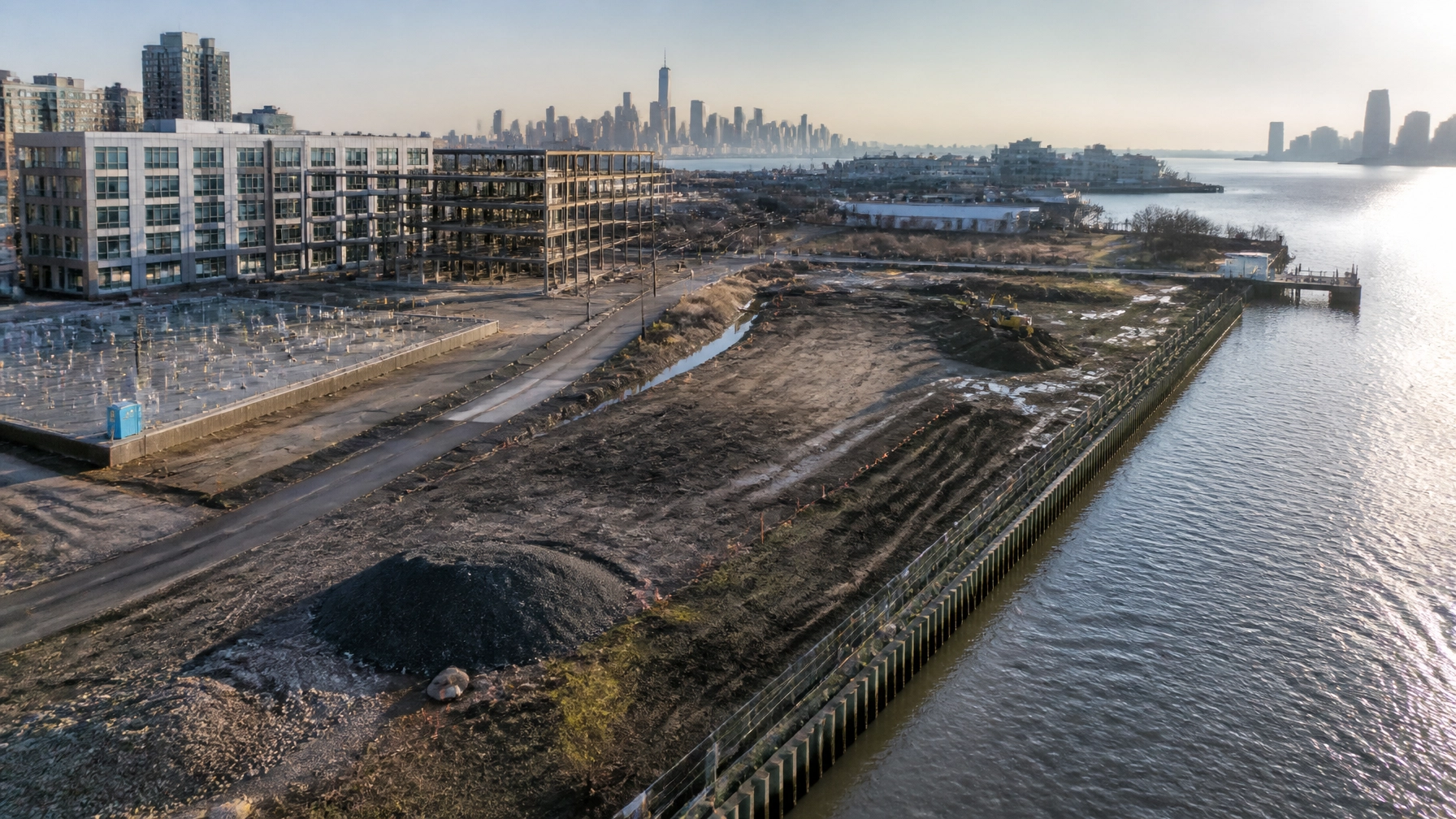
GP-0-25-001 is now the permit controlling New York construction stormwater readiness
New York’s SPDES Construction General Permit GP-0-25-001 took effect on January 29, 2025, and remains effective through January 28, 2030. It replaced GP-0-20-001 and applies to qualifying construction activity across New York, including New York City, Westchester County, and the Hudson Valley.
For most projects, coverage is required when construction will disturb one or more acres of soil. It can also apply to a smaller phase that forms part of a larger common plan of development or sale that will ultimately disturb one or more acres.
The permit authorizes stormwater discharges associated with construction activity only after the project completes the required process. That process includes:
- A complete Stormwater Pollution Prevention Plan, or SWPPP
- Proper owner and operator certifications
- Applicable MS4 or NYCDEP acceptance
- Electronic Notice of Intent, or eNOI, submission
- NYSDEC authorization
- Qualified inspections and ongoing implementation of erosion and sediment controls
A permit gap can stop mobilization before the first excavator reaches the site. It can also trigger redesign, agency comments, contractor downtime, and expensive rework.
Review the official NYSDEC construction activity requirements and the GP-0-25-001 fact sheet before finalizing your construction schedule.
The SWPPP must be ready before the site is ready
A SWPPP is not a generic erosion control drawing added to a permit package. It is the operating plan for how your project will prevent sediment and pollutants from leaving the site.
Under GP-0-25-001, the SWPPP should address the full construction sequence, including:
- Existing site conditions and drainage patterns
- Limits of disturbance
- Soil disturbance and grading activities
- Construction sequencing
- Stabilization requirements
- Erosion and sediment control practices
- Stormwater management practices
- Pollution prevention procedures
- Inspection and maintenance requirements
- Final stabilization and permit termination steps
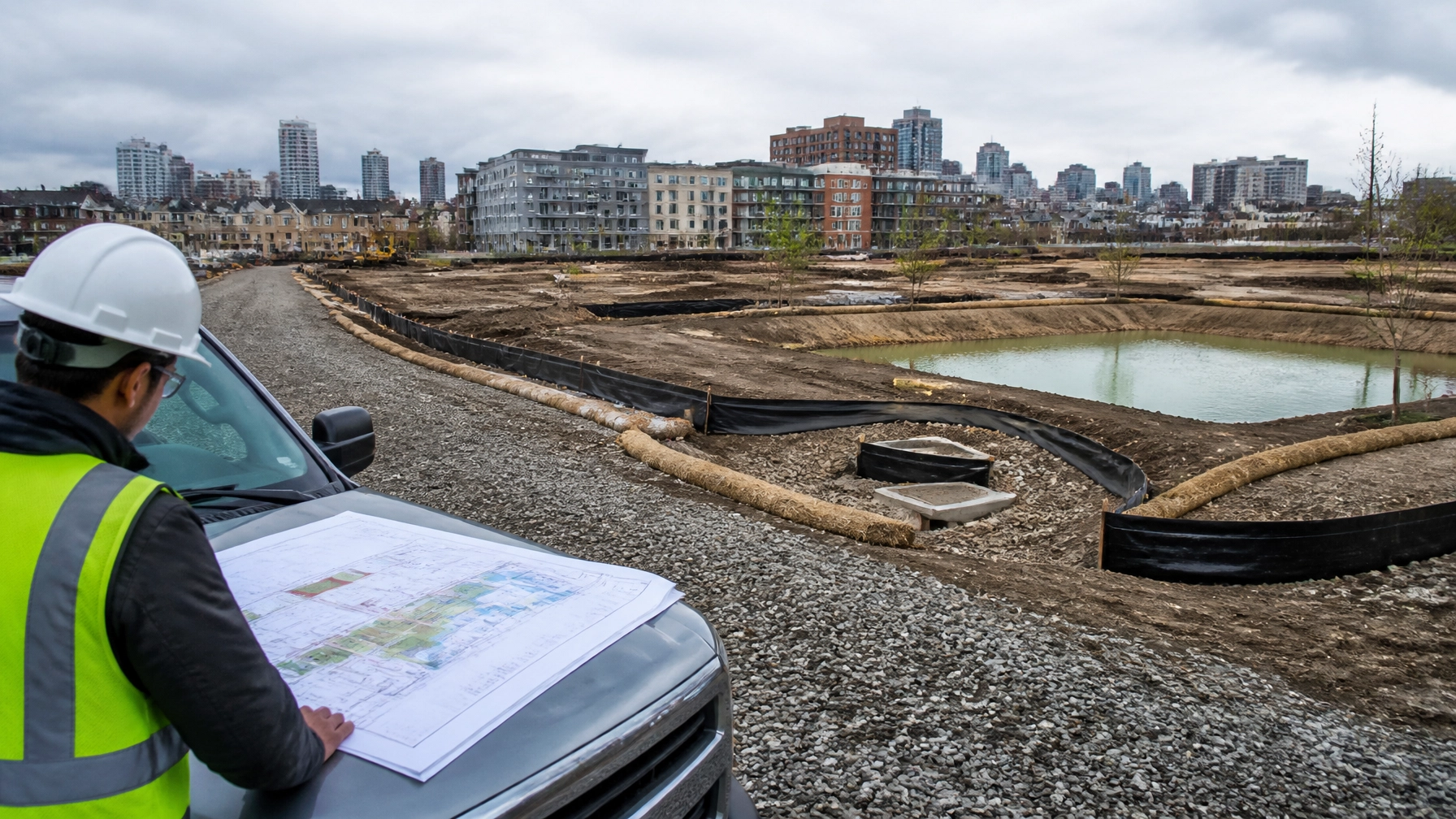
The plan must reflect actual site conditions. A SWPPP prepared from an outdated survey or an incomplete grading plan can fail when construction begins. Controls may be shown in locations that conflict with access roads, utility work, excavation support, staging areas, or the final drainage design.
That is why SWPPP preparation should connect directly to civil engineering and field implementation. Envicon provides civil and geotechnical engineering support so the stormwater plan aligns with grading, drainage, utilities, and the way the contractor will actually build the project.

Owner and operator roles must be clear
GP-0-25-001 places responsibilities on both owners and operators. The project owner generally controls the property or has ownership responsibility for the development. The operator typically controls construction plans, specifications, construction activities, or day-to-day implementation of the SWPPP.
A project can have more than one operator. For example, the owner, general contractor, and another party with operational control may each have responsibilities under the permit.
Those responsibilities should be assigned before the eNOI is submitted. The parties responsible for the project need to understand who will:
- Maintain the SWPPP on site
- Direct contractors to install and maintain controls
- Correct deficiencies
- Coordinate inspections
- Keep inspection records
- Update the SWPPP when site conditions change
- Respond to agency or MS4 comments
- Complete final stabilization and termination documentation
Unclear roles create predictable problems. The owner assumes the contractor is managing compliance. The contractor assumes the consultant is handling field conditions. The consultant prepares a plan but has no authority to direct corrective work.
We avoid that gap by coordinating directly with owners, contractors, civil engineers, architects, attorneys, and reviewing agencies. Collaboration is not a buzzword. It is how the work gets done.
NYC, Westchester, and Hudson Valley projects need local acceptance review
NYSDEC permit coverage does not eliminate local stormwater review.
If a project falls within the boundaries of a Traditional Land Use Control MS4, the owner or operator must contact the applicable MS4 operator. The project generally needs one of two documents:
- A signed MS4 SWPPP Acceptance Form
- A signed MS4 No Jurisdiction Form
For New York City projects, NYCDEP review and acceptance requirements must be addressed before NYSDEC coverage can be completed. The exact review path depends on the project, site location, disturbance area, drainage conditions, and applicable local requirements.
This is a frequent source of schedule risk. A team may complete the SWPPP and prepare the eNOI, only to discover that the local acceptance form is missing, incomplete, or based on a plan that has since changed.
For projects involving NYC environmental conditions, developers can also review Envicon’s NYC E-designation support. The broader objective is the same: identify the regulatory path early and keep each approval connected to the construction sequence.
Submit the correct eNOI through DEC’s current process
Coverage under GP-0-25-001 requires the current electronic Notice of Intent process through the NYSDEC nForm portal. The previous GP-0-20-001 eNOI should not be used for new coverage under the 2025 permit.
The submission package may include:
- The completed GP-0-25-001 eNOI
- SWPPP preparer certification
- Applicable MS4 acceptance or no-jurisdiction documentation
- NYCDEP acceptance documentation, where applicable
- Required certifications and supporting project information
The SWPPP preparer certification is not a formality. The person preparing the plan must certify that the SWPPP meets the permit requirements and applicable NYSDEC technical standards.
A submission that is incomplete or inconsistent with the SWPPP can delay authorization. Before mobilization, confirm that the permit number, project description, disturbance area, site plans, owner information, operator information, and local acceptance documents all match.

Erosion and sediment controls must work in the field
A compliant SWPPP is only useful if the controls are installed correctly and maintained as the site changes.
Common controls may include:
- Stabilized construction entrances
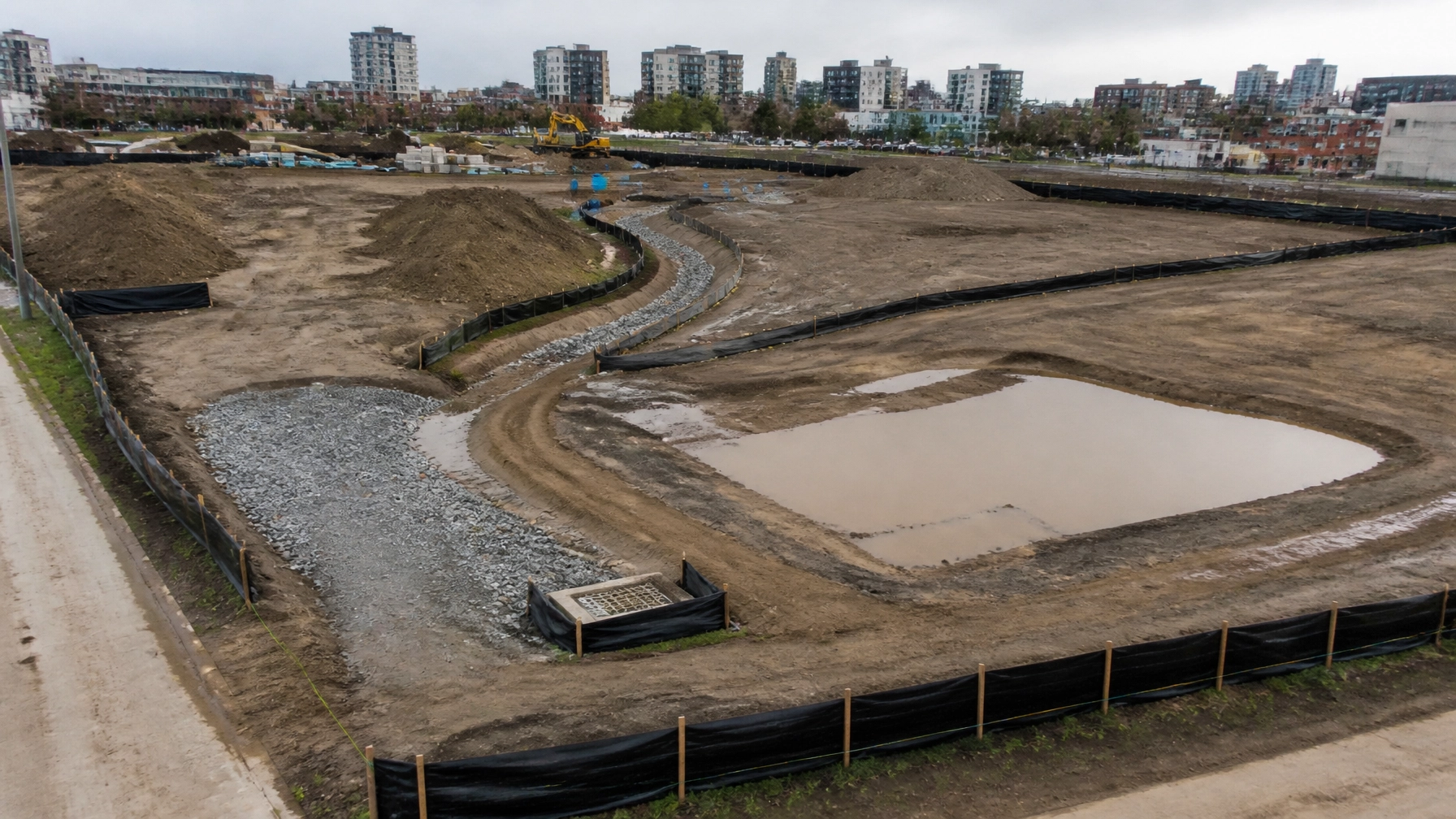
- Silt fence and other perimeter controls
- Inlet protection
- Check dams
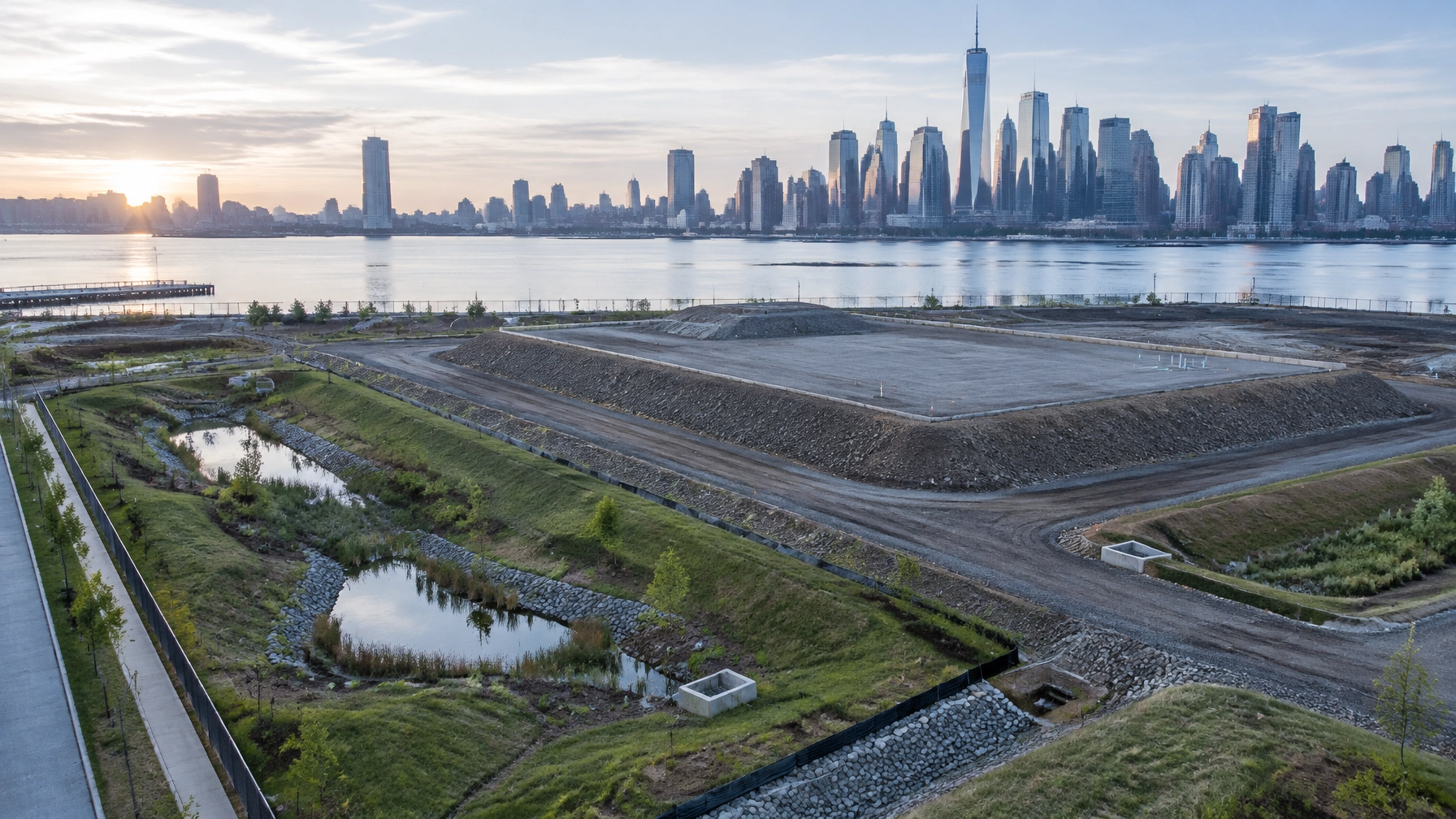
- Sediment traps or basins
- Temporary swales
- Outlet protection
- Dust control
- Stockpile protection
- Temporary and permanent stabilization
- Concrete washout controls
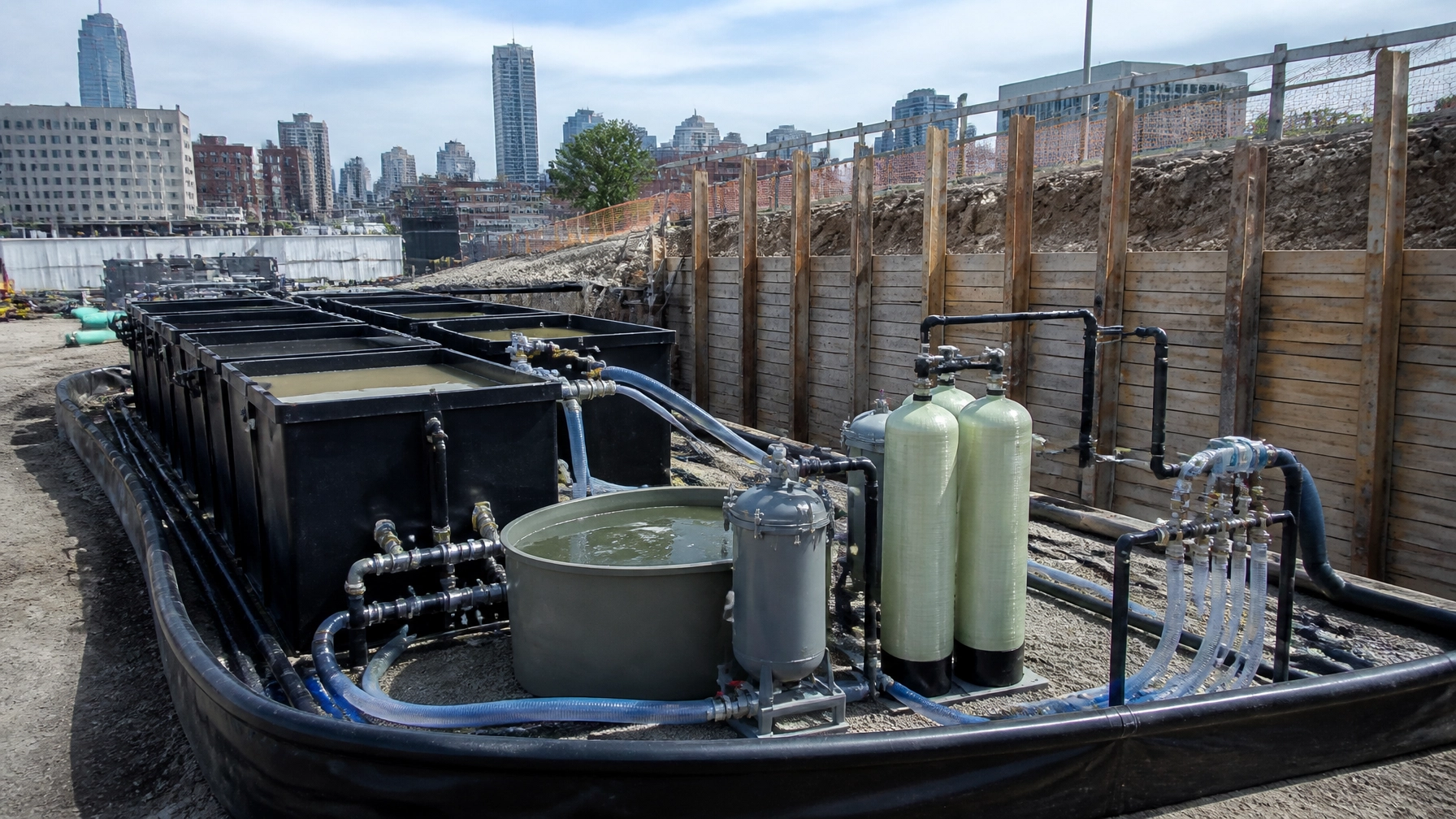
- Dewatering controls where applicable
The right controls depend on soil type, slope, drainage area, discharge points, construction sequencing, and receiving waters. A flat urban site in Brooklyn, a steep Westchester parcel, and a former industrial property in the Hudson Valley do not present the same stormwater risks.
Controls also need to move with the work. A silt fence that worked during rough grading may be inadequate after utility installation or foundation excavation. An inlet may become active after the first phase of paving. A stockpile may shift into a drainage path. These changes need field-level attention.
Envicon’s compliance and permitting team helps connect the SWPPP to construction oversight, agency coordination, and corrective action.
Inspections require qualified professionals and consistent records
GP-0-25-001 requires inspections by qualified personnel. Depending on the role and task, qualifications may include a New York-licensed Professional Engineer, Registered Landscape Architect, Certified Professional in Erosion and Sediment Control, New York State erosion and sediment control certificate holder, or properly trained personnel working under the required professional supervision.
Typical inspection obligations include:
- At least weekly inspections for standard active projects
- Increased inspection frequency for qualifying sites, including certain large disturbance projects or projects discharging to impaired waters
- Periodic inspections during winter shutdown conditions
- Daily trained-contractor walkthroughs of active work areas
- Written documentation of conditions, deficiencies, and corrective actions
Inspection records should identify the permit number, inspection date, weather and temperature information, disturbed and stabilized areas, site locations reviewed, and corrective actions required. Site maps and clear field documentation matter.
An inspection that simply states “no issues observed” does not demonstrate meaningful compliance. The record should show what was inspected, what changed, what was corrected, and who was responsible.

Practical preconstruction checklist for GP-0-25-001
Before releasing the site for mobilization, confirm the following:
-
Confirm permit applicability
- Calculate the total disturbance area.
- Review the full common plan of development.
- Identify receiving waters and potential impaired-water requirements.
-
Complete the SWPPP
- Use current survey, grading, drainage, and utility information.
- Show erosion and sediment controls at the correct locations.
- Coordinate the plan with the construction sequence.
-
Assign owner and operator responsibilities
- Identify who controls the work.
- Confirm who maintains the SWPPP.
- Establish who receives inspection findings and directs corrections.
-
Resolve local review
- Determine whether the site is within a Traditional Land Use Control MS4.
- Obtain MS4 acceptance or no-jurisdiction documentation.
- Obtain NYCDEP acceptance for applicable New York City projects.
-
Submit the correct eNOI
- Use the GP-0-25-001 process.
- Attach the SWPPP preparer certification.
- Confirm every project detail matches the SWPPP and local forms.
-
Confirm authorization before mobilization
- Do not treat eNOI submission as the end of the process.
- Confirm NYSDEC authorization and the permitted construction start date.
-
Prepare field implementation
- Install initial controls before soil disturbance.
- Schedule qualified inspections.
- Train the contractor’s field personnel.
- Set up inspection records and corrective action tracking.
Keep the permit path connected to the construction path
Stormwater compliance is not separate from project delivery. It affects grading, site access, excavation, utilities, scheduling, contractor coordination, and final stabilization.
Envicon provides standalone SWPPP preparation, civil engineering, construction oversight, and environmental field monitoring for downstate New York projects. Our team works directly with owners, contractors, engineers, and agencies to identify gaps before they become schedule problems.
A clean SWPPP is important. A SWPPP that the field team can build, inspect, maintain, and defend is better.
The takeaway: GP-0-25-001 readiness starts before mobilization. Confirm the disturbance threshold, prepare a site-specific SWPPP, resolve MS4 or NYCDEP review, submit the correct eNOI, and assign qualified inspection support. The goal is not another report. The goal is a permitted, controlled, buildable site.
Ready to confirm your project’s stormwater path?