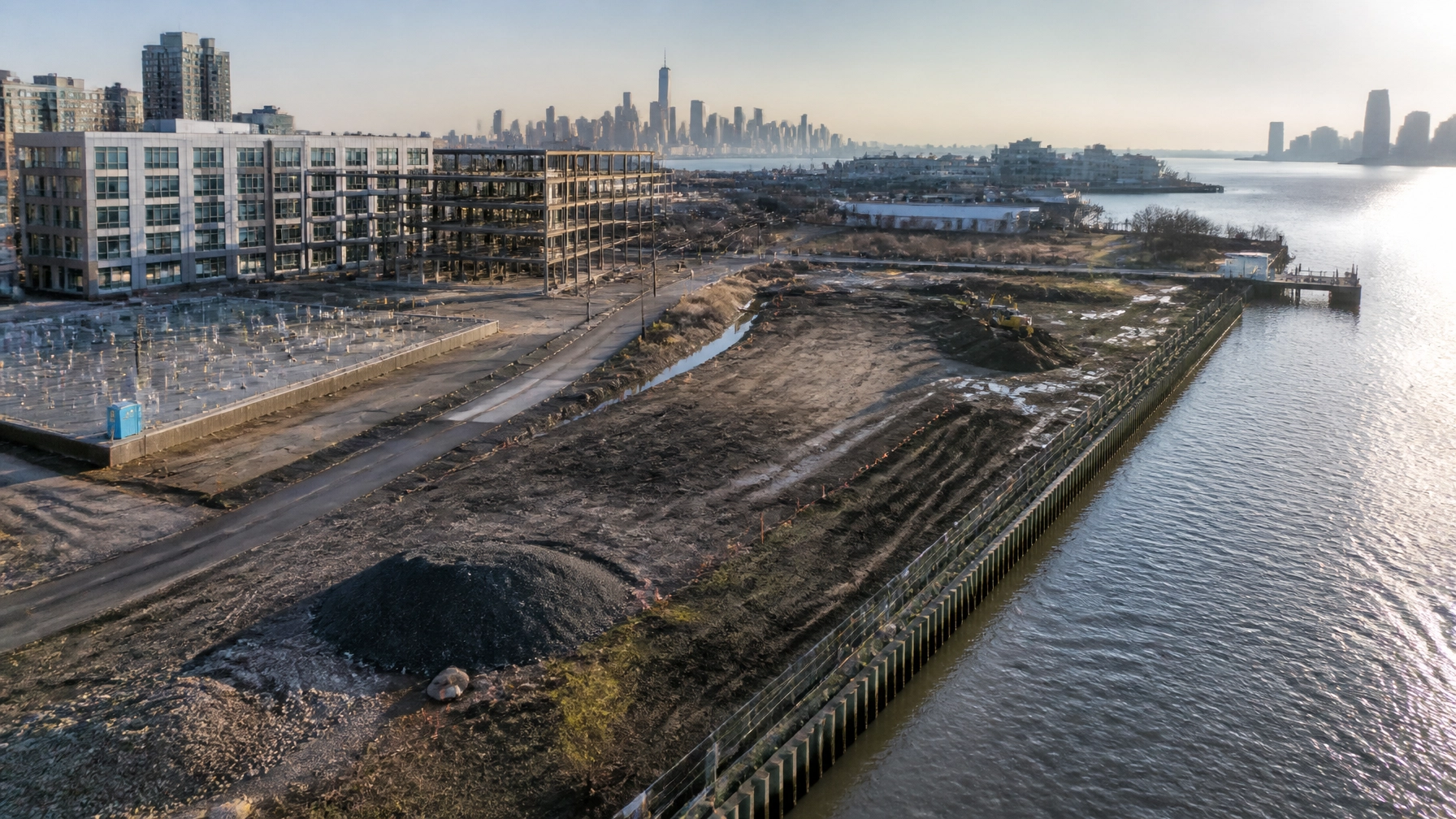
For developers planning a September 2026 or fall 2026 construction start in Jersey City, Newark, Bergen County, Hudson County, Essex County, or elsewhere in Northern New Jersey, stormwater permitting needs to be part of the pre-construction schedule.
The key issue is not simply whether your project has a SWPPP. You need to confirm the disturbance threshold, obtain Soil Erosion and Sediment Control Plan certification, submit the correct Request for Authorization through NJDEP E-Permitting, and receive authorization before regulated land disturbance begins.
The NJPDES construction stormwater permit deadline is therefore a project milestone, not an administrative detail.
When does NJPDES 5G3 apply?
New Jersey’s Construction Activity Stormwater General Permit, commonly called 5G3, is identified as NJPDES Permit No. NJ0088323.
The permit generally applies when construction activity will disturb:
- One acre or more of land.
- Less than one acre as part of a larger common plan of development or sale that will ultimately disturb one acre or more.
- Soil through clearing, grading, excavation, demolition-related site work, utility installation, or similar activities.
A small phase does not automatically avoid permitting. For example, a 0.6-acre building pad in Newark may still fall under 5G3 if it forms part of a broader redevelopment plan that includes additional roads, parking, utility corridors, or future phases.
The one-acre calculation should be reviewed against the full common plan. Do not rely only on the limits shown on a single contractor mobilization plan.
Projects disturbing more than 5,000 square feet may also require a certified Soil Erosion and Sediment Control Plan under New Jersey’s Soil Erosion and Sediment Control Act, commonly referred to as Chapter 251. That requirement is separate from the one-acre NJPDES threshold.
Review the NJ Department of Agriculture’s Chapter 251 resources and the NJDEP stormwater general permit resources before finalizing your construction schedule.
The filing sequence matters
For a typical 5G3 project, the process follows a defined order.
1. Confirm the disturbance area and permit pathway
Start with a civil site plan showing:
- Existing and proposed grading.
- Limits of disturbance.
- Access drives and construction entrances.
- Utility work.
- Soil stockpile areas.
- Temporary and permanent drainage features.
- Off-site improvements connected to the project.
This review should identify whether the project falls under the 5G3 general permit, needs an individual NJPDES permit, or requires another authorization because of site-specific conditions.
A project with wetlands, flood hazard areas, dewatering, contaminated soil, waterfront work, or a sensitive receiving water may require additional permits or coordination.
2. Obtain Soil Conservation District certification
Before filing the 5G3 Request for Authorization, submit the Soil Erosion and Sediment Control Plan to the appropriate county Soil Conservation District.
For projects in the target market, that may involve the district serving:
- Hudson County.
- Essex County.
- Bergen County.
- Newark and surrounding municipalities.
- Other Northern New Jersey jurisdictions based on the property location.
The certified plan typically addresses erosion and sediment controls, construction sequencing, stabilization, drainage, and maintenance requirements. The Soil Conservation District certification information is then used in the NJDEP authorization filing.
This is where many construction schedules lose time. A developer may have a building permit target and a contractor ready to mobilize, but the stormwater sequence cannot move forward if the certified erosion and sediment control plan is still pending.
3. Prepare the SWPPP or SPPP
New Jersey materials may refer to the plan as a Stormwater Pollution Prevention Plan, or SPPP. The market commonly uses the term SWPPP.
For a 5G3 project, the plan should connect the certified erosion and sediment control measures to the actual construction sequence. It should not be a generic document detached from the civil drawings.
A project-ready SWPPP should address:
- Limits of disturbance.
- Existing and proposed drainage patterns.
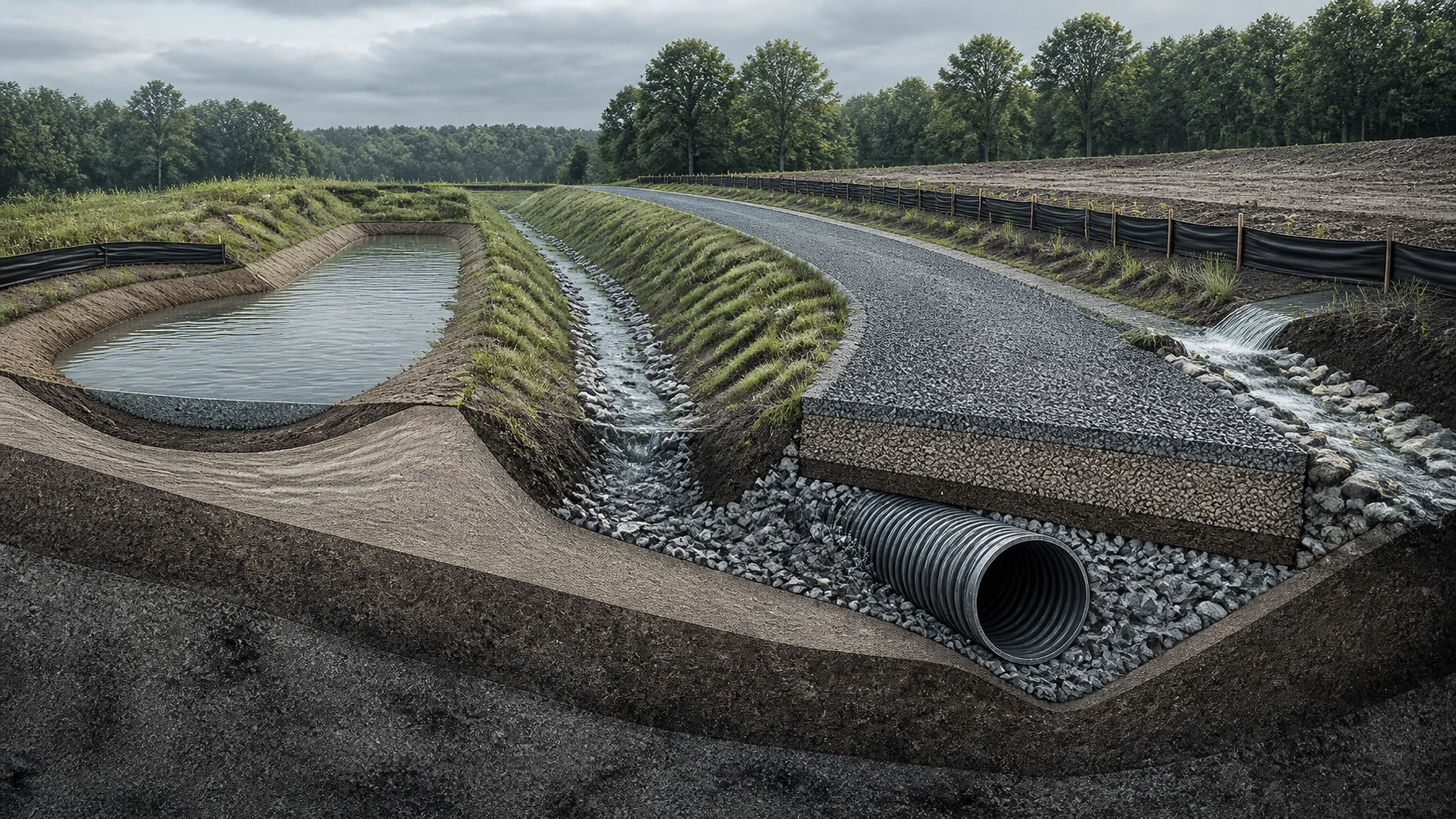
- Silt fence, inlet protection, diversion, and outlet controls.
- Stabilized construction entrances.
- Sediment basins or other sediment-trapping measures.
- Soil stockpile controls.
- Concrete washout and construction waste controls.
- Fuel, chemical, and material storage.
- Dewatering and discharge procedures, if applicable.
- Inspection responsibilities and documentation.
- Temporary and permanent stabilization.

The SWPPP must reflect the site in Jersey City, Newark, or another Northern New Jersey municipality. A flat suburban template will not adequately address a constrained urban site with adjacent sidewalks, combined sewer infrastructure, neighboring buildings, and limited staging space.
What is the NJPDES 5G3 permit application timeline?
For new construction under the 5G3 general permit, NJDEP guidance identifies a minimum filing requirement of at least 30 days before land disturbance.
That is the minimum RFA lead time. It is not a complete project schedule.
The actual timeline depends on:
- Soil Conservation District review.
- Municipal engineering and site plan approvals.
- The completeness of the RFA.
- The selected permit pathway.
- Whether NJDEP requests additional information.
- Whether dewatering, wetlands, flood hazard, or other permits are involved.
- The location and complexity of the receiving water system.
- Whether the project is part of a larger common plan.
If NJDEP requires an individual permit rather than general permit coverage, the application timeline can be longer. NJDEP materials identify a longer lead time for individual permit applications.
The practical rule for a developer is simple:
“The RFA cannot be filed until the Soil Erosion and Sediment Control Plan certification has been completed.”
Do not back into the 30-day filing period from the date your contractor wants to mobilize. Start with the intended disturbance date, then work backward through civil design, Soil Conservation District review, municipal coordination, RFA preparation, NJDEP submission, and authorization.
How to file the Request for Authorization
The 5G3 Request for Authorization is submitted through the NJDEP online permitting system using the Stormwater Construction General Authorization service.
The filing generally requires:
- Owner and project information.
- Site location and receiving waters.
- Total area of disturbance.
- Common-plan information, when applicable.
- Soil Conservation District certification details.
- Required certifications.
- Supporting stormwater and erosion control information.
- Permit fee payment, when applicable.

The person certifying the application must have authority to sign environmental permit documents for the owner or responsible entity. The developer, owner’s representative, civil engineer, or environmental consultant may prepare the technical package, but the certification authority needs to be handled correctly.
Keep the authorization documentation with the project records and on site as required. The contractor, superintendent, inspector, and subcontractors should know where the current SWPPP, certified plan, authorization, and inspection forms are located.
Municipal and MS4 coordination is a separate workstream
NJPDES coverage does not replace local approvals.
A project may also need coordination with:
- The municipal engineer.
- The local construction official.
- The planning or zoning department.
- The county engineering department.
- The municipality’s MS4 program.
- The local Soil Conservation District.
- The utility authority or sewer authority.
- NJDEP program staff.
Municipal MS4 requirements can affect drainage connections, outfalls, construction site controls, post-construction stormwater measures, and inspection expectations. A municipality may also require documentation before issuing or maintaining local approvals.
For a Jersey City project, stormwater planning may need to account for dense urban drainage networks, constrained outfalls, redevelopment conditions, and municipal coordination. In Newark or Essex County, industrial history, fill materials, existing infrastructure, and phased redevelopment may affect both the drainage design and the construction sequencing.
This is why SWPPP preparation should run with civil and site engineering, not after it.
Envicon’s Stormwater and SWPPP services connect permit-ready plans with grading, drainage, erosion control, inspection templates, and agency coordination. Our civil and geotechnical engineering team can carry those requirements into the site design and construction phase.
Stabilization and inspection obligations continue after authorization
A permit authorization is not the end of the stormwater work.
During construction, the permittee must implement the certified controls and maintain them as site conditions change. The inspection program should verify that controls are installed correctly, functioning, and repaired when necessary.
Typical obligations include:
- Routine inspections at the frequency required by the permit and approved plan.
- Inspection after qualifying rainfall events.
- Documentation of sediment accumulation, erosion, tracking, ponding, and discharge conditions.
- Prompt corrective action.
- Maintenance of inspection reports and compliance records.
- Temporary stabilization of inactive or completed areas.
- Permanent stabilization as grading and construction phases are completed.
- Protection of stormwater inlets, channels, basins, and outlets.
NJDEP’s 5G3 guidance identifies weekly inspections and inspections within 24 hours after a rainfall event of 0.5 inches or more. Confirm the current permit language and project-specific requirements before relying on any inspection frequency.

Stabilization is especially important during the fall and winter construction season. Open soil, steep grades, stockpiles, and incomplete drainage systems can create immediate compliance problems after a major storm.
Your SWPPP should identify who makes the field decision when weather, sequencing, or contractor activity changes the approved control strategy. A written plan without field ownership will not protect the schedule.
A pre-construction readiness checklist for NJ developers
Before authorizing ground disturbance, confirm that you have:
- Calculated the total area of disturbance.
- Evaluated the common plan of development or sale.
- Determined whether Chapter 251 certification is required.
- Submitted and obtained Soil Conservation District certification.
- Prepared a site-specific SWPPP or SPPP.
- Coordinated grading, drainage, erosion controls, and post-construction stormwater measures.
- Confirmed municipal and MS4 requirements.
- Submitted the 5G3 RFA through NJDEP E-Permitting.
- Allowed the required filing period for the selected permit pathway.
- Received authorization before regulated disturbance begins.
- Assigned inspection responsibility to qualified personnel.
- Established stabilization and corrective-action procedures.
- Put the current permit documents and inspection forms on site.
The takeaway
The NJPDES construction stormwater permit deadline is not simply “file something 30 days before construction.” The 30-day period applies to the RFA filing for new 5G3 construction coverage, but the full schedule starts earlier with disturbance calculations, civil design, Soil Conservation District certification, SWPPP preparation, municipal coordination, and agency review.
For developers in Jersey City, Newark, Bergen County, Hudson County, Essex County, and Northern New Jersey, early permit readiness protects the construction start and prevents avoidable rework.
Envicon brings civil engineering, stormwater permitting, SWPPP preparation, and construction oversight into one accountable process. We do not hand you a plan and leave you to manage the gaps. We help move the project from design to authorization to field compliance.
Sources
- NJDEP Industrial Stormwater General Permits
- NJDEP Stormwater Technical Manual
- NJDEP 5G3 Construction Stormwater Program Information
- NJDEP 5G3 E-Permitting Registration Instructions
- NJ Department of Agriculture, Chapter 251 Soil Erosion and Sediment Control Resources
- NJDEP Stormwater Management Rules and FAQs
Ready Before the Excavator Arrives?
If your project is approaching site disturbance, do not wait for the contractor’s mobilization date to begin the stormwater review.
- Request a pre-construction permit readiness consultation
- Call Envicon at (917) 764-2171
- View Envicon’s complete services