New York’s amended 6 NYCRR Part 617 took effect on June 12, 2026. For developers, the change is direct: SEQRA review must now address whether a proposed action may cause or increase a disproportionate pollution burden on a disadvantaged community.
That analysis belongs in the environmental review record. It can affect the completeness of your application, the lead agency’s determination of significance, the scope of an Environmental Impact Statement, and the timing of related permits.
This guide explains the NYSDEC Part 617 disadvantaged community screening process for projects in Brooklyn, Queens, the Bronx, Manhattan, Staten Island, Westchester, Nassau, and Suffolk.
What changed on June 12, 2026?
NYSDEC amended Part 617 to implement environmental justice requirements under New York’s Environmental Justice Siting Law. The revised framework adds disadvantaged community considerations to both:
- The determination of significance
- Environmental Impact Statements when an EIS is required
The central question is whether the action may cause or increase a disproportionate pollution burden in a disadvantaged community that the project directly or significantly indirectly affects.
The updated Short and Full Environmental Assessment Forms also include new questions addressing disadvantaged communities, pollution impacts, vulnerability, and climate-related risks.
Review the official NYSDEC Part 617 regulatory revisions and the agency’s Environmental Justice Siting Law guidance.
DACAT is a screening tool, not a substitute for project analysis
The Disadvantaged Community Assessment Tool, or DACAT, helps lead agencies evaluate existing environmental burdens and population vulnerabilities in affected census tracts.
DACAT can show whether a potentially affected disadvantaged community has comparatively higher burdens or vulnerabilities than relevant peer areas. It does not determine whether a census tract is a disadvantaged community. That designation comes from the state’s official disadvantaged community mapping process.
DACAT also does not model every project-specific impact. It does not replace traffic analysis, air modeling, flood analysis, wastewater review, Phase I due diligence, or permit-specific technical studies.
Use it as an initial screen. Then connect the result to actual project conditions.

The 2026 SEQRA disadvantaged community checklist
Before submitting a Short or Full EAF, developers should work through the following checklist.
1. Confirm the project classification
Determine whether the action is:
- Type I
- Type II
- Unlisted
Type I actions generally require the Full EAF. Unlisted actions may require the Short or Full EAF depending on the project and lead agency’s direction. Type II actions are generally not subject to further SEQRA review, but confirm the classification carefully.
Use the current forms and guidance available through the NYSDEC SEQR program page. Do not rely on an older EAF template.
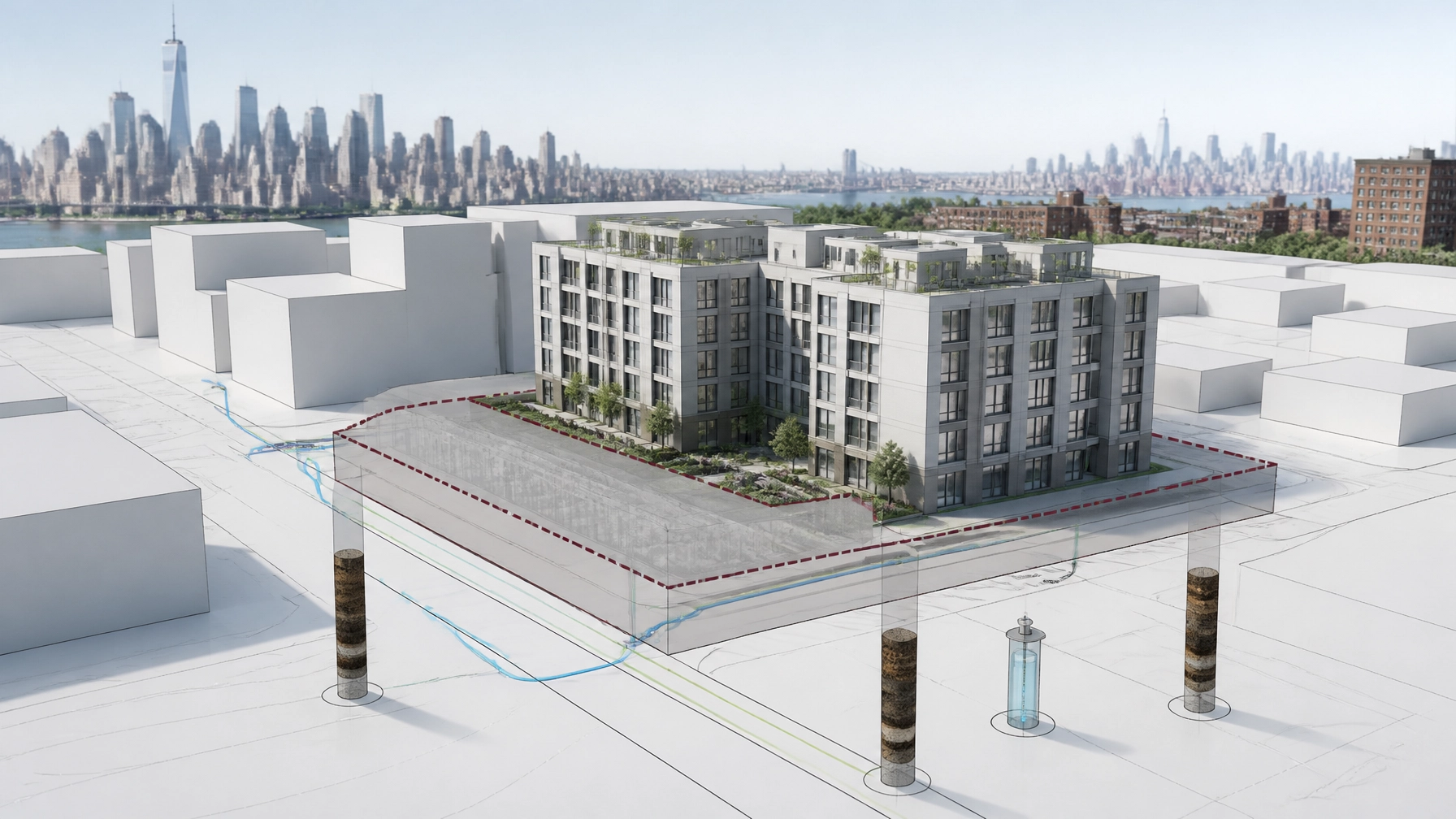
2. Map the project and surrounding study area
Identify:
- The project boundary
- Construction areas
- Access roads and staging areas
- Utility corridors
- Discharge points
- Off-site waste handling routes
- Nearby disadvantaged community census tracts
- Areas that may experience indirect impacts
For NYC projects, review the affected area at the borough and neighborhood level. A project in Brooklyn may affect a DAC in Queens through traffic, air emissions, wastewater infrastructure, or regional waste movement. The same issue can arise in the Bronx, Manhattan, and Staten Island.
For suburban and regional projects, extend the review to Westchester, Nassau, and Suffolk where project components or traffic patterns may cross municipal boundaries.
3. Run DACAT screening
Document the DACAT result for each potentially affected tract. Retain:
- The date of the screening
- The project location used
- The census tracts reviewed
- The comparative burden and vulnerability result
- Any applicable study-area assumptions
- A map or export supporting the finding
Do not simply state that the site is or is not in a disadvantaged community. Explain whether the project could affect a DAC and why.
4. Identify disproportionate pollution burdens
Review the project’s construction and operational impacts across the major categories identified in the revised SEQRA framework.
Air emissions
Consider:
- Diesel construction equipment
- Truck traffic
- Boilers and emergency generators
- Industrial or commercial process emissions
- Dust and particulate matter
- Odors
- Indoor or outdoor air quality concerns
If the project includes regulated emission sources, coordinate the SEQRA record with applicable NYSDEC or local air permitting requirements.
Traffic and transportation
Consider:
- Construction truck routes
- Queueing and idling
- Changes in traffic volume
- Roadway safety
- Transit access
- Pedestrian exposure
- Traffic-related air pollution
A traffic impact that appears limited at the property line may become significant when added to an already burdened neighborhood.
Wastewater and water quality
Review:
- Sanitary discharge
- Industrial wastewater
- Dewatering
- Combined sewer interactions
- Stormwater discharges
- Temporary construction discharge
- Receiving water sensitivity
The SEQRA analysis should align with SPDES, NYCDEP, local sewer, and other applicable requirements.
Solid and hazardous waste
Document:
- Excavated soil
- Historic fill
- Construction and demolition debris
- Petroleum-impacted material
- Hazardous waste
- Asbestos-containing material
- Off-site disposal and reuse pathways
- Truck routes and receiving facilities
A waste management plan should identify how material will be characterized, staged, transported, reused, or disposed of.
Flooding, sea-level rise, and climate risks
Review:
- FEMA flood zones
- Tidal flooding
- Storm surge
- Sea-level rise
- Extreme precipitation
- Urban heat
- Erosion
- Critical infrastructure vulnerability
- Emergency access and continuity
Waterfront and low-lying sites in Brooklyn, Queens, Manhattan, Staten Island, Nassau, Suffolk, and Westchester require particular attention. Climate risk is not separate from environmental justice analysis when exposure and vulnerability overlap.

Complete application and lead agency coordination
A “complete application” is usually determined under the applicable approval or permit program. It does not mean that an applicant can submit an incomplete EAF and expect the SEQRA clock to resolve the missing information.
For a defensible submission, coordinate early with the lead agency and confirm:
- Which EAF form applies
- What project materials are required
- Which agencies are involved
- Whether a DAC may be affected
- Whether DACAT screening is expected
- What technical studies support the EAF
- Whether additional alternatives or mitigation analysis is needed
The lead agency remains responsible for the determination of significance. The applicant must provide enough accurate information for the agency to make that determination.
Envicon supports this process through compliance and permitting services, including agency coordination, environmental documentation, stormwater compliance, air quality permitting support, and regulatory response.
SEQRA screening is not a Phase I ESA, CEQR review, or permit
These reviews overlap, but they are not interchangeable.
SEQRA disadvantaged community screening
This evaluates whether the proposed action may create or increase a disproportionate pollution burden on a disadvantaged community. It supports the lead agency’s significance determination and, where applicable, the EIS.
Phase I ESA
A Phase I ESA evaluates environmental conditions affecting real estate, including recognized environmental conditions under ASTM E1527-21. It supports acquisition, financing, and environmental liability decisions.
A Phase I ESA does not replace DACAT screening or a project-specific SEQRA analysis. Learn more about Phase I Environmental Site Assessments.
CEQR
NYC’s City Environmental Quality Review process applies to city actions and approvals. CEQR may be the applicable environmental review framework for a NYC land-use action, while SEQRA may also apply depending on the involved agencies and approvals.
For NYC projects, coordinate CEQR, SEQRA, NYC OER, NYCDEP, NYCDOB, and other agency requirements rather than treating them as separate document exercises. Envicon’s NYC environmental consulting team works across all five boroughs.
Permits
Permits authorize specific activities. Examples include stormwater, air, wastewater, wetland, and waste-related approvals.
A permit may contain its own environmental or environmental justice requirements. Permit compliance does not eliminate the need for complete SEQRA screening.
Practical submission checklist
Before filing, confirm that your package includes:
- Current Short or Full EAF
- Project classification
- Site and study-area maps
- DAC map review
- DACAT screening documentation
- Pollution burden analysis
- Traffic and truck-route discussion
- Air emissions and dust discussion
- Wastewater and stormwater review
- Solid and hazardous waste plan
- Flood, sea-level-rise, and climate risk review
- Construction mitigation measures
- Agency and lead agency coordination record
- Phase I ESA or other supporting environmental studies, where applicable
- Clear explanation of remaining uncertainties
A clean submission makes the reviewer’s job easier. More importantly, it reduces the chance that the project loses time to avoidable completeness comments.
Frequently asked questions
Does every NYC development project require DACAT screening?
Not every action requires the same level of review. If a project may directly or significantly indirectly affect a disadvantaged community, DACAT can help support the required screening. Confirm the approach with the lead agency using the current EAF and DEC guidance.
Does DACAT identify disadvantaged communities?
No. DACAT assesses relative burdens and vulnerabilities. Official disadvantaged community designations come from the state’s designated mapping process.
Can a project outside a disadvantaged community still require review?
Yes. A project may affect a nearby or connected disadvantaged community through traffic, air emissions, wastewater, waste transport, construction activity, or climate-related impacts.
Does a Phase I ESA satisfy the 2026 SEQRA requirement?
No. A Phase I ESA and SEQRA screening answer different questions. A Phase I may provide important site history and environmental condition information, but it does not replace DACAT screening or project-specific impact analysis.
Who makes the final significance determination?
The lead agency makes the determination of significance under Part 617. The applicant supplies the information needed for the agency to evaluate the action.
Ready to screen your project?
The June 12, 2026 amendments make early coordination more important. If your project is in Brooklyn, Queens, the Bronx, Manhattan, Staten Island, Westchester, Nassau, or Suffolk, Envicon can help connect DACAT screening to the EAF, technical studies, agency process, and permitting path.
- Call Envicon now at (917) 764-2171
- Get a free project quote
- Use the project risk screener
- View Envicon’s complete service list
The goal is not to produce another report. It is to give the lead agency a complete record and give your project a clear path forward.