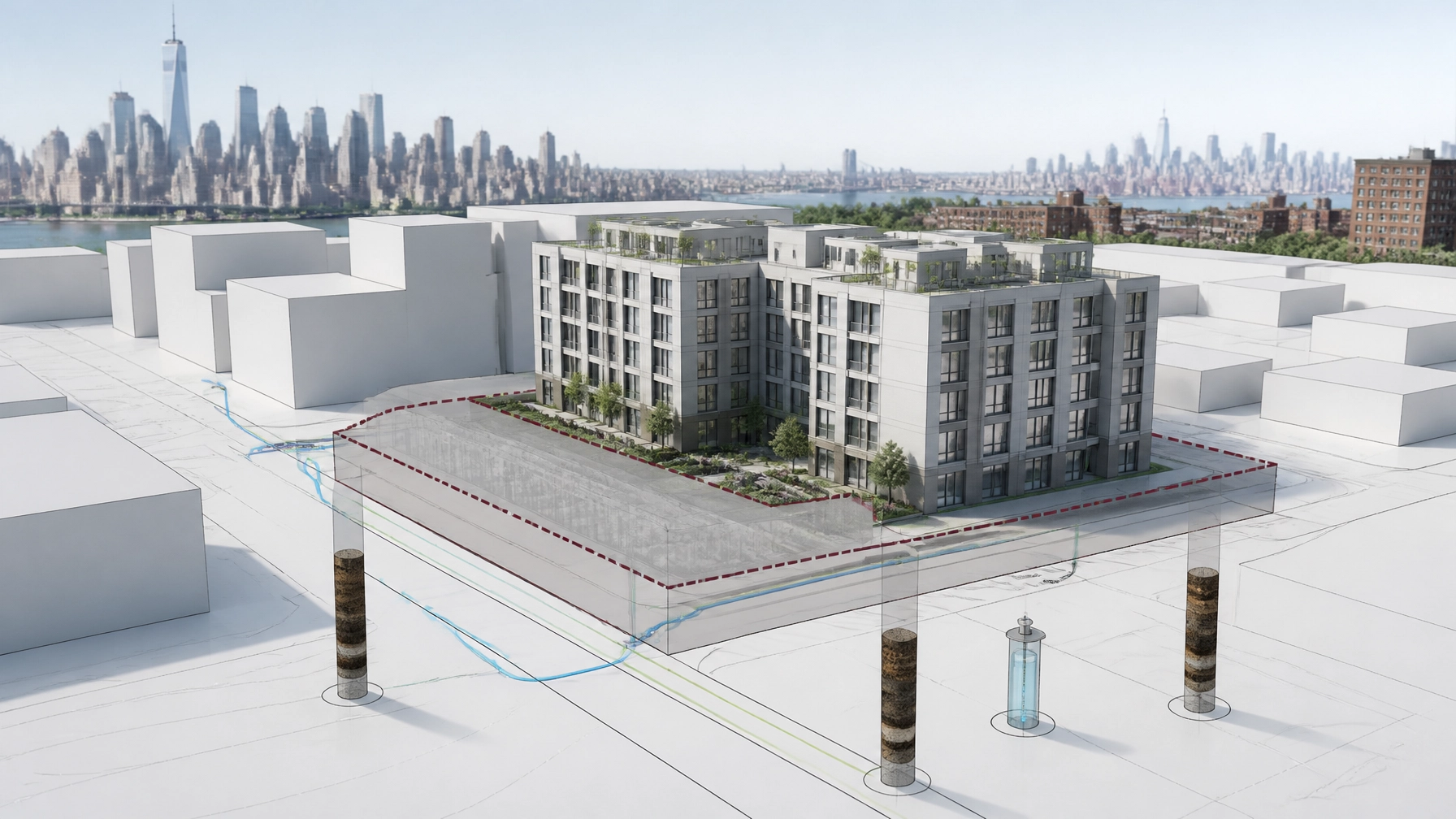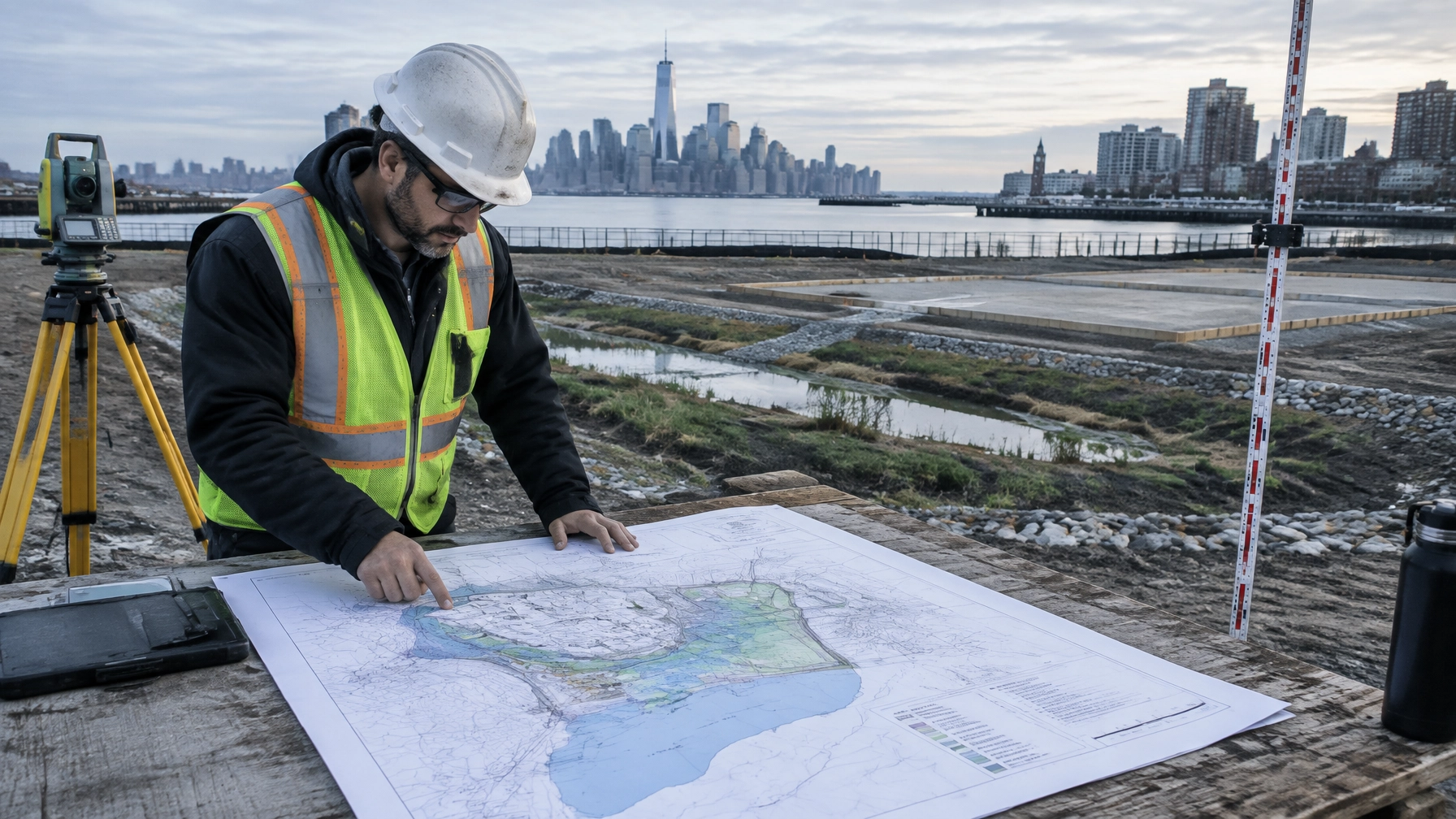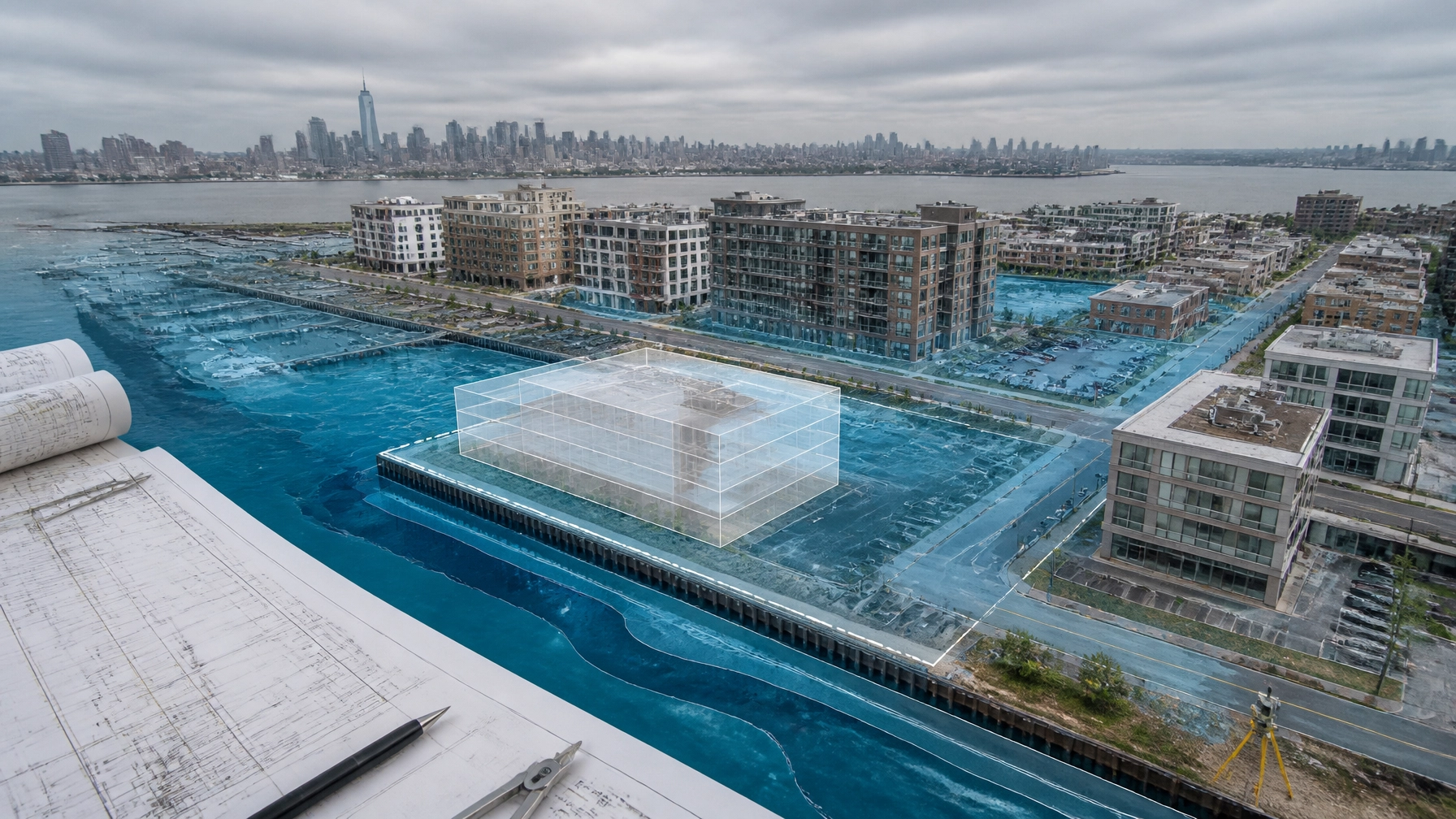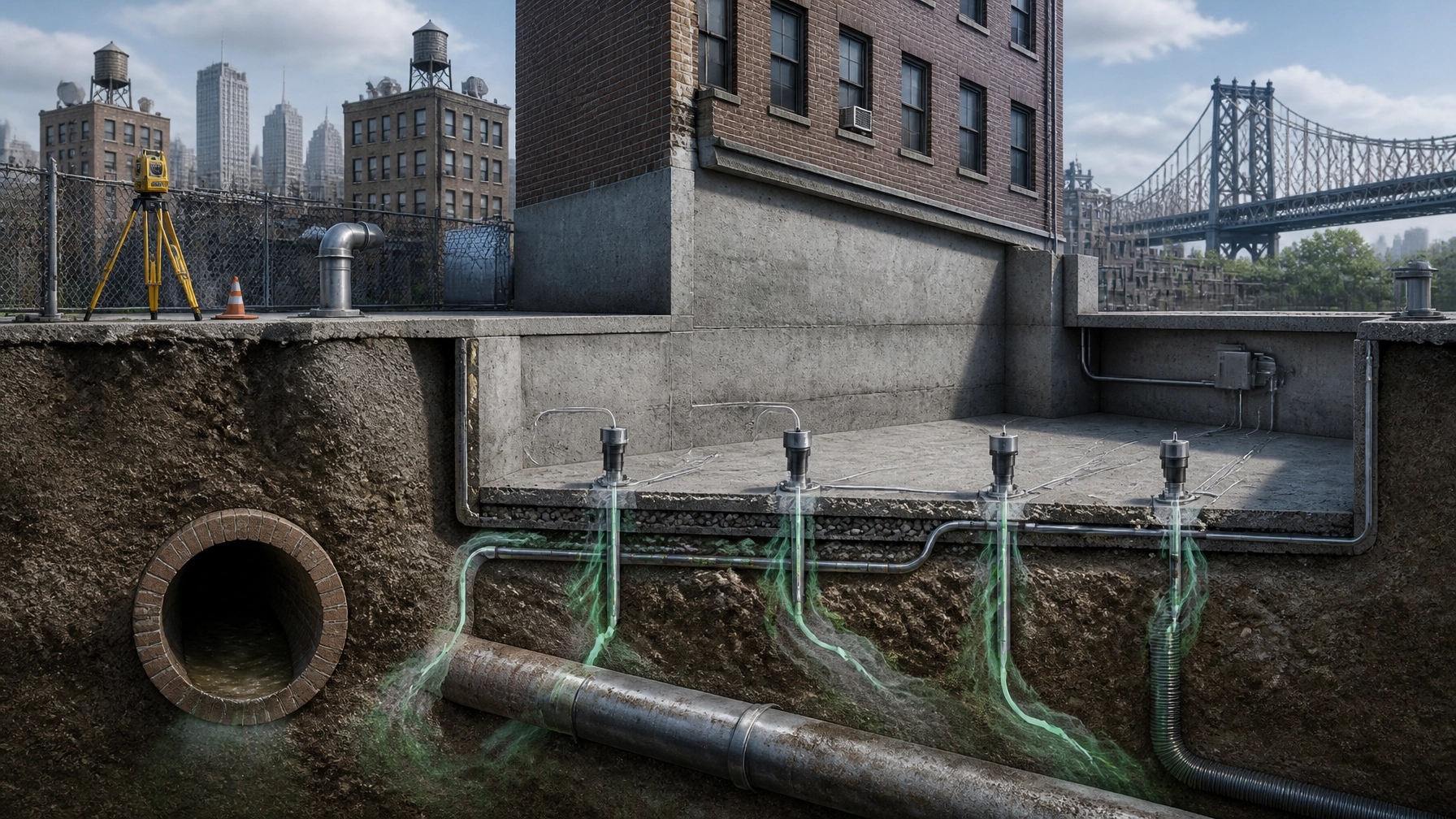
A New Jersey real estate closing can stall when environmental work gets divided among too many firms.
One consultant handles the Phase I. Another performs the Phase II. A separate LSRP reviews the NJDEP file. Someone else addresses asbestos, geotechnical conditions, dewatering, or construction stormwater after the deal closes.
That structure creates gaps.
For properties in Newark, Jersey City, Hoboken, Bayonne, Hudson County, Bergen County, or Essex County, the better approach is one coordinated environmental and engineering scope from acquisition through construction.
Envicon Group serves as the single point of accountability for ASTM E1527-21 Phase I, Phase II investigation, UST and historic fill review, PFAS and vapor assessment, asbestos coordination, geotechnical planning, ISRA and LSRP services, lender deliverables, and field oversight.
The objective is simple: give you a clear path to closing and a buildable site after closing.
Why environmental risk appears late in New Jersey transactions
A lender may accept a Phase I report, but that does not mean the property carries no construction or regulatory risk.
A former industrial site in Newark may have:
- Historic fill beneath paved areas
- Former USTs or undocumented heating oil tanks
- Chlorinated solvents or petroleum impacts
- PFAS concerns linked to prior industrial use
- Vapor intrusion risk beneath an existing building
- Soil that cannot be reused without characterization
- Groundwater that requires treatment before discharge
- An ISRA trigger tied to sale, closure, or transfer
- Existing NJDEP controls, deed notices, or monitoring obligations
A standard Phase I identifies potential recognized environmental conditions. It does not quantify every cost or resolve every issue.
That is why the closing scope should account for the entire transaction workflow before the purchase agreement becomes final.
“To reduce the number of contaminated sites in New Jersey to ensure the protection of public health and the environment and ready sites for redevelopment.”
New Jersey Department of Environmental Protection, Contaminated Site Remediation & Redevelopment
The NJ environmental closing workflow
1. Start with the purchase agreement and closing date
The environmental consultant should review more than the property address.
We start with:
- The proposed closing date
- Inspection and termination rights
- Lender requirements
- Seller access rights
- Existing NJDEP files and case numbers
- Industrial operations and NAICS history
- Known tanks, spills, fill, and prior reports
- Planned demolition, excavation, or redevelopment
- Allocation of environmental obligations between buyer and seller
This timing matters. A Phase I that arrives after the inspection period does not protect the deal. A Phase II that cannot be completed before the financing deadline may have little value in negotiations.
2. Complete the Phase I ESA
The Phase I ESA service follows ASTM E1527-21 and the All Appropriate Inquiries framework under 40 CFR Part 312.
The work typically includes:
- Historical aerial photographs and Sanborn map review
- Regulatory database research
- NJDEP file and case review
- Site reconnaissance
- Interviews with owners, occupants, and knowledgeable parties
- Review of adjoining properties
- REC, HREC, and CREC determinations
- A clear recommendation for the next step
For lender environmental due diligence in New Jersey, the report must be defensible, current, and delivered in time for underwriting.
A Phase I is generally not the place for vague conclusions. If the report identifies a potential UST, historic fill, vapor pathway, or former industrial release, the next action should be clear.
3. Scope Phase II around the actual risk
A Phase II should answer the question raised by the Phase I.
The Phase II ESA service may include:
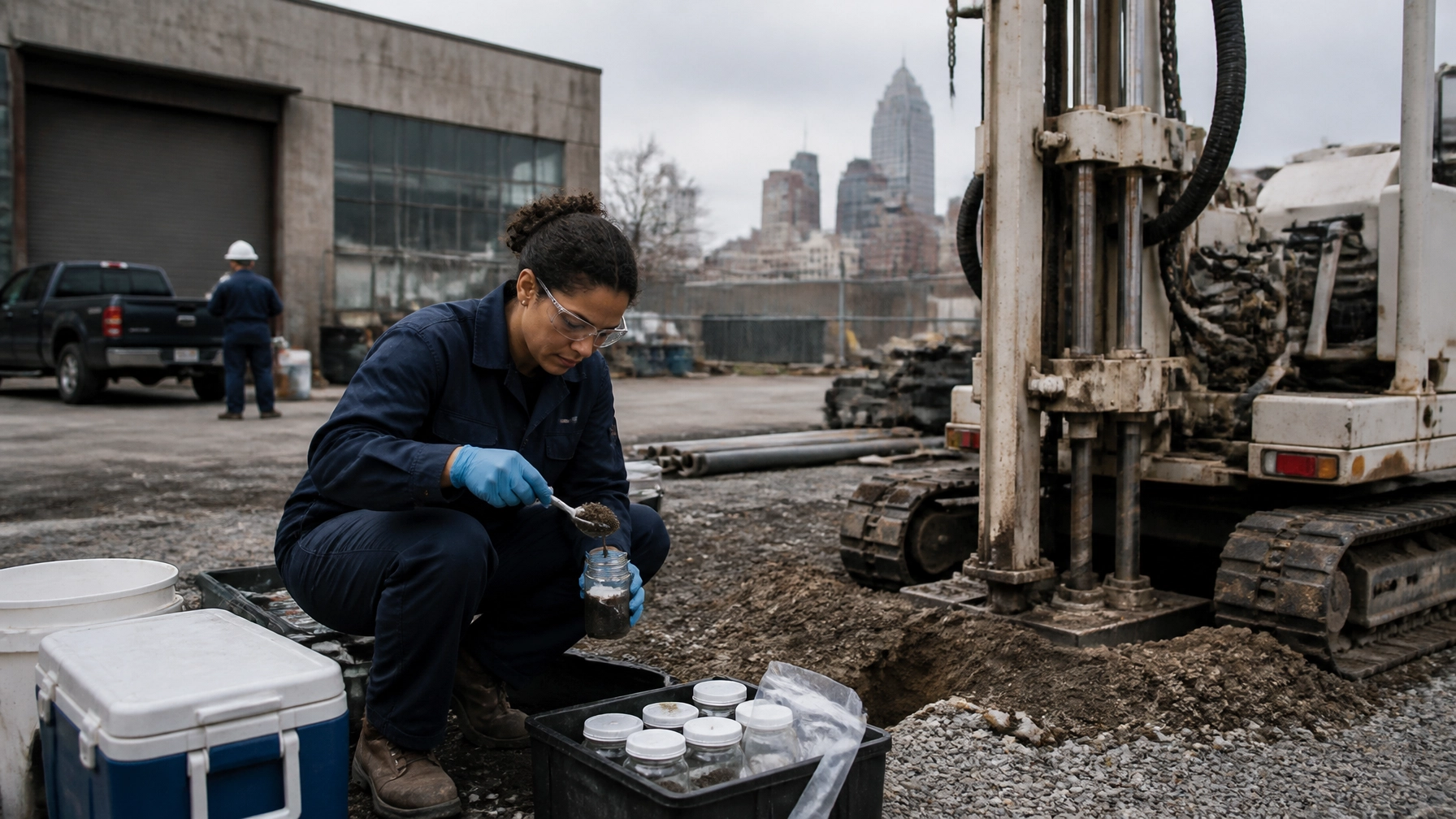
- Soil borings and direct-push sampling
- Temporary or permanent monitoring wells
- Soil vapor or sub-slab sampling
- Groundwater sampling
- PFAS analysis where site history or NJDEP requirements warrant it
- PID screening and field observations
- Laboratory data validation
- Comparison with applicable NJDEP standards
- Remedial cost and schedule implications
The boring plan should follow the Areas of Concern. It should not scatter samples across the property simply to produce more data.
For a Jersey City acquisition, that may mean focusing on former manufacturing areas, historic fill, dry-cleaning operations, petroleum storage, or adjacent waterfront sources. For a Newark closing, the scope may need to address long industrial histories, rail corridors, former utilities, and redevelopment-related soil management.

4. Determine whether NJDEP, ISRA, or an LSRP pathway applies
New Jersey uses different terms for different stages of environmental work.
A lender may ask for a Phase I and Phase II. NJDEP may require a Preliminary Assessment, Site Investigation, Remedial Investigation, or Remedial Action under the state remediation program.
If the property is an industrial establishment subject to the Industrial Site Recovery Act, the transaction may require specific notices, applicability analysis, and regulatory documentation. If contamination or a regulatory trigger is confirmed, an NJ LSRP may need to manage the case through investigation, remediation, and a Response Action Outcome.
The NJDEP PA/SI guidance provides the state framework for initiating remediation. Requirements can change, so your attorney and LSRP should confirm the current filing and timing obligations for the specific transaction.
The practical point is this: do not wait until after closing to discover that the property needs a regulatory strategy.
5. Coordinate building and construction risks before you acquire
Environmental due diligence does not stop at soil and groundwater.
A complete closing scope should identify whether the project also needs:
- Asbestos and lead surveys before demolition or renovation
- Geotechnical borings for foundation and excavation design
- Historic fill management and soil disposal profiling
- Dewatering design and discharge coordination
- Construction stormwater and SWPPP planning
- Vapor mitigation or sub-slab depressurization
- Community air monitoring during excavation
- Utility and UST locating with GPR
- Construction oversight and environmental monitoring
This is where acquisition decisions become development decisions.
If the project requires a deep garage in Jersey City, dewatering and treatment may affect both schedule and budget. If the site is in Hoboken or Bayonne near the waterfront, groundwater, flood exposure, and regulatory coordination may need to enter the design conversation before the purchase agreement is signed.
One coordinated scope is better than disconnected reports
Large consulting firms often assign separate departments to separate deliverables. The report may be technically complete, but the transaction team still has to connect the findings.
Envicon’s approach is different.
A senior engineer coordinates the Phase I, Phase II, LSRP, civil, geotechnical, permitting, and construction work under one project structure. The result is:
- One schedule tied to the closing date
- One point of contact for the buyer, lender, attorney, and contractor
- Clear handoffs between investigation and remediation
- Direct coordination with NJDEP and project stakeholders
- Transparent scope and pricing
- Fewer surprises after authorization
- Documentation that supports both financing and construction
We do not hand you a report and leave you to interpret the consequences. We explain what the finding means, what it will cost to resolve, and what must happen next.
Our complete service offering supports projects across Newark, Jersey City, Hoboken, Bayonne, Hudson County, Bergen County, and Essex County. Our Jersey City office gives our team direct regional coverage for Hudson County transactions.
Frequently asked questions
Do I need both a Phase I and a Phase II before closing?
Not always. A Phase II is typically recommended when the Phase I identifies a REC or when the lender, attorney, or purchase agreement requires subsurface data. The scope should address the specific concern rather than add unnecessary testing.
Is a Phase I the same as a New Jersey Preliminary Assessment?
No. An ASTM Phase I supports commercial due diligence and AAI requirements. A NJDEP Preliminary Assessment is part of the state remediation process. They may overlap in information, but they serve different purposes.
When does a New Jersey transaction require an LSRP?
An LSRP may be required when the property enters the NJDEP Site Remediation Program, an ISRA obligation applies, contamination is confirmed, or another regulatory trigger exists. Counsel and the LSRP should confirm the requirement based on the property and transaction facts.
Can PFAS be addressed in a standard Phase II?
PFAS testing should be based on site history, Areas of Concern, regulatory requirements, and the intended use of the property. At industrial or historically complex sites, it should be discussed during Phase I scoping rather than added after the field program is complete. See the NJDEP PFAS program for current state information.
How much does the environmental work cost?
Cost depends on property size, history, access, sampling needs, laboratory analysis, regulatory status, and closing schedule. Use Envicon’s cost estimator for a preliminary range, then request a site-specific scope.
The takeaway for your next NJ closing
A New Jersey environmental closing is not just a Phase I report.
It is a coordinated decision process that connects due diligence, lender requirements, NJDEP obligations, purchase agreement timing, remediation cost, design constraints, and construction execution.
For an acquisition in Newark, Jersey City, Hoboken, Bayonne, Hudson County, Bergen County, or Essex County, bring the environmental consultant into the transaction early.
Envicon helps you move from uncertainty to action with one accountable team, direct communication, and a clear path from closing to construction.
Ready to scope the property?
- Get a free quote
- Use the NJ environmental cost estimator
- Review Phase I ESA services
- Review NJ LSRP services
- Call Envicon at (917) 764-2171
Solve environmental and engineering challenges with precision, speed, and trust. The goal is not another report. The goal is a cleared path to your next closing.
Sources
- EPA: All Appropriate Inquiries
- Electronic Code of Federal Regulations: 40 CFR Part 312
- NJDEP Contaminated Site Remediation & Redevelopment
- NJDEP Site Remediation Forms
- NJDEP Site Remediation Rules
- NJDEP Stormwater BMP Manual
- NJDEP PFAS Program