Published September 28, 2026 at 2:00 PM ET
A New Jersey brownfield project can qualify for meaningful financial support. It can also lose that support when remediation costs, funding sources, and completion dates are poorly documented.
The NJ Brownfield Tax Credit is not a reimbursement check issued when excavation begins. Under the New Jersey Economic Development Authority’s Brownfields Redevelopment Incentive Program, or BRIP, the credit is tied to eligible remediation costs, project approval, regulatory completion, and a later certification process.
That timing matters.
Developers should build the cost file before the first major remediation invoice arrives. The right documentation can support NJEDA certification, lender underwriting, tax planning, and the sale or transfer of a credit. Weak documentation creates delays, disputes, and avoidable questions about whether a cost was remediation or ordinary construction.
“The tax credit is a one-time tax credit issued in the year of completion of remediation.”
Source: NJEDA 2026 BRIP overview
What the NJ Brownfield Tax Credit covers in 2026
The BRIP is a $100 million project-based tax credit program. It supports environmental remediation, abatement, demolition, and related building or structural remedial activities that enable commercial, retail, mixed-use, or other eligible redevelopment.
The program does not fund ordinary vertical construction.
Under the current NJEDA framework:
- Projects outside a qualified incentive tract or government-restricted municipality may receive 60% of eligible remediation costs, up to $8 million.
- Projects in a qualified incentive tract or government-restricted municipality may receive 80% of eligible remediation costs, up to $12 million.
- Solar projects on closed sanitary landfills may qualify for 100% of eligible remediation costs, subject to the applicable cap.
- Credits are transferable. NJEDA identifies a minimum transfer value of 85% of face value for most projects and 75% for certain projects involving Low-Income Housing Tax Credits.
The NJEDA program page currently states that rule amendments are being developed and that new applications are not being accepted until the revised rules are filed. Do not underwrite a 2026 project on outdated program assumptions. Confirm the current application window, rules, and award structure with NJEDA before committing capital.
Read the current NJEDA Brownfields Redevelopment Incentive Program requirements.
HDSRF is not the same as the NJ Brownfield Tax Credit
New Jersey has several brownfield funding tools. They do different jobs.
The Hazardous Discharge Site Remediation Fund, or HDSRF, is administered through the New Jersey Department of Environmental Protection. It provides loans and grants for investigation and remediation of qualifying contaminated properties.
The structure depends on the applicant and the remediation phase.
For example, NJDEP’s current HDSRF chart identifies:
- Grants for municipalities, counties, and redevelopment entities for certain preliminary assessment, site investigation, and remedial investigation activities.
- Loans for private parties in qualifying situations, including imminent and significant threats, ISRA-related remediation, discharges of hazardous substances, and certain qualifying municipalities.
- Public-sector grant funding for some remedial action activities, including projects involving recreation, conservation, renewable energy, and affordable housing.
- Specific caps, ownership requirements, redevelopment commitments, and other conditions.
HDSRF support is generally a grant or loan. It is not the same as the BRIP tax credit. A private developer should not assume that HDSRF eligibility automatically creates BRIP eligibility.
Start with the NJDEP HDSRF financial assistance chart and coordinate eligibility before remediation spending accelerates.
The Brownfield Site Remediation Fund follows a different cash-flow model
The Brownfield Site Remediation Fund, also called the Brownfield Reimbursement Fund in NJDEP materials, can reimburse developers for up to 75% of remediation costs through a redevelopment agreement with NJEDA and the State Treasurer.
That reimbursement is tied to certain new State tax revenue realized from the completed redevelopment project.
This distinction is important:
- BRIP provides a one-time transferable tax credit based on eligible remediation costs.
- HDSRF provides qualifying loans and grants for investigation or remediation.
- The Brownfield Site Remediation Fund provides reimbursement tied to new tax revenue generated by the redevelopment.
These programs may be evaluated together, but they are not automatically stackable. The same dollar of remediation cost should not be presented as fully reimbursed by multiple programs without confirming the applicable statutes, agreements, and agency requirements.
A practical funding matrix should identify:
- The cost category.
- The proposed funding source.
- The agency responsible for review.
- Whether the funding is a grant, loan, reimbursement, or tax credit.
- Whether the benefit reduces the eligible cost base for another program.
- The expected date of approval, reimbursement, or credit realization.
That matrix belongs in the project file before contracts are signed.
How to make remediation costs audit-ready
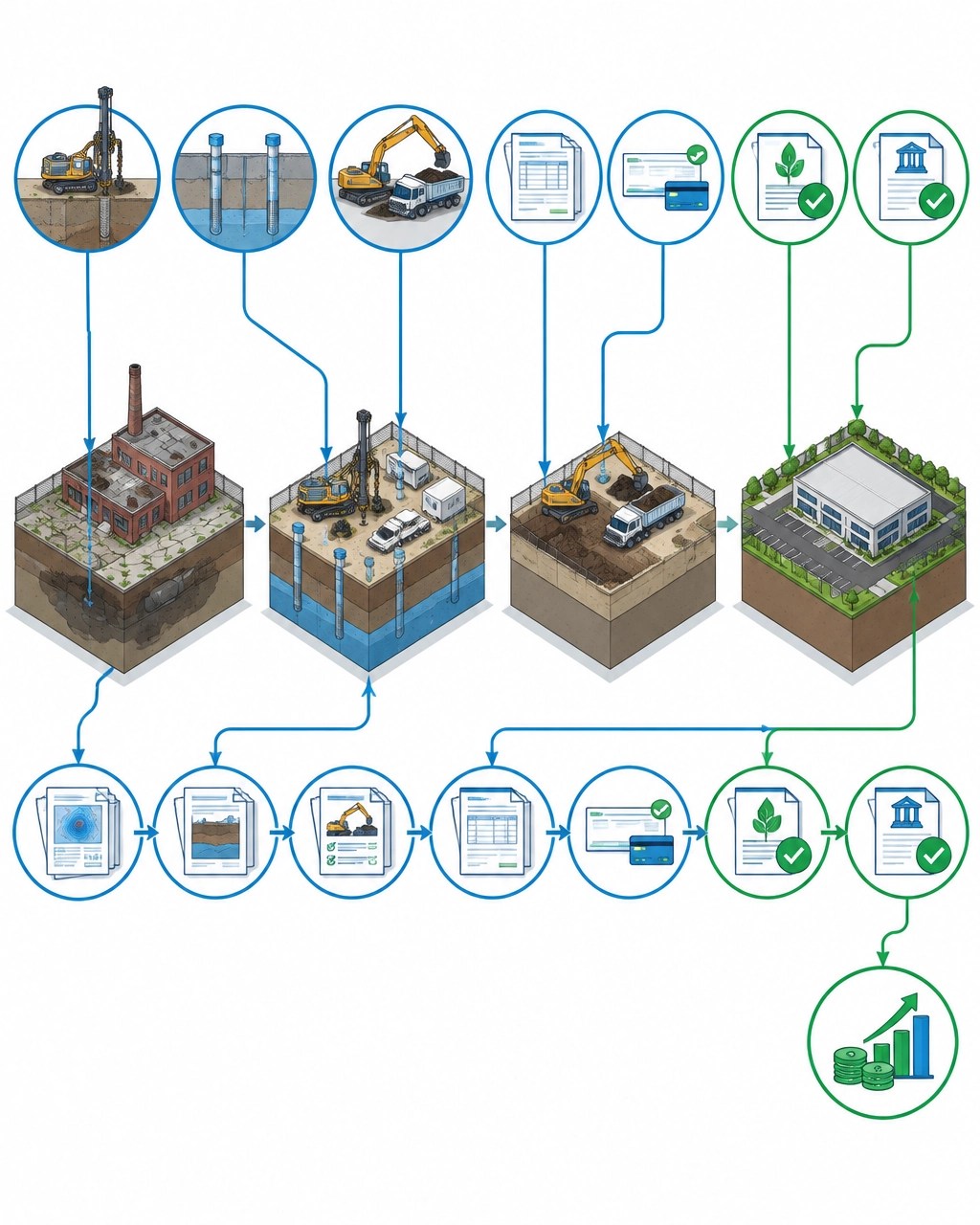
NJEDA uses the term certification rather than publishing a universal audit checklist. No consultant can promise that a file will never be questioned. You can, however, create a clear record that connects every claimed cost to the remediation scope, field activity, payment, and regulatory milestone.
Build the file around five controls.
1. Separate remediation from vertical construction
Use separate cost codes from the first invoice.
Eligible categories may include:
- Environmental assessment and investigation.
- Soil and groundwater investigation.
- Remedial design and implementation.
- Excavation and disposal of contaminated material.
- Groundwater treatment.
- Demolition required to address contamination.
- Asbestos, PCB, contaminated paint, or contaminated wood removal.
- Remediation-related infrastructure work.
- Direct environmental consultant services.
- Remedial Action Work Plan preparation and implementation.
Do not mix these costs with:
- Building construction.
- Tenant improvements.
- Property acquisition.
- Financing fees.
- General legal fees.
- NJEDA fees.
- Incentive consultant fees.
- Non-remediation site improvements.
The NJEDA BRIP overview identifies vertical construction and several non-remediation expenses as ineligible.
2. Tie each invoice to a work package
An invoice should do more than say “environmental services.”
It should identify:
- The property and project phase.
- The date of work.
- The task performed.
- The remediation objective.
- The personnel or subcontractor involved.
- The applicable contract or purchase order.
- Any field report, laboratory report, disposal record, or agency submittal supporting the charge.
For construction invoices, maintain line-item detail for excavation, soil handling, hauling, treatment, disposal, capping, dewatering, and confirmation sampling.
If a contractor performs both remediation and general site work, require a defensible allocation method. A blended invoice with no breakdown creates an avoidable eligibility problem.
3. Preserve proof of payment
A cost is not fully supported by an invoice alone.
Maintain:
- Executed contracts.
- Purchase orders.
- Change orders.
- Invoices.
- Lien waivers.
- Cancelled checks or wire confirmations.
- General ledger entries.
- Bank statements when appropriate.
- Subcontractor payment records.
- Payroll and prevailing wage records when required.
The payment record should match the claimed cost schedule. If the invoice says $185,000 but the payment record shows a different amount, explain the difference in the file.
4. Connect costs to NJDEP closure documentation
The technical record and the financial record should tell the same story.
Maintain a cross-reference between costs and:
- Preliminary assessment and site investigation reports.
- Remedial investigation documents.
- Remedial Action Work Plans.
- Sampling and laboratory data.
- Waste characterization and disposal records.
- Field daily reports.
- Soil manifests.
- Groundwater treatment logs.
- Confirmation sampling.
- NJDEP approvals.
- Response Action Outcomes or other applicable closure documents.
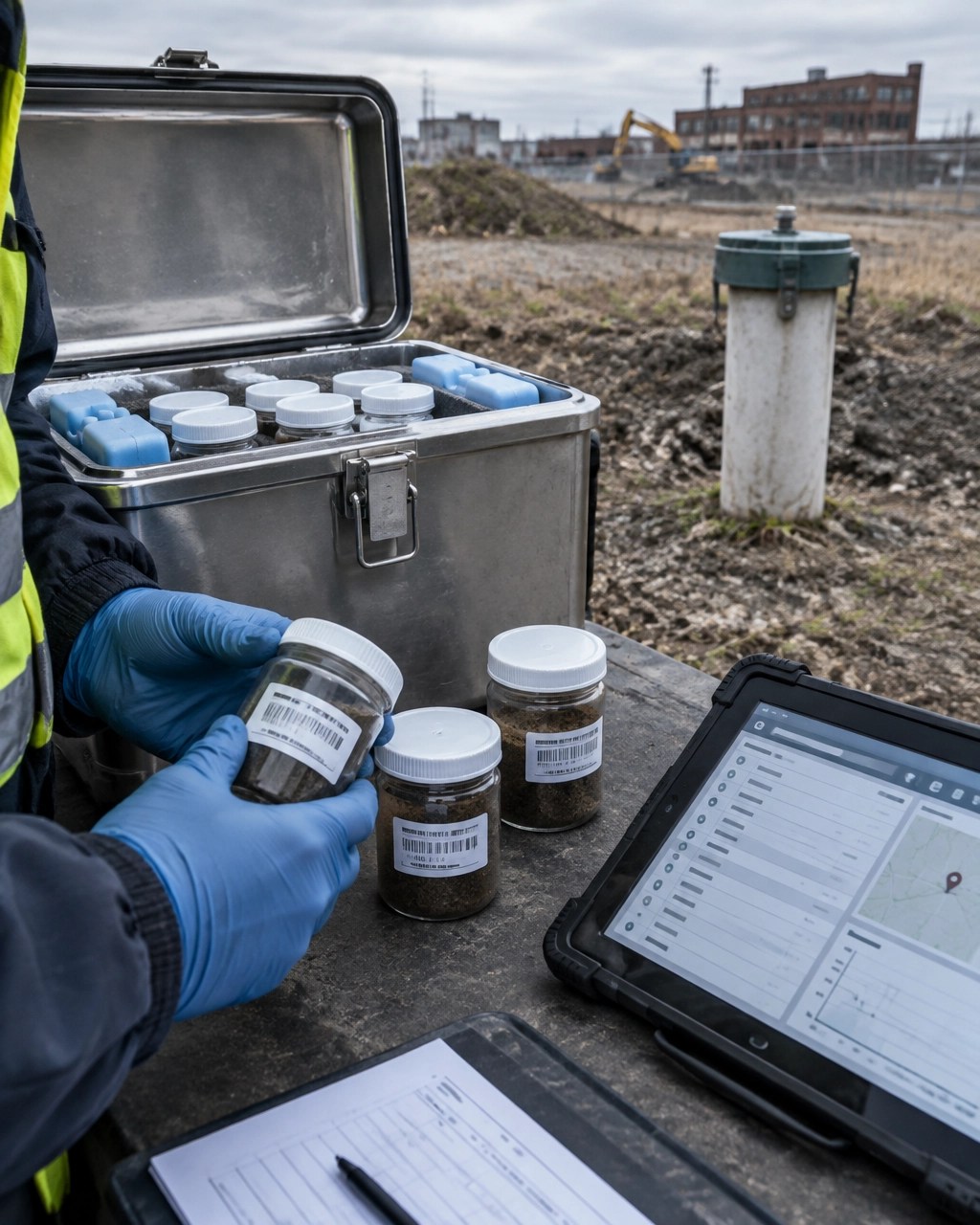
This is where a field-first environmental team adds value. Cost documentation should reflect what occurred on the ground, not just what appeared in an accounting system.
Timing problems can reduce the value of the credit
BRIP timing has several moving parts.
According to NJEDA’s project timetable:
- Projects have six years from Board approval to complete the project.
- The developer must submit documents for certification within one year after completing remediation.
- The tax credit is issued in the year remediation is completed.
- Reporting continues throughout the project.
- Prevailing wage obligations continue after credit issuance, including construction and building services requirements.
The timing creates a common cash-flow mismatch.
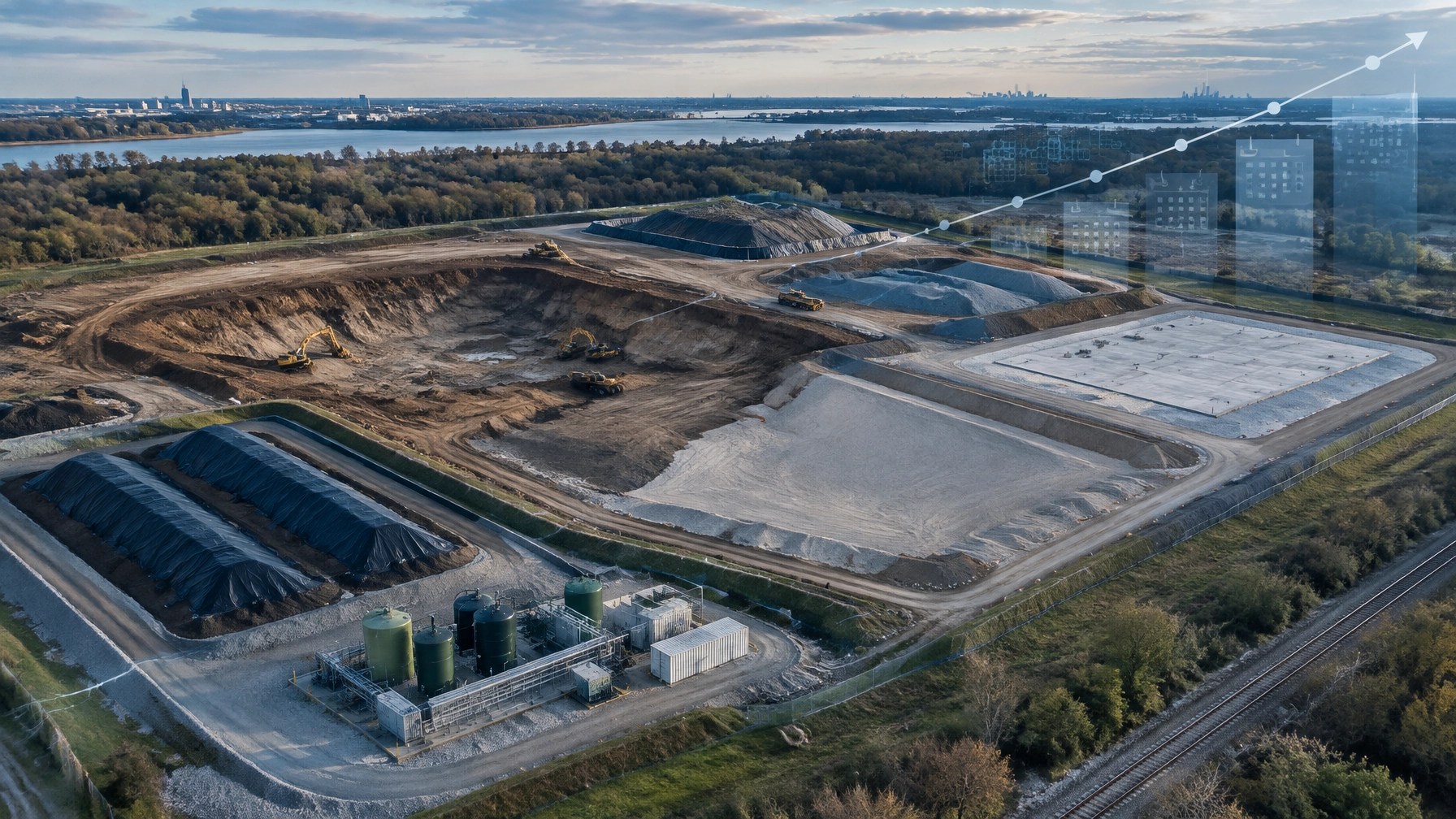
A developer may spend millions on investigation, excavation, treatment, demolition, and disposal in 2026. The credit may not be realized until remediation is formally complete, the documentation is submitted, NJEDA certifies the eligible costs, and the credit certificate is issued.
The credit year is not necessarily the invoice year.
That means your capital plan should account for:
- Remediation spend before credit issuance.
- The time required to assemble certification documents.
- NJEDA review time, which is not stated as a fixed period in the public materials.
- The difference between applying the credit against New Jersey tax liability and selling or transferring it.
- Potential delays if costs are reclassified as ineligible.
- Required equity contributions, including the general 20% requirement and the reduced 10% requirement identified for certain qualified locations.
- Prevailing wage and other continuing compliance obligations.
What incentive stacking should look like
A defensible stacking strategy starts with eligibility, not with the largest possible incentive number.
Before work begins, prepare a funding and timing schedule that answers:
- Which program applies to this applicant and property?
- Is the applicant the discharger or otherwise responsible party?
- Has remediation started, and was it allowed to start before application?
- Which costs are eligible under each program?
- Are the programs compatible for the same project and cost category?
- What records must be submitted to each agency?
- When will the project spend the money?
- When will the grant, loan, reimbursement, or credit become available?
- What happens if the credit is delayed or costs are reduced?
- Who owns the certification file?
For a New Jersey project, Envicon can coordinate brownfield redevelopment support, NJDEP LSRP work, remedial design, cost estimating, waste documentation, construction oversight, and agency coordination under one project structure. Our site remediation and brownfield redevelopment service is built around the path from investigation to closure, not a report handed over at the end.
For projects in the Gold Coast market, our Hudson County environmental consulting team works with the industrial fill, legacy UST, waterfront, and NJDEP issues that shape redevelopment from Jersey City to Bayonne and Hoboken.
2026 NJ Brownfield Tax Credit checklist
Before you authorize major remediation work:
- Confirm the current NJEDA application status and rules.
- Determine whether the site and applicant meet BRIP eligibility requirements.
- Confirm whether remediation has already started and whether an exception applies.
- Obtain municipal support where required.
- Build a separate remediation cost ledger.
- Establish invoice and proof-of-payment requirements in every contract.
- Separate environmental work from vertical construction.
- Track prevailing wage compliance.
- Coordinate HDSRF eligibility with NJDEP.
- Review Brownfield Site Remediation Fund requirements with NJEDA and the State Treasurer.
- Create a completion and certification calendar.
- Reserve cash for the period between remediation spending and tax credit realization.
- Have tax counsel and your accounting team review the final credit position.
The strongest NJ Brownfield Tax Credit files are assembled during the work. They are not reconstructed after the excavator leaves.
The takeaway
New Jersey’s brownfield programs can help convert contaminated or underused property into a productive asset. The benefit depends on disciplined execution.
BRIP is a tax credit. HDSRF is a separate loan and grant program. The Brownfield Site Remediation Fund follows a tax-revenue reimbursement model. Treating them as interchangeable creates risk.
Document every cost. Tie every invoice to remediation. Track every payment. Plan for the gap between spend, completion, certification, and realization.
That is how you protect the incentive and keep the project moving.
Call to Action
- Use Envicon’s proprietary cost estimator tool
- Read more Envicon project insights
- Connect with Envicon Group on LinkedIn