On June 15, 2026, NJDEP adopted site remediation standards for PFNA, PFOA, PFOS, and GenX chemicals, and amended its sampling requirements for areas of concern where contaminants are unknown or not well documented. In those situations, the listed compounds, along with 2,3,7,8-TCDD, must be analyzed in all environmental media.
For a Newark property owner or developer planning a Phase II environmental site assessment in NJ, the practical change is straightforward: old assumptions about which analytes belong in the work plan may no longer hold. But this is a testing and standards change, not a blanket order to clean up every site or remediate every detected PFAS compound.
Read NJDEP’s June 15, 2026 announcement and review the adopted rule.
What changed under NJDEP’s 2026 rule?
The adopted amendments to N.J.A.C. 7:26E-2.1(c) add PFNA, PFOS, PFOA, GenX chemicals, and 2,3,7,8-TCDD to the analyte list for areas of concern with unknown or poorly documented contaminants. The requirement applies to all relevant environmental media in those areas.
The new sampling obligation works alongside standards NJDEP formally adopted for PFNA, PFOA, PFOS, and GenX in soil and soil leachate. The rules also establish a groundwater criterion for GenX. See NJDEP’s remediation standards tables for the applicable values and pathways.
Keep the distinction clear:
- The sampling rule determines what to analyze when an area’s contaminant history is uncertain.
- Remediation standards determine how results are evaluated for the applicable medium and exposure pathway.
- A required analysis is not, by itself, a cleanup mandate. Results need to be interpreted against the relevant standard and site conditions.
“Default testing expands the investigation where the site history leaves a real data gap. It does not replace site-specific professional judgment.”
How the rule changes the Phase I to Phase II handoff
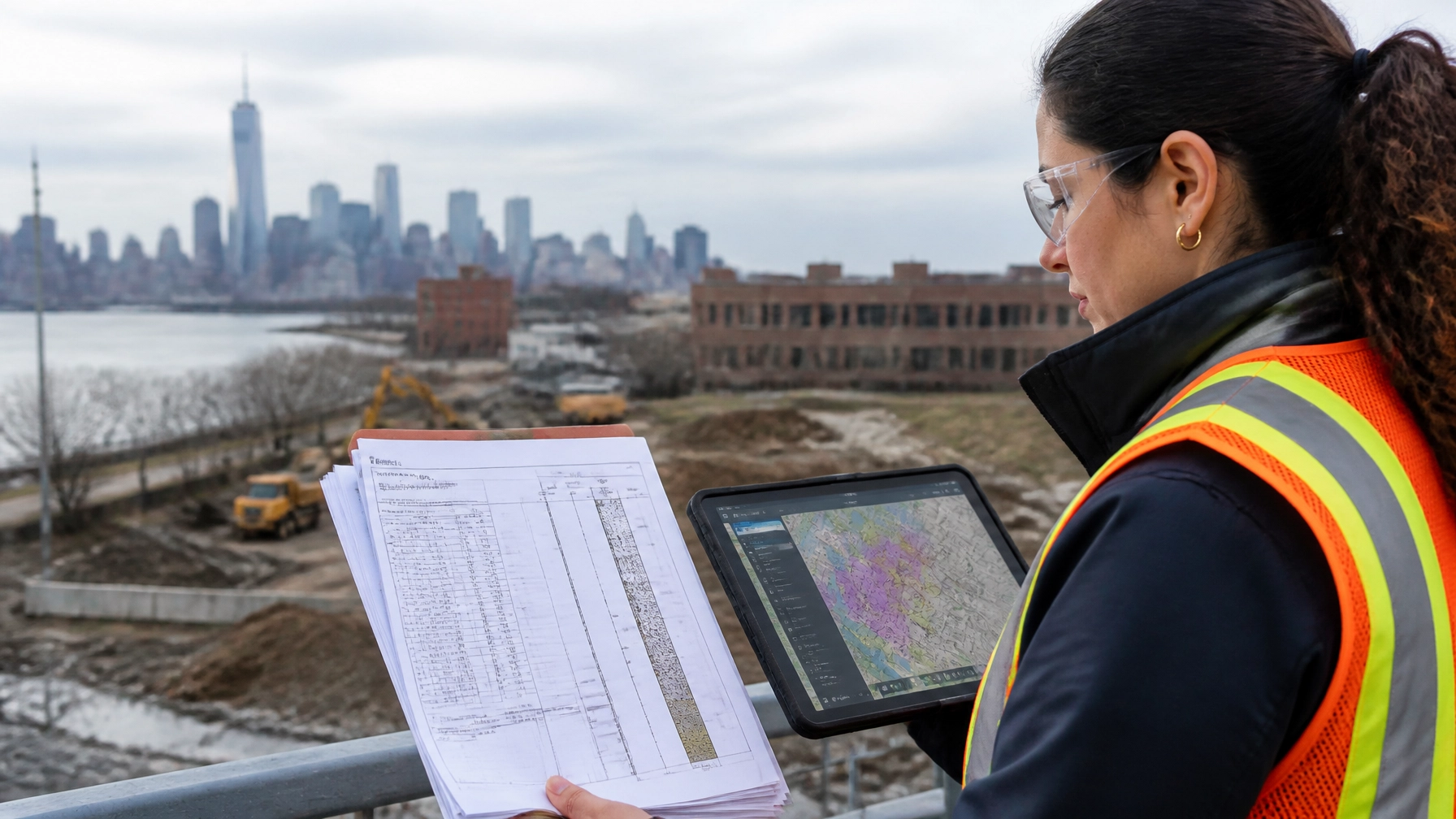
A Phase I ESA should do more than identify a recognized environmental condition and pass it downstream. It should document what the historical record establishes, what it leaves uncertain, and how that uncertainty affects the Phase II sampling plan.
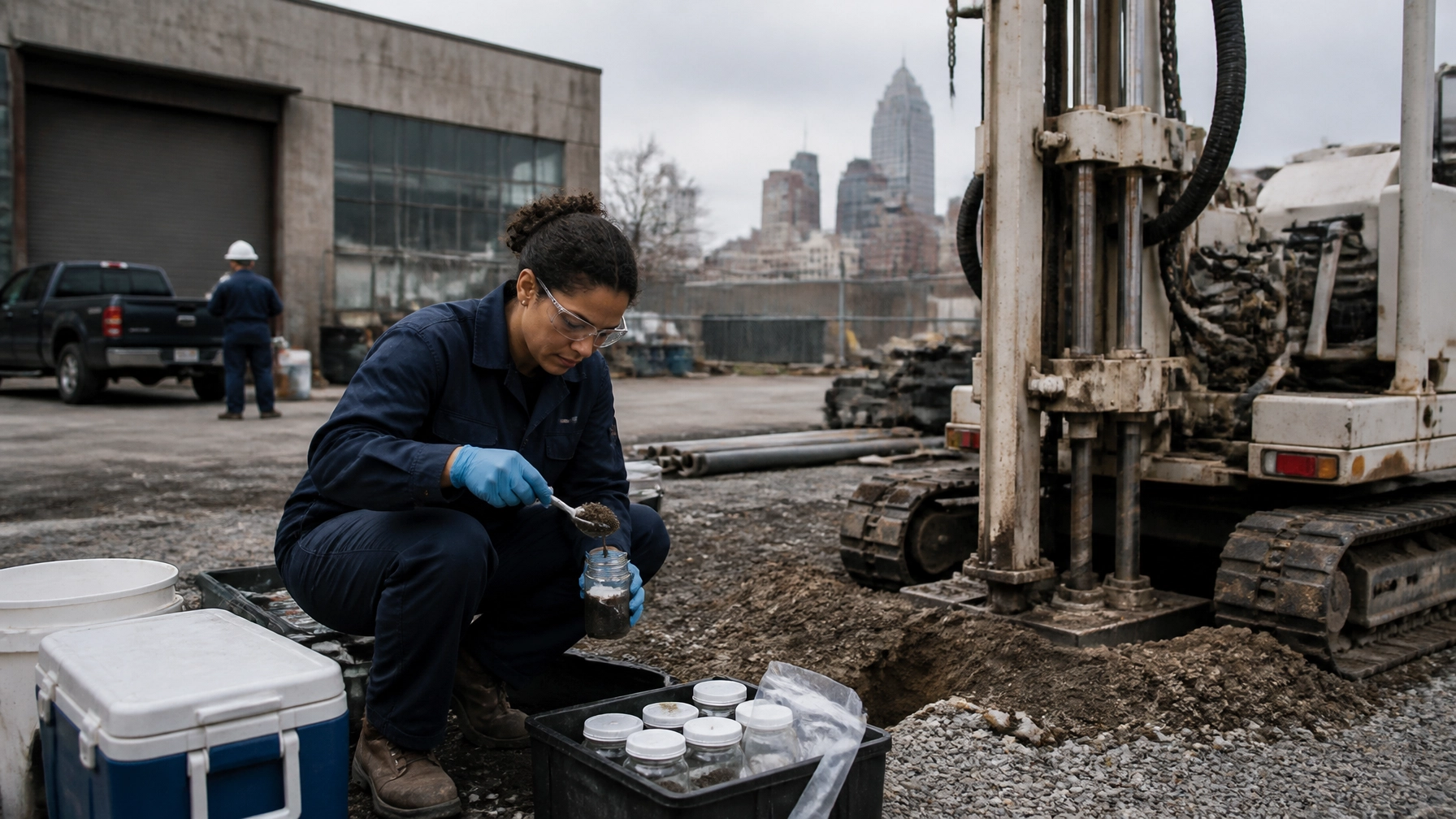
If the site history doesn’t reliably identify contaminants in an area of concern, the Phase II scope needs to address NJDEP’s added analytes. That can affect the sampling and analysis plan before a drill rig mobilizes. For example, the team may need to coordinate PFAS and dioxin analyses with the laboratory, collect samples from multiple relevant media, and set aside enough material for the selected methods.
That handoff matters on Newark properties with industrial histories, fill, former manufacturing uses, or incomplete operating records. It also matters for transactions where a lender, buyer, or counsel needs to understand the cost and schedule implications before closing.
A defensible Phase II scope should identify:
- The area or areas of concern and why contaminant history is unknown or incomplete.
- Which environmental media need sampling based on site conditions and potential pathways.
- How many locations and samples are needed to characterize those areas. The rule does not set one fixed sample count for every property.
- The PFAS and 2,3,7,8-TCDD analyses, methods, reporting limits, and quality-control requirements.
- How results will be compared to the applicable standards, and what follow-up decisions may depend on the data.

Sample counts: plan around areas and media, not a flat number
The rule adds analytes. It does not prescribe a universal number of borings, wells, or samples. The count still depends on the number and size of the areas of concern, site access, geology, likely release points, and which media could have been affected.
A site with several poorly documented industrial areas may need a broader program than a single, well-defined source area. Additional media may also require separate sampling locations or methods. Field duplicates, blanks, and other quality-control samples can add to the laboratory workload as well.
The practical risk is under-scoping. If the initial program doesn’t address the required analytes or misses a relevant medium, the team may need another mobilization, more laboratory work, and a revised report. That can put a closing or construction schedule under pressure.
We recommend documenting the basis for the sample count and analyte list before fieldwork. That gives the owner, LSRP, laboratory, and project team one agreed plan instead of a late scope revision.
Laboratory methods and reporting limits: specify them up front
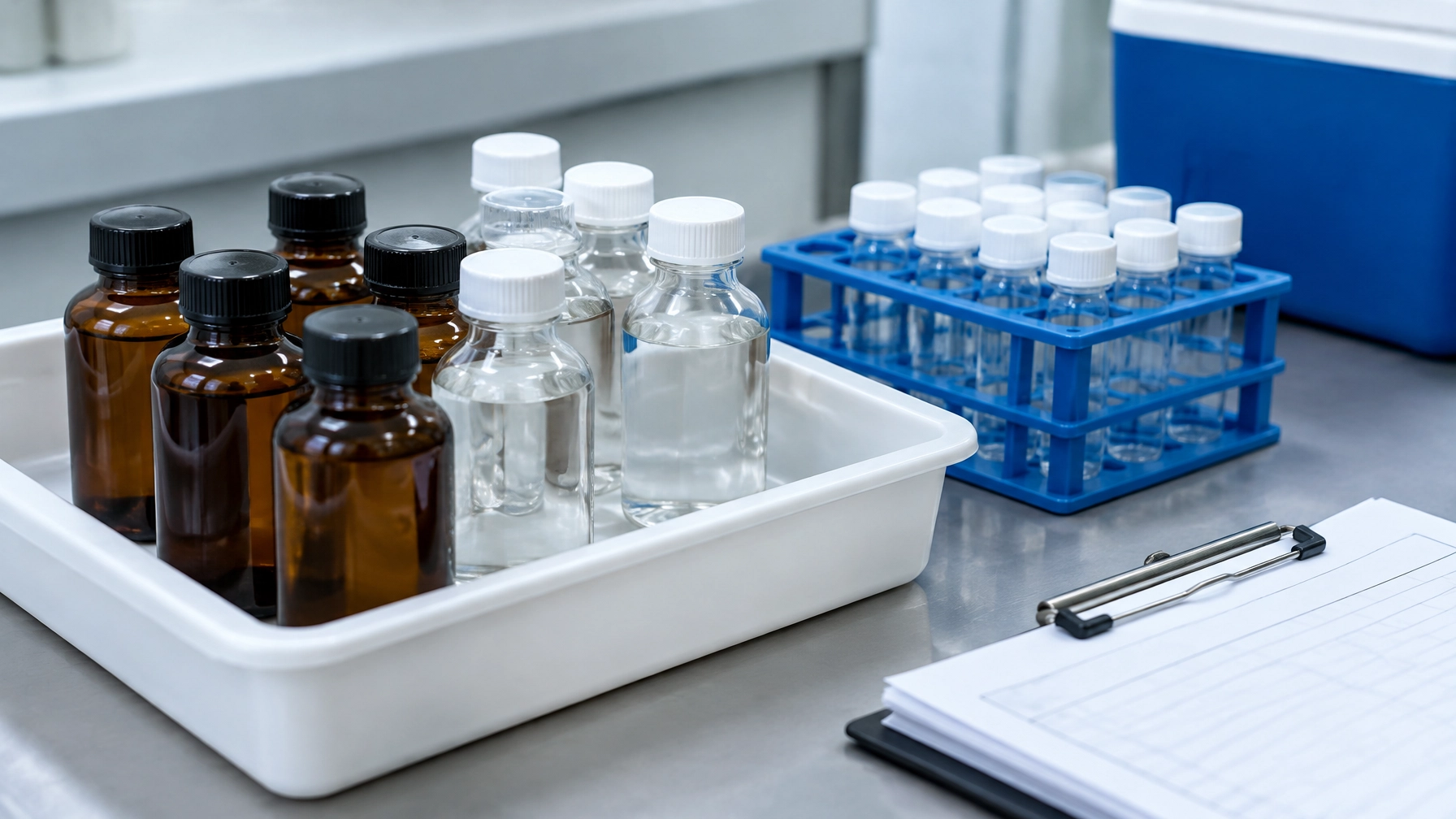
PFAS results are only useful when the chosen method fits the sample matrix and can report at a sensitivity appropriate for the project. EPA Method 1633A covers PFAS analysis in aqueous and solid matrices, among others, but the method choice should be confirmed with the laboratory and LSRP for the specific media and NJDEP requirements. Review the EPA Method 1633A document and NJDEP’s PFAS sampling fact sheet.
Do not assume the same method or reporting limit will work for groundwater, soil, soil leachate, or every other medium. PFAS methods also do not substitute for a suitable method for 2,3,7,8-TCDD. Confirm the laboratory’s method capability, NJDEP acceptance or certification where applicable, and matrix-specific quality controls before collecting samples.
A reporting limit is an analytical capability, not a cleanup standard. The laboratory should provide analyte-specific reporting limits, units, qualifiers, and method information. The LSRP can then compare results to the applicable standard for the medium and pathway.

Before authorizing the lab, confirm:
- The method covers the target analytes and the project’s sample matrices.
- Reporting limits are appropriate for the standards and decisions at issue.
- The report will list all analytes included in the method, not just a simple “detected” or “not detected” summary.
- Field and laboratory quality-control requirements are included in the sampling plan.
What this means for PFAS remediation cost
For sites that previously did not test for PFAS, the immediate budget impact may be the cost of additional sampling and analysis, not remediation. Depending on the findings, the work may end with no further action on PFAS, require additional delineation, or support a site-specific remedial response.
Potential cost drivers include the number of areas of concern, media and sample counts, specialized laboratory analyses, quality-control samples, and whether results require follow-up. If remediation is warranted, further factors may include the affected volume, disposal or treatment requirements, groundwater conditions, and the applicable cleanup pathway.
Build these items into the investigation budget early. A clear Phase II scope and transparent laboratory costs make it easier to plan contingencies and avoid surprises. That is especially important for developers and investors trying to protect transaction timing, lender confidence, and the value of a site.
What Newark owners and project teams should do now
If you’re planning a site investigation, review the Phase I findings and project records with your environmental professional. Decide whether any areas of concern have an unknown or poorly documented contaminant history, then make sure the sampling plan addresses the rule’s analytes and relevant media.
For Newark projects, Envicon coordinates Phase II investigations and NJDEP requirements directly, with senior professionals involved from scope through reporting. Our Newark environmental team supports local due diligence and remediation. We also serve clients in Monmouth County and Queens, NY, with regional teams familiar with their respective jurisdictions.
For additional context, review our Phase II environmental assessment services, our NJDEP LSRP services, and the New Jersey environmental consulting hub.
The takeaway
NJDEP’s June 15, 2026 rule changes what must be tested when contaminants in an area of concern are unknown or poorly documented. It also formalizes standards for PFNA, PFOA, PFOS, and GenX. It does not require every site to remediate PFAS simply because those compounds are now part of the analysis.
Get the Phase I to Phase II handoff right. Confirm sample counts, media, laboratory methods, and reporting limits before fieldwork. A precise scope protects your budget and gives the project a clearer path forward.