A Newark industrial property buyer needs more than a clean-looking Phase I ESA. Former manufacturing, metalworking, chemical, warehouse, transportation, and waterfront properties can carry documented and undocumented Areas of Concern, or AOCs.
That matters under New Jersey’s 2026 PFAS rule changes.
On June 15, 2026, NJDEP adopted final remediation standards for PFNA, PFOA, PFOS, and GenX and amended the Technical Requirements for Site Remediation under N.J.A.C. 7:26E. By June 24, 2026, the amended requirements were in force and relevant to active investigations, remediation cases, and transactions that depend on an NJDEP-compliant scope.
The practical takeaway is straightforward:
When contaminants at an AOC are unknown or not well documented, the analytical program may need to include PFNA, PFOA, PFOS, GenX chemicals, and 2,3,7,8-TCDD across the relevant media being investigated.
That does not mean every private buyer must automatically sample every property for every PFAS compound. It means your environmental professional must evaluate the site history, AOCs, regulatory program, lender requirements, and transaction structure before deciding what the Phase II investigation must include.
What changed under NJDEP’s 2026 PFAS standards?
The June 15 rulemaking amended three important regulatory chapters:
- N.J.A.C. 7:26D, Remediation Standards
- N.J.A.C. 7:9C, Ground Water Quality Standards
- N.J.A.C. 7:26E, Technical Requirements for Site Remediation
NJDEP converted several interim PFAS criteria into final standards. The rule covers:
- PFNA
- PFOA
- PFOS
- GenX chemicals, including HFPO-DA
- Methanol in applicable remediation standards
The final standards address soil ingestion and dermal exposure, soil leachate migration to groundwater, and groundwater. For GenX, NJDEP established a groundwater standard of 0.02 micrograms per liter.
Review the NJDEP PFAS program and the Department’s PFAS Standards and Regulations page for current regulatory materials.
What does 7:26E-2.1(c) mean for an unknown AOC?
The amended N.J.A.C. 7:26E-2.1(c) is the provision most likely to affect Phase II scoping at an industrial property with incomplete records.
The rule adds the following analytes when contaminants at an AOC are unknown or not well documented:
- PFNA
- PFOA
- PFOS
- GenX chemicals
- 2,3,7,8-TCDD
These parameters may need to be analyzed in all relevant media, such as:
- Soil
- Groundwater
- Surface water
- Sediment
- Soil gas or indoor air, when the exposure pathway and investigation require it
“All media” does not mean that a consultant should collect every possible sample type at every property. The scope still needs to follow the actual AOC, site geology, groundwater conditions, exposure pathways, and regulatory objective.
For example, a former Newark industrial site with unknown process chemicals, undocumented fill, and shallow groundwater may need a broader analytical plan than a well-documented warehouse with no recognized environmental conditions beyond historical petroleum use.
Read the current N.J.A.C. 7:26E Technical Requirements PDF and N.J.A.C. 7:26D Remediation Standards PDF before finalizing a sampling plan.
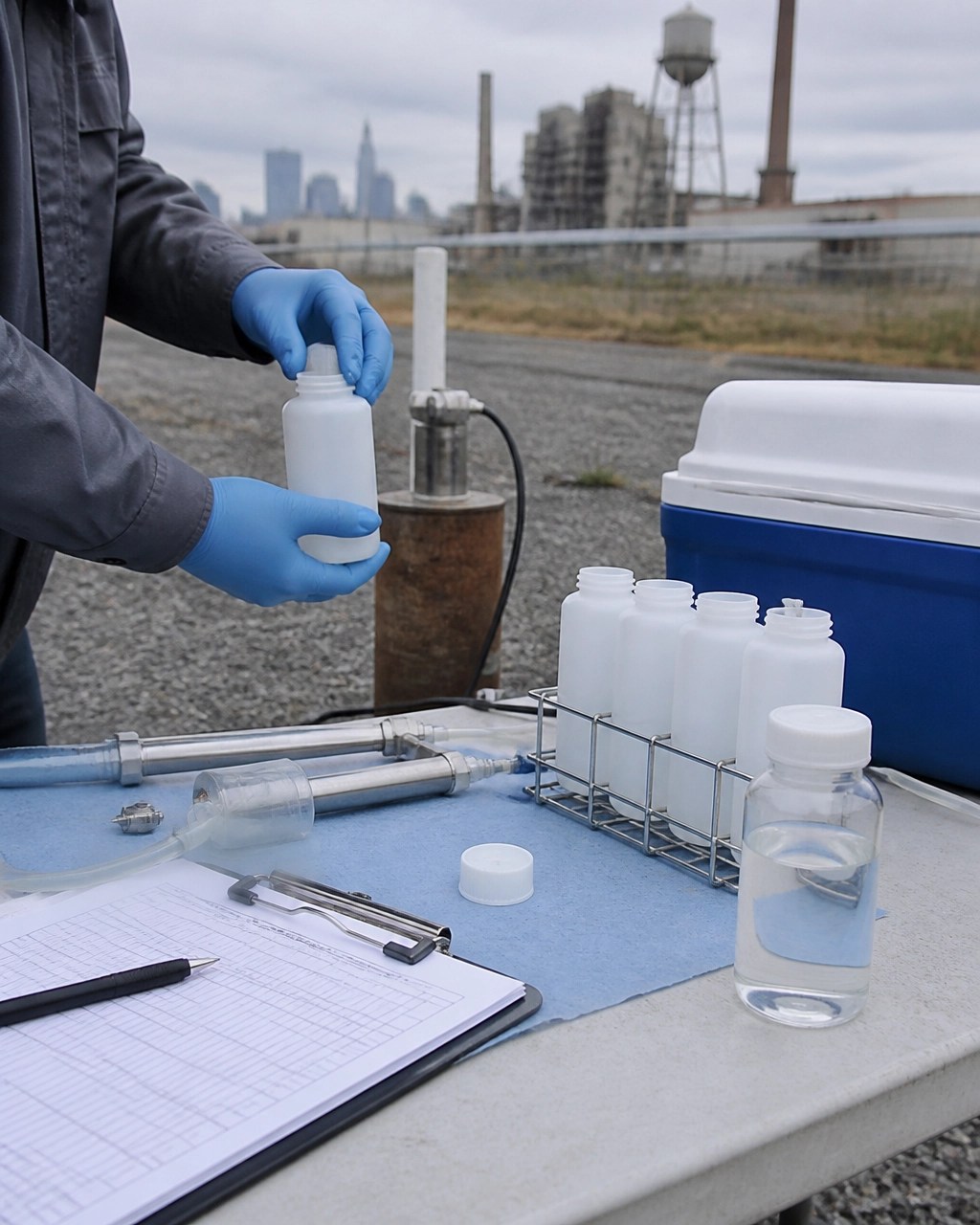
PFAS remediation standards buyers should understand
The following values summarize the final criteria reported in NJDEP rule materials for the four principal PFAS compounds.
| Compound | Residential soil ingestion and dermal | Non-residential soil ingestion and dermal | Soil leachate to groundwater | Groundwater |
|---|---|---|---|---|
| PFNA | 0.047 mg/kg | 0.67 mg/kg | 0.26 µg/L | 0.013 µg/L |
| PFOA | 0.13 mg/kg | 1.8 mg/kg | 0.28 µg/L | 0.014 µg/L |
| PFOS | 0.11 mg/kg | 1.6 mg/kg | 0.26 µg/L | 0.013 µg/L |
| GenX | 0.23 mg/kg | 3.9 mg/kg | 0.40 µg/L | 0.020 µg/L |
Soil migration-to-groundwater evaluations can remain site-specific. A result cannot be interpreted correctly by looking at one number in isolation. The consultant must consider soil type, groundwater depth, infiltration, contamination distribution, land use, and the applicable pathway.
For a buyer, the question is not simply, “Did the lab detect PFAS?”
The better questions are:
- Which compounds were analyzed?
- Were the reporting limits appropriate?
- Which AOC and media did each sample represent?
- Do the results exceed the applicable standard?
- Does the result create an NJDEP remediation obligation?
- Will the result affect the lender, purchase agreement, escrow, or redevelopment plan?
When should an industrial buyer order PFAS Phase II ESA work?
A PFAS-focused Phase II investigation may be appropriate when the Phase I or transaction review identifies:
- Former chemical, metal, textile, plating, coating, or manufacturing operations
- Fire-training areas or historical use of aqueous film-forming foam
- Wastewater treatment, sludge handling, or industrial discharge areas
- Unknown or poorly documented historic operations
- Uncharacterized fill or imported soil
- Existing NJDEP cases or active remediation
- Groundwater contamination or a suspected migration pathway
- An ISRA trigger or LSRP-managed remediation
- Lender requirements for PFAS screening
- A purchase agreement that allocates environmental risk to the buyer
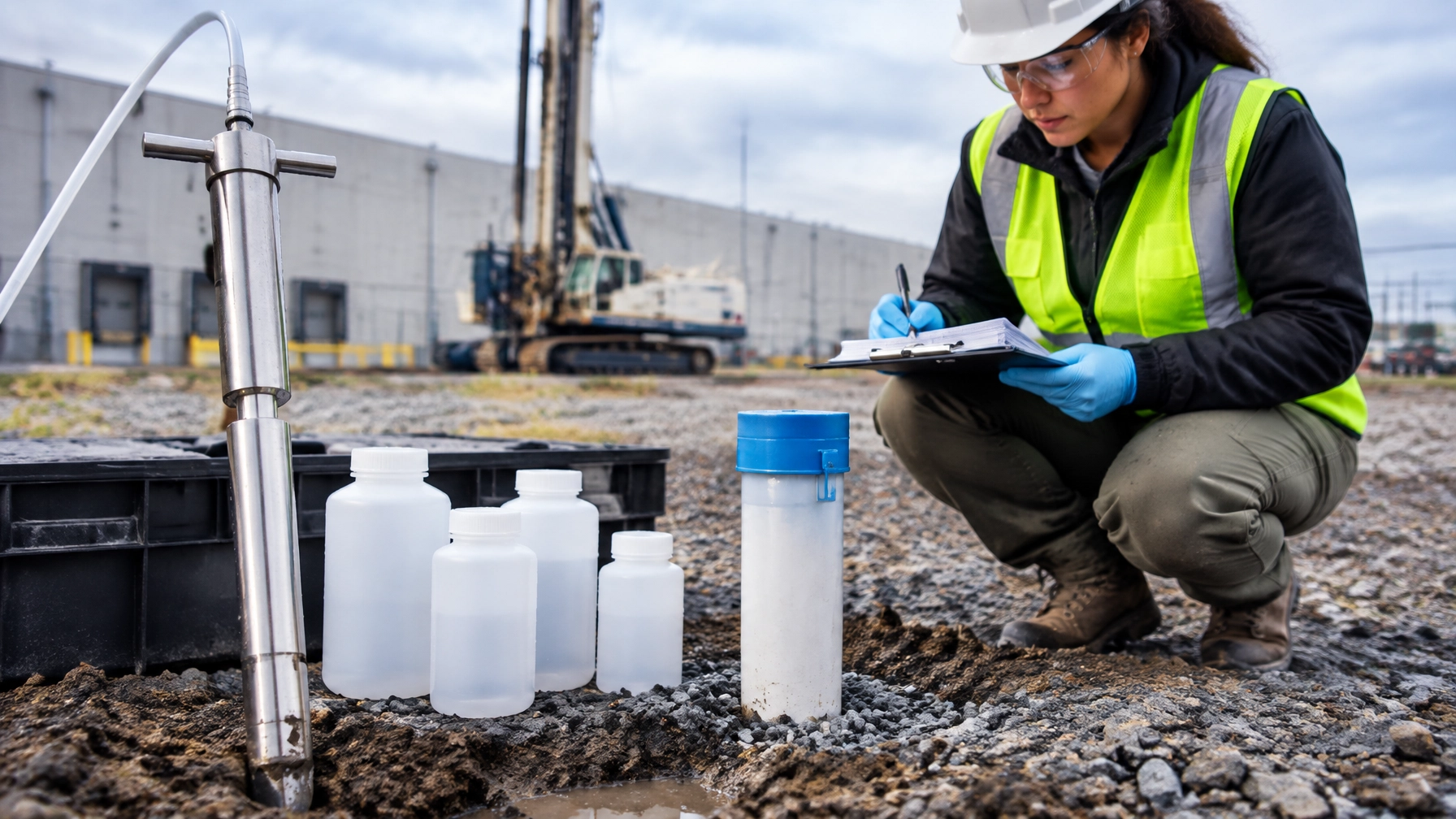
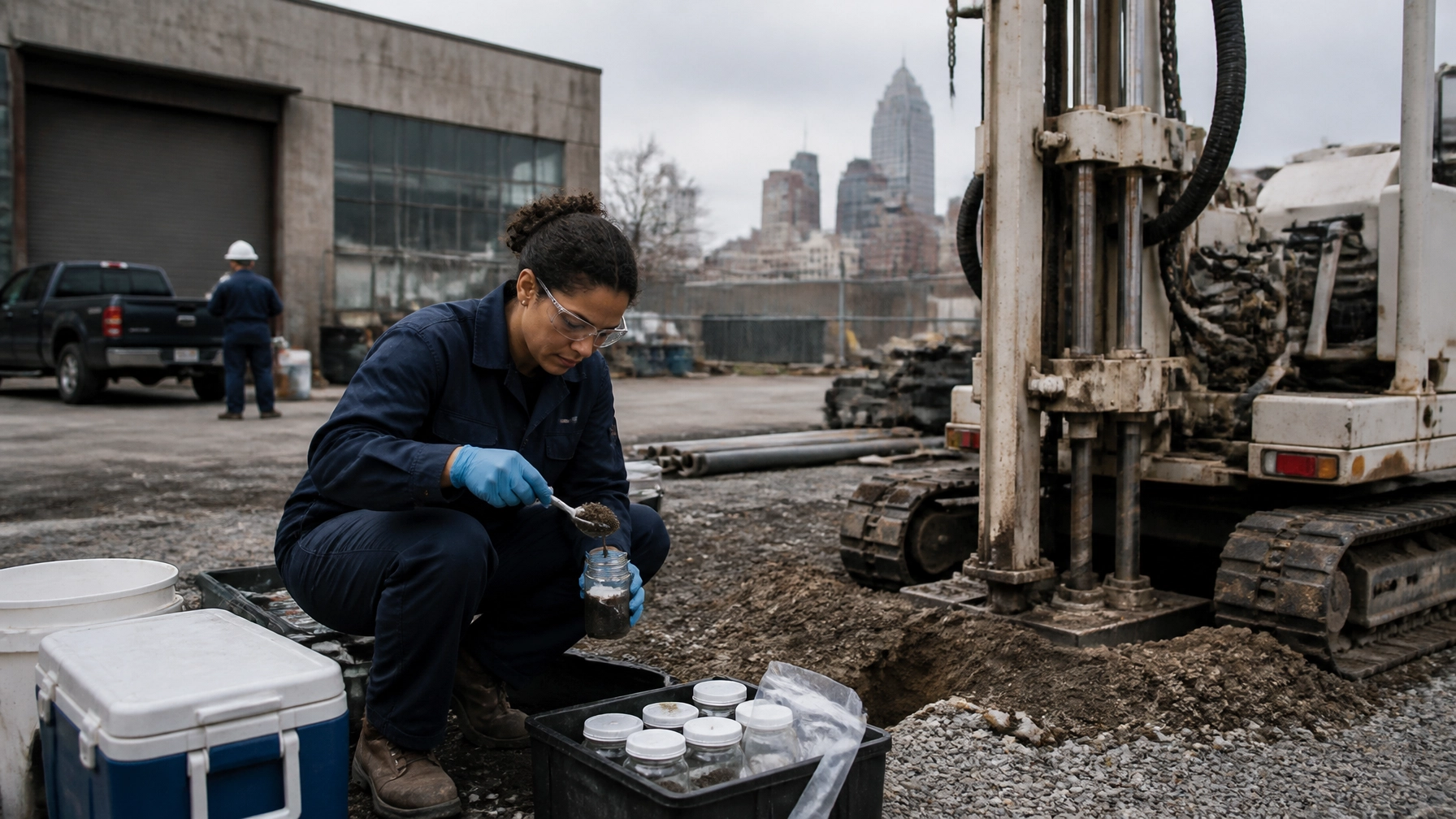
For a Phase II Environmental Site Assessment, the sampling plan should connect each boring, well, and sample location to a specific REC or AOC. Randomly distributing borings across the parcel creates activity, not necessarily useful evidence.
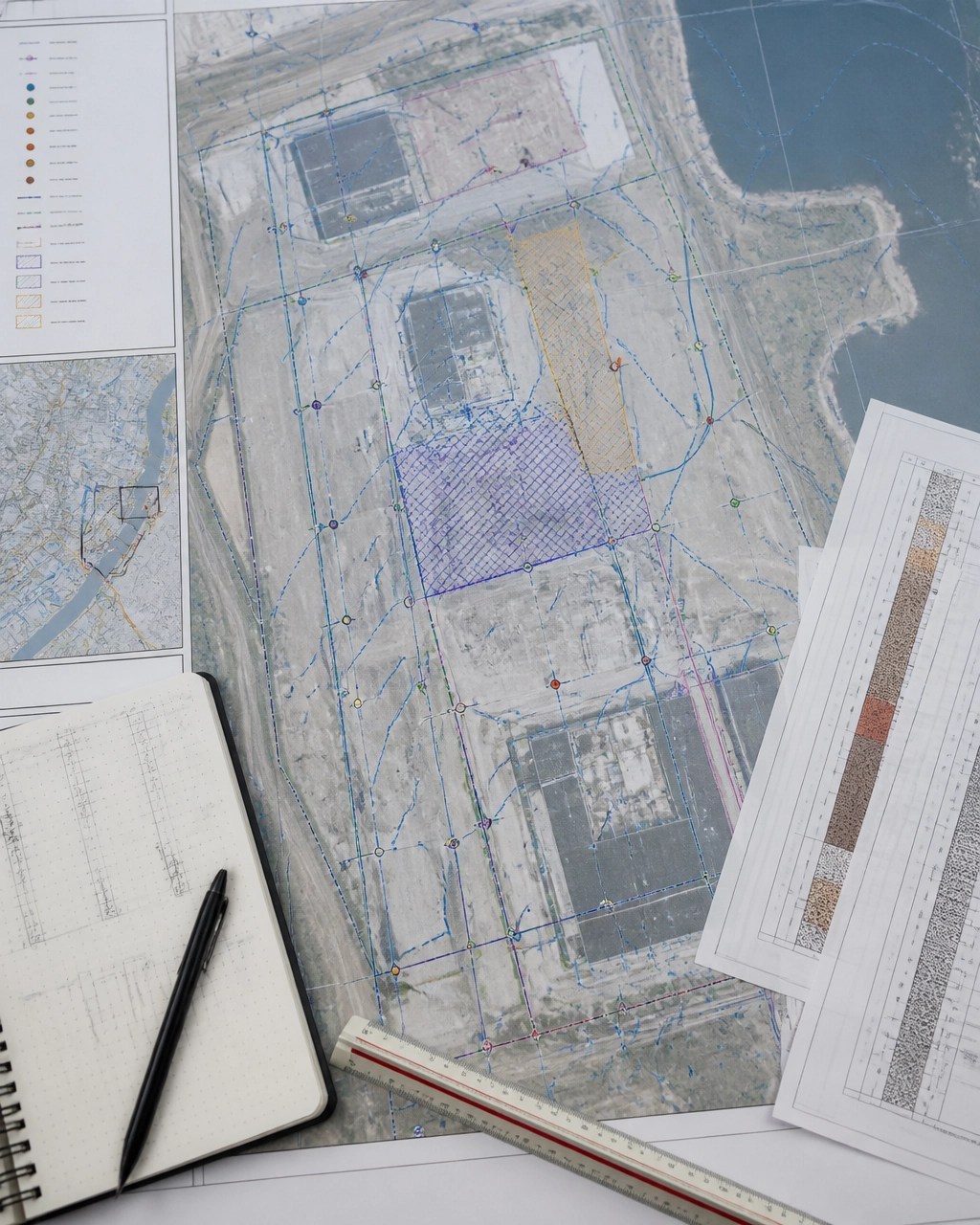
Decision table for Newark and Hudson County transactions
| Site condition | Likely due diligence response | NJDEP or LSRP involvement |
|---|---|---|
| Well-documented warehouse with no PFAS-related history | Review records and lender scope. PFAS testing may not be necessary. | Usually not required solely because of a private sale |
| Former manufacturing site with unknown process chemicals | Expand Phase II analytes to address 7:26E-2.1(c), including PFAS and 2,3,7,8-TCDD where applicable | LSRP review may be needed if the site is in the SRP |
| Active NJDEP remediation case | Coordinate the buyer’s investigation with the existing remedial strategy and data gaps | NJ LSRP involvement is typically central |
| Industrial property subject to ISRA | Evaluate trigger, notice, remediation obligations, and transaction instruments | Engage an NJ LSRP early |
| Waterfront or fill site in Jersey City, Bayonne, Hoboken, or Newark | Address fill quality, groundwater, sediment, and redevelopment pathways | Scope depends on AOCs, permits, and case status |
| Lender requires PFAS testing | Build the lender’s requirements into the SAP and laboratory scope before mobilization | Confirm whether results must support an NJDEP pathway |
QA/QC is not optional in PFAS sampling
PFAS exists in many common products and materials. Poor field controls can create false positives or unusable data.
A defensible program should address:
- PFAS-free or PFAS-compatible sampling materials
- Field blanks and equipment blanks where appropriate
- Trip blanks when required by the sampling plan
- Dedicated or properly decontaminated equipment
- Documented sample preservation
- Laboratory chain of custody
- Appropriate holding times
- NJDEP-accepted or otherwise qualified laboratory methods
- Data validation and reporting-limit review
- Clear documentation of non-detects and estimated results
The sampling team must also identify potential sources of cross-contamination before field work begins. Waterproof clothing, certain tubing, treated materials, cosmetics, food packaging, and other common items can interfere with low-level PFAS work.
QA/QC should be written into the Sampling and Analysis Plan before the drill rig arrives. It should not be improvised in the field.
How PFAS findings affect an NJ industrial property sale
PFAS results can affect more than the environmental report. They can change:
- Purchase price
- Escrow requirements
- Indemnity language
- Remediation responsibilities
- Construction soil management
- Dewatering and discharge planning
- Groundwater monitoring
- Institutional or engineering controls
- Lender approval
- ISRA and NJDEP scheduling
- The feasibility of a proposed residential or mixed-use redevelopment
A buyer acquiring an industrial parcel in Newark, Essex County, Hudson County, Bergen County, or nearby markets should resolve these questions before closing whenever possible.
If the property falls within an NJDEP remediation case, Envicon’s NJ LSRP team can connect the Phase II findings to the regulatory path. That may include further delineation, a Remedial Investigation, a Remedial Action Work Plan, soil management, groundwater monitoring, or a path toward a Response Action Outcome.
Why local execution matters
PFAS due diligence is not just a laboratory order. It is a coordination problem involving the buyer, seller, lender, attorney, contractor, laboratory, regulator, and sometimes the municipality.
Envicon works across Newark, Jersey City, Hoboken, Bayonne, Hudson County, Bergen County, and Essex County. Our team scopes the investigation around the transaction deadline and the actual regulatory question.
That means:
- A Phase II plan tied to the AOCs
- Direct communication with the LSRP or regulator
- Clear QA/QC requirements
- Findings translated into cost and schedule exposure
- Documentation that supports the next decision
You should not have to wait weeks for a senior reviewer to discover that the original sampling plan missed the transaction’s real risk.
Frequently asked questions
Does the 2026 NJDEP rule require PFAS testing at every private property sale?
No. The rule does not create a universal private sampling mandate for every transaction. The requirement depends on the regulatory context, AOC history, documentation, applicable investigation requirements, lender scope, and whether the site is subject to NJDEP remediation obligations.
What is 7:26E-2.1(c) testing?
It is part of NJDEP’s Technical Requirements for Site Remediation. When contaminants at an AOC are unknown or not well documented, the analytical program must address specified compounds, including PFNA, PFOA, PFOS, GenX chemicals, and 2,3,7,8-TCDD, across the relevant media being investigated.
Should a Newark buyer test for PFNA, PFOA, PFOS, and GenX during a Phase II ESA?
It may be appropriate, particularly at former industrial properties with unknown operations, undocumented fill, or an active NJDEP matter. The decision should follow a Phase I review, AOC analysis, lender requirements, and the proposed property use.
Is PFAS testing required for an ISRA transaction?
ISRA applicability and PFAS analytical requirements are related but not identical. An ISRA transaction may require NJDEP and LSRP involvement, while the specific PFAS scope depends on the site’s AOCs, documentation, remedial status, and applicable technical requirements.
Can a PFAS result delay closing?
Yes. A result can trigger additional delineation, negotiation over responsibility, remedial planning, or lender review. Early sampling gives the transaction team more options than discovering PFAS after closing or after construction begins.
Can Envicon provide a PFAS Phase II scope for a Jersey City property?
Yes. Envicon provides Phase II investigations and NJ LSRP coordination for industrial and redevelopment properties across Jersey City, Newark, and the surrounding metro area. See our Jersey City environmental consulting page.
The takeaway for property buyers
The June 15, 2026 NJDEP adoption changed the baseline for PFAS evaluation in New Jersey. By June 24, the final requirements were in force for active investigations and relevant remediation matters.
For Newark industrial buyers, the right response is not automatic over-testing. It is disciplined scoping.
Review the historic use. Identify every AOC. Determine whether the contamination is known or poorly documented. Build the correct PFAS, TCDD, and other analytes into the Sampling and Analysis Plan. Control the field work. Validate the data. Then connect the results to the purchase agreement, lender, ISRA, LSRP, and redevelopment schedule.
That is how due diligence protects the deal instead of simply producing another report.
Start your Newark PFAS due diligence review
- Request a free quote from Envicon
- Review Envicon’s Phase II ESA services
- Call Envicon at (917) 764-2171
- Use the project risk screener
Official NJDEP sources
- NJDEP PFAS program
- NJDEP PFAS Standards and Regulations
- N.J.A.C. 7:26D Remediation Standards
- N.J.A.C. 7:26E Technical Requirements for Site Remediation
- NJDEP PFAS Strategy 2025
This article is for general informational purposes. Site-specific sampling, regulatory, engineering, and legal decisions should be reviewed by qualified professionals familiar with the property and applicable NJDEP requirements.