If you're developing or redeveloping property in New Jersey, you've probably already budgeted for your Licensed Site Remediation Professional (LSRP). You've seen the hourly rates: somewhere between $150 and $290 depending on seniority: and maybe you've added a buffer for soil remediation costs. You think you're covered.
Here's the problem: most developers budget for compliance, not for success. And that gap between the two can cost you 20-30% more than you planned, along with months of schedule delays that compound into serious carrying costs.
Let's talk about what the real cost of an LSRP actually is: and why the cheapest hourly rate is almost never the smartest investment.
The Three Costs Everyone Sees (And Plans For)
When you start shopping for an LSRP, three numbers typically make it into your pro forma:
1. Licensing and Regulatory Fees
These are actually the smallest line items. For 2025, NJDEP charges a $990 annual license fee, plus nominal application and renewal fees. The Site Remediation Program itself charges annual fees ranging from $880 to $19,360 depending on your site's complexity: the number of contaminated areas of concern (CAOC) and contaminated media (CM).
2. Professional Services
This is where your LSRP's time gets billed. Expect $150-$206 per hour for standard LSRPs, $165-$225 for Senior LSRP/Project Managers, and $180-$290 for Principal LSRPs. Support staff: environmental specialists, technicians, CAD drafters: run $85-$185 per hour depending on their role.
3. Actual Remediation Work
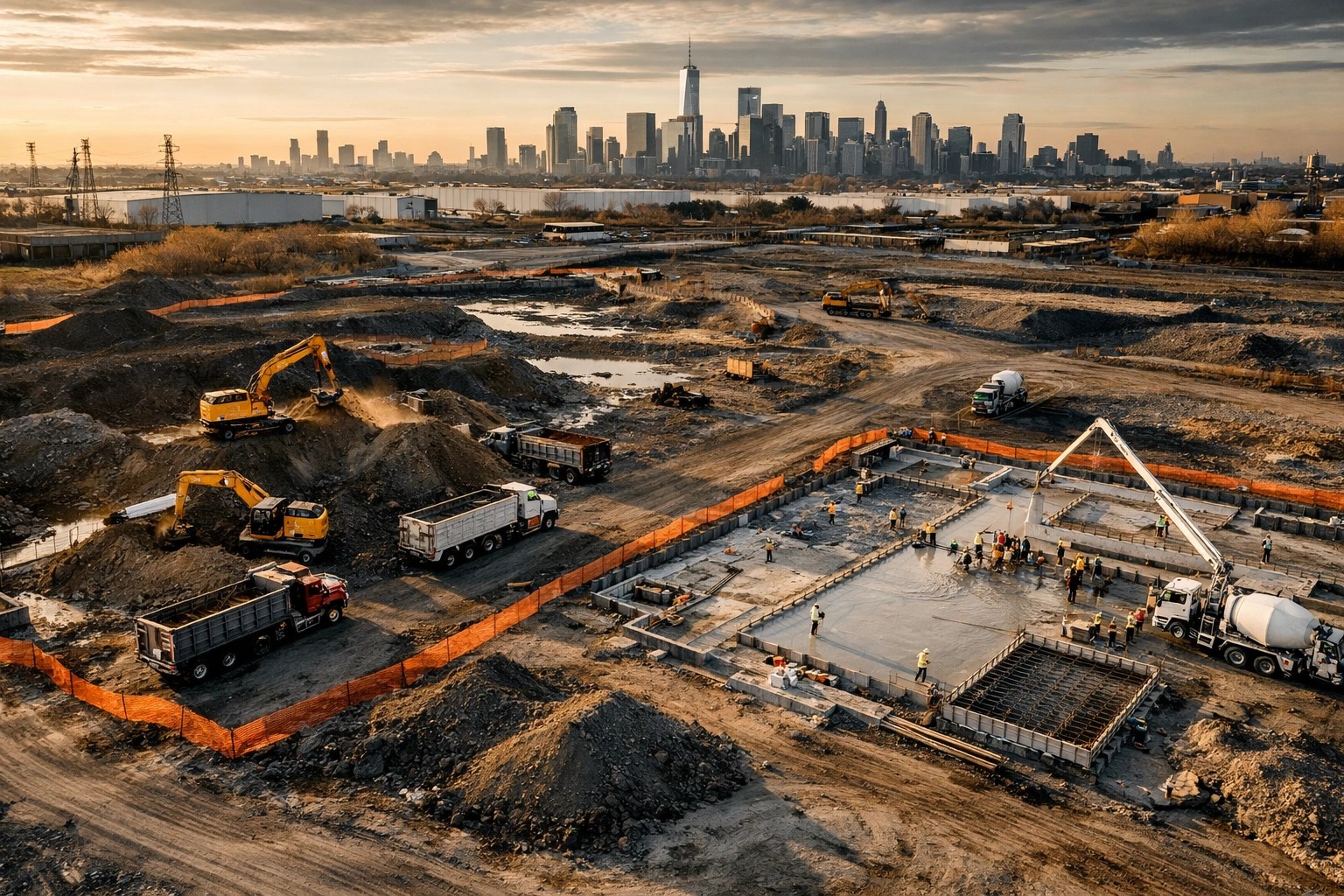
Soil remediation costs typically range from $3,000 to $15,000 for residential properties, with most projects landing in the $8,000-$10,000 range. Low-level contamination cleanup runs $3,000-$6,000, moderate contamination hits $6,000-$12,000, and complex cases involving groundwater contamination can exceed $25,000. These costs include excavation, testing, disposal, and site restoration.
So far, so good. You add these up, apply a 10% contingency, and move on with your life.
The Invisible Costs That Destroy Budgets
Here's where most developers get blindsided: and where a strategic LSRP versus a "checklist LSRP" makes all the difference.
Schedule Delays = Carrying Cost Hemorrhage
Every extra month your site sits in remediation is a month you're paying:
- Property taxes
- Debt service on acquisition financing
- Insurance
- Security
- Lost opportunity cost on capital
A generic LSRP who treats your project like just another "file to close" might take the safest, slowest path through NJDEP's process. Meanwhile, an LSRP who understands redevelopment timelines will strategically phase remediation to keep your critical path moving. The difference between a 9-month versus 15-month remediation schedule isn't just six months: it's six months of carrying costs that can easily exceed $50,000 to $100,000 on a mid-sized project.
Soil Disposal Roulette
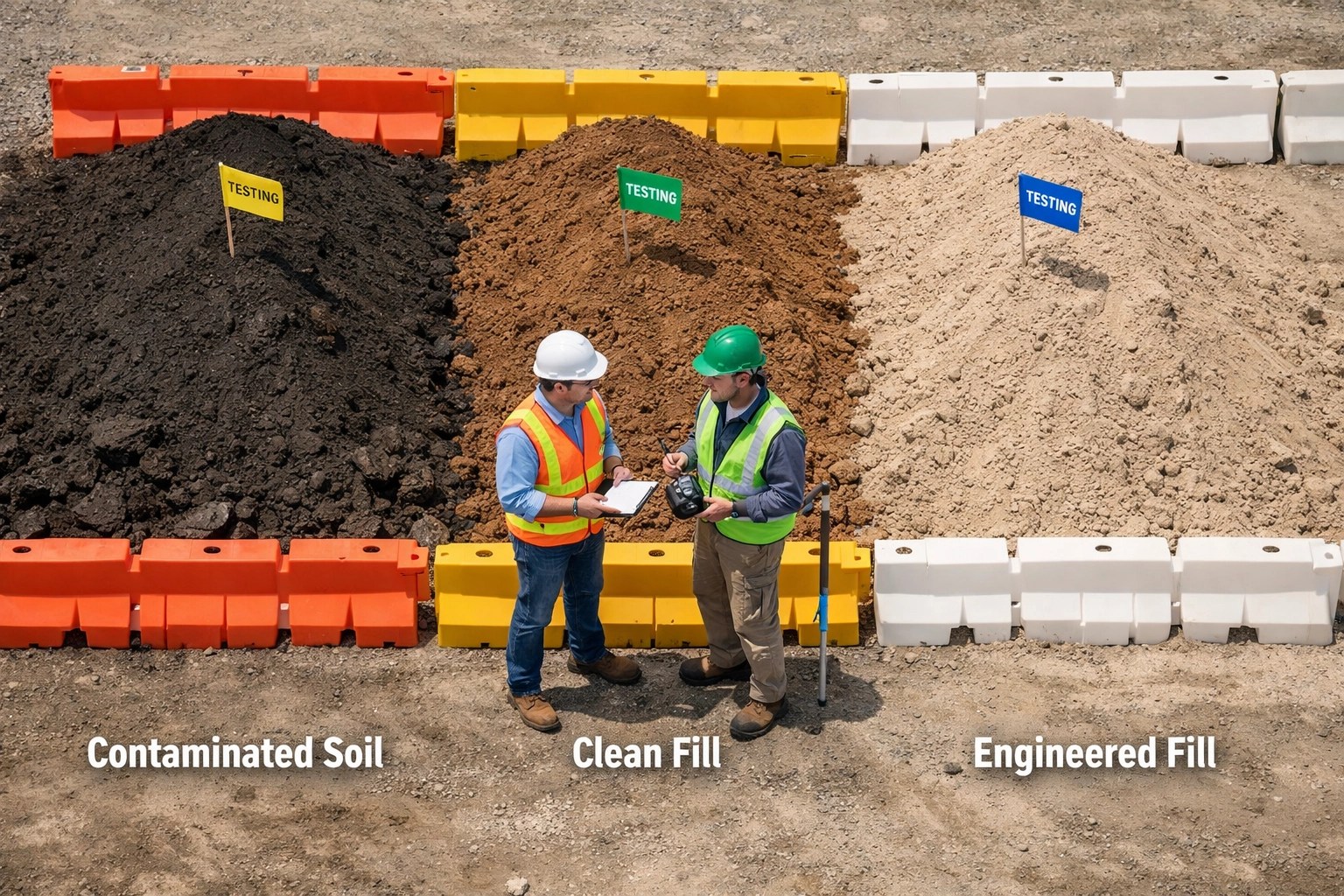
Here's a scenario that happens constantly: Your Phase II ESA identifies contamination. Your LSRP recommends excavation. You get a disposal quote for "contaminated soil" at $150-$200 per ton.
But here's the question a strategic LSRP asks: "Do we actually need to dispose of all of it as contaminated material?"
Through proper characterization, segregation strategies, and understanding of receiving facility acceptance criteria, an experienced LSRP can often reclassify portions of your soil for significantly cheaper disposal: or even beneficial reuse. On a project requiring 500 tons of soil removal, the difference between uniform "contaminated" disposal and strategic segregation can save $30,000 to $75,000.
Rework and Change Orders
A purely "compliance-focused" LSRP might not think about how your remediation plan impacts your civil site design. They close out the environmental case, hand you a Response Action Outcome (RAO), and walk away.
Then your civil engineer discovers that the remediation left you with unsuitable fill, inadequate compaction for your foundation loads, or drainage issues that require expensive rework. Suddenly you're spending another $40,000 to re-grade and import engineered fill that should have been coordinated during remediation.
Why a "Redevelopment LSRP" Saves Money
The best LSRPs don't just think about closing cases: they think about making projects successful. Here's what that looks like in practice:
They Understand Your End Game
A redevelopment-minded LSRP asks: What are you building here? When does it need to be vertical? What are your foundation requirements? What's your target market and exit strategy?
Those questions inform every decision: from the aggressiveness of your remedial approach to the timing of your regulatory submissions to how soil is managed on site.

They Engineer Solutions, Not Just Compliance
Instead of defaulting to "dig and haul," a strategic LSRP evaluates:
- Can we stabilize contamination in place and use deed restrictions?
- Can we consolidate contaminated soil under parking areas with engineered caps?
- Can we coordinate soil import needs with remediation export needs to reduce trucking costs?
- Can we phase remediation to match construction sequencing?
These aren't just environmental questions: they're value engineering questions that directly impact your bottom line.
They Navigate Regulatory Process Like a Chess Game
NJDEP's Site Remediation Reform Act (SRRA) gave LSRPs direct oversight authority, but it didn't eliminate bureaucracy. There are still Strategic Plans to submit, Classification Exception Areas (CEAs) to negotiate, and deed restrictions to record.
An LSRP who knows the regulators, understands the unwritten rules, and can anticipate objections moves your project through approval cycles significantly faster than someone learning on your dime.
The Value Engineering Advantage: Integrated Consulting
This is where firms like Envicon flip the traditional model on its head.
Most developers hire three separate consultants:
- An environmental firm for remediation
- A civil engineer for site design
- A geotechnical engineer for foundation recommendations
Each one does their scope in isolation. Then everyone gets together for coordination meetings where conflicts get identified, change orders get issued, and your budget gets shredded.
The integrated approach works differently. When your LSRP is also your civil engineer, they're thinking about grading, drainage, and structural loads while they're designing your remediation strategy. They're coordinating soil disposal with soil import. They're planning foundation systems around contamination constraints instead of treating them as separate problems to solve sequentially.
Here's what that looks like in dollars:
- Traditional approach: Separate contracts for environmental ($120K), civil ($80K), and geotech ($35K) = $235K in professional fees, plus change orders
- Integrated approach: Single contract for coordinated services ($190K) with built-in value engineering = $45K savings, plus schedule compression
The hourly rate might look similar, but the total project cost tells a completely different story.
What to Look for in Your LSRP
If you're evaluating LSRPs for your next project, here are the questions that separate strategic advisors from compliance box-checkers:
Ask About Their Development Experience
- "How many redevelopment projects have you closed in the past 24 months?"
- "Can you walk me through a project where you saved a developer significant money through strategic remediation?"
Probe Their Integration Capabilities
- "How do you coordinate with civil and structural design?"
- "Do you have in-house civil engineering, or will I need to hire that separately?"
- "Can you provide design-build remediation services?"
Test Their Regulatory Sophistication
- "What's your typical timeline for Remedial Investigation through Response Action Outcome?"
- "How do you approach CEA negotiations with NJDEP?"
- "When was the last time you had a remedial action plan rejected, and why?"
Evaluate Their Business Acumen
- "How do you approach cost-benefit analysis for remedial alternatives?"
- "Can you help me understand the carrying cost implications of different remediation timelines?"
The answers should sound less like a textbook and more like a business strategy session.
The Bottom Line
When you budget $150K for LSRP services and $200K for remediation, you're not actually budgeting for the real cost: you're budgeting for the line item cost.
The real cost includes:
- Schedule delays that add carrying costs
- Inefficient soil management that inflates disposal fees
- Lack of coordination that creates rework
- Missed value engineering opportunities that leave money on the table
A strategic LSRP who thinks like a developer, engineers solutions instead of just compliance, and integrates environmental work with civil design doesn't cost more: they save you a fortune by avoiding the invisible costs that destroy budgets.
At Envicon Strategic Solutions, we've built our entire practice around this integrated approach. We're not just closing environmental cases: we're making projects pencil. Because in the New Jersey redevelopment game, that's the only metric that actually matters.
Your LSRP should be a strategic partner, not just a regulatory checkbox. Choose accordingly.