If you’re budgeting a commercial renovation in Newark, Jersey City, Hoboken, Bayonne, or elsewhere in Hudson, Essex, or Bergen County, the question is rarely just, “What does an asbestos inspection cost?”
The better question is, “What level of inspection will give the project team enough information to renovate or demolish without reopening the budget later?”
The answer depends on the building, the planned work, and the quality of the survey. A small office fit-out and a full industrial gut renovation do not require the same investigation. The inspection may involve a records review, visual assessment, bulk sampling, laboratory analysis, drawings, regulatory coordination, and follow-up support.
There is no universal price for an asbestos inspection cost NJ commercial property project. A defensible budget starts with the actual scope.
What an asbestos inspection covers
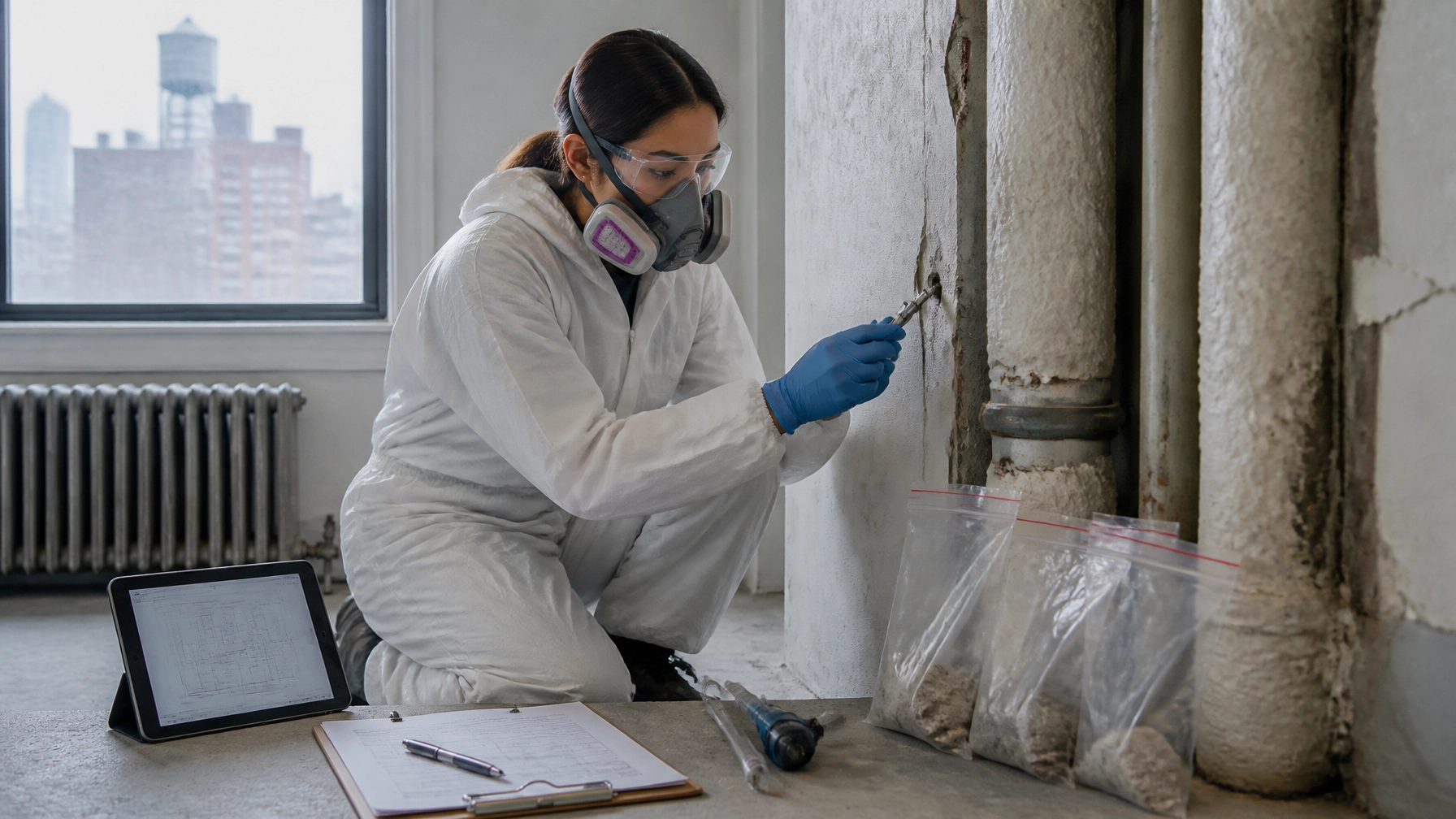
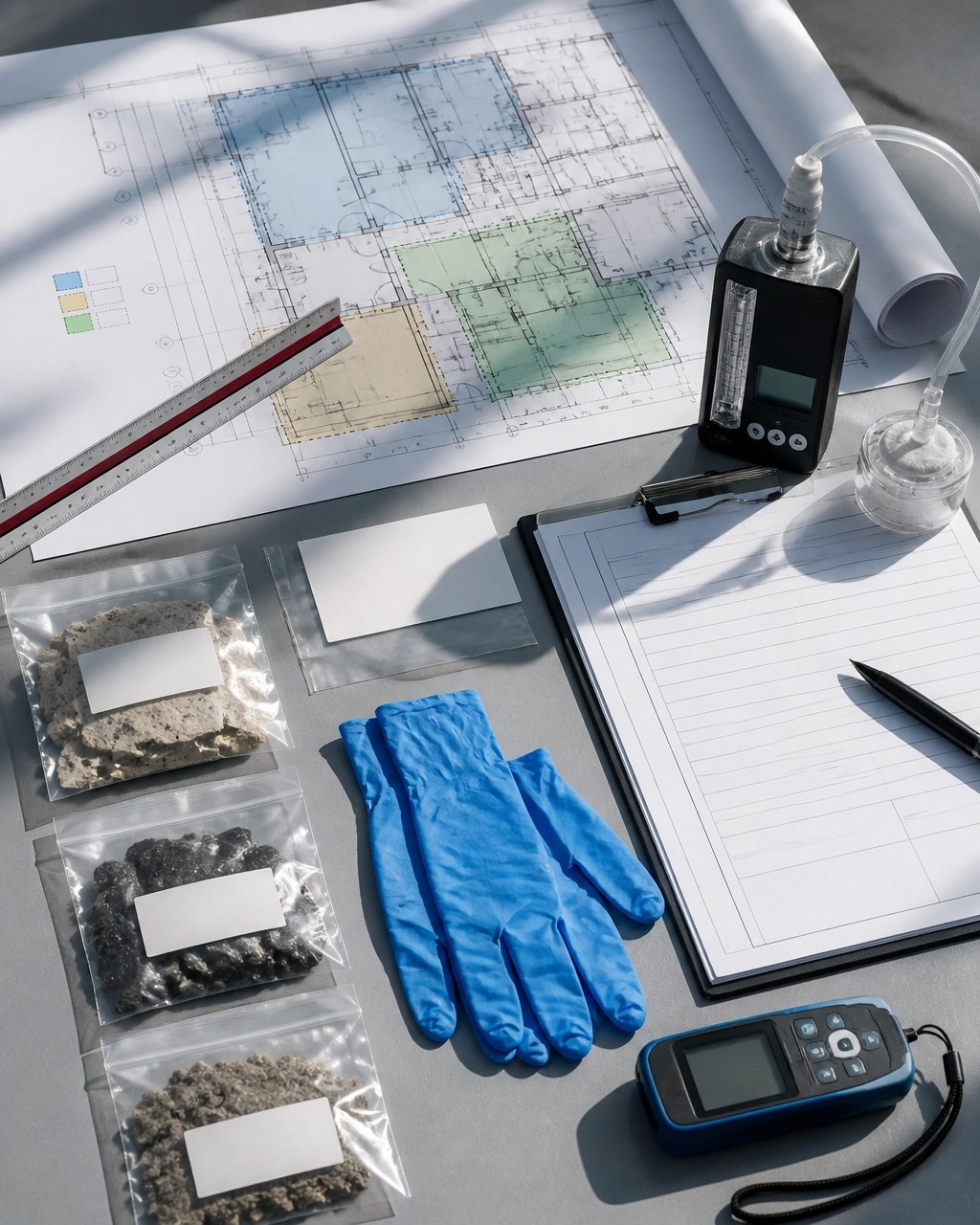
A commercial asbestos inspection identifies suspect asbestos-containing materials, documents their locations and conditions, and determines which materials may be disturbed by the planned renovation or demolition.
Depending on the building and scope, the inspection may include:
- A review of available construction records and prior surveys
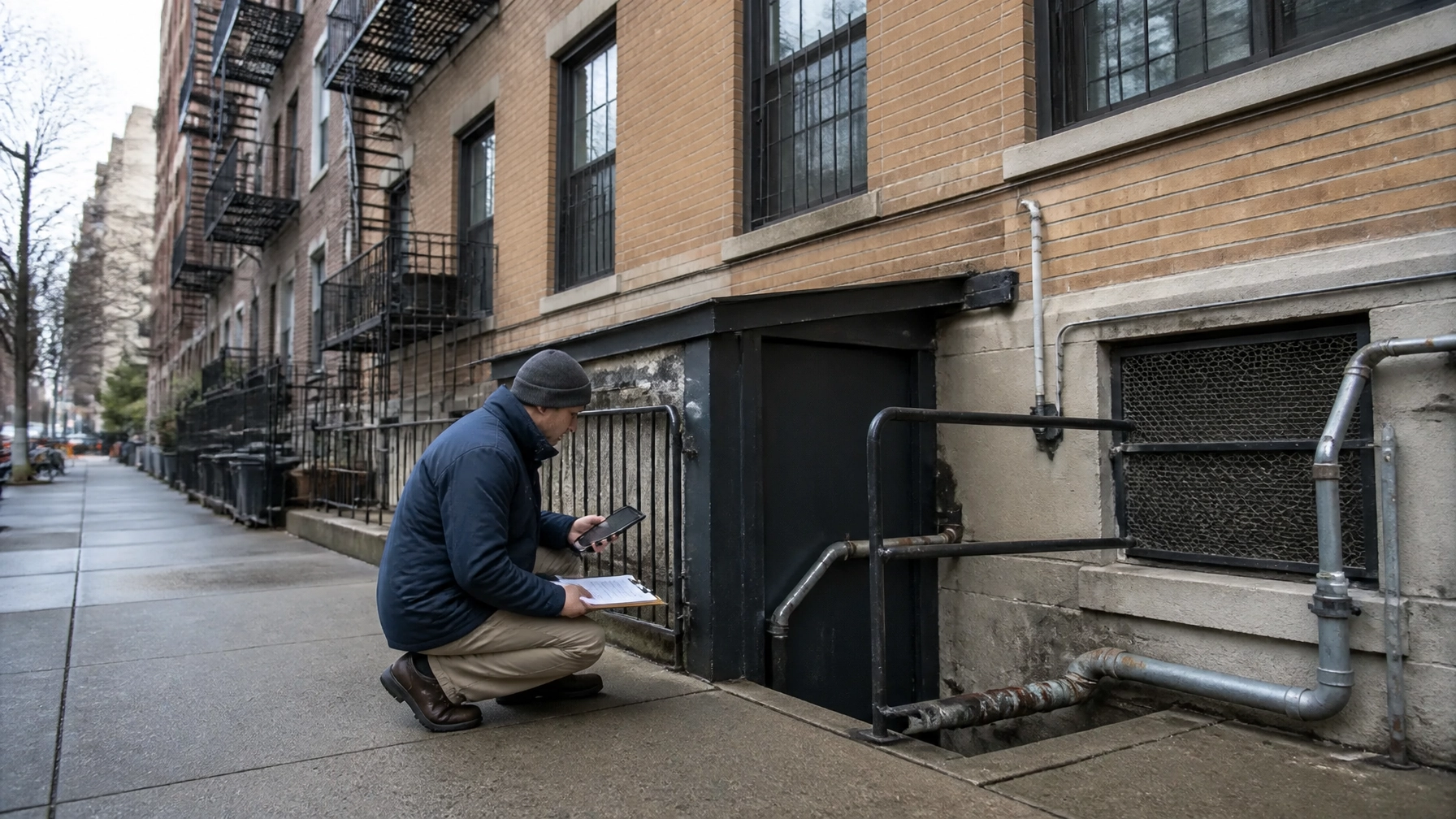
- A visual inspection of accessible interior and exterior areas
- Identification of homogeneous areas with similar materials and installation histories
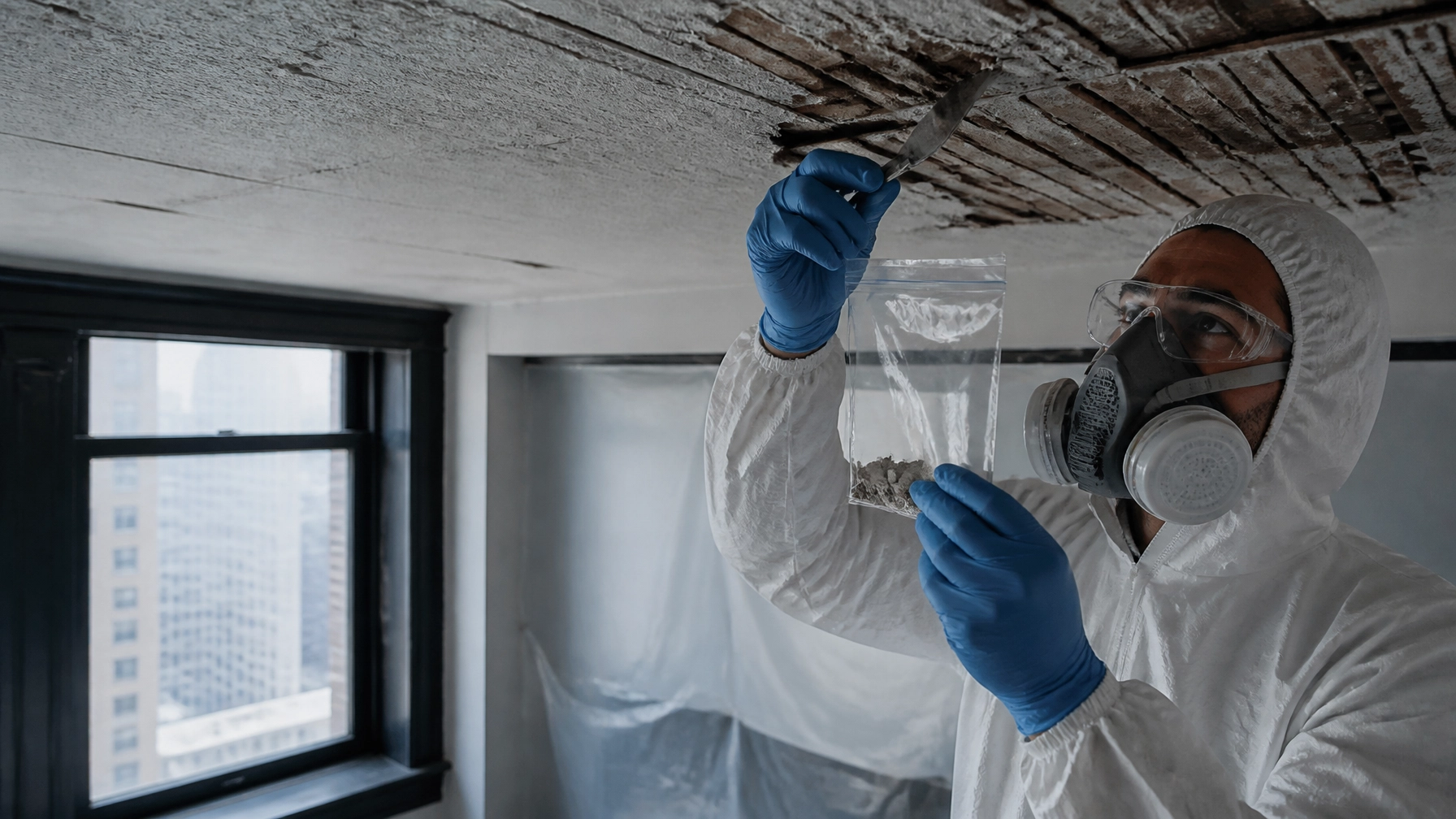
- Bulk sampling of suspect materials
- Laboratory analysis by an appropriately qualified laboratory
- Quantity estimates in square feet, linear feet, or cubic feet
- Floor plans or field sketches showing sample locations
- A written report tied to the actual renovation or demolition scope
- Coordination with the architect, contractor, owner, code official, and environmental team
The survey should answer practical questions. Which ceiling systems can be removed? Will a new mechanical chase disturb pipe insulation? Are floor tiles, mastics, roofing materials, fireproofing, or transite panels within the construction footprint? Are any areas inaccessible and therefore subject to additional investigation before work begins?
A report that only lists materials without connecting them to the construction plans may not help you price the work.
The main cost drivers for a commercial asbestos survey
The following factors usually control the budget more than the building’s street address.
| Cost driver | Why it affects the inspection budget |
|---|---|
| Square footage | Larger buildings contain more rooms, systems, finishes, and potential sampling locations. |
| Building age | Older Newark, Jersey City, Hoboken, and Bayonne properties often contain more layers of historic materials and undocumented alterations. |
| Material count | Pipe insulation, ceiling tile, flooring, adhesive, roofing, plaster, fireproofing, siding, and other materials may require separate evaluation. |
| Homogeneous areas | Similar materials can sometimes be grouped for sampling, but only when their appearance, use, installation, and history support that approach. |
| Inaccessible spaces | Plenums, shafts, locked rooms, crawl spaces, roofs, and concealed systems may require additional access planning or return visits. |
| Bulk samples | Each sample adds field labor, chain-of-custody documentation, and laboratory analysis. |
| Urgency | A compressed closing, permit, or mobilization date may require expedited fieldwork and laboratory turnaround. |
| Occupied areas | Surveys in active offices, schools, retail spaces, and multifamily or mixed-use buildings require more coordination and controlled access. |
| Renovation scope | A limited tenant improvement differs from a gut renovation, structural alteration, or full demolition. |
| Laboratory analysis | The number and type of samples affect laboratory cost and turnaround time. |
| Abatement design | If ACM is identified, the project may need specifications, drawings, quantities, work plans, or contractor bid support. |
| Air monitoring and clearance | These are separate services associated with abatement and reoccupancy, not automatically part of the initial survey. |
| Municipal coordination | Demolition permits, construction permits, notifications, and code-official questions can add project management time. |
A credible proposal should identify which of these items are included. It should also identify exclusions, assumptions, access requirements, and any areas that could not be inspected.
Asbestos survey cost in Newark, NJ
For an asbestos survey cost Newark NJ estimate, start with the planned construction documents, not just the building size.
A 20,000-square-foot warehouse with open access and a limited roof replacement may require a different survey than a 20,000-square-foot office building with multiple tenant suites, concealed mechanical systems, and a full interior demolition.
Newark projects may also involve:
- Historic industrial construction
- Multiple building additions
- Former manufacturing or warehouse uses
- Active tenants or public access
- Utility corridors and inaccessible mechanical spaces
- Coordination with a broader environmental due diligence process
When the property is being acquired, the asbestos survey should align with the renovation budget and closing timeline. Envicon’s environmental assessment services can help coordinate asbestos-related questions with other environmental due diligence rather than treating each issue as an isolated report.
Asbestos inspection for a Jersey City renovation
An asbestos inspection Jersey City renovation project often requires coordination between the owner, architect, construction manager, general contractor, and local permitting team.
Older commercial properties in Jersey City may have several generations of construction materials. A renovation that looks limited on paper can still disturb concealed pipe insulation, fireproofing, plaster, flooring adhesive, or ceiling systems.
The inspection scope should follow the disturbance footprint. If the architect plans to remove walls, open ceilings, replace mechanical systems, core through floors, or modify structural elements, the survey must account for those activities.
Envicon works with project teams in Jersey City and throughout Hudson County. Our Jersey City environmental consulting team can help connect the field findings to the construction sequence, permitting path, and contractor pricing.
New Jersey asbestos survey before demolition
A New Jersey asbestos survey before demolition is not the same as a general visual walkthrough.
Federal Asbestos NESHAP applies to demolition and renovation at institutional, commercial, industrial, and other covered facilities. The EPA requires a thorough inspection of the affected facility or portion of the facility before work begins. Review the EPA overview of the Asbestos NESHAP.
New Jersey’s Uniform Construction Code also requires documentation related to asbestos and NESHAP compliance before a demolition permit is issued. The state rule states:
“Before a structure can be demolished or removed, the owner or agent shall document that the requirements of USEPA 40 CFR 61 subpart M have been or shall be met.”
You can review the New Jersey Asbestos Hazard Abatement Subcode and the NJDEP asbestos guidance for official requirements.
The exact permitting and notification path depends on the building, the work, the quantity and type of ACM, and the agencies with jurisdiction. Do not assume that a prior survey from a previous owner covers a new demolition scope.
Commercial asbestos inspection in Hudson County
A commercial asbestos inspection Hudson County project needs to reflect how the building will actually be used during construction.
Occupied buildings create additional planning requirements. Work areas may need isolation, controlled access, negative air, air monitoring, and clearance procedures. If the project affects a public building or another facility covered by the New Jersey Asbestos Hazard Abatement Subcode, the permit application may require an asbestos hazard assessment, licensed contractor information, plans and specifications, and an authorized asbestos safety control monitor.
The NJ Department of Community Affairs asbestos resources provide current information on the state’s regulatory framework. The New Jersey Department of Labor asbestos resources address contractor licensing and asbestos control requirements.
Budgeting should distinguish between:
- The initial inspection and laboratory report
- Abatement design or specifications
- Licensed asbestos contractor work
- Air monitoring during abatement
- Final clearance testing
- Permit and agency coordination
- Additional investigation caused by inaccessible areas or scope changes
NJ DCA asbestos abatement requirements
The survey is an investigation. Abatement is the controlled removal, repair, enclosure, or encapsulation of asbestos-containing material.
Those services should not be combined into one vague line item.
For projects subject to the applicable New Jersey requirements, the team may need to coordinate:
- An asbestos hazard assessment
- A licensed asbestos abatement contractor
- An asbestos abatement construction permit
- A separate demolition or renovation permit
- An authorized asbestos safety control monitor
- Required notifications
- Work plans, drawings, and specifications
- Air monitoring during the work
- Final visual inspection and clearance testing
- Proper packaging, transport, and disposal of asbestos waste
The applicable NJ DCA asbestos regulations should be reviewed for the specific building and project scope. Local code officials and the relevant state agencies may also require project-specific documentation.
Asbestos inspection versus Phase I ESA
An asbestos inspection does not replace a Phase I Environmental Site Assessment.
A Phase I ESA evaluates recognized environmental conditions associated with the property, including current and historical uses, potential releases, and regulatory records. It generally does not provide a complete asbestos survey for renovation or demolition planning.
The reverse is also true. An asbestos survey does not evaluate every environmental condition that may affect a property acquisition or redevelopment plan.
For a commercial acquisition, the two studies may be coordinated, but they serve different purposes. Envicon can help structure the investigation through its Phase I ESA services and broader environmental assessment work.
What to request before approving a proposal
Before comparing prices, ask each consultant to confirm:
- What areas will be inspected
- How many bulk samples are included
- Whether laboratory analysis is included
- Whether floor plans or sample-location drawings are included
- How inaccessible areas will be handled
- Whether the report addresses demolition or only renovation
- Whether abatement design is included or excluded
- Whether air monitoring and clearance are separate services
- Whether municipal coordination is included
- What turnaround time is guaranteed
- Who will lead the project and answer field questions
A lower initial fee may not be lower after missed materials, return visits, permit delays, redesign, or contractor change orders.
Envicon takes a field-first approach. We coordinate directly with owners, architects, attorneys, construction managers, contractors, and local officials. You get a clear scope, direct access to the technical team, and documentation built to support the next decision.
Takeaway
The cost of an asbestos inspection for a New Jersey commercial property depends on the building and the work, not on a universal price sheet.
For Newark, Jersey City, Hoboken, Bayonne, Bergen County, Hudson County, and Essex County projects, budget for the full path:
- Define the renovation or demolition footprint
- Inspect accessible and relevant suspect materials
- Collect and analyze representative samples
- Document quantities and locations
- Identify abatement, monitoring, and clearance needs
- Coordinate permits and notifications
- Keep the findings aligned with the construction schedule
A complete inspection does more than identify asbestos. It gives your project team a defensible basis for pricing, permitting, sequencing, and risk control.
Next steps with Envicon
- Call Envicon at (917) 764-2171 to discuss your building and renovation scope.
- Request a free quote for a commercial asbestos inspection.
- Use our project risk screener to identify early environmental and construction risks.
- Review Envicon’s remediation and brownfield services if asbestos is part of a larger redevelopment plan.