A Manhattan acquisition rarely turns on one report. A buyer may need a Phase I ESA, asbestos survey, property condition assessment, structural review, lead and mold screening, vapor evaluation, title review, and lender-specific deliverables before closing.
These scopes answer different questions. Combining them under one coordinated diligence plan helps you identify risk earlier, allocate costs correctly, and avoid discovering a material issue after you own the building.
For an office conversion in Midtown, a mixed-use asset in SoHo, a multifamily acquisition on the Upper West Side, or a redevelopment site in East Harlem, environmental due diligence Manhattan acquisition work should begin with the transaction strategy, not a generic checklist.
Why a Phase I ESA is necessary but not sufficient
A Phase I Environmental Site Assessment prepared under ASTM E1527-21 evaluates potential releases or threatened releases of hazardous substances and petroleum products. It typically includes:
- Historical aerial photographs, Sanborn maps, city directories, and topographic information
- Federal, state, and local environmental database research
- Review of available regulatory records
- Site reconnaissance and interviews
- Identification of recognized environmental conditions, historical recognized environmental conditions, and controlled recognized environmental conditions
- Documentation of significant data gaps
- A report signed by an environmental professional
ASTM E1527-21 is recognized by the U.S. Environmental Protection Agency as consistent with the All Appropriate Inquiries requirements under 40 CFR Part 312. That makes the Phase I ESA an important part of commercial acquisition diligence and potential CERCLA liability protection.
It does not make the Phase I a building inspection.
A Phase I ESA does not replace:
- An asbestos survey
- Lead-based paint or lead-containing material evaluation
- Mold or moisture assessment
- Structural inspection
- Mechanical, electrical, plumbing, fire protection, or elevator review
- ASTM E2018-24 Property Condition Assessment
- Targeted soil, groundwater, soil vapor, or indoor-air sampling
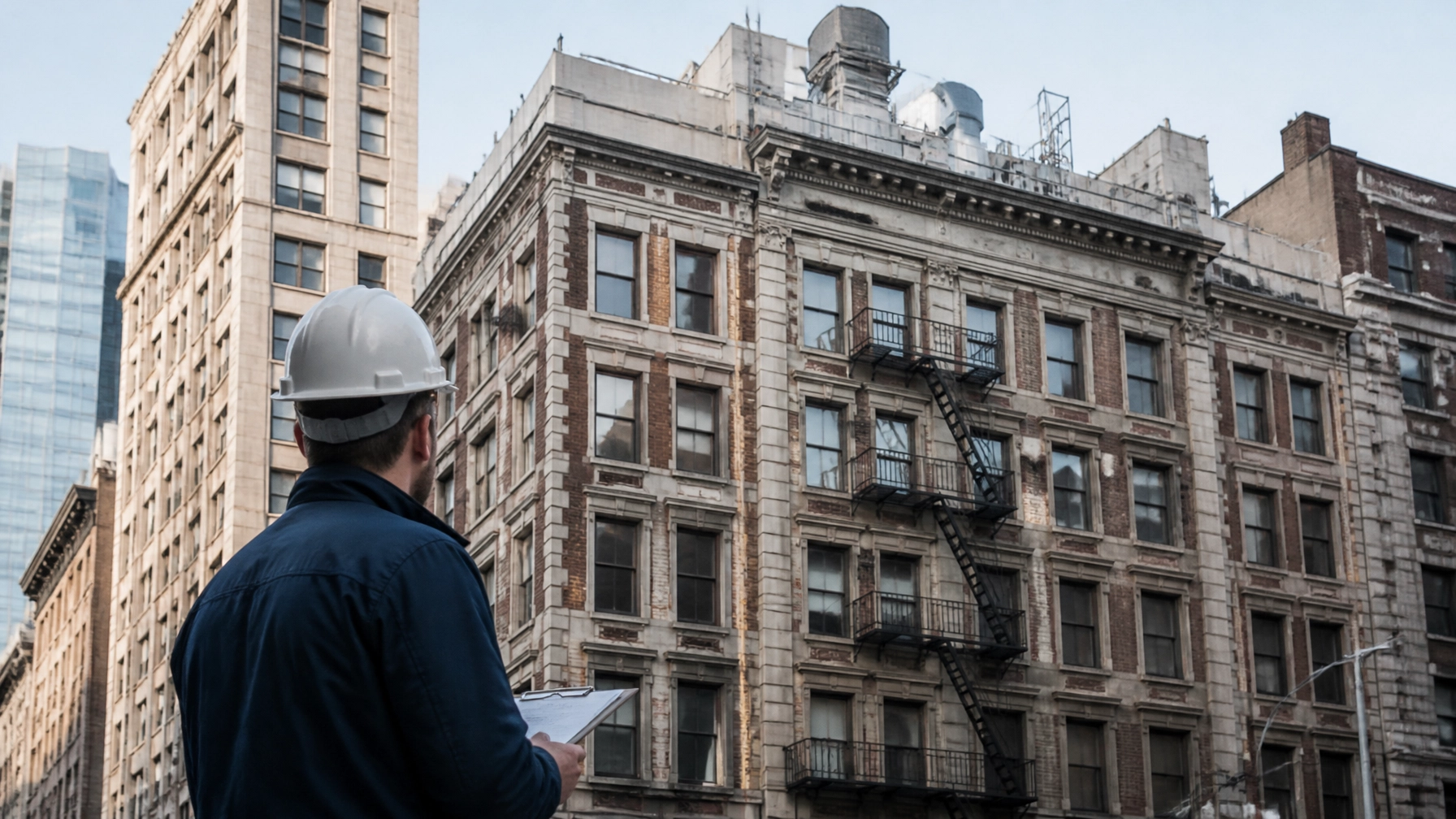
The distinction matters. A prewar office building near the Garment District may have historic dry-cleaning or manufacturing uses in the surrounding area. It may also have asbestos insulation, failing roofing, obsolete electrical equipment, and a deferred capital repair program. One Phase I report cannot fully characterize all of those conditions.
The coordinated diligence workflow

1. Start with the transaction and title record
Before field work begins, the diligence team should understand the deal structure and intended use.
Review the following where available:
- Current deed and prior ownership history
- Title report and recorded environmental liens
- Activity and use limitations, easements, and deed restrictions
- Existing environmental reports and closure documents
- Certificates of occupancy and zoning history
- DOB permits, violations, and alteration records
- Existing leases, tenant operations, and access restrictions
- Prior fuel tank, dry-cleaning, printing, garage, laboratory, or industrial uses
- Planned conversion, demolition, excavation, or change in occupancy
Title and records review can reveal obligations that will not appear in a standard database report. For example, an environmental restriction, institutional control, or past remedial agreement may affect the buyer’s redevelopment plans even if current site conditions appear stable.
The buyer’s attorney should lead legal interpretation. The environmental professional should identify technical implications and additional investigation needs.
2. Complete the Phase I ESA under ASTM E1527-21
A Phase I ESA for a Manhattan buyer should be scoped around the property’s actual history and the lender’s requirements.
Manhattan properties often require careful review of:
- Historic commercial and industrial occupants
- Former gasoline stations and automobile uses
- Dry cleaners and solvent users
- Printing, metalworking, and manufacturing tenants
- Historic fill and imported soil
- Underground and aboveground storage tanks
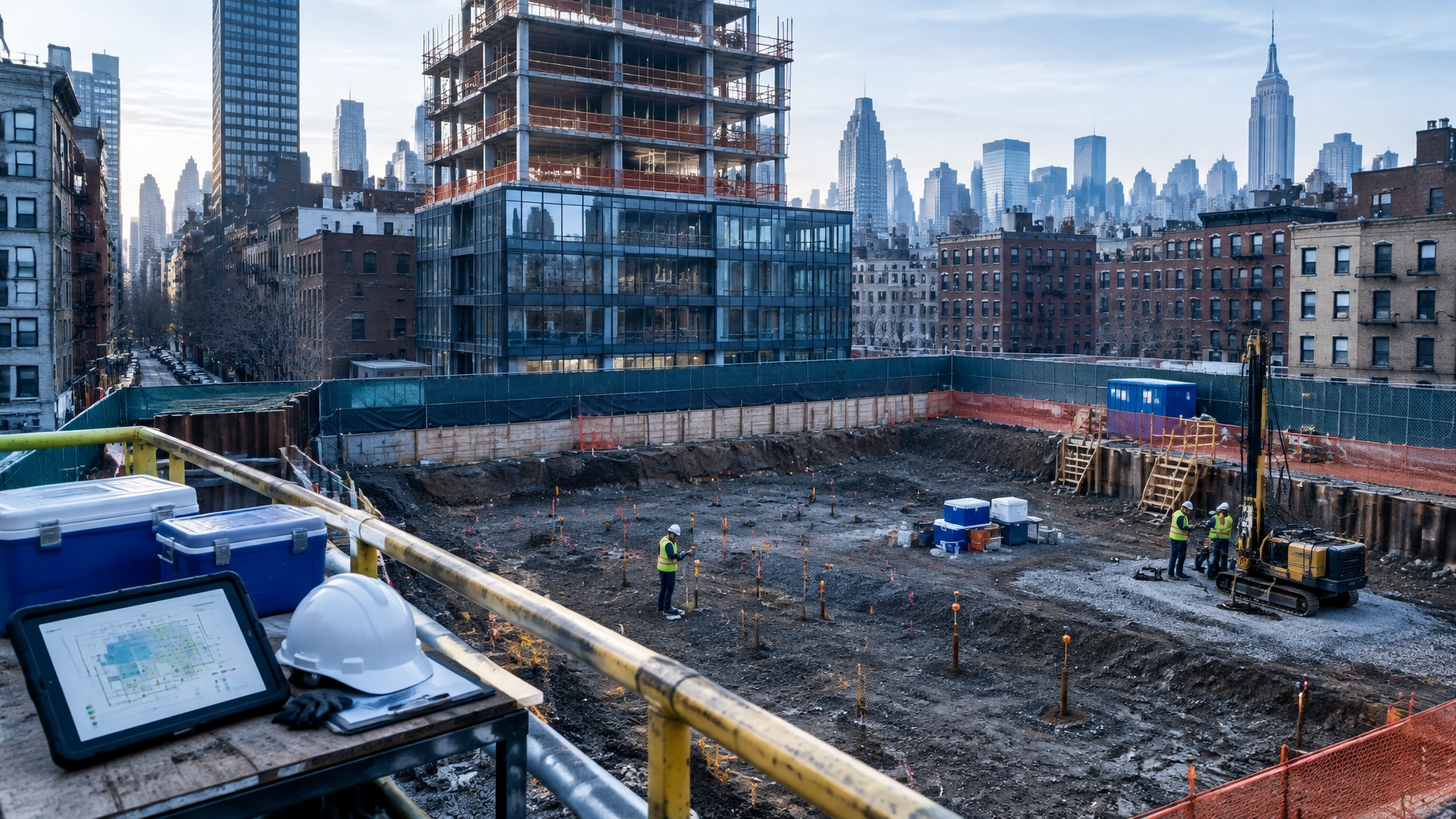
- Adjacent properties with potential vapor or groundwater pathways
- NYC E-Designation or other environmental restrictions
- Prior NYC OER, NYSDEC, or NYC DEP involvement
If the Phase I identifies a recognized environmental condition, the buyer must decide whether to proceed with a Phase II investigation before closing, negotiate a price adjustment, require seller work, obtain an indemnity, or accept the uncertainty with a defined reserve.
The answer should be commercial and technical. A report that only lists concerns without explaining the next decision does not move the transaction forward.
3. Add asbestos, lead, and mold scopes based on the work plan
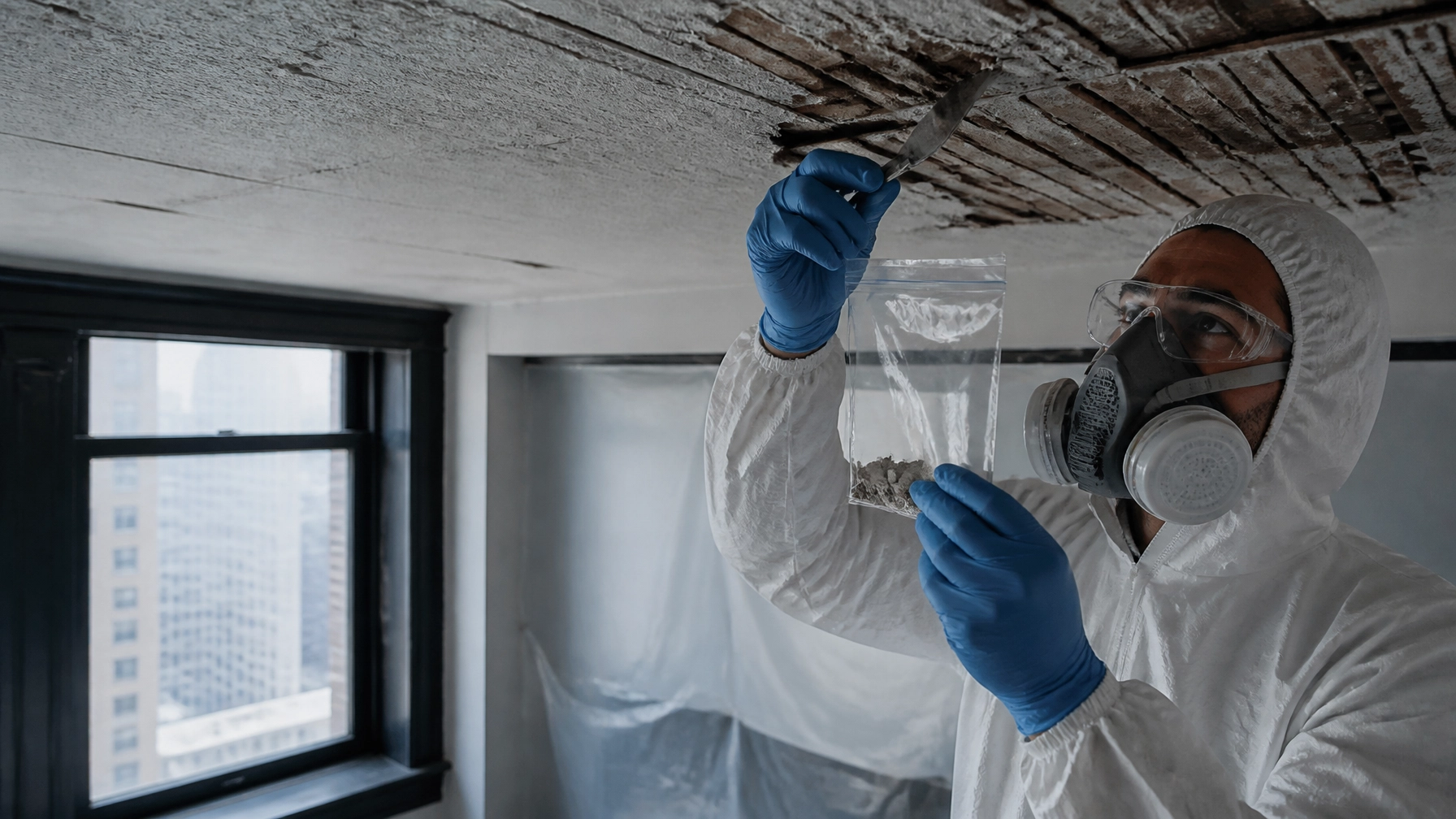
An asbestos survey for a Manhattan commercial building is a separate scope. It is not included in ASTM E1527-21.
For renovation, alteration, or demolition work in New York City, asbestos requirements may apply under New York State Industrial Code Rule 56 and NYC DEP requirements. NYC Department of Buildings guidance explains that covered work may require an asbestos investigation and either an ACP-5 assessment report or an ACP-7 project notification, depending on the findings and scope.
Review the current requirements through:
- NYC DOB Project Requirements: Asbestos
- NYC DEP Asbestos Abatement Forms
- 15 RCNY asbestos regulations
A buyer planning a conversion should not wait until construction documents are complete to identify asbestos risk. Sampling access, destructive openings, laboratory turnaround, abatement design, and filing requirements can affect the closing and construction schedule.
Lead and mold require separate decisions. Lead-based paint may be relevant in pre-1978 buildings and in components that will be disturbed. Mold evaluation should focus on visible growth, moisture intrusion, humidity, plumbing leaks, roof failures, and below-grade conditions. Neither issue is resolved by a Phase I ESA.

4. Commission a PCA under ASTM E2018-24
A property condition assessment for a Manhattan lender addresses the physical condition and anticipated capital needs of the building. The current ASTM reference is ASTM E2018-24.
A PCA commonly reviews:
- Structural framing and foundation
- Exterior walls, windows, roofing, and waterproofing
- Heating, ventilation, and air-conditioning systems
- Electrical distribution and emergency power
- Plumbing and domestic water systems
- Fire protection
- Elevators
- Interior finishes and common areas
- Site improvements and drainage
- Immediate repairs and replacement reserves
The PCA is especially important for office conversions and multifamily purchases. A building may have acceptable environmental conditions but still require substantial capital investment for elevators, facade repairs, HVAC replacement, electrical upgrades, or life-safety improvements.
The lender may request a specific format, reserve period, cost opinion, or consultant qualification. Confirm those requirements before authorizing the work.
Comparison: what each diligence scope answers
| Scope | Primary question | Typical standard or driver | What it does not replace |
|---|---|---|---|
| Phase I ESA | Could hazardous substances or petroleum releases affect the property? | ASTM E1527-21 and AAI | Asbestos, mold, structural, and building systems reviews |
| Phase II ESA | Is contamination present in soil, groundwater, soil vapor, or indoor air? | Site-specific investigation plan | Building condition or asbestos compliance work |
| Asbestos survey | Could planned work disturb asbestos-containing material? | Rule 56 and NYC DEP requirements | Phase I environmental liability review |
| PCA | What is the physical condition and capital cost exposure? | ASTM E2018-24 | Environmental release assessment |
| Structural inspection | Are structural components safe and adequate for current or planned use? | Project-specific engineering scope | Full PCA or environmental assessment |
| Lead and mold assessment | Are lead hazards or moisture-related conditions present? | Project and regulatory requirements | Phase I ESA and PCA |
| Vapor screening | Could subsurface contamination affect indoor air? | Site-specific regulatory and technical guidance | General Phase I or building-wide PCA |
Cost, schedule, and access decisions
The buyer and seller should establish responsibility for each scope in the purchase agreement and diligence plan. Common approaches include:
- Seller provides existing reports, permits, maintenance records, and access
- Buyer orders independent Phase I, PCA, and asbestos work
- Seller funds corrective work identified before closing
- Buyer receives a credit, escrow, indemnity, or price adjustment
- Buyer accepts a known condition with a defined remediation or capital reserve
- Both parties agree on access windows for occupied spaces, tenant areas, roofs, basements, and mechanical rooms
Access limitations must appear in the reports. A locked basement, occupied tenant suite, concealed wall cavity, inaccessible roof, or restricted mechanical room can create a meaningful data gap.
Do not treat a limited inspection as a clean result. Treat it as a risk decision.
How Envicon keeps the diligence moving
Envicon coordinates environmental assessment, asbestos and lead surveys, vapor evaluation, civil engineering, and property-condition work through one project team. That reduces duplicate site visits and gives the buyer, lender, attorney, architect, and contractor one clear record of findings and next steps.
Our NYC environmental consulting team works across Midtown, Hudson Yards, Chelsea, the Financial District, SoHo, Tribeca, the Upper West Side, Harlem, and the outer Manhattan neighborhoods. We understand that the useful deliverable is not a stack of disconnected reports. It is a decision path that answers:
- What condition exists?
- What work is required?
- Who controls the next step?
- What will it cost?
- Can the project still close and proceed on schedule?
That is the difference between ordering reports and managing risk.
Takeaway
A Phase I ESA is the foundation of commercial property environmental due diligence in NYC. It is not a substitute for asbestos, lead, mold, structural, vapor, or ASTM E2018-24 property-condition work.
For a Manhattan acquisition, coordinate the scopes before the inspection window opens. Match the work to the planned use, lender requirements, access conditions, and seller negotiations. The right diligence program gives you more than findings. It gives you the information needed to price the asset, protect the closing, and move toward a buildable, financeable property.
Request a coordinated diligence scope
Tell us the property address, transaction timeline, planned use, lender requirements, and available access. We will help define the right combination of Phase I ESA, asbestos, PCA, vapor, and related assessments.
- Request a coordinated consultation
- Call Envicon at (917) 764-2171
- Review Phase I and environmental assessment services
- Start with our Phase I ESA service