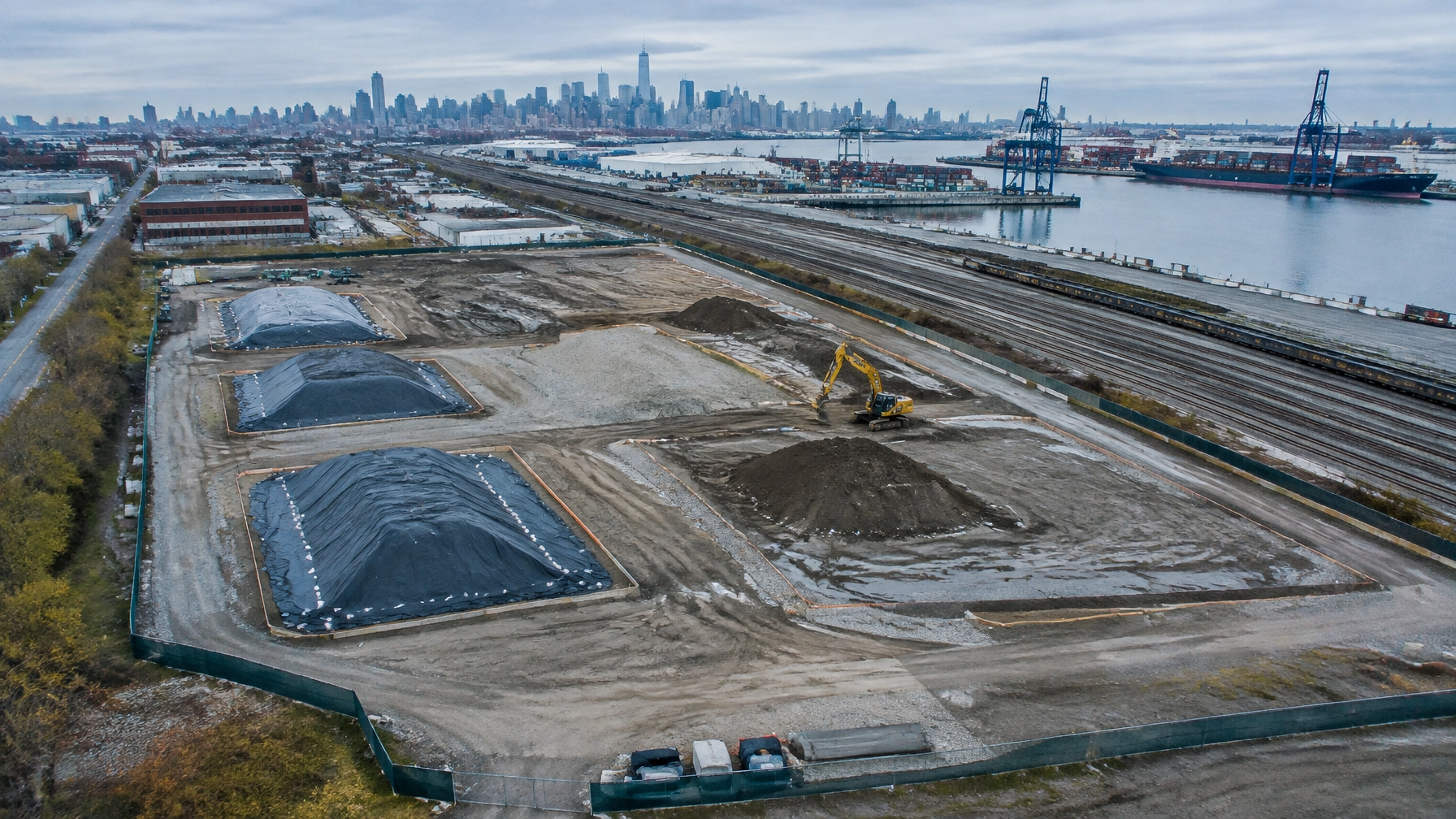
A new state permitting navigation service is due by April 2027. It may help qualifying projects coordinate agency reviews. It will not change what an environmental application must contain today.
That distinction matters if your Newark redevelopment is waiting on NJDEP review, or if field data and technical documents are still being completed. A new point of contact cannot make an incomplete submittal complete. The most useful work in the next 90 to 150 days is still direct: close data gaps, document the review path, and submit a technically complete package.
What Executive Order No. 28 directs New Jersey to do
On November 10, 2026, Governor Mikie Sherrill signed Executive Order No. 28, establishing the New Jersey Means Business Economic Development Strategy and its Economic Development Council. The order took effect immediately. The Council reports to the Governor’s Chief Operating Officer and includes the NJEDA, New Jersey Innovation Authority, and several state departments.
The order sets deadlines for new strategies, a statewide site readiness plan, and a cross-agency navigation service. That service is intended to coordinate state and municipal permitting, regulatory review, workforce development, and other business support for projects that meet criteria still to be developed.
The order also calls for a project lead for each qualifying project, agency liaisons, escalation procedures, and a common way to track milestones, agency actions, and unresolved barriers. It does not establish those criteria or assign a project lead to every application today.
Read the Governor’s announcement and the full Executive Order No. 28.
Key deadlines from the order
Deadlines run from the order’s November 10 effective date. Calendar calculations put the milestones below in early February, March, and April 2027.
- Within 90 days, by about February 8, 2027: Develop business retention and attraction strategies and a statewide site readiness plan. The state must also convene the Governor’s Office Permitting Governing Council to align permitting reform under Executive Order No. 5 with this economic strategy, and provide initial recommendations to reduce the cost and complexity of doing business.
- Within 120 days, by about March 10, 2027: Recommend priority sectors, review economic development incentives and funding programs, develop a statewide research and development and speed-to-market strategy, improve small business access to state services, establish an advisory group for small and midsized businesses, and propose coordinated economic development for communities facing persistent challenges.
- Within 150 days, by about April 9, 2027: Create the cross-agency business and permitting navigation service for qualifying projects.
These are planning deadlines, not promises that a particular application will be decided by a specific date. The order also requires performance measures that track outcomes such as employment, wages, business formation, and private investment.
A navigation service can coordinate review. It cannot repair a deficient submittal.
The order’s proposed service could make it easier to identify the right agency contacts and raise unresolved cross-agency issues. That could be valuable when a development project involves multiple permits, municipal approvals, environmental review, and workforce needs.
But coordination is not technical review. Environmental submittals can take time because they depend on field investigation, laboratory results, interpretation of site conditions, and review by the regulator. Under the NJDEP Site Remediation Program, an NJDEP LSRP may oversee remediation and certify work within the applicable regulatory framework. EO 28 does not replace the LSRP’s professional responsibilities or change the NJDEP LSRP rules.
A navigation contact cannot fill an uncharacterized soil area, explain a groundwater result that conflicts with earlier data, or supply the professional certification required for a submission. If the reviewer finds a data gap, the project may still need additional sampling, analysis, or a revised document.

What a “qualifying project” could mean for a site with remediation activity
EO 28 directs the state to propose criteria for coordinated support. It does not yet say which project types or sizes will qualify. A site with active remediation could be considered strategically important because its cleanup, permits, infrastructure, and construction schedule may involve several parties. That is a reasonable possibility, not a confirmed eligibility rule.
Owners should not assume that a remediation project will qualify just because it has an NJDEP case or an LSRP. Nor should they assume that lack of a state contact or dashboard listing means a project is ineligible, delayed, approved, or overlooked. The qualifying standard and operating process remain to be developed.
For projects in Newark, technical readiness still starts with a clear record of site conditions and next actions. We help developers coordinate regulatory compliance and permitting with investigation, remediation, and project schedules. Our compliance and permitting team works across agency requirements, while our remediation and brownfield services support cleanup planning and implementation. We also serve projects in Newark, NJ.
What the statewide site readiness plan could mean for brownfields
The order directs the state to propose a plan to identify and prepare priority sites for development and redevelopment. It specifically names predevelopment activities such as environmental assessment, planning, permitting, infrastructure engineering, acquisition, and site assembly. It also calls for an initial list of priority sites, funding recommendations, readiness measures, and a public-facing tool to identify and evaluate available sites.
That could help bring attention and resources to brownfield sites with strong redevelopment potential. It does not mean every underused or contaminated parcel will receive state support, or that a selected site will receive automatic permits or regulatory closure. Site readiness depends on real conditions: contamination extent, access, utilities, stormwater needs, land control, and the approvals required for the intended use.
For owners and developers pursuing brownfield redevelopment in NJ, early environmental due diligence can help clarify those constraints before the construction schedule is fixed. A useful site readiness plan will need dependable site data, clear documentation, and realistic milestones. A dashboard can make project status easier to see, but the underlying technical work still has to hold up.

Use the 90 to 150-day window to get the file ready
The service is not in place yet. While the state develops it, owners can reduce avoidable back-and-forth by taking practical steps now:
- Close the data gaps a reviewer is likely to find first. Compare the proposed use, site history, sampling locations, soil and groundwater results, vapor concerns, and the conclusions in the current submittal. Confirm that the data supports the decisions being requested.
- Document the regulatory path and timing. Keep a current list of open agency questions, submitted documents, responses, required field events, and dependencies. Separate agency review time from time needed to produce new data or revise a submission.
- Check technical completeness before filing. Confirm that figures, tables, laboratory results, supporting calculations, certifications, and attachments match and tell a consistent story. Resolve gaps before they turn into a request for more information.
- Keep an accountable point of contact. Make sure your licensed professional, project team, counsel, and contractor know who owns each next action and when it is due.

The practical difference is not another report in a queue. It is a complete, traceable file and a project team that can explain what is outstanding, who owns it, and what comes next. At Envicon, we sit at the table with NJDEP rather than behind a queue. Our clients can see schedule and deliverable status in real time, rather than waiting for a monthly PDF that may already be out of date. Collaboration is not a buzzword. It is how we keep the work aligned.
Frequently asked questions
Does Executive Order No. 28 change environmental application requirements?
No. The order creates a strategy and directs the state to develop a navigation service. It does not change the technical requirements for environmental submissions or the applicable NJDEP review process.
When will the permitting navigation service be available?
The order directs the state to create it within 150 days of November 10, 2026, which is approximately April 9, 2027. The detailed eligibility criteria and operating procedures still need to be proposed.
Will a site with an NJDEP LSRP automatically qualify?
No automatic eligibility is stated in the order. It requires the state to propose criteria for qualifying projects. An LSRP-led remediation case alone does not establish that a project will qualify.
If my project is not on a state dashboard, does that mean it has no status?
No. Absence from a dashboard or program is not a status signal. The navigation service’s criteria, tracking process, and project coverage have not yet been established.
What should I do while the state develops the service?
Close known data gaps, document agency communications and regulatory timeframes, and confirm your submittal is technically complete. Do not wait for a new navigation process to prepare the work your project already needs.
Takeaway: prepare the project, not just the queue
EO 28 could give qualifying projects a clearer route through state and municipal coordination. It does not make an incomplete environmental file complete, and it does not guarantee a faster decision for every site. For a stalled approval in Newark or elsewhere in New Jersey, the strongest move now is to tighten the technical record, document the path to review, and keep each next action owned and visible.