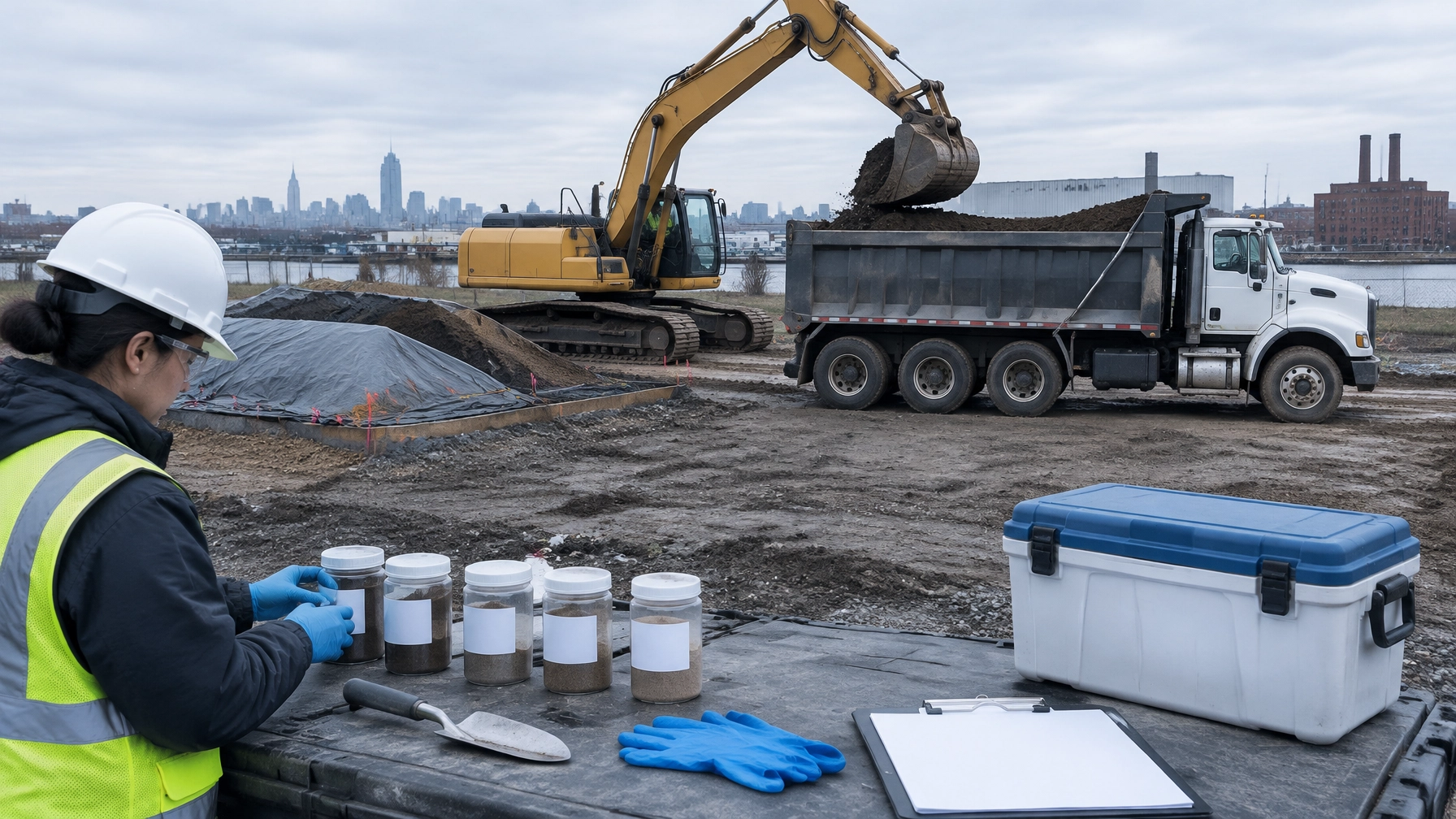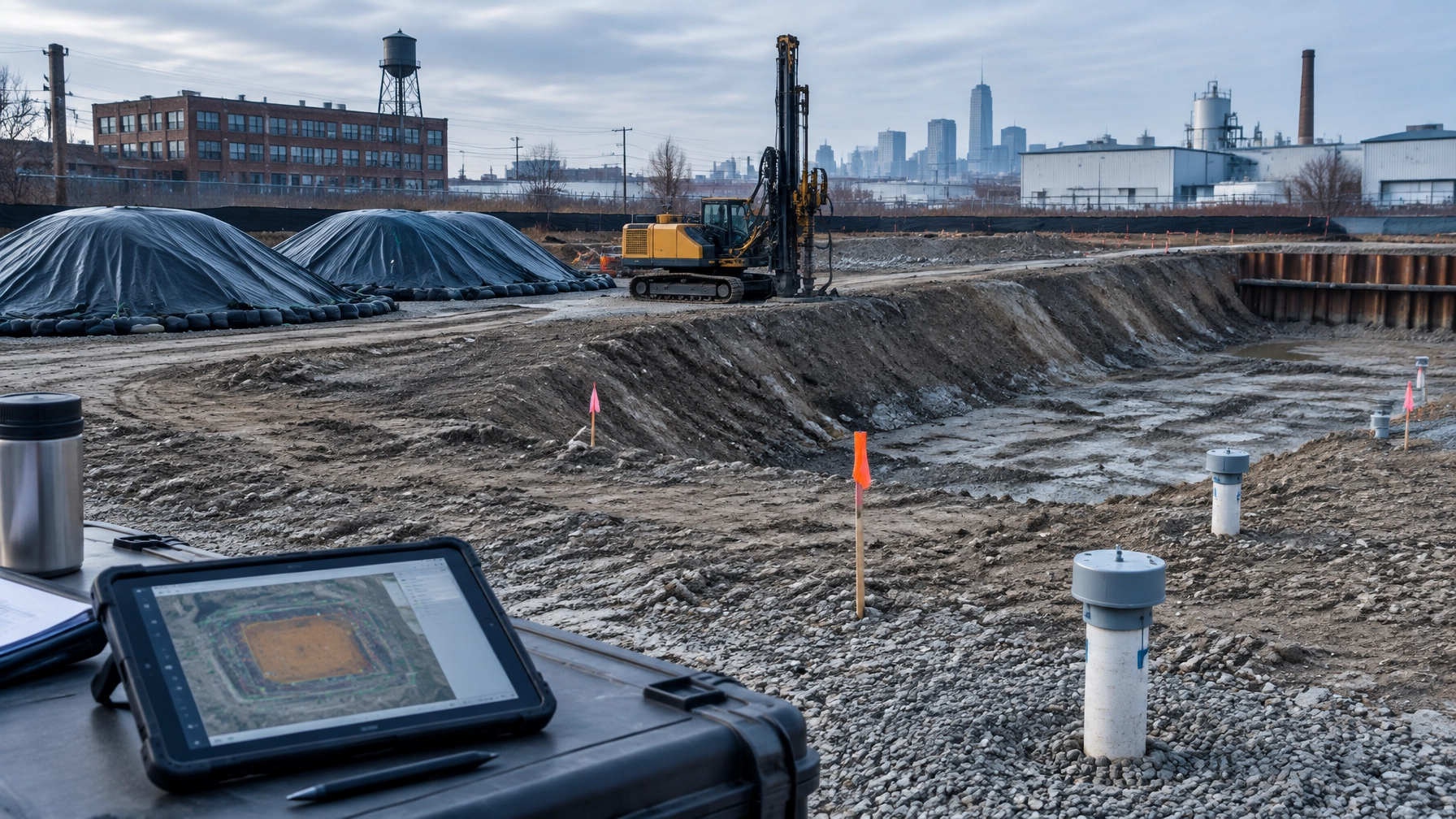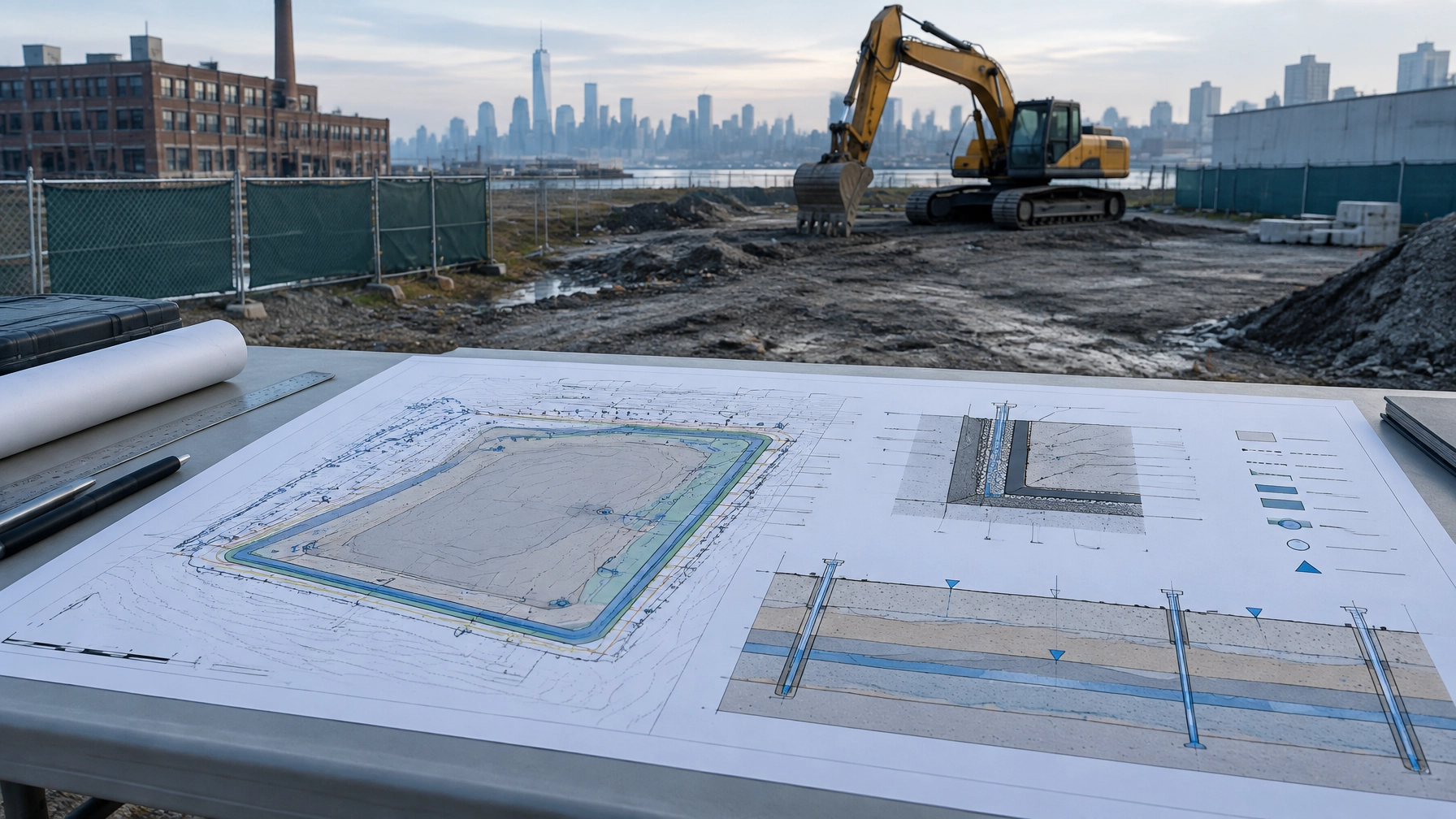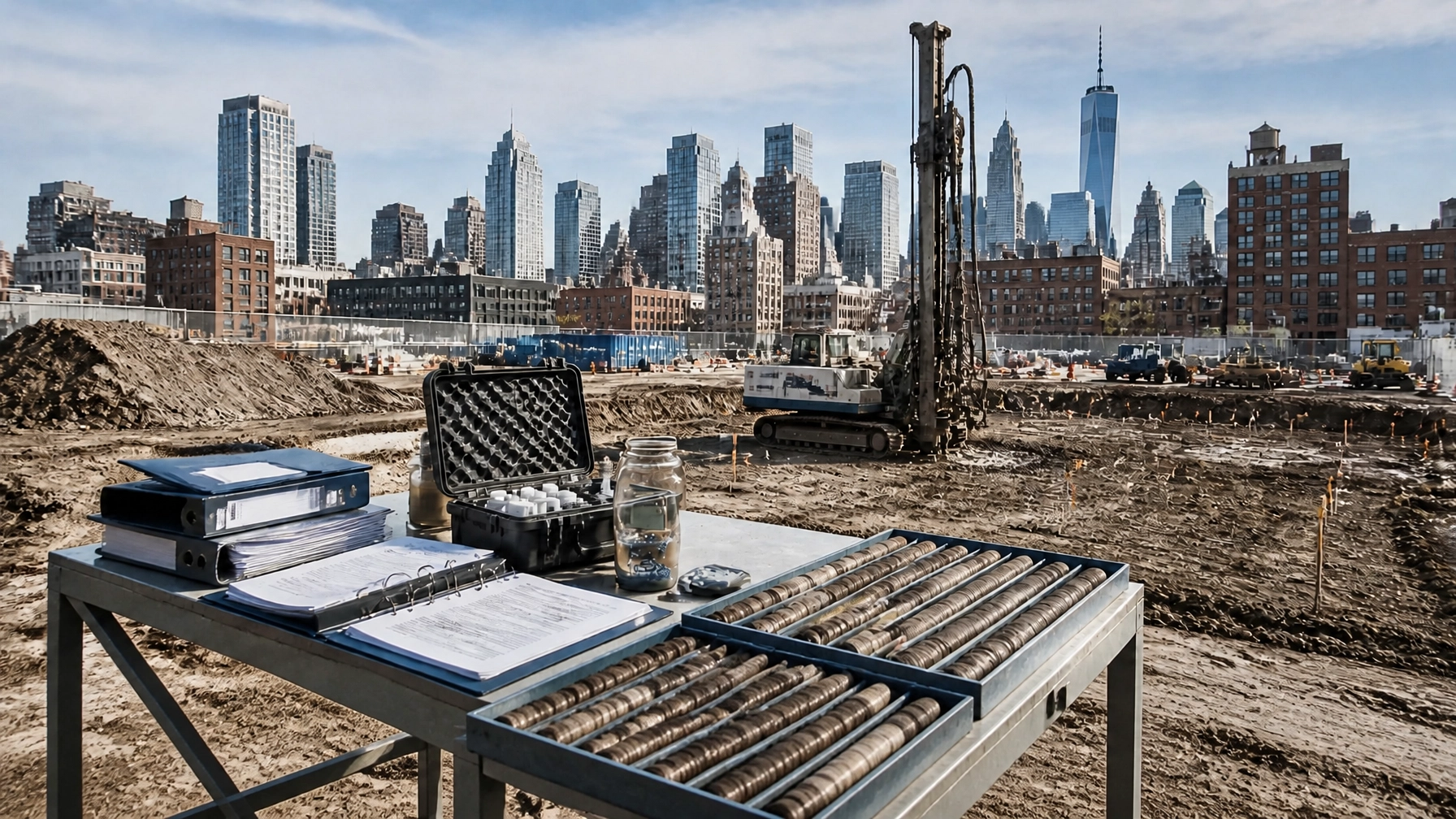
For a New Jersey brownfield deal, HDSRF is worth checking before you lock the remediation budget. Developers often assume the Hazardous Discharge Site Remediation Fund is public-sector money. That misses real, but limited, grant and loan pathways for private applicants.
The details matter. Private grants are narrow. Loans have separate eligibility tests. And the $10 million annual pool for certain remedial actions is oversubscribed as of November 2026. Model HDSRF as a potential funding source, not a committed source of capital.
HDSRF is not public-only, but private assistance has limits
The NJDEP HDSRF program provides grants and loans to eligible public and private entities. NJDEP evaluates preliminary eligibility, the technical merits of the project, and estimated costs. NJEDA then evaluates financial status and determines whether to award a grant or loan. See the NJEDA HDSRF program page and the NJDEP funding chart for the program’s distinct pathways.
For private entities, the grant opportunity most likely to be overlooked is a matching grant for a soil remedial action that achieves unrestricted use. A qualifying private person may receive 25% of eligible project costs, up to $250,000 per project. The qualifying-person rules include a net-worth limit of not more than $2 million. That is not an automatic benefit for every developer or every cleanup. Eligibility, qualifying costs, matching requirements, and the required cleanup outcome need to be confirmed for the specific applicant and site.
HDSRF also offers private loans in certain circumstances. The program chart lists loans of up to $500,000 per calendar year for private persons, subject to the applicable eligibility pathway. Some loan pathways require the applicant to be unable to establish a remediation funding source or obtain conventional financing. A loan can help bridge a funding gap, but it is debt. Treat it accordingly in your sources and uses.
Public funding follows different rules
Public entities may access grants for assessment and investigation, as well as remedial-action assistance. The program materials identify:
- Up to 100% of eligible preliminary assessment, site investigation, and remedial investigation costs, subject to program conditions and annual caps.
- Remedial-action grants for eligible end uses, including recreation or conservation, renewable energy, and affordable housing.
- Additional assistance for qualifying projects in a designated Brownfield Development Area (BDA).
The NJDEP program page lists a public-sector annual cap of $3 million, with an additional $2 million available for qualifying BDA projects. The chart also identifies a separate $250,000 project cap for certain unrestricted-use remedial-action matching grants. These caps apply to different categories. Do not add them together as though every applicant can claim the maximum in one award.
Public applicants also face ownership and redevelopment-commitment conditions. Depending on the funding category, they may need to show qualifying property control and a plan or resolution demonstrating a realistic redevelopment commitment.

What the $10 million oversubscription means for a deal
The $10 million figure does not describe a single pot available to every HDSRF applicant. It refers to annual remedial-action funding for specified end uses. The program identifies up to 75% of eligible remedial-action costs for recreation or conservation and renewable-energy projects, and up to 50% for affordable-housing projects. The rules and applicant category determine which pathway applies.
NJDEP’s 2026 Q3 Brownfield Roundtable slides report that the non-BDA remedial-action pool was oversubscribed. Three applications totaling $3.2 million were unfunded during calendar year 2026. NJDEP said it would continue accepting applications, review them in receipt order, and work with applicants and LSRPs to reach administrative and technical completeness. Recommendations to NJEDA for those currently unfunded applications were deferred until January 2027.
For a developer, that changes the pro forma in a practical way:
- Do not book a grant as committed capital before an award.
- Do not assume a 2026 application will produce a 2026 award from an oversubscribed category.
- Build a base case that can proceed without the grant, then show the award as a potential reduction in the owner’s net cleanup cost.
- Confirm that your proposed end use matches the specific funding category.
- Track the application’s completeness and status, not just the submission date.
NJEDA says priority may consider receipt date, readiness to proceed, and fund availability. An early but incomplete package can still create delays. Technical readiness matters. So does the quality of cost support.
Sequence funding with site work, the pro forma, and ISRA
HDSRF planning should begin during due diligence, not after remediation costs are locked. For environmental due diligence for developers in NJ, the key is to connect the environmental scope to the planned use, funding category, and transaction schedule.
A workable sequence looks like this:
- Confirm the site and applicant pathway. Review the responsible-party history, site ownership or control, applicant net worth where relevant, and any available conventional funding. Do not assume a private grant applies because the property is a brownfield.
- Define the cleanup and end use. Soil volume, groundwater conditions, remedial standards, confirmation sampling, and the planned reuse all affect costs and possible eligibility.
- Develop a defensible cost estimate. Separate assessment, investigation, and remedial-action costs. Tie estimates to the remedial approach, schedule, and supporting field data.
- Check funding availability and completeness requirements. Confirm the latest program status with NJDEP and NJEDA. Their review roles differ, and a complete application needs to be ready for both technical and financial review.
- Keep regulatory deadlines on a separate track. HDSRF review does not pause or replace environmental obligations.
For an ISRA-covered industrial establishment, the current NJDEP ISRA rules require an owner or operator planning to close operations or transfer ownership or operations to submit a General Information Notice within five calendar days after a listed triggering event. The deadline runs from the event, not from an HDSRF decision. A funding application does not extend it. If the transaction depends on a pre-completion transfer, ISRA’s remediation certification and funding-source requirements also need separate attention.
That is where early coordination pays off. A funding strategy should support the cleanup path, not become the reason the transaction misses a notice or closing milestone.

Keep HDSRF separate from the NJ Brownfield Tax Credit
The NJ Brownfield Tax Credit, formally the Brownfields Redevelopment Incentive Program (BRIP), is a separate NJEDA program. It is not an HDSRF grant or loan. As of November 2026, the NJEDA BRIP page says the program is not accepting applications while NJEDA develops rules following the 2024 statutory changes.
That distinction matters in financing models. HDSRF has its own eligibility, funding categories, annual caps, and application process. BRIP has separate requirements and award mechanics. Do not use a potential BRIP tax credit to make an HDSRF application appear financeable, or count both sources without checking whether the costs and program rules allow the proposed combination.
For Monmouth County projects, a former industrial parcel, coastal redevelopment site, or underused commercial property may have different environmental and permitting constraints. Start with the property’s actual history and cleanup endpoint. Our Monmouth County environmental consulting team supports site-specific brownfield redevelopment planning. Our New Jersey environmental consultant hub provides a broader view of local services and regulatory coverage.

The practical takeaway
HDSRF is not only for municipalities. Private applicants may qualify for a limited unrestricted-use remedial-action grant or, under specific conditions, a loan. Public entities have broader assessment and investigation assistance and separate remedial-action categories. The $10 million annual pool for specified non-BDA remedial actions is oversubscribed, so timing and application completeness now matter even more.
Build the cleanup budget first. Confirm the applicant and project pathway. Treat funding as uncertain until awarded. Keep ISRA deadlines moving independently. That is how you protect the deal while pursuing assistance that can improve its economics.
Envicon Group provides brownfield redevelopment support for developers, lenders, attorneys, and public agencies across New York and New Jersey. We connect site conditions, regulatory requirements, remediation costs, and project decisions so your team has a clear path forward.
Frequently asked questions
Can a private developer receive an NJDEP HDSRF grant?
Possibly. A qualifying private person may be eligible for a 25% matching grant for an unrestricted-use soil remedial action, capped at $250,000 per project. Net-worth and other program requirements apply. Confirm eligibility with NJDEP and NJEDA before including the grant in a committed funding plan.
What does the $10 million HDSRF pool cover?
It supports specified remedial-action categories, including recreation or conservation, renewable energy, and affordable housing. The applicable percentage depends on the end use and program rules. It is not a general-purpose $10 million grant pool for every brownfield cleanup.
Does an HDSRF application stop an ISRA deadline?
No. Under N.J.A.C. 7:26B-3.2, a General Information Notice is due within five calendar days after a listed triggering event. An HDSRF application or pending funding decision does not extend that deadline.
Is HDSRF the same as the NJ Brownfield Tax Credit?
No. HDSRF is a separate grant and loan program. BRIP is a distinct tax-credit program administered by NJEDA, with separate eligibility and application requirements. As of November 2026, NJEDA says BRIP is not accepting applications while it develops updated rules.
Take the next step
If you are underwriting a New Jersey brownfield, get the eligibility and cleanup assumptions on the table before they become closing issues.