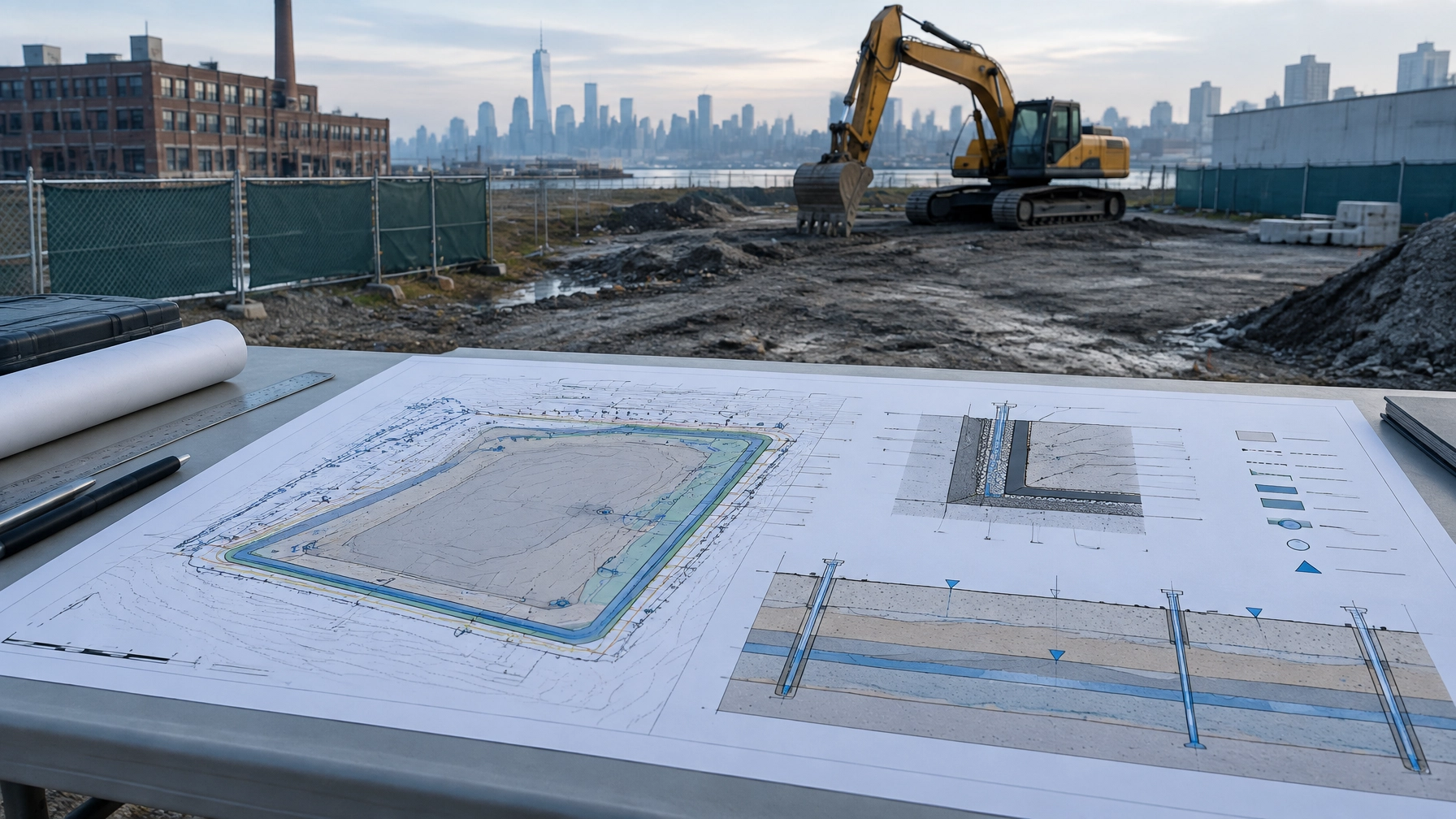
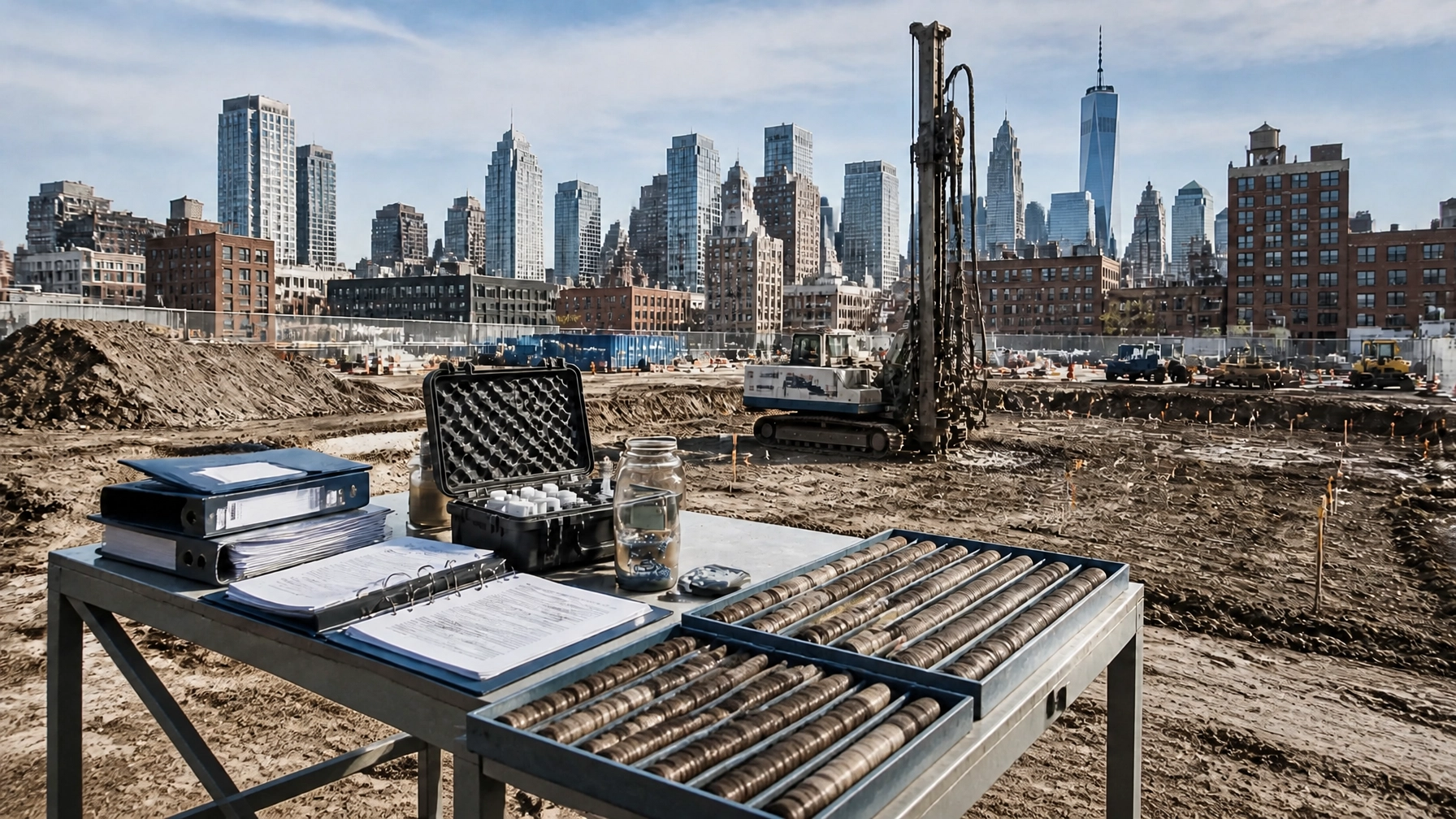
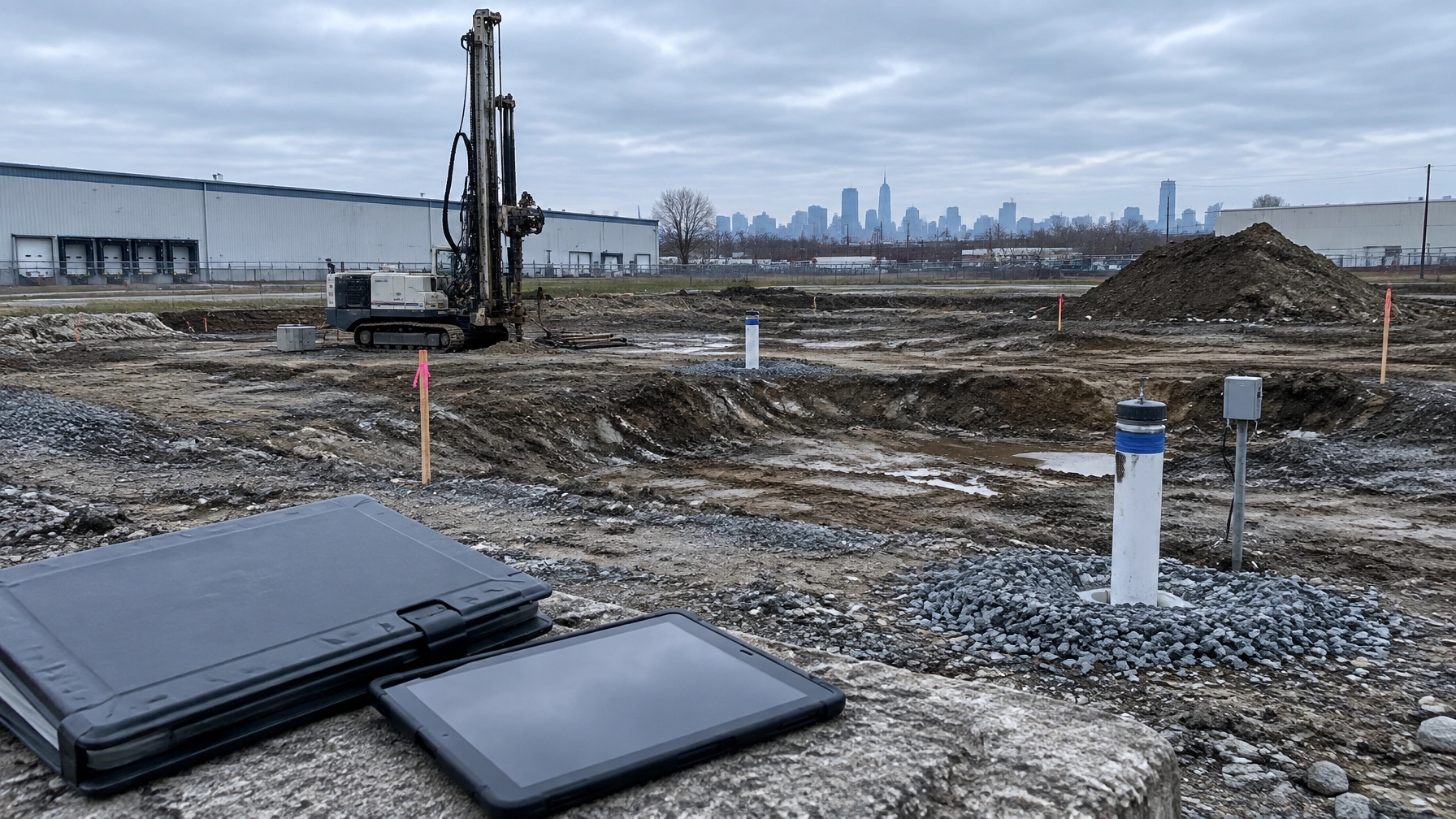
A New Jersey brownfield project can qualify for significant financial support. The difficult part is not identifying the available programs. It is documenting the work, costs, financing gap, and regulatory status so the incentives survive review.
For 2026 projects, developers must also account for a major timing issue. The New Jersey Economic Development Authority states that the Brownfields Redevelopment Incentive Program is not currently accepting applications while revised rules are developed under the September 4, 2024 amendments. NJEDA expects updated rules and a new application in 2026. Review the current NJEDA program page before relying on any application timeline.
The underlying mechanics remain clear. The NJ Brownfield Tax Credit is based on verified remediation costs. It can be applied against specified New Jersey tax liabilities or transferred through a tax credit transfer certificate. It also must be coordinated with HDSRF funding, Redevelopment Area Bonds, PILOT agreements, site plan approvals, and NJDEP remediation milestones.
What the NJ Brownfield Tax Credit covers
The Brownfields Redevelopment Incentive Program, or BRIP, is established under N.J.S.A. 34:1B-277 through 34:1B-287.
The program is intended to compensate developers for eligible remediation costs at qualifying brownfield sites. NJEDA identifies eligible work such as:
- Environmental investigation and assessment
- Remedial investigation and remediation
- Hazardous materials abatement
- Hazardous waste disposal
- Structural remedial activities
- Demolition tied to environmental conditions
- Landfill capping and related remedial work
- Removal of contaminated building materials
The credit does not cover every cost in a development budget. Acquisition, financing costs, legal fees, incentive consultant fees, authority fees, penalties, and non-remediation vertical construction costs generally remain outside the eligible remediation cost calculation.
The current NJEDA program page identifies these award limits:
- 80 percent of eligible remediation costs, up to $12 million, for projects in a Government-Restricted Municipality or Qualified Incentive Tract
- 60 percent of eligible remediation costs, up to $8 million, for other New Jersey projects
- 100 percent of remediation and capping costs, subject to an $8 million or $12 million cap, for qualifying solar projects on closed sanitary landfills
These percentages are subject to the revised program rules and statutory requirements applicable when NJEDA reopens the program.
How the credit applies to New Jersey tax liability
Once the remediation is complete and the required certifications are accepted, the credit can be applied against certain New Jersey taxes. The statute identifies:
- New Jersey Corporate Business Tax under N.J.S.A. 54:10A-5
- Certain insurance premiums taxes under N.J.S.A. 54:18A-2 and 54:18A-3
- The insurer tax under N.J.S.A. 17:32-15
- The applicable tax under N.J.S. 17B:23-5
This matters because the developer does not need to be a traditional corporate taxpayer to evaluate the incentive. An insurance company or other eligible taxpayer may have a different use case than a real estate entity with limited New Jersey CBT liability.
The statute also states that the developer cannot carry forward unused credit. That makes the tax planning and monetization strategy important before certification.
A developer may instead apply for a tax credit transfer certificate. The certificate can be sold or assigned to another taxpayer that can use the credit against an eligible New Jersey tax liability.
Under N.J.S.A. 34:1B-285:
- The transfer occurs during the privilege period in which the credit is awarded.
- The purchaser or assignee cannot make another transfer.
- The developer generally cannot sell the certificate for less than 85 percent of the transferred credit amount.
- Certain qualified low-income housing projects may use a 75 percent floor if additional conditions are met.
The credit is not cash at the beginning of the project. It is a future value tied to successful completion, cost certification, and regulatory compliance.
Why remediation cost certification controls the award
The tax credit percentage is only useful if the underlying cost is accepted.
New Jersey law requires the developer to submit satisfactory evidence of actual remediation costs. For work under the Site Remediation Reform Act, the evidence must be certified by both:
- A certified public accountant
- A Licensed Site Remediation Professional
Other work may require certification by an appropriately licensed or certified professional.
The law requires the developer to demonstrate that:
“The remediation costs were actually and reasonably incurred.”
That standard is more demanding than submitting invoices at the end of a project. The cost record must show what was done, why it was required, who performed it, when it occurred, and how it connects to the approved remedial approach.

A defensible cost file should separate:
- Eligible remediation costs
- Prior environmental assessment costs
- Non-remediation construction costs
- Financing costs
- Legal and administrative costs
- State, federal, or local grants
- Costs paid through other funding programs
The current NJEDA application materials recognize certain environmental studies and work plans completed within the 24 months before application. That exception does not create a blanket allowance for all early spending. The project team must classify those costs correctly and preserve supporting records.
A weak cost allocation creates avoidable risk. NJDEP may reduce the eligible amount. A lower award can increase the financing gap. If the gap is no longer covered, NJEDA may require additional capital before board approval or deny the application.
What the LSRP should document before filing
The LSRP is not simply a name on the application. The LSRP must connect the site condition, remedial strategy, schedule, and cost estimate.
Before filing, the project record should normally include:
- Preliminary Assessment and Site Investigation materials
- Remedial Investigation and Feasibility Study documents, where applicable
- Sampling and Analysis Plans
- Laboratory data and chain-of-custody records
- Maps showing affected media and contamination boundaries
- Remedial Action Work Plans or equivalent remedial design documents
- Remedial alternatives and the basis for selecting the proposed remedy
- Soil, groundwater, vapor, and building material data, as applicable
- Waste characterization and disposal documentation
- Engineering control and institutional control plans
- Proposed site management requirements
- Schedule for investigation, remediation, demolition, reporting, and closure
- Required permits and local planning or zoning approvals
- A detailed remediation cost estimate prepared and signed by the LSRP
- Evidence supporting the reasonableness of labor, disposal, treatment, monitoring, and oversight costs
The application materials also call for an identified LSRP, certification number, organizational chart, resumes, project experience, aerial maps, remedial design documents, and a comprehensive schedule.
Envicon’s NJ LSRP Services team supports this work from site characterization through RAWP preparation, remedial oversight, NJDEP coordination, and Response Action Outcome documentation.
How BRIP interacts with HDSRF funding
The Hazardous Discharge Site Remediation Fund is a separate NJDEP and NJEDA financing program.
HDSRF may provide grants or loans for investigation and remediation. Current NJEDA information identifies potential support such as:
- Loans of up to $500,000 per calendar year for private entities
- Loans of up to $2 million per calendar year for public entities
- Grants of up to $3 million for eligible municipalities, counties, and redevelopment authorities
- Additional support for projects in designated Brownfield Development Areas
- Targeted funding for certain recreation, conservation, renewable energy, and affordable housing projects
HDSRF can help fund work before a tax credit is issued. It does not eliminate the need for a BRIP cost allocation.
Developers should identify which costs are being paid through HDSRF and which costs will be included in the NJ Brownfield Tax Credit calculation. State grants and tax credits also affect the equity and sources-and-uses analysis. The BRIP application materials state that state grants and state tax credits are not treated as developer equity.
Do not assume that the same invoice can support multiple benefits. Build a source-and-use schedule that identifies funding by cost category, funding date, program, and responsible entity.
How RAB financing and PILOT agreements fit into the capital stack
Redevelopment Area Bonds, or RABs, are authorized under New Jersey’s Redevelopment Area Bond Financing Law.
A municipality or redevelopment authority may use RAB financing for eligible redevelopment costs. A PILOT agreement can create a payment stream that supports repayment of the bonds.
The practical division is often:
- The NJ Brownfield Tax Credit reduces the remediation funding gap.
- HDSRF grants or loans support investigation and cleanup.
- RAB proceeds support infrastructure, demolition, public improvements, or other approved redevelopment costs.
- PILOT revenues support bond repayment and improve project-level debt sizing.
- Developer equity and private financing fund the remaining project costs.
The programs are not interchangeable. RAB proceeds are not treated as developer equity for BRIP purposes. The tax credit application must still demonstrate economic feasibility and, where required, a project financing gap.
Municipal support is also central. BRIP requires a letter or resolution of support from the governing body. A mayoral statement alone may not satisfy the application requirement. Coordinate early with municipal counsel, the redevelopment entity, bond counsel, the tax advisor, and the LSRP.

Sequence remediation, tax filings, and site plan approvals
The cleanest sequence is usually:
- Confirm site eligibility. Review ownership, prior discharges, responsible-party issues, brownfield status, municipal designations, and any prior reimbursement.
- Complete the environmental baseline. Conduct the PA, SI, RI, building surveys, vapor work, and other studies needed to define the problem.
- Map eligible costs. Separate remediation, environmental assessment, non-remediation construction, financing, legal, and incentive costs.
- Coordinate the LSRP strategy. Prepare the remedial design, cost estimate, schedule, and regulatory pathway.
- Coordinate municipal approvals. Align zoning, redevelopment designation, site plan approvals, PILOT terms, and the governing body support resolution.
- Build the capital stack. Evaluate HDSRF, RAB, PILOT, private debt, equity, and the anticipated tax credit.
- Submit before starting unapproved remediation. The statute generally restricts remediation before application and execution of the redevelopment agreement, with limited exceptions.
- Track costs every six months. N.J.S.A. 34:1B-283 requires project updates that include remediation costs incurred.
- Complete remediation and obtain closure documentation. For SRRA work, this generally includes the LSRP’s Response Action Outcome.
- Submit the certification package. Include actual costs certified by the CPA and LSRP, evidence of completion, and other information requested by NJDEP or NJEDA.
- Apply the credit or transfer it. Coordinate the tax filing or transfer certificate with the developer’s tax advisor.
Site plan approval should not be treated as a separate track. The remedial limits, engineering controls, soil management plan, utility alignments, dewatering approach, and construction phasing can affect both the site plan and the credit calculation.
What developers should do now in 2026
NJEDA’s current position is that the BRIP application is closed while revised rules are developed. That does not mean a developer should wait.
Use the current period to prepare:
- A complete environmental history
- A defensible remedial cost model
- A financing gap analysis
- A municipal incentive strategy
- A RAB and PILOT feasibility review
- An HDSRF funding plan
- A site plan and remediation sequencing schedule
- A documentation system for invoices, tickets, field records, sampling, and progress reports
The takeaway
The NJ Brownfield Tax Credit is not secured by a promising pro forma. It is secured by a documented project.
The LSRP must define the contamination and remedial scope. The CPA and LSRP must support actual costs. NJDEP must accept the work and cost reasonableness. NJEDA must confirm compliance. The municipality must support the redevelopment. The tax advisor must plan for direct use or transfer.
Envicon Group helps developers turn those separate requirements into one coordinated path. We combine NJDEP-facing LSRP services, remediation oversight, cost documentation, civil coordination, and brownfield incentive strategy for projects across New Jersey, including Hudson County.
Call to action
Have a New Jersey brownfield project entering underwriting, site plan review, or remediation planning?
This article is for general informational purposes. Tax credit eligibility, tax treatment, municipal financing, and regulatory requirements depend on project-specific facts and current NJEDA, NJDEP, municipal, and tax guidance. Confirm the applicable 2026 rules with qualified legal and tax advisors before filing.