Pending approval.
A New York Part 375 QEP certification is more than a signature on a report. For a brownfield project pursuing a NYSDEC Certificate of Completion, the certifying professional must have enough technical knowledge, field visibility, and documentation to support the accuracy and completeness of the submitted work.
That matters more after the December 31, 2025 amendments to 6 NYCRR Part 375. The amendments update New York’s environmental remediation regulations, including program definitions, eligibility provisions, and soil cleanup requirements. They do not eliminate the practical need for properly prepared and certified BCP documents.
For developers in New York City, Westchester, Nassau, and Suffolk County, the question is straightforward:
Can your project prove that the work performed in the field matches the approved plan, that deviations were controlled, and that the final record supports COC issuance?
What changed on December 31, 2025?
NYSDEC’s revised 6 NYCRR Part 375 regulation became effective on December 31, 2025.
The amendments align Part 375 with statutory changes to the Brownfield Cleanup Program and update provisions related to environmental remediation programs. They also address soil cleanup objectives and program implementation.
The change does not create a completely new QEP certification system. Instead, it reinforces the need for disciplined documentation under the existing BCP process.
NYSDEC states:
“All environmental investigation and cleanup activity must be performed in accordance with DEC-approved work plans or design documents.”
The agency also requires reports documenting completion of the work to be submitted for review and approval before issuing a Certificate of Completion. Applicable reports are typically certified by a Qualified Environmental Professional or a New York-licensed Professional Engineer.
Read the agency’s Brownfield Cleanup Program overview and BCP document certification guidance before finalizing a project closeout strategy.
What does a QEP certification actually support?
A QEP certification supports DEC’s review of the technical record. It should give the agency a reliable basis to evaluate whether the applicant completed the investigation and remedy as required.
For practical purposes, a strong certification package addresses four questions:
- Who prepared and reviewed the document?
- Was the work performed under the approved work plan or design?
- Are the data and descriptions accurate and complete?
- Were field changes identified, evaluated, and properly documented?
A QEP is not simply certifying that a report exists. The certification should reflect professional review of the work, data, field records, and conclusions.
That requires more than reviewing a contractor’s final invoice or receiving a folder of photographs after excavation ends. The certifying professional needs a defensible record of what happened on site.
Approved-plan conformance is the center of COC readiness
The approved Remedial Investigation Work Plan, Remedial Action Work Plan, design documents, and Decision Document establish the project’s technical framework.
They define items such as:
- Sampling locations and analytical parameters
- Excavation limits and cleanup endpoints
- Soil handling and disposal procedures
- Groundwater or soil vapor controls
- Imported fill requirements
- Engineering controls
- Institutional controls
- Confirmation sampling
- Reporting and recordkeeping requirements
Field conditions rarely follow a plan perfectly. Utilities may block a boring location. An excavation may encounter unexpected fill. A groundwater sample may require rescheduling because of site access or weather.
The issue is not whether every field condition was predicted. The issue is whether the project identifies and manages deviations before they create a closeout problem.
A practical Part 375 field deviation log should record:
- Date and location of the deviation
- Approved plan or drawing affected
- Description of the condition encountered
- Immediate health, safety, and environmental implications
- Proposed adjustment
- Supporting photographs or field measurements
- Sampling or analytical impact
- Contractor and consultant involved
- DEC communication or approval, when required
- Final resolution and responsible reviewer
A field deviation log is not a substitute for DEC approval where a formal plan modification is necessary. It is a control that keeps the project record accurate and gives the QEP or PE a reliable basis for certification.
Data control matters as much as excavation control
COC readiness can fail because of weak documentation even when the physical remedy appears complete.
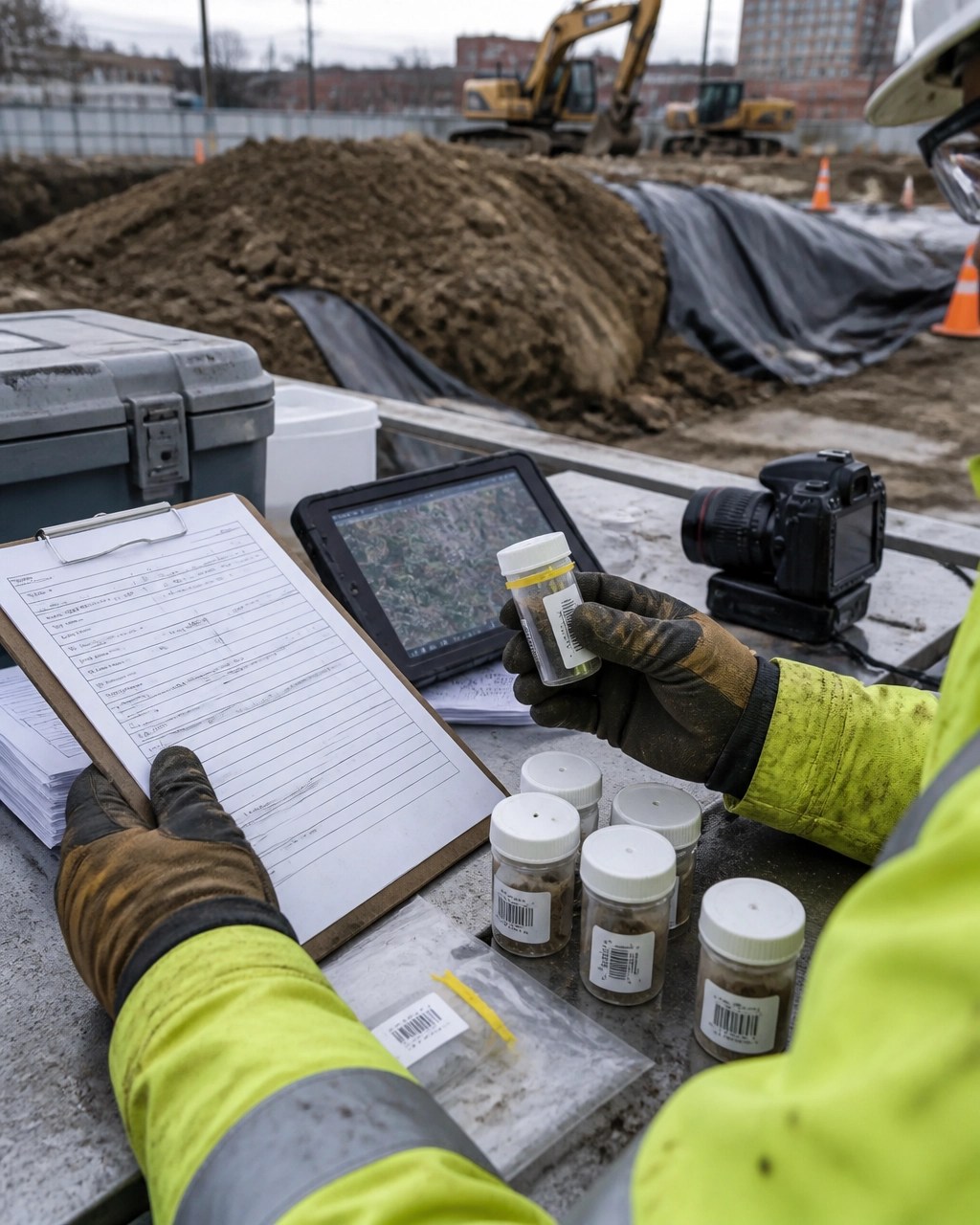
The project record should connect field activity to final conclusions through consistent controls for:
- Soil and groundwater sample identification
- Chain-of-custody forms
- Laboratory deliverables
- Field screening records
- Survey coordinates
- Excavation limits
- Confirmation sample locations
- Photo logs
- Soil disposal and reuse manifests
- Imported fill documentation
- Daily reports
- Contractor tickets
- Air monitoring records
- Equipment decontamination
- Waste characterization
Every data point should answer a basic question: Can someone outside the field team verify where it came from, when it was collected, and how it supports the cleanup conclusion?
This is especially important for urban sites in Queens, Brooklyn, the Bronx, and Manhattan, where multiple contractors, tight access conditions, utility conflicts, and changing excavation limits can make the final record difficult to reconstruct.
A field-first construction oversight program keeps the documentation current while the work is happening. That is more effective than trying to recreate the record months later.
Engineering and institutional controls continue after the COC
A Certificate of Completion does not always mean the property has no continuing obligations.
Depending on the remedy, a site may require:
- Sub-slab depressurization or vapor mitigation systems
- Vapor barriers and sealed penetrations
- Cap or cover systems
- Groundwater treatment or monitoring
- Soil management plans
- Environmental easements
- Site management plans
- Periodic certifications
- Operation, maintenance, and monitoring
- Institutional controls recorded in property documents
Engineering controls need construction verification. Institutional controls need clear ownership and long-term administration.
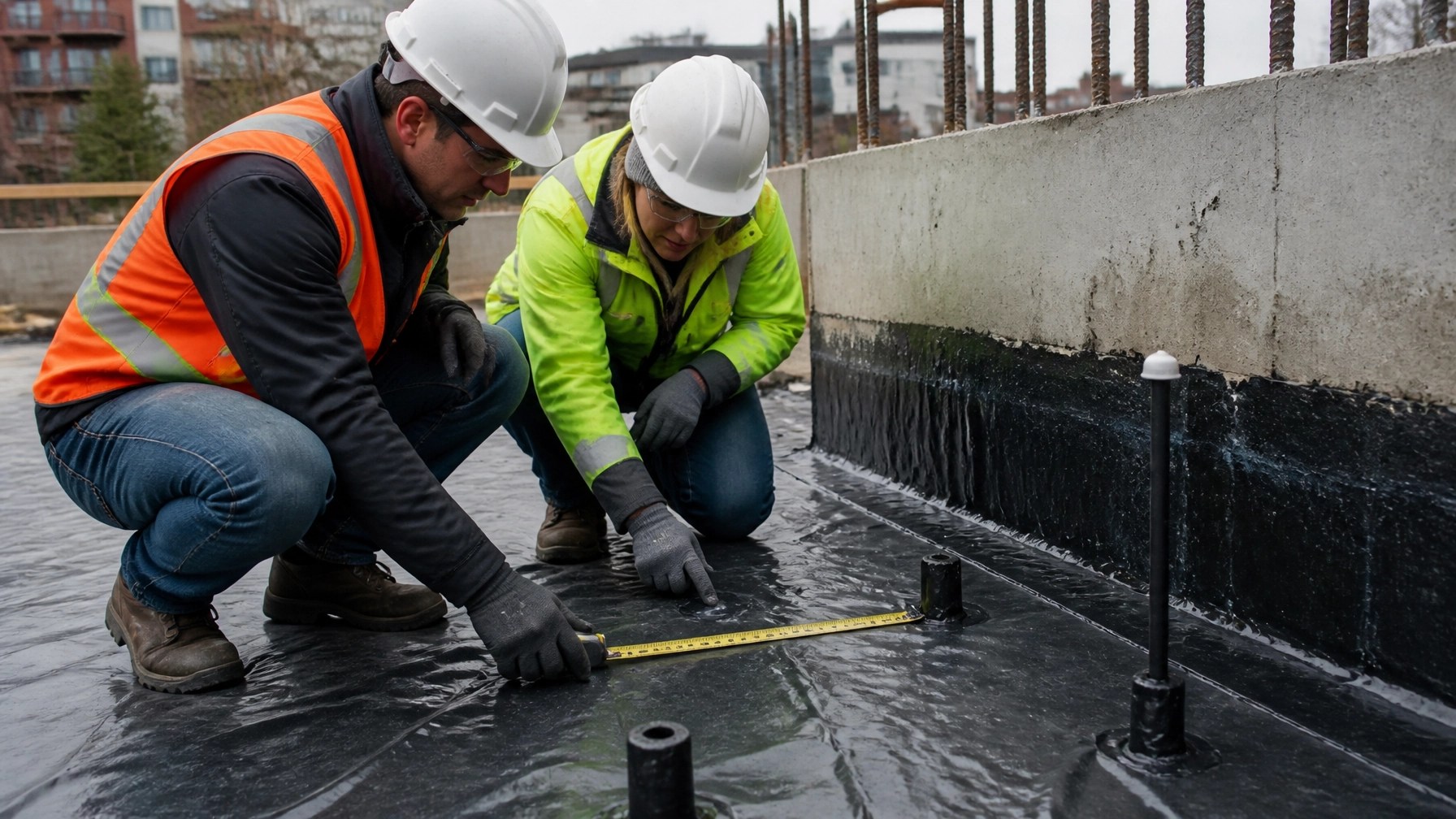
For example, a vapor barrier may be installed correctly in one area but compromised at utility penetrations or foundation transitions. A cap may meet design thickness in the main excavation but lack complete documentation at the site perimeter.
These details affect both DEC acceptance and future property transactions.
Envicon’s brownfield remediation services integrate environmental documentation with field-level oversight, contractor coordination, and regulatory closeout planning.
NYSDEC BCP is not the same as NYC OER VCP
NYC developers often use “brownfield program” as a general term. That can create confusion during acquisition and financing.
The NYSDEC Brownfield Cleanup Program is a statewide program governed by New York Environmental Conservation Law and 6 NYCRR Part 375. It can provide a DEC-issued Certificate of Completion, liability protections, and eligibility for applicable state brownfield tax credits.
The NYC Office of Environmental Remediation Voluntary Cleanup Program is a separate city-administered program. It applies only within New York City and offers a more localized process for eligible sites.
The official NYC OER Voluntary Cleanup Program describes its local enrollment, liability, grant, and cleanup benefits. It is not the same as obtaining a NYSDEC BCP Certificate of Completion.
Before selecting a path, confirm:
- Which agency has jurisdiction
- Whether the site qualifies for BCP or OER VCP
- Whether state tax credits affect project feasibility
- What liability protection the lender expects
- Whether the transaction documents require a DEC-issued COC
- What engineering or institutional controls will remain after completion
The distinction matters in NYC, and it matters even more when a developer or investor compares a city cleanup agreement with a statewide BCP strategy.
Why COC readiness matters to lenders and transactions
A lender may not wait until the end of construction to ask for environmental closeout documentation.
During underwriting, the lender, investor, or purchaser may review:
- BCP enrollment and Brownfield Cleanup Agreement
- DEC-approved work plans
- Decision Document requirements
- Remedial Action Work Plan
- Final Engineering Report status
- QEP or PE certifications
- Sampling and laboratory data
- Waste manifests
- Engineering control installation records
- Institutional control requirements
- Remaining monitoring obligations
- Tax credit eligibility and timing
- Environmental insurance
- Open DEC comments
A missing field record can become a lender condition. An unexplained deviation can trigger additional review. An incomplete control certification can affect the timing of a refinance, sale, or construction loan conversion.
That is why COC readiness should begin before the last excavation is complete.
COC readiness checklist for NYC and Long Island brownfields
Use this checklist as an early closeout review:
- Confirm the current Part 375 requirements and approved project documents.
- Identify every report requiring QEP or New York PE certification.
- Maintain a live field deviation log.
- Reconcile field notes, survey data, photographs, and daily reports.
- Verify that laboratory data matches sample identifiers and locations.
- Track all soil shipments, manifests, reuse decisions, and disposal facilities.
- Document imported fill source, testing, and placement.
- Confirm excavation limits and confirmation sample results.
- Verify installation of vapor, cap, groundwater, or other engineering controls.
- Prepare institutional control and site management documentation.
- Resolve DEC comments before the final report is assembled.
- Conduct a QEP or PE review while corrective work is still possible.
- Align the closeout schedule with lender, purchaser, and tax credit deadlines.
The Envicon approach
COC readiness is a documentation discipline backed by field knowledge.
Envicon works with developers, attorneys, contractors, architects, and lenders across NYC, Westchester, Nassau, and Suffolk. We coordinate the technical record from investigation through remediation, construction oversight, engineering controls, and regulatory closeout.
Our approach is direct:
- Review the approved plan before field work begins.
- Track actual site conditions in real time.
- Escalate material deviations early.
- Keep data, photographs, manifests, and field records connected.
- Coordinate with the project team and agency stakeholders.
- Prepare documentation that supports the next decision, not just the last activity.
We do not treat a COC as a paperwork event. We treat it as the final proof that the project met its obligations.
Frequently asked questions
Is New York Part 375 QEP certification a new requirement after December 31, 2025?
No. The December 31, 2025 Part 375 amendments update New York’s environmental remediation regulations, but they do not appear to create a new certification system. NYSDEC continues to require applicable BCP reports to be properly prepared and certified by a QEP or New York-licensed PE.
What is NYSDEC COC readiness in NYC?
NYSDEC COC readiness means the site has completed the approved investigation and remedy, documented field work and deviations, verified data and controls, resolved agency comments, and assembled certified reports that support DEC review.
Does every field deviation require a new work plan?
Not necessarily. The response depends on the type and significance of the change. Minor adjustments may be documented and justified in the project record. Material changes to excavation limits, sampling objectives, remedy components, or engineering controls may require DEC consultation or an approved plan modification.
Is a NYC OER VCP Notice of Completion the same as an NYSDEC Brownfield Cleanup Certificate of Completion?
No. NYC OER VCP and the NYSDEC BCP are separate programs administered by different agencies. They may offer different eligibility standards, liability protections, incentives, and closeout documents.
Can COC documentation affect a property closing?
Yes. Lenders, purchasers, and investors may condition financing or closing on evidence of regulatory progress, certified reports, engineering controls, institutional controls, and remaining environmental obligations.
When should a QEP or PE review begin?
The review should begin during field work, not after the final report is drafted. Early review gives the project team time to correct gaps, document deviations, and address control or data issues before they affect COC timing.
Takeaway
The December 31, 2025 Part 375 amendments make regulatory accuracy even more important for New York brownfield projects.
A credible COC package requires more than completed excavation. It requires proof that the work followed the approved plan, that changes were controlled, that data are traceable, and that engineering and institutional controls will remain effective.
The strongest projects do not wait for closeout to discover missing documentation. They build the record while the work is happening.
Start your COC readiness review
- Call Envicon now
- Get a free quote
- Review brownfield remediation services
- Use the project risk screener
- Learn more about Envicon’s NYC environmental consulting team