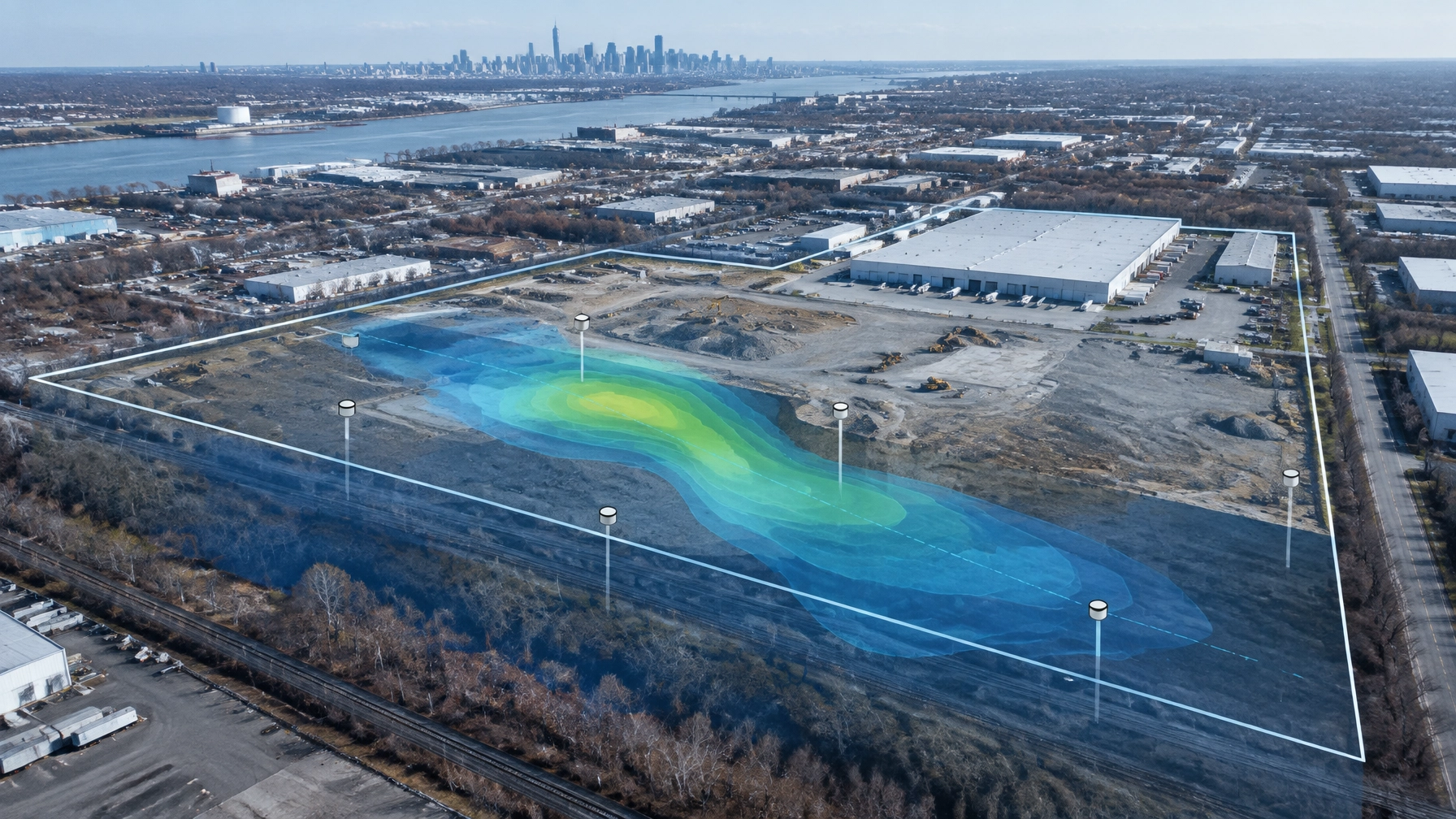
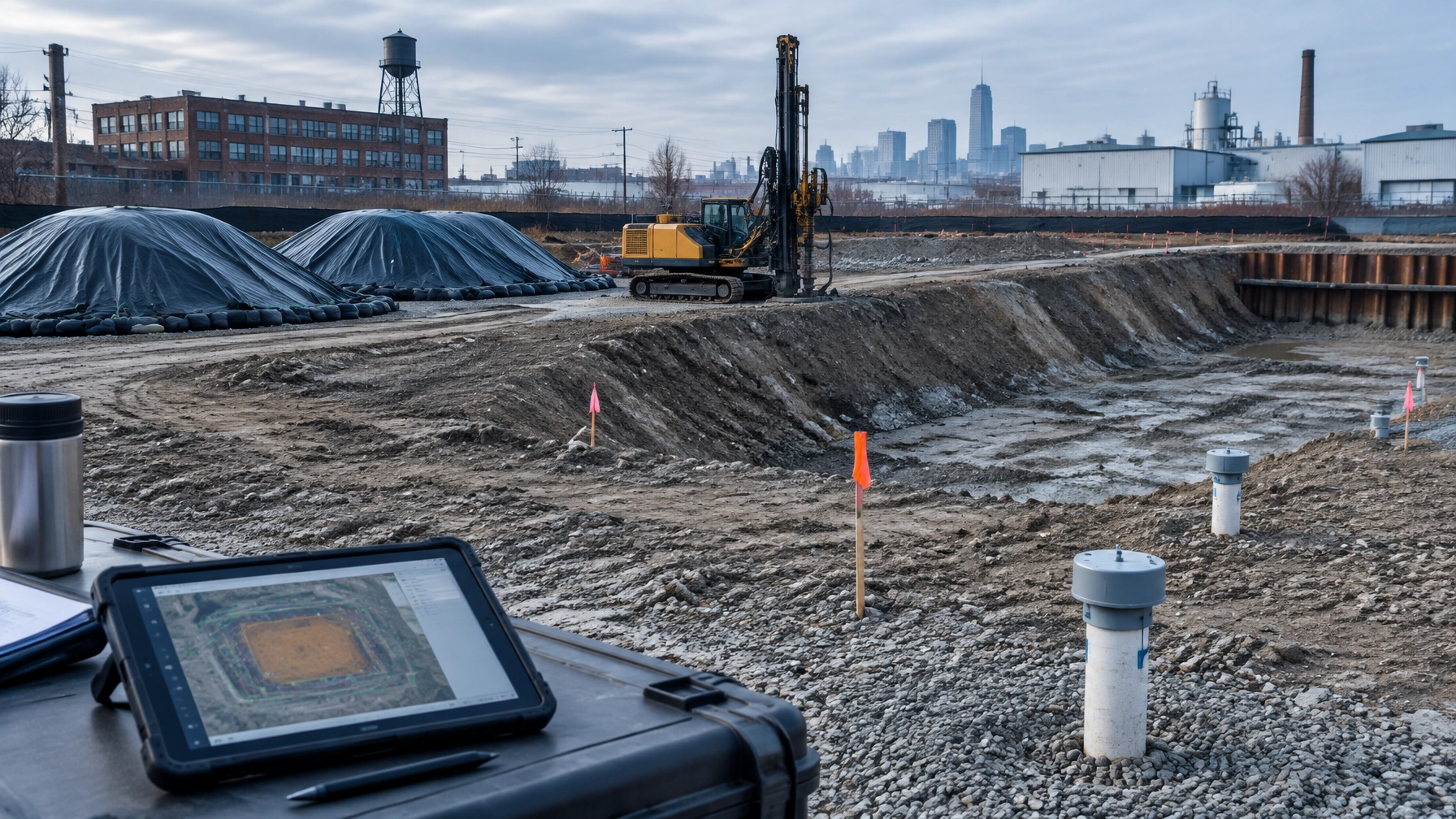
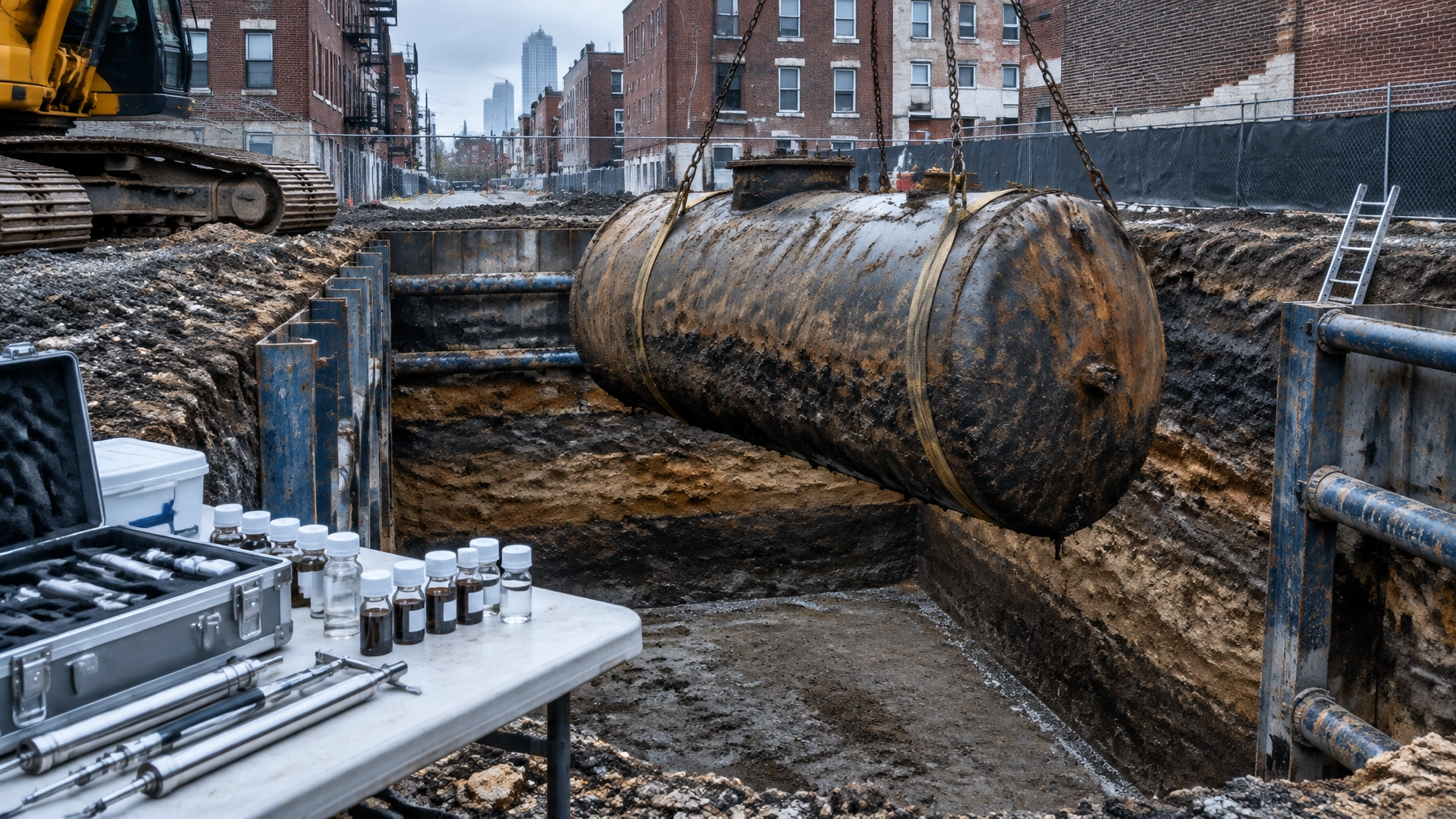
A New Jersey site can enter NJDEP Direct Oversight without a separate warning letter. If a person responsible for conducting the remediation misses a mandatory remediation timeframe, an expedited site-specific timeframe, or an enforceable schedule, the site becomes subject to Direct Oversight under the Site Remediation Reform Act.
That changes the project.
NJDEP gains control over key remediation decisions. The responsible party faces additional documentation, funding, public participation, and invoicing requirements. The LSRP remains central to the technical work, but the case no longer operates like a standard LSRP-led remediation.
This guide explains the current NJDEP LSRP rules, the Direct Oversight triggers, the role of the Licensed Site Remediation Professional, remediation funding source requirements, NJDEP invoices, audit documentation, and the practical path toward adjustment and case closure.
Direct Oversight is not simply a higher level of review. It is a different operating structure for the remediation.
What puts a New Jersey site into Direct Oversight?
The controlling framework appears in N.J.S.A. 58:10C-27 and N.J.A.C. 7:26C-14.
Compulsory Direct Oversight applies when one of the following occurs:
- The person responsible for conducting the remediation has been the subject of at least two enforcement actions concerning remediation during a five-year period.
- The person misses a mandatory remediation timeframe.
- The person misses an expedited site-specific remediation timeframe established by NJDEP.
- The person fails to meet a schedule established in an administrative order or court order.
- For certain pre-May 7, 1999 discharges, the person fails to complete the remedial investigation of the entire site within the applicable statutory timeframe.
The 2026 version of the ARRCS rules also confirms that remediation timeframes run with the site. A change in ownership does not erase the deadline or the Direct Oversight status.
There is another important point. When Direct Oversight is compulsory because a timeframe was missed, NJDEP guidance states that no separate notice is required before the obligations apply. The person responsible for conducting the remediation must act as soon as the trigger occurs.
Exceptions for access and federal review
A missed deadline does not always lead to Direct Oversight. NJDEP may decline to impose Direct Oversight when the responsible party demonstrates that:
- It could not enter the contaminated property because it did not own the property, took timely steps to obtain access, and pursued the required access process.
- The site was under federal oversight, timely submissions were made, and the delay resulted from additional federal or NJDEP review.
These exceptions depend on documentation. An informal email stating that access was difficult is not the same as a documented access strategy, written requests, legal filings, and a clear timeline showing good-faith efforts.
Mandatory timeframes are not one universal deadline
The phrase “mandatory remediation timeframe” covers several different obligations.
Under N.J.A.C. 7:26C-3, requirements can apply to:
- Preliminary assessment and site investigation reports.
- Initial receptor evaluations.
- Immediate Environmental Concern source control.
- LNAPL investigation and interim remedial measures.
- Remedial investigation and RI reports.
- Remedial action and remedial action reports.
- Completion of specific tasks required by NJDEP orders or site-specific schedules.
For many sites, the applicable timeframe is tied to the date remediation became required or to the regulatory timeframe established under the Technical Requirements for Site Remediation, N.J.A.C. 7:26E.
The correct approach is to build a site-specific compliance calendar. That calendar should identify:
- The event that triggered remediation.
- The date the LSRP was retained.
- The date each report or form was submitted.
- The applicable regulatory, mandatory, and expedited deadlines.
- Any approved extension and its supporting basis.
- The date NJDEP received each submission.
- Any deficiencies and the deadline for correcting them.
An extension request should not be treated as a last-minute schedule repair. Under N.J.A.C. 7:26C-3.5, mandatory or expedited timeframe extension requests generally must be submitted at least 60 days before the deadline. The request must explain the cause of delay, the additional time required, and the steps taken to minimize the delay.
What changes after Direct Oversight?
Once a site is in Direct Oversight, the responsible party must proceed as NJDEP directs.
The core obligations include:
- Retain an LSRP within 14 days if one is not already retained.
- Submit an initial remediation cost review within 90 days.
- Establish and maintain a remediation funding source.
- Submit a proposed public participation plan within 90 days.
- Submit a receptor evaluation.
- Prepare a Direct Oversight remediation summary report.
- Complete a feasibility study for NJDEP review.
- Obtain NJDEP approval for disbursements from the RFS.
- Implement the remedial action selected by NJDEP.
- Pay applicable fees, oversight costs, and RFS surcharges.
The LSRP still performs and certifies technical work. However, under full Direct Oversight, NJDEP reviews and approves submissions, selects the remedy, and controls funding disbursements.
That distinction matters to owners, developers, lenders, and attorneys. A normal LSRP case gives the LSRP more discretion to select and implement the remedy. A Direct Oversight case requires more agency coordination and creates more opportunities for the project schedule to depend on NJDEP action.
The LSRP’s role under NJDEP LSRP rules
The LSRP is not replaced by NJDEP. The LSRP remains responsible for professional judgment, technical oversight, certifications, and the quality of the remediation record.
Under the SRRA framework, an LSRP must:
- Apply applicable statutes, regulations, remediation standards, and technical guidance.
- Review relevant site information and identify material data gaps.
- Manage, supervise, perform, or periodically review the work supporting a submission.
- Certify that submitted information is true, accurate, and complete.
- Disclose material limitations, assumptions, and facts that do not support the conclusions.
- Correct deficiencies identified by NJDEP.
- Notify NJDEP when an Immediate Environmental Concern or new discharge is identified.
- Maintain records supporting the remediation and final Response Action Outcome.
NJDEP does not expect a report that only presents favorable data. The LSRP must explain the full technical record, including conflicting results, failed sampling points, changes in conceptual site model, incomplete access, non-detect limitations, and unresolved exposure pathways.
Envicon’s NJ LSRP Services team supports the full process from investigation and RAWP preparation through remedial action oversight, regulatory correspondence, permits, and RAO documentation.
Remediation funding source requirements
A Remediation Funding Source, or RFS, is a financial mechanism that demonstrates money will be available to complete the cleanup.
Under the current NJDEP RFS guidance and N.J.A.C. 7:26C-5, the RFS amount must generally equal or exceed the estimated remaining remediation cost. The estimate can include:
- Investigation and remedial action costs.
- Engineering and construction costs.
- NJDEP fees and oversight costs.
- Operation, maintenance, and inspection of engineering controls.
- Other direct and indirect remediation costs.
For Direct Oversight cases, the responsible party may use approved mechanisms other than a self-guarantee. Current rules recognize options such as:
- Remediation trust funds.
- Environmental insurance.
- Lines of credit.
- Letters of credit.
- Surety bonds.
- Loans or grants where applicable.
The mechanism must match NJDEP requirements and the current model language. A funding instrument that looks commercially acceptable may still be incomplete for NJDEP purposes.
The responsible party must also submit annual cost reviews. The LSRP and responsible party certify the amount spent, the estimated cost to complete the work, and changes from the previous review.
If the estimate increases, the RFS must be increased. Under N.J.A.C. 7:26C-5.11, an increase may be required within 30 days after the cost review, NJDEP demand, or LSRP certification of the increased estimate.
The RFS also carries a financial cost. For most approved mechanisms, the annual RFS surcharge is 1 percent of the required funding amount. The NJDEP RFS guidance explains the surcharge, renewal, substitution, and release process.
NJDEP invoices and the practical cost of oversight
Direct Oversight creates costs beyond the consultant’s scope.
The FY 2027 NJDEP Fee Guidance explains that sites may face annual remediation fees, RFS surcharges, remedial action permit fees, and NJDEP oversight costs.
For FY 2027, annual remediation fees range from:
- $985 for Category 1 sites.
- $1,970 for Category 2 sites.
- $10,835 for Category 3 sites.
- $21,670 for Category 4 sites.
Contaminated media additives may also apply. These figures are separate from Direct Oversight billing.
NJDEP oversight costs are billed based on agency staff time and site-specific expenses. Invoices can identify the program interest number, job codes, staff members, work descriptions, hours, and calculated charges.
The financial impact often includes:
- NJDEP staff time and oversight invoices.
- Annual remediation fees.
- The 1 percent RFS surcharge.
- LSRP and legal coordination.
- Additional reporting and public participation work.
- Schedule delays that affect carrying costs, financing, construction, and closing.
- Additional field work when earlier documentation is incomplete.
An oversight cost invoice can be challenged, but the request generally must be submitted within 45 days of the billing date. The request must identify the specific charges disputed and include supporting facts. It cannot simply challenge NJDEP’s general staffing or hourly rate decisions.
What NJDEP looks for in an audit
NJDEP and the Site Remediation Professional Licensing Board can review the technical record, field work, certifications, and supporting documentation.
The strongest audit file is organized before the final RAO. It should include:
- Historical research and the Preliminary Assessment.
- Site Investigation and Remedial Investigation reports.
- Sampling plans, quality assurance documents, field notes, and chain-of-custody records.
- Laboratory data deliverables and electronic data submissions.
- Raw sampling and monitoring data.
- GIS-compatible maps and current contaminant delineation.
- Receptor evaluations and IEC documentation.
- Remedial Action Workplans and approved amendments.
- Permits, dewatering records, disposal documentation, and soil management records.
- As-built drawings and engineering control documentation.
- Deed notices, Classification Exception Areas, and Remedial Action Permits.
- Public notices, fact sheets, mailing lists, photographs, and responses to inquiries.
- RFS instruments, cost reviews, renewal confirmations, surcharge payments, and disbursement records.
- NJDEP correspondence and responses to every identified deficiency.
- Invoices, payment confirmations, and oversight cost review requests.
- Operation, maintenance, monitoring, and biennial certification records.
Under N.J.A.C. 7:26C-2.5, records include technical records, contractual documents, raw data, and monitoring information. Site condition data cannot be withheld simply by labeling it confidential.
How to reduce or exit Direct Oversight
Direct Oversight does not disappear because a new owner takes title. It runs with the site.
The practical path is:
- Identify the exact trigger. Confirm whether the issue was a missed timeframe, enforcement history, order schedule, or legacy RI deadline.
- Bring the case into compliance. Retain the LSRP, submit missing documents, correct deficiencies, pay outstanding invoices, and establish the required RFS.
- Build an accurate cost model. The RFS should reflect the remaining work, NJDEP costs, permits, controls, and realistic contingencies.
- Contact NJDEP Compliance Assistance. The 2026 Direct Oversight handout describes the process for an Adjusted Direct Oversight Administrative Consent Order.
- Earn adjustments through performance. An Adjusted DO ACO may allow the responsible party to proceed without prior approval for each step, pay annual fees in lieu of certain oversight costs, and avoid some additional Direct Oversight reports or studies.
- Maintain every ACO deadline. A missed ACO obligation can restore full Direct Oversight, require prior approval for disbursements, trigger stipulated penalties, and require payment of all oversight costs.
- Complete the remediation. The LSRP must support the final remedy, permits, controls, monitoring, and RAO.
- Resolve fees and funding obligations. NJDEP fees and oversight costs must be paid. The RFS remains in place until the regulatory release conditions are met.
After an RAO is issued for the complete remediation, the RFS may be released under the applicable requirements. If the remedy includes engineering or institutional controls, financial assurance and long-term permit obligations may continue.
The RAO itself is not the end of the record. NJDEP may audit an RAO for up to three years, subject to statutory exceptions involving undiscovered contamination, an LSRP investigation, or license suspension or revocation.
How to keep a New Jersey case out of Direct Oversight
The best Direct Oversight strategy starts before the deadline.
- Retain the LSRP early enough to understand the full scope.
- Maintain one master schedule for regulatory and project deadlines.
- Track NJDEP receipt dates, not just mailing dates.
- Submit technically complete reports.
- Request extensions before the 60-day deadline.
- Document access problems as they occur.
- Update the conceptual site model when field data changes.
- Keep RFS estimates current and renew instruments before expiration.
- Reconcile invoices and fees every quarter.
- Preserve field records, laboratory data, and correspondence.
- Respond to NJDEP deficiencies with a clear corrective action table.
- Coordinate the LSRP, attorney, lender, contractor, civil engineer, and owner.
A New Jersey remediation case is not managed by reports alone. It is managed through disciplined technical work, documented decisions, accurate funding, and active regulatory coordination.
For sites in Hudson County, Jersey City, Newark, and throughout New Jersey, Envicon Group combines field investigation, engineering, construction oversight, and LSRP services under one accountable team. Our approach is direct and practical. We do not just deliver documents. We help turn contaminated and underused properties into compliant, buildable assets.
Takeaway
A site enters NJDEP Direct Oversight when a statutory, mandatory, expedited, or enforceable remediation obligation is missed. Once triggered, the responsible party must manage the technical, financial, public participation, and documentation requirements immediately.
The route back is not a single form. It is a demonstrated record of compliance, an adequate RFS, accurate cost reviews, complete technical documentation, and sustained performance under NJDEP requirements.
The clearest path is to identify the risk before the deadline becomes a violation.
Call to Action
- Call Envicon Group now to discuss an NJDEP remediation issue.
- Get a free project quote for LSRP, investigation, or Direct Oversight support.
- Use our project risk screener to identify potential schedule and compliance risks.
- View Envicon’s complete list of services for environmental, civil engineering, remediation, and construction oversight support.