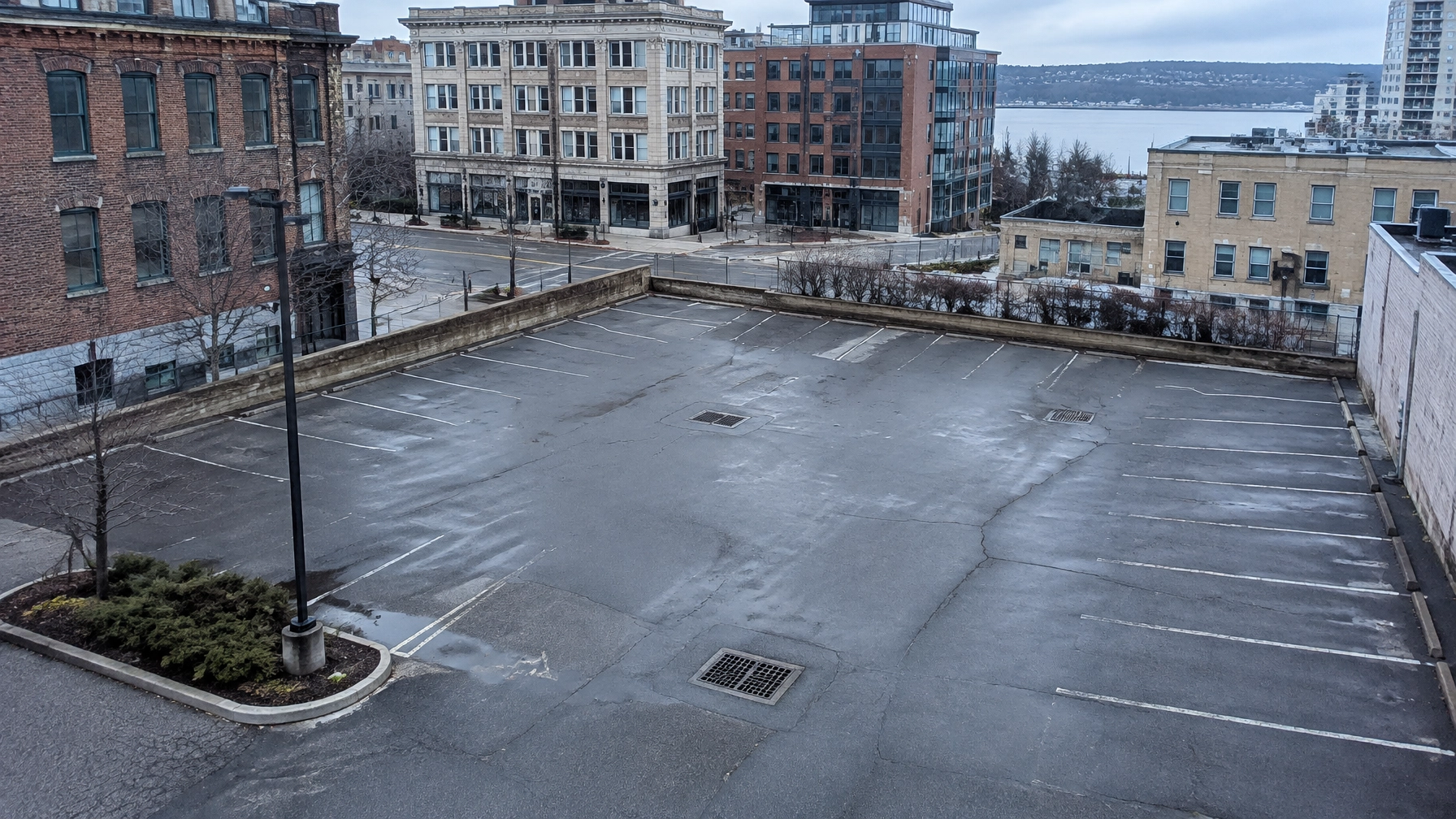
NYSDEC is accepting public comments through November 27, 2026 on a Brownfield Cleanup Program (BCP) application and draft remedial investigation work plan for 177 North Avenue in New Rochelle. The site, identified as C360280, is an approximately 0.433-acre asphalt parking lot with a history that includes a laundry operation and long-term vehicle parking.
For lenders and buyers, the issue is not what the surface looks like today. It is what historical use, past filling, fuel storage and existing test results say about the ground below it. The State’s project file includes Phase I and Phase II assessments, the draft work plan and the completed BCP application. The public comment notice provides the November 27 deadline and DEC contact information.
The parcel and its commercial history
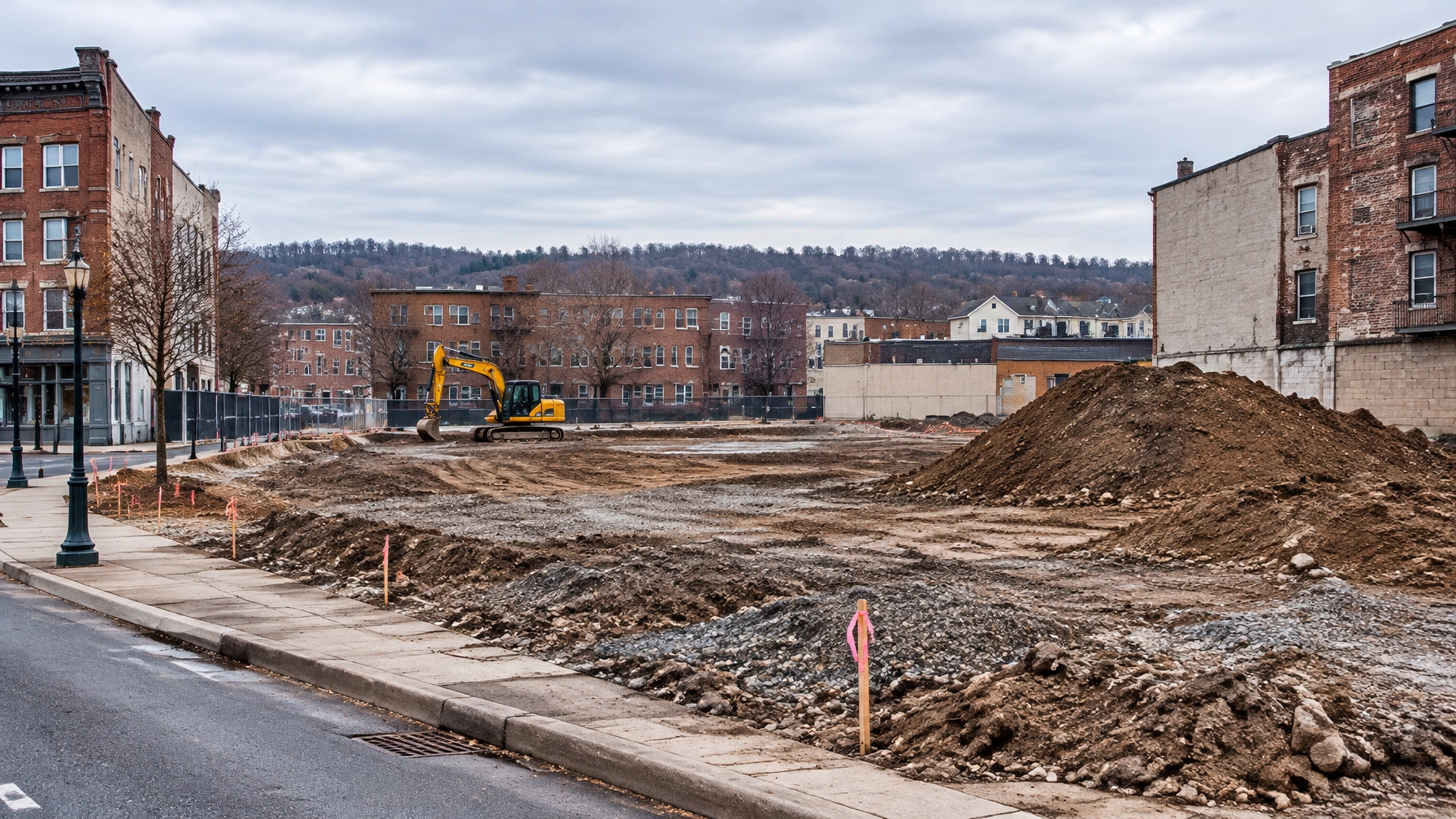
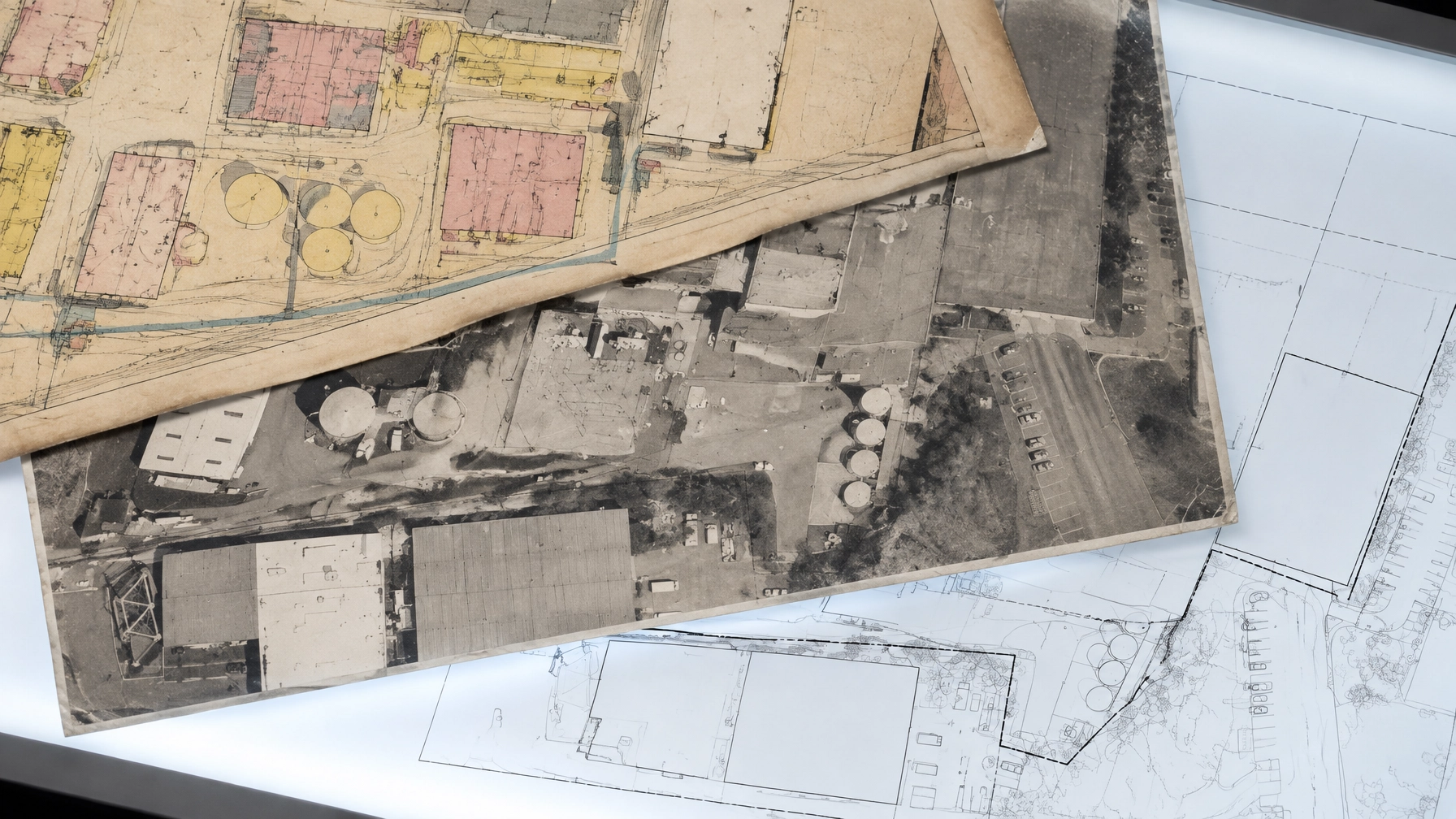
The draft work plan describes a paved site at 177 North Avenue, near New Rochelle’s downtown commercial district. The historical review identified a laundry on the property from about 1887 until potentially 1911. The site also had residential use, a long history of vehicle parking and possible former heating-oil tanks. The work plan notes that a ground-penetrating radar survey did not identify tanks, but that result does not erase the historical concern.
The proposed redevelopment described in the plan is an eight-story mixed-use building: ground-floor commercial space, three parking levels and four residential floors. The plans matter to environmental review because future residential use can affect which cleanup objectives and exposure pathways the regulator evaluates.
A parking lot is a cover, not a clearance document. Asphalt can conceal historic fill, impacted soil, groundwater conditions and vapor pathways. For buyers, a Phase I that flags the laundry history without targeted Phase II investigation leaves a material part of the underwriting unresolved.

Why former laundry sites carry a solvent signature
A former laundry or dry-cleaning use is a reason to investigate, not proof of a specific contaminant. Dry-cleaning operations historically used solvents such as tetrachloroethene, or PCE. PCE can break down into other chlorinated compounds, including trichloroethene and dichloroethene. Some operations also used petroleum-based solvents such as Stoddard solvent. Boilers and fuel storage can leave a separate petroleum signature. Metals may come from historic fill or other site activities.
The important distinction at 177 North Avenue is between a property-type risk and documented site results. The draft work plan cites the historic laundry as a recognized environmental condition and discusses possible detergents and chlorinated solvents. But it also reports other findings from prior investigations: metals and pesticides in soil, petroleum-related compounds and other constituents in groundwater, and volatile organic compounds in soil vapor. It identifies metals including lead and mercury in soil, and petroleum-related groundwater contamination consistent with the site’s parking and potential historic fuel sources. The draft work plan lists VOCs, semi-volatile organic compounds, pesticides, metals and PFAS among anticipated contaminants of concern. See the DEC-filed draft RIWP for its investigation summary and supporting tables.
These findings do not establish that every laundry-associated solvent is present at the site. They show why buyers should review the actual sample data and proposed follow-up scope rather than assume the site has either a clean bill of health or a known cleanup cost.
What the BCP application announces
The BCP application is a request to enter New York State’s cleanup program. It is not a final cleanup decision, and the draft remedial investigation work plan is still subject to NYSDEC review. The purpose of the planned investigation is to define where contamination is present, how far it extends and what response may be needed.
The draft plan proposes:
- Nine soil borings across the site, generally on an approximately 50-foot grid, extending to 20 feet below ground surface or bedrock. Soil samples will be tested for a broad set of compounds, including VOCs, SVOCs, pesticides, PCBs, metals, PFAS and 1,4-dioxane.
- Three new groundwater monitoring wells, with sampling intended to help define groundwater conditions, evaluate whether a plume exists and assess potential migration.
- Three soil-vapor points within the proposed building footprint, plus an ambient-air sample, to evaluate potential vapor intrusion into future buildings.
- A remedial investigation report summarizing the results and evaluating whether more investigation or remediation is needed.
That scope is designed to turn a general risk history into project data. It also means the current public review is an opportunity to question whether the plan adequately addresses the site’s history, nearby receptors, testing locations and intended future use.

The November 27 comment window
The comment period allows neighboring property owners, prospective buyers and other interested parties to review the application and draft plan before NYSDEC makes its program and work-plan decisions. The project documents are available in the NYSDEC C360280 file repository.
Comments are due November 27, 2026, to:
Mark Domaracki, Project Manager
NYS Department of Environmental Conservation
325 Broadway
Albany, NY 12233-7014
Mark.Domaracki@dec.ny.gov
(518) 402-9832
A useful comment should point to a specific issue in the application or work plan. For example, ask how the proposed sampling addresses a documented historical use, how the selected locations test the suspected source areas, or how the plan considers future residential use. Read the supporting reports first, and identify the page, figure or table that informs your question.
New Rochelle redevelopment context
New Rochelle’s downtown has seen significant redevelopment under its broader transit-oriented development and downtown planning framework. The proposed project at 177 North Avenue is described in the RIWP as a short walk from the New Rochelle Transit Center. The city’s TOD and Downtown Cluster information and Envicon’s New Rochelle environmental consulting page provide wider local context.
That setting raises the stakes for precise site work. Soil removal, well installation and vapor sampling take place in a dense urban neighborhood, where construction sequencing and clear communication matter to neighbors as well as the developer. The draft work plan includes a community air monitoring plan for intrusive work. A credible environmental program needs both defensible data and practical measures to manage field activity.
Underwriting a former laundry parcel
A former laundry site is an underwriting category because the historical use can signal several distinct cost drivers. But a useful budget comes from site-specific findings, not a generic “dry cleaner” allowance.
For a buyer or lender, the initial financial picture usually includes:
- Investigation costs: borings, groundwater wells, soil-vapor sampling, laboratory analysis and reporting.
- Remediation costs: dependent on contaminant type, concentration, location, volume, disposal requirements and the cleanup endpoint accepted by regulators.
- Building and construction costs: excavation logistics, soil management, vapor mitigation and, where an existing structure will be renovated or demolished, separate hazardous-material surveys.
- Potential BCP benefits: tax credits may improve project economics when a site and its costs meet program requirements. They are not automatic, and the application itself does not establish a final credit amount.
- Exit value: a site with a documented cleanup path, regulator-reviewed work and clear post-remediation obligations is easier to evaluate than one with unresolved environmental uncertainty.
The key is to price the uncertainty before it becomes a schedule problem. A Phase I identifies historical concerns. A targeted Phase II environmental site assessment measures them. BCP investigation and remediation then proceed through agency review and documented milestones.
For investors comparing the New York and New Jersey markets, searches such as “Phase II environmental site assessment NJ,” “Phase II ESA NJ” and “environmental due diligence for developers NJ” often reflect the same underlying need: a clear scope, reliable data and a path to a financeable decision. Envicon provides environmental assessment services and brownfield remediation support across the NY/NJ region. A locally informed team can coordinate sampling, agency communication and project decisions directly, rather than leave the client with a report and an unanswered cost question.
The secondary search “asbestos inspection cost NJ” addresses a different scope. Soil and groundwater testing do not assess building materials. If an existing department store or other older structure is part of a demolition or renovation scope, arrange an appropriate asbestos and lead survey and budget it separately.

Frequently asked questions
What is the November 27, 2026 deadline for?
It is the deadline to submit public comments to NYSDEC on the BCP application and draft remedial investigation work plan for site C360280 at 177 North Avenue.
Does the BCP application mean the site has been accepted into the program?
No. The application is under review. The public comment period and NYSDEC’s review come before any final program and work-plan decisions.
What environmental issues have prior investigations identified?
The draft work plan reports soil impacts including metals and pesticides, groundwater results involving petroleum-related compounds and other constituents, and VOC detections in soil vapor. Review the underlying reports and tables for details. These findings do not mean every laundry-related solvent is present.
What will the draft investigation plan test?
It proposes additional soil, groundwater and soil-vapor sampling. The planned analyses cover VOCs, SVOCs, pesticides, PCBs, metals, PFAS and 1,4-dioxane, among other parameters.
Can the cleanup cost be estimated from the application alone?
Not reliably. The investigation must define the extent and type of impacts. Cleanup costs also depend on the selected remedy, disposal requirements, construction plans and regulatory endpoints. Any potential BCP tax credits depend on program eligibility and qualifying costs.
Takeaway
At 177 North Avenue, the paved surface is not the story. The history, existing test results, proposed residential use and draft investigation scope are what matter to underwriting. Review the primary documents, submit specific comments by November 27 and require a site-specific path from data to cleanup and redevelopment. Good due diligence replaces a black box with decisions you can defend.