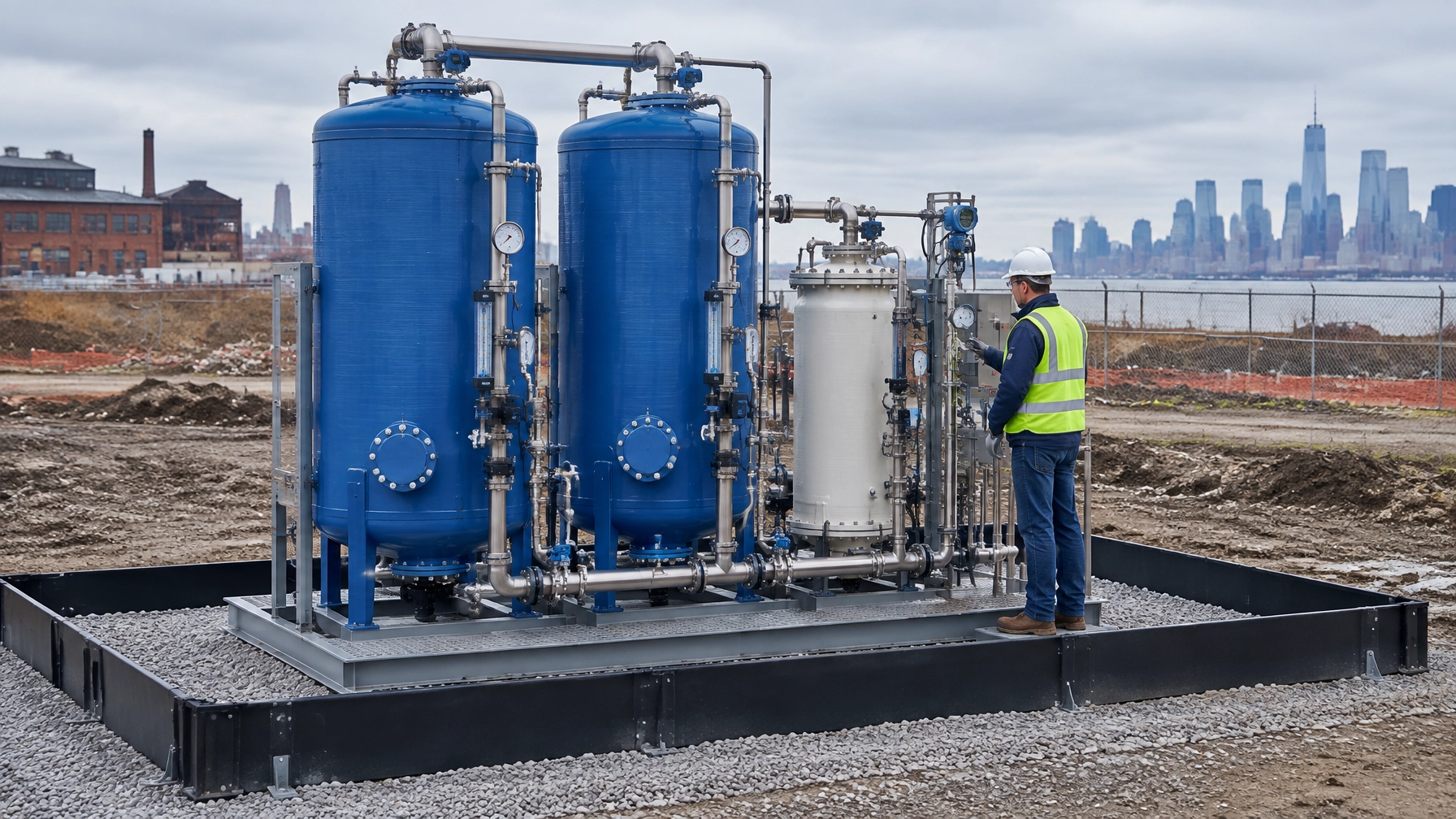
In New Jersey, treating PFAS-contaminated groundwater is only part of the job. You also need a lawful discharge path, a defensible monitoring plan, and treatment equipment designed around the compounds that NJDEP now expects you to analyze.
That matters for developers, property owners, contractors, and responsible parties budgeting for PFAS remediation cost in NJ. A system that removes PFOA and PFOS during startup may not remain compliant if breakthrough occurs, if GenX is present, or if the discharge route changes from a surface water outfall to a local POTW.
The right design starts with the discharge destination.
Three discharge routes for treated groundwater
1. Direct discharge to groundwater
If treated groundwater will be reinjected, discharged to an infiltration basin, or otherwise released to groundwater, the project generally requires a New Jersey Pollutant Discharge Elimination System, or NJPDES, Discharge to Groundwater permit.
The NJDEP NJPDES Discharge to Groundwater Technical Manual connects remedial groundwater discharges to a remedial action workplan under the Site Remediation Program.
The permit application must address:
- The source and expected flow rate.
- The complete pollutant characterization.
- Treatment processes and design assumptions.
- Effluent sampling locations.
- Groundwater monitoring wells and attenuation monitoring.
- PFAS analytes and reporting limits.
- Contingency actions if treated water exceeds applicable standards.
New Jersey’s current groundwater quality standards include:
- PFOA: 14 nanograms per liter.
- PFOS: 13 nanograms per liter.
- PFNA: 13 nanograms per liter.
NJDEP also identifies interim criteria for certain emerging PFAS, including GenX. Requirements can change based on the site, the receiving aquifer, and the contaminants identified in the remedial investigation.
2. Direct discharge to surface water
If treated groundwater will discharge to a stream, river, storm sewer, or other surface water, the project may require a NJPDES Discharge to Surface Water permit.
The BGR general remediation permit can apply to eligible treated groundwater discharges from remediation, dewatering, and pump test activities. Eligibility depends on the project and receiving water. Restrictions may apply to FW1 waters, Category One waters, Pinelands waters, and other sensitive receiving waters.
A BGR authorization is not automatic. The treatment system still needs to demonstrate that the discharge can meet permit limits. When PFAS, petroleum compounds, VOCs, 1,4-dioxane, metals, or other constituents are present, the discharge profile must support the proposed treatment train.
3. Indirect discharge to a POTW
Sending treated groundwater to a publicly owned treatment works, or POTW, does not eliminate permitting requirements. It changes the regulatory pathway.
The project becomes an industrial user subject to state pretreatment requirements and the POTW’s sewer use ordinance. Depending on flow, strength, contaminant profile, and potential to affect the treatment plant, the project may qualify as a Significant Industrial User and require an industrial user or NJPDES-SIU permit.
Before designing around a sewer connection, obtain written confirmation from the POTW regarding:
- Acceptance of remediation groundwater.
- Available hydraulic capacity.
- Local limits.
- pH, temperature, metals, VOC, and PFAS requirements.
- Sampling frequency.
- Flow metering and discharge hours.
- Mass-based limits.
- Infiltration and inflow requirements.
- Liability for pass-through, interference, or impacts to biosolids.
The NJDEP Significant Industrial User program and N.J.A.C. 7:14A Subchapter 21 provide the regulatory framework. Local acceptance remains a separate practical decision.
A POTW can reject a discharge even when the groundwater has been treated. Treatment capacity, residuals management, local limits, and the plant’s own NJPDES permit all matter.
Why the 2026 analyte expansion changes system design
Effective June 15, 2026, NJDEP expanded the baseline analytical requirements under N.J.A.C. 7:26E-2.1(c)1ii.
When contaminants at an Area of Concern are unknown or poorly documented, the required analytical program now includes:
- PFOA.
- PFOS.
- PFNA.
- GenX chemicals, including HFPO-DA and its ammonium salt.
- 2,3,7,8-TCDD, a dioxin.
- TCL/TAL compounds.
- Hexavalent chromium.
- Extractable petroleum hydrocarbons.
- pH.
This does not mean every site will require the same treatment system. It does mean that a poorly documented industrial property can no longer rely on a narrow historical contaminant list without a site-specific rationale.
For a remediation system, the change affects more than laboratory costs. It can affect:
- Treatment media selection.
- Vessel sizing.
- Empty bed contact time.
- Lead-lag configuration.
- Sampling ports and redundancy.
- Waste classification.
- Backwash management.
- Discharge limits.
- Long-term monitoring duration.
As NJDEP states in its PFAS strategy, treatment must support the state’s goal to “Identify, Reduce and Eliminate” PFAS discharges.
GAC, ion exchange, and breakthrough monitoring
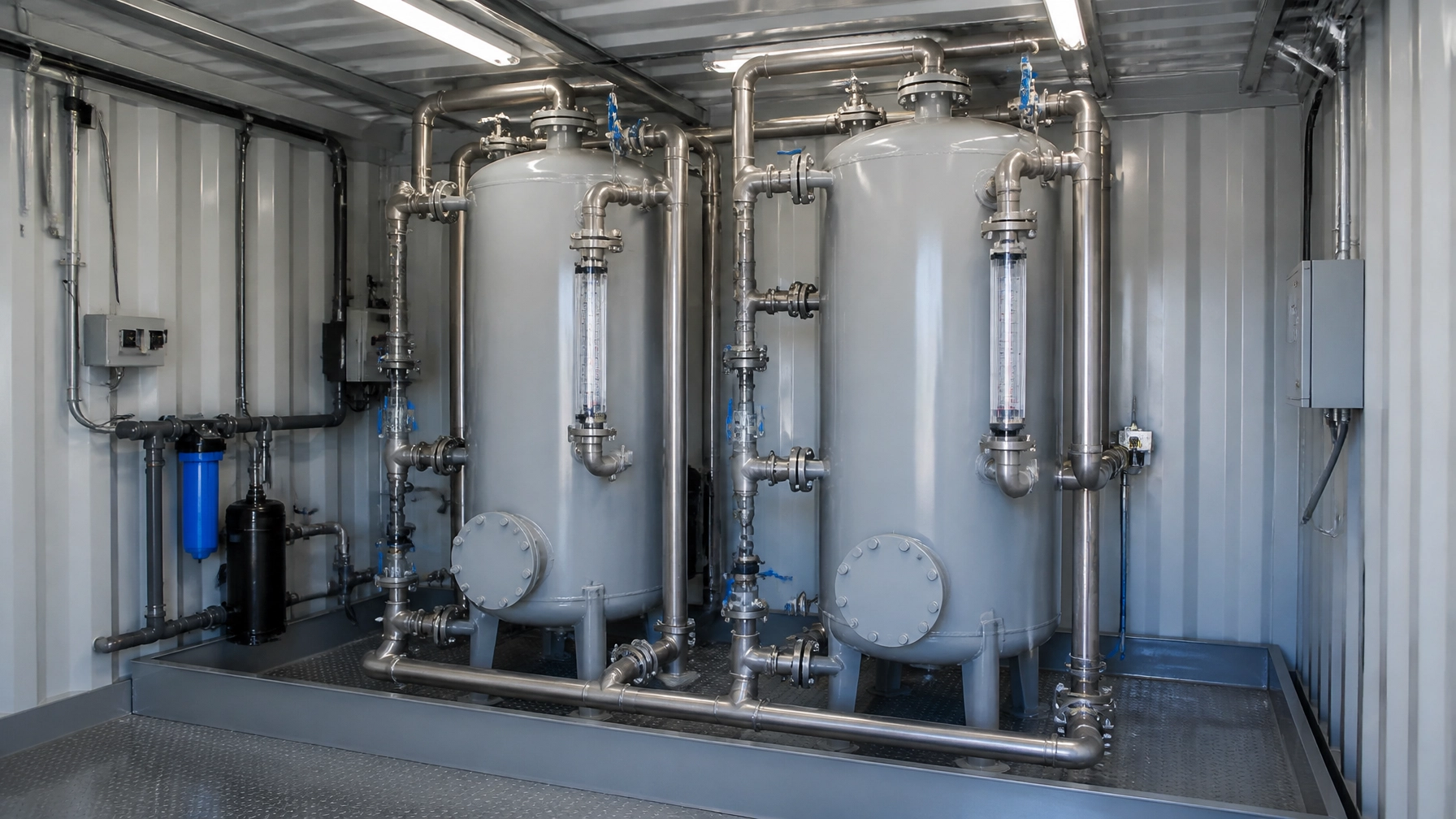
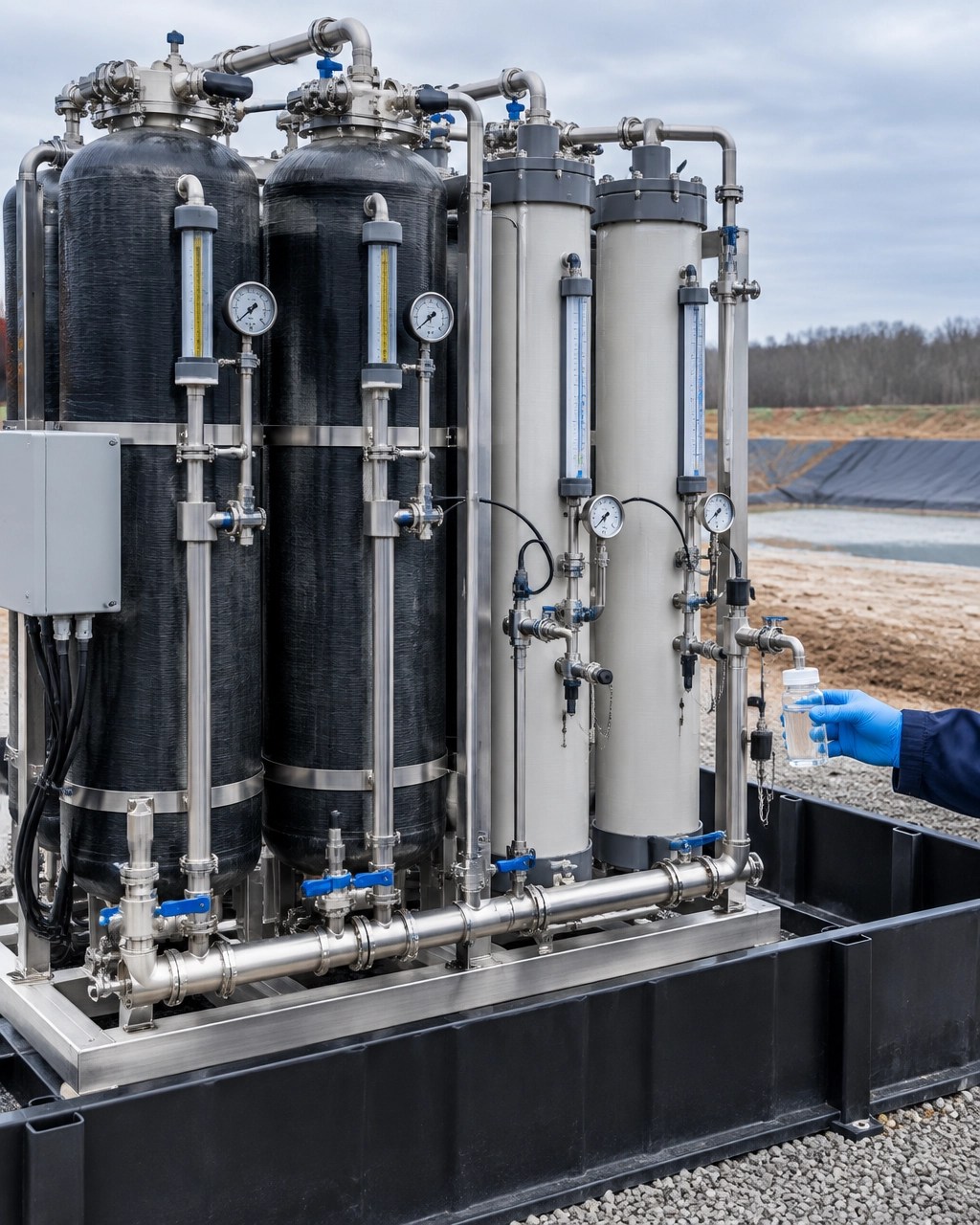
Granular activated carbon, or GAC, remains a common PFAS treatment option. A properly designed lead-lag system gives the operator a polishing vessel after the primary vessel begins to lose capacity.
GAC performance depends on:
- PFAS chain length.
- Influent concentration.
- Flow rate.
- Competing organic compounds.
- Dissolved organic carbon.
- pH and water chemistry.
- Empty bed contact time.
- Media type and carbon loading.
Short-chain PFAS and some replacement compounds can move through GAC more quickly than long-chain compounds. A system that appears effective based only on PFOA and PFOS results may not control GenX or other compounds for the same operating period.
Ion exchange resin can provide stronger performance for certain PFAS profiles and may reduce vessel footprint. It also creates a different residuals problem. Resin selection, regeneration strategy, disposal requirements, and compatibility with co-contaminants must be evaluated before procurement.
A reliable system should include:
- Pretreatment for suspended solids, iron, oil, or biological fouling.
- Lead-lag vessels or columns.
- Sample ports before treatment, between vessels, and after treatment.
- Flow totalization and pressure monitoring.
- A written breakthrough response plan.
- Confirmatory laboratory testing at appropriate reporting limits.
- A media replacement schedule based on data, not guesswork.
Breakthrough monitoring is not a final check after the system is installed. It is part of the operating design. Sampling frequency should reflect the risk of exceeding the discharge limit, the variability of the influent, and the consequences of a failed treatment vessel.
Sampling, reporting, backwash, and spent media
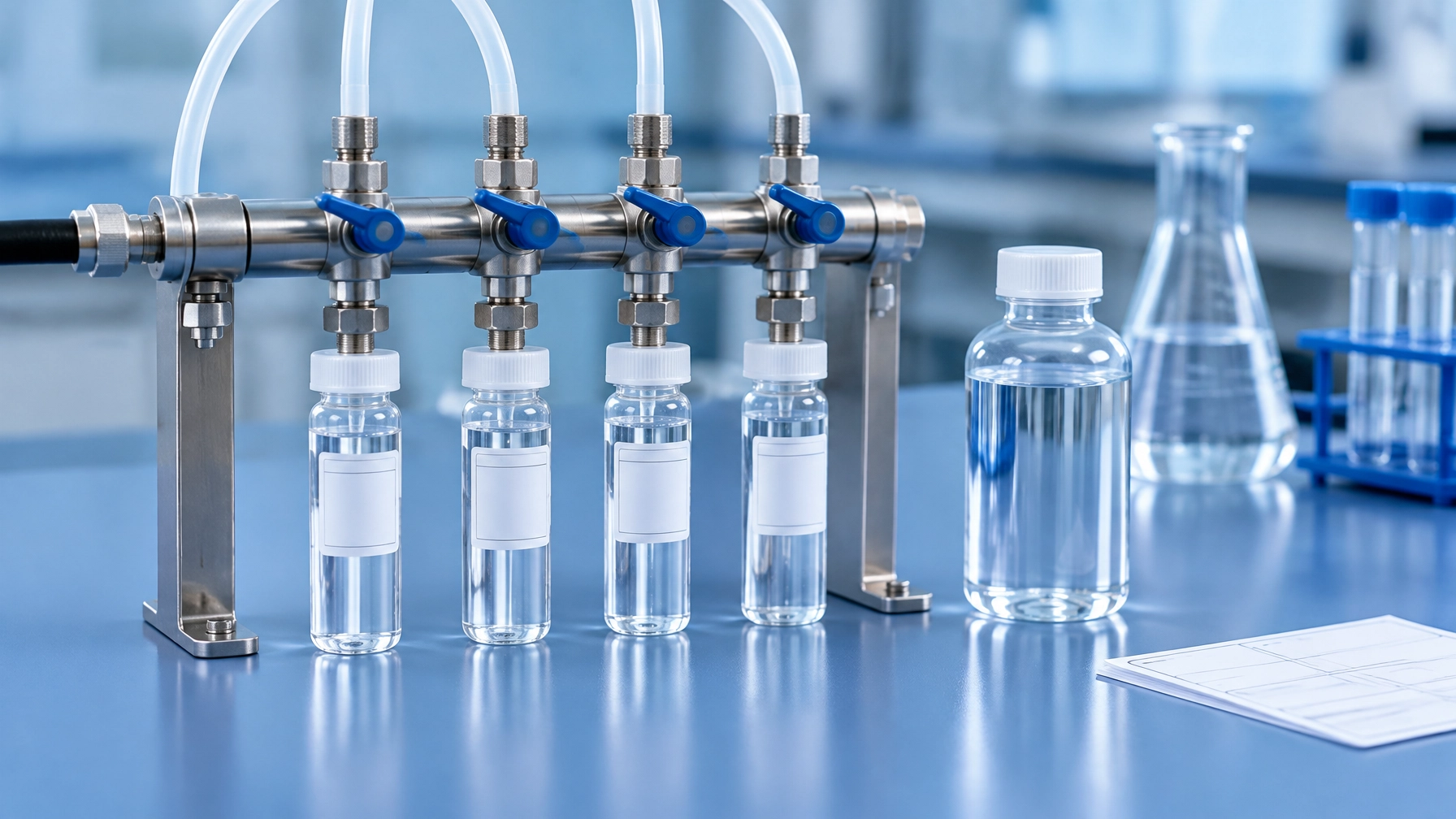
PFAS sampling requires strict field controls. Sampling equipment, tubing, clothing, containers, and personal-care products can introduce background contamination. The project sampling plan should address PFAS-specific quality assurance, laboratory method selection, holding times, field blanks, equipment blanks, and chain of custody.
For NJPDES Discharge to Groundwater permits, NJDEP may require annual or quarterly PFAS monitoring depending on the facility and permit conditions. NJDEP’s strategy notes that industrial and large domestic DGW permits are being modified to include quarterly PFAS monitoring.
Permit reporting may include:
- Discharge Monitoring Reports.
- Effluent laboratory results.
- Flow totals.
- Field and equipment blanks.
- Groundwater monitoring data.
- Noncompliance reports.
- Remedial Action Reports.
- Immediate or expedited notice of exceedances.
If PFAS exceeds the applicable groundwater quality standard, NJDEP may require written notification, increased monitoring, source removal, additional treatment, or groundwater quality monitoring.
Backwash water cannot be treated as an afterthought. Depending on the system, backwash may contain concentrated PFAS, sediment, iron, or other contaminants. It may need to return to the treatment process, go to a permitted disposal facility, or receive separate treatment.
Spent GAC and ion exchange resin also require a documented management plan. The owner must evaluate whether media will be regenerated, destroyed, stabilized, or disposed of. Disposal costs can become a major part of the total PFAS remediation cost in NJ, particularly when influent concentrations are high or the media loads quickly.
Budget drivers for PFAS treatment systems in New Jersey
There is no responsible single price for a PFAS groundwater system without flow, chemistry, discharge route, and permit information. The main budget drivers are below.
| Budget driver | Why it affects cost |
|---|---|
| Initial characterization | The 2026 analyte expansion can increase sampling, laboratory, and data evaluation requirements. |
| Flow rate and operating hours | Higher flow requires larger vessels, pumps, controls, containment, and discharge capacity. |
| PFAS profile | PFOA, PFOS, PFNA, GenX, and short-chain compounds can behave differently in GAC and ion exchange systems. |
| Co-contaminants | Iron, manganese, VOCs, petroleum, solids, and 1,4-dioxane may require pretreatment or additional polishing. |
| Discharge route | A DGW, surface water, or POTW pathway creates different permit, monitoring, and infrastructure costs. |
| POTW requirements | Local limits, sewer connection fees, metering, sampling, and infiltration/inflow conditions can change project economics. |
| Breakthrough frequency | Faster media exhaustion increases replacement, labor, transportation, and disposal costs. |
| Backwash and residuals | Concentrated PFAS waste streams require separate handling and documentation. |
| Reporting and oversight | Quarterly monitoring, DMRs, field QA/QC, and agency coordination continue throughout operation. |
| Site schedule | Temporary treatment, night work, winter conditions, and construction sequencing can increase mobilization costs. |
The practical path forward
The most expensive mistake is selecting treatment equipment before confirming the discharge route and the complete contaminant profile.
For a New Jersey site, the work should proceed in this order:
- Confirm whether the discharge is to groundwater, surface water, or a POTW.
- Review historical operations and Areas of Concern.
- Apply the 2026 7:26E analyte requirements where site documentation is incomplete.
- Characterize PFAS and co-contaminants at appropriate reporting limits.
- Contact the receiving POTW before assuming sewer acceptance.
- Complete bench or pilot testing when water chemistry is uncertain.
- Design lead-lag treatment and breakthrough monitoring together.
- Establish backwash and spent media procedures before startup.
- Build permit reporting into the operating budget.
- Track flow, cost, media performance, and schedule in real time.
Envicon Group brings environmental permitting, remediation oversight, civil engineering, and field monitoring together for complex New York and New Jersey projects. Our team works directly with owners, attorneys, contractors, laboratories, POTWs, and NJDEP. We focus on clean documentation, responsive coordination, and a treatment plan that moves the site toward closure instead of creating another queue.
The takeaway is simple: PFAS treatment is not only a filtration problem. It is a discharge, permitting, monitoring, waste management, and project-control problem. Design the whole path at the beginning, and you reduce surprises later.
Move your New Jersey remediation project forward
- Call Envicon now at (917) 764-2171
- Get a free quote today
- Use our proprietary PFAS project risk screener
- Review Envicon’s remediation and brownfield redevelopment services
- Learn about our New Jersey LSRP services