September 1, 2026 changed the application standard for volunteer applicants entering New York’s Brownfield Cleanup Program. Applicants must now certify that they exercised appropriate care regarding contamination and provide a detailed explanation of why they qualify as volunteers.
At the same time, the BCP requires a $50,000 nonrefundable program entrance fee, subject to a financial hardship waiver. The fee cannot be included in BCP tax credit calculations.
For developers, property owners, investors, and environmental attorneys working on downstate New York projects, these requirements affect more than the application package. They affect liability strategy, project financing, cleanup scheduling, and the value of the redevelopment tax credit pathway.
This article explains what changed, what NYSDEC expects, and how to plan before submitting a BCP application.
The September 1, 2026 BCP change
NYSDEC now requires a volunteer applicant to do two things:
- Certify that it exercised appropriate care with respect to site contamination.
- Provide a detailed description of its eligibility for volunteer status.
The revised application form applies to submissions received on or after September 1, 2026. NYSDEC has stated that older application versions may be rejected after that date. Applicants should use the current NYSDEC BCP application and instructions.
This is not a minor form update. It changes how applicants need to tell the story of the property.
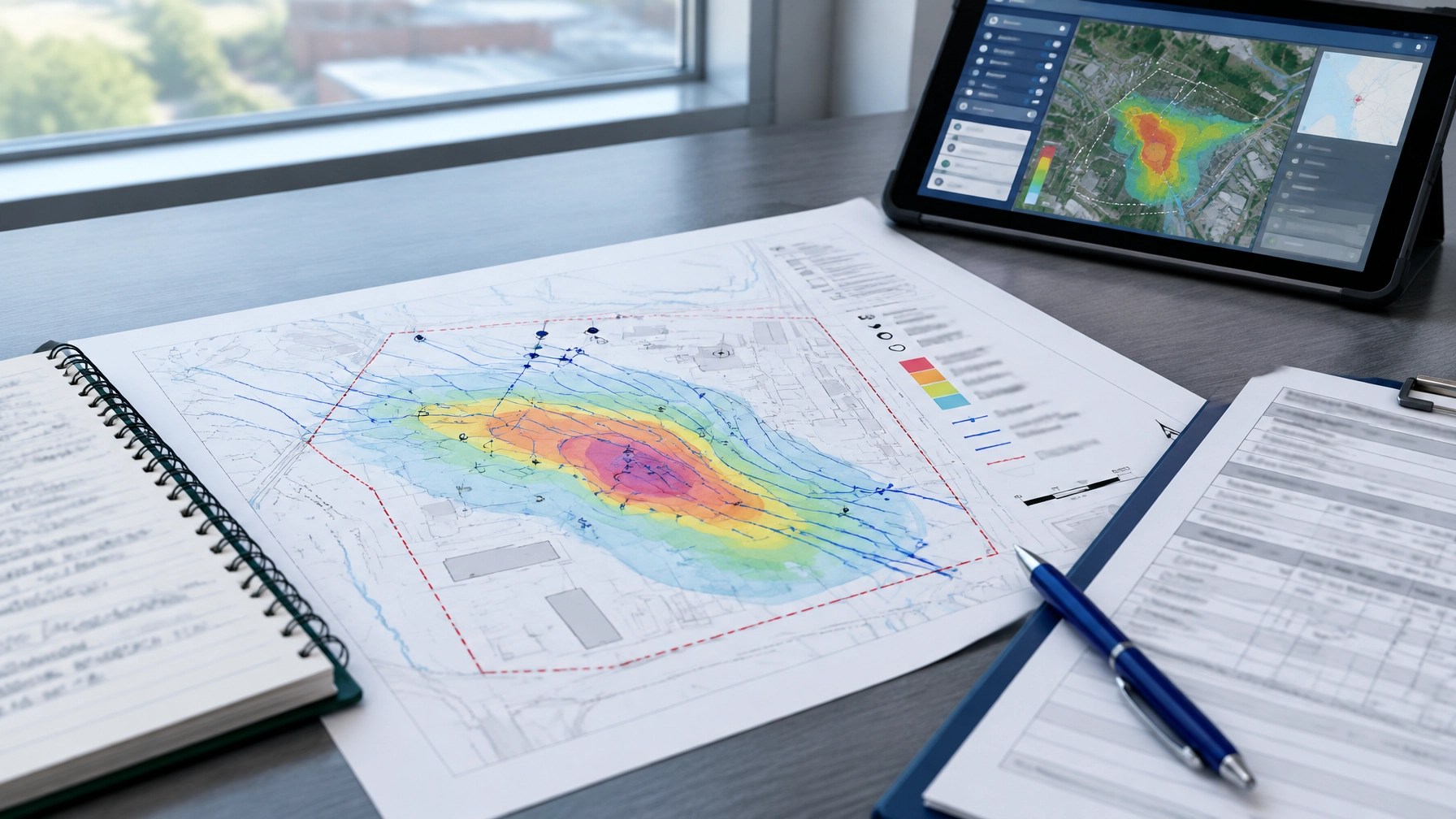
A Phase I ESA, Phase II ESA, laboratory report, or sampling figure still provides important evidence. But attachments do not replace the narrative. NYSDEC wants the application to explain the site history, contamination, exposure pathways, and actions taken by the applicant in a way that a reviewer can understand without reconstructing the case from hundreds of pages.
The revised standard is simple: describe the facts, connect the facts, and explain the actions taken.
What “appropriate care” means for a volunteer
Under New York’s Environmental Conservation Law, volunteer status generally applies to an applicant whose liability arises from ownership or involvement after contamination occurred, rather than from causing or contributing to the release.
That status depends on more than when the applicant acquired the property. The applicant must also show that it took reasonable steps to manage the contamination.
The statutory standard focuses on actions taken to:
- Stop continuing releases.
- Prevent threatened future releases.
- Prevent or limit human, environmental, or natural resource exposure.
- Address on-site contamination and prevent further migration where appropriate.
The New York Environmental Conservation Law, Section 27-1405 provides the statutory framework for the distinction between participants and volunteers.
A strong appropriate care narrative should explain:
- When the applicant acquired or became involved with the property.
- The historical uses of the site and surrounding properties.
- Whether the applicant owned or operated the property during the period of disposal or discharge.
- What the Phase I ESA identified.
- What the Phase II ESA and supplemental investigations found.
- Where contamination is located in soil, groundwater, soil vapor, or structures.
- Whether contamination could affect adjacent properties, receptors, or public resources.
- What interim measures were taken to control exposure or prevent additional releases.
For example, the narrative may describe restricted access, maintained pavement or clean soil covers, dust control, stormwater controls, proper management of drums or tanks, worker protection measures, or steps taken to prevent contaminated soil from migrating off-site during construction.
The key is specificity. A statement such as “the applicant exercised appropriate care” is not enough. The application should explain what happened, when it happened, and how each action addressed a known risk.
NYSDEC’s practical expectation can be summarized in one sentence: “Be specific as to the appropriate care taken.”
Narrative detail matters more than a stack of attachments
A common mistake is to submit a large technical package and assume the documents speak for themselves.
They do not.
NYSDEC reviewers need a concise narrative that connects the documentation to the eligibility decision. The application should identify the relevant report, figure, or table, but it should also summarize the finding in plain technical language.
A useful structure includes:
1. Site and area history
Describe former industrial, commercial, manufacturing, transportation, dry-cleaning, petroleum, or waste-handling uses. Explain which historical operations may relate to the contaminants found today.
2. Investigation summary
Summarize the Phase I ESA, Phase II ESA, supplemental borings, monitoring wells, vapor sampling, and laboratory data. Identify contaminants, affected media, exceedances, and source areas.
3. Volunteer eligibility
Explain the applicant’s ownership and operating history. State whether the applicant caused, contributed to, or arranged for the disposal of contamination. Address corporate relationships and prior ownership where relevant.
4. Appropriate care actions
List the actions taken after contamination became known. Tie each action to a purpose, such as stopping a release, preventing migration, or limiting exposure.
5. Proposed cleanup pathway
Explain how the BCP, work plan, engineering controls, institutional controls, or other remedy will address the contamination and support the planned end use.
This format gives NYSDEC a readable decision record. It also creates a stronger foundation for lenders, investors, counsel, and tax professionals reviewing the project.
The $50,000 BCP entrance fee
Under Environmental Conservation Law Section 27-1409, an accepted applicant must submit a $50,000 nonrefundable program fee with the executed Brownfield Cleanup Agreement.
The fee is not a cleanup cost. It is a program entrance fee deposited into the state hazardous waste remedial fund account.
The timing matters. The fee is generally due after NYSDEC accepts the site and the applicant returns the executed agreement. It should be included in the project capital stack from the start.
The fee also creates a planning issue because it does not qualify for BCP tax credits. It cannot be counted as a site preparation cost, tangible property cost, or other credit-generating expenditure.
Hardship waivers require a “but-for” showing
NYSDEC may waive the $50,000 fee when an applicant demonstrates financial hardship.
The statutory test requires the applicant to show that, “but for the program fee, remediation of the brownfield site would not be economically viable.”
That is not the same as showing that the fee is inconvenient or that the project has a tight budget. The applicant must connect the fee directly to the project’s ability to proceed.
NYSDEC may consider:
- The applicant’s assets and income.
- The project’s financial structure and remediation costs.
- Whether the site is in a disadvantaged community.
- Whether the project includes affordable housing.
- Whether the applicant has waived its rights to BCP tax credits.
- Other relevant financial and project-specific factors.
A waiver request should be developed as a project economics package, not as a short hardship letter. It may need to address the purchase price, remediation budget, financing commitments, projected development costs, anticipated revenue, available equity, and the specific effect of the $50,000 fee.
Applicants should raise the waiver issue before submitting the application. The request should be included with the initial BCP package and supported by the documentation NYSDEC needs to evaluate the but-for test. Waiting until after acceptance can eliminate the opportunity to request the waiver.
How the new requirements affect tax credit planning
BCP tax credit planning starts before site acceptance. It does not begin after construction is complete.
The general pathway is:
- The site is eligible for and accepted into the BCP.
- The applicant executes a Brownfield Cleanup Agreement.
- The applicant performs investigation and remediation under NYSDEC-approved work plans.
- NYSDEC issues a Certificate of Completion.
- The taxpayer evaluates and claims eligible BCP tax credit components with its tax advisor.
The NYSDEC tax credit eligibility and rates guidance and the New York State Department of Taxation and Finance BCP credit guidance should be reviewed for current requirements.
Potential credit components can include:
- Site preparation costs, including qualifying investigation, remediation, demolition, and certain hazardous-material abatement costs necessary to obtain a Certificate of Completion.
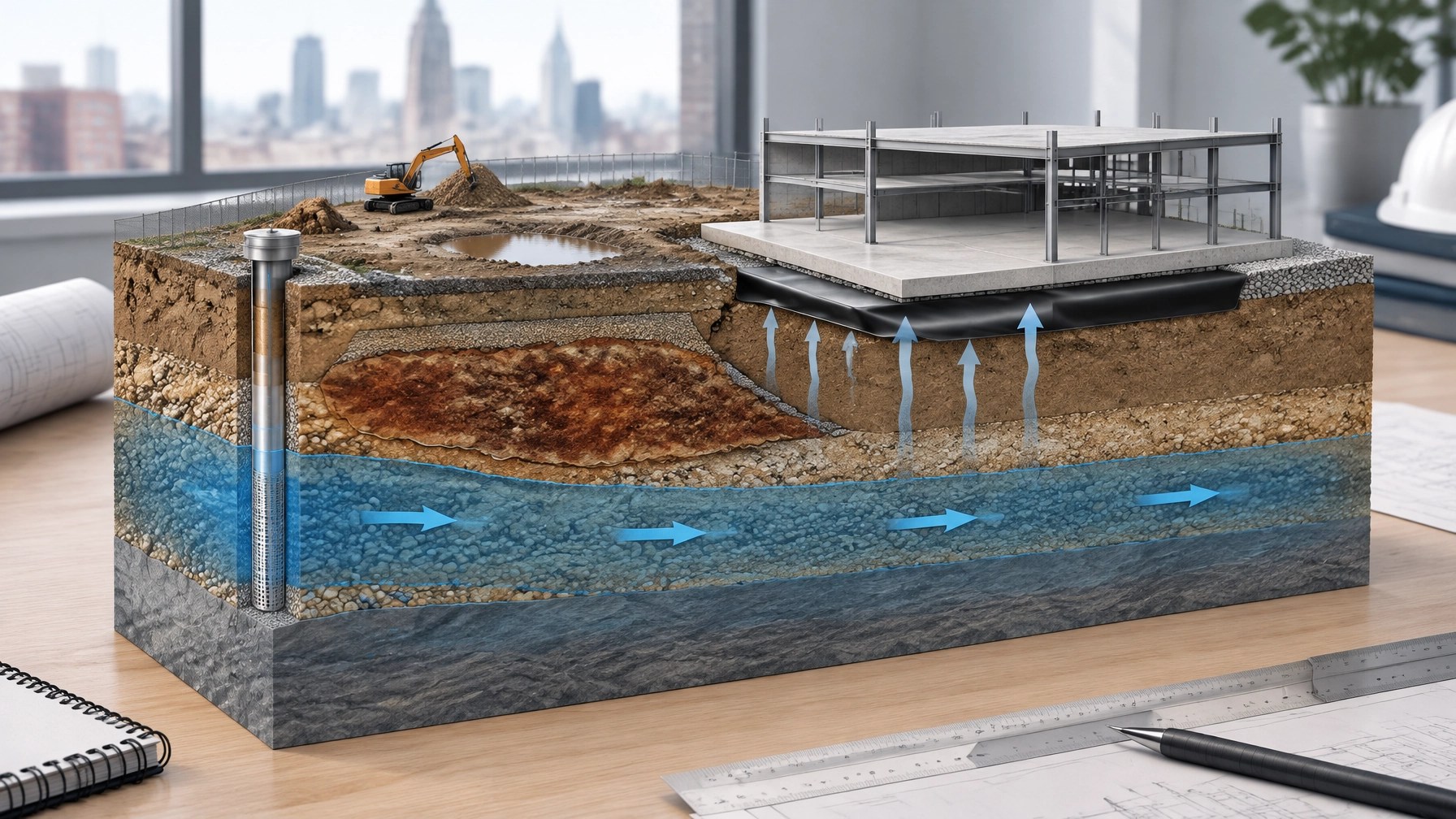
- On-site groundwater remediation costs.
- Tangible property costs, subject to applicable eligibility tests, project use, location, timing, and statutory caps.
A Certificate of Completion is central to the tax credit pathway. Without the required program status and completion documentation, eligible project costs may not produce the expected tax benefit.
For New York City projects, the tangible property component may also depend on additional criteria, including location in an Environmental Zone, affordable housing use, underutilized or upside-down property status, renewable energy use, or other statutory categories. A project in Manhattan, Brooklyn, Queens, the Bronx, or Staten Island should be evaluated against the current NYC-specific requirements.
The fee waiver decision also has a tax planning connection. NYSDEC may consider whether the applicant has waived its tax credit rights when evaluating financial hardship. That means the applicant should compare:
- The value of potential BCP tax credits.
- The immediate benefit of avoiding the $50,000 fee.
- The project’s tax capacity.
- Whether credits can be transferred or monetized.
- The applicant’s ownership and financing structure.
This analysis should involve environmental counsel, tax counsel, the developer, and the environmental engineer. The decision should not be made in isolation.
NYC OER and NYSDEC are not the same pathway
For a New York City brownfield, the phrase “NYC OER brownfield cleanup” may refer to a project involving the New York City Office of Environmental Remediation, the NYSDEC BCP, or both.
NYC OER operates municipal cleanup and redevelopment programs, including the City Voluntary Cleanup Program and E-Designation-related processes. NYSDEC administers the statewide Brownfield Cleanup Program.
The correct pathway depends on the property, contamination, planned use, agency jurisdiction, available incentives, and desired liability protections. A project may need coordinated planning across city and state requirements.
Envicon works with developers, attorneys, architects, contractors, and public agencies to evaluate those pathways before field work and construction decisions lock in the project’s options. Our brownfield redevelopment and site remediation team connects investigation, remedial design, agency coordination, tax incentive planning, and construction oversight.
2026 BCP application checklist
Before submitting a volunteer application, confirm that you have:
- Used the current NYSDEC BCP application form.
- Confirmed whether the applicant is a volunteer or participant.
- Prepared an appropriate care certification.
- Written a detailed volunteer eligibility narrative.
- Summarized the site history and environmental investigations.
- Identified contamination locations, sources, and exposure pathways.
- Described interim measures and contamination controls.
- Evaluated the $50,000 entrance fee.
- Prepared a hardship waiver request before submission, if needed.
- Reviewed whether waiving tax credits affects the waiver analysis.
- Mapped potential site preparation and tangible property costs.
- Coordinated with tax counsel and environmental counsel.
- Confirmed how NYSDEC and, where applicable, NYC OER will coordinate on the project.
The takeaway for downstate developers
The 2026 BCP changes reward preparation.
Volunteer applicants must now explain their status and appropriate care in a detailed, fact-based narrative. The $50,000 entrance fee must be included in early project economics, and a hardship waiver must be supported by a credible but-for analysis. Tax credits require their own planning around the BCA, eligible costs, completion requirements, and project use.
Do not submit a BCP application that forces NYSDEC to reconstruct your project from attachments. Build the narrative, the cleanup strategy, and the financial plan together.
A contaminated site is not just an environmental problem. It is a development, financing, regulatory, and community decision. The right path turns those issues into a coordinated plan.
Take the next step
Have a New York brownfield project entering the BCP, NYC OER, or another cleanup pathway? Use the Envicon project risk screener to identify key environmental, regulatory, and schedule risks before they become closing or construction problems.
You can also read more Envicon insights or call Envicon Group at (917) 764-2171 to discuss your site with a responsive environmental and engineering team.
This article is for general information and does not replace project-specific advice from NYSDEC, NYC OER, environmental counsel, tax counsel, or a licensed professional engineer.