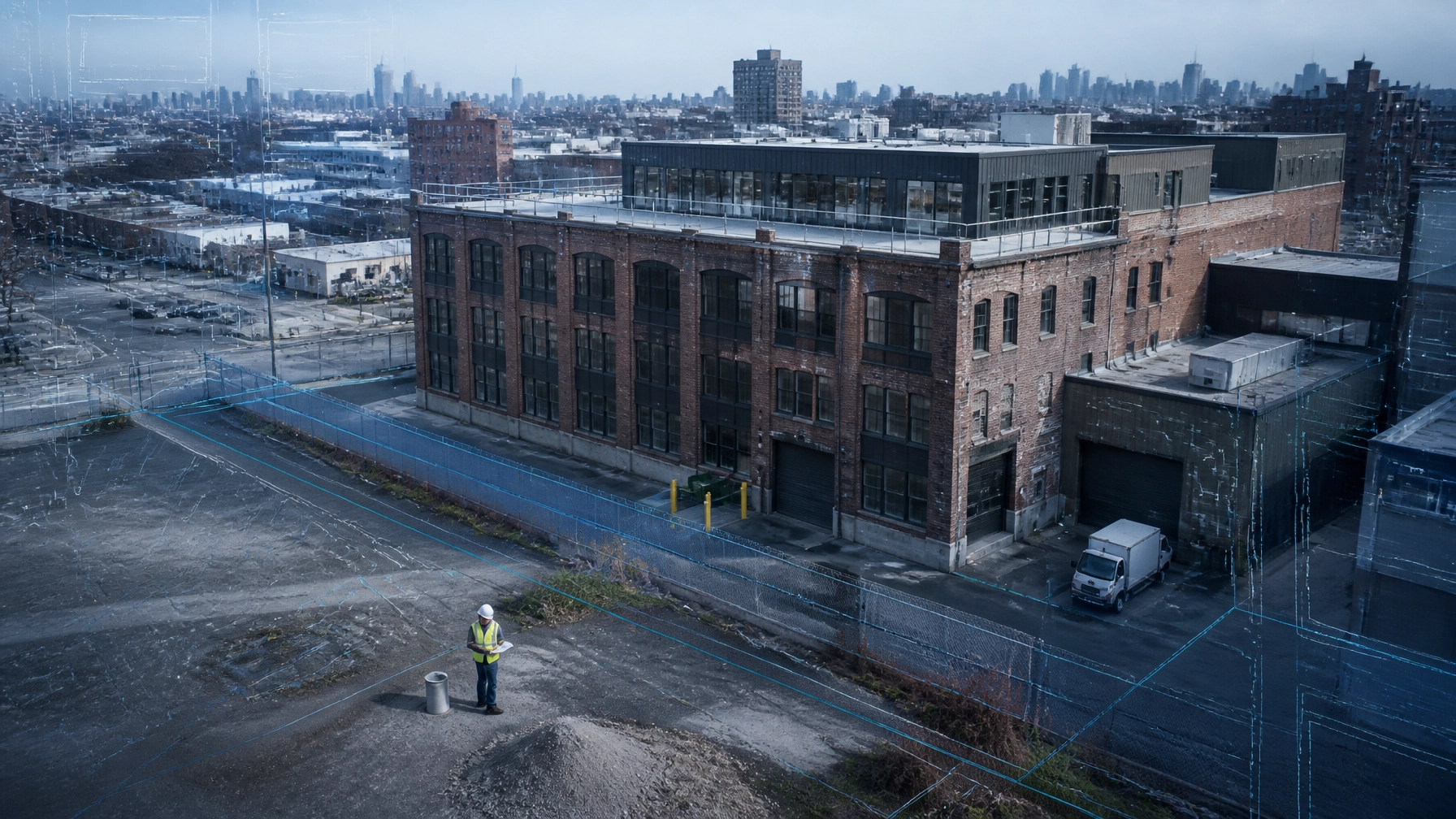
A NYC OER E-designation can affect permits, occupancy, financing, title review, and the closing schedule. The issue is not limited to one borough. Developers and owners face the same core process in Queens, Brooklyn, the Bronx, Manhattan, and Staten Island.
The challenge is knowing what “closeout” actually means.
An OER project may reach a point where the environmental requirements are complete and DOB can receive the necessary notice. That does not always mean the E-designation has already disappeared from the Zoning Resolution or every title record.
This 2026 transaction checklist explains the difference and outlines the steps needed to move from records review to OER certification and, where eligible, administrative removal by the New York City Department of City Planning.
What an NYC E-designation controls
According to the NYC Office of Environmental Remediation, an E-designation is attached to a property as a result of a zoning action. It creates environmental requirements related to:
- Hazardous materials
- Air quality
- Noise
The requirements must be investigated and addressed before the owner can obtain certain building permits or certificates of occupancy.
The designation does not automatically mean the site is contaminated or unusable. It means the environmental conditions identified during the CEQR process require documented review before development proceeds.
The first step in any NYC OER E-designation closeout is identifying exactly which component applies to the property.
Step 1: Identify the E-designation component
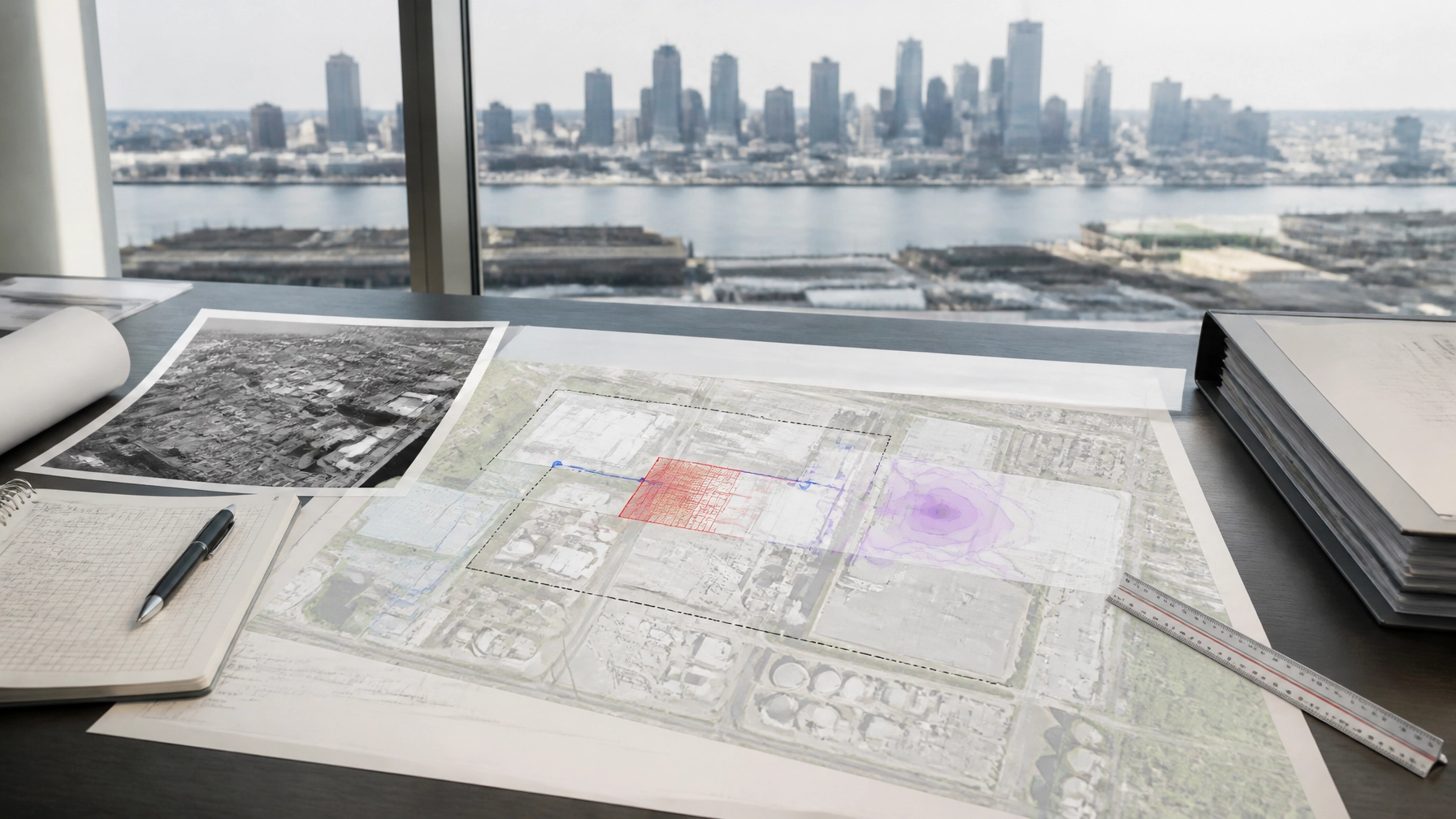
Start with the property’s tax block and lot, zoning history, CEQR determination, and any environmental restrictive declaration. Confirm whether the designation covers one tax lot or multiple lots.
Review:
- The E-designation number
- The applicable CEQR determination
- Appendix C of the NYC Zoning Resolution
- Prior OER correspondence
- Existing DOB filings and permits
- Any recorded restrictive declaration
- Prior environmental reports and remedial documents
NYC Zoning Resolution Section 11-15 explains that E-designations relate to potential hazardous materials, noise, or air quality impacts established through a zoning action.
This records review matters in every borough. A property in Long Island City may have a different CEQR history from a development site in Gowanus, Hunts Point, the South Bronx, Midtown, or Staten Island. The process is citywide, but the technical scope depends on the lot’s history and the specific designation.
Step 2: Confirm the OER pathway through EPIC
New E-designation compliance applications are submitted through OER’s Environmental Project Information Center, or EPIC Environment.
For a new building, conversion, or major alteration, the project may require OER review before DOB can approve plans. OER’s New Projects and Notices of No Objection guidance distinguishes between:
- New development projects that require a Notice to Proceed and a Notice of Satisfaction
- Minor alterations that may qualify for a Notice of No Objection
- Limited work types where OER requirements may be waived
The EPIC submission should match the actual project. A weak or incomplete application can create additional review cycles, revised scopes, and avoidable pressure on the closing schedule.
Your submission package may include:
- Property and ownership information
- Tax lot and zoning documentation
- Proposed development plans
- Environmental reports
- Sampling and Analysis Plans
- Remedial Action Plans
- Construction Health and Safety Plans
- Air, noise, or hazardous materials design information
- Prior OER approvals and agency correspondence
Step 3: Address hazardous materials, soil vapor, and indoor air
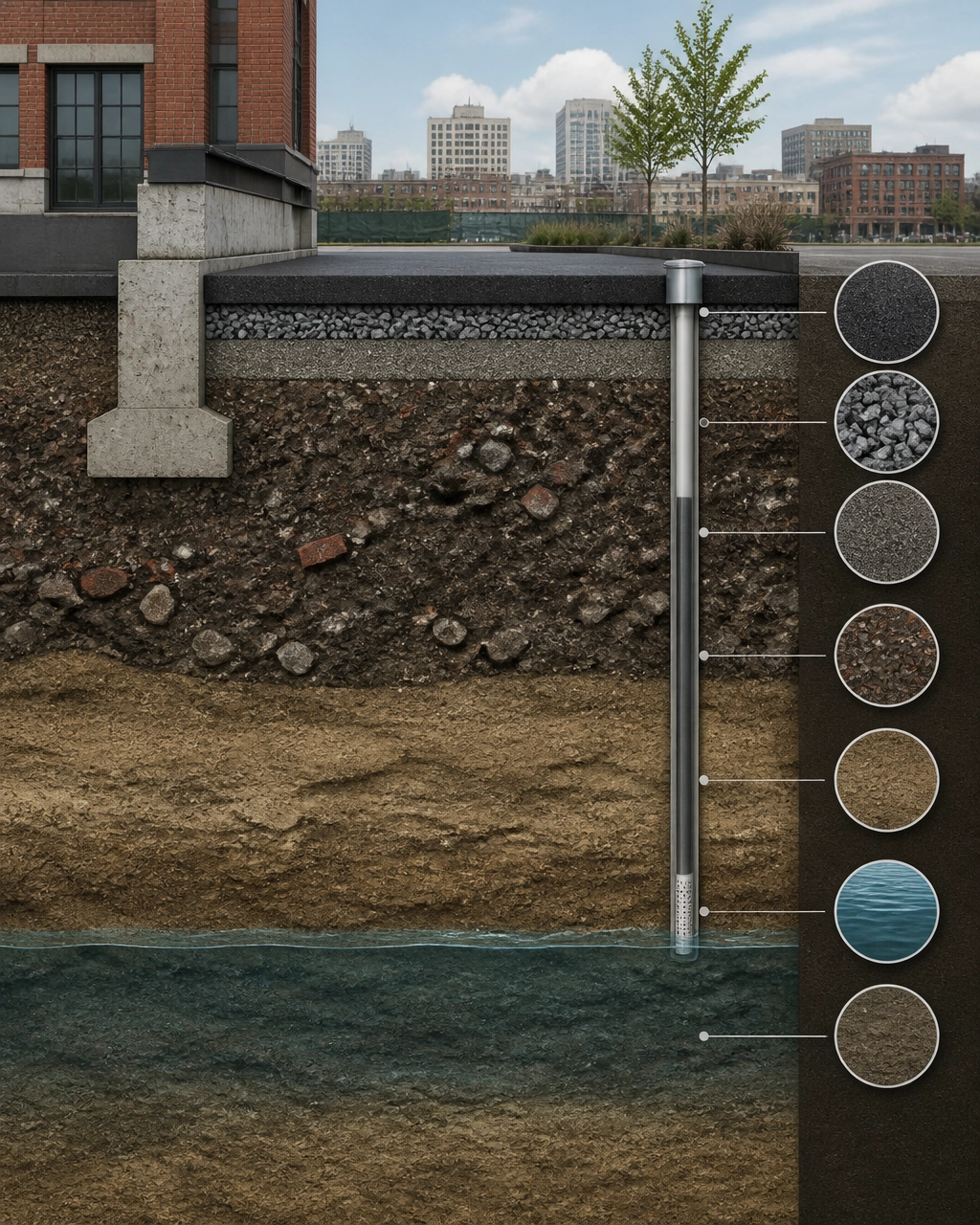
A hazardous materials E-designation commonly requires soil testing. If contamination is identified, OER may require an approved Remedial Action Plan before development proceeds.
Depending on site conditions, the investigation may include:
- Historical land-use review
- Soil borings and laboratory analysis
- Groundwater sampling
- Soil vapor testing
- Sub-slab vapor sampling
- Indoor and outdoor air sampling
- Utility and preferential pathway review
- Waste characterization
- Confirmation sampling after excavation
Soil vapor and indoor air require particular attention where volatile organic compounds may migrate from soil or groundwater into a building. A vapor intrusion assessment can help determine whether the project needs additional sampling, a vapor barrier, a sub-slab depressurization system, or another engineering control.
The closeout question is not simply whether a sample was collected. OER needs enough defensible information to determine whether the remedy protects the proposed use and whether ongoing controls remain necessary.
A project that retains an active vapor management system may have continuing obligations. That can affect title, operations, maintenance, future construction, and lender review.
Step 4: Address air quality requirements
Air quality E-designations can control building mechanical systems. Requirements may involve:
- Boiler fuel
- Boiler capacity
- Stack location
- Stack height
- Exhaust configuration
- Mechanical design
- Installation documentation
The approved design must match what gets built. A late design change by the mechanical engineer, architect, or contractor can create a documentation problem even when the building performs as intended.
For closeout, assemble the design and construction record together. That may include approved plans, equipment specifications, photographs, certifications, and installation reports. The exact documentation depends on the E-designation and OER’s project requirements.
Step 5: Address noise requirements
Noise E-designations often require specific building envelope and ventilation measures. These may include:
- Window and wall attenuation
- Exterior wall assemblies
- Sealed or acoustically rated windows
- Alternate means of ventilation
- Mechanical ventilation or air-conditioning systems
- Installation reports and product documentation
The noise condition must be coordinated with the architect, mechanical engineer, façade consultant, and contractor. A consultant who only reviews the environmental file after construction may miss a design change that affects compliance.
For an E-designation closeout Brooklyn development, this is especially important where mixed-use buildings, residential conversions, transportation infrastructure, and active industrial areas create overlapping noise conditions.
Construction documentation is part of the closeout
OER closeout depends on proof of implementation. Keep the documentation current during construction rather than trying to recreate it at the end.
A practical closeout file may include:
- Daily field logs
- Soil excavation and disposal records
- Waste profiles and manifests
- Laboratory data
- Community air monitoring records
- Soil vapor and indoor air results
- Vapor barrier installation records
- Sub-slab system as-built drawings
- Mechanical equipment records
- Boiler and stack documentation
- Window and façade product data
- Ventilation commissioning records
- Photographs of installed controls
- Contractor certifications
- Construction Health and Safety Plan records
- Agency correspondence and comment responses

Envicon’s remediation and brownfield service supports investigation, remedial design, construction oversight, documentation, and regulatory closure. The value is not another report. It is a complete record that connects field conditions to the requirements OER must certify.
OER certification and the Notice of Satisfaction
After the approved environmental work is complete, the applicant submits the required closure documentation through EPIC. OER reviews the package and determines whether the environmental requirements have been completed to its satisfaction.
For many development projects, this results in an OER Notice of Satisfaction or another applicable OER notice to DOB. The notice is important because DOB may require it before issuing a building permit, change of use, or temporary or final certificate of occupancy.
Do not treat OER certification as a guaranteed administrative formality. OER may request additional information, revised reports, confirmation sampling, or clarification of construction details.
There is no universal closeout timeline. Schedule depends on:
- The number of E-designation components
- Site contamination and vapor conditions
- Number of affected tax lots
- Quality of historical documentation
- Completeness of the EPIC submission
- Construction status
- OER review comments
- Whether active controls remain
- Whether the property is fully built out
Closeout is not the same as zoning record removal
This distinction affects lenders, title companies, buyers, and sellers.
Environmental closeout means OER has determined that the applicable environmental requirements have been completed or otherwise no longer apply. The project may then receive the OER documentation needed for DOB and occupancy purposes.
Zoning record update means DCP later modifies or removes the applicable E-designation from Appendix C of the Zoning Resolution.
Under Section 11-15, DCP may administratively modify Appendix C after receiving a duly issued OER notice stating that the requirements for the applicable tax lot have been completed or no longer apply.
For full removal, OER’s Removing Es guidance states that the property must achieve a high level of cleanup and fully meet applicable air quality and noise requirements. OER also identifies circumstances involving no active soil vapor management system and full development potential.
That standard may not apply to every project. Confirm the property-specific path with OER and counsel.

Lender and title timing
If a closing depends on E-designation closeout, involve the lender and title company early.
Provide them with:
- The E-designation records review
- OER correspondence
- EPIC project status
- Approved remedial documents
- Construction completion records
- Notice of Satisfaction or applicable OER notice
- DCP Appendix C update, if completed
- Any restrictive declaration or ongoing obligations
- A clear explanation of remaining items
Do not assume that a title company will treat an OER closeout letter and a zoning record update as interchangeable. They may request different evidence for environmental risk, zoning compliance, or recorded obligations.
A transaction can be environmentally closed out while the zoning record still awaits administrative updating. That gap should be identified before the final title commitment and closing statement are prepared.
NYC OER E-designation closeout checklist
Use this checklist before requesting final certification:
- Confirm tax block, lot, borough, and E-designation number
- Identify hazardous materials, air quality, and noise components
- Review the CEQR determination and Appendix C
- Check for a restrictive declaration
- Review prior OER and DOB records
- Create or confirm the EPIC project
- Complete required investigation and sampling
- Address soil vapor and indoor air concerns
- Obtain RAP approval where required
- Implement approved air and noise measures
- Maintain construction and monitoring records
- Compile waste, laboratory, and as-built documentation
- Submit the closure package through EPIC
- Respond to OER comments
- Obtain the applicable OER certification or Notice of Satisfaction
- Confirm DOB permit and occupancy requirements
- Determine whether DCP administrative removal is available
- Track Appendix C and title updates separately
- Deliver the final record to the lender, title company, buyer, and counsel
Why local transaction coordination matters
A Queens, Brooklyn, Bronx, Manhattan, or Staten Island project needs more than a generic environmental report. It needs a coordinated record that architects, attorneys, lenders, contractors, DOB, OER, and DCP can understand.
Envicon works across all five boroughs with direct environmental, civil, remediation, vapor, and construction oversight capabilities. We keep the technical work connected to the transaction instead of handing you a report and leaving the closing team to interpret it.
As one OER project moves through investigation, design, construction, and certification, accountability matters. Collaboration is not a buzzword. It is how the work gets done.
Summary
The answer to “how to remove E-designation before closing” starts with records, not assumptions.
Identify the component. Confirm the EPIC pathway. Complete the required hazardous materials, air quality, noise, soil vapor, and indoor air work. Document construction. Obtain the applicable OER certification. Then track DCP’s administrative zoning record update as a separate step.
For an E-designation removal Queens project, an E-designation closeout Brooklyn development, or NYC OER hazardous materials closeout Bronx transaction, the safest approach is to begin the records review before the closing deadline becomes the project schedule.
CTA: Request an NYC E-Designation Records Review
Envicon can review your E-designation records, identify the outstanding OER requirements, and outline the next steps for your lender, title company, counsel, and development team.
- Request an E-designation records review and consultation
- Call Envicon at (917) 764-2171
- Review NYC environmental consulting services
- Review vapor intrusion assessment services