Published: October 5, 2026 at 2:00 PM ET
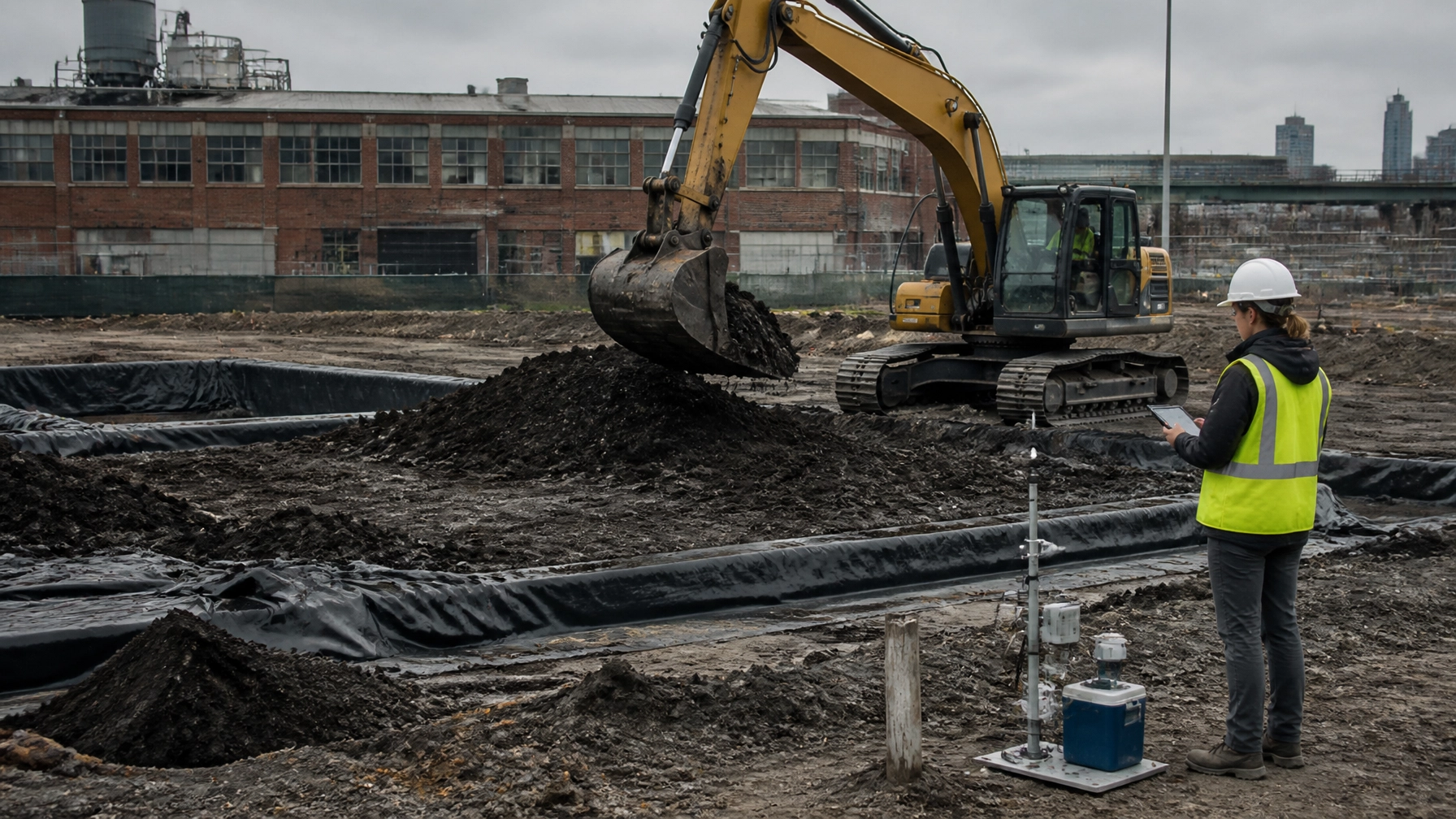
If PFAS has entered your New Jersey project, the first budget number you receive is rarely the number you ultimately spend.
A consultant may quote the treatment equipment but omit media disposal. Another may price groundwater extraction without including NJPDES permitting, confirmatory sampling, electrical work, or long-term operation and maintenance. Those omissions create the scope gaps that turn a reasonable estimate into a change-order problem.
For 2026 planning, a New Jersey PFAS remediation budget should compare three treatment paths:
- Granular activated carbon, or GAC
- Single-use and regenerable ion exchange resin
- In-situ treatment and source control
The ranges below are planning allowances, not contractor bids. Actual costs depend on flow rate, PFAS concentrations, water chemistry, treatment goals, site access, discharge limits, and the final remedy approved by NJDEP.
What PFAS remediation can cost in New Jersey
For a developer or property owner, the following preliminary planning ranges are reasonable starting points:
| Project component | Preliminary 2026 planning range |
|---|---|
| PFAS delineation, sampling, and treatability evaluation | $25,000 to $150,000 |
| Small temporary GAC treatment system | $150,000 to $500,000 |
| Permanent GAC system with multiple vessels and controls | $500,000 to $3 million |
| Single-use ion exchange system | $200,000 to $1.5 million |
| Regenerable ion exchange system | $500,000 to $3 million or more |
| Focused in-situ treatment area | $500,000 to $5 million |
| Complex site-wide groundwater remedy | $3 million to $20 million or more |
| Annual operation, maintenance, sampling, and media management | $75,000 to $1 million or more |
These figures do not represent a universal rate card. They are useful for testing whether a consultant’s estimate includes the complete project, not just the equipment that appears on the process diagram.
NJDEP states that treatment costs vary based on system size, the number of wells or sources, water chemistry, organic matter, and the degree of contamination. The agency also recognizes GAC, anion exchange resins, and membrane treatment as effective PFAS treatment technologies. Read the NJDEP PFAS drinking water FAQ.
GAC vessels: higher capital, more predictable operations
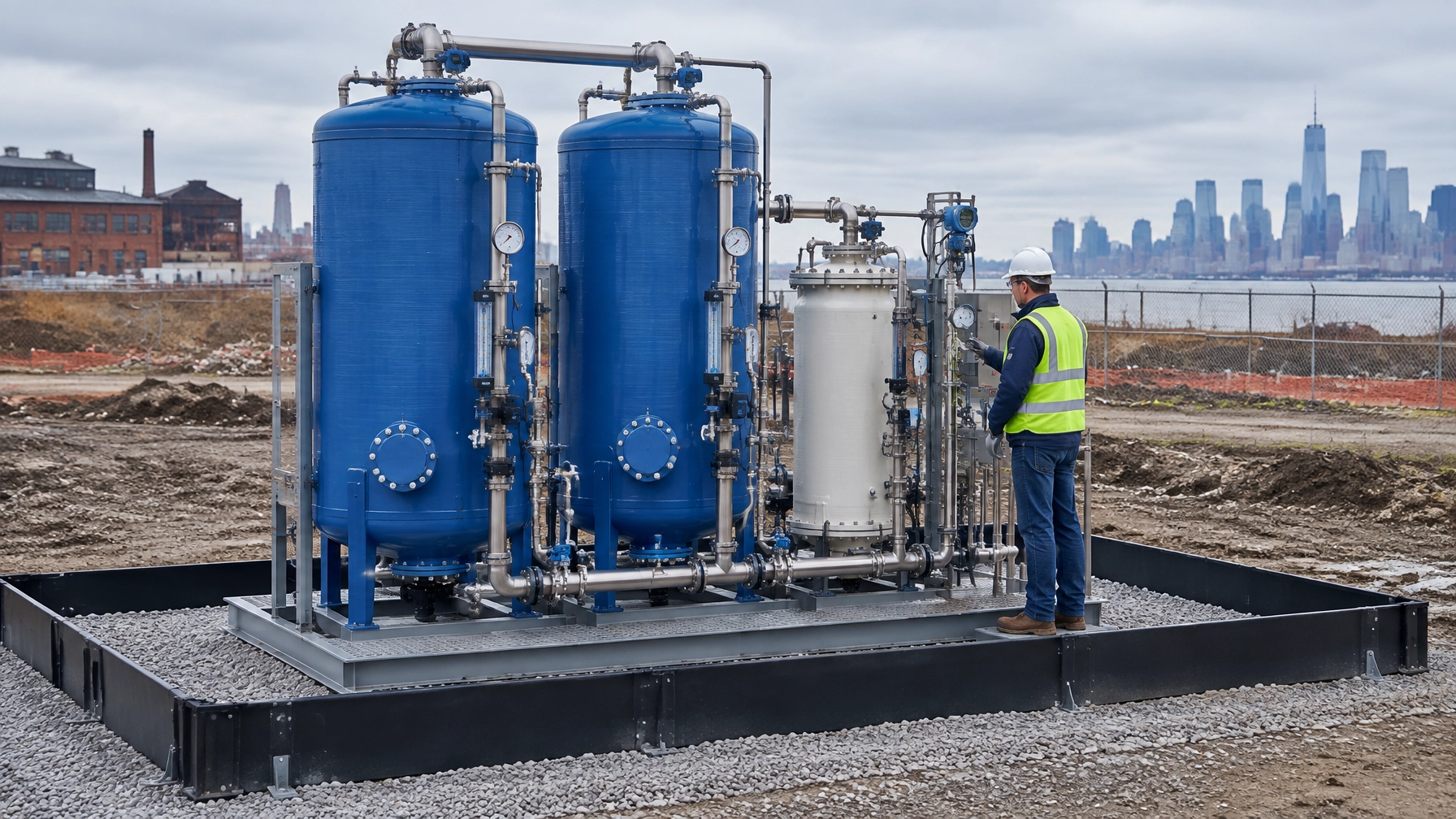
GAC remains a common choice for PFAS treatment because it is established, scalable, and familiar to regulators, utilities, contractors, and operators.
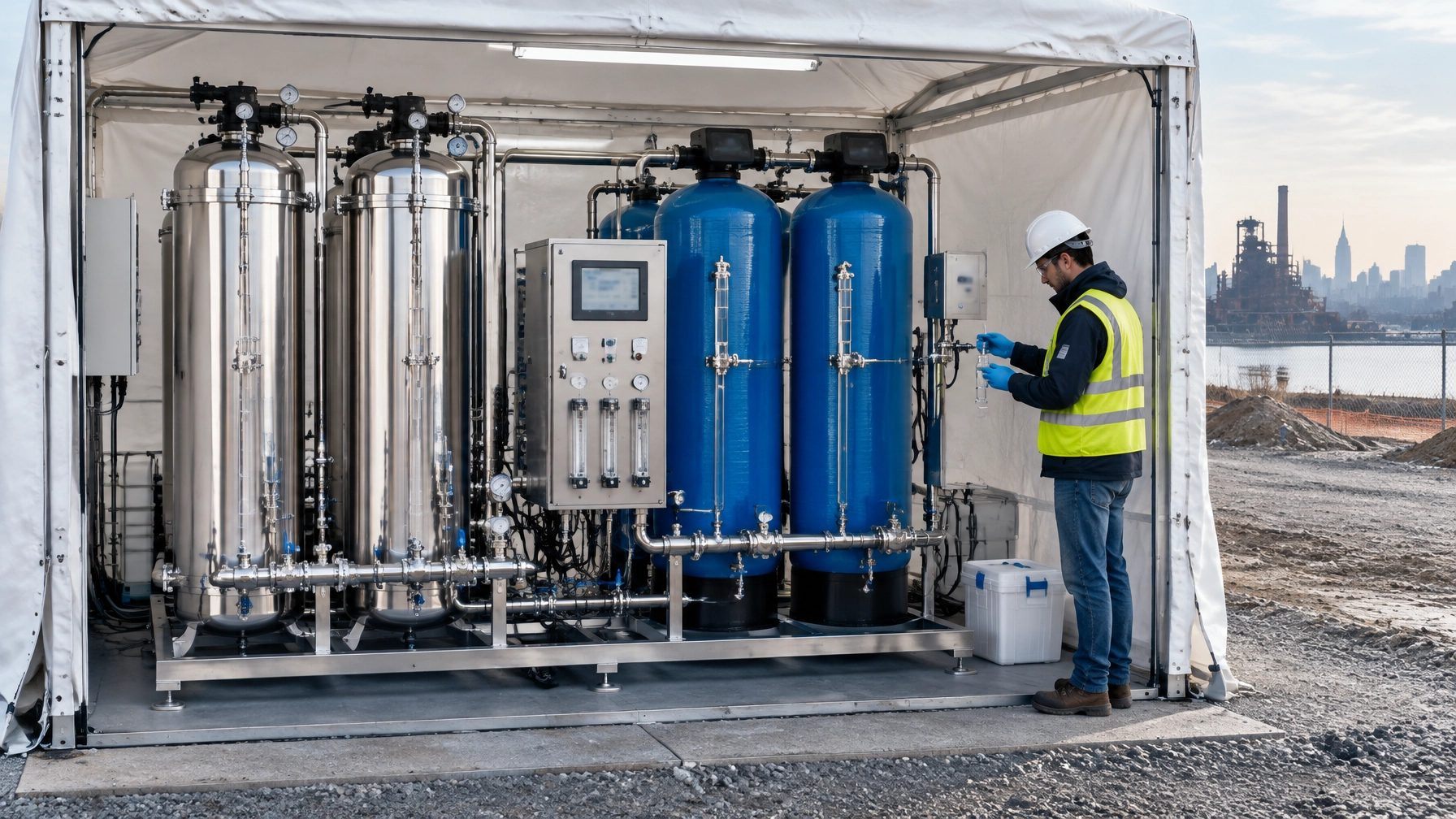
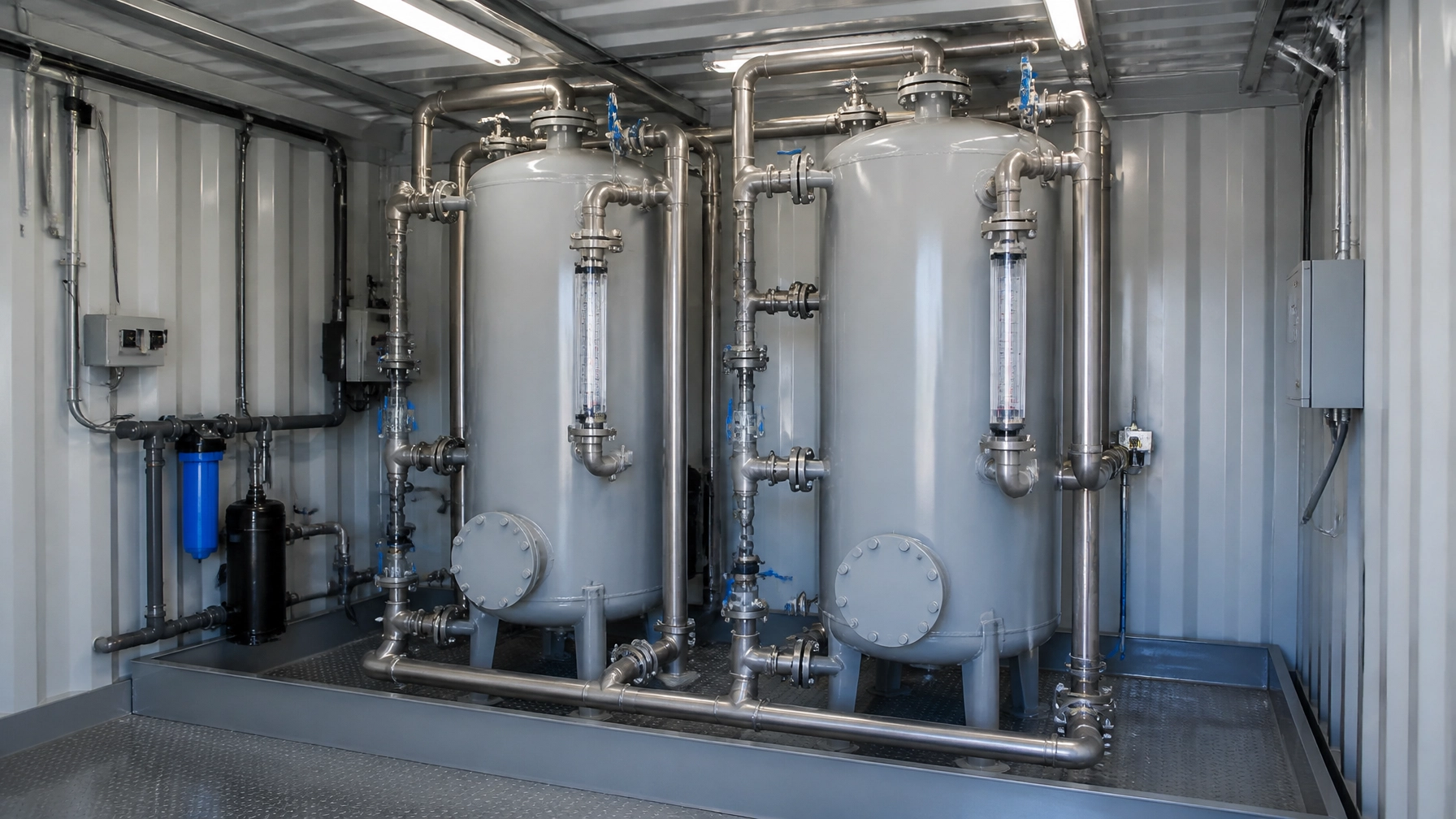
A typical system may include:
- Extraction pumps
- Equalization or influent storage
- Pre-filtration
- Lead and lag GAC vessels
- Flow controls and pressure gauges
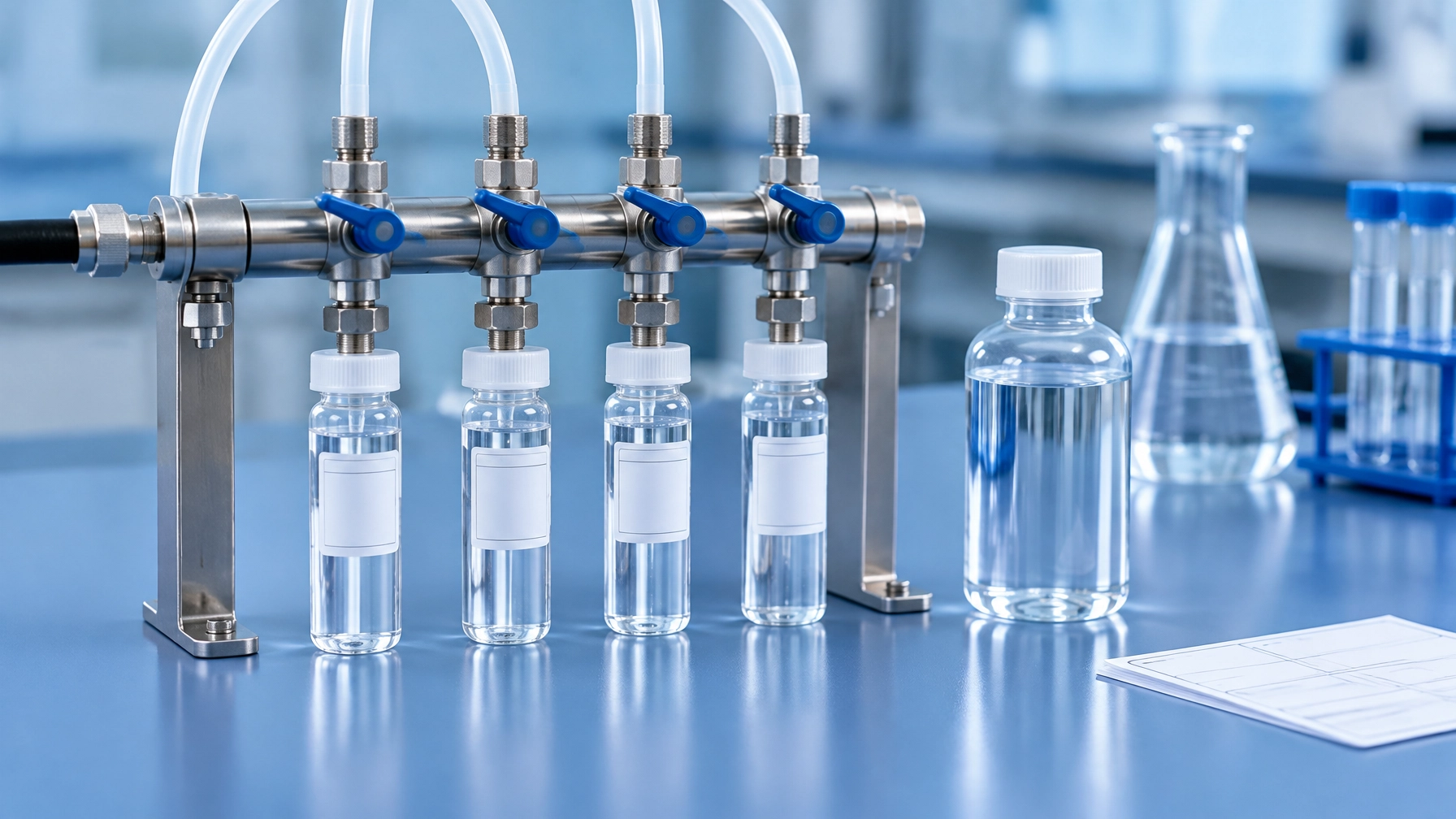
- Sample ports before and after each vessel
- Instrumentation and alarms
- Secondary containment
- Treated-water discharge controls
- Backup power or emergency bypass protection
A simple rental or temporary GAC system may fall within the $150,000 to $500,000 range when the site has modest flow and straightforward access. A permanent installation serving multiple extraction wells can move into the $1 million to $3 million range before long-term O&M.
The largest cost driver is not always the vessel. It is often the replacement frequency of the carbon.
Carbon exhaustion depends on:
- Influent PFAS concentrations
- Flow rate and daily operating hours
- Dissolved organic carbon
- Competing contaminants
- PFAS chain length
- Empty bed contact time
- Treatment endpoint
- Breakthrough criteria
- Whether the system operates continuously
A consultant that provides only the vessel price has not provided a lifecycle budget.
Ion exchange resin: smaller footprint, different disposal exposure
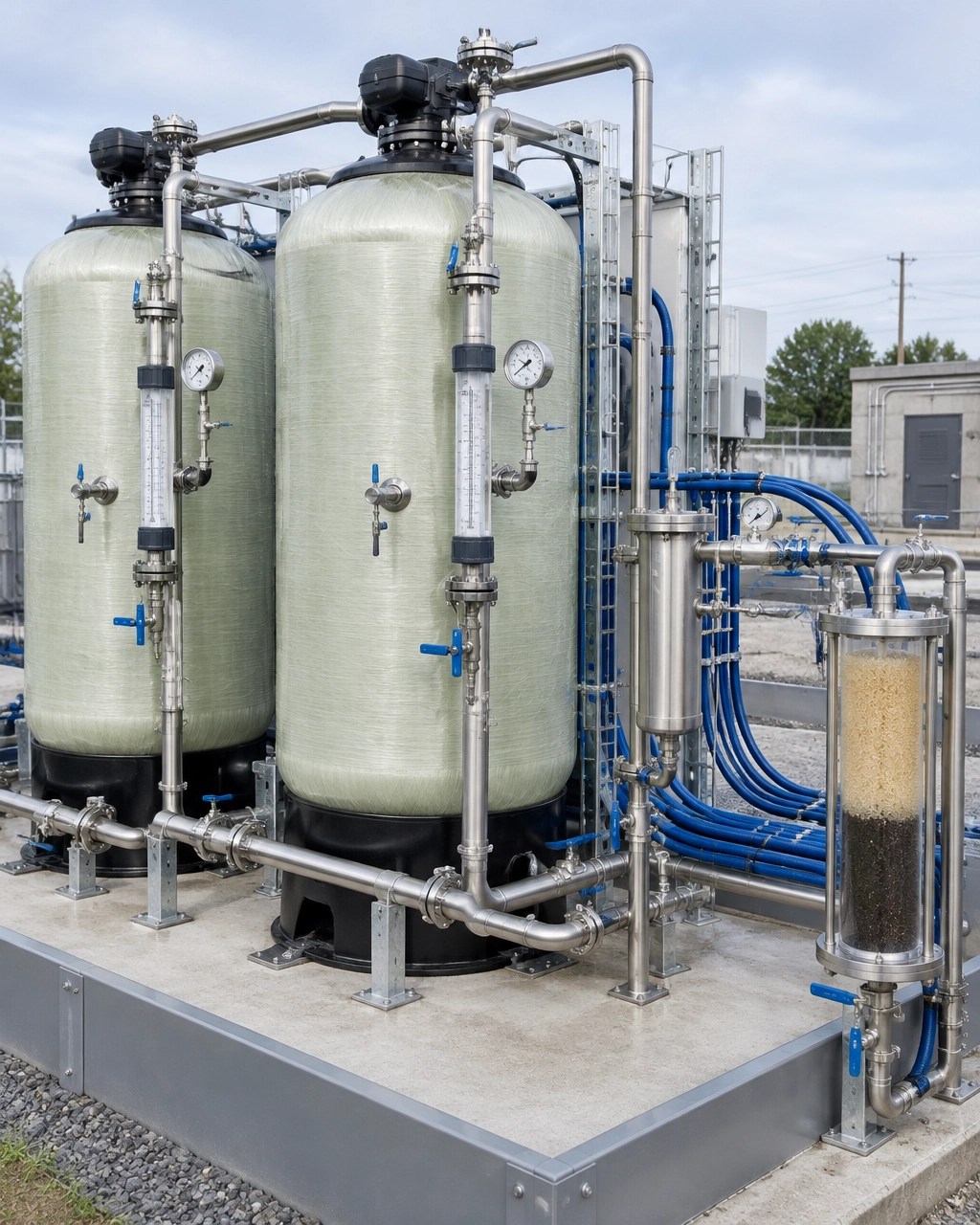
Anion exchange resin can reduce the physical footprint of a treatment system and may achieve strong PFAS removal at shorter contact times than GAC. That can reduce vessel size and, in some cases, initial capital cost.
Single-use resin is usually the easier system to operate. Once the resin reaches its loading limit, the media is removed and replaced. A reasonable preliminary allowance for a small to mid-sized system is $200,000 to $1.5 million for capital, with annual O&M driven by resin consumption, sampling, labor, freight, and disposal.
Regenerable resin adds equipment and operational complexity. The system may require:
- Regeneration tanks
- Chemical storage
- Additional pumps and controls
- Residuals management
- More complex operator training
- Secondary treatment for regeneration waste
Regenerable systems may make financial sense where PFAS loading is high, flow is steady, and the site will operate for many years. They can also create a new waste stream that must be characterized and managed.
The key question is not whether resin has a lower purchase price. The question is how many media changes the system will require over the remedy duration.
In-situ treatment: lower surface infrastructure, higher design uncertainty
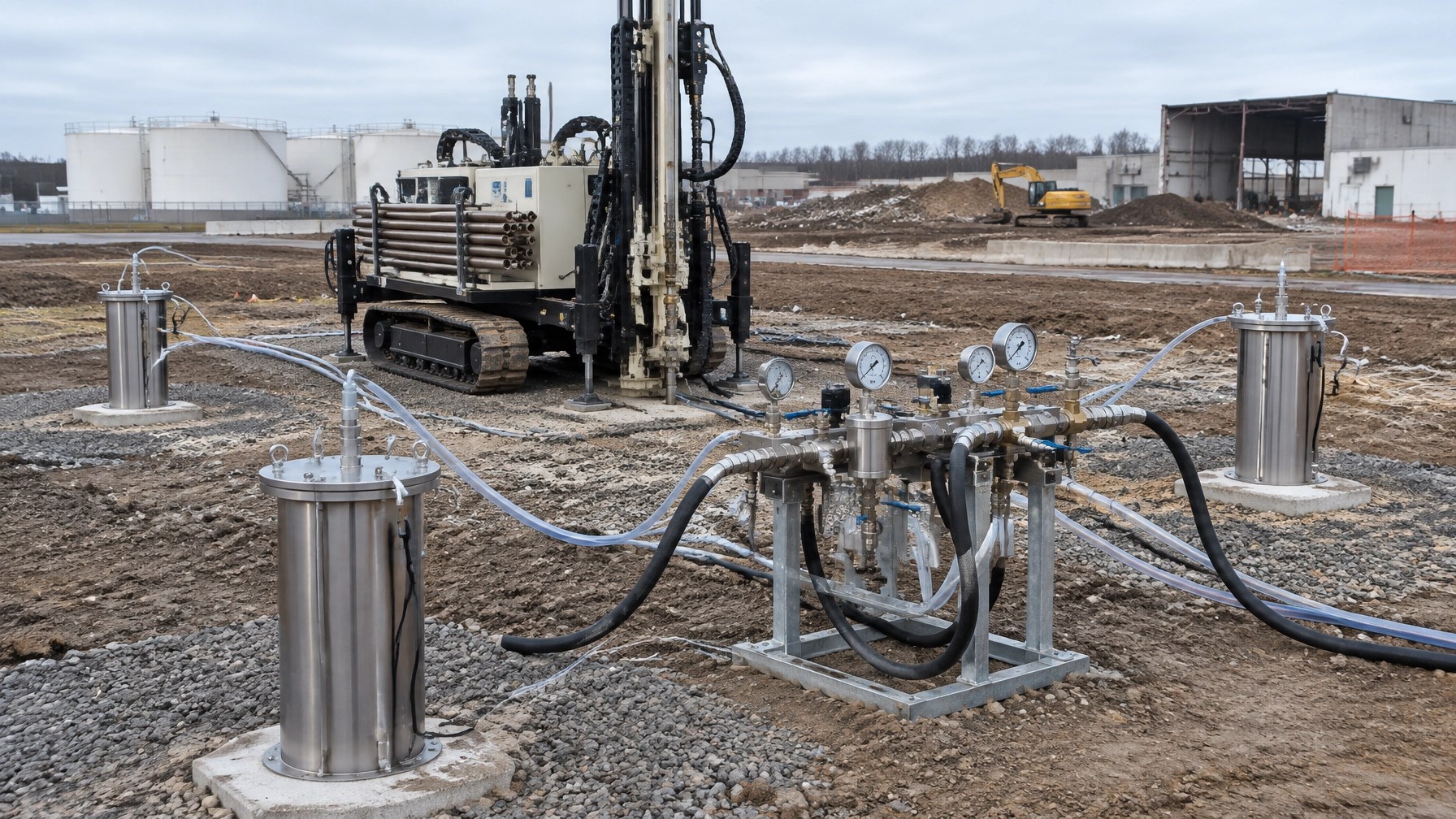
In-situ PFAS treatment attempts to reduce mass or mobility below grade instead of pumping all impacted groundwater to an aboveground treatment system.
Potential approaches include:
- Sorptive barriers
- Injectable adsorbent materials
- In-situ stabilization
- Targeted source-area treatment
- Permeable reactive zones
- Combined source control and monitored natural attenuation, where technically defensible
A focused in-situ remedy may cost $500,000 to $5 million. A complex treatment program covering a large plume, multiple source areas, or difficult urban subsurface conditions can reach $3 million to $20 million or more.
In-situ treatment can reduce:
- Aboveground equipment
- Electrical demand
- Pumping duration
- Surface disturbance
- Long-term operator requirements
But it can increase:
- Pilot testing costs
- Design investigation requirements
- Injection point density
- Performance monitoring
- Contingency allowances
- Regulatory review time
- Risk of additional treatment if results are uneven
In-situ treatment should not be sold as a cheaper remedy by default. It is a site-specific risk decision. The estimate should explain the performance criteria, monitoring network, rebound evaluation, and contingency if the treatment does not meet expectations.
Treatment trains change the budget
PFAS treatment rarely works as one piece of equipment. A treatment train may require pretreatment for iron, manganese, turbidity, oil, volatile organic compounds, or dissolved solids before the PFAS media performs reliably.
A common train may look like:
- Extraction and equalization
- Bag or cartridge filtration
- Metals or solids removal
- GAC or ion exchange
- Polishing vessel
- Flow monitoring and automated controls
- Final sampling
- Permitted discharge or reinjection
A consultant estimate should identify each unit process and explain why it is included. If the design includes GAC, ask whether the estimate includes lead-lag operation, carbon testing, change-out labor, transportation, and replacement media.
If it includes ion exchange, ask whether the estimate assumes single-use or regenerable resin. Those are materially different operating models.
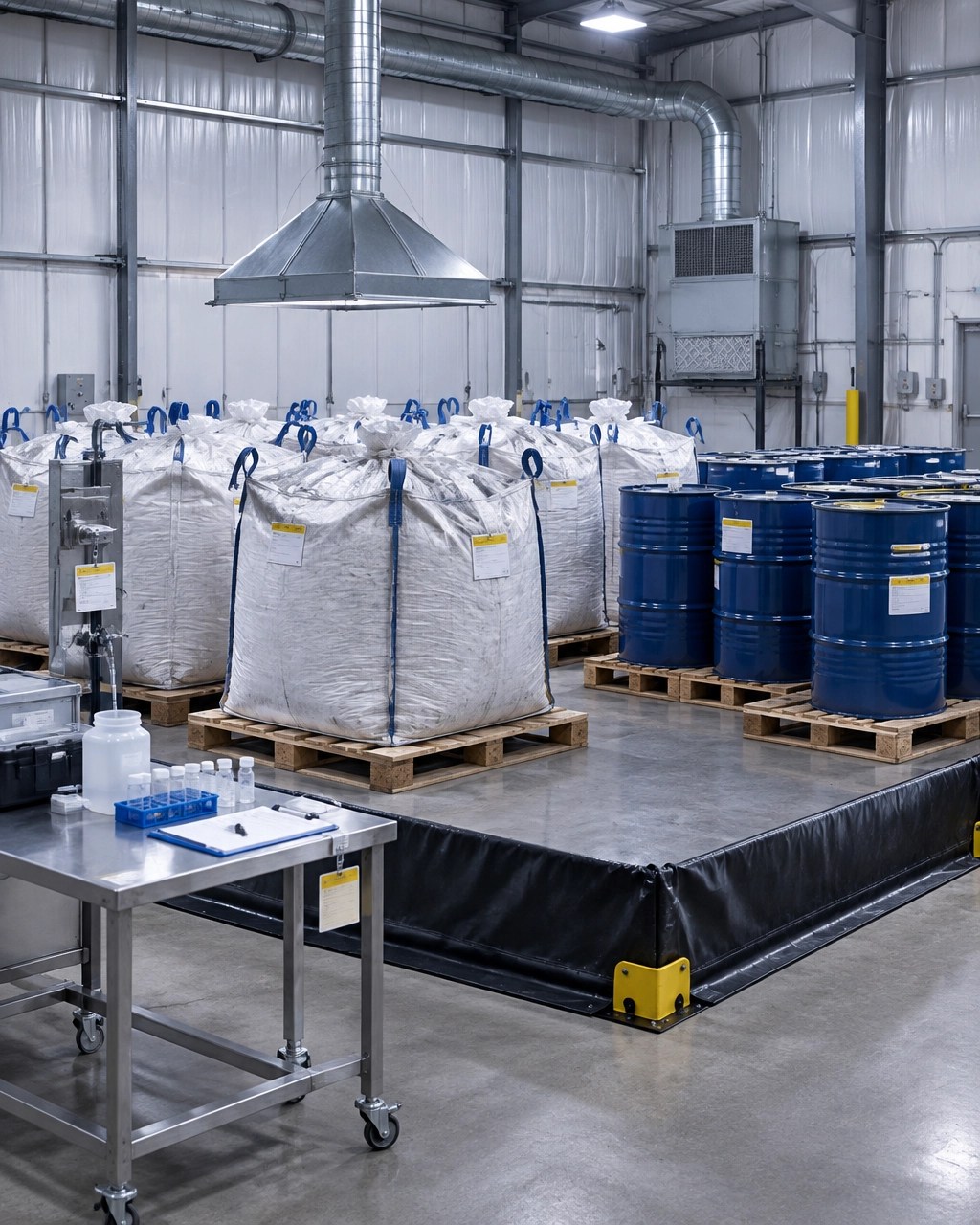
Spent media disposal is now a liability issue
PFOA and PFOS were designated as hazardous substances under CERCLA in 2024. The designation matters for reporting, response authority, cost recovery, and potential liability.
It does not automatically make every spent GAC bed or resin load a RCRA hazardous waste. It also does not mandate one specific landfill or treatment method. EPA explains this directly in its PFAS CERCLA designation FAQ.
The practical budget issue is traceability.
Before media leaves a New Jersey site, the project team should address:
- Waste characterization sampling
- PFAS analytical results
- Generator classification
- Transportation requirements
- Receiving facility acceptance
- Disposal or destruction method
- Manifesting and documentation
- CERCLA site status, if applicable
- Potential future cost recovery or liability claims
As a preliminary screening allowance, owners should carry approximately $1,500 to $5,000 per ton for PFAS-impacted spent media management. Actual pricing can be lower or substantially higher depending on the media, concentration, moisture content, packaging, transportation distance, receiving facility, and whether thermal treatment or another specialized method is required.
A $50,000 media disposal allowance may be reasonable for one project and materially understated for another. The estimate should show the assumed media volume and number of change-outs.
NJPDES permitting can affect both schedule and capital cost
If treated groundwater will discharge to a surface water, groundwater, sewer, or another regulated receiving point, the project may require NJPDES authorization or coordination with the applicable discharge program.
New Jersey’s NJPDES regulations include requirements for discharges to groundwater. NJDEP has established groundwater quality standards of 14 parts per trillion for PFOA and 13 parts per trillion for PFOS. The treatment system must achieve the applicable limits in the permit or approval.
Budget separately for:
- Permit applicability review
- Sampling and pollutant characterization
- Permit application preparation
- Agency responses
- Effluent monitoring
- Certified laboratory analysis
- Discharge reporting
- Treatment modifications required by permit conditions
NJDEP does not prescribe one universal treatment technology. The permittee remains responsible for meeting the applicable standards. That is why a proposal that says “GAC treatment” without defining influent conditions, effluent criteria, sampling frequency, and permit assumptions is incomplete.
How to pressure-test a PFAS remediation estimate
Before approving a consultant’s budget, ask these questions:
- What flow rate and pumping schedule does the estimate assume?
- What influent PFAS concentrations support the media replacement frequency?
- Are PFOA, PFOS, PFNA, GenX, PFHxS, and PFBS included in the analytical program?
- Does the design address dissolved organic carbon, metals, oil, and suspended solids?
- Is the system temporary, permanent, rented, or purchased?
- Does the capital budget include controls, power, winterization, security, and secondary containment?
- Are NJPDES permitting and agency comments included?
- How many GAC or resin change-outs are assumed each year?
- Is spent media disposal priced by actual estimated tonnage?
- Who pays if the receiving facility rejects the media?
- What is the monitoring period after treatment?
- What is the contingency if PFAS rebounds or treatment performance declines?
If the answers are unclear, the estimate is not ready for a closing memo, litigation budget, or construction authorization.
Why Envicon’s approach is different
PFAS remediation requires technical judgment and budget discipline. Envicon provides remedial design and brownfield implementation support for New Jersey projects, including treatment evaluation, NJDEP coordination, groundwater management, waste characterization, and construction oversight.
Our estimates are PE-led and built around the actual site conditions. We separate capital costs from O&M. We identify media replacement assumptions. We show permit and laboratory costs. We do not hide uncertainty inside a vague allowance and then introduce it as a change order.
That is the difference between receiving a treatment concept and having a practical path to closure.
For projects in Jersey City, Newark, Hoboken, and the surrounding region, see our Hudson County environmental engineering services.
Takeaway
A credible 2026 PFAS remediation budget in New Jersey must include more than GAC vessels, resin tanks, or injection points.
It must account for:
- Treatment train design
- Site investigation and pilot testing
- NJPDES requirements
- Media change-outs
- Spent media disposal
- Confirmatory sampling
- Long-term O&M
- Regulatory coordination
- Performance contingencies
The lowest capital cost is not always the lowest lifecycle cost. The right remedy is the one that meets the regulatory endpoint, fits the site, and gives the owner a defensible path from contamination to redevelopment.
Plan Your New Jersey PFAS Budget Before You Commit
- Call Envicon now at (917) 764-2171
- Use our proprietary project risk screener
- Check us out on LinkedIn