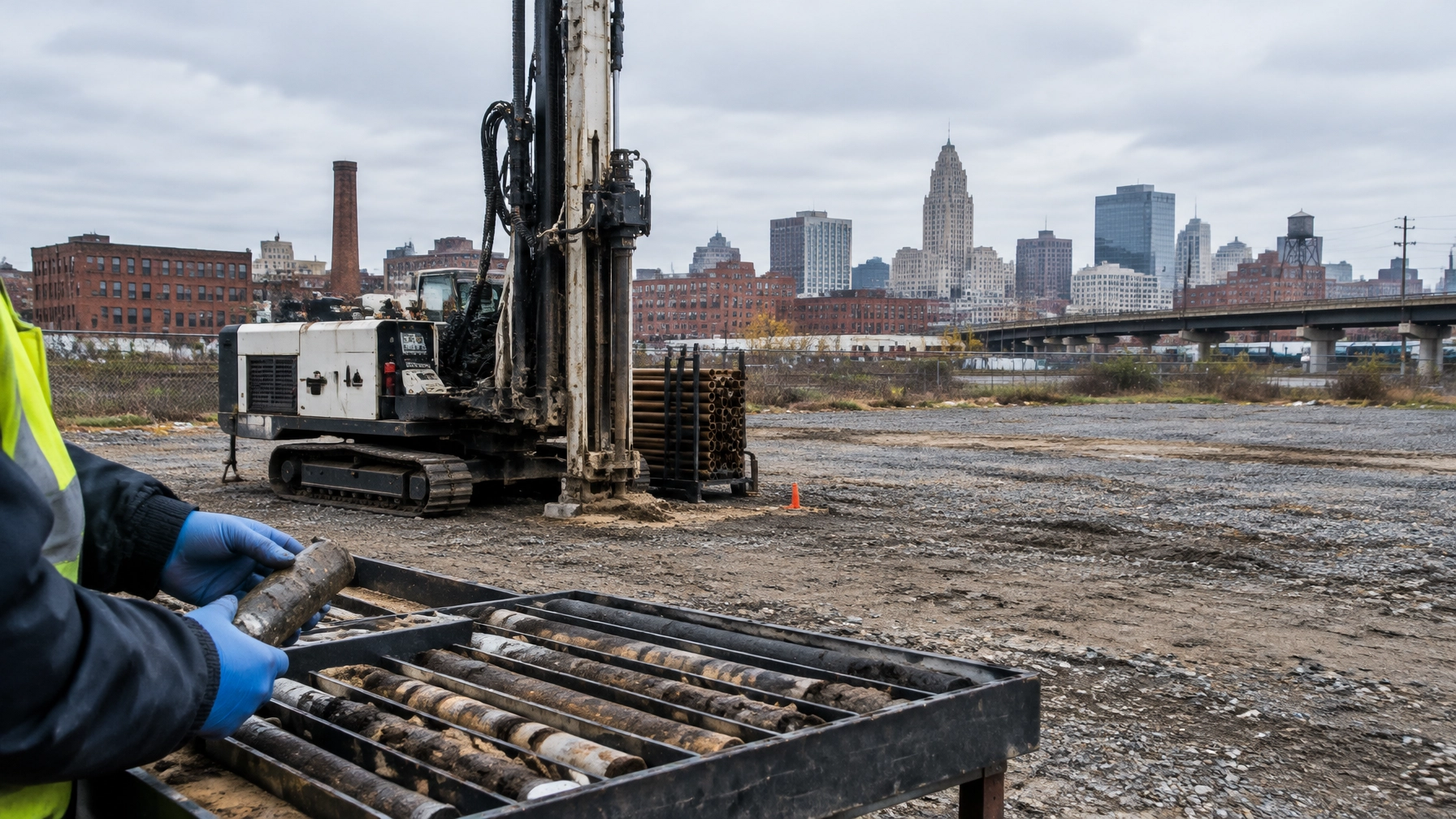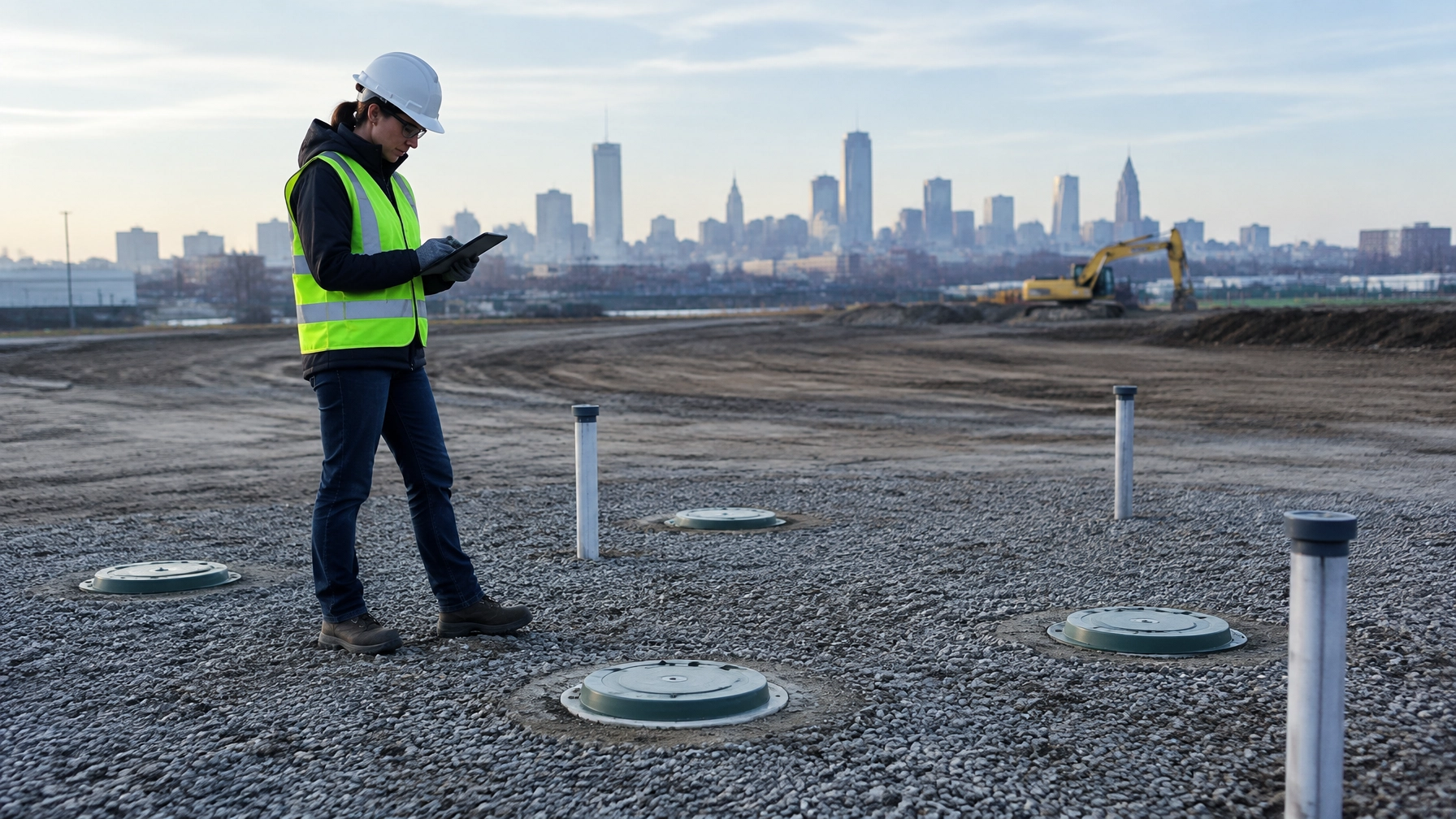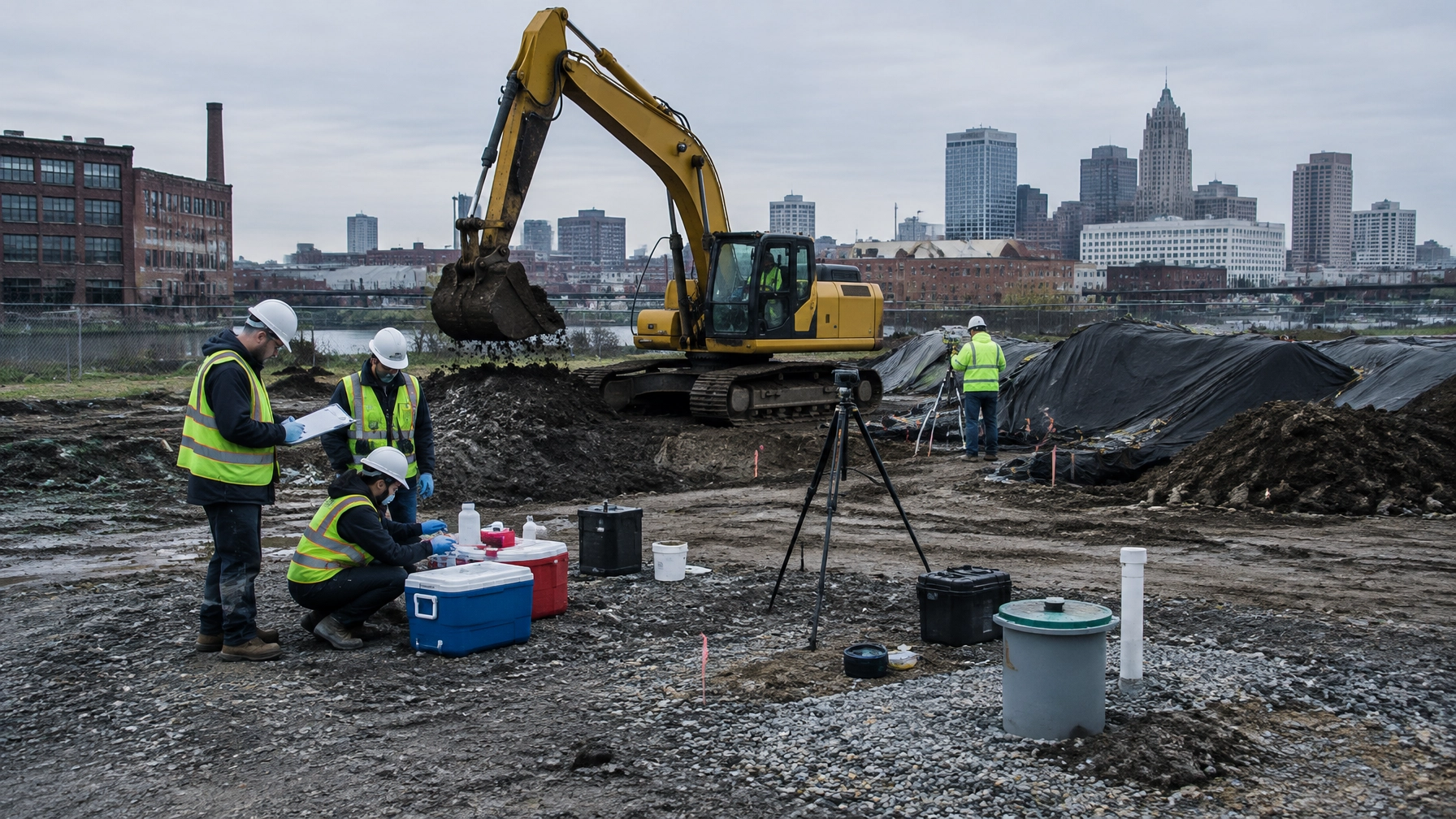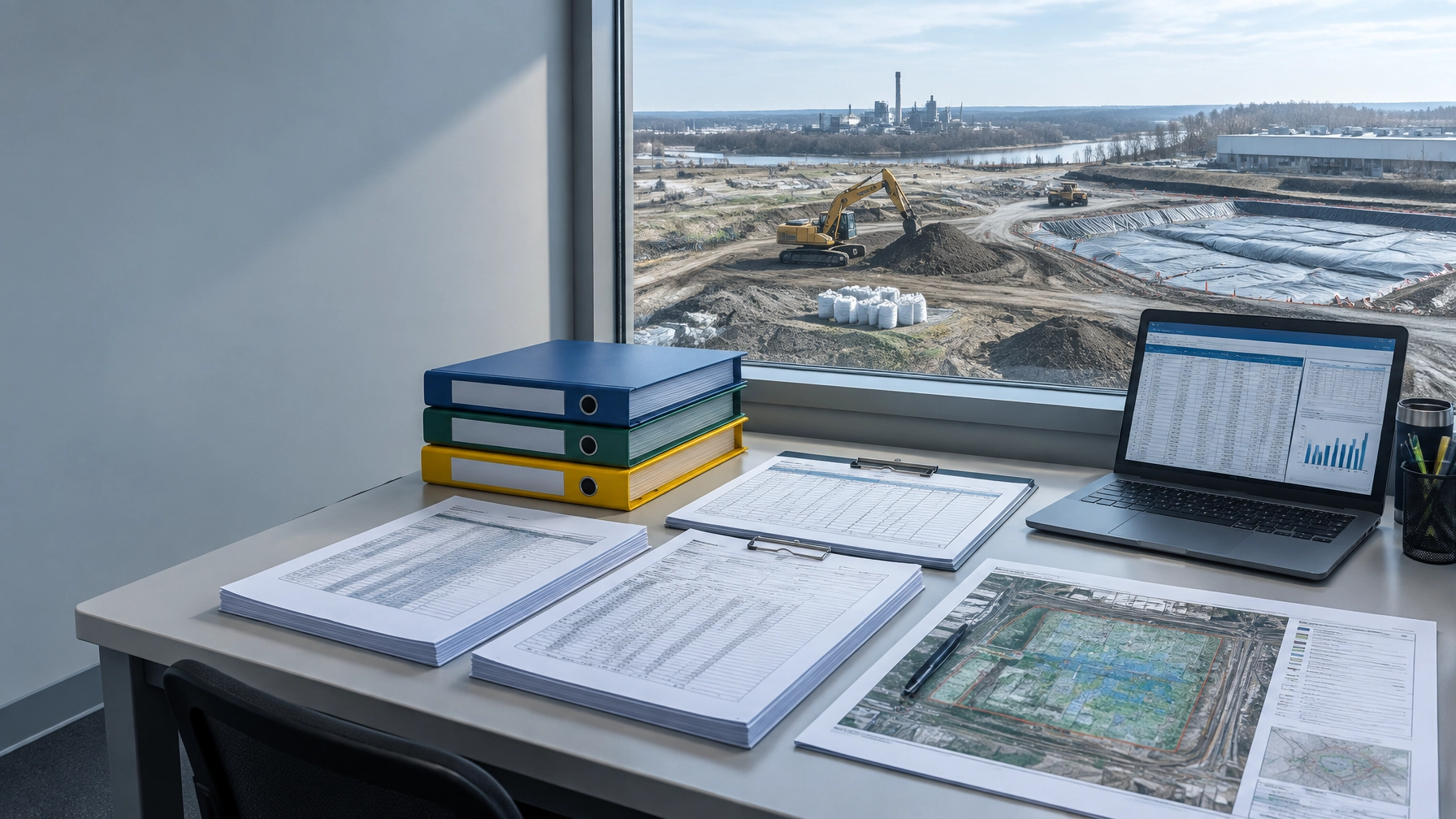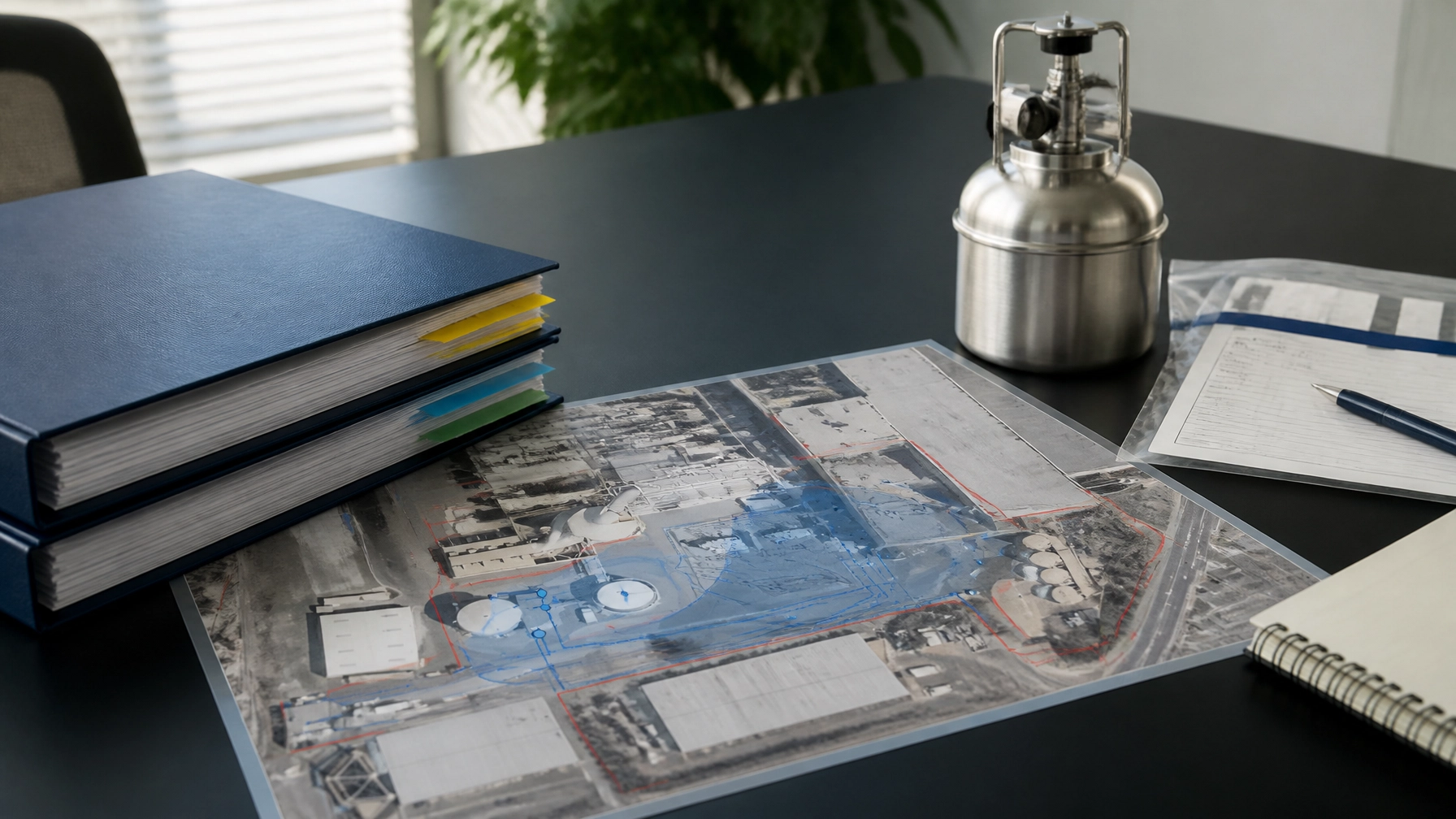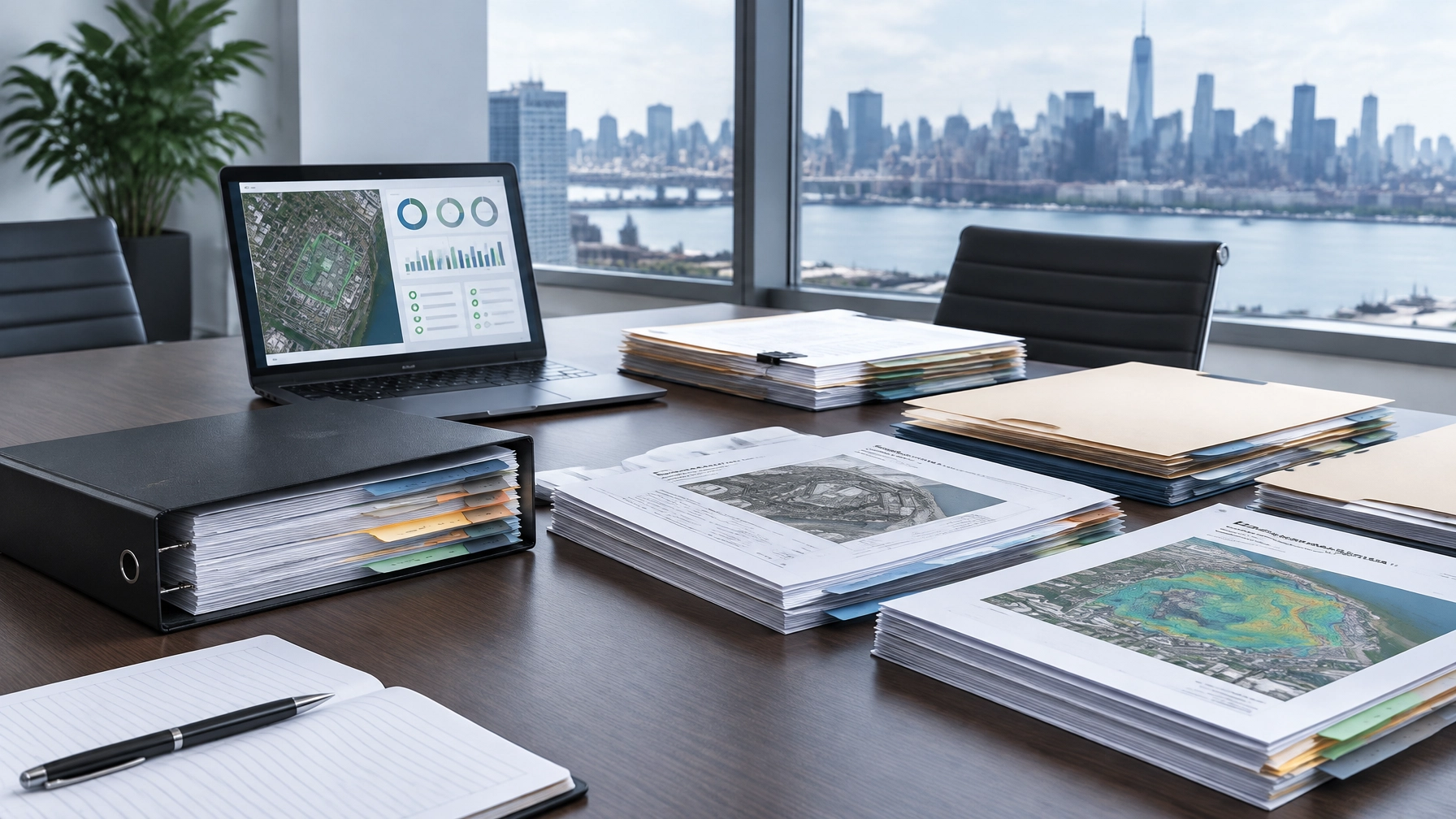
A buyer does not wait until the purchase agreement is signed to price environmental risk. The review starts when the data room opens.
If you own a commercial or industrial property in Manhattan, Brooklyn, Newark, or Jersey City, your environmental file can affect valuation, financing, indemnities, escrows, and closing timing. The same applies when you list a property, recapitalize an asset, refinance a loan, or bring in a new development partner.
The problem is rarely one missing document. It is the gap between what the seller believes is complete and what the buyer, lender, or counsel can actually verify.
A pre-sale environmental liability audit closes that gap before it becomes a negotiation.
The buyer is not paying for your history. They are pricing the uncertainty in it.
Why sellers should audit before the buyer does
A buyer’s consultant will review more than a current Phase I Environmental Site Assessment. The review often expands into regulatory files, historical operations, site controls, permits, waste records, and unresolved agency correspondence.
When the file is incomplete, the buyer has three choices:
- Request more information and extend diligence.
- Reduce the purchase price to cover unknown costs.
- Require an escrow, indemnity, or closing condition.
None of these outcomes helps the seller.
A current ASTM E1527-21 Phase I remains an important foundation for environmental due diligence. Under EPA’s All Appropriate Inquiries framework, certain components must be completed within 180 days of acquisition, and the inquiry must generally be updated within one year. See the EPA AAI requirements.
But a Phase I is not a complete liability audit. It identifies recognized environmental conditions and data gaps. It does not, by itself, prove that every permit, remedial obligation, institutional control, or historic liability has been resolved.
What a buyer will examine
A serious buyer will test whether your environmental record is current, consistent, and transferable.
1. Existing Phase I and Phase II reports
Start with every environmental report ever prepared for the property.
For each report, record:
- Date of the site visit.
- Date of the records review.
- Environmental professional responsible for the report.
- Recognized environmental conditions identified.
- Recommendations for Phase II work.
- Soil, groundwater, soil vapor, or indoor air data.
- Whether the report covered the entire parcel or only part of it.
- Whether later construction changed site conditions.
A Phase II report from ten years ago may still contain useful data. It does not automatically answer today’s transaction questions. The buyer will want to know whether the investigation addressed current building footprints, new utilities, former tanks, vapor pathways, fill, and adjacent sources.
2. Open regulatory obligations
Pull the complete regulatory history, not just the closure letter.
For New York properties, review NYSDEC records, NYC Office of Environmental Remediation records, zoning documents, restrictive declarations, and any E-Designation history. For New Jersey properties, review NJDEP case records, LSRP submissions, Response Action Outcomes, No Further Action documents, deed notices, and active permit conditions.
The question is simple:
What remains open, and who must do what next?
A site can have a completed remedy and still carry long-term monitoring, inspection, maintenance, reporting, or soil disturbance obligations.
3. Institutional and engineering controls
Institutional controls can include deed restrictions, environmental easements, groundwater use restrictions, soil management requirements, and limits on future property use.
Engineering controls can include:
- Caps and covers.
- Vapor barriers.
- Sub-slab depressurization systems.
- Groundwater treatment systems.
- Physical containment systems.
- Other engineered barriers required by the remedy.
The audit should identify the control, the document that created it, the party responsible for maintaining it, and the evidence that it has been maintained.

New York obligations that can affect a sale
NYC OER certifications and E-Designation records
For NYC OER-regulated sites with institutional or engineering controls, the owner or responsible party generally must submit periodic certification that the controls remain in place, functional, and protective. The default frequency is typically annual unless OER approves another schedule for the site.
Review:
- OER-approved Remedial Action Work Plans.
- Site Management Plans.
- Remedial Closure Reports.
- Notices of Satisfaction.
- Environmental restrictive declarations.
- Inspection and maintenance records.
- Annual certification reports.
- Open OER comments or enforcement correspondence.
The controlling requirements come from the site-specific documents and applicable NYC OER rules.
An open NYC OER brownfield cleanup obligation can affect a buyer’s construction schedule and lender approval. If an E-Designation remains open, confirm exactly what work remains before DOB can issue or release permits and certificates of occupancy. See Envicon’s NYC E-Designation compliance service.
NYSDEC Site Management Plans
For many NYSDEC Brownfield Cleanup Program sites where contamination remains in place, the Site Management Plan controls long-term obligations after the remedy and Certificate of Completion.
A seller should confirm:
- The current SMP is available.
- Engineering and institutional controls match field conditions.
- Required inspections occurred.
- Monitoring data is complete.
- Periodic Review Reports were submitted.
- IC and EC certifications are current.
- No outstanding NYSDEC deficiencies remain.
NYSDEC describes site management requirements through its Brownfield Cleanup Program work plan and report guidance and its Site Management Checklist.
A Certificate of Completion does not mean the file can be archived and forgotten. It may start a long-term stewardship phase that a buyer will inherit.
New Jersey obligations that can affect a sale
NJDEP Remedial Action Permits and biennial certifications
New Jersey properties with soil or groundwater remedies may be subject to Remedial Action Permits. These permits can require operation, maintenance, monitoring, inspections, annual fees, and biennial remedial action protectiveness certifications.
The seller should assemble:
- Current soil and groundwater RAPs.
- RAP schedules.
- Inspection and maintenance records.
- Monitoring results.
- Prior biennial certifications.
- LSRP sign-offs.
- NJDEP comments or deficiency notices.
- Evidence that permit fees are current.
NJDEP requires applicable permittees and LSRPs to submit biennial certifications using the Department’s forms and schedules. The NJDEP remedial action protectiveness instructions and RAP forms page identify the relevant process.
The transaction file should clearly state which obligations transfer to the buyer and which must be completed before closing.
ISRA good standing
For an industrial establishment in New Jersey, confirm whether the transaction or operational change triggers the Industrial Site Recovery Act.
NJDEP does not typically use “good standing” as a formal ISRA status label. In practice, buyers look for evidence that:
- The required ISRA notice was filed.
- The site received a negative declaration, approved remedial action workplan, No Further Action letter, or remediation agreement.
- Investigation and remediation followed NJDEP requirements.
- Ongoing deed notice, RAP, or institutional control obligations remain current.
- No unresolved ISRA enforcement action is pending.
Review the NJDEP ISRA program guidance before representing that an industrial property is clear for transfer.
This review matters in brownfield redevelopment NJ transactions, particularly in Newark, Jersey City, Hudson County, and other areas with former manufacturing, petroleum, rail, and chemical uses. It also supports applications involving the NJ Brownfield Tax Credit.

The nine-point pre-sale readiness audit
Before you list, recapitalize, or refinance, review these nine points.
-
Property identity and scope
Confirm the current tax lots, addresses, parcels, building footprints, and areas covered by prior reports. -
Phase I and Phase II currency
Identify outdated reports, missing updates, incomplete sampling, and unresolved recommendations. -
Regulatory program status
Document NYSDEC, NYC OER, NJDEP, LSRP, BCP, VCP, ISRA, and petroleum case status. -
Institutional and engineering controls
Match recorded controls to actual site conditions and current operations. -
Certification and monitoring history
Verify NYC OER annual certifications, NYSDEC periodic certifications and reports, and NJDEP biennial certifications. -
Permits and operating records
Review air, wastewater, tank, hazardous materials, waste, and other environmental permits relevant to the property or business. -
Waste manifests and disposal records
Confirm that excavated soil, investigation-derived waste, hazardous waste, and regulated materials went to authorized facilities with complete documentation. -
Insurance and historical policies
Search historical commercial general liability, pollution liability, and site-specific environmental policies. Old policies can matter when addressing legacy contamination. -
Agency correspondence and unpermitted conditions
Identify pending notices, deficiency letters, consent orders, undocumented tanks, unauthorized fill, unregistered equipment, missing permits, or conditions that differ from approved plans.
The final deliverable should be a concise transaction-ready file. It should include an executive summary, document index, open-item register, regulatory status table, recommended corrective actions, cost ranges, and responsibility matrix.
Why an owner-led audit protects value
A large consulting firm may produce a long report that describes risk without helping you close the gap. That is not enough before a sale.
Envicon’s approach is different. We look for the missing certification, the expired report, the unclosed agency comment, and the field condition that a buyer will discover later. We connect the records review to the actual property. We coordinate with environmental counsel, brokers, lenders, architects, and developers.
You get a clear answer:
- What is complete?
- What remains open?
- What should be corrected before marketing?
- What can be disclosed with confidence?
- What deserves a cost reserve or transaction-specific allocation?
Our fees are transparent. Our scope is defined before work begins. We do not write a defensive report designed only to protect the consultant. We build a file that helps you sell, refinance, or recapitalize with fewer surprises.
“We do not just deliver services. We help transform underused and contaminated properties into thriving assets.”
The takeaway
A pre-sale environmental liability audit is not a duplicate Phase I. It is a structured review of the property’s environmental history, current obligations, regulatory standing, and transfer risk.
For owners in Manhattan, Brooklyn, Newark, and Jersey City, the best time to find the gap is before the buyer does.