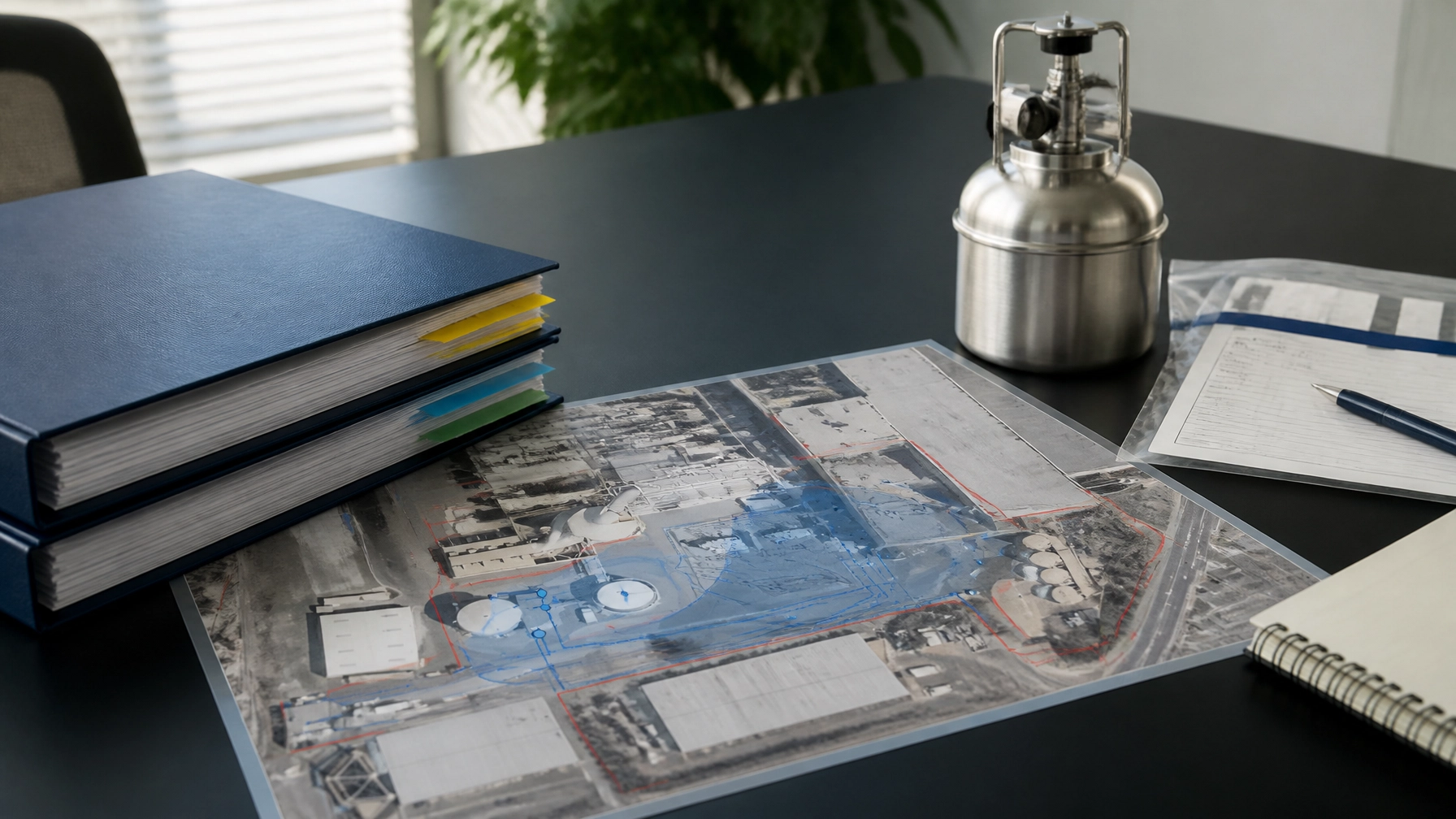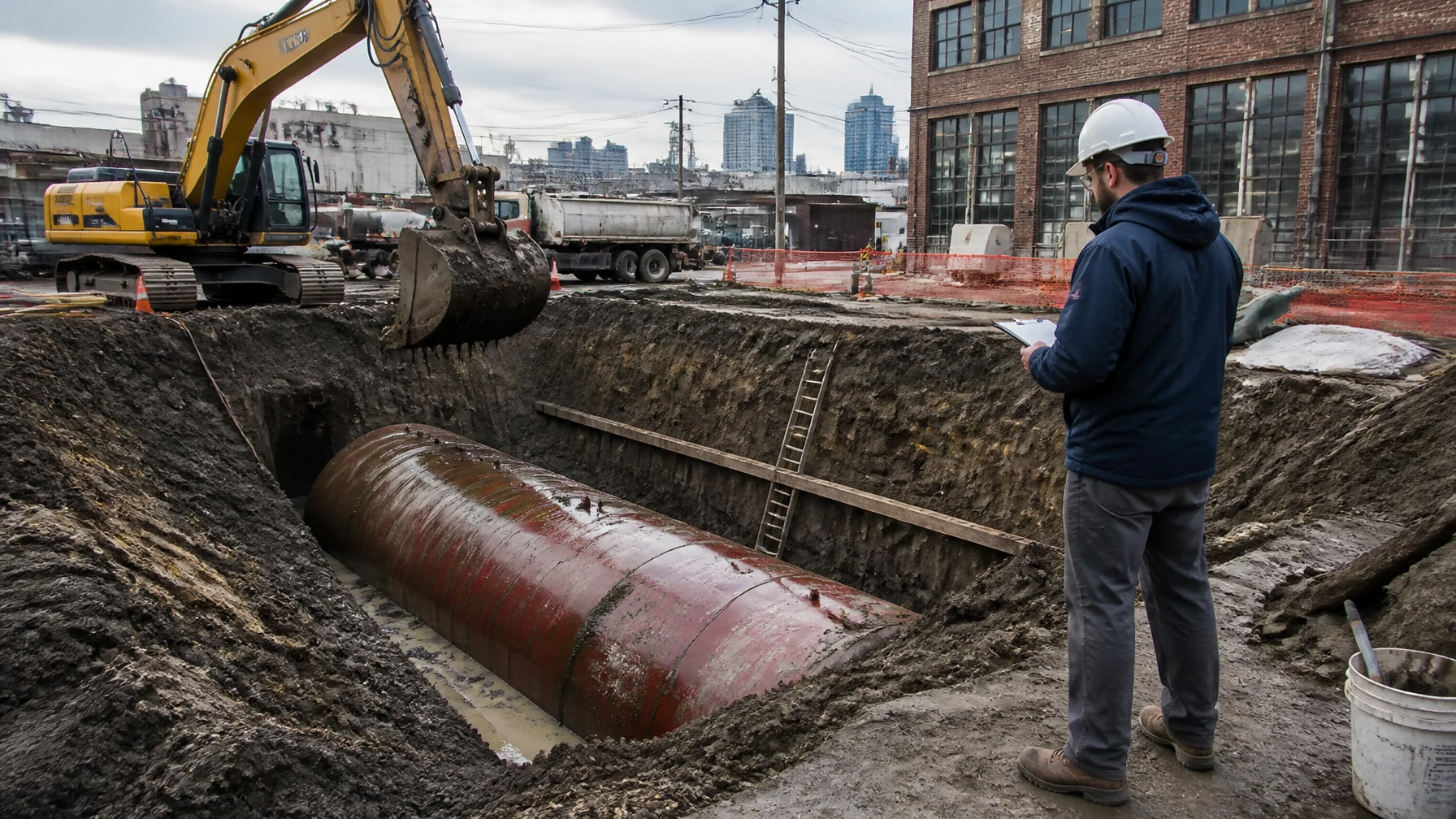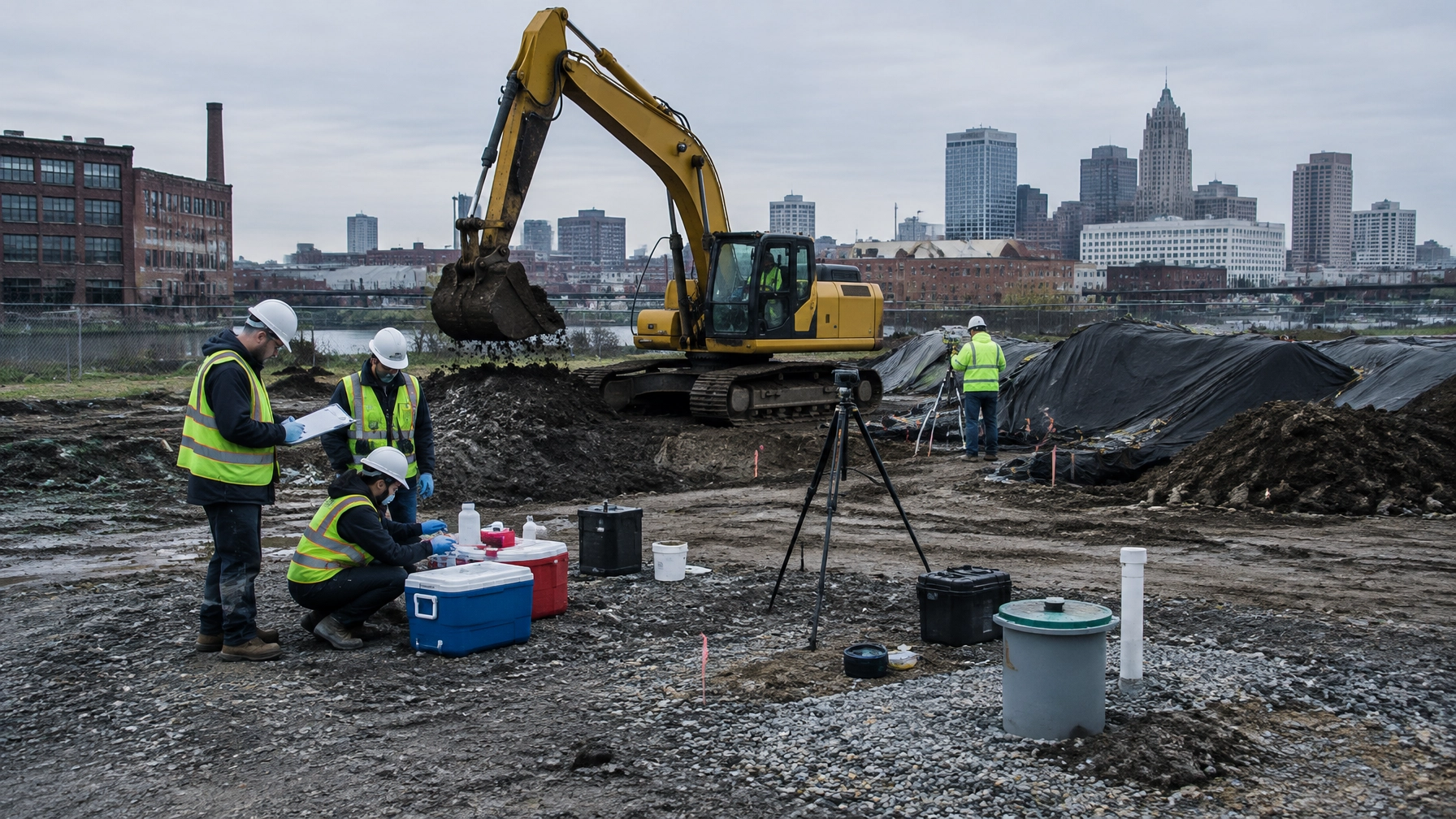
NJDEP’s October 30, 2026 announcement puts a sharper focus on the handoff between remediation work and regulatory review. For developers and contractors, the practical issue is not simply a faster submittal. It is whether field records, sampling results, waste documentation, and the project team are ready when the application moves.
One point needs to be clear: NJDEP describes the Rapid Inspection Program as expediting document inspections after applications are submitted. The release does not announce a new schedule for physical site visits or set a guaranteed review window. But when document review moves sooner, incomplete records or unresolved field decisions can surface earlier, at a point when crews and disposal plans may already be moving.
Here is how to prepare your remediation field schedule without assuming more than NJDEP has announced.
What NJDEP’s Rapid Inspection Program actually inspects
The October 30 NJDEP news release says the Department launched the Rapid Inspection Program to expedite document inspections immediately after applications are submitted. The announcement discusses the program in the context of reducing the backlog of Remedial Action Permits, or RAPs.
A RAP applies when remediation has taken place, but contamination in soil, groundwater, or indoor air remains above applicable standards. The permit sets out long-term regulatory controls, which may include a soil deed notice or an engineering control such as a cap.
NJDEP says its broader effort also includes remedial timeframe extensions, enhanced peer review, and a revamped technical consultation process. The release reports a 25% reduction in the RAP backlog. It does not describe a new physical inspection protocol, a guaranteed decision date, or a change to cleanup standards.
For your schedule, treat the program as a reason to make application records review-ready earlier. Do not treat it as a signal to skip field checks or assume NJDEP will visit a site on a particular date. Confirm the application requirements and site-specific obligations with the LSRP and the relevant NJDEP guidance.
Why faster document review affects field sequencing
A remediation schedule has dependencies. Excavation, confirmation sampling, backfill, treatment system work, and waste shipment each rely on decisions and records from earlier steps. If an application review identifies a gap, the project may need to reconcile records or clarify field decisions while contractors have moved on.
That creates avoidable pressure in Newark and Monmouth County, where an active brownfield project may involve several crews, restricted access, utility conflicts, and separate soil and groundwater workstreams. A Phase II environmental site assessment in NJ may define the investigation scope, but the remediation field schedule must carry the evidence through construction and closure.
Build the schedule around decision points, not just equipment dates:
- Confirm what the approved remedial documents require before intrusive work begins.
- Identify the LSRP’s review and sign-off points for sampling, excavation limits, and field changes.
- Coordinate sample collection, laboratory turnaround, and the contractor’s next activity.
- Keep separate stockpiles and waste streams identifiable from excavation through final disposition.
- Confirm how treatment, discharge, or groundwater management decisions affect sequencing.
This is also where early coordination saves time. If the excavation contractor, hauler, sampler, treatment-system vendor, and LSRP each plan from a different schedule, a faster records review will not fix the gaps between them.
Stage remediation work so the record is ready
Field readiness means the physical work and the documentation tell the same story. A photo of an excavation is useful, but it does not replace a dated log, sample identification, location information, or a record of what happened when field conditions differed from the plan.

Before mobilization, set up a shared field documentation process. At a minimum, the project team should be able to find and reconcile:
- Daily field logs with date, location, work completed, personnel, and notable conditions.
- Sample records that match field labels, chain-of-custody forms, and laboratory reports.
- QA/QC documentation required by the sampling plan, including equipment checks and applicable blanks or duplicates.
- Waste profiles, load records, disposal or reuse approvals, and scale tickets as applicable.
- Photographs tied to dates and locations, with captions that explain what they show.
- A deviation log that records the issue, who was notified, the decision made, and supporting documentation.
These examples are a practical recordkeeping framework, not a claim that the Rapid Inspection Program created a new universal document checklist. The governing requirements come from the approved remedial documents, applicable permits, project-specific plans, and LSRP direction.
When field conditions differ from the plan, document the difference while it is happening. Record the location, observed condition, proposed response, approvals or direction received, and the final action. Do not rely on a later recollection to explain why a boundary, sampling point, or handling method changed.
Coordinate the treatment system and sampling windows
Treatment equipment cannot be scheduled in isolation from the soil and groundwater work around it. Confirm that the system layout, utilities, access, sampling ports, and commissioning sequence match the approved design and field conditions. Identify who will check connections, record operating conditions, collect samples, and address a result that does not meet the project’s criteria.

Before mobilizing a treatment-system subcontractor, align its schedule with excavation and groundwater management. Check that equipment and materials are available, access routes are clear, and the sampling plan fits the installation and startup sequence. Where a result or field condition requires a response, the team should know who has authority to make the decision and how it will be documented.
A dedicated construction oversight and field engineering team can help coordinate field QA/QC, monitoring, contractor communication, and closeout records. Envicon also supports remediation and brownfield redevelopment and soil disposal and clean fill management. The aim is simple: one coordinated field record, not separate logs that leave gaps between consultants and contractors.
Revisit soil and groundwater disposition before excavation
Compressed review timing makes early disposition planning more valuable. Before soil leaves the site, confirm how the material will be characterized, segregated, staged, transported, and documented. Confirm acceptance requirements with the receiving facility or reuse destination before loading. If groundwater requires treatment, discharge, or off-site management, coordinate sampling and approvals with the planned dewatering sequence.

Keep each soil area and groundwater stream traceable. A field team should be able to connect a load or sample to its source area, characterization results, destination, and supporting records. Mixing material or losing source information can complicate both field decisions and later documentation.
For projects with potential ISRA NJ compliance obligations, coordinate transaction requirements with the site’s LSRP and legal team. Do not assume that an accelerated RAP document inspection changes ISRA obligations or substitutes for transaction-specific review.
Field-readiness checklist for Newark and Monmouth County
Before the next remediation phase, walk through this list with the LSRP, contractor, and key subcontractors:
- Plan: Confirm the current approved work documents, sampling requirements, and decision responsibilities.
- Schedule: Put sampling, lab turnaround, review points, equipment delivery, and disposal milestones on one schedule.
- Stage: Mark excavation areas, sample locations, stockpiles, groundwater equipment, and access routes clearly.
- Document: Use consistent daily logs, sample identifiers, chain-of-custody records, QA/QC files, photos, and deviation records.
- Coordinate: Confirm who contacts the LSRP, owner, subcontractors, and agencies when field conditions change.
- Close the loop: Reconcile field quantities, lab results, load records, and final destinations before preparing application documentation.
Envicon’s work is field-first and regulator-facing. A large consultant may route a question through several layers. We keep the engineer, field team, and project decision-makers connected so that a problem gets addressed while the relevant people and records are still on site. Collaboration is not a buzzword. It is how the schedule holds together.
For a Newark project, see our local environmental and remediation services. We also support Monmouth County projects. Teams looking for an environmental consultant in NYC should note that New York programs and agencies have their own requirements. NJDEP processes do not automatically apply across the river to Queens or elsewhere in New York.
FAQ
Does NJDEP’s Rapid Inspection Program mean an inspector will visit my site sooner?
Not based on the October 30 release. NJDEP describes the program as expedited inspection of application documents immediately after submission. It does not announce a new schedule for on-site visits.
Does faster inspection mean NJDEP has changed cleanup standards?
The release describes administrative efforts to reduce the RAP backlog. It does not announce relaxed cleanup standards. Site-specific remedial requirements and long-term controls still need to be addressed.
What records should a remediation field team keep ready?
Maintain the records required by the approved project documents and permits. A practical set typically includes daily field logs, sample and chain-of-custody records, applicable QA/QC, waste characterization and disposition records, photographs, and documentation of deviations and responses.
Should a project request an NJDEP Technical Consultation?
The Department encourages remediating parties to request a consultation to address technical questions proactively. Check NJDEP’s Technical Consultation information and discuss timing and site-specific use with the LSRP. A consultation is not a substitute for preparing a complete application.
How should Newark and Monmouth County developers adjust their schedule?
Do not assume a fixed inspection window. Instead, build a schedule that keeps sampling, laboratory results, contractor activity, waste handling, and documentation aligned. Confirm the latest NJDEP process and project-specific requirements with the LSRP before setting milestones.
Keep the field record ahead of the review
NJDEP’s announcement is a reason to strengthen the link between field execution and application readiness. It does not eliminate technical review or make an incomplete record acceptable. Stage the work, coordinate your subcontractors, and document decisions as they happen. That is how you protect the schedule and keep a brownfield redevelopment project moving toward a buildable, compliant asset.
Take the next step