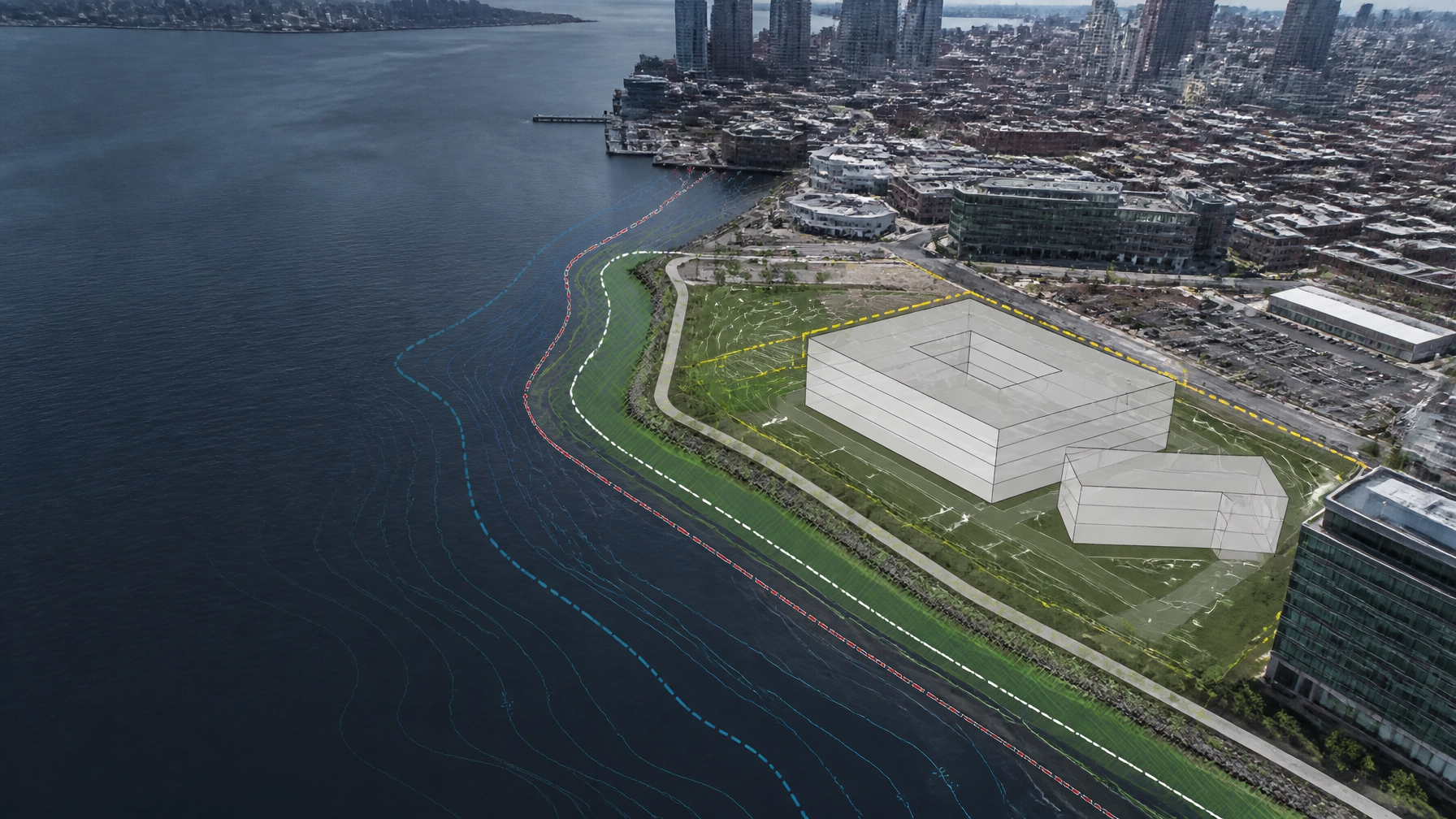
A Newark construction project that disturbs one acre or more may need coverage under New Jersey’s NJPDES Construction Activity Stormwater General Permit 5G3 before land disturbance begins.
The same requirement can apply to a smaller phase when it forms part of a larger common plan of development or sale. That matters for phased multifamily projects, industrial redevelopment, warehouse conversions, and urban infill across Newark, Jersey City, Hoboken, Bayonne, Hudson County, Essex County, and Bergen County.
A compliant SWPPP permit Newark NJ strategy is not just a form submission. It connects grading, drainage, erosion control, stabilization, inspections, dewatering, contractor duties, and municipal storm sewer coordination into one field-ready plan.
When Newark projects need NJPDES 5G3 coverage
NJPDES 5G3 generally applies to construction activities that disturb one acre or more and discharge stormwater to surface waters, directly or through a municipal separate storm sewer system.
The one-acre calculation includes more than the building footprint. It can include:
- Clearing and grubbing
- Excavation and foundation work
- Temporary access roads
- Utility corridors
- Stockpile areas
- Staging and material storage areas
- Parking, drive aisles, and site improvements
- Future phases included in a common development plan
A parcel under one acre does not automatically avoid the permit. If it is part of a common plan that will disturb at least one acre in total, NJDEP may require 5G3 coverage.
Before relying on a threshold exemption, document the full development area, phasing, ownership structure, and proposed limits of disturbance. A narrow calculation based only on the first construction phase can create a permit problem later.
Review the current NJDEP Construction Activities 5G3 program and confirm the project-specific determination with the appropriate agency or qualified environmental professional.
The permit path: SESC certification first, RFA second
For most Newark projects, the permit path has two connected steps.
1. Obtain soil erosion and sediment control certification
The project needs a certified Soil Erosion and Sediment Control Plan, often called an SESCP or erosion and sediment control plan. The plan is reviewed by the applicable Soil Conservation District or, where authorized, an exempt municipality.
For a Newark project, confirm the responsible reviewing entity early. Essex County coordination, municipal engineering review, and local redevelopment requirements can affect the sequence.
The certified plan should address:
- Existing and proposed contours
- Limits of disturbance
- Construction sequencing
- Temporary drainage patterns
- Sediment basins, traps, and perimeter controls
- Stabilized construction entrances
- Inlet protection
- Stockpile and material management
- Slope protection
- Final stabilization
- Maintenance and inspection procedures
Certification is not a substitute for an NJPDES authorization. It is a prerequisite to the next step.
2. Submit the Request for Authorization
After certification, the owner or authorized operator submits the Request for Authorization, or RFA, through the NJDEP Online system.
The RFA typically requires project information, owner and operator details, receiving waters, disturbance information, and the applicable soil conservation certification information.
NJDEP guidance has historically required the RFA to be submitted at least 30 days before land disturbance for new construction. Current lead times depend on project facts, application completeness, Soil Conservation District coordination, municipal requirements, and agency review. Do not schedule mobilization around an assumed approval date without confirming the current filing requirements.
NJDEP’s permits, application forms, and checklists page is the appropriate starting point for current agency instructions.
What the SWPPP must control in the field
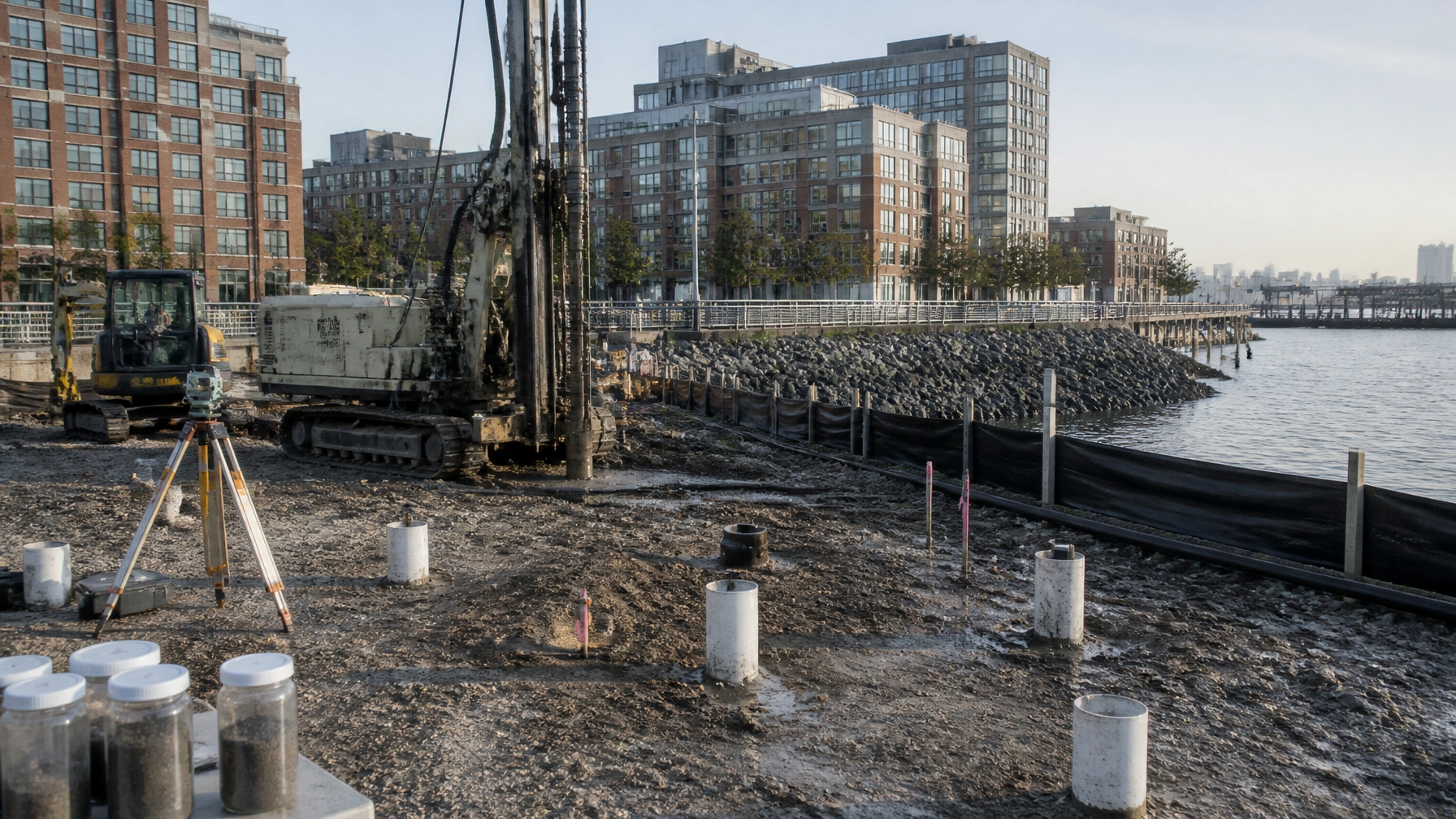
A stormwater pollution prevention plan industrial redevelopment package must match the way the site will actually be built. A generic narrative that does not align with the grading plan or contractor sequence will not protect the project.
The SWPPP should show how the site will manage:
- Stormwater flowing onto the site
- Runoff leaving disturbed areas
- Sediment moving toward streets and catch basins
- Water from stockpiles and spoil areas
- Concrete washout
- Fuel and equipment staging
- Temporary drainage during foundation work
- Dewatering from excavations
- Final stabilization and post-construction controls
Grading and drainage coordination
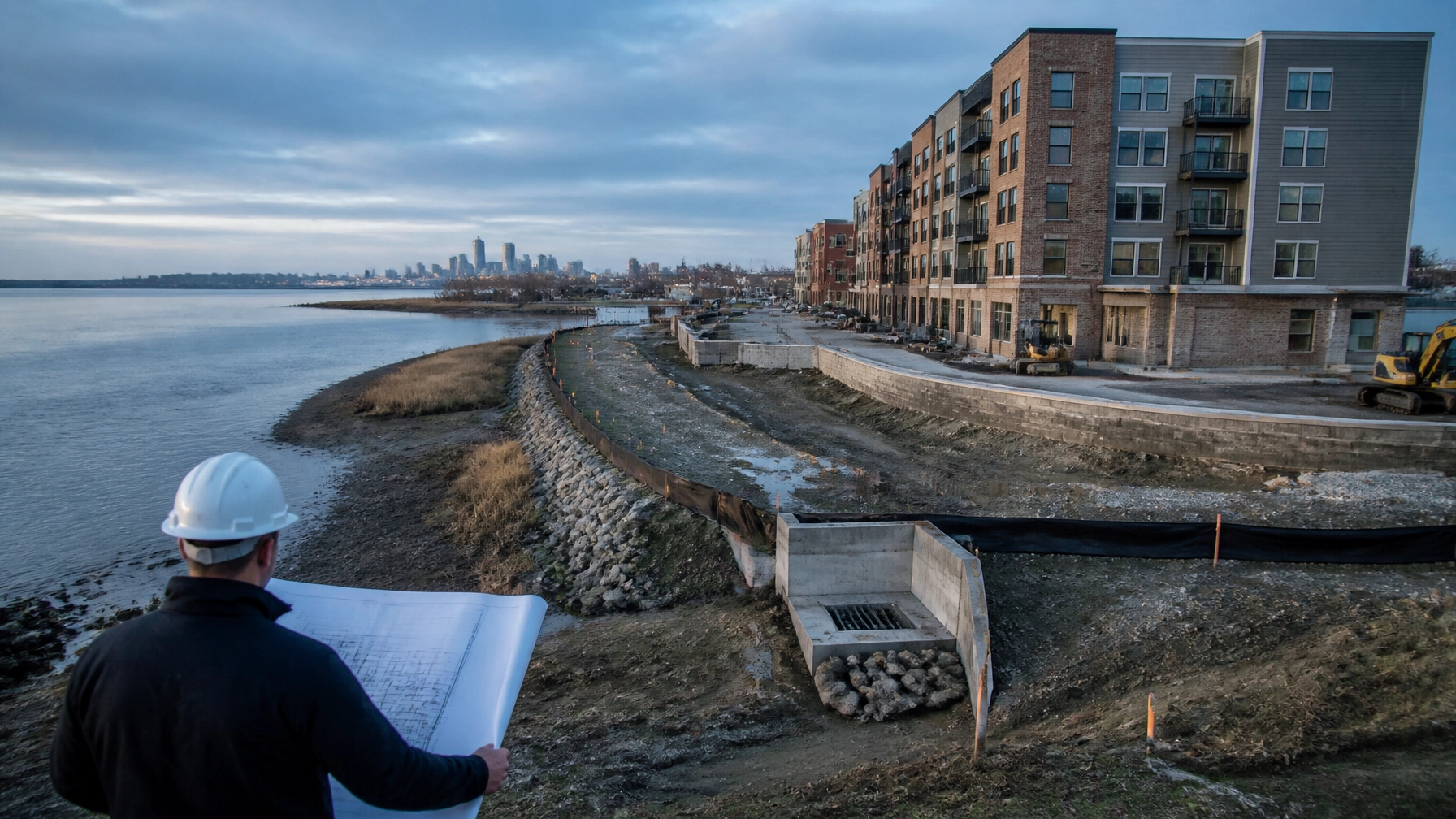
The SWPPP should be coordinated with the civil plans, not prepared as a separate document after design is complete.
That means reviewing:
- Existing drainage divides
- Proposed grades and low points
- Temporary swales and berms
- Inlet and outlet locations
- Sediment basin capacity
- Flow paths around buildings and foundations
- Construction entrances and truck routes
- Connections to municipal storm sewer systems
- Permanent stormwater management facilities
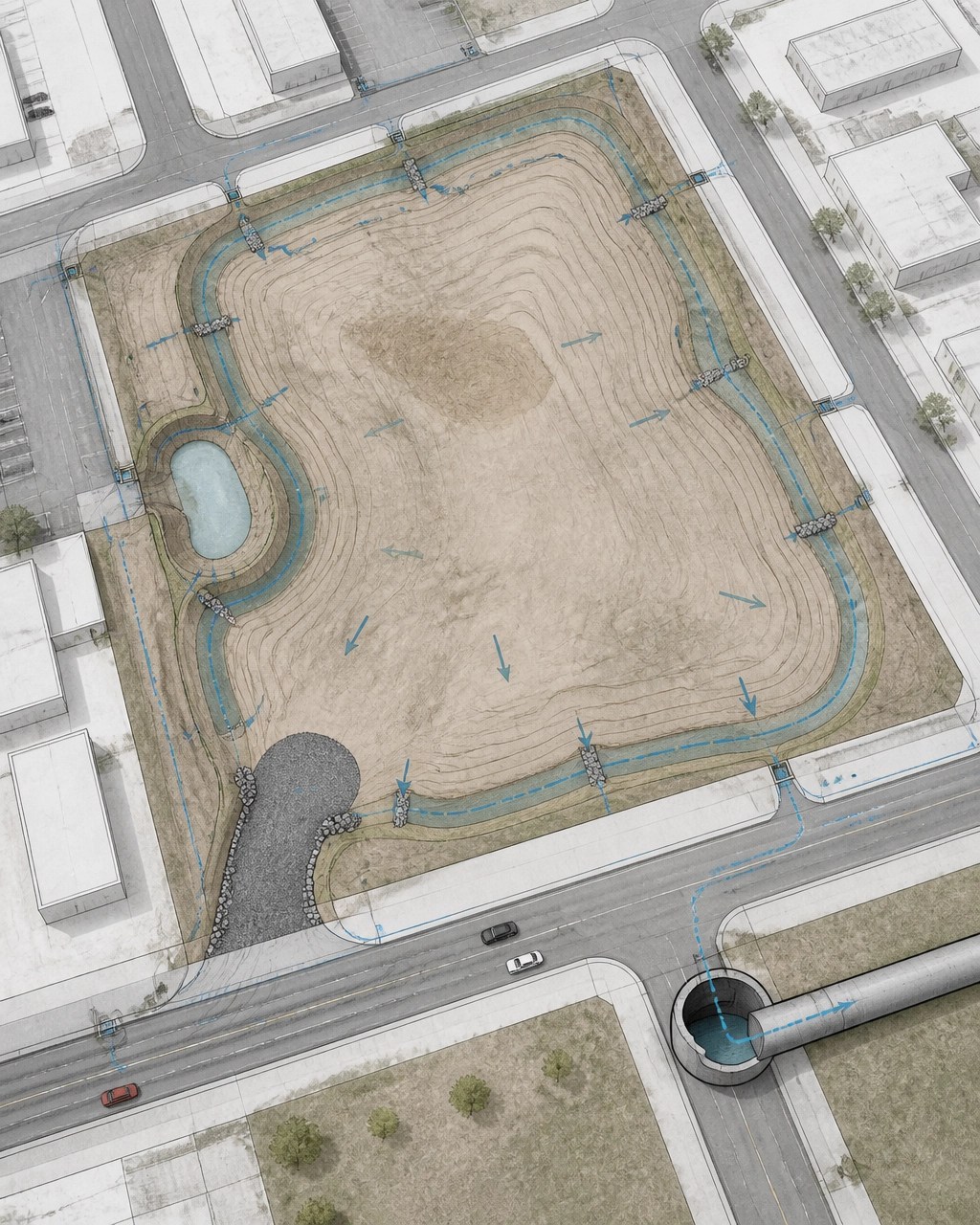
For industrial and multifamily sites, urban constraints make this coordination more important. There may be limited space for sediment controls, high groundwater, active streets, adjacent buildings, and existing catch basins that receive runoff quickly.
Envicon integrates this work through civil and geotechnical engineering and stormwater and SWPPP services. The objective is simple: build a control plan that a contractor can install and maintain without guessing.
Stabilization, inspection, and maintenance
Exposed soil is the primary stormwater risk during construction. The longer it remains unprotected, the more likely the project is to experience sediment loss, clogged inlets, street tracking, and agency or municipal complaints.
Stabilization measures may include:
- Temporary or permanent seeding
- Mulch
- Erosion control blankets
- Stone cover
- Stabilized construction entrances
- Temporary pavement
- Soil binders where appropriate
- Final landscaping and permanent cover
Stabilize disturbed areas as soon as practicable and follow the certified plan and applicable New Jersey technical standards. Do not wait until the end of construction to address exposed slopes or inactive work areas.
NJDEP’s stormwater Best Management Practices Manual provides technical references for erosion, sediment, and stormwater controls.
Inspection is an active permit responsibility. NJDEP’s 5G3 guidance identifies inspections at least once every seven days and within 24 hours after a rainfall event of 0.5 inches or more. The inspection record should document:
- Date and weather conditions
- Condition of silt fences and inlet protection
- Sediment accumulation
- Evidence of erosion or bypass
- Stabilized and unstabilized areas
- Dewatering equipment
- Washout areas
- Corrective actions
- Person performing the inspection
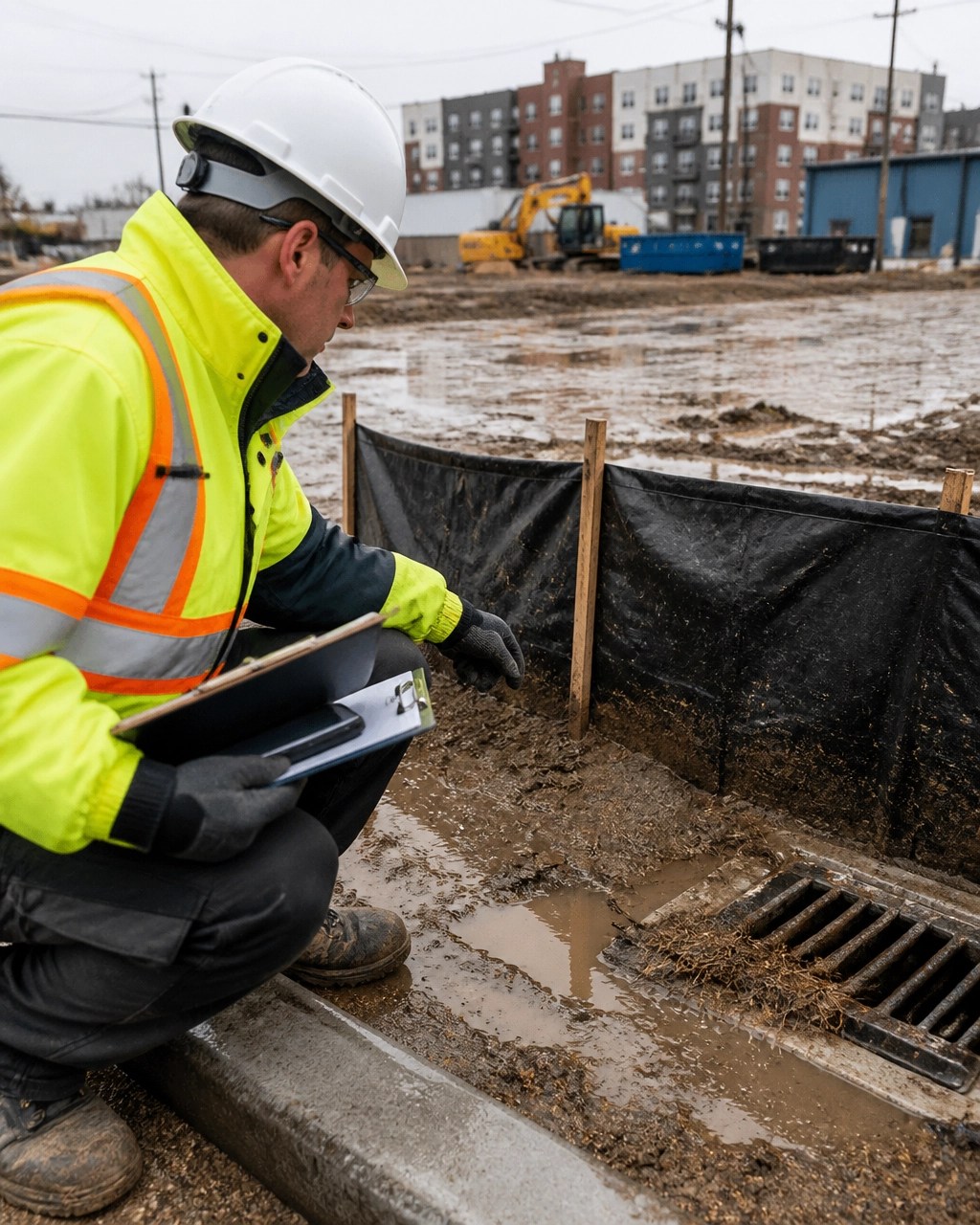
Inspection without maintenance is not compliance. Contractors must repair failed controls, remove accumulated sediment, clean tracked mud, and document the work.
Dewatering is a separate risk interface
Foundation excavations and utility trenches in Newark, Jersey City, Hoboken, and Bayonne often encounter groundwater or accumulated stormwater. That water cannot be pumped directly to a storm drain because it looks clear.
Dewatering must be evaluated for sediment, contamination, discharge location, flow rate, and applicable authorization. Depending on the project, controls may include:
- Settling tanks
- Filtration bags
- Sediment basins
- Treatment systems
- Turbidity checks
- Controlled discharge points
- Additional NJPDES authorization
- Municipal approval for discharge to an MS4
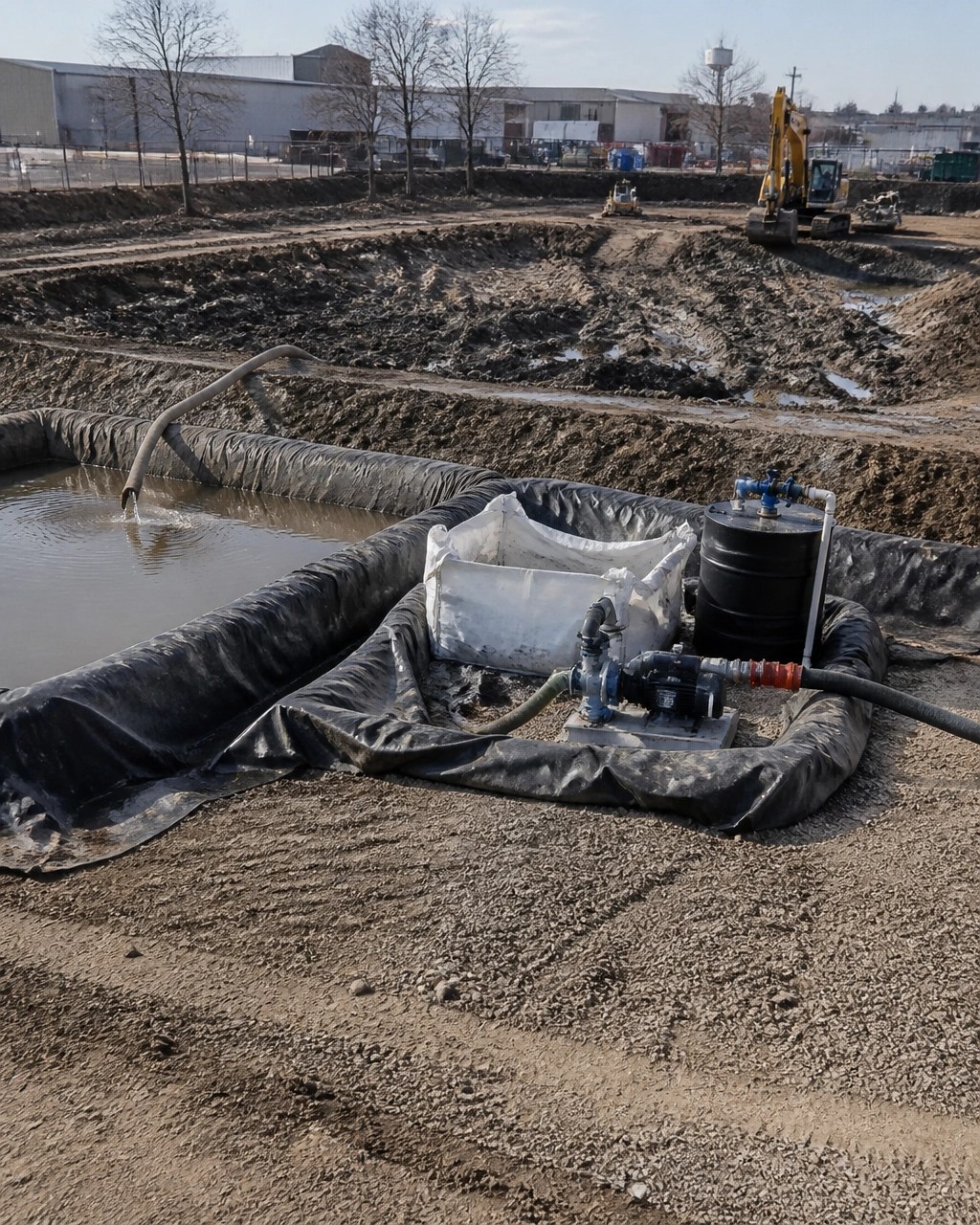
If groundwater is contaminated or the discharge requires treatment beyond ordinary sediment control, the SWPPP may need to interface with remediation, discharge permitting, or site management requirements. Coordinate dewatering before excavation begins.
MS4 coordination and contractor responsibilities
The municipal separate storm sewer system, or MS4, is not a replacement for 5G3 coverage. A construction site generally needs its own construction stormwater authorization when the applicable disturbance threshold is met.
The municipality may also require:
- Connection approval
- Street opening coordination
- Catch basin protection
- Local inspection access
- Discharge limitations
- Restoration of public infrastructure
- Compliance with local stormwater ordinances
NJDEP’s Tier A MS4 program provides additional context for municipal stormwater responsibilities.
The owner or operator remains responsible for maintaining permit compliance. Contractors still have direct operational duties under the project contract and SWPPP. They should:
- Install BMPs before disturbance begins
- Follow the approved construction sequence
- Maintain controls during active work
- Use designated washout areas
- Manage stockpiles and equipment leaks
- Follow dewatering procedures
- Participate in inspections
- Correct deficiencies immediately
- Keep records and photographs
- Notify the owner and engineer when site conditions change
A good SWPPP assigns responsibility by task. It does not simply name a contractor and leave implementation unclear.
Newark NJ SWPPP permit checklist
Before authorizing land disturbance, confirm that the project team has:
- Calculated total disturbance, including all common-plan phases
- Confirmed NJPDES 5G3 applicability
- Identified the owner, operator, and responsible contractor
- Coordinated the erosion and sediment control plan
- Obtained Soil Conservation District or municipal certification
- Prepared the site-specific SWPPP
- Coordinated grading and drainage plans
- Selected temporary and permanent BMPs
- Established stabilization procedures
- Addressed dewatering and discharge interfaces
- Confirmed MS4 and municipal requirements
- Submitted the RFA through NJDEP Online
- Allowed time for agency review and corrections
- Prepared inspection forms and maintenance logs
- Trained field personnel before mobilization
FAQ: SWPPP services Newark
How long does a Newark SWPPP permit take?
Lead times depend on the project scope, disturbance area, design completeness, Soil Conservation District coordination, municipal review, NJDEP requirements, and agency workload. The 5G3 RFA timing requirement and current NJDEP Online instructions should be reviewed before scheduling land disturbance.
Does a project under one acre need 5G3 coverage?
It may. A project under one acre can still require coverage if it is part of a common plan of development or sale that will disturb at least one acre in total.
Is the SWPPP the same as the erosion and sediment control plan?
No. They are related but not identical. The erosion and sediment control plan addresses soil movement and sediment controls. The SWPPP is the broader construction stormwater management document and should also address sequencing, inspections, maintenance, stabilization, dewatering, material handling, and responsible parties.
Does 5G3 cover dewatering?
Not automatically in every situation. Dewatering requires a project-specific review of water quality, treatment, discharge location, and applicable permits or approvals. Untreated turbid water should not be discharged to a storm drain or surface water.
Can Envicon prepare and coordinate the filing?
Yes. Envicon provides SWPPP services Newark, civil drainage coordination, inspection support, and regulatory permitting through one PE-led team.
Build stormwater compliance into the schedule
A permit-ready SWPPP protects more than a drainage system. It protects the construction schedule, public infrastructure, lender confidence, and the project’s relationship with local agencies.
Envicon works with developers, contractors, architects, attorneys, and municipalities across Newark, Jersey City, Hoboken, Bayonne, Bergen County, Hudson County, and Essex County. We prepare practical documents, coordinate the agency path, and stay close to field conditions after the permit is issued.
Ready to review your Newark project?
- Call Envicon now at (917) 764-2171
- Get a free quote today
- Use our proprietary cost estimator tool
- View our complete list of services