A Hoboken property transaction can look straightforward on paper and still carry environmental, flood, subsurface, or permitting risks that affect price, financing, and schedule.
A credible environmental consultant in Hoboken NJ should do more than deliver a Phase I report. The work should connect environmental findings to the decisions you need to make before closing, design, permitting, or construction.
That means coordinating:
- Phase I and Phase II Environmental Site Assessments
- Historic fill and former industrial use review
- Underground storage tank and petroleum screening
- PFAS and vapor risk evaluation
- NJDEP LSRP and ISRA applicability
- Flood hazard, wetlands, REAL, and stormwater constraints
- Geotechnical investigation and dewatering
- SWPPP preparation
- Asbestos and lead surveys
- Construction oversight and field documentation
Envicon works across Hoboken, Jersey City, Bayonne, Newark, Hudson County, and Bergen County. Our goal is direct. We help you understand the site before the site controls your project.
Why Phase I ESA work in Hoboken needs a local lens
A standard Phase I Environmental Site Assessment should follow ASTM E1527-21 and support All Appropriate Inquiries under 40 CFR Part 312.
The report should include:
- Historical aerial photographs, Sanborn maps, directories, and topographic records
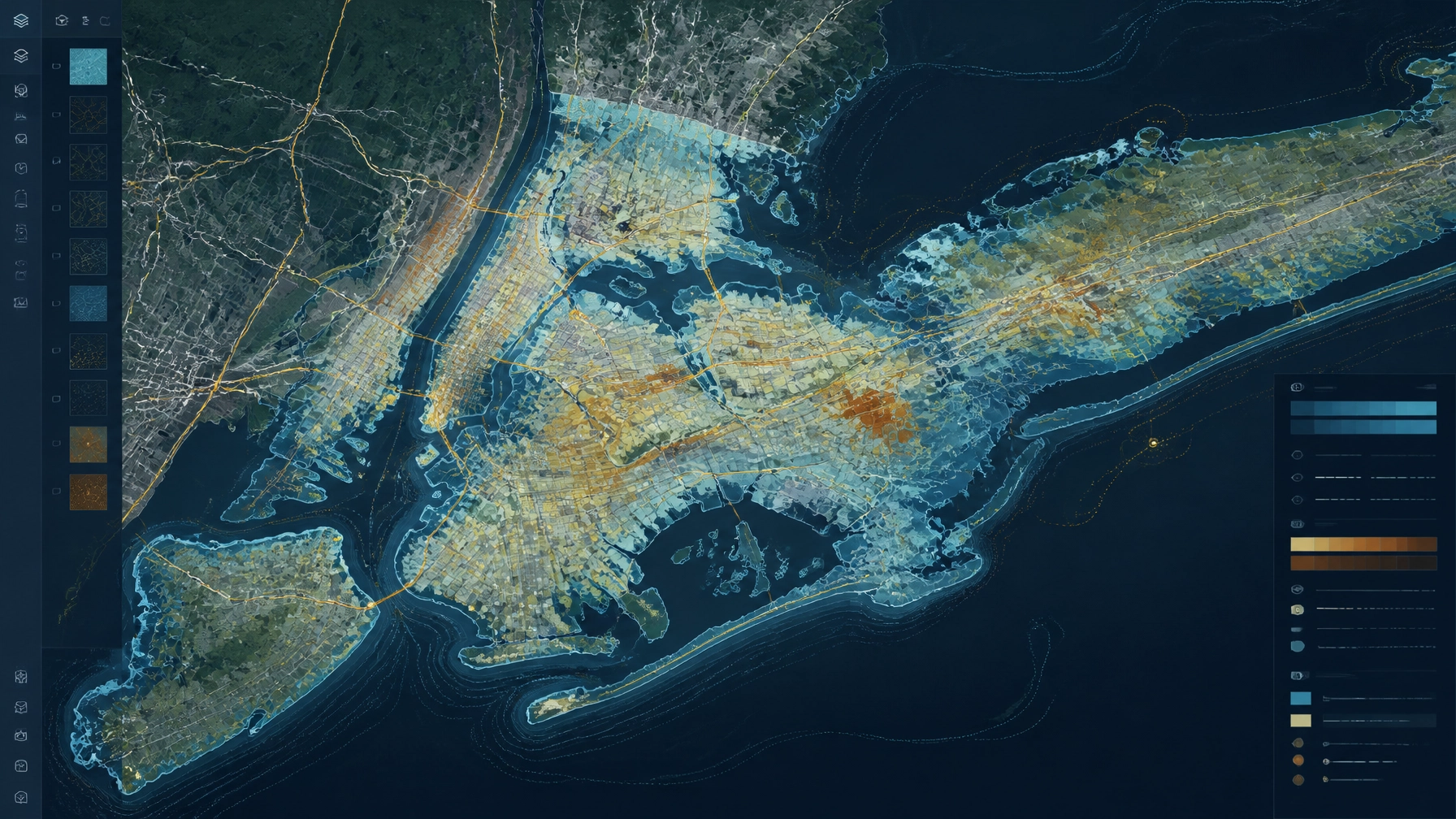
- Federal, state, and local environmental database reviews
- Site reconnaissance and interviews
- Review of adjoining and nearby properties
- Identification of Recognized Environmental Conditions, Historical Recognized Environmental Conditions, and Controlled Recognized Environmental Conditions
- Clear recommendations for additional investigation
The standard matters. The local interpretation matters more.
Hoboken and the broader Hudson County market include dense urban parcels, former industrial uses, transportation corridors, older buildings, redevelopment sites, and waterfront areas. Those conditions can create environmental questions that a generic national template may not answer clearly.
A Phase I ESA should help you determine whether you need:
- A limited Phase II investigation
- Soil, groundwater, or soil gas sampling
- A vapor intrusion assessment
- UST location or closure work
- NJDEP case file research
- An LSRP
- Additional cost and schedule contingencies before closing
“A Phase I should answer what happens next, not just what happened before.”
Historic fill investigation Hoboken: what buyers should understand
Historic fill is common across older urban and waterfront areas in the New York and New Jersey region. Fill may contain ash, brick, cinders, construction debris, petroleum-related impacts, metals, or other material associated with past development.
Historic fill does not automatically mean that a property is contaminated. It does mean the subsurface conditions require a deliberate investigation.
A historic fill investigation in Hoboken may include:
- Historical land use review
- Review of maps, aerials, municipal records, and prior reports
- Evaluation of former rail, industrial, utility, commercial, and waterfront uses
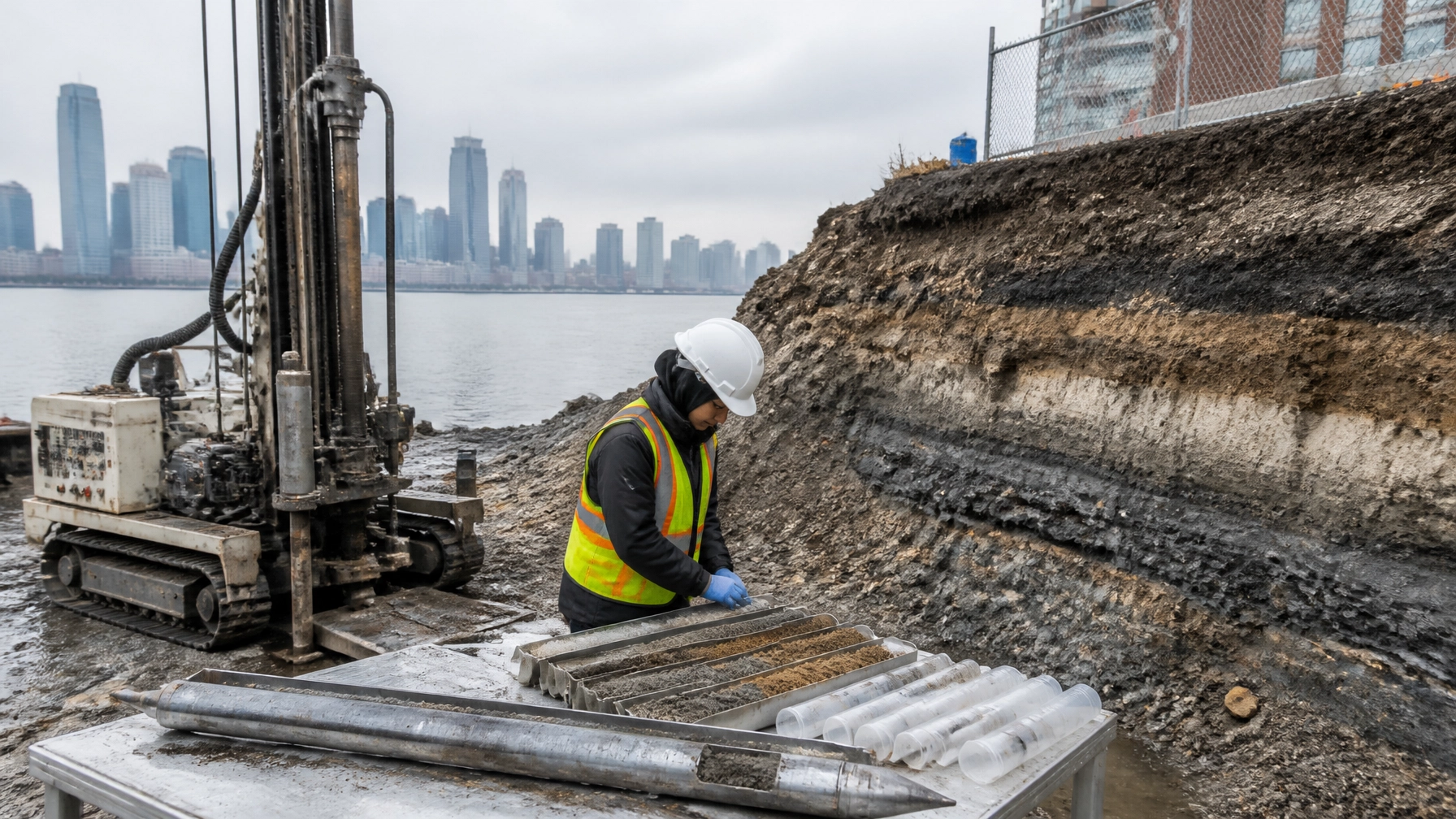
- Soil borings and laboratory analysis where the Phase I identifies a REC or AOC
- Groundwater evaluation based on site geology and contaminant mobility
- Soil management planning for excavation and off-site disposal
The result should be practical. You need to know whether the fill affects foundation design, excavation costs, soil disposal, groundwater management, or regulatory obligations.
USTs, PFAS, and vapor: three issues that can change the deal
Underground storage tanks
Older commercial, industrial, and mixed-use properties may have current, closed, abandoned, or undocumented tanks.
A proper review looks for:
- NJDEP UST records and spill cases
- Historical fuel, heating oil, vehicle service, or manufacturing uses
- Fill ports, vent pipes, abandoned piping, and concrete pads
- Evidence of staining or petroleum odors
- Prior tank removal or closure documentation
If a tank is suspected but not documented, ground penetrating radar, test pits, soil borings, or targeted sampling may be appropriate. The correct scope depends on the property history and transaction risk.
PFAS
PFAS screening is increasingly relevant in New Jersey due diligence, especially where a property or nearby property had industrial, fire-training, landfill, wastewater, plating, textile, or other uses that may warrant review.
PFAS is not automatically required in every Phase I ESA. It should be evaluated based on the property history, surrounding land uses, regulatory records, lender requirements, and intended redevelopment.
When PFAS is relevant, the work may include:
- Records-based screening
- Sampling plan development
- Soil and groundwater sampling
- NJDEP-approved laboratory analysis
- Comparison to current NJDEP standards and guidance
Review the NJDEP PFAS program and current NJDEP Ground Water Quality Standards before finalizing a sampling program.
Vapor intrusion
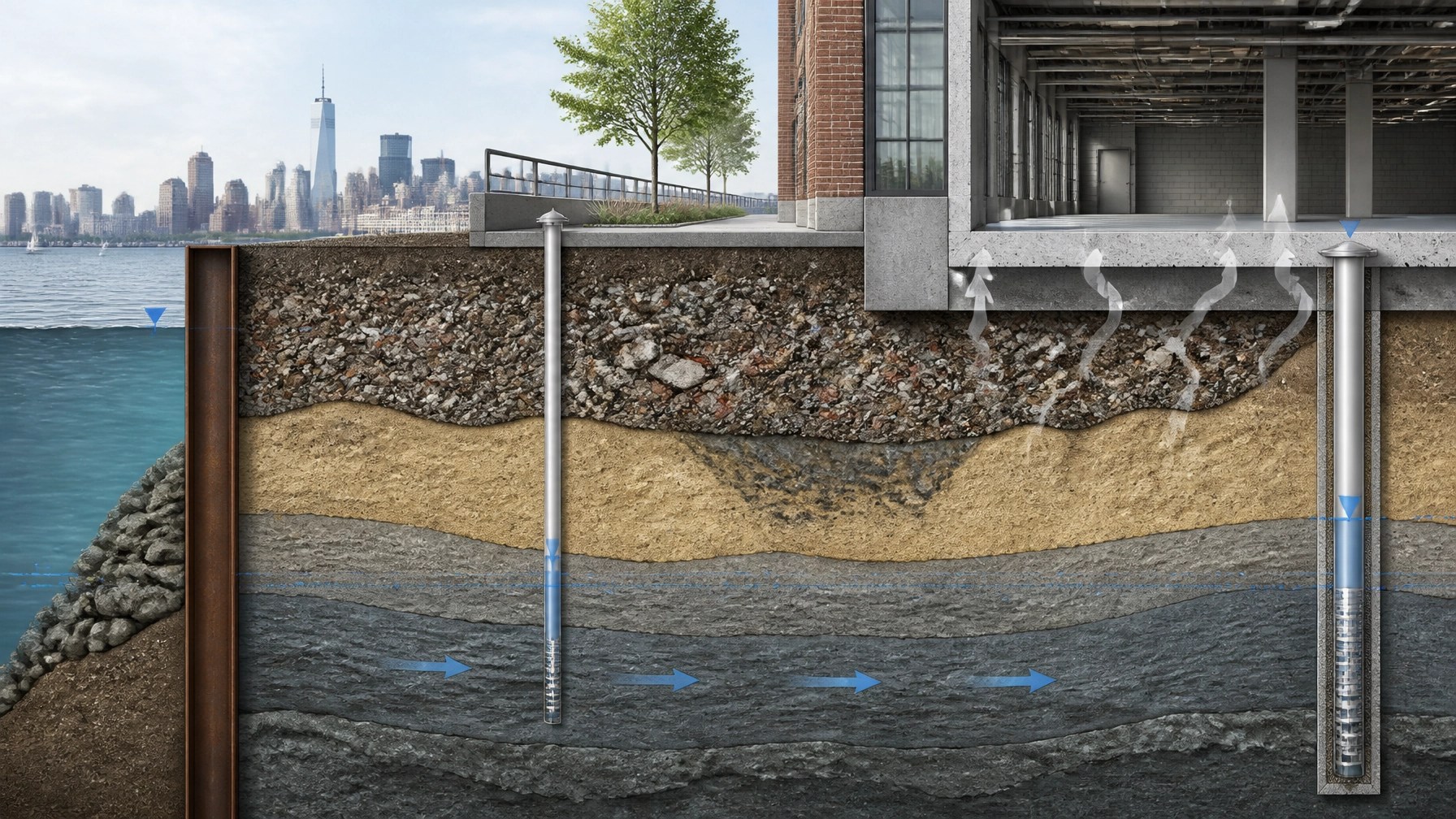
Vapor concerns can arise when volatile organic compounds in soil or groundwater migrate into buildings through cracks, utility penetrations, floor drains, or other pathways.
A vapor evaluation may involve:
- Soil gas or sub-slab sampling
- Indoor and outdoor air sampling
- Building pathway inspection
- Review of nearby chlorinated solvent or petroleum releases
- Mitigation design if a complete pathway is identified
The objective is not to assume a problem. It is to identify whether a pathway exists and determine what action, if any, will resolve it.
NJDEP LSRP and ISRA review
A Phase I ESA is not the same as an NJDEP remediation case.
If a property has known contamination, active remediation, engineering or institutional controls, or an applicable industrial transaction trigger, you may need an NJDEP Licensed Site Remediation Professional.
Envicon’s NJ LSRP services can support:
- Preliminary Assessment and Site Investigation
- Remedial Investigation
- Remedial Action Work Plans
- NJDEP coordination
- Vapor mitigation
- Soil and groundwater management
- Deed notices and Site Management Plans
- Response Action Outcome strategy
- Long-term compliance monitoring
ISRA applicability also requires a separate review. A Phase I ESA does not replace an ISRA determination. The analysis should consider the property’s current and historical operations, applicable NAICS codes, hazardous substances, triggering events, and transaction structure.
Start with the official NJDEP Technical Requirements for Site Remediation, N.J.A.C. 7:26E, ARRCS rules, N.J.A.C. 7:26C, and the applicable NJDEP site remediation guidance.
Flood, wetlands, REAL, and stormwater constraints
Environmental due diligence should not stop at contamination.
A waterfront or low-lying Hoboken redevelopment project may need a separate review of:
- FEMA flood mapping
- NJDEP Flood Hazard Area Control Act requirements under N.J.A.C. 7:13
- Tidal and freshwater wetlands
- Coastal and waterfront permitting
- Riparian zones
- Stormwater management under N.J.A.C. 7:8
- Local drainage and elevation requirements
- Construction dewatering and discharge approvals
- REAL land use rule applicability
The NJDEP Flood Hazard Area Control Act rules regulate development in designated flood hazard areas and riparian zones. The NJDEP stormwater guidance addresses major development, runoff quantity, water quality, groundwater recharge, and related requirements.
The rules do not mean every Hoboken parcel requires the same permit. The site boundary, proposed disturbance, receiving waters, project design, and mapped conditions control the analysis.
REAL applicability should also be confirmed against current NJDEP guidance. Review the NJDEP REAL rule amendments before relying on an older permit strategy.
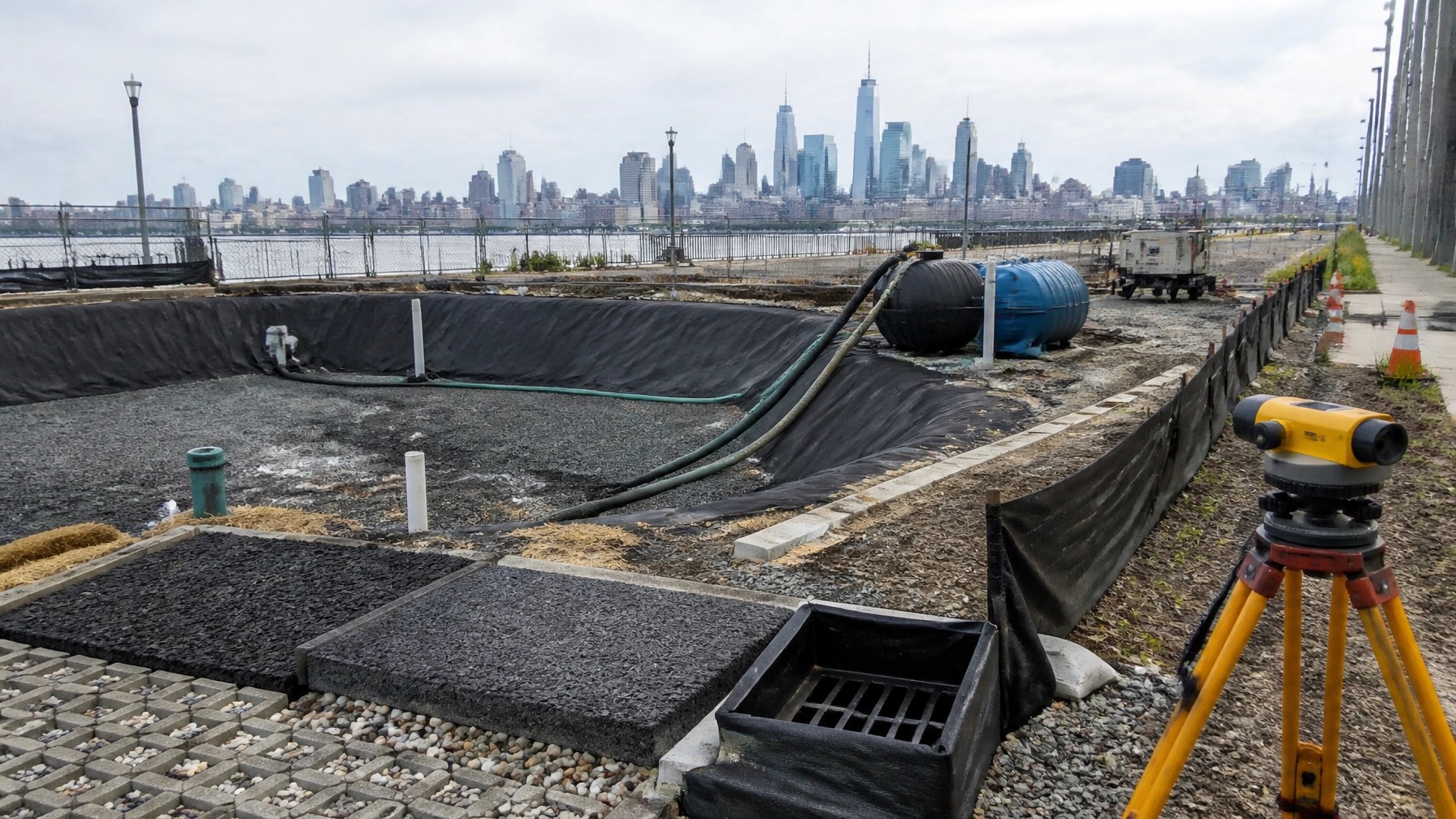
Geotechnical, dewatering, and SWPPP coordination
Environmental and engineering scopes often overlap below grade.
A coordinated civil and geotechnical investigation can evaluate:
- Fill thickness and variability
- Bearing conditions
- Groundwater elevation
- Excavation support
- Settlement potential
- Foundation recommendations
- Utility conflicts
- Flood-resilient site design
- Dewatering needs
If excavation extends below groundwater, the project may need a dewatering design, treatment system, discharge permit, monitoring plan, and clear responsibilities for field implementation.
Construction disturbance may also trigger a Stormwater Pollution Prevention Plan. Envicon’s SWPPP and stormwater service supports erosion and sediment controls, BMP selection, NOI and NOT filing support, inspection forms, and construction-phase coordination.
A plan prepared after the contractor mobilizes is already late. Stormwater and dewatering should be evaluated during feasibility and preconstruction planning.
The Hoboken environmental due diligence workflow
Use this decision path for an acquisition or redevelopment project:
-
Define the transaction and intended use.
Confirm the closing date, lender requirements, proposed disturbance, building program, and known site history. -
Complete the Phase I ESA and NJ-specific screening.
Review RECs, AOCs, historic fill, USTs, vapor, PFAS, NJDEP records, and ISRA applicability. -
Decide whether Phase II work is necessary.
Scope targeted soil, groundwater, soil gas, or vapor sampling around actual sources and pathways. -
Overlay development constraints.
Review flood hazard areas, wetlands, REAL, stormwater, geotechnical conditions, dewatering, and utility conflicts. -
Build the cost and schedule model.
Include investigation, laboratory, disposal, treatment, permitting, remediation, and construction oversight contingencies. -
Assign one accountable team.
Keep environmental, civil, geotechnical, regulatory, and construction decisions connected.
This is where Envicon differs from a large consultant. You do not receive a report and a list of unanswered questions. Our team connects field conditions, agency requirements, design decisions, and transaction timing.
FAQ
Do I need a Phase I ESA for a Hoboken property acquisition?
Most commercial, industrial, multifamily, and redevelopment transactions require environmental due diligence for lender, investor, legal, or liability reasons. The exact scope depends on the property, transaction, and lender requirements.
Is historic fill automatically a Recognized Environmental Condition?
No. Historic fill is a site condition that may require additional evaluation. Whether it supports a REC or AOC determination depends on the available records, material, release evidence, and applicable standards.
Does a Phase I ESA include flood or wetlands permitting?
Not usually. Those are separate land use and engineering reviews. They should still be coordinated with the Phase I because they can affect feasibility, cost, and schedule.
When should I involve an LSRP?
Bring in an LSRP early when contamination is known, a regulatory case is active, ISRA may apply, engineering or institutional controls exist, or the transaction depends on an NJDEP closure path.
Can Envicon coordinate the environmental and engineering work?
Yes. Envicon provides Phase I and Phase II ESAs, LSRP services, civil and geotechnical engineering, dewatering, SWPPP preparation, compliance support, and construction oversight through one coordinated team.
A clear path before you close
The right environmental consultant in Hoboken NJ should help you make a decision, not create another document for your transaction file.
Start with the facts. Identify the sources. Test what matters. Confirm the regulatory path. Price the work before the site becomes your problem.
Envicon helps clients across Hoboken, Jersey City, Bayonne, Newark, Hudson County, and Bergen County solve environmental and engineering challenges with precision, speed, and trust.
Next steps
- Call Envicon now
- Get a free quote today
- Use the project risk screener
- View our complete list of services
Official sources
- NJDEP Technical Requirements for Site Remediation, N.J.A.C. 7:26E
- NJDEP ARRCS rules, N.J.A.C. 7:26C
- NJDEP Flood Hazard Area Control Act rules, N.J.A.C. 7:13
- NJDEP Stormwater Management FAQs
- NJDEP PFAS program
- NJDEP Ground Water Quality Standards
- NJDEP REAL rule amendments
This article is for general informational purposes only. Site-specific environmental, engineering, legal, and regulatory decisions require review by appropriately licensed professionals and confirmation of current agency requirements.