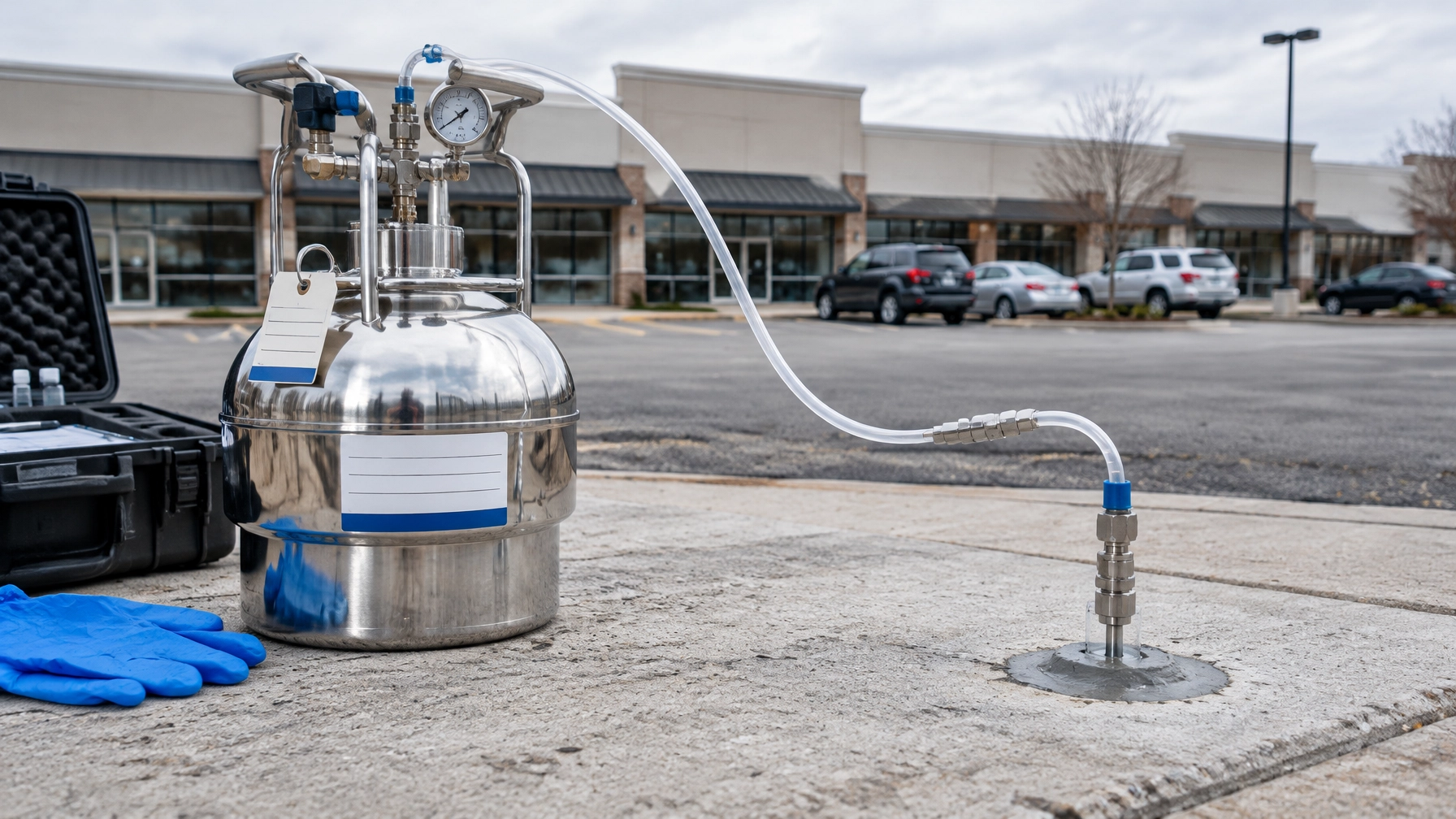
A vapor intrusion mitigation system is not finished when the fan turns on.
For an NJ multifamily or mixed-use building, the operational phase determines whether the remedy remains protective, whether tenants receive accurate information, and whether the property can satisfy its ongoing NJDEP obligations. Sub-slab depressurization and sub-membrane systems require documented startup testing, pressure monitoring, maintenance, building inspections, and reporting.
The details matter. A fan can run continuously while the pressure field beneath the slab fails to reach part of the building. A gauge can show vacuum at one suction point while a new tenant improvement creates a short-circuiting pathway somewhere else.
The NJDEP Vapor Intrusion Technical Guidance, Version 4.1 treats mitigation as a process with six steps: evaluation, investigation, mitigation, monitoring and maintenance, and eventual termination. For owners and developers, the practical message is simple:
A vapor intrusion remedy must be operated as an engineered control, not treated as a one-time installation.
What O&M covers after system installation
Operations and maintenance, or O&M, confirms that a system continues to interrupt the pathway between subsurface vapor and building occupants.
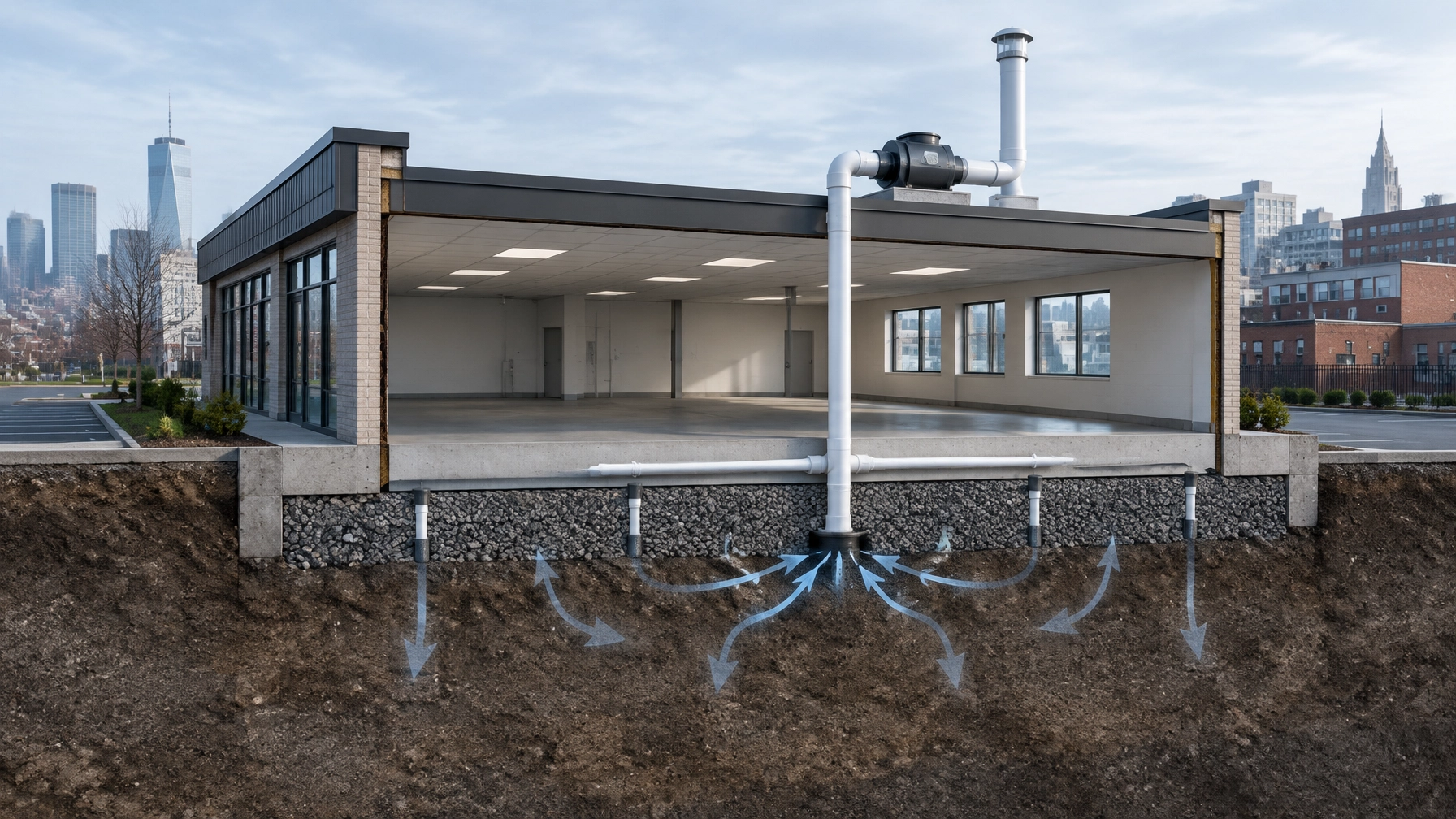
For an active sub-slab depressurization system, O&M commonly includes:
- Fan and blower operation checks
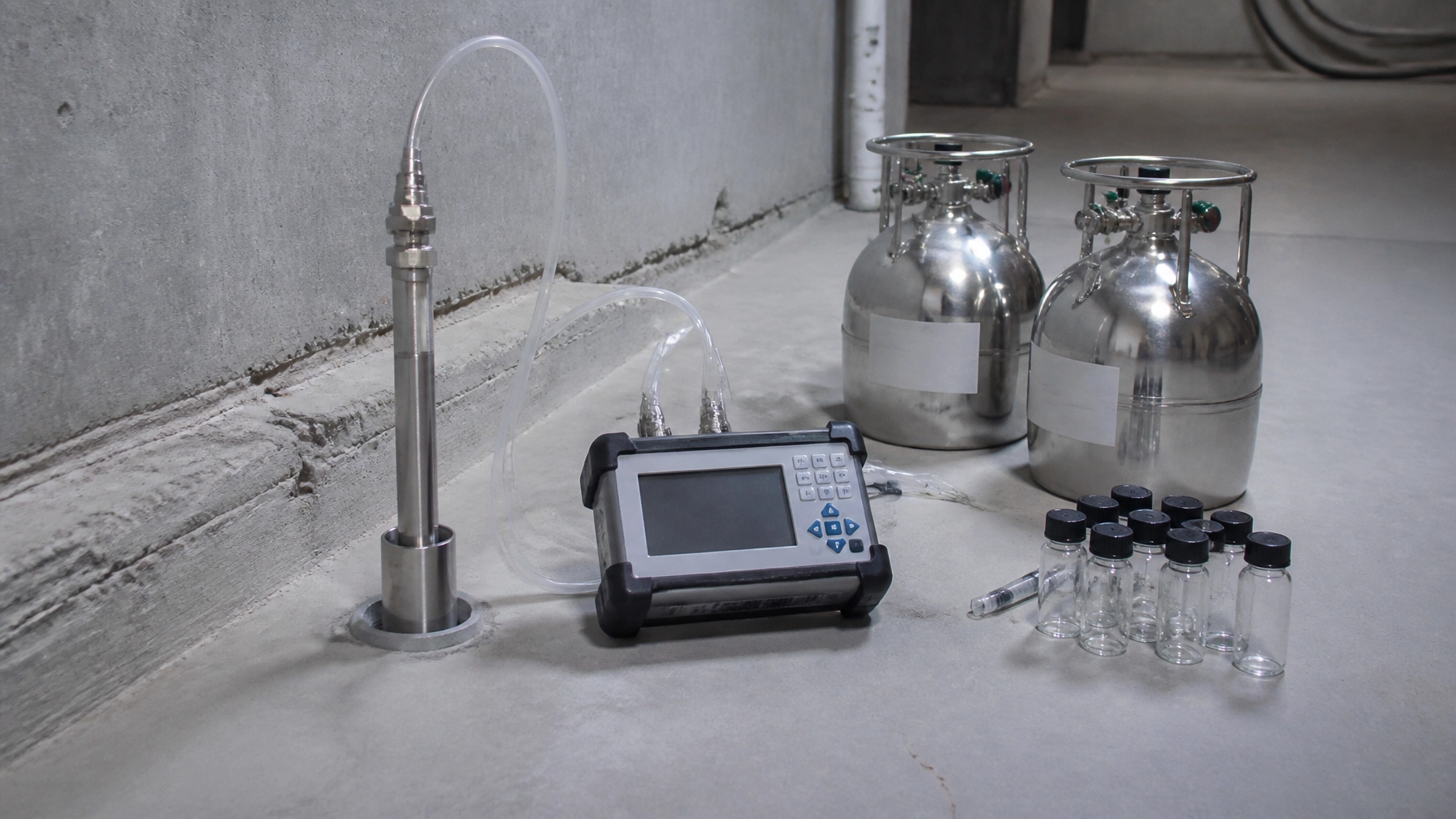
- Vacuum and airflow measurements
- Pressure field extension verification
- Inspection of permanent sub-slab monitoring points
- Alarm and remote notification testing
- Electrical service and circuit checks
- Inspection of pipe joints, seals, risers, and discharge points
- Building envelope and tenant-use inspections
- Indoor air or sub-slab sampling when required by the approved plan
- Corrective action documentation
- Annual and biennial regulatory reporting
The exact frequency depends on the approved Monitoring and Maintenance Plan, Remedial Action Work Plan, remedial action permit, building conditions, and the type of mitigation system.
NJDEP’s guidance identifies semi-annual system inspections during the first year for active systems. Beginning in the second year, annual inspections and diagnostic measurements are generally expected. Larger or more complex systems may require more frequent inspections.
That schedule is a baseline. The permit and site-specific plan control.
Startup is a commissioning process, not a switch
System startup should establish a defensible operating baseline. That baseline becomes the comparison point for future inspections.
NJDEP guidance generally calls for commissioning no sooner than 30 days after activation and no later than 60 days after startup. This allows the sub-slab environment to reach a more stable condition and gives the building time to ventilate before verification sampling.
A proper startup review should document:
- Fan or blower model, location, and operating condition
- Suction point configuration
- Header and riser layout
- Airflow and pressure at the fan
- Vacuum at individual suction points
- Vacuum at permanent sub-slab monitoring points
- Electrical amperage and operating load
- Condensate, noise, and vibration conditions
- Alarm activation and reset functions
- Backdraft testing for combustion appliances
- Indoor air verification sampling
- Ambient air conditions and sampling locations
NJDEP identifies pressure measurements, airflow, amperage, temperature, and direct-reading vapor measurements as possible commissioning parameters. Not every system requires every measurement. The LSRP and design professional should define the appropriate parameters based on the system design.
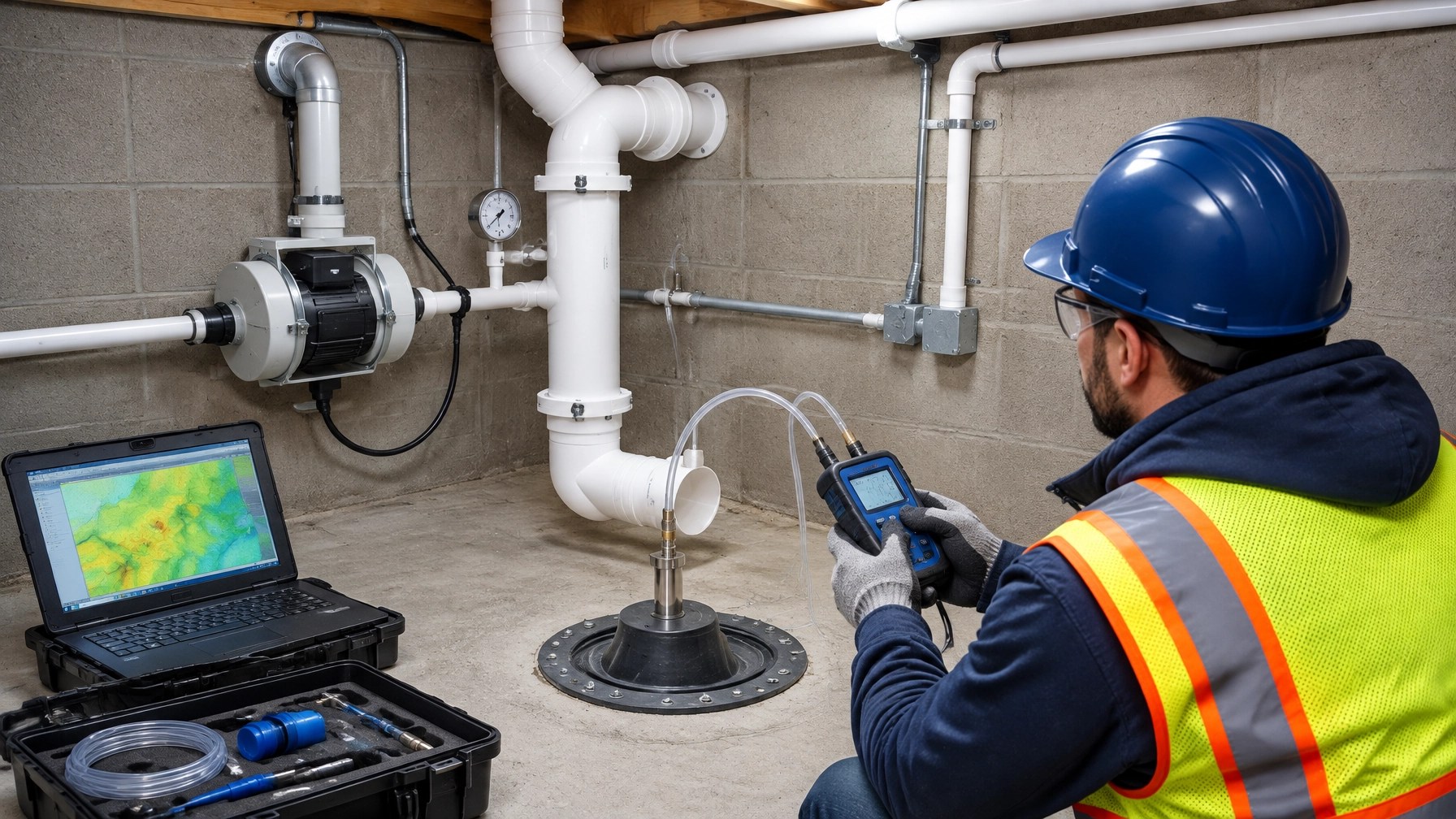
Communication testing and pressure field extension
Communication testing shows how far a vacuum travels through the sub-slab material. It is one of the most important steps in designing and verifying a sub-slab depressurization system.
A suction point may produce strong vacuum locally but fail to influence areas separated by:
- Grade beams
- Footings
- Foundation walls
- Low-permeability fill
- Interior slab sections
- Utility trenches
- Changes in slab elevation
- Moist or saturated sub-slab materials
Permanent monitoring points should be placed where they can confirm the total area of influence. NJDEP guidance recommends four permanent sub-slab points for the first suction point and two additional points for each additional suction point, subject to site-specific professional judgment.
For active systems, NJDEP guidance identifies a general performance target of at least 0.004 inches of water, or approximately 1 Pascal, across the affected slab area. Measurements must be evaluated point by point. Averaging the readings can hide an unprotected portion of the building.
A smoke test can provide useful qualitative information, but it does not replace quantitative pressure measurements. A digital micromanometer with sufficient resolution is typically needed for low sub-slab pressure differentials.
For sub-membrane depressurization systems, the performance criteria differ. NJDEP guidance identifies a typical minimum static pressure of 0.125 inches of water at system suction points. The approved design should establish the actual acceptance criteria for the building.
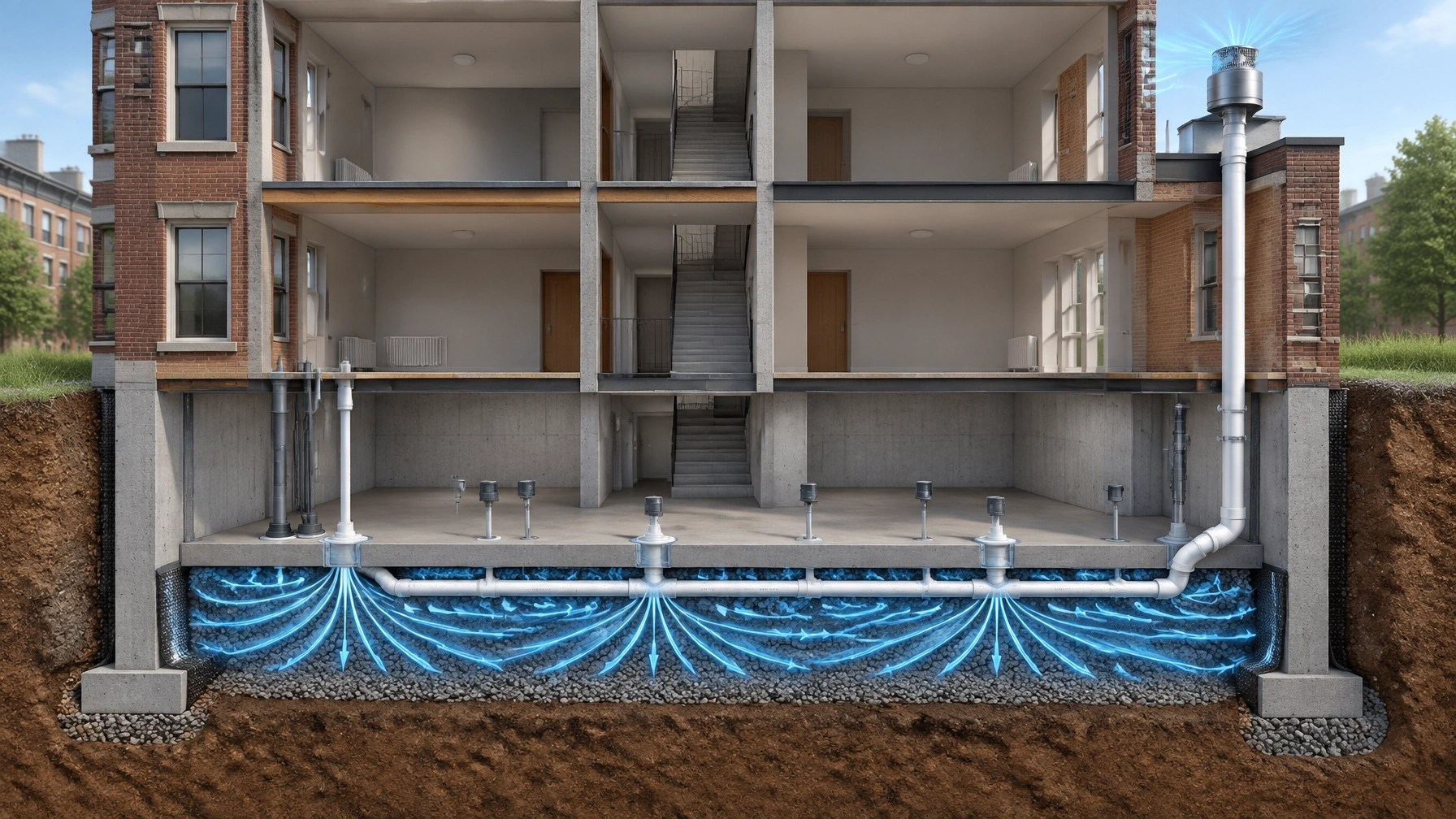
Common failure modes in NJ multifamily and mixed-use buildings
The most common O&M problems are not always mechanical failures. Many involve changes in the building itself.
HVAC imbalance
Commercial HVAC systems can create positive or negative pressure zones. A building that operates under negative pressure can draw soil gas toward cracks, sumps, utility penetrations, and slab joints.
Changes to rooftop units, exhaust fans, outside air settings, or return-air locations can alter the pressure relationship between the building and the sub-slab.
Record relevant HVAC changes during each inspection. If indoor air results change, review building pressure and ventilation conditions before assuming that the mitigation fan failed.
Stack effect
During colder weather, warm air rises through a building. Lower floors can fall below outdoor pressure, increasing infiltration through the foundation and slab.
This matters in New Jersey buildings with basements, parking levels, stairwells, elevator shafts, and multiple residential floors. A system that performed adequately during mild weather may need closer review during the heating season.
Tenant alterations
Tenants may install:
- New floor drains
- Sump pumps
- Interior partitions
- Mechanical equipment
- Utility penetrations
- Flooring systems
- Storage rooms
- Kitchen exhaust
- Plumbing or electrical pathways
These alterations can create new vapor entry points or change the pressure field. Property managers should require environmental review before approving work in basements, slab-on-grade areas, crawlspaces, and ground-floor tenant spaces.
Roof exhaust interference
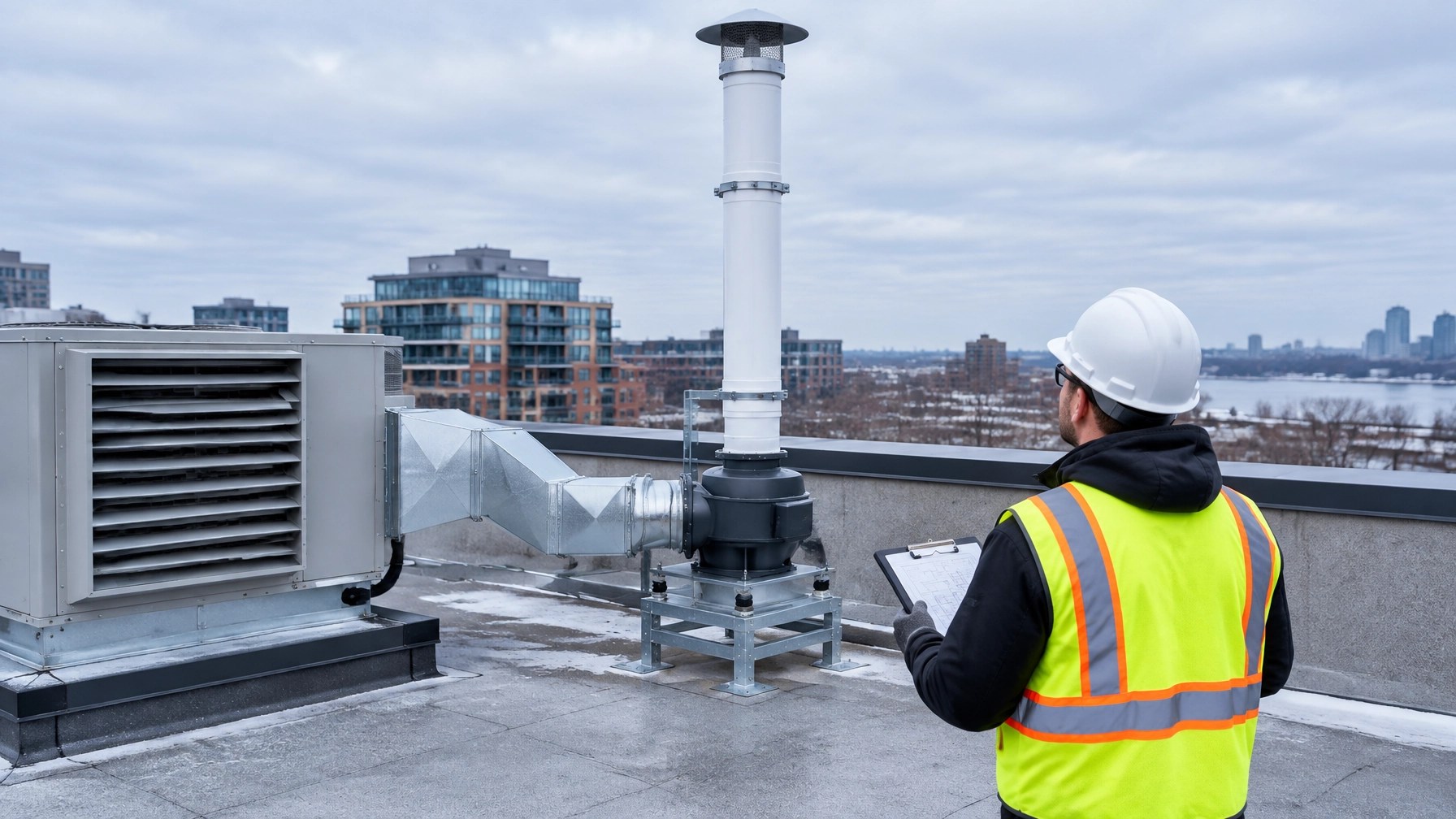
The mitigation discharge location must remain separated from outdoor air intakes, operable windows, and rooftop equipment. New HVAC units, parapets, screens, or neighboring construction can change how the discharge plume behaves.
Inspect the roof termination and surrounding equipment. Confirm that the discharge remains intact, unobstructed, weatherproof, and appropriately separated from building air intakes.
Alarms, electrical redundancy, and tenant notification
An active system that loses power can stop protecting the building without producing an obvious indoor warning. Every system should have a visible or audible alarm that indicates loss of power or vacuum.
Depending on system size and building risk, owners may also consider:
- Dedicated electrical circuits
- Clearly labeled breakers
- Battery-backed alarm power
- Automatic restart controls
- Remote alarm notification
- Cellular or internet-based monitoring
- A documented emergency contact tree
- Spare fan or motor components
- Planned maintenance windows
NJDEP guidance also calls for clear instructions to the building owner or occupant. Tenants should know what the equipment does, how to recognize an alarm, and whom to contact.
Notification should be practical, not alarming. A short building-specific notice can explain that the system operates continuously as an engineering control and that access may be needed for scheduled inspections.
Annual inspections versus biennial certification
This distinction is important.
Annual O&M inspections are common under NJDEP-approved monitoring plans. Annual building inspections may also be required where the site has an Indeterminate VI Pathway status, a long-term monitoring plan, or a change-in-use evaluation requirement.
The formal Remedial Action Protectiveness or Biennial Certification is generally a separate obligation. Under N.J.A.C. 7:26C-7.7 and 7:26C-7.9, permittees with applicable remedial action permits must evaluate and certify that the remedy remains protective on a biennial schedule established by the permit.
Some permits or site-specific plans may include annual reporting or certification requirements. Do not assume that a biennial filing replaces annual O&M. The annual field records become evidence supporting the LSRP’s protectiveness determination.
What an LSRP needs for permit renewal or certification
A clean O&M file helps the LSRP make a defensible certification. It also reduces the risk of discovering missing information immediately before a regulatory deadline.
Maintain the following records:
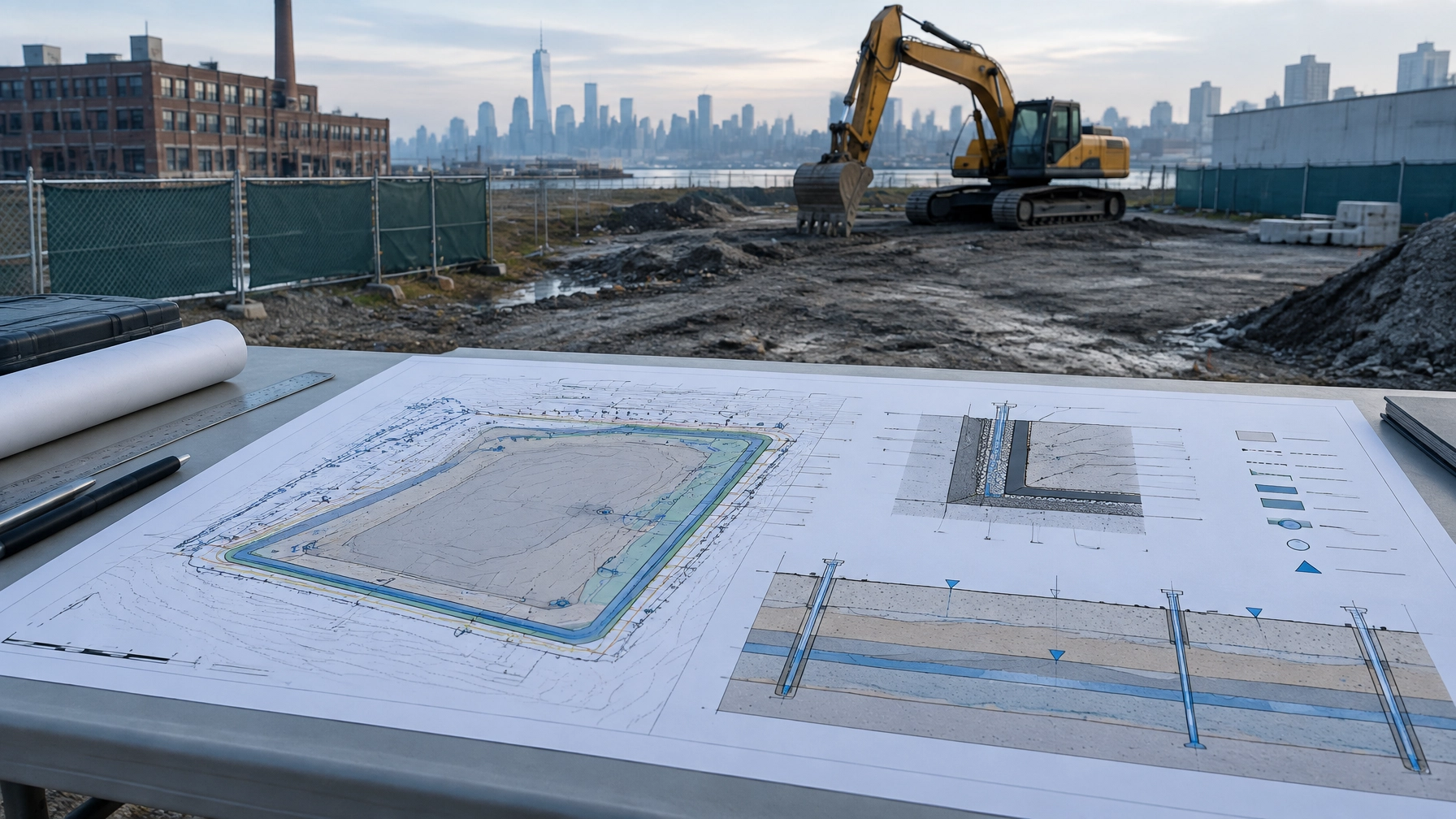
- Current as-built drawings
- System component inventory
- Fan and blower specifications
- Startup and commissioning data
- Communication testing results
- Pressure field extension maps
- Permanent monitoring point locations
- Annual inspection checklists
- Fan, vacuum, and airflow readings
- Alarm test results
- Electrical and maintenance records
- Repair and corrective action logs
- Photos of system components and roof discharge
- Tenant or owner notifications
- Building use and renovation history
- Indoor air and sub-slab sampling reports
- Laboratory data and validation records
- NJDEP checklists and forms
- Air permit applicability documentation, if relevant
- Evidence of current permits and inspections
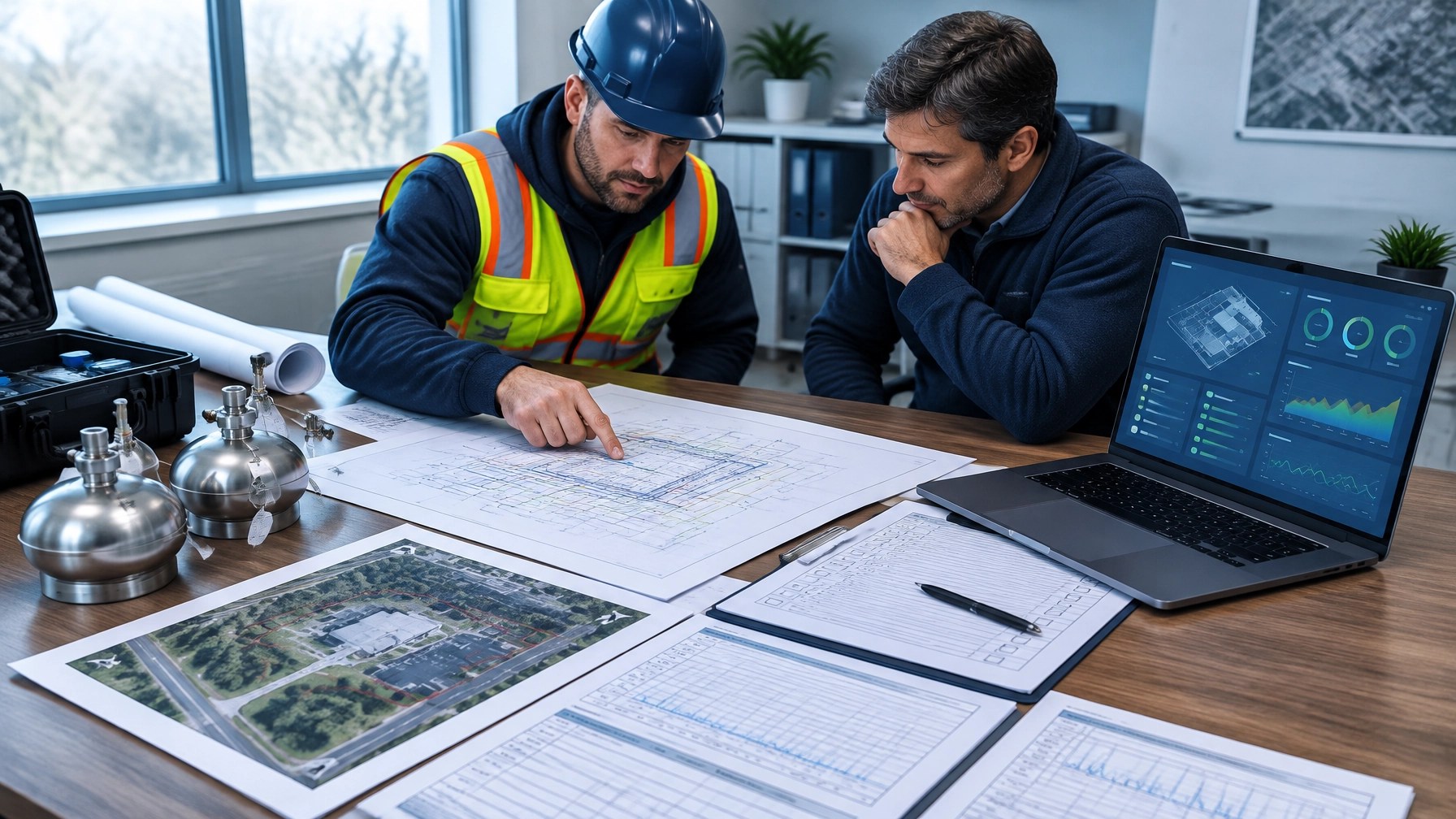
NJDEP’s guidance specifically identifies design and as-built drawings, sampling locations, communication testing results, commissioning measurements, photos, permits, the Monitoring and Maintenance Plan, and certification by the appropriate professional as components of the engineered response action record.
How to keep a system compliant between inspections
Property owners and managers can prevent many failures with a simple operating protocol:
- Keep the fan powered continuously unless the LSRP authorizes a shutdown.
- Check visible gauges and alarms during routine property walks.
- Report unusual noise, vibration, condensate, odors, or alarm events immediately.
- Do not modify slabs, sumps, drains, walls, or utility penetrations without environmental review.
- Track tenant changes, renovations, vacancies, and changes in use.
- Maintain roof access and inspect the discharge after major storms.
- Keep electrical breakers and system components clearly labeled.
- Store current drawings and inspection records where maintenance staff can access them.
- Schedule annual inspections before the reporting deadline, not after it.
- Give the LSRP complete records before the biennial protectiveness certification is due.
The goal is not to generate paperwork for its own sake. The goal is to know whether the engineered control still performs under actual building conditions.
O&M should protect the building and the project
Vapor intrusion mitigation systems are technical remedies with long operating lives. Their reliability depends on more than fan selection. It depends on pressure field coverage, electrical continuity, building operations, tenant coordination, roof configuration, and disciplined documentation.
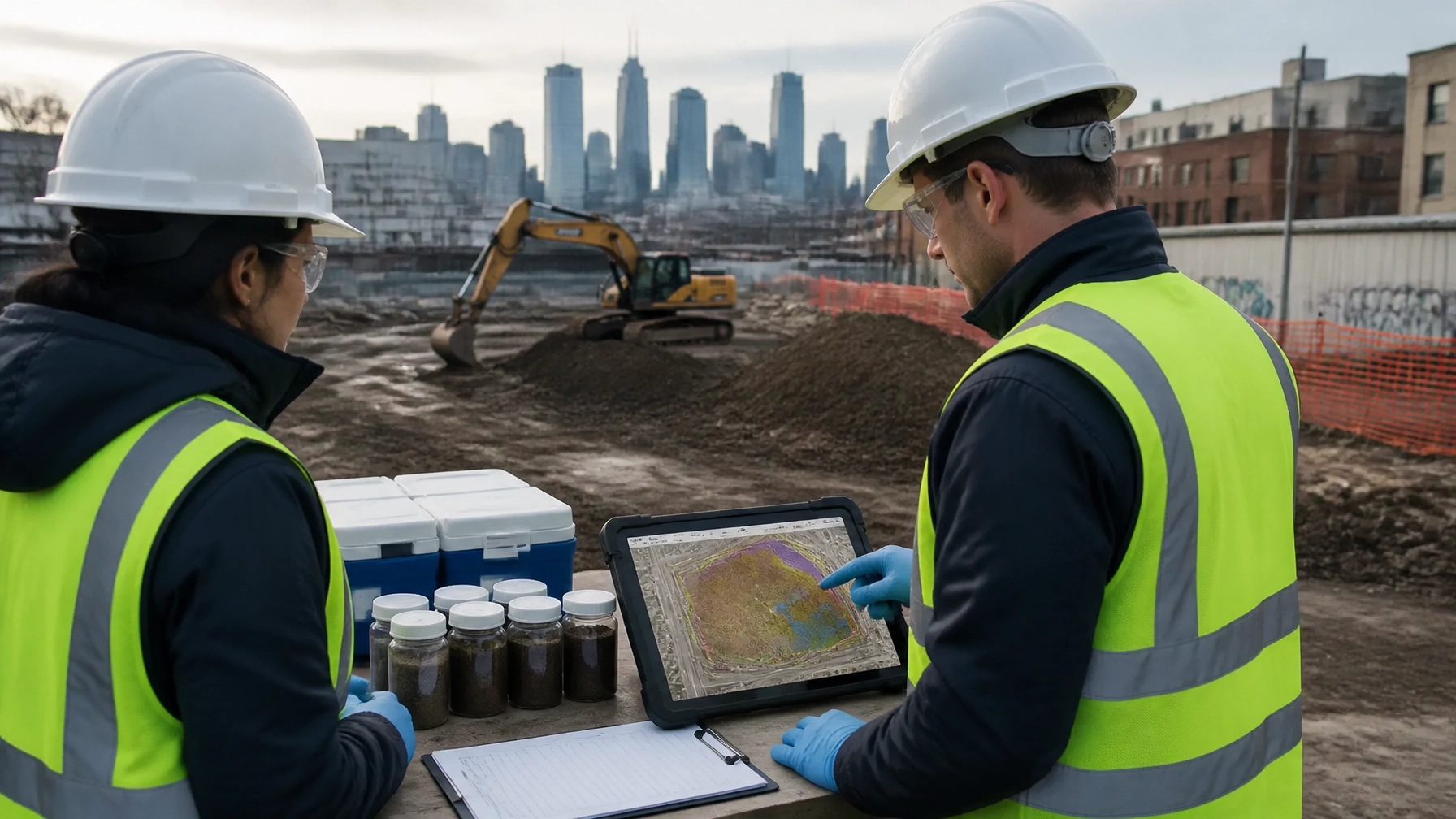
Envicon supports New Jersey owners, developers, attorneys, and property managers with vapor intrusion mitigation system design and oversight, NJ LSRP services, and ongoing regulatory compliance. Our team works directly with the field conditions, building stakeholders, and NJDEP requirements that determine whether a remedy continues to protect occupants.
For projects in the region, our Hudson County environmental consulting team brings local field knowledge and direct accountability to complex multifamily and mixed-use properties.
Takeaway
A functioning fan is only the starting point. A compliant vapor intrusion mitigation system requires verified pressure coverage, reliable alarms, controlled building changes, tenant communication, annual O&M, and complete records for the LSRP.
Solve the operational details early. Keep the building protected. Keep the regulatory path clear.
Talk with Envicon about your NJ vapor mitigation system